
Last Updated: May 20th, 2026
This post contains affiliate links. If you click through and buy, I may earn a small commission at no cost to you. It helps keep the lights on and the reviews independent. I only recommend gear I’ve shot in, trained in, or stood behind in a class.
- Treat every gun as loaded
- Point the muzzle in a safe direction
- Keep your finger off the trigger until you’re ready to shoot
- Know your target and what’s beyond
The Best Body Armor for Home Defense in 2026
Most home-defense conversations are about offense. Which gun, which optic, which light. Nobody talks about not getting shot. That’s an expensive blind spot, a defender who takes a round in the chest before stopping the threat may not survive long enough to see the outcome.
Body armor changes the math. Home invasions are statistically rare, but when they happen they don’t always come alone. Two attackers. Three.
A scenario where you stop one and take fire from another is precisely where armor decides whether your kids see you in the morning. A quick-don plate carrier staged beside the bed costs $500-800. That’s a reasonable price for “not dying.”
This roundup is the seven setups I’d actually recommend in 2026. Real plates, real carriers, real soft armor, and one honest section on who probably shouldn’t buy any of it. We tested across hundreds of hours of plate-carrier training and against the threat realities most home defenders actually face. The picks below cover every budget from $300 to $1,400 and every threat tier from pistol-only to AP-rated.
Let’s get into it.
Table of Contents
The Body Armor We Recommend at a Glance
Seven picks, ranked by use case rather than overall ranking. The “best” answer depends on whether you want maximum protection, lightest weight, fastest donning, or lowest price.
| Pick | Type | NIJ Level | Weight | Price (Set) |
|---|---|---|---|---|
| Best Complete Setup Hesco L210 + Crye JPC 2.0 | Hard plate + carrier | Level III+ | ~10 lbs total | ~$800–$950 |
| Best Budget Plates RMA 1155 Hard Plates | Hard plate (Level IV) | Level IV | ~17 lbs/pair | ~$360–$400 |
| Best Soft Armor Safariland Hardwire IIIA | Soft armor panel | Level IIIA | ~2–3 lbs | ~$200–$300 |
| Best Quick-Don Carrier Spartan Armor Sentinel | Carrier (no plates) | n/a | ~2.5 lbs | ~$130–$150 |
| Best Budget Full Carrier AR500 Testudo Gen 2 | Carrier + steel plate bundle | Level III steel | ~17–18 lbs total | ~$250–$300 |
| Best Concealed Soft Armor Point Blank Guardian Vest | Concealable soft armor | Level IIIA | ~4–5 lbs | ~$400–$600 |
| Best Premium Carrier First Spear Strandhogg V3 | Carrier (no plates) | n/a | ~2 lbs | ~$450–$550 |
How We Evaluated Body Armor
Three things matter when armor meets a real defensive scenario: does the plate stop the threat, can you put it on fast, and will you actually train with it.
For protection, we cross-referenced each plate’s NIJ certification (the only credible US ballistic standard), the published special-threat ratings (M193, M855, M855A1, 7.62×39 API), and field reports from law enforcement and military users currently in service. Plates without NIJ 0101.06 or 0101.07 certification got disqualified.
For donning speed, we ran timed drills from “asleep in bed” to “armor on, light on, weapon up.” Practice ceiling on a Crye JPC 2.0 with the cummerbund pre-threaded sits around 12 seconds. A Spartan Sentinel with the quick-pull strap is similar with reps. A traditional MOLLE-buckle carrier without quick-don features takes 25-45 seconds depending on how panicked you are.
Then there’s the part nobody likes to talk about: the gear has to be light enough that you’ll actually train with it. A 25-pound steel-plate setup that lives in the closet because you can’t move in it doesn’t protect anyone. A 10-pound UHMWPE setup that you’ve practiced donning 200 times might save your life.
Understanding NIJ Protection Levels
Before we get into the picks, here’s the protection ladder. The NIJ (National Institute of Justice) is the US standards body for ballistic armor. Every credible plate and panel sold in the United States carries an NIJ rating. The current standard is NIJ 0101.07 (revised in 2023), which replaces the long-standing 0101.06 spec with new RF1/RF2/RF3 nomenclature. Plates certified under either revision remain valid on shelves.
| Level | Stops | Typical Format | Home Defense Verdict |
|---|---|---|---|
| IIA | 9mm.40 S&W FMJ | Soft armor | Outdated, skip |
| II | 9mm.357 Magnum | Soft armor | Adequate, but Level IIIA is a small upgrade |
| IIIA | .44 Magnum.357 SIG, all handgun | Soft armor | Solid baseline for pistol threats |
| III | 7.62×51 (.308) ball | Hard plate | The first rifle-rated tier, strong choice |
| III+ | Level III + 5.56 M855, M193 | Hard plate | The home-defense sweet spot |
| IV | .30-06 M2 AP and lighter | Hard plate | Maximum, with weight penalty |
For most home defenders, Level III+ is the sweet spot. It stops the rifle rounds most likely to be in a home invader’s hands (5.56 from an AR-pattern rifle, 7.62×39 from an AK) without the weight penalty of Level IV ceramic. Level IIIA soft armor remains a strong choice if your threat model is pistol-only and weight is at a premium.

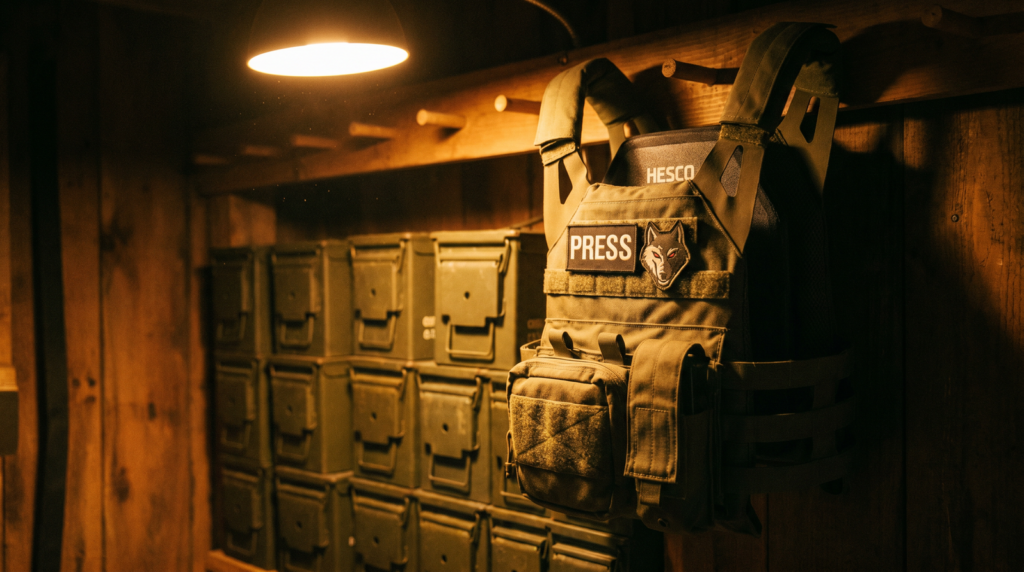
1. Hesco L210 Plates + Crye JPC 2.0: Best Complete Setup
- Plate: Hesco L210, 10×12 SAPI cut, multi-curve UHMWPE
- Plate Rating: Level III+ (defeats M193, M855, M855A1)
- Plate Weight: 4.0 lbs each (8 lbs/pair)
- Carrier: Crye JPC 2.0, front + back plate bag with cummerbund
- Combined Street Price: ~$800–$950
Pros
- Hesco L210 is the UHMWPE Level III+ plate currently in service with US SOF and tier-1 law enforcement
- 8 lbs total for full rifle-rated protection versus 14-18 lbs for comparable steel
- Crye JPC 2.0 is the SOF-standard carrier and pairs perfectly with L210 SAPI-cut plates
Cons
- $800-950 is real money, well over the budget tier
- Crye JPC street availability fluctuates; lead times can hit 8-12 weeks
- Overkill for most suburban threat models where a pistol-armed intruder is the realistic worst case
If budget isn’t the constraint and you want the setup professional operators actually wear, this is it. Hesco L210 plates are in service with multiple US military and tier-1 law enforcement units. Hesco L210 plates are in service with multiple US military and tier-1 law enforcement units. The UHMWPE construction delivers Level III+ rifle protection at 4 lbs per plate. Steel plates at the same rating run 7-9 lbs each.
That weight difference is real when you’re putting armor on over pajamas in the dark. Eight pounds of plates versus fourteen-plus pounds of plates over your already-elevated heart rate matters more than spec-sheet readers realize.
The Crye Precision JPC 2.0 is the carrier that JSOC and tier-1 LE standardized on years ago. It’s minimalist by design, front and back plate bags, a cummerbund for side coverage, nothing else you don’t need. No MOLLE drag handles, no extra pouches, no spare-mag panels. The plates and the side panels.
That’s it.
For a dedicated home-defense rig, keep it staged with the plates in and the cummerbund pre-threaded. Practiced donning time clocks at 12-15 seconds from bedside to fully on. That’s fast enough to matter in most home-invasion scenarios where you have audio warning (breaking glass, dog, door alarm) before the threat reaches the bedroom.
Best For: Serious home defenders who want the proven SOF-grade setup and aren’t constrained by budget.
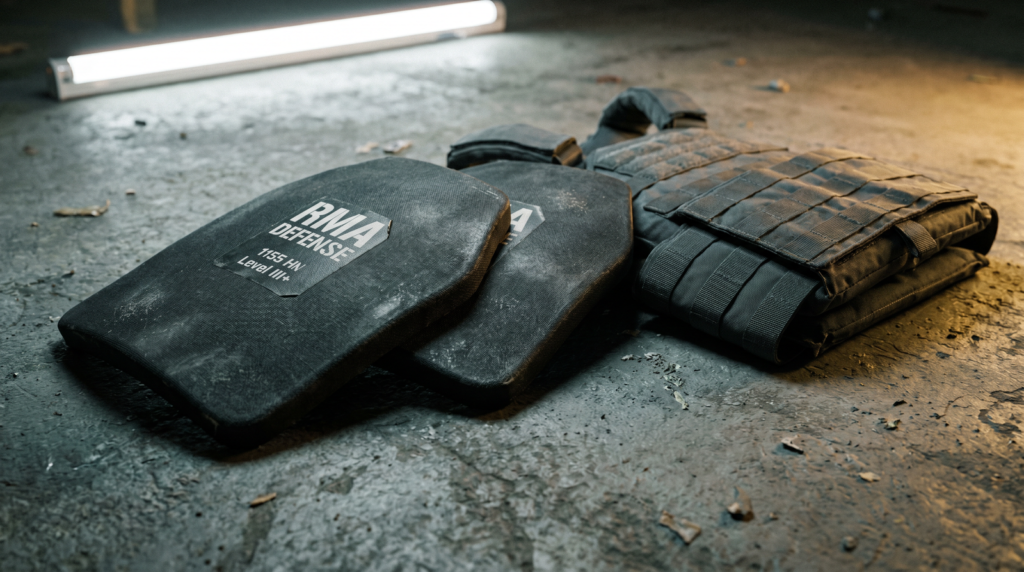
2. RMA 1155 Hard Plates: Best Budget Plates
- Rating: NIJ Level IV (0101.06 certified)
- Material: Ceramic / PE composite
- Weight: 8.4 lbs per plate (10×12)
- Profile: Single curve
- Street Price: ~$180–$200 per plate (~$360–$400/pair)
Pros
- Level IV stops .30 caliber AP rounds (including .30-06 M2 AP) that Level III and III+ plates don’t
- $360-400 per pair is among the cheapest certified Level IV armor available in the US
- RMA Defense is a respected US manufacturer with credible NIJ 0101.06 certification testing
Cons
- 8.4 lbs per plate (17+ lbs total) is significantly heavier than UHMWPE alternatives
- Single-curve profile is less ergonomic than shooter-cut or multi-curve designs
- Ceramic plates degrade if dropped or subjected to repeated impact, handle them carefully
RMA Defense 1155 makes Level IV protection affordable. At $360-400 per pair, you’re getting genuine armor-piercing-stopping capability for less money than a lot of people spend on a single pistol light. Level IV is the top civilian armor rating and stops rounds that Level III and III+ don’t, including .30-06 M2 AP and similar military-grade penetrators.
Weight is the honest tradeoff. 8.4 lbs per plate means 17 lbs of plates in your carrier, significantly more than the Hesco L210 setup. For emergency home-defense use that’s tolerable. For extended movement it becomes meaningful. Most shooters who try both setups find the lighter UHMWPE plates easier to live with.
If your budget is tight and you want the highest protection level available at the lowest cost, RMA 1155 is the call. Pair them with any MOLLE-compatible carrier that fits 10×12 plates (the Spartan Sentinel at $130 is a natural match) and you have a functional Level IV home-defense setup for around $500 all-in.
Best For: Budget-conscious buyers who want genuine Level IV rifle and AP protection without spending $500+ on plates alone.
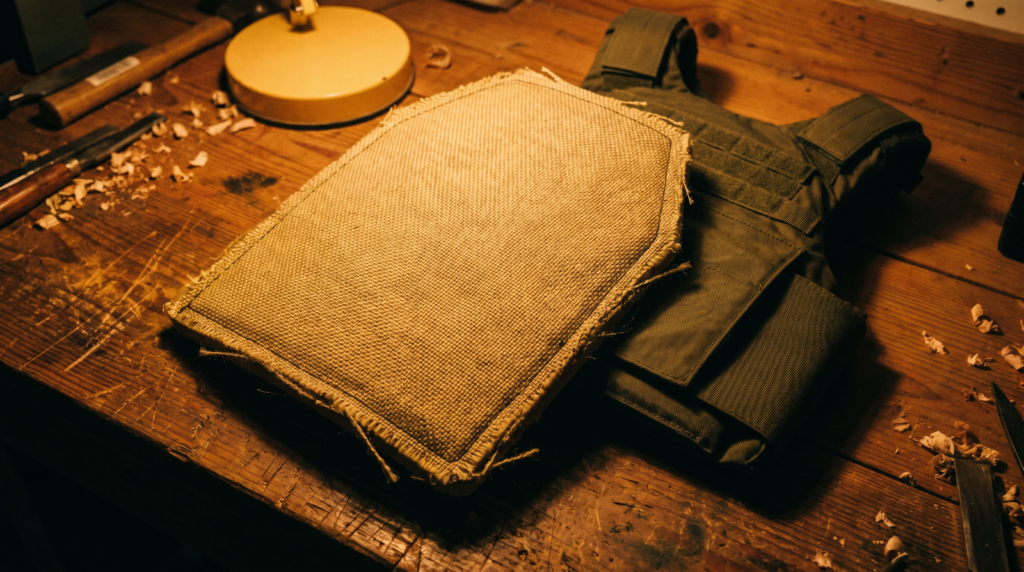
3. Safariland Hardwire IIIA Soft Panels: Best Soft Armor
- Rating: NIJ Level IIIA
- Material: Dyneema aramid composite (Hardwire construction)
- Weight: ~1.0–1.5 lbs per panel
- Protection: Up to .44 Magnum, all common 9mm.357 SIG.45 ACP
- Street Price: ~$200–$300 per panel set
Pros
- Significantly lighter and more flexible than any hard plate, a full set weighs around 2-3 lbs
- Level IIIA stops all common pistol threats and most shotgun buckshot at typical home-defense distances
- Safariland is the standard brand for US law enforcement soft armor, credible manufacturer history
Cons
- Stops zero rifle rounds, if your threat model includes a rifle, this is the wrong category
- Soft armor degrades over time and must be replaced on the manufacturer’s schedule (typically 5 years)
- Requires a soft-armor carrier or vest, sold separately, adding to total cost
Level IIIA soft armor is the right call if your primary concern is pistol threats, which is the statistical majority of home-invasion scenarios, and you want something lighter and more comfortable than hard plates. A Level IIIA vest comes in around 2-3 lbs total versus 17+ lbs for a full plate setup.
That weight delta isn’t marginal. It’s the difference between armor you’ll grab in a hurry and armor that lives in the closet. Soft armor also conforms to your body in a way that even the best plate carriers don’t.
The limitation is clear and non-negotiable. Soft armor doesn’t stop rifle rounds. If a home invader shows up with an AR-15 or AK (uncommon but not impossible), Level IIIA doesn’t help against that threat. For the overwhelming majority of home-defense scenarios involving pistol-armed criminals, it’s entirely adequate.
For a “better than nothing” quick-don option that goes on in 5 seconds, a soft-armor vest with Level IIIA panels is practical in a way that a full plate carrier isn’t for some buyers. Know what you’re protecting against and choose accordingly.
Best For: Pistol-focused home defenders who want lightweight, comfortable protection without a plate-carrier setup.
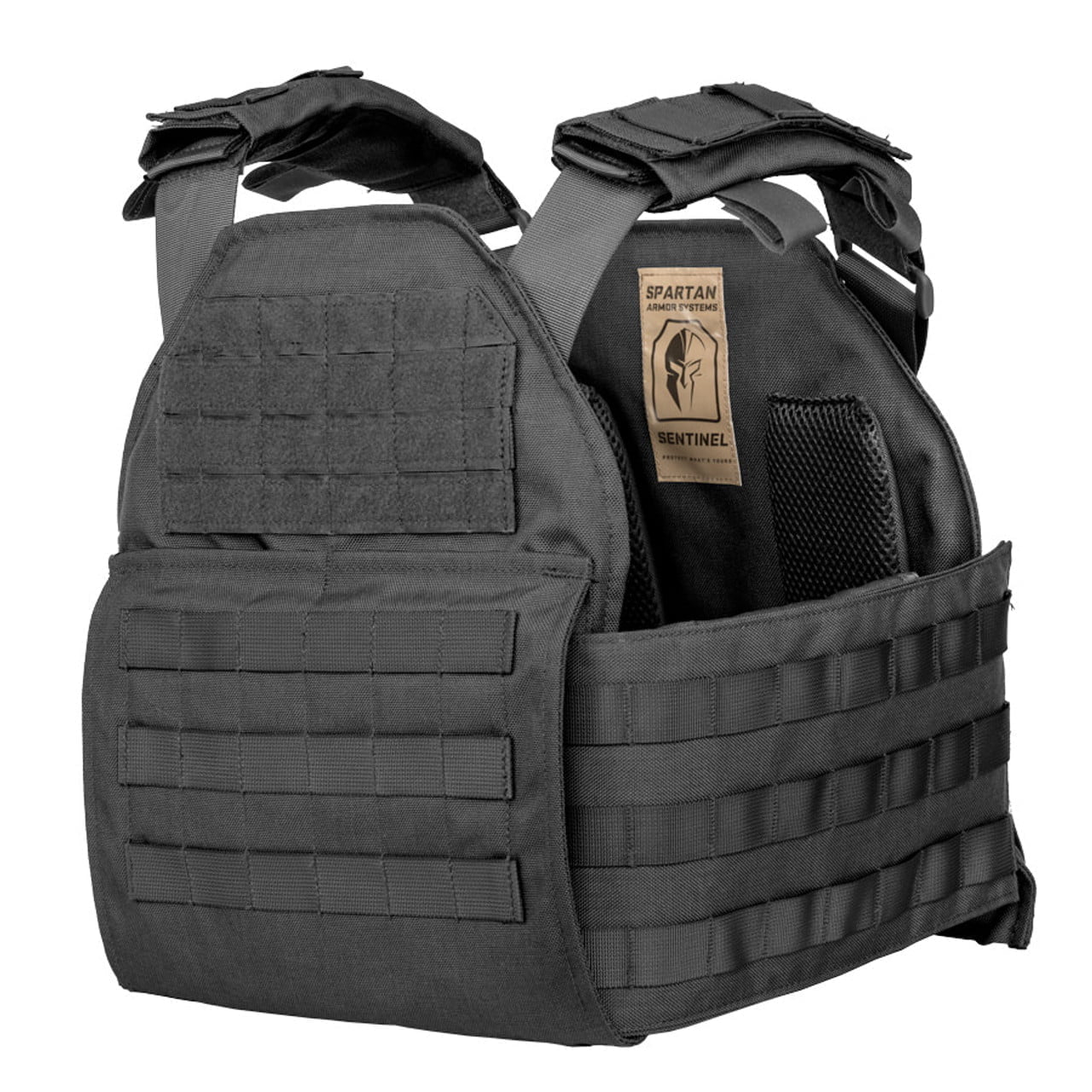
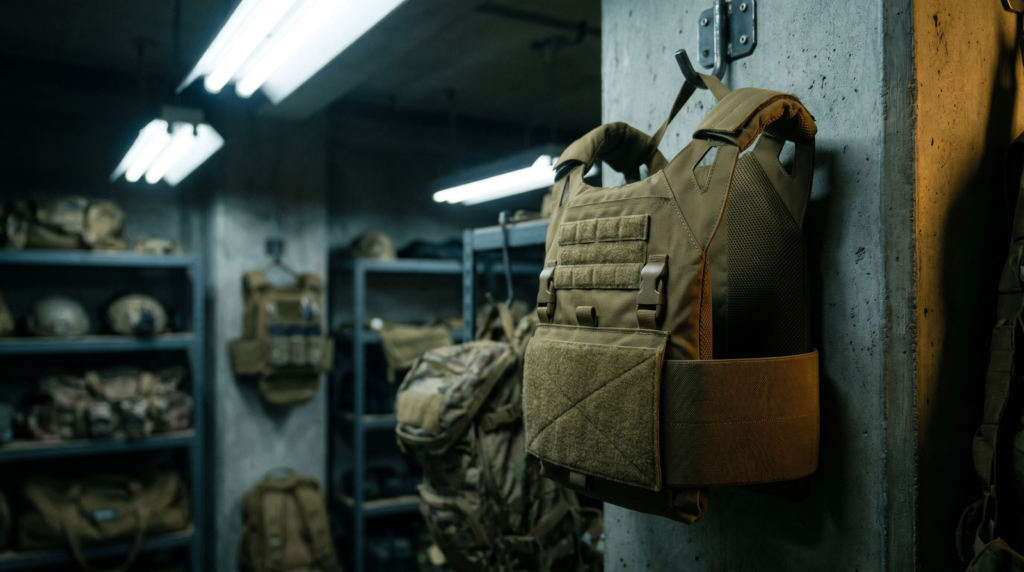
4. Spartan Armor Sentinel: Best Quick-Don Carrier
- Type: Plate carrier (plates not included)
- Plate Size: Standard 10×12 SAPI cut
- Carrier Weight: ~2.5 lbs
- Features: Single-pull quick-don strap, adjustable cummerbund
- Street Price: ~$130–$150
Pros
- Designed specifically for rapid donning without assistance, the single-pull shoulder system is genuinely fast with practice
- Priced to be accessible paired with budget plates like the RMA 1155 (~$500 complete setup)
- Standard SAPI plate compatibility fits virtually any 10×12 hard plate on the market
Cons
- Build quality is acceptable but not on the level of a Crye JPC or First Spear Strandhogg
- Quick-don system requires specific practice, out-of-the-box donning is no faster than a standard carrier
- Limited cummerbund adjustability for very large or very small torso sizes
The Sentinel is the carrier to pair with budget plates when you want a complete setup without the Crye JPC 2.0 price. At $130-150 for the carrier plus $360-400 for RMA 1155 plates, you have a functional Level IV setup for around $500 total. That’s the best value complete armor kit available in 2026.
Quick-don design is the selling point. Standard plate carriers require threading buckles, adjusting straps, and connecting cummerbunds in sequence. The Sentinel’s single-pull shoulder system collapses that into one motion. With practice, it goes on in 10-12 seconds.
Without practice it’ll take 30 seconds, same as any other carrier. Donning under stress is a perishable skill. Set a calendar reminder to run the drill once a month with your bedside light off and the armor staged where it actually lives.
Best For: Budget-focused buyers building a complete plate carrier setup who want fast donning time at a reasonable price.
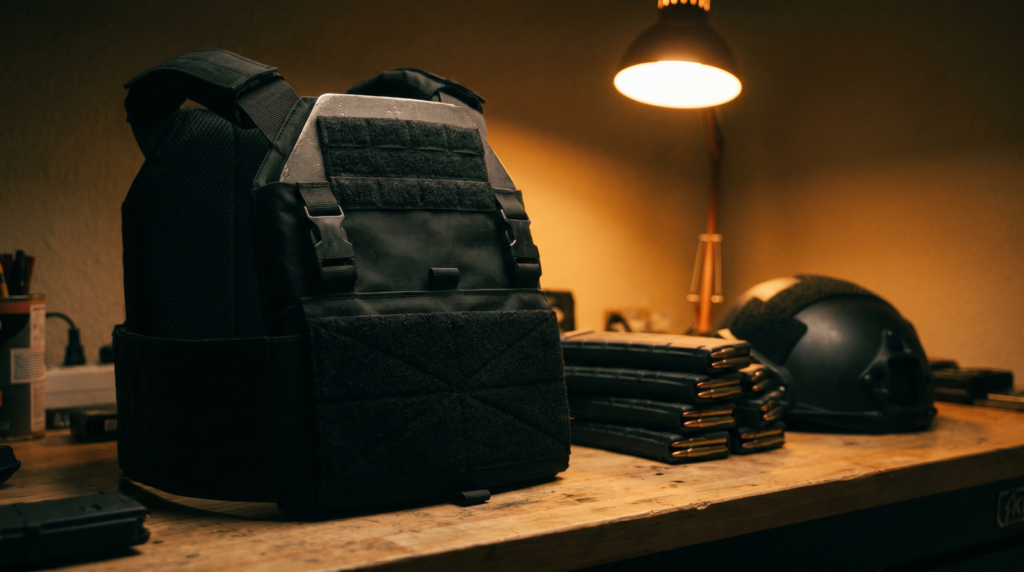
5. AR500 Testudo Gen 2: Best Budget Full Carrier
- Type: Plate carrier; bundles available with AR500 steel plates
- Plate Size: 10×12 standard
- Features: Full MOLLE webbing, integral shoulder pads, multiple pouch points
- Carrier Weight: ~3 lbs
- Street Price: ~$90–$120 (carrier only) / ~$250–$300 (bundle)
Pros
- Bundles with AR500 steel plates land a complete Level III rated setup under $300, the cheapest functional armor kit available
- Integrated MOLLE webbing and shoulder pads make it noticeably more comfortable for extended wear than budget competitors
- AR500 has a long track record in the budget armor space with thousands of long-term owner reviews
Cons
- AR500 steel plates are heavy (7-8 lbs each); total setup runs 17-18 lbs with the carrier
- Full MOLLE setup and pouch attachment points slow donning compared to minimalist carriers
- Steel plates require anti-spall coating maintained over time, check it after every range session
For shoppers asking what the best body armor under $500 is, the AR500 Testudo Gen 2 bundle at $275-300 is the honest answer. AR500 built a massive following in the budget-armor community for a reason. The Testudo Gen 2 bundled with AR500’s steel plates lands a complete Level III rated carrier setup for around $250-300. For that money you get MOLLE for carrying spare magazines and a pistol, integrated shoulder pads, and a serviceable design. It’s legitimate armor at a price that doesn’t require a dedicated budget line.
Steel plates are the weight penalty. Each plate runs 7-8 lbs versus 4 lbs for Hesco L210. Over a pair, that’s 6-8 lbs of extra carry weight. For emergency home-defense use it’s tolerable.
For extended wear or aggressive movement the difference becomes significant.
Start here if budget is the constraint. Upgrade to lighter UHMWPE plates when finances allow. Buying once and crying once isn’t always possible; buying twice over five years often is.
Best For: Budget-first buyers who want a complete carrier and plate setup for under $300 and can accept steel-plate weight.
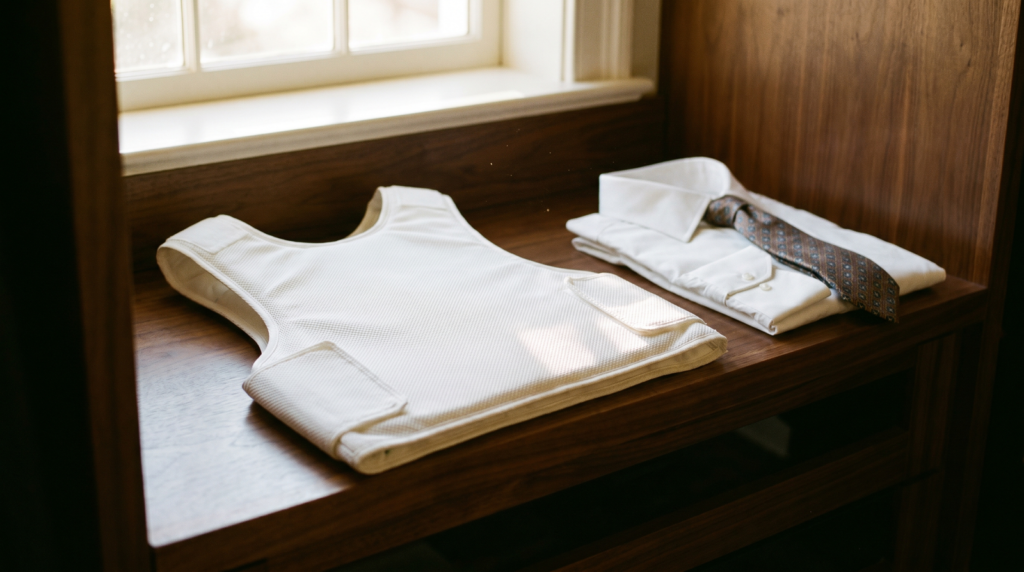
6. Point Blank Guardian Vest: Best Concealed Soft Armor
- Rating: NIJ Level IIIA (also available in II)
- Wear: Concealable under regular clothing
- Weight: ~4–5 lbs
- Features: Moisture-wicking inner carrier, modular front/back panels, custom-fit sizing
- Street Price: ~$400–$600
Pros
- Worn under regular clothing for all-day concealed protection during elevated-threat periods
- Point Blank Enterprises is one of the most established soft-armor brands, used by US PDs nationally
- Level IIIA stops all common pistol threats at any realistic engagement distance
Cons
- Stops only pistol rounds; offers no rifle protection without adding a separate hard plate
- Cost is significant for soft armor; hard plate options at this price point offer more protection
- Requires fitting to your specific torso dimensions, not a “grab any size” purchase
The Point Blank Guardian is the type of soft-armor vest law enforcement officers wear daily under their uniforms. It’s concealable, comfortable enough for all-day wear for most people, and provides Level IIIA protection against pistol rounds. For someone who wants to wear armor continuously rather than grabbing it in an emergency, this is the product category.
The concealed-armor use case is specific. Someone who anticipates a sustained elevated-threat period (after making a police report about a stalker, during a known threat window) or someone whose job puts them at civilian risk and wants armor for non-LE use.
For pure home defense, a plate carrier beside the bed is more practical than all-day soft-armor wear. But for situational protection during a known threat window, the Guardian is hard to beat.
Best For: All-day concealable protection during elevated-risk periods, or buyers who want continuous passive protection under street clothes.
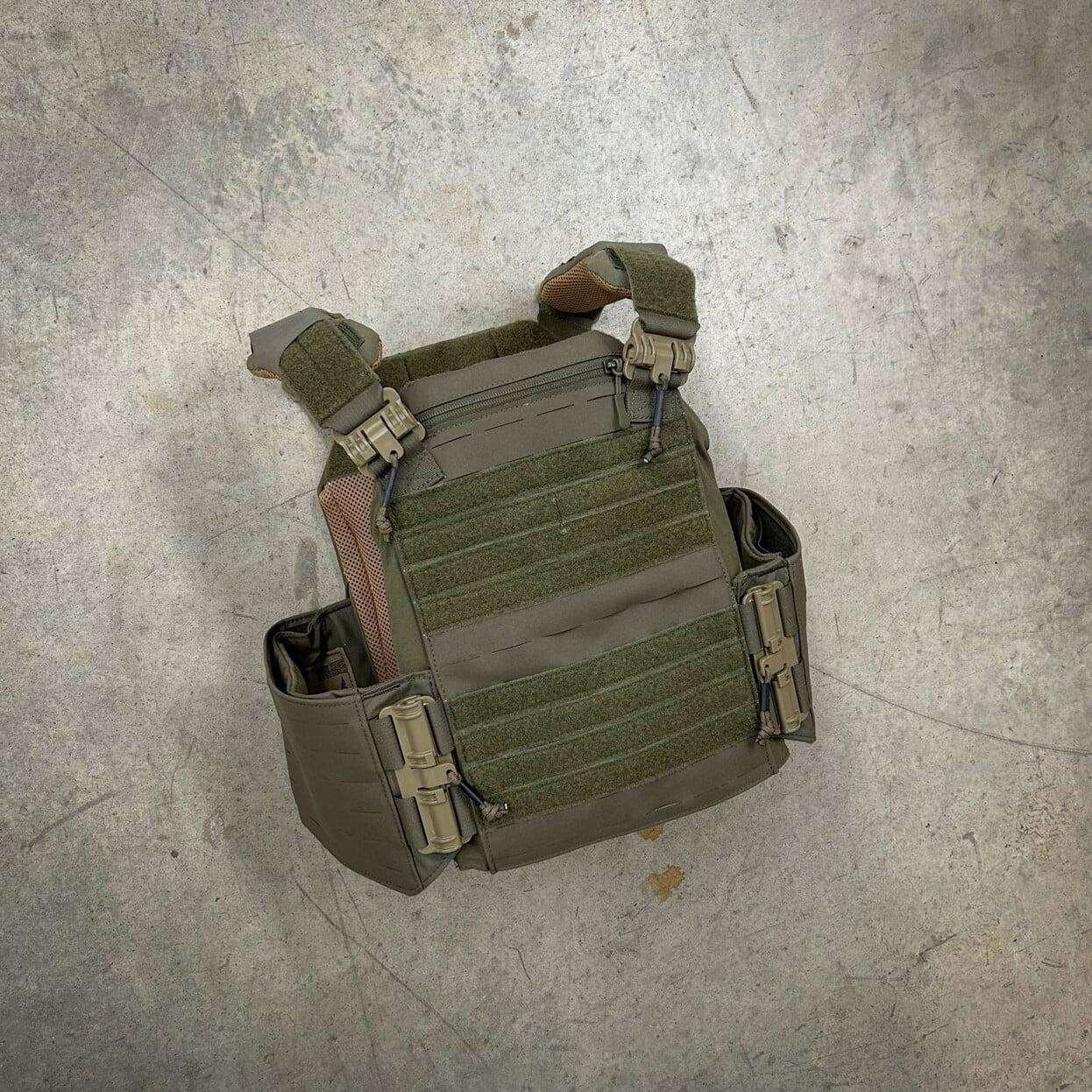
7. First Spear Strandhogg V3: Best Premium Carrier
- Type: Plate carrier (plates not included)
- Features: Tubes quick-release fasteners, 6/12 modular front panel, internal admin pocket
- Plate Size: 10×12 SAPI cut
- Carrier Weight: ~2 lbs
- Street Price: ~$450–$550
Pros
- Tubes connector system allows full single-pull quick-release of the entire carrier, critical for medical scenarios
- 2 lbs carrier weight is exceptionally light for a full plate carrier with cummerbund
- Build quality is on a different tier than any budget carrier, this rig will outlast you
Cons
- $450-550 for the carrier alone before plates is a premium investment
- Less MOLLE real estate than tactical-leaning carriers, minimalist by design
- The 6/12 modular panel adds capability but increases learning curve for first-time users
The First Spear Strandhogg is the alternative to the Crye JPC for buyers who want a quick-release capability built in. The Tubes connector system lets you fully release the carrier in a single pull, which has obvious applications in medical-emergency scenarios or when you need to get armor off fast.
It’s used by multiple SOF units and is widely regarded as the premium alternative to the JPC. At 2 lbs for the carrier, it’s among the lightest full plate carriers available. Pair it with Hesco L210 plates and total weight lands around 10 lbs, remarkably light for full Level III+ protection.
The quick-release is the tactical advantage over the JPC. For home defense where post-incident medical considerations matter (you got hit, need to get the armor off so EMTs can work), it’s a real differentiator.
Best For: Serious shooters who want the premium alternative to the JPC with quick-release capability and exceptional build quality.
Hard Plates vs Soft Armor: Which You Actually Need
Most buyers default to hard plates because they sound cooler. But the right answer depends entirely on your threat model and your willingness to actually wear the gear.
Hard plates (Level III, III+, IV) stop rifle rounds. Soft armor (IIIA and below) stops pistol rounds only. If your worst-case home invasion involves a rifle, hard plates are the only correct answer. If your realistic worst case is a pistol-armed criminal, which is the statistical majority of US home invasions, soft armor is plenty.
Weight changes the math. Hard plates run 8-17 lbs per pair depending on material. Soft armor runs 2-5 lbs total. The “best armor in the world” stays in the closet if you can’t move in it.
A Level IIIA vest you’ll actually grab beats a Level IV plate set you won’t.
The honest answer for most home defenders in suburban or urban environments is Level IIIA soft armor for primary protection, with a Level III+ plate carrier staged for the rare rifle threat. Soft panels use aramid weaves (Kevlar and modern descendants like Twaron) laminated into flexible packs. A budget hybrid path: pair a Level IIIA vest with a single hard trauma plate in the front pocket for emergency rifle coverage on a soft-armor base.
Plate Materials: Steel, Ceramic, and UHMWPE
Three materials dominate the hard-plate market. Each has tradeoffs that matter for home defense.
Steel
AR500-grade steel plates are the cheapest hard armor on the market. They’re durable, shrug off impacts that would crack ceramic, and last essentially forever if you maintain the anti-spall coating.
The catch is weight (7-9 lbs per plate) and spall risk. Without coating, a rifle round hitting a steel plate fragments into shrapnel that travels along the plate surface. Modern coated plates mitigate this but don’t eliminate it. For budget setups, steel works.
For optimal protection, it’s the bottom tier.
Ceramic
Ceramic plates (typically silicon carbide or boron carbide) are the most common Level IV armor. They’re lighter than steel (6-9 lbs depending on construction), produce no spall, and stop rounds steel plates can’t.
The tradeoff is fragility. Drop a ceramic plate hard and you’ve potentially compromised it. Most ceramic plates have a 5-year service life with proper storage. RMA 1155 is the budget-tier representative.
Higher-end ceramic plates from Highcom or 3M Ceradyne run $400-700 per plate.
UHMWPE
Ultra-high-molecular-weight polyethylene (UHMWPE) is the lightest hard armor available. Hesco L210, Velocity Systems, and Highcom 4SAS7 all use UHMWPE construction. Weight runs 3-4 lbs per plate, half what steel weighs.
UHMWPE is also less fragile than ceramic. It can take impact and field abuse that would crack a Level IV ceramic plate. The downside is cost ($300+ per plate) and a hard ceiling at Level III+. UHMWPE alone doesn’t stop true AP rounds.
For Level IV you need ceramic.
If budget allows, UHMWPE Level III+ is the home-defense sweet spot. If you need Level IV, ceramic is the only option. If budget rules, steel works and you live with the weight.
Storage, Maintenance and Replacement
Body armor is perishable. Soft armor degrades from heat, moisture, and UV. Ceramic plates fail silently if dropped. Steel plates rust if the coating wears.
Store and inspect accordingly.
- Soft armor: Store flat in the carrier in a climate-controlled space. Replace every 5 years per manufacturer schedule. Heat exposure (a hot car trunk) shortens that significantly.
- Ceramic plates: Inspect for hairline cracks after any drop or impact. X-ray check available from some plate makers if you suspect damage. 5-year service life with normal handling.
- UHMWPE plates: The most forgiving, check the carrier seams and the plate edges for delamination once a year. Otherwise pretty bulletproof (sorry) about storage conditions.
- Steel plates: Inspect the spall coating quarterly. Touch up with manufacturer-approved sealant if it chips. Steel itself doesn’t degrade meaningfully over decades.
Store your armor where you’d grab it. Beside the bed, in the closet by the entrance to the safe room, in a quick-access drawer. Armor in the basement that you’d need to retrieve before threat contact isn’t protecting anyone.
The Donning Drill: Train or You’ll Fumble
Buying armor is the easy part. Putting it on under stress, in the dark, in 15 seconds, is the part that requires practice.
Run the drill cold once a month. Lights off. Alarm clock simulating the door alarm. Armor staged where it actually lives.
Time yourself from “asleep” to “armor on, light on, weapon ready.”
First attempts on any carrier hit 30-45 seconds. After a dozen reps you’ll be in the 15-20 second range. After two dozen, sub-15. The skill is perishable, three months without practice and you’re back to 30 seconds.
Stage everything pre-threaded. Cummerbund through the carrier. Plates seated. Velcro ready.
The faster the system is configured, the faster you’ll be at zero-hour. Buckles and straps that need to be threaded under stress will not be threaded under stress.
Common Mistakes and What to Avoid
- Buying uncertified plates. If the plate doesn’t carry an NIJ 0101.06 or 0101.07 rating, you don’t know what it stops. Tested marketing claims aren’t testing. Stick with NIJ-rated.
- Skipping the spall coating on steel plates. Raw steel fragments rifle rounds into your own neck and arms. Buy plates with factory spall coating, not stripped-down “raw” plates.
- Mounting armor in a basement closet. If you have to walk past the threat to retrieve your armor, the armor doesn’t exist. Stage it within arm’s reach of your sleep position.
- Buying without training. Armor without donning practice is a costume. Practice is non-negotiable.
- Mixing plate sizes between front and back. Both plates should be the same cut (SAPI, shooter’s, swimmer’s) and size (10×12 standard) so they fit the carrier symmetrically.
- Skipping side plates entirely. Most home-defense scenarios are front-on, but a side plate adds meaningful coverage for the price. Worth considering on a serious setup.
Who Should NOT Buy Body Armor
Honest section. Body armor isn’t the right purchase for every home defender. Skip it if you fit one of these profiles.
- The buyer who won’t train. Armor without donning practice is theater. If you’ll buy it and never run the drill, the money is better spent on training rounds and a class with a competent instructor.
- The buyer who hasn’t bought a light yet. A weapon light, a flashlight, a basic carbine class, and 500 rounds of practice ammo all outrank armor for a first-time home defender. Armor comes after the fundamentals are in place.
- The buyer in a single-person residence with no children. A solo defender’s best strategy is rarely “stand and fight in armor”, it’s “barricade and call 911.” A quality gun safe and a hardened safe room buy more survivability than armor for this profile.
- The buyer with significant mobility limitations. 10-17 lbs of plates on a small frame or someone with joint or back issues can be more dangerous than helpful. A 20-gauge semi-auto and a hardened bedroom is a better answer than armor that slows you down.
- The buyer treating armor as a substitute for situational awareness. Armor is a last-ditch backstop. Locks, alarms, dogs, lighting, and decision-making all matter more day-to-day. If armor is the first line item, the priority stack is wrong.
The Final Verdict
If money is no object, the Hesco L210 + Crye JPC 2.0 setup is the proven SOF-grade answer. At 10 lbs total for full Level III+ rifle protection in the carrier that JSOC standardized on, it’s what serious operators wear when their lives depend on it.
If budget rules, pair RMA 1155 Level IV plates with a Spartan Sentinel carrier for around $500 all-in. You’ll be heavier and slower than the premium setup, but you’ll have genuine AP-stopping protection that no soft-armor option can match.
If your threat model is pistol-only and weight is the constraint, Safariland Hardwire IIIA panels in a Point Blank Guardian-style vest is the right path. 2-3 lbs of total armor weight, 5-second don time, full Level IIIA pistol protection. Realistic and wearable.
Choosing home defense body armor comes down to one tradeoff: weight versus protection. The best plate carrier for home defense, regardless of budget, is the one you have actually trained to put on in the dark. And if you take only one thing from this roundup: armor without training is decoration. Run the donning drill once a month with the lights off. That habit makes more difference than any product on this list.
Frequently Asked Questions
Is body armor worth it for home defense?
Body armor provides an extra layer of protection during a home invasion, especially if you cannot avoid confrontation. A plate carrier with Level III+ plates stored near your safe room takes 15-20 seconds to don and could save your life.
What level body armor do I need for home defense?
Level IIIA soft armor stops all common handgun rounds. Level III steel or ceramic plates stop rifle rounds up to 7.62x51. For home defense, Level IIIA is usually sufficient unless you expect rifle-caliber threats in your area.
What is the best plate carrier for home defense?
The Ferro Concepts Slickster and Crye Precision JPC 2.0 are top choices. Both are lightweight, quick to don, and comfortable enough to wear while moving through your home. Choose a carrier that accepts your plate size without shifting.
Should I use steel or ceramic plates for home defense?
Ceramic plates are lighter and do not produce dangerous spall fragments. Steel plates are cheaper and more durable but require anti-spall coating. For home defense where weight matters less, either works. Ceramic is the better investment.
Can body armor stop shotgun slugs?
Level III and above hard plates stop 12 gauge slugs. Soft armor rated IIIA will stop most handgun rounds and some shotgun loads but may not stop slugs. Check your armor specific rating for shotgun projectile protection.
How should I store body armor for home defense?
Store your plate carrier on a hanger or shelf in your bedroom closet or next to your safe room supplies. Drape it open so you can slip it on quickly. Practice donning it in the dark. Replace ceramic plates every 5-7 years.
Is soft armor enough for home defense?
Level IIIA soft armor stops all handgun calibers up to .44 Magnum and is lighter and more comfortable than plate carriers. If your primary concern is handgun threats from home invaders, soft armor provides excellent protection with minimal bulk.
How fast can I put on body armor during a home invasion?
With practice, a plate carrier can be donned in 10-20 seconds. Keep it staged open with plates inserted near your safe room. Practice putting it on in the dark until it becomes automatic. Those seconds of preparation could be lifesaving.
Related Reading
- 10 Best Shotguns for Home Defense (2026)
- Best Home Defense Shotgun Under $500 (2026)
- Best Shotgun Ammo for Home Defense (2026)
- AR-15 vs Shotgun vs Pistol for Home Defense
- Best Home Defense Bullpup: Shotguns and Rifles
- 8 Best Tactical Shotguns in 2026
- Best Long Gun Safes for Rifles and Shotguns
Gear up: browse tactical gear, pouches, belts and packs.
4,644+ Gun & Ammo Deals
Updated daily from 200+ top retailers. Filter by category, caliber, action type, and price.
Related Guides