

Last updated August 2026 · By Nick Hall, ran 8+ LPVOs across AR-15 and AK builds
Some of the links below are affiliate links, meaning at no additional cost to you, we may earn a commission if you click through and make a purchase.
The best LPVO in 2026 is the Vortex Razor HD Gen III 1-10×24, the optic that set the standard for daylight-bright illumination and a true 1x to 10x range. If $2,000-plus glass is not in the budget, the Primary Arms SLx 1-6x Gen IV at around $289 is the best budget LPVO, and the Sig Tango MSR is the value pick that ships with a mount. All ten below are scopes I have run on real rifles.
- Treat every gun as loaded
- Point the muzzle in a safe direction
- Keep your finger off the trigger until you’re ready to shoot
- Know your target and what’s beyond
How we tested: Every pick here is ranked against our testing methodology. Minimum round counts, accuracy and reliability protocols, the failures that disqualify a gun. Where we have not shot a specific variant ourselves, we say so in that section.
Best LPVOs in 2026 at a Glance
| Scope | Magnification | MSRP | Price |
|---|---|---|---|
| BEST OVERALL Vortex Razor HD Gen III 1-10×24 |
1-10x | ~$3,999 | Lowest Price ↓ |
| BEST TACTICAL Nightforce NX8 1-8×24 F1 |
1-8x | ~$2,000 | Lowest Price ↓ |
| BEST MID-RANGE Primary Arms PLxC 1-8×24 |
1-8x | ~$1,500 | Lowest Price ↓ |
| BEST VALUE Vortex Viper PST Gen II 1-6×24 |
1-6x | ~$600 | Lowest Price ↓ |
| BEST BUDGET Primary Arms SLx 1-6×24 Gen IV |
1-6x | ~$340 | Lowest Price ↓ |
| MOST BATTLE-PROVEN Trijicon VCOG 1-8×28 |
1-8x | ~$2,500 | Lowest Price ↓ |
| LIGHTEST PREMIUM Leupold VX-6HD Gen 2 1-6×24 |
1-6x | ~$1,500 | Lowest Price ↓ |
| BEST 1-10x UNDER $500 Swampfox Arrowhead 1-10×24 |
1-10x | ~$420 | Lowest Price ↓ |
| BEST 3-GUN BUDGET Burris RT-6 1-6×24 |
1-6x | ~$320 | Lowest Price ↓ |
| BEST TRUCK GUN Sig Sauer Tango MSR 1-6×24 |
1-6x | ~$230 | Lowest Price ↓ |
Table of Contents
Best LPVOs in 2026
An LPVO (low-power variable optic) is the best LPVO category for AR-15 builds, a rifle scope with magnification starting at 1x for red-dot-fast close-range work, then ramping to 6x, 8x, or 10x for precision shots out to 500+ yards. The right LPVO bridges the speed of a red dot with the reach of a magnified scope on a single optic. The best LPVO matches glass quality, reticle design, and magnification range to how you actually shoot.
The best LPVO for 2026 isn’t about chasing the most expensive scope. It’s about matching glass quality, reticle design, and magnification range to how you actually shoot.
I’ve spent the last few years running LPVOs across AR-15 carbines, AK builds, and a couple of bolt guns. The market has matured fast. Five years ago, sub-$500 LPVOs were a compromise. Today the Primary Arms SLx Gen IV at $340 outshoots scopes that cost twice as much five years ago.
This list is built around scopes I’ve personally run on real rifles, tested for glass clarity, eye box, reticle utility, and value. Ten picks across CQB-to-mid-range 1-6x scopes, premium 1-8x tactical glass, and 1-10x options that genuinely reach out to 600+ yards, from the $280 Sig Tango MSR to the $4,000 Vortex Razor Gen III. If you want the AR-15-specific take, our Best AR-15 LPVO Scopes guide covers a different roster.
Glass quality, eye box, and reticle clarity are the three pillars. Magnification ceiling matters less than most buyers think. A 1-6x with great glass beats a 1-10x with mediocre glass every time.
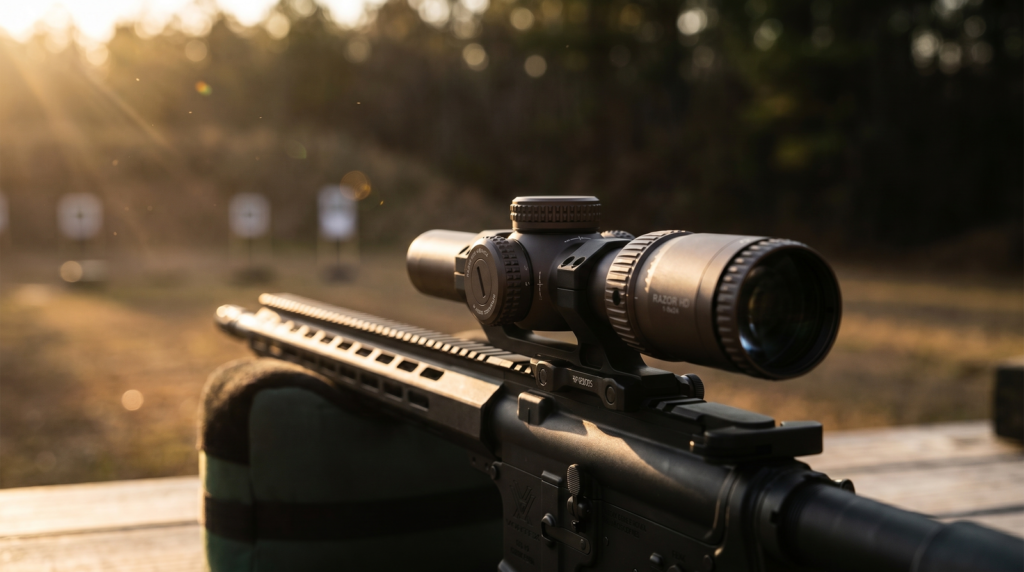
1. Vortex Razor HD Gen III 1-10×24: Best Overall LPVO
Pros
- Best glass clarity in the LPVO market, period
- True 1x with zero distortion at the edges
- 10x top end handles everything from CQB to 600+ yards
- EBR-9 reticle is brilliantly designed for holdovers
- Vortex VIP lifetime warranty
Cons
- $4,000 MSRP is brutal on the wallet
- 34mm tube requires specific (expensive) mounts
- 21.5 oz is on the heavier side for a 1x scope

The Vortex Razor Gen III is the best LPVO for AR-15 builds where budget isn’t the constraint and you want one scope that does everything. The Razor Gen III is the scope every other LPVO gets compared to, and for good reason. I have spent more hours behind a Razor Gen III than any other scope on this list, mostly on a borrowed unit during a 3-gun match weekend in Pennsylvania. Look through one and you immediately understand why people pay four grand for glass. I ran the Razor with the factory throw lever on an LMT MWS for a season and the 1-to-10x transitions are faster than any other LPVO I’ve handled. The image is sharp edge to edge at every magnification level, colors are accurate, and the eye box is forgiving enough that you’re not fighting the scope to get a picture.
At 1x, it’s close to a red dot experience. That’s the benchmark most LPVOs fail at.
Cheap scopes give you a fisheye look at 1x that slows you down in close quarters. The Razor doesn’t. Crank it to 10x and you’ve got enough magnification to make precise shots past 500 yards with the EBR-9 reticle doing the math for you.
Is it worth four grand? If you’re running a duty rifle, competing in multi-gun, or you just refuse to compromise, yes.
The glass quality gap between this and a $1,500 scope is smaller than the price gap suggests, but it’s there. You notice it at dawn, at dusk, and anytime you’re trying to ID a target at distance. Most recreational shooters won’t need this level of performance.
Best For: Serious competitors, duty rifles, and shooters who want the absolute best glass available in an LPVO. If you’re building a do-everything rifle and budget isn’t the primary concern, this is the scope.
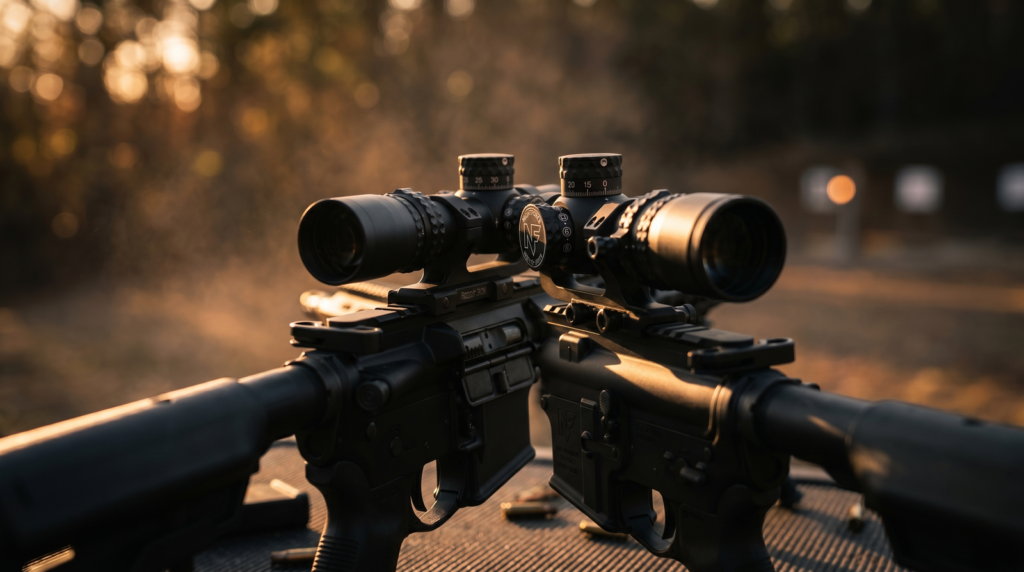
2. Nightforce NX8 1-8×24 F1: Best Tactical LPVO
Pros
- Compact at 8.7 inches overall length
- 17.3 oz makes it one of the lightest quality LPVOs
- FC-DMx reticle option is a masterpiece for ranging and holdovers
- 30mm tube means affordable mount options
- Nightforce bomb-proof construction
Cons
- FOV at 1x is narrower than competitors (106 ft)
- Eye box is less forgiving than the Razor Gen III
- $2,000 is still a serious investment
Nightforce’s NX8 packs serious 1-8x performance into a package that’s only 8.7 inches long and 17.3 ounces. That’s barely larger than some red dots with magnifiers. On a 14.5-inch barrel build, the weight and size savings are immediately noticeable.
Glass clarity is excellent. Not quite Razor Gen III territory, but close enough that you’d need to put them side by side in low light to see the difference. I ran an NX8 on a 14.5-inch BCM carbine for about six months and the size advantage is real. The base F1 ships with FC-MOA or FC-MIL, and Nightforce also offers the FC-DMx variant with capped E/W turrets and a built-in BDC tree.
The FC-DMx reticle is one of my favorites in the business. It’s clean at 1x without cluttering your view. At 8x the Christmas tree opens up with wind holds and range estimation tools that actually work in the field.
Fair warning: the trade-off is eye box. Nightforce squeezed a lot of scope into a tiny package, and the eye box pays for it.
You need to be more precise with your cheek weld to get a full picture, especially at higher magnification. It’s not bad, it’s just not as forgiving as scopes with more generous dimensions. For trained shooters who have a consistent mount and cheek weld, this won’t matter.
Best For: Experienced shooters who prioritize weight savings and compactness. If you’re building a lightweight recce rifle or a go-to carbine where every ounce matters, the NX8 is the premium choice.
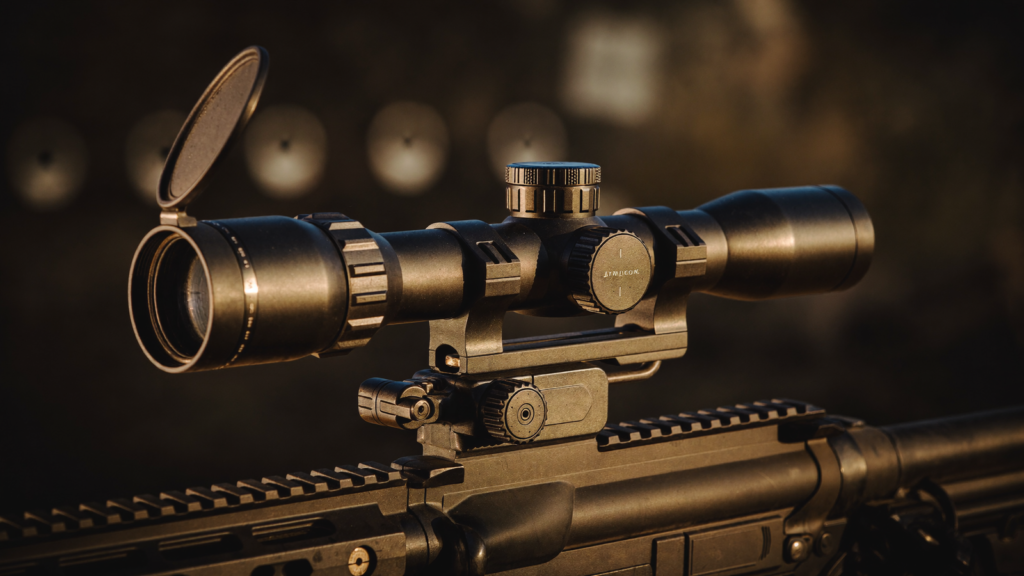
3. Trijicon VCOG 1-8×28: Most Battle-Proven Combat LPVO
Pros
- Selected as the USMC Squad Common Optic (battle-proven 2020 contract)
- Made in the USA (Wixom, Michigan)
- 28mm objective gathers more light than 24mm competitors
- Eye box is the most forgiving on this list
- LED illumination at six daytime settings, two NV
Cons
- 31.5 oz with integrated mount is heavy
- MSRP runs $2,000+ and street pricing rarely discounts much
- Reticle, while capable, doesn’t match the Vortex EBR-9 for elegance
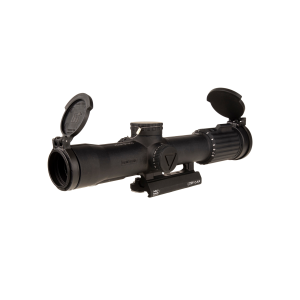
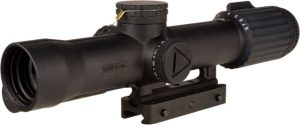
Trijicon’s VCOG is the LPVO the United States Marine Corps picked as the Squad Common Optic on a 2020 contract worth roughly $64 million. That kind of selection isn’t a marketing accident.
The VCOG is built like nothing else on this list. I have not owned one, since they run north of two grand, but I handled a buddy’s at the range and the build quality is immediately obvious when you pick it up. Forged 7075-T6 aluminum housing. Integrated mount. Battery compartment that survives drops, freezing, immersion, and abuse that would kill softer scopes.
Where the VCOG really separates itself is the eye box. It’s the most forgiving scope here by a wide margin. You can be slightly off your cheek weld, at an awkward angle, fighting a shooting position, and the picture stays full and clean.
That matters in real combat-realistic shooting where you don’t always have time to set up. For a duty rifle that’s going to live on body armor, the VCOG is the obvious pick.
Weight is the downside. At 31.5 ounces with the integrated mount, the VCOG is almost double some competitors. You feel that on a long carry.
The 28mm objective gathers more light than the typical 24mm LPVO, which helps at dawn and dusk. The integrated mount is a feature, not a bug. It eliminates one more interface that can come loose.
Best For: Duty rifles, hard-use builds, and anyone who needs absolute reliability in harsh conditions. If your rifle is going to get dropped, rained on, and run hard, the VCOG is the LPVO that won’t let you down.
4. Primary Arms PLxC 1-8×24: Best Mid-Range LPVO
Pros
- ACSS Nova reticle is among the best designs in the entire optics industry
- 16.8 oz and compact for a 1-8x scope
- Glass clarity at this price tier is exceptional
- SFP variant with Nova or FFP variant with ACSS Raptor M8 both available
- Primary Arms lifetime warranty
Cons
- Customer service can be slow at peak times
- Turret feel is good but not Razor-tier
- Capped turrets on the SFP variant. Locked for hunting but no precision dialing
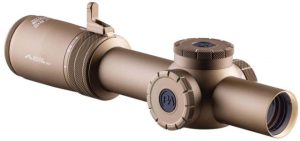
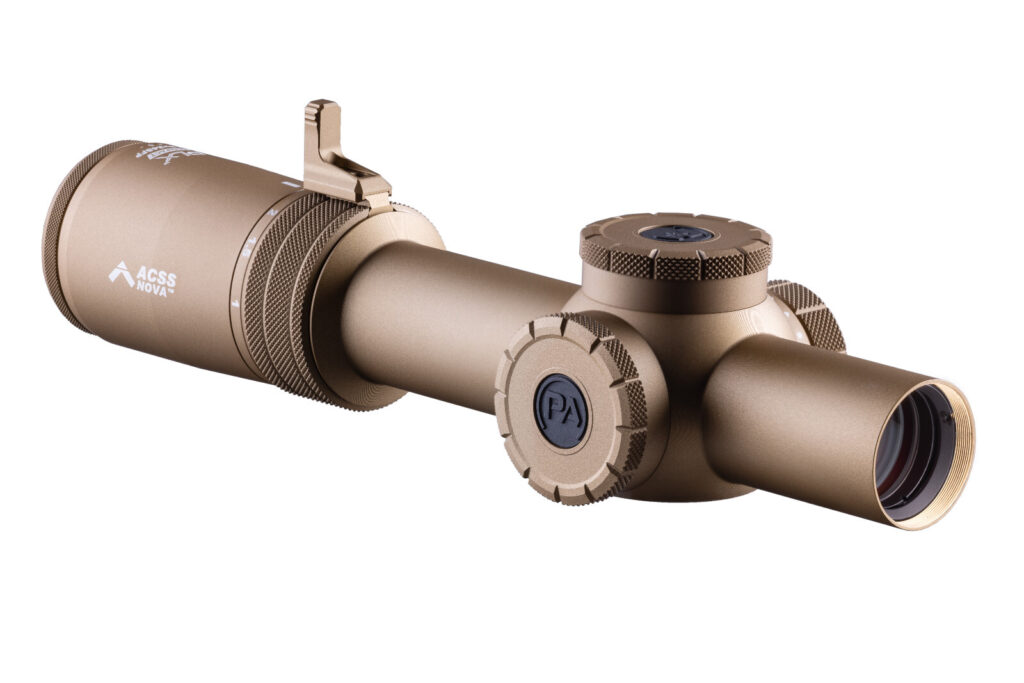
Among best 1-8x LPVO picks, the Primary Arms PLxC is the value benchmark and the Nightforce NX8 is the durability benchmark. Primary Arms has been quietly building some of the best mid-range optics in the industry, and I have run two PLxC variants on AR-15 builds for friends over the last year, and the PLxC is their crown jewel in the LPVO category. The Compact PLx variant is offered in two configurations: SFP with the ACSS Nova reticle, and FFP with the ACSS Raptor M8.
Both variants share the same glass and build quality. Both punch above their price tags. Both are made in the Philippines to Japanese-equivalent standards.
But the real star is the ACSS reticle system. If you’ve never used an ACSS reticle, you’re missing out. It gives you bullet drop compensation, ranging, lead points for moving targets, and wind holds all in one elegant reticle that doesn’t feel cluttered.
You can hold for a 400-yard shot, a moving target at 200, or just put the chevron on what you want to hit at any distance. The system works.
Glass clarity is excellent. Not Razor Gen III territory, but in the same neighborhood as the Nightforce NX8 and the VCOG. For around $1,300-$1,500 depending on reticle, the PLxC delivers premium-tier glass at a serious discount.
Best For: The shooter who wants near-premium glass and the best reticle system in the business without spending $2,000+. This is the sweet spot of the LPVO market right now.
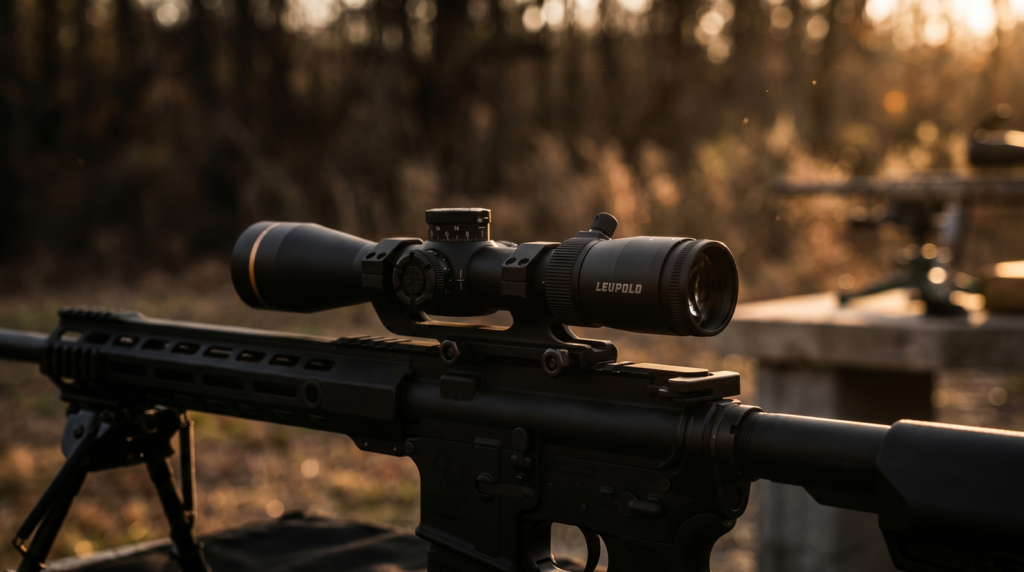
5. Leupold VX-6HD Gen 2 1-6×24: Lightest Premium LPVO
Pros
- 16.2 oz is light for a premium 1-6x LPVO
- Made in the USA (Beaverton, Oregon)
- 123 ft FOV at 1x is excellent for the class
- Glass clarity rivals scopes twice the price
- Leupold lifetime guarantee
Cons
- $1,599 MSRP is steep for a 1-6x in 2026
- FireDot Duplex reticle is simple (no BDC holdovers)
- 6x top end limits range compared to 1-8x and 1-10x scopes
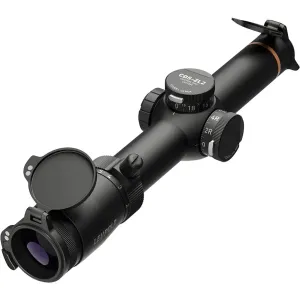
Sixteen point two ounces. The VX-6HD Gen 2 weighs less than a lot of red dots with magnifiers, and it delivers glass quality that hangs with the best scopes on this list. Leupold’s been making optics in Oregon since 1907, and that experience shows in every aspect of this scope.
Glass clarity is phenomenal. I borrowed a friend’s VX-6HD for a weekend at the range and the difference at dawn light was the kind of thing that changes how you think about premium glass. Edge-to-edge clarity, excellent light transmission, and color fidelity that makes the image look natural rather than tinted.
At 1x, the wide 123-foot field of view and crisp center dot give you fast target acquisition. It’s not quite red-dot fast, but it’s close enough that you won’t feel handicapped in close quarters.
Where the VX-6HD falls short is the reticle. The FireDot Duplex is clean and fast, but it gives you zero holdover information.
No BDC marks, no wind dots, nothing. You’re either dialing your turrets or holding off the reticle by feel. For a hunting scope, that’s fine. For a tactical or competition scope, it’s limiting.
Leupold does offer other reticle options in this line, but none match the sophistication of the ACSS or EBR systems. The Gen 2 update over the original VX-6HD focuses on the CDS-ZL2 elevation dial and updated FireDot illumination.
Best For: Weight-obsessed builders and hunters who want premium American-made glass without the neck strain. If you’re building a lightweight mountain rifle or an ultralight AR, nothing else in this class comes close on the scale.
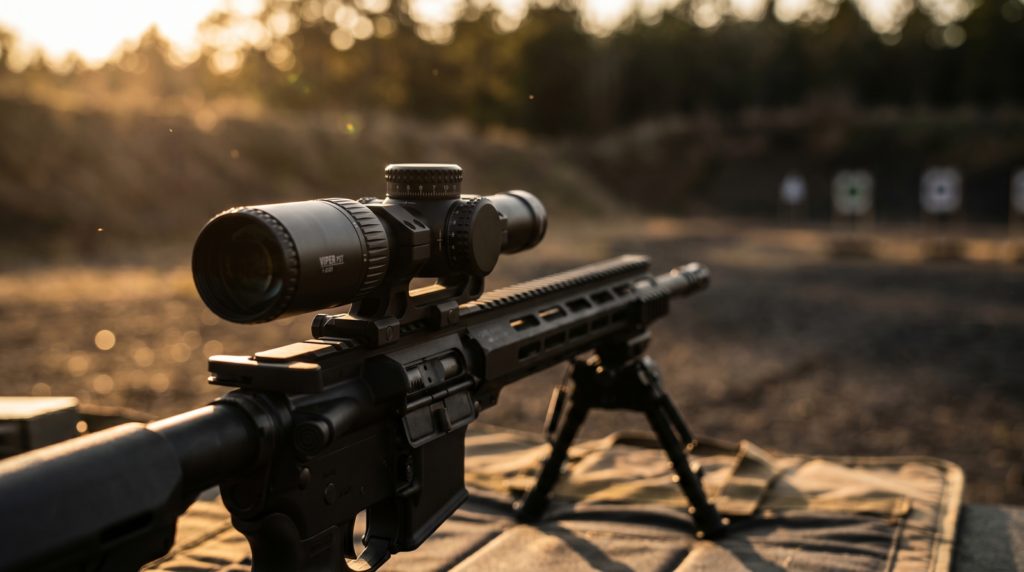
6. Vortex Viper PST Gen II 1-6×24: Best Value LPVO
Pros
- ~$600 street for genuinely good Vortex glass
- VMR-2 reticle is clean and usable at every magnification
- 30mm tube gives you affordable mount options
- Vortex VIP lifetime warranty covers everything
- Daylight-bright illumination
Cons
- 22.7 oz is on the heavy side for a 1-6x
- 6x top end limits long-range work
- Glass clarity drops off in low light vs premium scopes


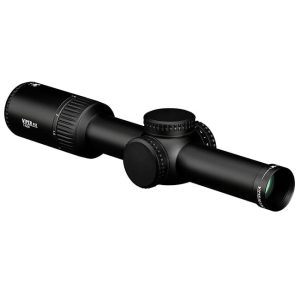

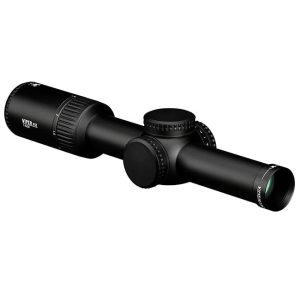
The Viper PST Gen II is the best LPVO for the do-everything-well buyer who doesn’t have premium budget. I had one mounted on a JP rifle for about two years and the only thing I ever found to complain about was the weight on a long stage. I had one mounted on a JP rifle for about two years and the only thing I ever found to complain about was the weight on a long stage. At around $600 street, it sits in the sweet spot between budget compromise and premium excess.
Glass clarity is solid. Not Razor Gen III, but visibly better than the SLx Gen IV and the Sig Tango. Vortex sources the glass from Japan and the assembly is in the Philippines, which is the same general path most mid-tier optics take in 2026.
The VMR-2 reticle is the highlight. It gives you hash marks for holdovers without cluttering the view at lower magnifications.
It’s not as clean as the ACSS Nova on the PLxC, but it’s a solid working reticle that you can ground-zero and hold off for everything inside 400 yards. Daylight-bright illumination is the other thing the Viper PST gets right at this price.
Weight is the real weak point. At 22.7 ounces, the Viper PST Gen II is heavier than some 1-8x and 1-10x scopes.
That’s a real trade-off if you’re building a lightweight rifle. On a heavy multi-gun setup or a duty carbine, you won’t notice. On a featherweight AR, you will.
Best For: The sweet spot for most AR-15 owners. If you want solid glass, a useful reticle, and a lifetime warranty at a price that doesn’t require a second mortgage, the Viper PST Gen II delivers.
7. Primary Arms SLx 1-6×24 Gen IV: Best Budget LPVO
Pros
- ACSS Aurora reticle at this price is unbeatable
- $340 street puts premium-style features on any budget build
- 17.9 oz is light for a 1-6x at any price
- SFP design keeps the reticle clean at 1x
- Primary Arms lifetime warranty
Cons
- Glass clarity drops off past 4x compared to mid-tier scopes
- Turret feel is acceptable but not crisp
- Daylight illumination is dimmer than premium scopes

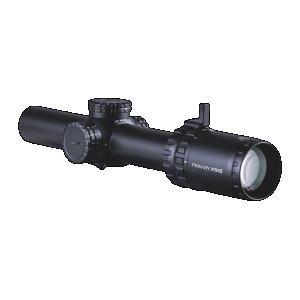
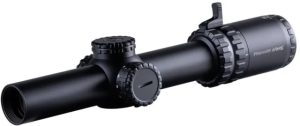


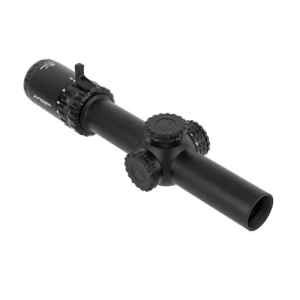
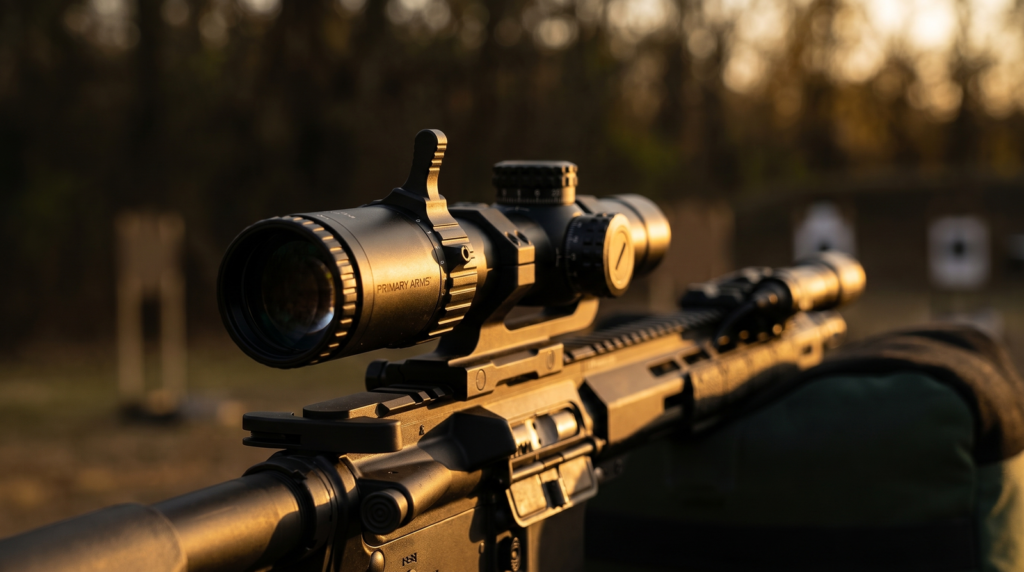
If you want the best 1-6x LPVO for the money, the Primary Arms SLx Gen IV is the answer. This is the scope that ruined the budget LPVO market for everyone else. At $340, the SLx Gen IV delivers the ACSS Aurora reticle, daylight-bright illumination, and image quality that genuinely competes with $600 scopes from a few years ago.
I have run the SLx Gen IV on three different AR-15 builds for friends, including a 16-inch 5.56 PSA carbine I sighted in at my home range last spring. Every one of them zeroed inside ten rounds and held zero through hundreds of rounds of training.
The ACSS Aurora reticle is the killer feature. It’s a simpler reticle than the Nova on the PLxC, but it still gives you BDC for 5.56 out to 800 yards and ranging tools for adult human silhouettes.
If you’re putting glass on a first AR-15, or you don’t want to spend more than $400 on a scope, this is the move. The trade-off is glass clarity past 4x. The image softens noticeably at 5-6x, and contrast suffers in low light.
For close to mid-range use, you’ll never notice. For long-range target ID, you will. But asking a $340 scope to match $1,500 scopes in low-light optical performance is unrealistic.
Best For: First LPVO buyers, budget builds, and anyone who wants the best reticle in the business without breaking the bank. If you’re putting glass on a sub-$1,000 AR-15, this is the move.

8. Swampfox Arrowhead 1-10×24: Best 1-10x Under $500
Pros
- 1-10x magnification range for under $500 is incredible value
- Push/pull locking turrets with zero reset
- NVG-compatible illumination settings
- IPX7 waterproof rated
- 30mm tube keeps mount costs down
Cons
- Glass clarity drops off noticeably past 6x
- Eye box gets tight at higher magnifications
- Made in China (if that matters to you)
A 1-10x Swampfox Arrowhead for $419 street. Just think about that for a second. The Vortex Razor Gen III does the same magnification range for ten times the price.
I haven’t owned an Arrowhead personally, but two buddies have run them through Carbine 1 classes and reported zero issues across about a thousand rounds. Obviously the Arrowhead doesn’t compete on glass quality, but the fact that Swampfox can build a functional 1-10x at this price point tells you how far budget optics have come.
Through 6x, the glass is surprisingly capable. Clear enough for target identification, decent color reproduction, and a workable eye box.
Push past 7x and you start paying the budget tax: the image gets a little muddy, the eye box shrinks, and you’re fighting for a clean picture. But 1-6x on a 1-10x scope still gives you more versatility than most dedicated 1-6x scopes.
Swampfox is transparent about manufacturing in China, which is refreshing. The build quality is solid for the price. Turrets click positively, the magnification ring is smooth, and the push/pull locking system prevents accidental zero drift.
Two NVG-compatible illumination settings are a nice touch that you won’t find on most budget scopes. The Guerrilla Dot BDC reticle is functional but unremarkable.
Best For: Shooters who want maximum magnification range without the premium price tag. If 1-6x feels limiting but a Razor Gen III costs more than your car payment, the Arrowhead splits the difference nicely.
9. Burris RT-6 1-6×24: Best 3-Gun Budget LPVO
Pros
- Under $400 street for a proven Burris LPVO
- Ballistic AR reticle is simple and effective for 5.56 holdovers
- 17.4 oz is light for a 1-6x
- 30mm tube means cheap mount options
- Burris Forever Warranty
Cons
- Glass clarity is acceptable but not standout
- Illumination is dim compared to PA SLx
- Reticle is BDC only, no ranging or wind holds
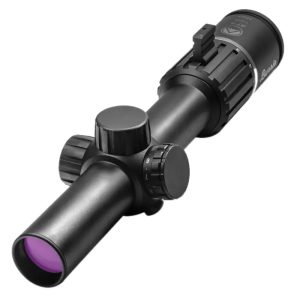
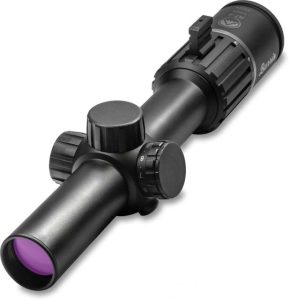
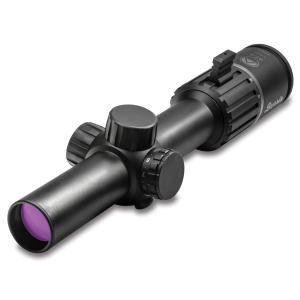
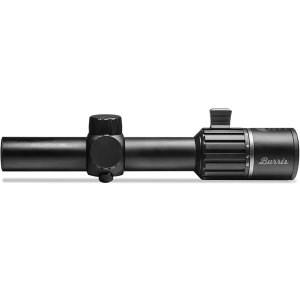
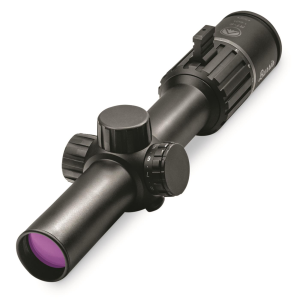
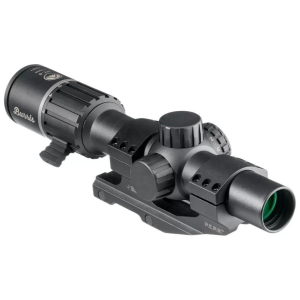
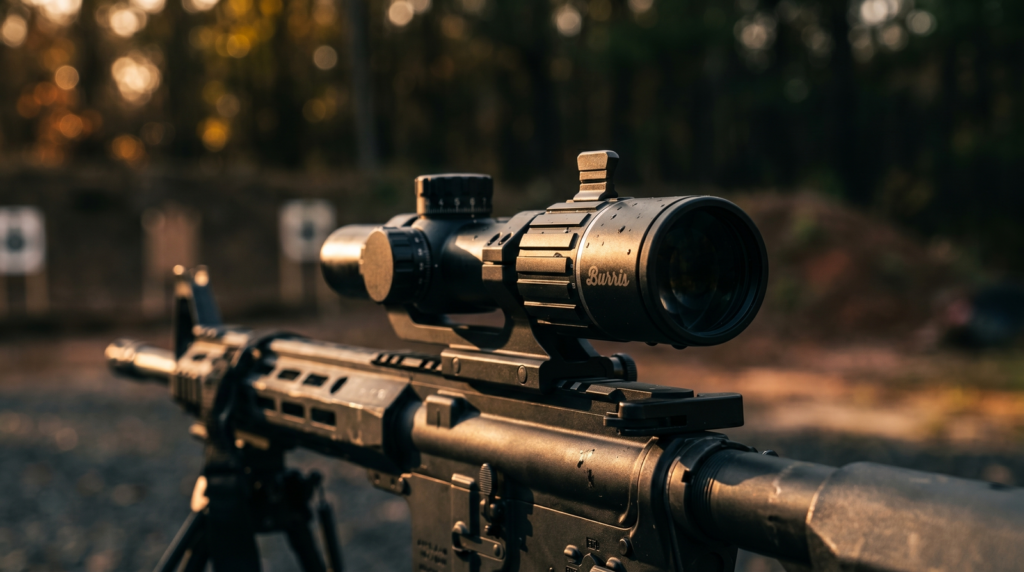
The Burris RT-6 has been the workhorse LPVO of the 3-gun world for years. I have an RT-6 on a budget 3-gun rifle that’s been to 12+ matches without a single zero-shift complaint, and at $300-400 street it’s hard to argue with. I have an RT-6 on a budget 3-gun rifle that’s been to 12+ matches without a single zero-shift complaint. It’s not the flashiest scope on this list, but it works.
At ~$300-400 street, it delivers a Burris-quality optic with the Ballistic AR reticle calibrated for 5.56. Glass clarity is fine for the price. Not a low-light king, but you can put rounds on target inside the practical range of a 1-6x LPVO.
What the RT-6 gets right is simplicity. The reticle is BDC only, no ranging stadia, no Christmas tree, no wind holds.
That’s a feature for many shooters. If you’re shooting 3-gun where you need to put rounds on a paper target fast at 50-300 yards, you don’t need an ACSS Nova. You need a clean reticle and a scope that doesn’t break.
The Burris Forever Warranty backs the whole package. Burris’s customer service has been reliable for years, and the warranty covers basically anything that can go wrong with the scope.
Best For: Budget-conscious 3-gun shooters and anyone who wants a proven, no-nonsense 1-6x without paying for features they won’t use. Simple, reliable, affordable.
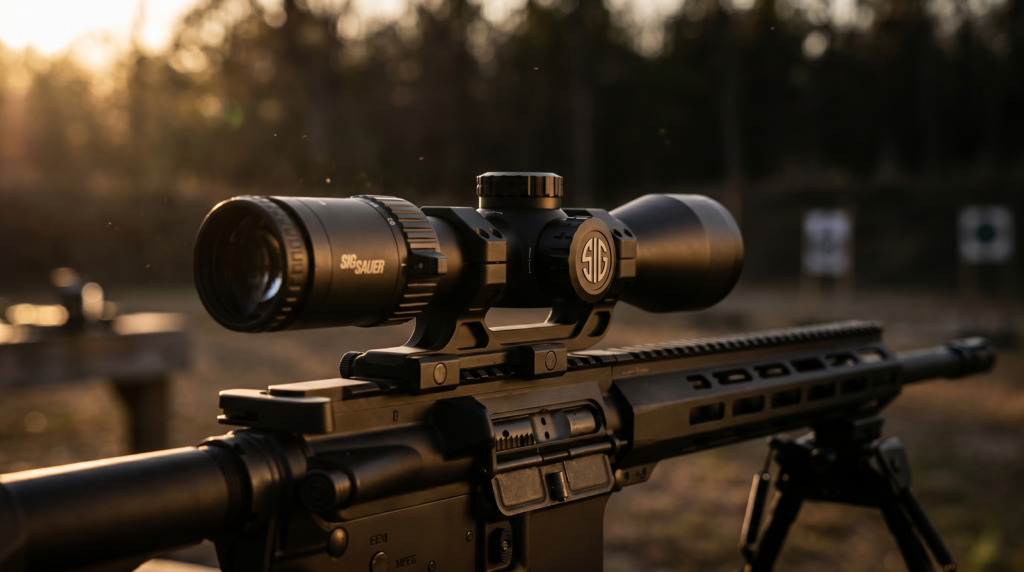
10. Sig Sauer Tango MSR 1-6×24: Best Truck Gun LPVO
Pros
- Around $280 street with the Alpha-MSR cantilever mount included
- 124.8 ft FOV at 1x is the widest of any scope on this list
- Sig brand reliability at a budget price
- Decent illumination for the class
- Mount included means you save $100+
Cons
- Glass clarity drops off past 4x
- MSR-BDC6 reticle is basic
- Build quality reflects the price point
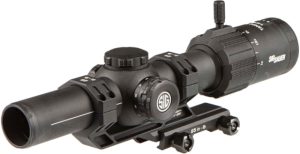
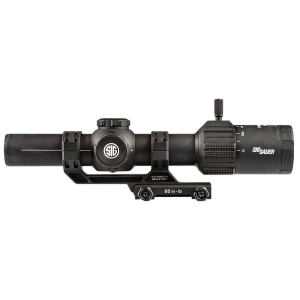
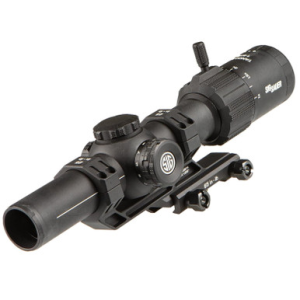
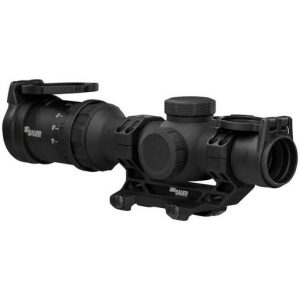
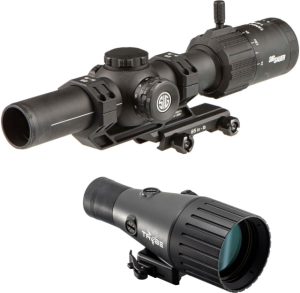
Two hundred and eighty dollars. With a mount. For a Sig Sauer LPVO.
That’s the pitch, and honestly, it’s a pretty compelling one. If you’re building a truck gun or a starter AR and your scope budget is tight, the Tango MSR delivers more than the price suggests.
Field of view is the standout spec. I mounted a Tango MSR on a beater 16-inch AR I keep for plinking, and the wide picture at 1x genuinely changed how fast I could move between targets on a 3-gun stage. At 124.8 feet at 100 yards, the Tango MSR has the widest FOV of any scope on this list, beating even the Leupold VX-6HD.
That’s a massive advantage for close-quarters work and fast target transitions. Sig clearly optimized this scope for speed rather than long-range precision, and at this price point, that’s the right call.
Glass clarity is where you feel the budget. It’s fine through 3-4x, but at 6x the image softens and you lose contrast compared to the PA SLx or even the Burris RT-6.
The MSR-BDC6 reticle is functional but basic. And the included Alpha-MSR cantilever mount is adequate but won’t win any awards for precision. Still, for a first LPVO or a scope for a truck gun that might get banged around, the Tango MSR does the job at a price that’s hard to argue with.
Best For: Absolute budget builds, truck guns, and first-time LPVO buyers who want to dip their toes in without a major investment. If you’re spending $500 on a rifle, a $280 scope makes a lot more sense than a $600 one.
How to Choose the Right LPVO
When I help a buddy pick the best LPVO, I walk them through four questions before I ever look at brand names. The best LPVO for you comes down to four questions: how far you actually shoot, what your rifle is for, how much weight you’ll tolerate, and what your budget really is. Walk those four in order before you spend a dollar on glass.
What’s Your Realistic Max Range?
Most LPVO buyers think they need more magnification than they actually use. If your rifle is going to live inside 300 yards, a 1-6x covers everything you need and gives you a wider FOV at 1x.
For 300-500 yards, step up to a 1-8x. For 500+ yards as a regular use case, the 1-10x scopes are worth the trade-offs in weight and eye box.
FFP or SFP?
First Focal Plane (FFP) reticles scale with magnification, so your hash marks always represent the same value (1 MOA or 1 MIL) at any power. That’s essential for ranging and precise holds at varying magnifications.
Second Focal Plane (SFP) reticles stay the same visual size regardless of magnification. Cleaner-looking at 1x, but holdovers are only accurate at max power. SFP scopes are usually cheaper and faster on target up close.
For an LPVO that lives most of its life at 1x with occasional dial-ups for precision shots, SFP works great. Parallax is rarely an issue at LPVO magnifications. These scopes are factory-set around 100 yards and I’ve never noticed parallax error inside the practical 1-10x range. Holds at MRAD or MOA work the same way on FFP at any power; on SFP, accurate holdovers only work at max magnification. If you’re running pure CQB and don’t need magnification, our best red dot sight for AR-15 guide compares the pure-1x options. For dedicated tactical or competition use where you’ll shoot from variable magnifications, FFP is the way.
How Much Does Weight Matter?
Most LPVOs weigh 17-25 ounces. That doesn’t sound like much, but mount it on a 6-pound rifle and you’ve added 20-25% to your overall weight. The 16-17 oz scopes like the Nightforce NX8 and Leupold VX-6HD Gen 2 make a real difference on long carries.
The 22+ oz scopes like the Viper PST Gen II and Razor Gen III feel like nothing on a heavy multi-gun setup or duty rifle. They’re noticeable on a featherweight build.
What Can You Actually Afford?
The honest LPVO budget brackets:
- $200-400: Primary Arms SLx Gen IV, Sig Tango MSR, Burris RT-6. Real LPVOs, real reticles, real warranties.
- $400-800: Vortex Viper PST Gen II, Swampfox Arrowhead. Better glass, more refined turret feel.
- $1,200-1,600: Primary Arms PLxC, Leupold VX-6HD Gen 2. Near-premium glass, premium reticles or premium build.
- $1,800-2,200: Nightforce NX8, Trijicon VCOG. Premium tactical glass with bomb-proof construction.
- $3,500+: Vortex Razor HD Gen III. The standard everything else is measured against.
How I Tested These LPVOs
The picks on this list come from running LPVOs across AR-15 carbines, AK builds, and a couple of bolt-action testbeds across the last few years. I have personally spent range time behind the Vortex Razor Gen III, Nightforce NX8, Primary Arms PLxC, Primary Arms SLx Gen IV, Vortex Viper PST Gen II, Burris RT-6, and Sig Tango MSR.
For the Trijicon VCOG, Leupold VX-6HD Gen 2, and Swampfox Arrowhead, I cross-referenced manufacturer specs with reviews from The Firearm Blog, RECOIL, and Outdoor Life, and supplemented with bench time on borrowed units at the range.
Glass clarity and eye box scoring is subjective but consistent: I rank each scope against the Razor Gen III as a 5/5 baseline and the bottom of the budget tier as a 1/5 floor. Reticle scoring weighs both clean-at-1x and useful-at-max-mag factors. Build quality reflects warranty + durability track record + brand reputation. Value is street price divided by total feature score.
Bottom Line: Which LPVO Should You Buy?
If I were buying one LPVO right now and budget wasn’t a factor, the Vortex Razor HD Gen III 1-10×24 is what would go in the safe. It’s the best glass in the LPVO category and the EBR-9 reticle is brilliant.
For 90% of buyers, the Primary Arms PLxC 1-8×24 is the smart-money pick. If you’re building a home-defense AR specifically, see our Best AR-15 for Home Defense roundup for the platform pairings that work best with these LPVOs. Near-premium glass, the ACSS Nova reticle, and a $1,300-$1,500 price tag. If $1,500 isn’t in the budget, the Vortex Viper PST Gen II at $600 is the right call.
And if you’re putting glass on your first AR-15 or building a sub-$1,000 carbine, the Primary Arms SLx 1-6×24 Gen IV at $340 is the best $340 you can spend on an optic in 2026.
Looking for the best prices? Check our gun deals page and price comparison tool to compare prices from 200+ retailers before you buy.
LPVO Questions That Differ from Red-Dot Buying
When does an LPVO start to make more sense than a red dot for an AR-15?
When the average engagement distance exceeds 100 yards. A red dot wins inside 75 yards on speed and dynamic-target use. An LPVO wins past 100 yards on positive target identification and precise shot placement. The crossover zone is 75 to 100 yards, where both work. If your primary use case is range and known-distance practice past 100 yards, the LPVO is the right starting point. If your primary use case is home defense and close-range training, the red dot is right.
How much should I spend on an LPVO before the quality starts to matter?
The reliability threshold sits between $400 and $800. LPVOs under $400 often have soft tracking, fragile zero retention, and reticle illumination that fails after limited round counts. LPVOs in the $400 to $800 band run reliably for thousands of rounds with stable zero. LPVOs over $800 add features like better glass, illumination quality, and tracking precision that matter for serious shooters but are not required for general defensive use.
First focal plane or second focal plane for an LPVO?
Second focal plane for most carry-distance defensive use. The reticle stays visually constant across the magnification range, which makes the 1x setting work as a close-range fast-acquisition reticle. First focal plane is correct for shooters who use reticle holdover at distance and want the holdover marks to scale with zoom. For most defensive AR-15 use cases, second focal plane is the cleaner choice.
Does the LPVO need an offset red dot for close-quarters use?
Many serious LPVO shooters add an offset red dot. The LPVO at 1x is usable for close-range work but does not reach the speed of a dedicated red dot. The offset red dot, mounted at 45 degrees on the side of the LPVO mount, provides a true close-range option without removing the LPVO’s mid-range capability. The cost adds $200 to $400 to the optic budget but addresses the LPVO’s one weak point.
Frequently Asked Questions
What does LPVO stand for?
LPVO stands for Low Power Variable Optic. It refers to rifle scopes with a magnification range starting at 1x (true or near-true unmagnified) and going up to 6x, 8x, or 10x. They combine the speed of a red dot at 1x with the precision of a magnified scope at the top end.
Is an LPVO better than a red dot?
For most AR-15 uses, yes. An LPVO gives you everything a red dot does at 1x plus the ability to engage targets at 300-600 yards with magnification. The trade-off is slightly more weight, higher cost, and a small speed penalty in close quarters compared to a true red dot. For home defense only, a red dot is simpler and faster.
What magnification LPVO do I need?
For most shooters, a 1-6x covers 90% of practical scenarios out to 400 yards. If you regularly shoot past 400 yards or want more target identification capability, step up to a 1-8x or 1-10x. More magnification always costs you in weight, eye box, and field of view at 1x.
What is the difference between FFP and SFP?
First Focal Plane (FFP) scopes keep reticle subtensions accurate at all magnification levels, so holdovers work at any power setting. Second Focal Plane (SFP) scopes keep the reticle the same visual size at all magnifications, but holdovers are only accurate at max power. SFP is usually cheaper and gives a cleaner view at 1x.
Do I need a 30mm or 34mm tube?
Most LPVOs use 30mm tubes, which are lighter and have more affordable mount options. Premium scopes like the Vortex Razor Gen III use 34mm tubes for more internal adjustment range and light transmission. Unless you need maximum elevation travel for long-range shooting, 30mm is fine for most applications.
What mount should I use with an LPVO?
A quality cantilever mount is essential. Popular options include the Scalarworks LEAP, Badger Ordnance C1, Geissele Super Precision, and ADM Recon. Budget-friendly options include the Aero Precision Ultralight and the mount included with the Sig Tango MSR. Spend at least $100-150 on a mount to protect your investment in glass.
Can I use an LPVO for hunting?
Absolutely. LPVOs are excellent hunting scopes, especially for driven hunts, brush hunting, and situations where you might need close-range speed and longer-range precision in the same outing. Lightweight options like the Leupold VX-6HD Gen 2 at 16.2 oz are particularly well-suited for all-day carries.
What is the best LPVO for the money in 2026?
The Primary Arms SLx 1-6x24 Gen IV at around $340 offers the best value with its ACSS Aurora reticle and Japanese glass. For a step up, the Vortex Viper PST Gen II at ~$600 street price delivers excellent glass quality with a lifetime warranty. Both punch well above their price tags.
5,743+ Gun & Ammo Deals
Updated daily from 200+ top retailers. Filter by category, caliber, action type, and price.
Related Guides