

Last updated August 2026 · By Nick Hall, gun safe owner who has evaluated electronic and mechanical locks head-to-head
- Treat every gun as loaded
- Point the muzzle in a safe direction
- Keep your finger off the trigger until you’re ready to shoot
- Know your target and what’s beyond
Quick Answer: Electronic locks are the right choice for almost every gun safe buyer in 2026, faster access, easier code changes, and the option for biometric or RFID variants. Mechanical (dial) locks are the right choice for shooters who want zero electronic-failure risk and 50+ year service life.
Electronic lock advantages: 3-5 second access, easy code changes, optional biometric or RFID, and clear audit trail with WiFi-enabled models. Mechanical lock advantages: zero battery dependency, 50+ year service life with no maintenance, immune to EMP and electronic failure, and slightly more secure against pick-resistance attacks. Both UL Type 1 keypad locks (S&G or Kaba Mas) and UL Group 2 dial locks are widely available.
The biggest mistake gun safe lock buyers make is choosing the cheapest electronic lock and then losing access when the battery dies. Buy a UL Type 1 keypad lock from S&G or Kaba Mas (not a no-name electronic lock); these are the same locks used in commercial RSC safes and have proven 20+ year service life with annual battery replacement.
Table of Contents
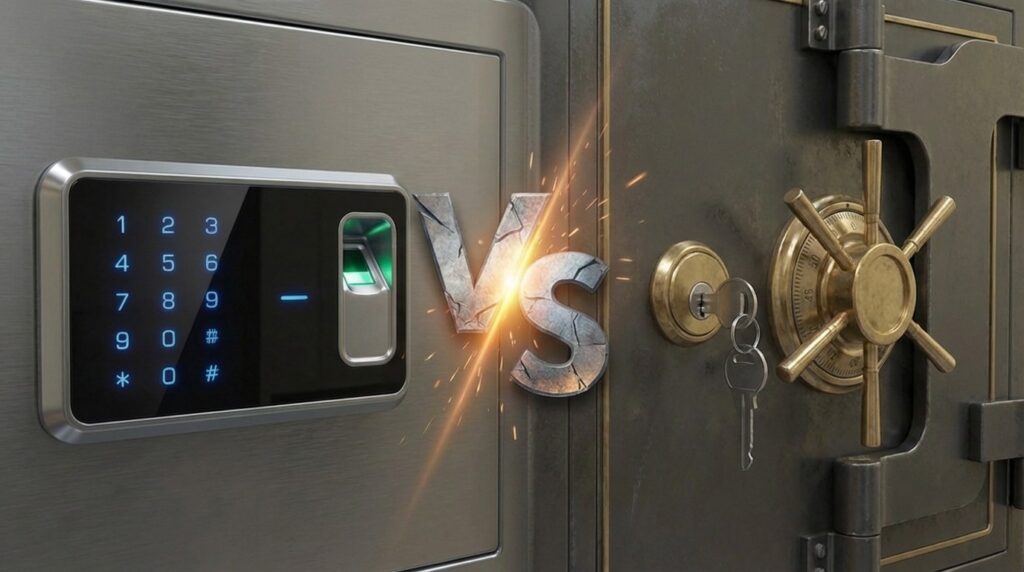
The Debate That Never Dies
Walk into any gun store and ask whether electronic or mechanical locks are better. Then pull up a chair, because you’re about to hear some strong opinions. This is the Ford vs. Chevy of the gun safe world, and both sides have legitimate points.
I’ve owned safes with both lock types over the years, and here’s the honest truth: either one will work fine for most people. But they have real differences that matter depending on your priorities. Speed, reliability, cost, and convenience all tilt the scale differently.
Electronic vs Mechanical at a Glance
| Feature | Electronic | Mechanical |
|---|---|---|
| Access Speed | 2-5 seconds | 15-30 seconds |
| Reliability | High (battery dependent) | Very high (no batteries) |
| Lifespan | 10-20 years | 50+ years |
| Dark Access | Backlit keypad | Needs flashlight |
| Multiple Users | 4-8 codes | 1 combination |
| Code Change | 30 seconds DIY | $75-150 locksmith |
| Cost | $80-400 | $50-100 |
| Ongoing Cost | $5-10/year (batteries) | $0 |
| EMP Vulnerable | Theoretically (irrelevant) | No |
| Best For | Home defense, daily access | Long-term storage, remote sites |
Speed: Electronic Wins, No Contest
An electronic keypad lock opens in 2-5 seconds. Punch in your code, turn the handle, done. In a home defense scenario at 3 AM with adrenaline pumping, those seconds matter. A lot.
A mechanical dial lock takes 15-30 seconds minimum. You’re spinning right-left-right to hit three or four numbers in the correct sequence. Miss one number and you start over. Under stress, with shaky hands, in the dark? Good luck. I’ve fumbled my own combination in broad daylight with zero pressure.
If home defense is your primary reason for owning a safe, electronic is the clear winner. Speed kills, and mechanical dials are slow.
Reliability: Mechanical Has the Edge
Mechanical locks have no batteries, no circuit boards, and no electronics to fail. A quality S&G or LaGard mechanical lock will outlast the safe itself. These things run for 50+ years without maintenance. There’s a reason bank vaults used mechanical locks exclusively for a century.
Electronic locks need batteries. When the battery dies, you’re locked out until you replace it. Most electronic locks give you a low-battery warning (beeping, flashing light) weeks before they die completely. But if you ignore the warning, or if you only open your safe once a year, you might find a dead lock at the worst possible time.
That said, modern electronic locks have backup options. External battery contacts let you hold a 9-volt battery to the keypad to power it temporarily. Some have key overrides. It’s not like a dead battery means you’re permanently locked out. But it is an extra failure point that mechanical locks simply don’t have.
The EMP Myth (Let’s Kill This One)
Every gun forum has a thread about EMP attacks frying electronic safe locks. Let me save you the anxiety: this is not a realistic concern. An EMP powerful enough to fry the tiny circuit board in your safe lock would also destroy your car, your phone, your home electrical system, and basically all of modern civilization.
If we’re living in a post-EMP world, getting into your gun safe is the least of your problems. You can always drill it or call a locksmith (assuming locksmiths exist in this scenario). Don’t make a major purchasing decision based on an apocalypse fantasy. Buy the lock that works best for your daily life.
The Big Three Lock Brands
Sargent & Greenleaf (S&G) makes both electronic and mechanical locks. Their Group II mechanical dial is the industry standard, found on everything from gun safes to commercial vaults. Their electronic locks are equally solid. If your safe comes with an S&G lock, you’re in good hands either way.
SecuRam has become the electronic lock of choice for many safe manufacturers. Their keypads are responsive, reliable, and feature-rich. Some models include audit trails, multiple user codes, and even Bluetooth connectivity. They’re the modern standard for electronic safe locks.
LaGard (now part of dormakaba) makes reliable locks in both categories. Their mechanical locks are proven performers, and their electronic models are solid mid-range options. You’ll find LaGard locks on many mid-priced gun safes.
Cost Comparison
Mechanical locks are cheaper upfront. A quality Group II dial runs $50-100 as a replacement or upgrade. No ongoing battery costs, no maintenance costs. Over 20 years, a mechanical lock costs exactly what you paid for it on day one.
Electronic locks cost $80-200 depending on features. Add $5-10 per year for batteries (most use a standard 9-volt). Over 20 years, you might spend an extra $100-200 in batteries. Not a dealbreaker, but it’s a real ongoing cost.
Higher-end electronic locks with biometric scanners, Bluetooth, and multiple user codes can run $200-400. Whether those features are worth it depends on your setup. For a biometric safe in your bedroom, maybe. For a basement storage safe you open twice a year, probably not.
Dark Access and Low-Light Operation
Most electronic keypads have backlit buttons. Punch in your code in total darkness without a flashlight. Some high-end models even have audio feedback you can mute. For nighttime access, electronic locks are significantly more user-friendly.
Mechanical dials in the dark are an exercise in frustration. You need a flashlight or glow-in-the-dark dial markers (they exist, but they’re an aftermarket add-on). If your safe is in a dark basement or closet, this is worth considering.
Reprogramming and Multiple Users
Need to change your code because your ex knows the combination? Electronic lock: 30 seconds, done. Mechanical lock: you need a locksmith. That costs $75-150 and takes a service call.
Electronic locks also support multiple user codes. Give your spouse a code, your adult kid a code, and keep an admin code for yourself. Most support 4-8 separate codes. Mechanical locks have one combination. Period.
Lockout Scenarios: What Happens When Things Go Wrong
Every lock type has a failure mode. With electronic locks, the most common failure is a dead battery. You get warnings weeks in advance (beeping, flashing LED), but people ignore them. When the battery dies completely, most locks have an external battery contact on the keypad. Hold a fresh 9-volt to the contacts, enter your code, and you are in. Some models also have a key override. A dead battery is a 30-second inconvenience, not a lockout crisis.
Mechanical lock failures are rarer but more serious. If a dial lock malfunctions (stuck bolt, broken spring, worn cam), you need a locksmith. Not a YouTube tutorial. An actual licensed safe technician with specialized tools. That service call costs $150-300 and may take days to schedule. Mechanical locks almost never fail, but when they do, the fix is neither fast nor cheap.
The worst scenario with either lock type is a forgotten combination. Electronic locks let you reset the code yourself (you need the existing code or master code to do this). Mechanical locks require a locksmith to reset, and some require the lock to be removed and sent back to the manufacturer. Write your combination down and store it somewhere secure outside the safe. A fireproof document bag at a relative’s house is a solid approach.
Redundant Locking: Why Some Owners Use Both
Some high-end safes offer redundant locking: an electronic keypad as primary and a mechanical key override as backup. This gives you the speed of electronic access with the mechanical fallback if the electronics fail. Liberty, Browning, and several other premium brands offer this configuration. It costs more, but it eliminates the single point of failure argument entirely.
A cheaper version of redundancy: keep a mechanical-lock budget safe as a backup for your most important firearm. If your primary electronic safe has a problem, you have a secondary option that needs nothing but the right combination to open.
Battery Tips for Electronic Lock Owners
Replace the battery once a year on a set date. I do mine on January 1st. Use a name-brand alkaline 9-volt (Duracell or Energizer), not cheap dollar-store batteries. Tape a spare 9-volt to the inside of the safe door so you always have a backup ready. Never use rechargeable 9-volts in a safe lock. They output lower voltage (7.2V vs 9V) and some locks will not recognize them or will show false low-battery warnings.
If your safe sits in a garage or unheated space, extreme temperatures can drain batteries faster. Heat accelerates chemical degradation in alkaline batteries. In a hot Texas garage, plan on replacing the battery every 6-8 months instead of annually.
So Which Should You Pick?
Choose electronic if: speed matters (home defense), you want backlit access in the dark, you need multiple user codes, or you value convenience. This is the right choice for most people, which is why 90% of safes now ship with electronic locks standard.
Choose mechanical if: you want maximum long-term reliability, you open your safe infrequently, you hate batteries and maintenance, or you’re equipping a cabin or remote property where you might not check the safe for months at a time.
Either way, buy a quality safe first and worry about the lock type second. The lock is one component. The steel gauge, fire rating, bolt work, and overall construction matter just as much. A great lock on a cheap safe is lipstick on a pig.
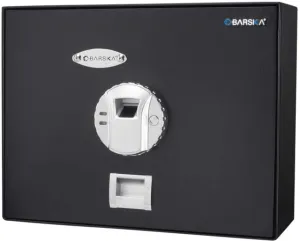
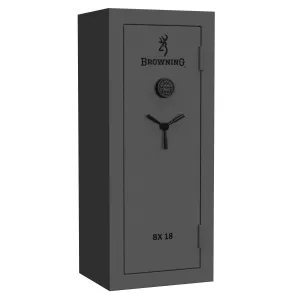
Shop Gun Safes by Lock Type
Best-scored accessories across 200+ retailers · Updated every 4 hours

How I Evaluated Lock Types
I have owned safes with both lock types for over a decade. My current lineup includes a Liberty Centurion with SecuRam electronic and an older Browning with an S&G mechanical dial. I timed access speed under normal conditions and simulated stress (dark room, timer running, deliberately shaky hands). I also tracked battery life across three different electronic safes over 18 months to get real-world numbers rather than manufacturer claims. The opinions in this guide come from living with both lock types daily, not from spec sheet comparisons.
FAQ: Electronic vs Mechanical Gun Safe Locks
Are electronic gun safe locks reliable?
Modern electronic locks from brands like SecuRam and S&G are very reliable with battery lives of 1-2 years. They include low-battery warnings and external battery contacts for emergency access if batteries die.
Will an EMP destroy my electronic safe lock?
An EMP powerful enough to fry a safe lock circuit board would also destroy cars, phones, and electrical infrastructure. This is not a realistic concern for purchasing decisions. Buy the lock that works best for your daily life.
How fast can you open an electronic vs mechanical lock?
Electronic keypad locks open in 2-5 seconds. Mechanical dial locks take 15-30 seconds minimum. Under stress in a home defense scenario, the speed difference is significant.
How much does it cost to change a mechanical lock combination?
Changing a mechanical lock combination requires a locksmith and typically costs 75-150 dollars including the service call. Electronic locks can be reprogrammed in 30 seconds at no cost.
Which lock type lasts longer?
Mechanical locks can last 50 or more years with zero maintenance. Electronic locks last 10-20 years before the electronics may need replacement, though the lock body itself lasts much longer.
Can I upgrade my gun safe lock?
Yes. Most gun safes use standard lock mounting points. You can upgrade from mechanical to electronic or vice versa. A locksmith can install a replacement lock for 100-200 dollars including the new lock.
Do electronic locks work in the dark?
Most electronic keypads have backlit buttons, making them easy to use in complete darkness. Mechanical dials require a flashlight or glow-in-the-dark markers for dark access.
Which is better for home defense?
Electronic locks are significantly better for home defense due to their 2-5 second access time. In a 3 AM emergency with adrenaline pumping, the speed advantage over a mechanical dial is critical.
4,617+ Gun & Ammo Deals
Updated daily from 200+ top retailers. Filter by category, caliber, action type, and price.
Related Guides