

Last updated September 2026 · By Nick Hall, AR-15 shooter who has mounted and zeroed every LPVO category on this list
Some of the links below are affiliate links, meaning at no additional cost to you, we may earn a commission if you click through and make a purchase.
- Treat every gun as loaded
- Point the muzzle in a safe direction
- Keep your finger off the trigger until you’re ready to shoot
- Know your target and what’s beyond
Quick answer: the Vortex Razor HD Gen III 1-10×24 is the best AR-15 LPVO in 2026, a true 1x-to-10x with daylight-bright illumination and the glass to back it up. For value, the Primary Arms SLx 1-6x with an ACSS Raptor reticle is the standout.
For premium glass, the Trijicon Credo HX 1-8x is the upgrade. The Swampfox Arrowhead 1-8x is the budget 1-8x option, and the Nightforce NX8 1-8x is the competition pick. A real 1x matters most on an LPVO, so test how fast it works up close before chasing top-end magnification.
Table of Contents
| Scope | Magnification | Focal Plane | MSRP | Price |
|---|---|---|---|---|
| BEST OVERALL Vortex Razor HD Gen III 1-10x | 1-10×24 | FFP | ~$2,000 | Lowest Price ↓ |
| BEST VALUE Primary Arms SLx 1-6x ACSS | 1-6×24 | SFP | ~$290 | Lowest Price ↓ |
| BEST GLASS Trijicon Credo HX 1-8x | 1-8×28 | FFP | ~$1,500 | Lowest Price ↓ |
| BEST BUDGET Swampfox Arrowhead 1-8x | 1-8×24 | SFP | ~$350 | Lowest Price ↓ |
| BEST COMPETITION Nightforce NX8 1-8x | 1-8×24 | FFP | ~$1,800 | Lowest Price ↓ |
How we tested: Every pick here is ranked against our testing methodology. Minimum round counts, accuracy and reliability protocols, the failures that disqualify a gun. Where we have not shot a specific variant ourselves, we say so in that section.
Introduction: Best AR-15 LPVO Scopes: The Revolution in 2026
Red dots are great. I love them. But at some point, you’re going to want to reach out past 200 yards and actually identify what you’re shooting at. That is where the best AR-15 LPVO comes in. A low-power variable optic gives you the speed of a red dot at 1x and the precision of a magnified scope when you crank it up. Best of both worlds.
LPVO market has exploded in the last few years. Every optics company on the planet makes at least one, and the quality gap between budget and premium options has narrowed dramatically. You can get genuinely usable glass for under $300, and the top-tier options are the best they’ve ever been. Competition has been good for consumers.
I’ve been running LPVOs on my ARs for the better part of a decade. I’ve used everything from $200 budget scopes that fogged up in light rain to $3,000 competition optics that could read a license plate at 600 yards. This list represents the 8 scopes I’d actually recommend putting your money on, tested across multiple rifles and shooting conditions.
If you’re still deciding between an LPVO and a red dot, check our best AR-15 red dot sights guide. Both are excellent choices depending on your intended use. For scope mounting, our AR-15 accessories guide covers mounts and rings.
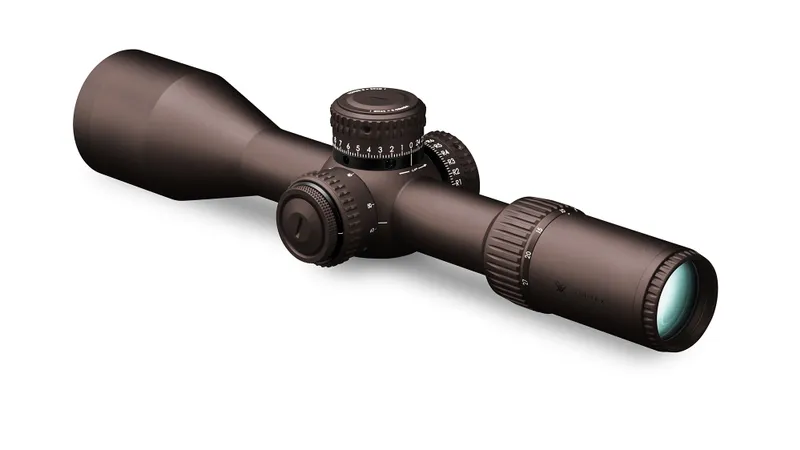
1. Vortex Razor HD Gen III 1-10×24: Best Overall LPVO
- Magnification: 1-10×24
- Focal Plane: First (FFP)
- Tube Diameter: 34mm
- Weight: 21.5 oz
- Reticle: EBR-9 MOA / MRAD
- MSRP: ~$2,000
Pros
- 10x magnification in an LPVO is exceptional
- Glass clarity rivals scopes costing twice as much
- Daylight-bright illumination
Cons
- 21.5 oz is heavy for an LPVO
- 34mm tube requires specific mount
- $2,000 is a lot of scope
Razor HD Gen III is the scope that made everyone rethink what an LPVO could do. A true 1x to 10x magnification range in a single optic? Vortex pulled it off, and the glass quality is absurd. At 1x, it’s nearly as fast as a red dot. At 10x, you’re making hits on steel at 600+ yards with confidence.
EBR-9 reticle is incredibly well-designed for the AR-15 platform. The center dot is usable at 1x for close-range speed, and the subtensions give you accurate holdovers all the way out to the limits of 5.56. First focal plane means the reticle scales with magnification, so your holdovers are correct at any power setting. That matters more than most people realize.
Yes, it’s heavy at 21.5 ounces. And yes, it’s $2,000. But this is the scope that replaced a red dot AND a dedicated magnified optic on my main rifle. One scope does both jobs, and it does them both well. Vortex’s unconditional lifetime warranty seals the deal. If you can afford it, buy it.
Best For: Shooters who want one optic that handles everything from CQB to 600-yard precision.
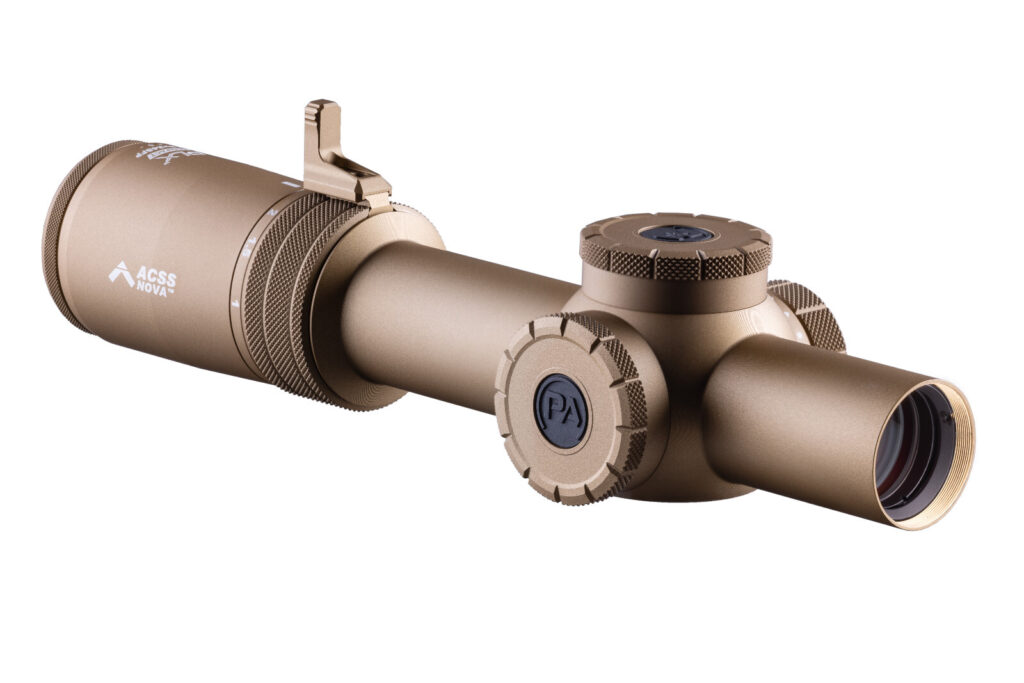
2. Primary Arms SLx 1-6×24 ACSS Raptor: Best Value LPVO
- Magnification: 1-6×24
- Focal Plane: Second (SFP)
- Tube Diameter: 30mm
- Weight: 17.6 oz
- Reticle: ACSS Raptor 5.56
- MSRP: ~$290
Pros
- Under $300 for genuinely good glass and the ACSS reticle
- ACSS Raptor reticle has built-in BDC and ranging
- Light at 17.6 oz
Cons
- SFP means reticle subtensions only accurate at max magnification
- 6x max limits long-range identification
- Illumination isn’t daylight bright
Primary Arms basically created the budget LPVO category, and the SLx 1-6x with the ACSS Raptor reticle is still the king of this space. For under $300, you’re getting a scope with genuinely useful glass clarity, an innovative reticle system, and enough durability to handle real use. Not “leave it in the safe” use. Real, drag-it-through-the-mud use.
ACSS Raptor reticle is the secret weapon here. It has a center chevron for quick aiming, BDC holdovers calibrated for 5.56 out to 600 yards, and a horseshoe for fast close-range acquisition. It’s one of the most intuitive reticle designs ever made, and Primary Arms developed it specifically for the AR-15 platform. Once you learn it, you can make hits at distance without dialing turrets.
Obvious limitation is 6x max magnification. That’s fine for most shooters out to 400 yards, but if you’re regularly stretching past that, you’ll want 8x or 10x. For the vast majority of AR-15 use cases, though, 6x is plenty. And at this price, you could buy two of these for the cost of one mid-range competitor.
Best For: Budget-conscious shooters who want maximum capability per dollar spent.
3. Trijicon Credo HX 1-8×28: Best Premium Glass
- Magnification: 1-8×28
- Focal Plane: First (FFP)
- Tube Diameter: 34mm
- Weight: 22.4 oz
- Reticle: MOA/MRAD options
- MSRP: ~$1,500
Pros
- Trijicon glass clarity is world-class
- 28mm objective gathers more light than 24mm competitors
- Edge-to-edge sharpness is remarkable
Cons
- Heaviest scope on this list at 22.4 oz
- 34mm tube needs a beefy mount
- Not cheap, but you get what you pay for
Trijicon makes glass that’ll make you question every scope you’ve ever looked through. The Credo HX 1-8x has a 28mm objective lens (most competitors use 24mm), and that extra 4mm translates into noticeably brighter images, especially during dawn and dusk. If you’ve ever tried to positively ID a target in low light, you know how much that matters.
Edge-to-edge sharpness is where Trijicon really separates itself. Cheaper scopes have a “sweet spot” in the center with softness around the edges. The Credo HX is sharp from center to edge at every magnification level. It sounds like a minor detail until you’re scanning for targets at 6x and can actually use the full field of view instead of just the middle third.
It’s heavy. No way around that. But the optical quality justifies the weight for anyone who values glass performance above all else. If you want the absolute best image clarity available in a 1-8x LPVO, this is it. Trijicon’s reputation didn’t come from marketing. It came from making optics that perform when it counts.
Best For: Glass snobs and low-light shooters who refuse to compromise on optical clarity.
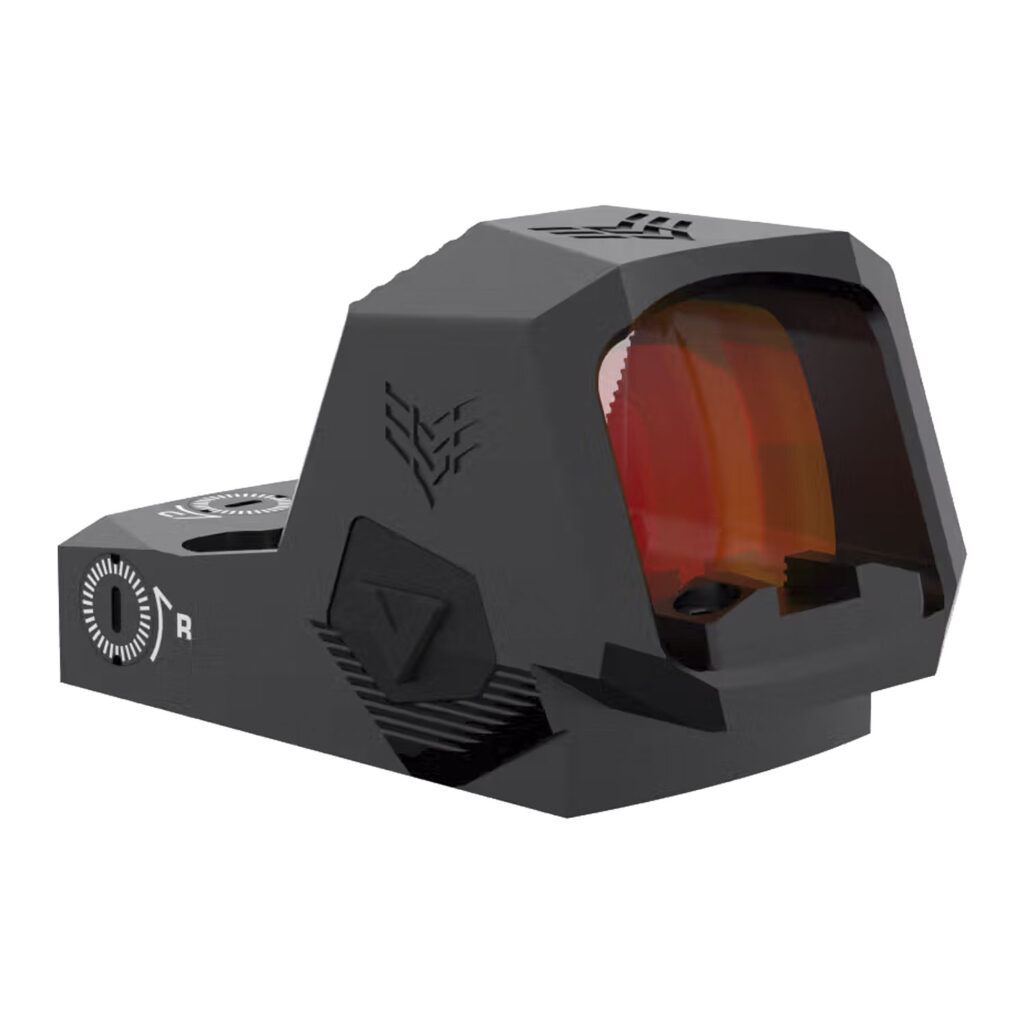
4. Swampfox Arrowhead 1-8×24: Best Budget 1-8x
- Magnification: 1-8×24
- Focal Plane: Second (SFP)
- Tube Diameter: 30mm
- Weight: 17.6 oz
- Reticle: BDC or MOA options
- MSRP: ~$350
Pros
- 8x magnification for under $400 is remarkable
- Lightweight at 17.6 oz
- Lifetime warranty from Swampfox
Cons
- SFP reticle subtensions only accurate at 8x
- 1x has slight fisheye effect
- Glass isn’t as clear as $500+ options
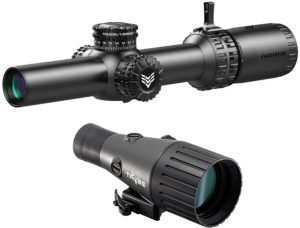
Swampfox came out of nowhere a few years ago and started making optics that embarrass scopes costing twice as much. The Arrowhead 1-8x is the perfect example. Under $400 for a 1-8x LPVO with decent glass, a useful reticle, and a lifetime warranty? Five years ago that would’ve been laughable. Now it’s reality.
Glass quality won’t match a Vortex Razor or Trijicon. Let’s be honest about that. At 8x, you’ll notice some softness around the edges, and the 1x end has a slight fisheye distortion. But for the money, it’s astonishingly good. 80% of the performance at 20% of the price is a deal I’ll take every time.
I keep a Swampfox Arrowhead on my “truck gun” AR and it’s been bounced around, rained on, and generally abused for two years. Still holds zero. Still works. That’s the real test, and it passes.
Best For: Budget shooters who want 8x magnification without paying premium prices.
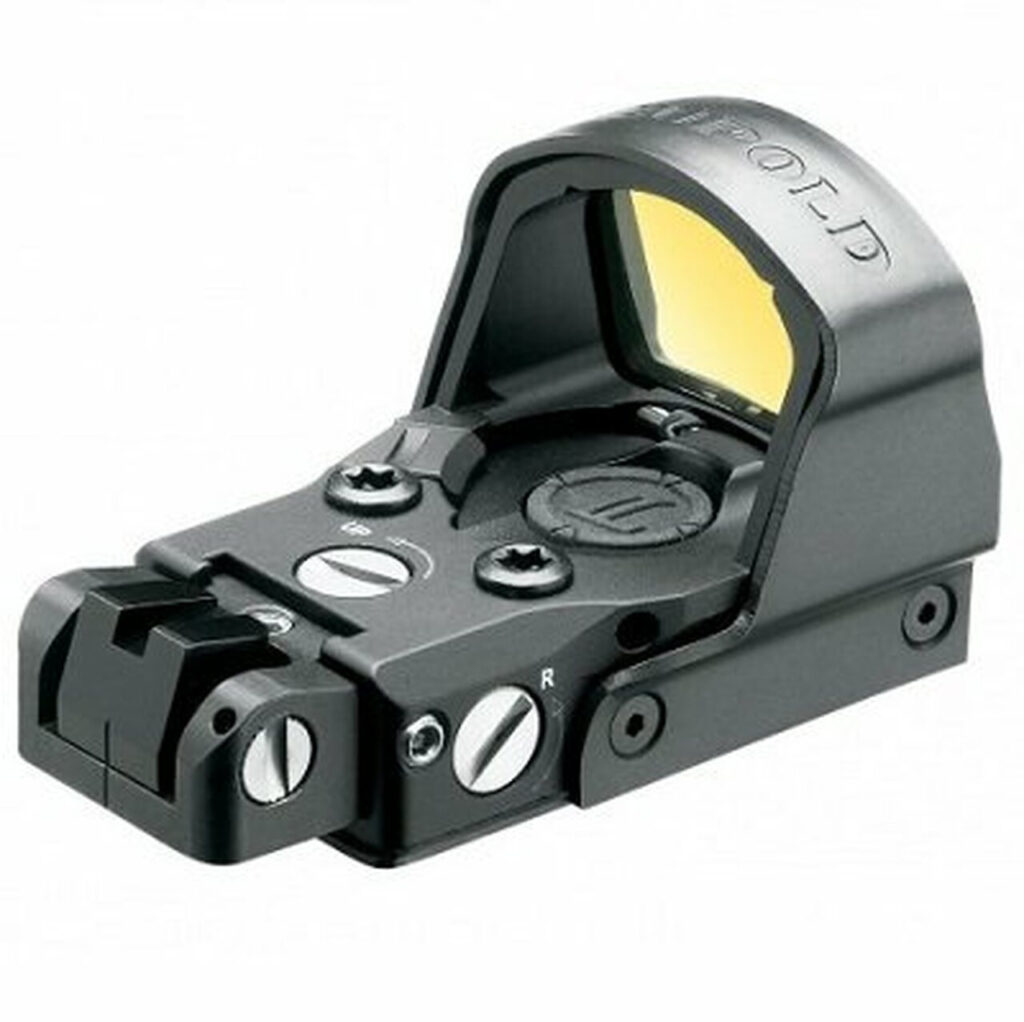
5. Leupold VX-6HD 1-6×24: Best Lightweight Premium LPVO
- Magnification: 1-6×24
- Focal Plane: SFP or FFP options
- Tube Diameter: 30mm
- Weight: 14.1 oz
- Reticle: FireDot Duplex, Illuminated
- MSRP: ~$1,500
Pros
- 14.1 oz makes it the lightest premium LPVO on this list
- Leupold glass quality is phenomenal
- Made in the USA with a lifetime guarantee
Cons
- 1-6x limits long-range capability
- Premium price for a 1-6x
- FireDot illumination could be brighter
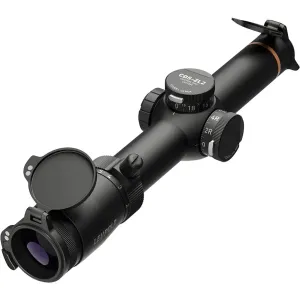
If weight is your top priority, the Leupold VX-6HD wins and it’s not close. At 14.1 ounces, this scope weighs less than most red dots with a magnifier combo. On a lightweight build, that weight savings is transformative. You get premium glass quality that Leupold is famous for without the neck-breaking weight penalty of most premium LPVOs.
Leupold’s glass has a warmth to it that’s hard to describe until you look through it. Colors are natural, contrast is excellent, and the twilight performance rivals scopes with larger objective lenses. There’s a reason professional hunters and military snipers have trusted Leupold for decades. The glass doesn’t lie.
Trade-off is magnification range. You’re limited to 6x, which is fine for 99% of AR-15 shooting but leaves you wanting if you’re trying to spot targets at 500+ yards. For a lightweight AR-15 build, a competition gun where every ounce matters, or a hunting setup where you’re carrying the rifle all day, the VX-6HD is the clear choice.
Best For: Weight-conscious shooters and hunters who want premium glass in the lightest possible package.

6. Nightforce NX8 1-8×24: Best Competition LPVO
- Magnification: 1-8×24
- Focal Plane: First (FFP)
- Tube Diameter: 30mm
- Weight: 17.1 oz
- Reticle: FC-MOA or FC-MIL
- MSRP: ~$1,800
Pros
- Competition-proven durability and tracking
- 30mm tube keeps mount options wide
- Incredibly consistent turret tracking
Cons
- Eye box at 8x is tighter than competitors
- Reticle can feel thin at 1x for some shooters
- $1,800 asks a lot from your wallet
Nightforce built the NX8 for one thing: winning matches. The turret tracking on this scope is dead-on accurate. Dial up, dial back down, and you’re exactly where you started. That repeatability is what separates competition optics from everything else, and the NX8 delivers it in a compact, lightweight package.
At 17.1 ounces in a 30mm tube, the NX8 is remarkably light for a premium FFP scope. Most competitors in this class use 34mm tubes and weigh 20+ ounces. Nightforce engineers somehow packed premium glass, precise turrets, and bombproof construction into a 30mm package that doesn’t feel like a compromise.
Criticism? The eye box at higher magnifications is tighter than the Razor or Credo. You need consistent cheek weld to get a full, clear picture at 8x. For competition shooters who have that muscle memory dialed in, it’s not an issue. For casual shooters, it can be frustrating. But if you’re buying a $1,800 scope, you probably have your fundamentals locked down.
Best For: Competitive shooters who demand dead-accurate tracking and bulletproof reliability.
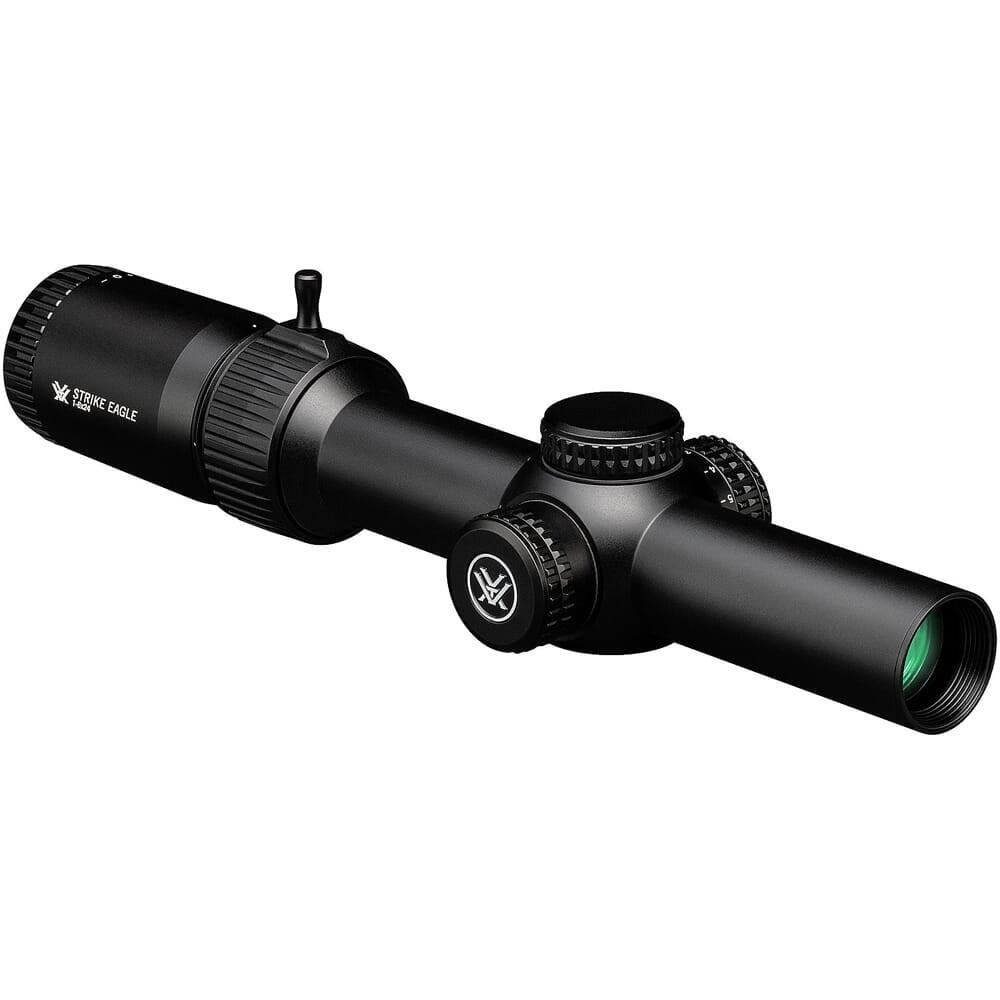
7. Vortex Strike Eagle 1-8×24: Best Entry-Level LPVO
- Magnification: 1-8×24
- Focal Plane: Second (SFP)
- Tube Diameter: 30mm
- Weight: 18.6 oz
- Reticle: EBR-8 BDC MOA
- MSRP: ~$400
Pros
- Vortex lifetime warranty backs every Strike Eagle
- EBR-8 BDC reticle is practical and intuitive
- Available in combo kits with Vortex mount
Cons
- Glass quality is noticeably behind $500+ options
- Eye relief can be finicky at max magnification
- Illumination washes out in direct sunlight
Strike Eagle is probably the most popular LPVO in America, and for good reason. Vortex packages it with a mount for around $400, which means you’re getting a mounted 1-8x scope for less than most scopes alone. For a first LPVO, that value proposition is tough to argue with.
Is the glass as good as the Razor? Not even close. But that’s like comparing a Civic to a Ferrari. The Strike Eagle does exactly what it needs to do at its price point. The EBR-8 reticle gives you a clean center dot and BDC holdovers for quick engagements. The illumination works well enough indoors and in shade, even if it gets washed out by direct sunlight.
I recommend the Strike Eagle to every new LPVO user because it lets you figure out whether you even like shooting with a variable optic before you spend $1,000+. Many people try an LPVO, realize they prefer a red dot, and save themselves a fortune. Others fall in love and upgrade later. Either way, the Strike Eagle is a smart first step.
Best For: First-time LPVO buyers who want to try the platform without a huge financial commitment.
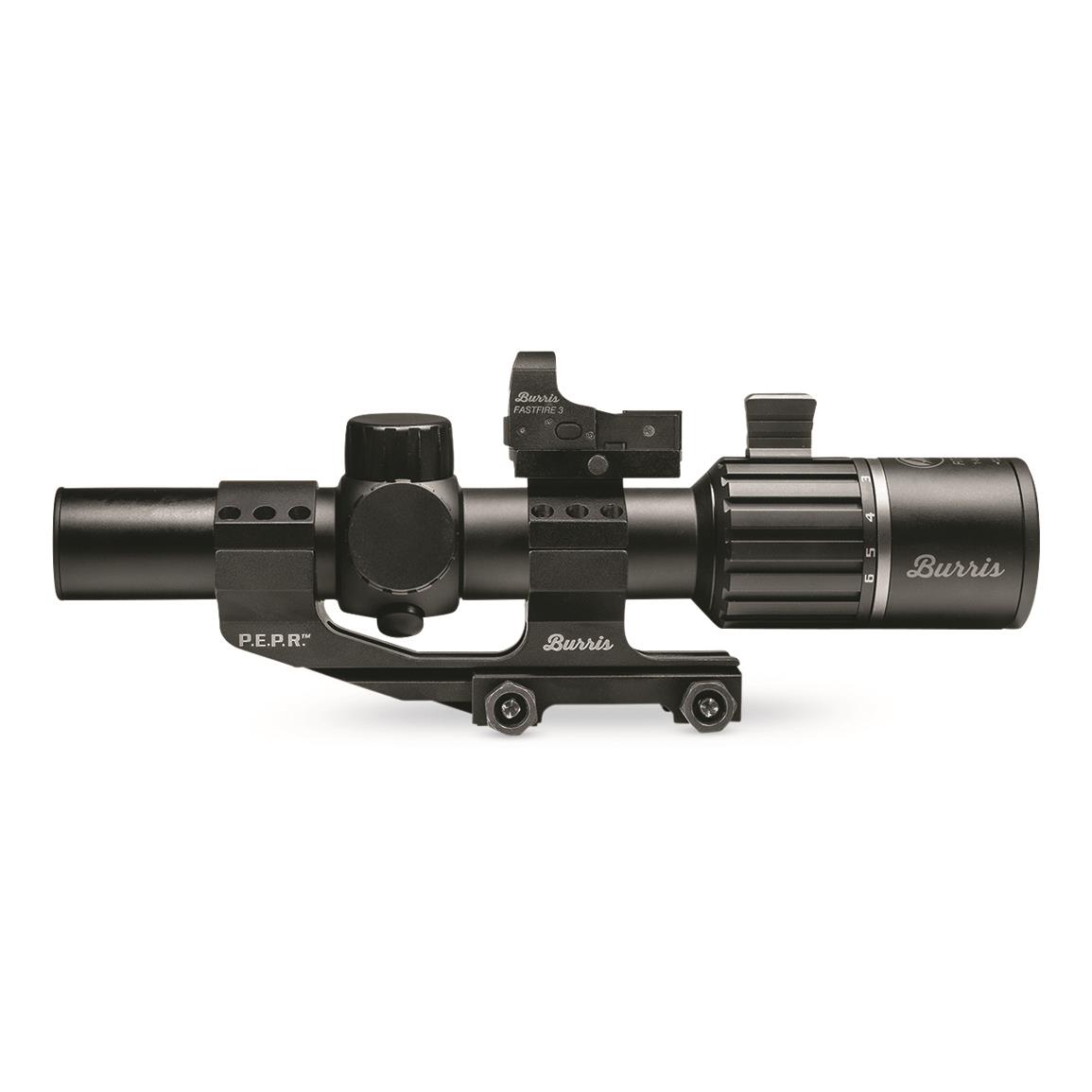
8. Burris RT-6 1-6×24: Best Mid-Range LPVO
- Magnification: 1-6×24
- Focal Plane: Second (SFP)
- Tube Diameter: 30mm
- Weight: 16.2 oz
- Reticle: Ballistic AR illuminated
- MSRP: ~$400
Pros
- True 1x at low end feels like a red dot
- 16.2 oz is excellent for a 1-6x
- Glass quality punches above its price class
Cons
- Limited to 6x max
- Illumination is just okay
- Power ring can be stiff initially
Burris RT-6 is the scope that 3-gun competitors kept quiet about for years. While everyone was arguing about Vortex vs Primary Arms in the budget space, Burris quietly made a 1-6x that had genuinely good glass, a true 1x low end, and a reticle that worked brilliantly for fast transitions. Then competitors discovered it, and the secret got out.
What makes the RT-6 special is the 1x end. A lot of budget LPVOs claim “true 1x” but have noticeable distortion or a tunnel effect. The RT-6 genuinely looks and feels like a red dot at 1x. That makes it incredibly fast for close-range shooting, which is exactly what you need in competition or home defense. Crank it to 6x and the glass is clear enough for precise 300-yard shots.
At 16.2 ounces, it’s lighter than most competitors. The Ballistic AR reticle is intuitive with holdover dots that correspond to 5.56 trajectory. For a “do everything” optic under $500, the RT-6 is legitimately hard to beat. It’s the one I recommend most often to people who ask “what scope should I get for my AR?”
Best For: Shooters who want the best 1x performance in a budget-friendly LPVO for competition or home defense.
Best AR-15 LPVO Buyer’s Guide: What to Look For
1-6x vs 1-8x vs 1-10x
More magnification isn’t always better. 1-6x scopes are lighter, cheaper, and have more forgiving eye boxes. They’re plenty for 90% of AR-15 shooting. 1-8x adds meaningful capability for 400-600 yard shooting. 1-10x is overkill for most people but incredible if you need it. Pick based on your realistic shooting distances, not your fantasy ones.
First Focal Plane vs Second Focal Plane
FFP reticles scale with magnification, so your BDC holdovers and ranging marks are accurate at every power setting. SFP reticles only give accurate subtensions at one specific magnification (usually max). FFP costs more. If you use holdovers at varying magnifications, get FFP. If you always shoot at max magnification or just use the center dot, SFP is fine.
Illumination
Good illumination lets you pick up the reticle faster in daylight. “Daylight bright” is the gold standard, meaning the illuminated reticle is visible against a bright sky. Budget scopes rarely achieve this. If speed at 1x is important to you, pay attention to illumination specs and reviews.
Mounting
An LPVO is only as good as its mount. You need a quality 30mm or 34mm mount (depending on tube size) with proper eye relief spacing. Expect to spend $100-200 on a good mount from brands like Scalarworks, Badger Ordnance, or Aero Precision. Don’t cheap out here. A $50 Amazon mount will shift zero and make your $2,000 scope worthless. Aero Precision Ultralight mounts are the best budget option at around $70. Scalarworks LEAP mounts are the premium choice at $300+ but their quick-detach feature lets you return to zero when remounting. Whatever you choose, torque it to spec with a FAT wrench. Over-tightening cracks scope tubes. Under-tightening lets your zero walk.
Shop Rifle Scopes
Best-scored accessories across 200+ retailers · Updated every 4 hours

Browse All AR-15 Parts & Upgrades →
Compare prices on our gun deals page or use the price comparison tool to find the lowest price. For AR-15 specific deals, check our AR-15 deals page.
FAQ: Best AR-15 LPVO Scopes
What is the best LPVO for an AR-15?
The Vortex Razor HD Gen III 1-10x24 is the best overall LPVO for an AR-15. It offers a true 1x to 10x magnification range, daylight-bright illumination, and exceptional glass clarity. For budget buyers, the Primary Arms SLx 1-6x ACSS Raptor at under $300 offers the best value.
Is a 1-6x or 1-8x LPVO better for an AR-15?
A 1-6x LPVO is lighter, cheaper, and has a more forgiving eye box, making it ideal for most AR-15 shooting out to 400 yards. A 1-8x adds meaningful capability for 400-600 yard shooting. Choose based on your realistic shooting distances, not aspirational ones.
What is the difference between FFP and SFP in an LPVO?
First Focal Plane (FFP) reticles scale with magnification, so holdovers and ranging marks are accurate at every power setting. Second Focal Plane (SFP) reticles are only accurate at one magnification (usually max). FFP costs more but is more versatile for variable-distance shooting.
How much should I spend on an LPVO for my AR-15?
A quality LPVO starts around $290 with the Primary Arms SLx. The sweet spot for most shooters is $350-500, where scopes like the Swampfox Arrowhead and Vortex Strike Eagle deliver solid performance. Serious shooters benefit from $1,000+ options like the Nightforce NX8 or Trijicon Credo.
Is an LPVO better than a red dot for an AR-15?
Neither is universally better. Red dots are lighter, simpler, and faster at close range. LPVOs offer target identification and precision at distance that red dots cannot match. For versatile use from 0-500 yards, an LPVO is more capable. For pure CQB speed, a red dot wins.
What mount do I need for an LPVO?
You need a quality 30mm or 34mm cantilever mount (depending on your scope tube diameter). Recommended brands include Scalarworks LEAP, Badger Ordnance, and Aero Precision. Budget $100-200 for a good mount. Do not use cheap mounts as they will shift zero.
What is the best budget LPVO for an AR-15?
The Primary Arms SLx 1-6x24 ACSS Raptor at under $300 is the best budget LPVO. The ACSS reticle is exceptionally useful with built-in BDC holdovers for 5.56. For a budget 1-8x, the Swampfox Arrowhead at around $350 offers more magnification.
Do I need illumination on my LPVO?
Illumination helps you acquire the reticle faster, especially at 1x in daylight. Daylight-bright illumination (found in premium scopes) lets the illuminated dot compete with a red dot for speed. Budget scopes often have illumination that washes out in bright light, making it less useful.
Need a rifle to mount that LPVO on? Our Springfield Saint Victor review covers a mid-tier AR-15 that’s ready to run out of the box.
4,617+ Gun & Ammo Deals
Updated daily from 200+ top retailers. Filter by category, caliber, action type, and price.
Related Guides