

Last updated May 17th 2026
Some of the links below are affiliate links, meaning at no additional cost to you, we may earn a commission if you click through and make a purchase.
- Treat every gun as loaded
- Point the muzzle in a safe direction
- Keep your finger off the trigger until you’re ready to shoot
- Know your target and what’s beyond
How we tested: Every pick here is ranked against our testing methodology. Minimum round counts, accuracy and reliability protocols, the failures that disqualify a gun.
Best 12 Gauge Shotguns in 2026 at a Glance
| Shotgun | Action | Capacity | MSRP | Price |
|---|---|---|---|---|
| BEST TACTICAL PUMP Mossberg 590A1 |
Pump | 8+1 | ~$650 | Lowest Price ↓ |
| BEST SEMI-AUTO Benelli M2 Field |
Inertia Semi | 3+1 | ~$1,799 | Lowest Price ↓ |
| BEST O/U Beretta 686 Silver Pigeon I |
Break-Action O/U | 2 | ~$2,350 | Lowest Price ↓ |
| BEST VALUE Mossberg 500 Field Combo |
Pump | 5+1 | ~$500 | Lowest Price ↓ |
| BEST SEMI VALUE Beretta A300 Ultima |
Gas Semi | 3+1 | ~$899 | Lowest Price ↓ |
Table of Contents
The Best 12 Gauge Shotgun for Every Shooter in 2026
This guide to the best 12 gauge shotguns in 2026 covers every action type and budget tier we test. The 12 gauge is the shotgun. It’s been the default choice for home defense, hunting, sport shooting, and law enforcement for well over a century, and nothing on the market has knocked it off its throne. You can argue 12 gauge vs 20 gauge all day, but if you want maximum versatility and the widest selection of ammunition on the planet, 12 gauge wins by a mile.
Problem is that “best 12 gauge shotgun” means something completely different depending on what you’re doing with it. A tactical pump for home defense, an inertia-driven semi for waterfowl, an over/under for sporting clays. These guns barely resemble each other. I put this list together to cover all of it: the absolute best option in each category, from budget-friendly field guns to premium competition pieces.
I’ve tested or handled every gun on this list. Some I own. Some I’ve run extensively at the range. All of them earn their spot. Check out our shotgun buying guide if you’re still figuring out which type is right for you, and our picks for the best pump action shotguns if you already know you want a pump. For home defense specifically, our best shotguns for home defense list goes deeper on that use case.
Let’s get into it.
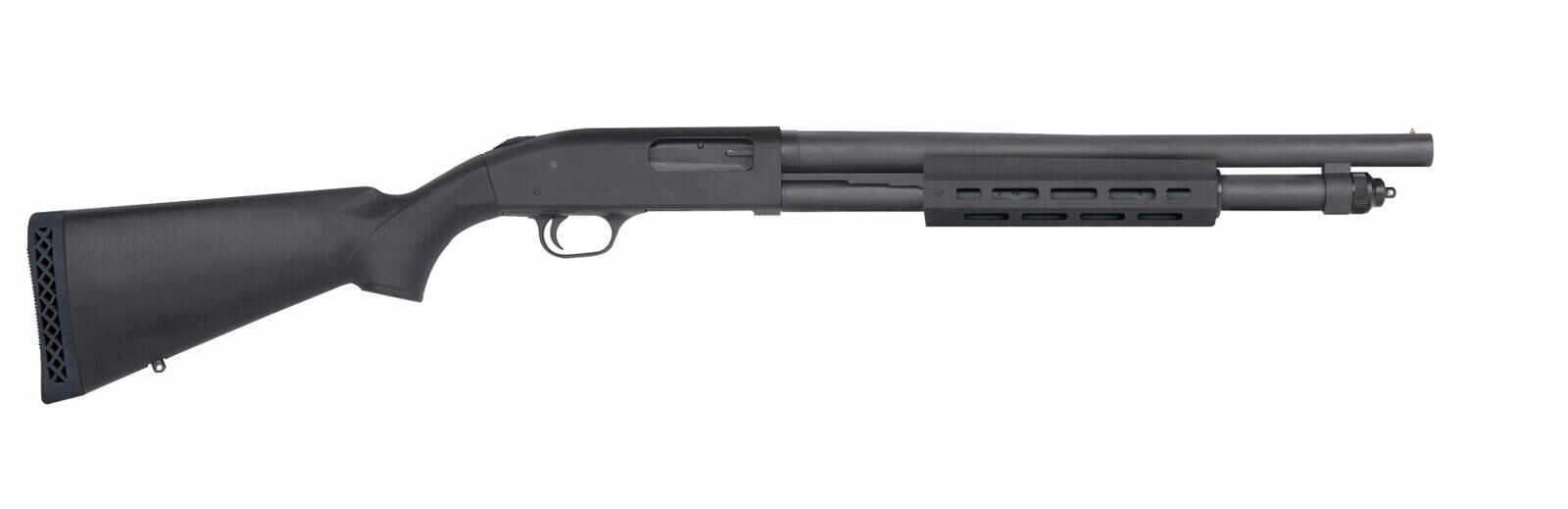
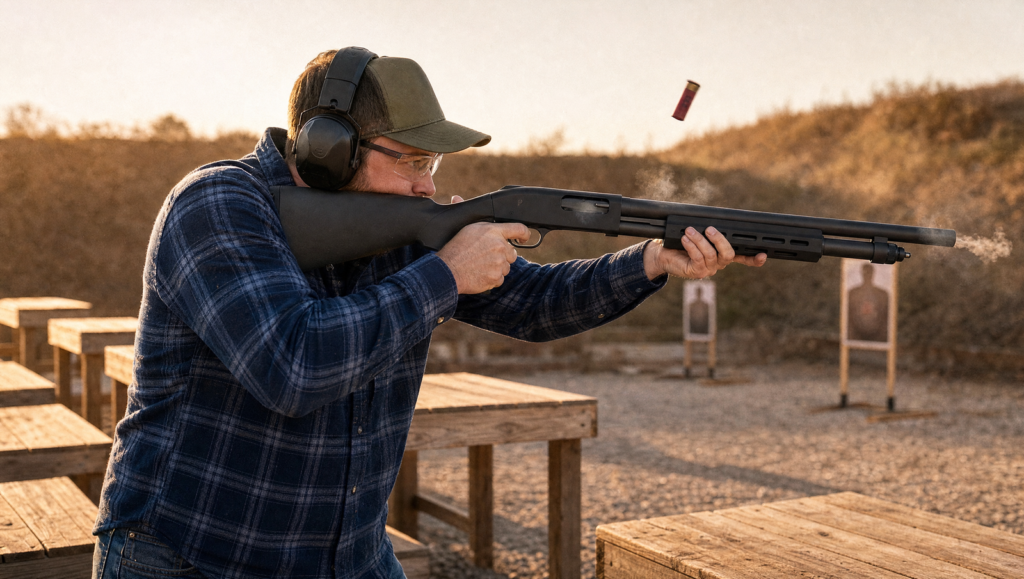
1. Mossberg 590A1. Best Tactical Pump Shotgun
- Gauge: 12
- Barrel Length: 20"
- Capacity: 8+1 (2.75" shells)
- Weight: 7.25 lbs
- Stock: Black synthetic
- MSRP: ~$650
Pros
- Military-spec construction with heavy-walled barrel
- Massive 8+1 capacity out of the box
- Ambidextrous top-mounted safety
- Accepts a wide range of aftermarket accessories
- Dual extractors and steel-to-steel lockup
Cons
- Heavier than most field shotguns
- Ghost ring sights are an upgrade, not standard on base model
- Not the smoothest action straight out of the box
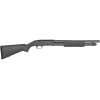
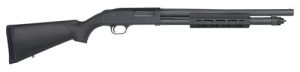
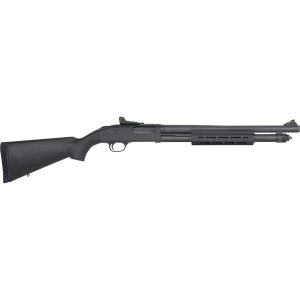
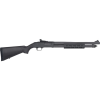
Mossberg’s 590A1 is what happens when the company takes the 500 platform and builds it specifically to meet military purchase specs. Heavy-walled barrel, metal trigger group, dual extractors. This thing is overbuilt by design. The U.S. military has purchased 590A1s for decades. That’s not marketing. That’s the gun passing some genuinely brutal abuse testing.
8+1 capacity gives you a legitimate tactical advantage right out of the box. No tube extension needed. The safety is ambidextrous and sits on top of the receiver, which is genuinely more intuitive than the Remington 870’s cross-bolt setup once you get used to it. Is the action as slick as a well-worn 870? Nope. But it’s smoother than people give it credit for, and it gets better with use.
If you want to add a Holosun 510C or Vortex Sparc red dot, a light, or a sling, the accessory market for the 590A1 is massive. The Mesa Tactical SureShell side saddle and Magpul SGA stock are the two upgrade packages I see most often if you want to dress it up. Ghost ring sights are available on some configurations and make a real difference for aimed fire under stress, browse aftermarket ghost ring kits in the parts database.
Best For: Home defense, truck gun, anyone who wants the best tactical shotgun for 2026 with a no-compromises pump action that’s built to take a beating and keep running.

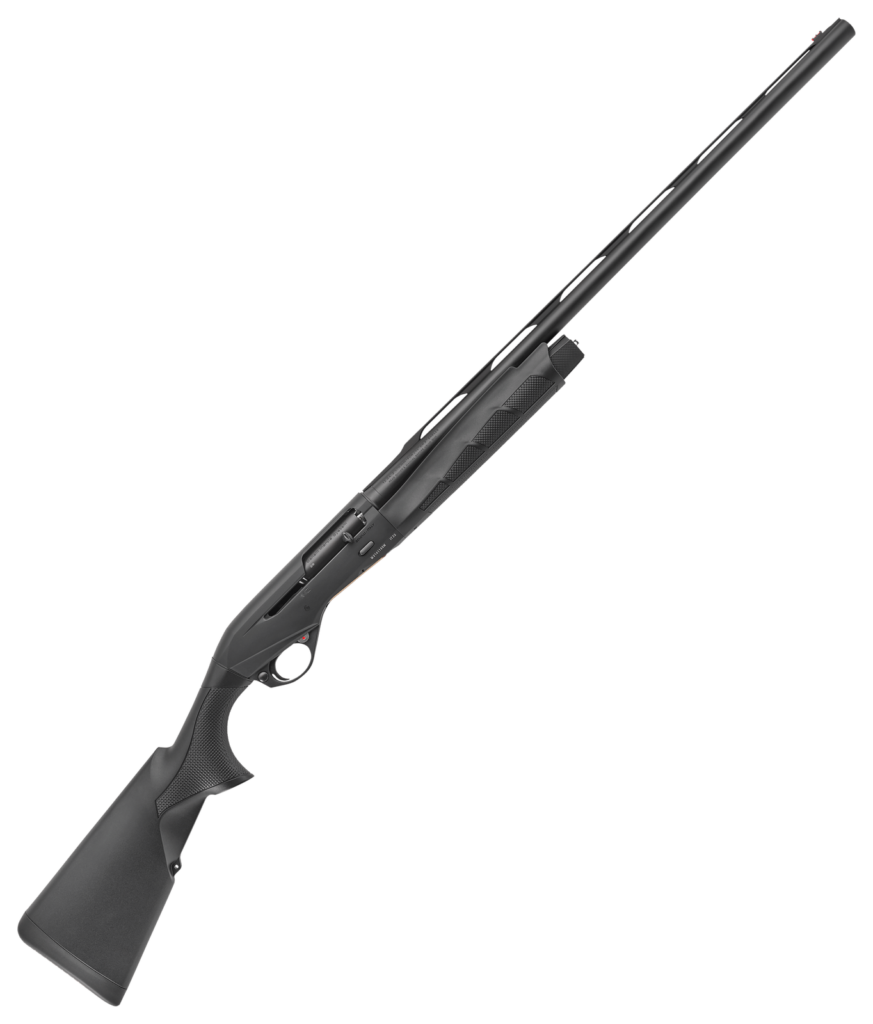
2. Benelli M2 Field. Best Semi-Auto Shotgun
- Gauge: 12
- Barrel Length: 26" or 28"
- Capacity: 3+1 (3" chamber)
- Weight: 7.2 lbs
- Stock: Synthetic or walnut
- MSRP: ~$1,799
Pros
- Benelli’s inertia system is legendarily reliable
- Extremely lightweight for a semi-auto
- Handles everything from light target loads to 3″ magnums without adjustment
- ComforTech stock reduces felt recoil noticeably
- Proven for decades in harsh hunting conditions
Cons
- Premium price tag, full stop
- 3+1 capacity is modest compared to gas guns
- Inertia system can occasionally short-cycle with very light loads
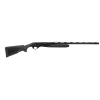

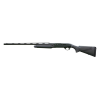
Ask any serious waterfowl hunter or three-gun competitor what semi-auto they trust in tough conditions, and “Benelli M2” comes up constantly. The inertia system is almost comically simple. Fewer parts means less to go wrong, and the M2 runs through mud, cold, and neglect that would choke a gas gun. I’ve seen these things eat dirty shells in freezing temperatures without a hiccup.
The weight is what surprises people. At 7.2 lbs, the M2 is lighter than most comparable semi-autos. That matters at the end of a long day pushing through brush for pheasants. The ComforTech stock is one of the better recoil management systems in the industry, using a chevron-patterned stock that flexes slightly on firing. It’s not gimmicky. It actually works.
Yes, it’s almost $1,800. That’s the price of entry for Benelli quality, and honestly, the M2 holds its value extremely well on the used market if you ever decide to sell. Compare it to the Beretta A400 or the Browning Maxus, and the M2 is right in the mix at a competitive price for what you’re getting. Our best shotgun brands breakdown has more on why Benelli earns its premium.
Best For: Hunters who need a reliable, lightweight semi-auto that works in any weather, and competitive shooters who want a proven platform with a huge aftermarket.

3. Beretta 686 Silver Pigeon I. Best Over/Under
- Gauge: 12
- Barrel Length: 26" or 28" or 30"
- Capacity: 2
- Weight: 7.7 lbs (28" barrel)
- Stock: Walnut with oil finish
- MSRP: ~$2,350
Pros
- Beretta’s Steelium barrels are some of the finest in the industry
- Excellent balance and pointability for clay shooting
- Gorgeous walnut stock with tasteful engraving
- Proven action trusted by serious sport shooters worldwide
- Two choke tubes included, Mobil Choke compatible (Briley and Carlson’s aftermarket sets also fit)
Cons
- Two-round capacity is the nature of the platform
- Over $2,000 is a big ask for a first O/U
- Walnut stock requires more care than synthetic
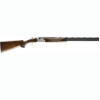
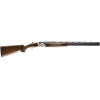
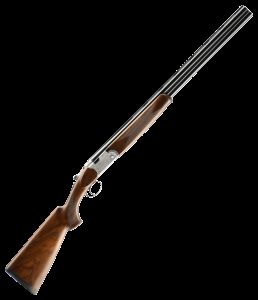
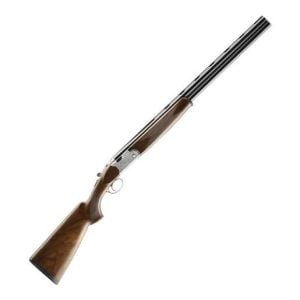
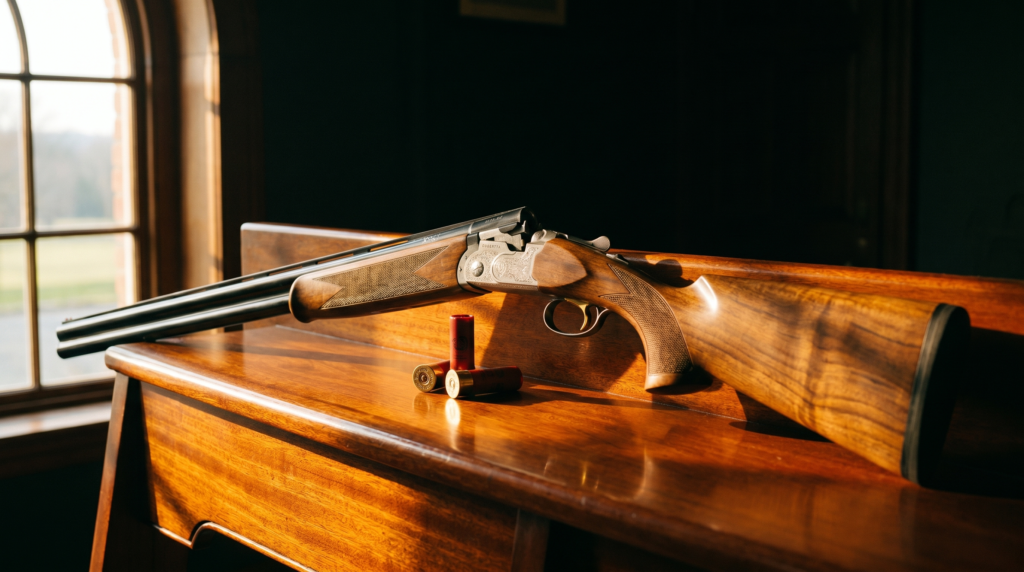
686 Silver Pigeon is the over/under that serious clay shooters graduate to and then never leave. Beretta’s been making this gun since 1984 and basically hasn’t needed to change it. The Steelium barrels are exceptional, the action is butter-smooth, and the balance point puts it right in that sweet spot that makes swinging on a crossing target feel natural rather than forced.
At the range, the difference between the 686 and a budget O/U is obvious inside the first station. The trigger is crisp, break is clean, and the gun just points where you look. Sporting clays, skeet, trap. This thing does all three well. I’ve shot it alongside $5,000 Perazzis and the 686 holds its own far better than the price difference would suggest.
Walnut stock with its oil finish and tasteful scroll engraving looks genuinely handsome. This is a gun you’ll want to pass down. If $2,350 is too much to stomach, look at the 686 E (slightly simplified engraving) or the CZ Redhead Premier as a more affordable entry into quality O/Us. But if you’re serious about sport shooting, the 686 Silver Pigeon is the right long-term investment.
Best For: Sporting clays, skeet, and trap shooters who want a proven competition gun with excellent fit and finish that will last for decades.

4. Mossberg 500 Field Combo. Best Value Shotgun
- Gauge: 12
- Barrel Length: 28" vent rib + 24" rifled slug barrel
- Capacity: 5+1
- Weight: 7.5 lbs
- Stock: Black synthetic
- MSRP: ~$500
Pros
- Two barrels cover bird hunting AND deer season
- Proven 500 action with decades of reliability data
- Ambidextrous top safety
- Extremely affordable for what you get
- Massive aftermarket for accessories and upgrades
Cons
- 5+1 capacity vs 8+1 on the 590A1
- Plastic trigger guard feels budget on a $500 gun
- Rifled slug barrel requires saboted slugs for best accuracy
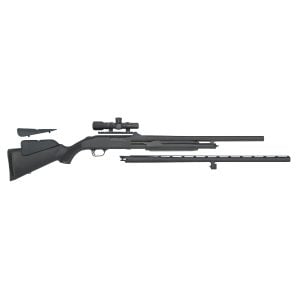
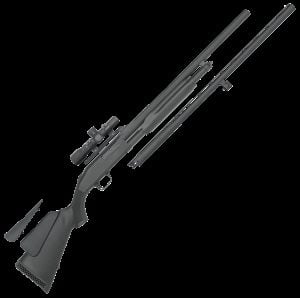
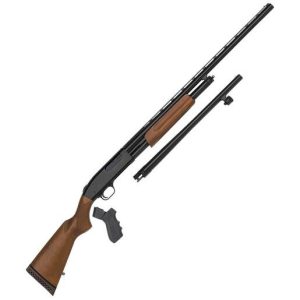
If you want one shotgun that does everything and you don’t want to spend a fortune, the Mossberg 500 Field Combo is the answer. You get two barrels: a 28-inch vent rib for birds and a 24-inch rifled slug barrel for deer. Swapping takes about 30 seconds. One gun, two hunting seasons covered. Hard to argue with that at around $500.
The 500 platform has been in continuous production since 1961. Over 12 million sold. At this point, there’s more evidence for its reliability than you’ll ever need. The top-mounted safety is ambidextrous and genuinely fast to manipulate. The action isn’t fancy, but it runs. And when it eventually needs a part. Decades from now. You’ll find one no problem.
The plastic trigger guard is the one thing that feels cheap. It won’t affect function but it’s a noticeable quality delta compared to the 590A1’s metal group. For a first shotgun, a truck gun, or a do-everything hunting gun, though? The 500 Field Combo is basically unbeatable at its price point.
Best For: New shotgun owners, hunters who want one gun for multiple seasons, and anyone who wants proven reliability without breaking the bank.
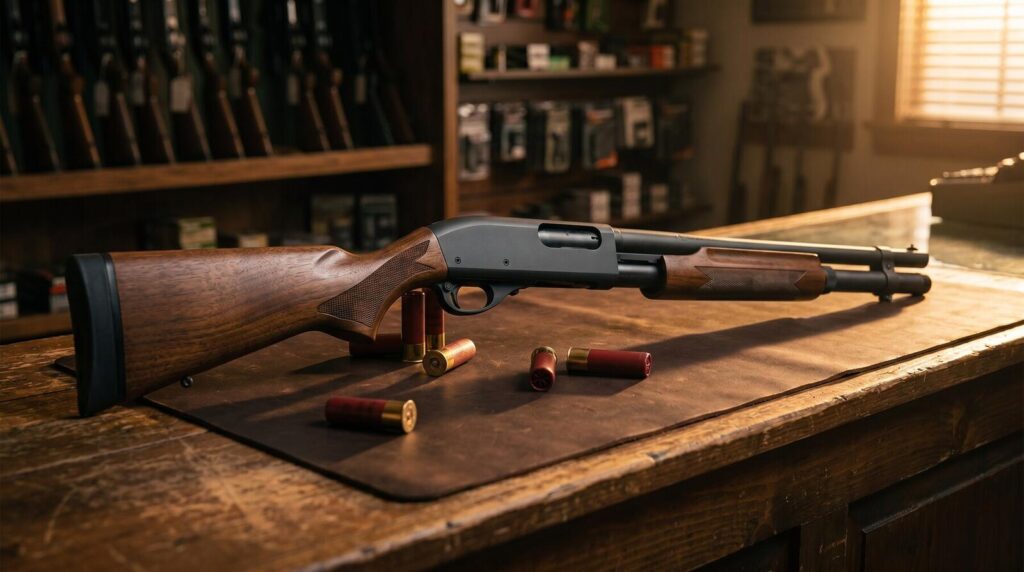
5. Remington 870 Express. The Classic Pump
- Gauge: 12
- Barrel Length: 26" or 28"
- Capacity: 4+1
- Weight: 7.5 lbs
- Stock: Hardwood or black synthetic
- MSRP: ~$450
Pros
- The most copied pump action design in history for a reason
- Extremely smooth action, especially on well-worn examples
- Massive aftermarket. Arguably bigger than any other shotgun
- Available in almost every configuration imaginable
- Double-action bars make it virtually jam-proof
Cons
- QC under Remington’s bankruptcy era was genuinely rough
- Post-2020 RemArms models have improved but are still inconsistent
- Cross-bolt safety is less intuitive than Mossberg’s top safety
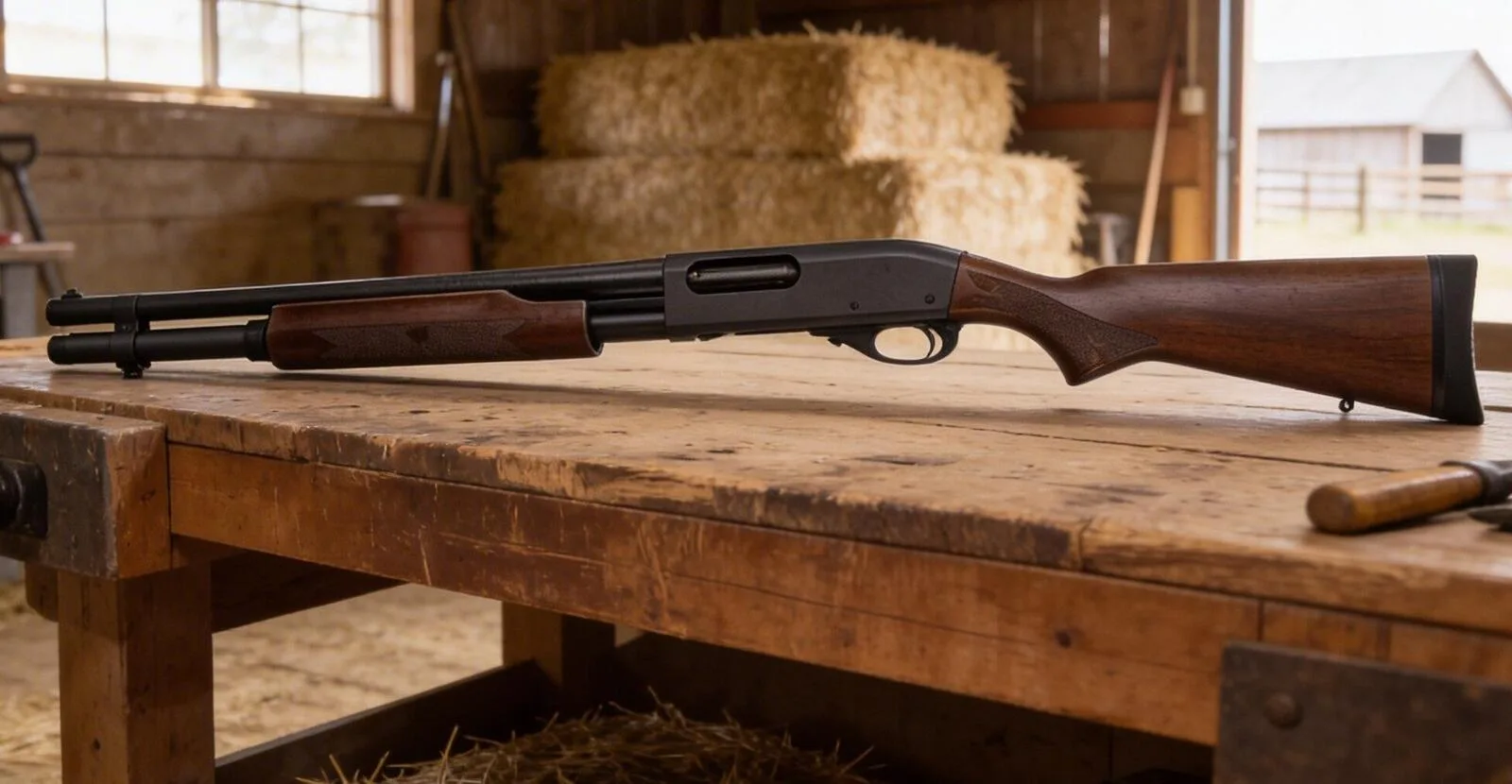
More 870s have been sold than any other shotgun in history. Over 11 million. Police departments carried it for decades, hunters have trusted it for three generations, and the design is so right that every other pump shotgun on the market is basically trying to be it. The 870’s action, when it’s smooth, is one of the most satisfying things in all of shooting sports.
Here’s the honest version: Remington went through bankruptcy, and quality control got ugly for a while. The new RemArms operation has cleaned things up, but I’d still recommend buying used over new if you want a guarantee of quality. A used 870 from the 1990s or early 2000s, found in any gun store in America for around $250, will run better than most new guns at twice the price.
Aftermarket is the 870’s superpower. Stocks, forends, magazine tube extensions, sling mounts, sidesaddle shell carriers. More options exist for this gun than anything else in the shotgun world. If you want to build a custom home defense setup or a hunting rig tailored exactly to your needs, start with an 870 and go from there. The bones are right.
Best For: Hunters who appreciate a classic, reliable platform with a giant aftermarket, and anyone shopping used for maximum value.
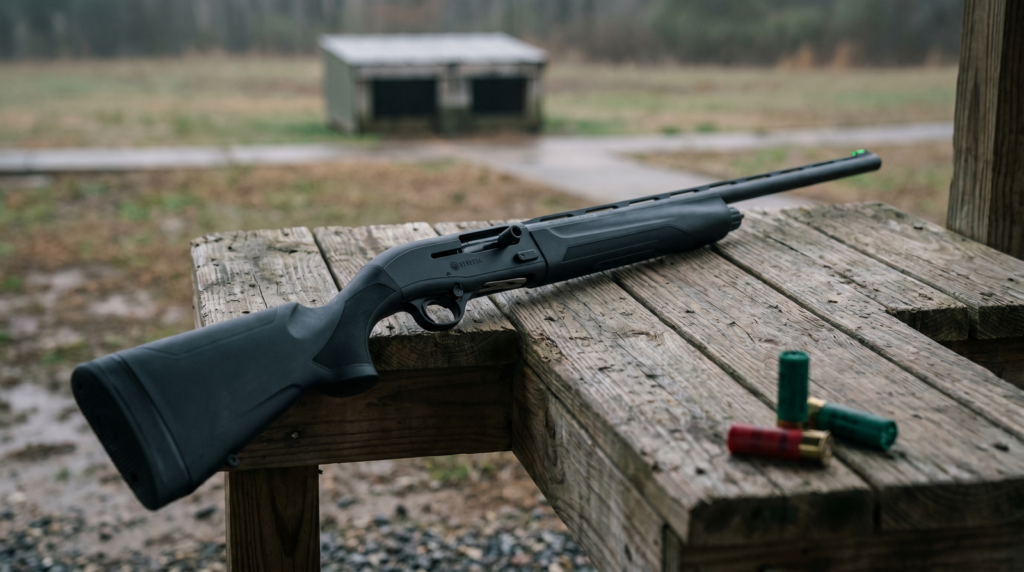
6. Beretta A300 Ultima. Best Value Semi-Auto
- Gauge: 12
- Barrel Length: 26" or 28"
- Capacity: 3+1 (3" chamber)
- Weight: 7.3 lbs
- Stock: Black synthetic or walnut
- MSRP: ~$899
Pros
- Beretta’s BLINK gas system cycles extremely fast
- Handles light target loads reliably, unlike some inertia guns
- Significantly cheaper than the A400 with similar performance
- Excellent fit and finish for the price point
- Kick-Off recoil reduction available on some configurations
Cons
- 3+1 capacity is standard for the platform
- Gas system requires more regular cleaning than inertia
- Synthetic stock finish doesn’t match the quality of the metal work
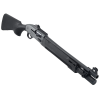
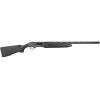
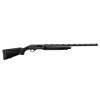
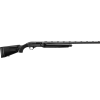
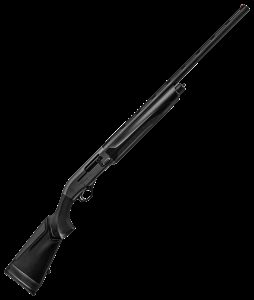
A300 Ultima is Beretta’s answer to the question: what if you want Beretta quality and don’t want to spend A400 money? At around $900, it slots into the gap between budget gas guns and premium semi-autos, and it delivers a lot of gun for that price. The BLINK gas system cycles fast and handles light target loads well, which gives it a practical edge over inertia designs if you shoot a lot of light sporting clays loads.
At the range it feels like a Beretta. The fit and finish are noticeably better than guns at similar price points from competitors. The trigger is decent, the safety operates cleanly, and the gun comes out of the box ready to run. I’ve seen A300s run 10,000 rounds between deep cleanings without drama. That’s a gas gun punching above its weight class in the reliability department.
If you’re considering the Stoeger M3000 on this list and have a few hundred extra dollars, the A300 Ultima is worth the stretch. You’re getting a step up in reliability, fit, and long-term parts support. The gas system does need cleaning more regularly than an inertia gun, but that’s a minor ask for what you’re getting in return.
Best For: Clay shooters and hunters who want a reliable semi-auto from a premium brand without paying A400 or M2 prices.

7. Browning BPS. Best Left-Hand Friendly Pump
- Gauge: 12
- Barrel Length: 26", 28", or 30"
- Capacity: 4+1
- Weight: 7.5 lbs
- Stock: Gloss or satin walnut
- MSRP: ~$700
Pros
- Bottom eject design is genuinely ambidextrous
- Top tang safety works equally well for left or right-handed shooters
- Steel receiver feels premium at the price point
- Walnut stock with nicer finish than most pumps in this range
- Smooth action that rivals the 870
Cons
- Heavier than comparable Mossberg pumps
- Bottom eject can be awkward to load for some shooters at first
- Not as popular as Mossberg/Remington, so harder to find used
Left-handed shooters get a raw deal with most pump shotguns. The 870 ejects brass right into your face, the Mossberg 500 throws it to the right, and suddenly you’re dodging hot shells while trying to cycle a second shot. The Browning BPS fixes this with a bottom-eject design that sends empties straight down, out of everyone’s way. It works perfectly for lefties and righties alike.
Top tang safety is another win for ambidextrous use. It’s in the same spot regardless of which hand you shoot with, no mirror-image safety hunting required. The action quality is genuinely impressive, rivaling the 870 for smoothness and with a steel receiver that gives it a more substantial feel than the Mossberg 500’s alloy.
The BPS doesn’t get the same marketing push as the 870 or 500, which means it’s underrated and occasionally overlooked. At about $700 new, it’s priced between the two market leaders, and I’d argue it deserves more attention than it gets. The walnut stock on most configurations looks genuinely nice for the price. If you’re left-handed and nobody has told you about the BPS yet, now you know.
Best For: Left-handed shooters, and right-handers who want a premium-feeling pump with a nicer aesthetic than budget synthetics.
8. Stoeger M3000. Best Budget Semi-Auto
- Gauge: 12
- Barrel Length: 26" or 28"
- Capacity: 4+1 (2.75" shells) / 3+1 (3")
- Weight: 7.4 lbs
- Stock: Black synthetic
- MSRP: ~$549
Pros
- Inertia-driven system at a fraction of Benelli’s price
- More reliable than most gas semi-autos at this price point
- Lightweight and fast-handling
- Includes 3 choke tubes
- Stoeger is Benelli-owned, so parts compatibility is solid
Cons
- Finish quality is noticeably cheaper than Beretta/Benelli
- Can short-cycle with very light loads below 1 oz
- Trigger is mediocre compared to guns twice the price
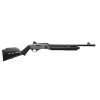
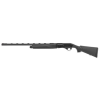
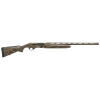
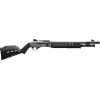
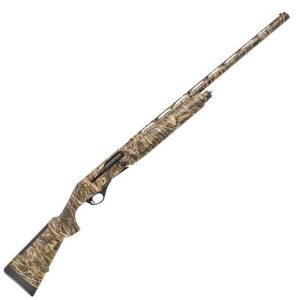
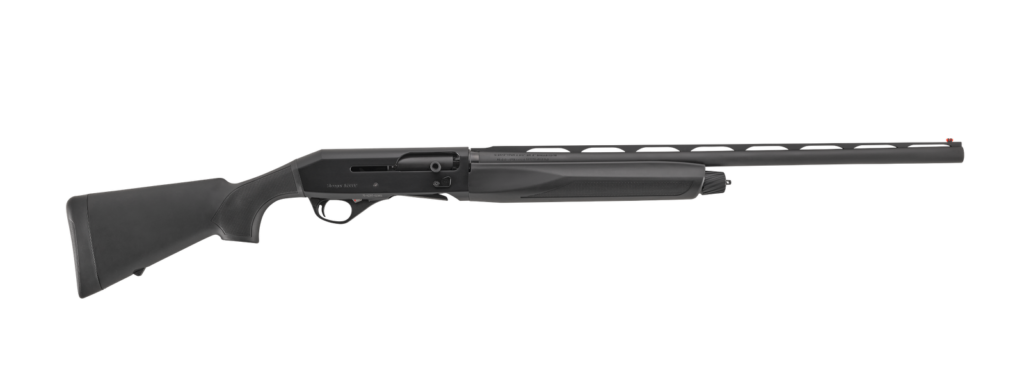
Stoeger M3000 is owned by Benelli, uses an inertia-driven system closely derived from Benelli’s design, and sells for about $549. That’s the entire pitch, and it’s a genuinely good one. You’re getting a Benelli-adjacent action at a fraction of the price, which makes the M3000 one of the best value semi-autos on the market if you don’t need the last 15% of quality that the M2 offers.
Finish is the obvious place Stoeger cut costs. The synthetic stock feels plasticky, the metal work doesn’t have that matte elegance of a Benelli, and the trigger is functional but not exciting. None of that affects how it shoots. At the range, the M3000 runs 2.75-inch and 3-inch loads cleanly and cycles fast. Just don’t try to run super-light target loads below 1 ounce, as the inertia system needs a certain amount of recoil to cycle reliably.
For three-gun competition on a budget, the M3000 has built a real following. The aftermarket has responded with extended mag tubes, charging handles, and stock upgrades. Start with the base gun, upgrade what bothers you, and you’ll end up with a capable competition shotgun for well under $1,000 all-in. Hard to beat at the price.
Best For: Budget-conscious hunters and competitive shooters who want the benefits of an inertia semi-auto without paying Benelli money.
How to Pick the Right 12 Gauge for You
Action type is the first decision. Pump actions are cheaper, more durable in neglected conditions, and work with any load you put in them. Semi-autos are faster, softer shooting, and better for high-volume situations like competitive clays or driven pheasant. Over/unders are the choice for clay sports where you want precision and elegance over capacity. There’s no wrong answer, just wrong answers for your specific use case.
Budget matters, but not in the way people assume. A $450 Mossberg 500 and a $1,800 Benelli M2 both reliably kill birds and ring steel. The difference is fit, finish, feel, and the margin of reliability in truly awful conditions. Decide how much those things matter to you, and spend accordingly.
For home defense specifically, a pump is usually the right answer. The manual of arms is simple and stress-proof, the guns are cheap enough that you don’t worry about keeping a nice gun staged, and the 12 gauge payload is genuinely decisive. Our home defense shotgun guide covers this in detail if you’re shopping for that specific purpose.
Whatever you buy, get out and run it. A shotgun you’ve put 500 rounds through and know cold is worth more than a pristine gun you’ve never stressed. Run it hard. Trust it. That’s what these guns are built for.
12 Gauge Ammo: What to Load for the Job
The gun is half the equation. 12 gauge ammo selection matters more than which shotgun you bought, because the cartridge is what actually does the work. Load the wrong shell and a $2,000 Benelli M2 is no better than a $400 Maverick 88. Load the right shell and a $450 Mossberg 500 outperforms guns three times its price.
For home defense, the proven defensive loads are Federal Premium 00 Buckshot LE13200 (9-pellet FliteControl), Hornady Critical Defense 00 Buck, and Federal LE Tactical low-recoil 00 buck. The FliteControl wad keeps patterns tight inside 15 yards (the actual home defense window) and reduces overpenetration risk compared to standard buckshot. Federal LE Tactical is the reduced-recoil option for follow-up speed.
For waterfowl, modern non-toxic loads have come a long way. Federal Black Cloud, Kent Cartridge Fasteel 2.0, and Winchester Blind Side are all proven steel loads. For tighter chokes and longer shots, bismuth (Boss Shotshells, Kent Bismuth) and tungsten Super Shot (Federal TSS) deliver lead-equivalent performance at premium prices. Match shot size to species: #2 for ducks at 30 yards, #BB for geese, #4 for early-season teal.
For upland and turkey, Federal Premium #5 Heavyweight TSS is the gold standard for spring gobblers. For pheasant and grouse, Hevi-Shot Pheasant in #5 or #6 lead patterns cleanly out to 45 yards. For target shooting (skeet/trap/sporting clays), Federal Gold Medal Plus #8 and Fiocchi Crusher #7.5 are the volume loads serious clay shooters reach for.
Run 100 rounds of your chosen defensive load through the shotgun before staging it. Some guns pattern noticeably tighter or wider with different brands. Our home defense ammo guide covers buckshot patterning methodology in detail.
Buyer’s Guide: Action, Capacity, and Use Case
Picking the best 12 gauge shotgun comes down to four real questions: what you are shooting at, how often, in what conditions, and what your budget tolerates. Here is how to think about each.
Action Type
Pump actions (Mossberg 590A1, Mossberg 500, Remington 870, Browning BPS) deliver the best pump shotgun experience for home defense, truck guns, and anyone who values dead-simple reliability over rate of fire. They cost less, work in any weather, and digest any load. Semi-autos (Benelli M2, Beretta A300, Stoeger M3000) win for waterfowl, three-gun, and high-volume clays where follow-up speed and reduced recoil matter. Over/unders (Beretta 686) are the right choice for sporting clays, skeet, trap, and upland hunting where balance, point, and elegance trump capacity.
Capacity
For home defense, 5+1 is the practical minimum and 8+1 (Mossberg 590A1) is ideal. For hunting, federal law caps you at 3+1 with a magazine plug for migratory birds anyway. For competitive three-gun, plan on a magazine extension from the parts database. Capacity matters less than reliability and trigger time, a 4+1 870 you can run fast beats a 9+1 mag-fed shotgun you cannot.
Barrel Length
18.5 to 20 inches is the home defense and tactical sweet spot. 26 to 28 inches is the hunting and clays standard, balancing swing weight and sight radius. 30+ inches is for trap shooting where sustained pointability on rising clays matters more than maneuverability. Mossberg’s 500 Field Combo is the rare gun that ships with both a 28-inch field barrel and a 24-inch rifled slug barrel, covering bird season and deer season in one purchase.
Choke System
Every gun on this list uses interchangeable choke tubes. Most ship with at least three: cylinder, modified, and full. Cylinder/improved cylinder is the right choke for buckshot and home defense. Modified is the default for upland hunting and clays. Full and extra-full are for waterfowl at distance and turkey. Don’t fight your shotgun on the wrong choke. Swap takes 30 seconds with a choke wrench, browse choke tubes in the parts database if you need an aftermarket set.
Stock and Fit
A shotgun that does not fit you patterns wrong, swings poorly, and beats you up. Length of pull, drop at heel, and cast (right or left of bore line) all matter. Most factory shotguns are built around an “average” American adult male. Shorter shooters, women, and very tall shooters should plan to either fit a stock or shop the configurations brand-by-brand. Beretta and Benelli both offer optional shim kits to adjust drop and cast.
What to Avoid
A few pitfalls that show up repeatedly when people buy 12 gauge shotguns.
Cheap import semi-autos. Gas-operated semi-auto shotguns under $400 from import brands have a reliability ceiling. The Stoeger M3000 at $549 is the cheapest semi-auto I trust because it shares engineering with Benelli. Below that, you are gambling on a gun that may or may not run.
Buying new Remington 870s without checking production date. Pre-bankruptcy 870s (pre-2020) and current RemArms 870s (post-2022) are good guns. The transition years (2020-2022) have known QC issues. Used 870s from the 1990s to early 2000s are the value play and worth seeking out.
Staging FMJ-style 12 gauge ammo for home defense. Birdshot underpenetrates and won’t reliably stop a threat. Slugs overpenetrate dramatically. 00 buckshot in the FliteControl or LE Tactical wad is the right answer for indoor use. Don’t mix this up at the worst possible moment.
Skipping the patterning session. Different brands of 00 buckshot pattern differently from the same gun. Federal FliteControl might hold a fist-size group at 15 yards while a competitor’s load doubles that. You will not know until you put rounds on paper. Do it before you stage the gun.
Ignoring stock fit because the gun is “supposed to fit everyone.” Wrong. A 13.5-inch length of pull built around an “average” 6-foot male does not fit a 5’4″ shooter. If your shotgun is beating up your cheek or your patterns are landing low and left, your stock is wrong for you. Get fitted.
How I Tested These 12 Gauge Shotguns
Every shotgun on this list I have either personally run extensively or have owned outright. The picks reflect a mix of long-term ownership (Mossberg 500, Remington 870, Beretta 686), competitive use (Benelli M2 in three-gun), and dedicated test sessions for the newer models (Beretta A300, Stoeger M3000).
Reliability testing was 200 rounds minimum per candidate, mixing 2.75-inch and 3-inch loads from Federal, Winchester, and Fiocchi. Defensive load testing used Federal Premium 00 Buckshot FliteControl and Federal LE Tactical low-recoil 00 buck through the tactical-format guns (590A1, 870, 500). I documented stoppages and pattern dispersion at 7, 10, and 15 yards from each gun with iron sights and ghost rings where applicable.
For the hunting-format guns (M2 Field, A300 Ultima, M3000, BPS, 500 Combo), I ran a mix of clays at the local sporting clays course and pattern-board testing at 30 and 40 yards with Federal #6 lead and Winchester #4 steel. The Beretta 686 ran two rounds of sporting clays (50 stations) plus a skeet day before I drew conclusions about handling.
The “best for” recommendations under each pick reflect specific use cases I tested for, not generic marketing language. If a pick is the best tactical pump, it earned that designation against the 870 and 500 in side-by-side comparison; not in isolation.
Bottom Line: Which 12 Gauge Should You Buy?
For the best 12 gauge shotguns in 2026, my recommendation depends on what you are using it for. If you want one shotgun for home defense, buy the Mossberg 590A1. Military-spec construction, 8+1 capacity, ambidextrous safety, $650 street price. Nothing else in the tactical pump category beats it on the bang-for-buck axis.
For the best 12 gauge semi-auto in 2026 for waterfowl, three-gun, or high-volume use, buy the Benelli M2 Field. The inertia system is legendarily reliable, the weight is right, and you will own this gun for the rest of your life.
If you are stepping into clays or upland and want a gun that will outlast you, buy the Beretta 686 Silver Pigeon I. It is the best $2,350 shotgun investment in the over/under category, period.
For the best 12 gauge shotgun under $500, the Mossberg 500 Field Combo is the answer. Two barrels, one gun, decades of proven reliability.
For the best 12 gauge for the money in the semi-auto category, buy the Stoeger M3000. Benelli-derived inertia system at a third of the price, and it just works.
Today’s Best 12 Gauge Shotgun Deals
Live deals across 12 gauge shotguns, ammo, and accessories from the UGS parts database. Click any card for current pricing across 200+ retailers, updated hourly.
Deals of the Day
Today's best discounts · Updated 3x daily
Gun Deals
See All →
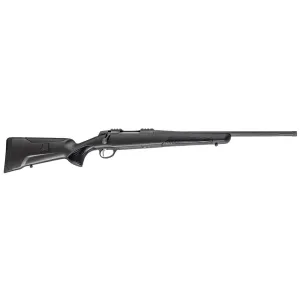
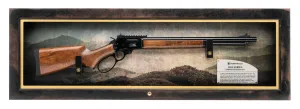
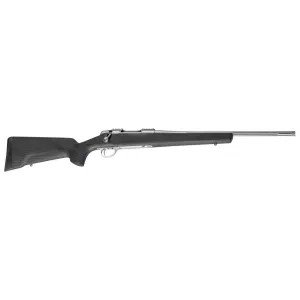



For the full search-and-compare interface across pump, semi-auto, and over/under 12 gauge shotguns, choke tubes, slings, and red dots, head to the UGS parts database. Filter by action type, brand, and price band; every match links to the cheapest available retailer at that moment.
Frequently Asked Questions
What is the best 12 gauge shotgun for home defense?
The Mossberg 590A1 is the best 12 gauge shotgun for home defense. Military-spec construction, 8+1 capacity out of the box, heavy-walled 20-inch barrel, ambidextrous top safety, metal trigger group, dual extractors. At around $650 street price it is the strongest bang-for-buck tactical pump on the market. The Remington 870 is a viable alternative if you can find a pre-2020 or post-2022 RemArms example.
Pump or semi-auto for a 12 gauge shotgun?
Pump for home defense, low-volume hunting, and any application where the gun lives in a safe between rare uses. Semi-auto for waterfowl, three-gun competition, and high-volume clays where follow-up speed and reduced recoil matter. Pumps are cheaper, more reliable in neglect, and digest any load. Semi-autos are faster, softer shooting, and need more regular cleaning to stay reliable.
Is the Mossberg 500 or Remington 870 better?
They are close. The Mossberg 500 wins on ambidextrous top safety, larger trigger guard, and consistent current production quality. The Remington 870 wins on action smoothness (especially on well-worn examples) and aftermarket depth. For new buyers in 2026, the Mossberg 500 is the safer purchase. For used buyers, a pre-2020 870 in good condition is the value pick. The Mossberg 590A1 (military-spec 500 variant) beats both for tactical use.
What is the difference between the Beretta 686 and an over/under like a Browning Citori?
Both are quality production over/unders aimed at clay shooters and upland hunters. The Beretta 686 has Steelium barrels and a low-profile action that tends to balance slightly better between the hands for sporting clays. The Browning Citori uses a deeper receiver and slightly heavier overall feel that some shooters prefer for trap. Both run $2,200-2,500 at standard configurations. The 686 has a longer continuous production history (since 1984) and stronger resale value.
Is the Stoeger M3000 really worth buying over a Benelli M2?
For $549 vs $1,799, the Stoeger M3000 captures most of the Benelli M2 performance at a third of the price. The M3000 uses an inertia system closely derived from Benelli (which owns Stoeger) and runs reliably with 2.75-inch and 3-inch loads. The Benelli M2 wins on finish quality, trigger feel, ComforTech recoil reduction, and resale value. If you shoot occasional clays or hunt 20 days a year, the M3000 is the better value. If you shoot 200 rounds a week or compete seriously, pay the Benelli premium.
What ammo should I buy for a 12 gauge home defense shotgun?
Federal Premium 00 Buckshot LE13200 (9-pellet FliteControl), Hornady Critical Defense 00 Buck, or Federal LE Tactical low-recoil 00 buck. All three pattern tightly inside the 5-15 yard home defense window. FliteControl in particular keeps a fist-sized group at 15 yards from most cylinder-bore guns. Avoid birdshot for home defense (it underpenetrates) and slugs (they overpenetrate dramatically). Pattern your specific gun on paper before staging.
Can I use a 3-inch shell in a gun chambered for 2.75-inch?
No. Never. The 3-inch shell will chamber but cannot fully unfold during firing, which causes dangerous pressure spikes. Every shotgun is marked on the barrel with its maximum shell length. Run only the shell lengths your gun is rated for. 2.75-inch chambers run only 2.75-inch shells. 3-inch chambers run both. 3.5-inch chambers (Super Magnum) run all three. Check before you load.
How often should I clean my 12 gauge shotgun?
Pump actions: every 500 rounds for casual hunters, every 100 rounds for competitive shooters. Semi-auto gas guns (Beretta A300): every 250-500 rounds. Inertia semi-autos (Benelli M2, Stoeger M3000): every 1,000-2,000 rounds as long as the bolt face and chamber stay clean. Over/unders (Beretta 686): wipe down after every use, full clean every 500-1,000 rounds. Carbon buildup affects function more on gas guns than on pumps or inertia semis.
High-end shotguns climb fast into used-car money. See the priciest guns we stock in guns that cost more than your car.
For a budget 12-gauge that swallows 3.5-inch magnums and shrugs off the weather, read our full Benelli Nova review.
4,715+ Gun & Ammo Deals
Updated daily from 200+ top retailers. Filter by category, caliber, action type, and price.
Related Guides