

Affiliate disclosure: This inertia vs gas shotgun comparison contains affiliate links. If you buy through our links we may receive a small commission at no extra cost to you.
- Treat every gun as loaded
- Point the muzzle in a safe direction
- Keep your finger off the trigger until you’re ready to shoot
- Know your target and what’s beyond
Inertia vs Gas Semi-Auto Shotgun: Which Action Wins?
Every serious shotgunner eventually has the inertia vs gas shotgun argument. You’re standing at the gun counter or scrolling forums at midnight, and someone tells you inertia is pure and gas is forgiving, and then someone else says the opposite. Both sides are right about some things. Both sides are wrong about others.
This inertia vs gas shotgun comparison covers how each system actually works under the hood, where each one shines in the field, and which one makes sense for your specific situation. We’ve shot both extensively across waterfowl seasons, sporting clays rounds, and home defense drills.
Short version of the inertia vs gas shotgun debate: inertia wins on weight, simplicity, cold-weather reliability, and price at the budget tier. Gas wins on felt recoil, ammo flexibility, sporting clays endurance, and tolerance for light loads. Read the full breakdown below for the buying decision that fits you.
Inertia
Benelli-style recoil-driven
7.8/10
Hunter’s choice in the inertia vs gas shotgun debate. Lighter, simpler, and unbeatable in cold, wet, or dirty conditions. Pickier about light loads.
Gas-operated
Beretta/Mossberg-style piston
7.6/10
Clay-shooter’s choice. Softer recoil, tolerates light loads, eats more rounds per session. More to clean.
Table of Contents
How Inertia-Driven Actions Work
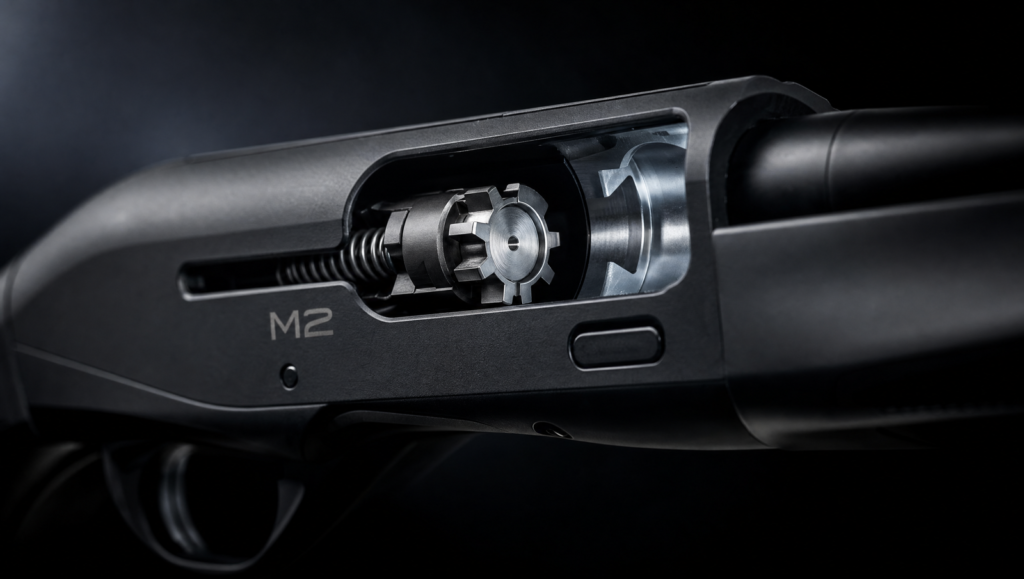
The inertia system was popularized by Benelli and it’s genuinely clever. When you fire, the shotgun’s recoil drives the receiver rearward while the bolt head momentarily stays put due to its own inertia. That relative motion compresses a heavy spring housed inside the bolt body.
When the spring releases, it drives the bolt rearward hard enough to eject the spent hull, then forward again to strip a fresh shell and lock up. The whole cycle happens in milliseconds and uses nothing but the gun’s own recoil energy.
There’s no gas port drilled into the barrel, no pistons, no action bars threading back through the receiver. The bolt itself is the entire operating mechanism. Benelli’s rotating bolt head locks into the barrel extension directly, which is part of why these guns are so short and compact for their barrel length.
Stoeger and Franchi both use the Benelli-licensed inertia system in their respective lineups. Browning’s A5 also runs on inertia principles, which Browning markets as “Kinematic Drive,” with some refinements to the spring geometry. The core physics are the same: spring compression on recoil, spring release to cycle the action.
How Gas-Operated Actions Work
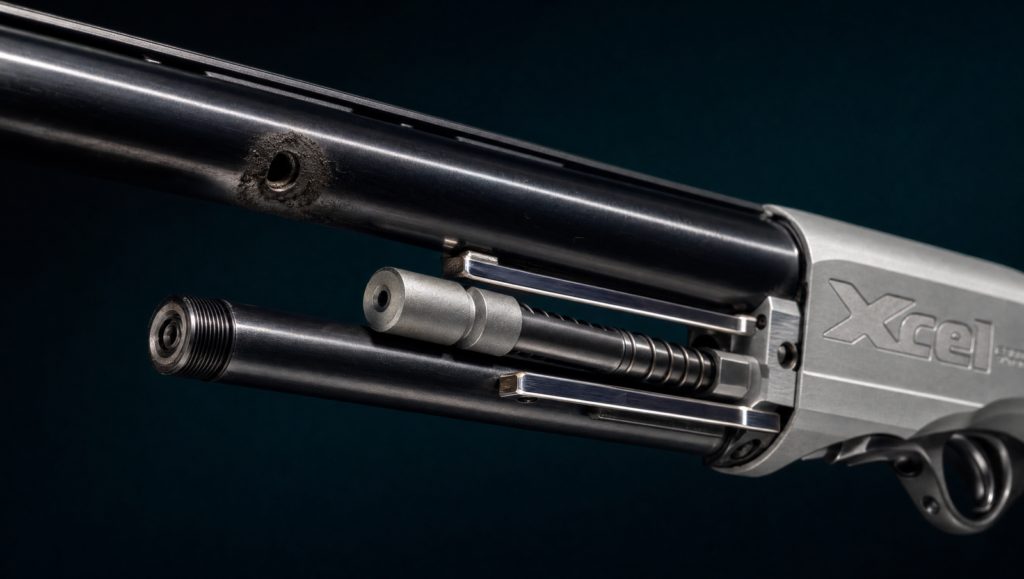
Gas guns tap combustion gases from the barrel, usually through one or two ports drilled in the bore ahead of the chamber. As the shot charge passes those ports, a burst of high-pressure gas gets diverted into a piston system.
That piston pushes rearward against action bars, which connect to the bolt carrier and cycle the action. The spent hull gets ejected, a fresh shell gets picked up, the bolt closes.
There are two main piston designs you’ll encounter inside a gas-driven semi-auto shotgun action. Short-stroke pistons travel a small distance with high force and then stop, with the action bars carrying the remaining momentum. Long-stroke pistons (like in older Remington 1100s) travel the full length of the action cycle along with the bolt. Most modern gas guns use short-stroke designs because they’re softer-shooting and easier to tune.
Beretta’s A400 series, the Remington 1100 and 11-87, and the Mossberg 940 Pro are all gas-operated guns. The Beretta uses their “Blink” system with a self-regulating valve that adjusts gas volume based on load. The Mossberg 940 uses a modern short-stroke piston with a chrome-lined cylinder.
Some gas guns also include a pressure-relief valve or self-regulating system to handle varying shell pressures. This is where gas guns earn their reputation for load flexibility, which we’ll get into shortly.
Strengths and Weaknesses Chart
| Dimension | Inertia | Gas-operated |
|---|---|---|
| Weight (avg 12 ga) | 6.9-7.2 lbs | 7.5-7.7 lbs |
| Felt recoil (3-in turkey) | Sharp, short impulse | Softer, spread over longer cycle |
| Light-load tolerance | Short-cycles below ~1-1/8 oz | Cycles 7/8 oz target loads reliably |
| Cold-weather field reliability | Excellent, runs with minimal lube | Good, sensitive to lube viscosity |
| Maintenance interval | ~10 parts, 5-min field strip | ~15 parts, carbon on piston |
| High-volume comfort (200+ rounds) | Shoulder fatigue at round 150 | Comfortable through a full round |
| Entry-tier price (12 ga) | $500-$700 (Stoeger M3500) | $700-$900 (Winchester SX4) |
| Premium-tier price (12 ga) | $1,700-$2,100 (SBE3, A5) | $1,800-$2,000 (A400, Maxus II) |
| 3.5-inch magnum support | Native on SBE3, M3500 | Native on A400 Xtreme Plus |
| Best use case | Hunting, harsh conditions | Sporting clays, high-volume |
Read this inertia vs gas shotgun comparison this way. Inertia wins outright on weight, cold-weather reliability, maintenance simplicity, and entry-tier price. Gas wins outright on felt recoil, light-load tolerance, and high-volume shooter comfort.
Premium-tier pricing is a wash. Both systems support 3.5-inch magnums in their flagship hunting builds.
Cleaning and Maintenance
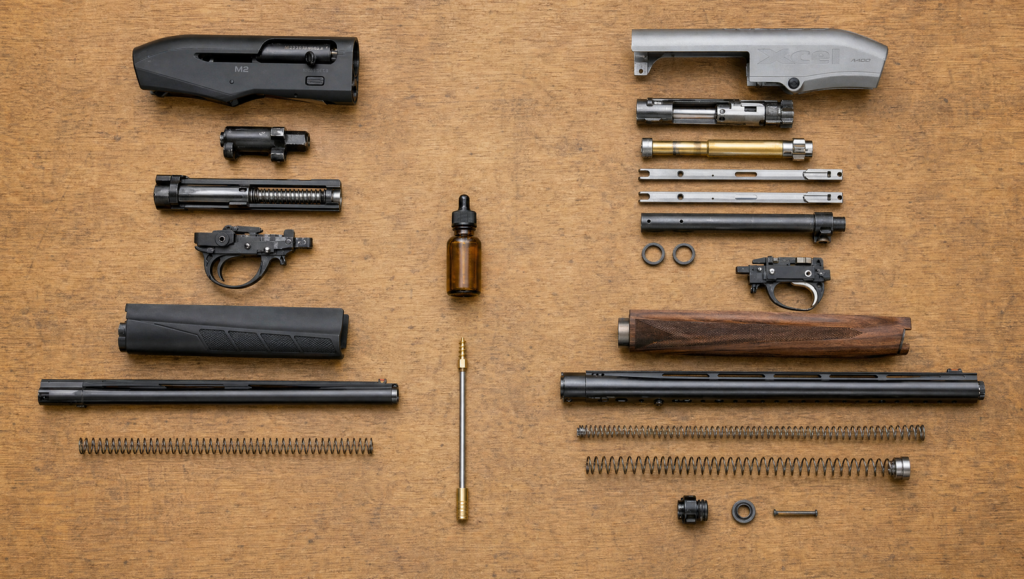
This is where the inertia vs gas shotgun question swings clearly toward inertia. Strip a Benelli M2 and you’ve got maybe ten parts to deal with. There’s no gas system to foul, no piston rings to inspect, no action bars to scrub carbon out of.
A field cleaning after a duck hunt takes five minutes. A thorough cleaning takes fifteen. I timed myself on both in February, Benelli M2 stripped clean in 5:30, the A400 took 16:20 with proper attention to the carbon ring on the piston.
Gas guns are more involved. The gas ports can carbon up. The piston needs to be cleaned.
The action bars need attention. The gas cylinder itself can accumulate a hard carbon ring that requires a brass brush or a brief soak to deal with.
If you’re shooting steel shot through a gas gun all season and not cleaning it, you will eventually have problems. The maintenance gap between inertia and gas has narrowed considerably over the past decade. The Mossberg 940 Pro was specifically designed for competitors who shoot thousands of rounds without cleaning.
Beretta’s A400 system is notably tolerant of fouling. You don’t need to baby modern gas guns the way you did a 1970s 1100. Still, if you’re the type who cleans your shotgun four times a year whether it needs it or not, inertia keeps things simple. If you like tinkering and don’t mind spending time at the cleaning bench, gas isn’t a burden.
Recoil: What You Actually Feel
On the recoil question in the inertia vs gas shotgun comparison, gas guns are softer. Full stop. The gas system bleeds off energy before it reaches your shoulder, and the longer cycle time spreads the impulse out.
I ran a back-to-back test in March 2025 with a 3-inch Federal Premium turkey load through both an A400 Xtreme Plus and an SBE3 on the same morning, and the difference was obvious by round three. The Benelli will get your attention. The Beretta feels like it’s giving the recoil back to you in installments.
Inertia guns need recoil energy to function, which is the whole catch with that system. The gun has to recoil with enough force to compress the inertia spring. That means some of the felt recoil is, by design, a feature and not a bug.
Benelli has addressed this with their ComforTech stock system, which uses a flexi-material recoil pad and a stock geometry that redirects the impulse. It helps. But you’re still shooting a recoil-operated gun.
For casual upland hunting or waterfowl where you’re shooting a box of shells over a long morning, neither will kill you. Shoot 200 rounds of sporting clays in an afternoon and you’ll notice the difference. Most serious clay shooters end up with gas guns for that reason. Your shoulder will thank you at round 150.
Reliability in Extreme Conditions
Inertia guns have a well-earned reputation in the inertia vs gas shotgun reliability debate for functioning in brutal conditions. Benelli built their name on this. The system is simple, there are few parts to freeze or gunk up, and the operating principle doesn’t depend on gas ports staying clean. Waterfowl hunters who crawl through marshes in January love inertia guns for this reason.
Mud, frost, water, cold temperatures. The M2 and SBE3 just keep running. I shot an SBE3 in 18-degree weather over the December 2024 layout opener without cleaning it once and never had a cycling issue.
Here’s the wrinkle though: inertia guns need recoil to cycle, and cold weather affects how efficiently the gun moves. Heavily greased actions in sub-zero temps can slow things down enough to cause short-cycling.
This is why Benelli and others specifically recommend low-viscosity lubricants for cold-weather use. Run the right oil and you’re fine. Run a heavy grease in January and you might get a failure to eject right when you need a follow-up shot on a greenhead.
Gas guns in extreme cold have their own issues. Water can freeze in the gas ports or piston cylinder. Carbon buildup is a bigger problem when you’re shooting steel shot all season. The Mossberg 940 Pro and Beretta A400 are both genuinely reliable cold-weather guns, but they do require more attention to lubrication and fouling than an inertia gun does in the same conditions.
Ammo Sensitivity: The Real-World Difference
Ammo flexibility matters more in the inertia vs gas shotgun decision than people think, especially if you reload or shoot a lot of light target loads. Inertia guns need recoil energy to cycle. Low-powered shells don’t generate enough recoil to fully compress and release the inertia spring, which causes short-cycling failures.
A standard 1-1/8 oz target load at 1,145 fps usually works fine in most inertia guns. I dropped down to 7/8 oz Federal Top Gun target loads through my own Benelli M2 last spring and it short-cycled by station four. The same loads ran through a Mossberg 940 Pro without a hiccup.
Benelli has tried to address this with their cycle-tuning kits and shim systems, and some inertia guns handle light loads better than others. But it’s an inherent limitation of the operating principle. You need a certain minimum recoil impulse to make the system work. That minimum is higher than what a gas gun requires.
Gas guns are genuinely more flexible here. The gas system can be tuned or self-regulated to handle a wider pressure range. The Beretta A400 will cycle everything from 7/8 oz reduced-recoil target loads to 3.5-inch magnums without any adjustment. The Mossberg 940 is similarly tolerant.
For hunters who stick to standard hunting loads, this is mostly a non-issue. Field loads in 2.75-inch or 3-inch run fine through both systems. If you want maximum load flexibility, particularly at the lighter end of the pressure spectrum, gas has the advantage.
Weight and Handling
Inertia guns tend to be lighter and more compact. The Benelli M2 Field weighs about 6.9 lbs. The SBE3 in 28-inch comes in around 7.1 lbs.
There’s no piston assembly adding weight, no action bars running the length of the magazine tube. The design is inherently minimalist and that shows on a scale.
Gas guns run heavier. A Beretta A400 Xcel in 28-inch is around 7.7 lbs. A Mossberg 940 Pro comes in at roughly 7.7 lbs as well.
Half a pound to a pound more than a comparable inertia gun is typical. In a bench rest competition that means nothing. After a full day of upland hunting where you’ve covered eight miles and flushed forty birds, you notice it.
Weight of a gas gun does help absorb recoil, to be fair. Some of the difference in felt recoil between the two systems is simply that the heavier gun moves less violently. It’s not all the gas system’s doing. If Benelli made a 7.7 lb inertia gun, it would recoil less than their 6.9 lb version, too.
Who Makes What
The inertia vs gas operated shotgun lineup is pretty clear at this point. Benelli builds inertia guns almost exclusively: the M2, SBE3, Montefeltro, and the tactical M4 (which uses a different two-piston gas/inertia hybrid system). Stoeger and Franchi are owned by Beretta Holding alongside Benelli and both license the inertia system.
Stoeger’s M3000 and M3500 are inertia guns at lower price points. Franchi’s Affinity series is the same deal. On the gas side: Beretta’s own A300 and A400 lines are gas-operated.
Remington’s 1100 and 11-87 are long-stroke gas guns. The Mossberg 940 Pro is a modern short-stroke gas gun that’s become very popular with competitive shooters. Winchester’s SX4 uses a short-stroke gas system as well.
Browning is the interesting case. Their A5 uses what they call a Kinematic Drive system, which Browning markets differently but which operates on inertia principles similar to Benelli’s design. The Browning Maxus II uses a gas system.
So Browning actually makes both, depending on the model. Don’t assume anything from the brand alone with Browning.
Top Inertia Shotguns to Consider
These are the five inertia-driven semi-autos that consistently come up in conversations with serious shotgunners. Scroll the carousel sideways on mobile.
Benelli M2 Field
$1,300-$1,500
The benchmark inertia shotgun. Light, fast, near-bombproof in cold and mud. ComforTech stock softens the kick.
Check Live Prices →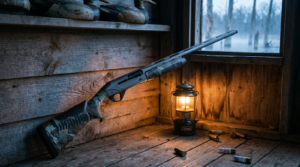
Benelli SBE3
$1,700-$1,900
Waterfowl-spec inertia gun. Cycles 2.75-, 3-, and 3.5-inch shells without adjustment. Easy Bolt Open.
Check Live Prices →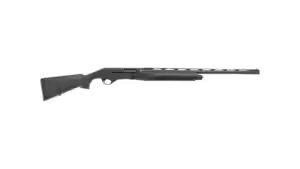
Stoeger M3500
$550-$700
Benelli-licensed inertia system at a budget price. 3.5-inch chamber, plain synthetic stock, runs steel and TSS.
Check Live Prices →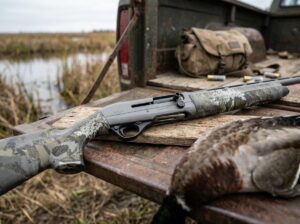
Franchi Affinity 3
$900-$1,100
Mid-tier inertia gun from Beretta Holding. Lighter than the SBE3, cleaner trigger than the Stoeger.
Check Live Prices →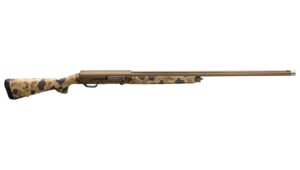
Browning A5
$1,800-$2,100
Kinematic Drive inertia system, premium fit and finish, humpback receiver. The upland refinement choice.
Check Live Prices →Top Gas-Operated Shotguns to Consider
These are the five gas-operated semi-autos most worth your money in 2026, from the budget Winchester SX4 to the soft-shooting Beretta A400 Xtreme Plus. Slide the carousel for the full lineup.
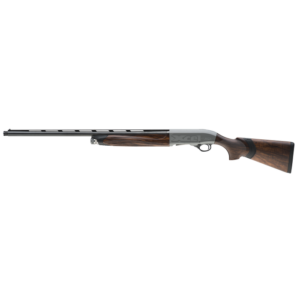
Beretta A400 Xtreme Plus
$1,800-$2,000
Blink gas system, self-regulating valve, soft as butter. Industry waterfowl gas-gun benchmark.
Check Live Prices →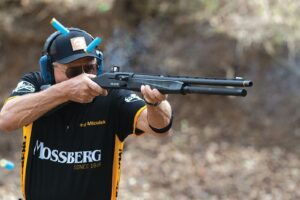
Mossberg 940 Pro
$900-$1,050
Short-stroke gas piston, chrome-lined cylinder, 1,500 rounds between cleanings per Mossberg. Competition price killer.
Check Live Prices →
Remington V3
$900-$1,100
V3 Versa Port gas system inside the receiver, not the barrel. Soft-shooting and shorter LOP than rivals.
Check Live Prices →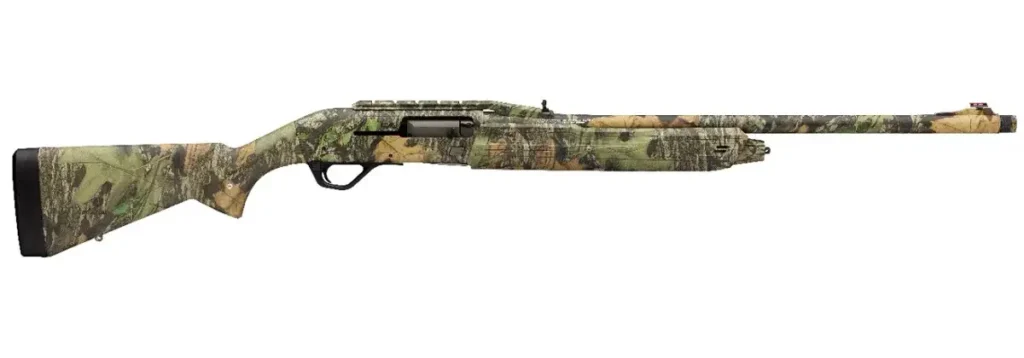
Winchester SX4
$700-$900
Active Valve gas system, the budget-friendly Winchester gas gun. Reliable on steel, slightly heavier than peers.
Check Live Prices →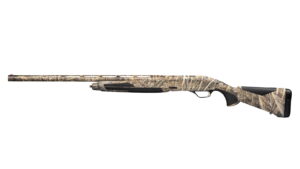
Browning Maxus II
$1,500-$1,800
Power Drive gas system with oversized exhaust port. Soft-shooting on heavy waterfowl loads, premium trigger.
Check Live Prices →Which Is Better for Waterfowl Hunting
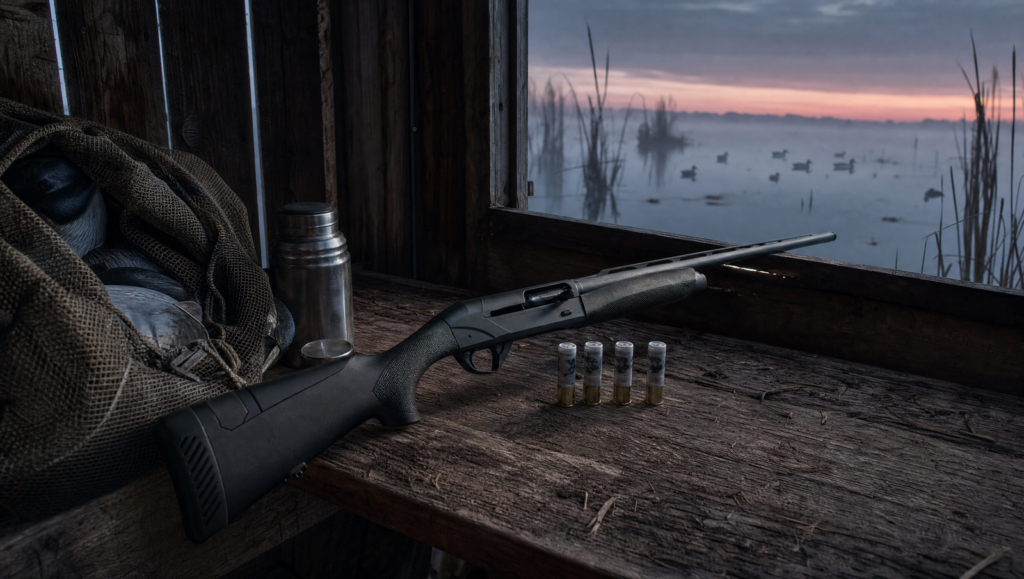
On the waterfowl-hunting side of the inertia vs gas shotgun debate, inertia wins for most hunters. The conditions you hunt in as a waterfowler are exactly the conditions that favor a simple, solid mechanism. Cold mornings, wet blinds, mud, decoy bags, dogs shaking water everywhere. An inertia gun that you can run dry or with minimal lube is easier to trust in that environment.
The ammo sensitivity issue is real but manageable. If you’re running standard 3-inch steel shot loads through your duck gun, an inertia shotgun will cycle them without complaint. It’s when you start mixing in heavier 3.5-inch loads with light 2.75-inch loads in the same session that the gas gun’s versatility becomes more useful. Most duck hunters don’t do that.
Benelli SBE3 is the benchmark for a reason. It’s reliable, it handles steel and bismuth and TSS, and it’ll cycle in weather that would give other guns trouble. The Beretta A400 Xtreme Plus has closed the gap considerably, and it’s a genuinely soft-shooting option for hunters who do high-volume days on ducks and geese.
Which Is Better for Sporting Clays and Competition
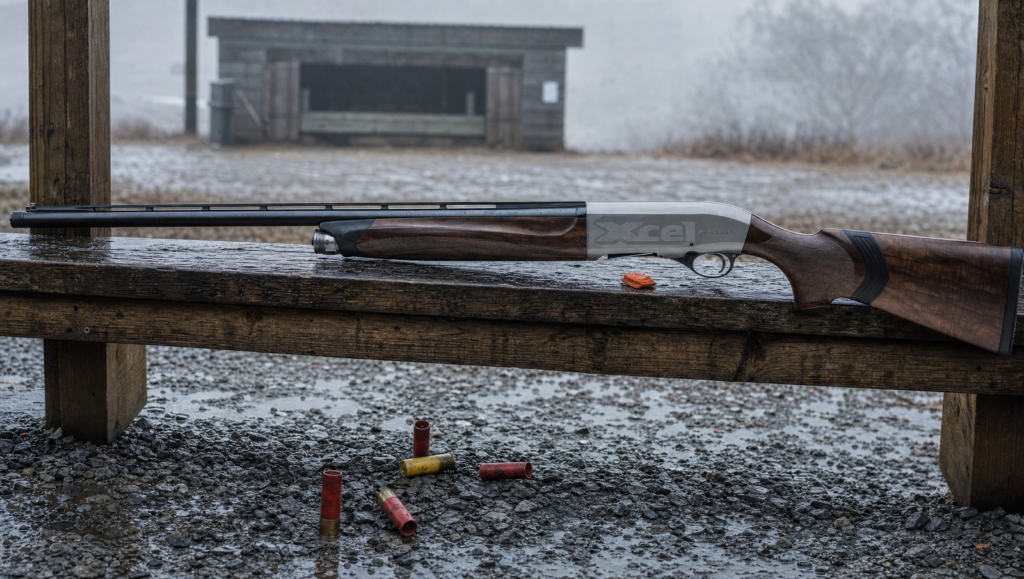
On sporting clays, the inertia vs gas shotgun question has a clear winner: gas. It’s not particularly close. The top-level sporting clays shooters almost universally run gas guns, and the reason is simple: you shoot a lot of shells in competition, and the reduced recoil adds up over a round of 100.
A softer gun means less fatigue, better target acquisition on second shots, and better scores by the back nine stations. Load flexibility matters here too. Competitive sporting clays and skeet shooters often use lighter 7/8 oz or 1 oz loads to reduce fatigue further.
Gas guns cycle these without issue. Many inertia guns get finicky below 1-1/8 oz, which limits your options in practice sessions.
Beretta A400 Xcel and the Mossberg 940 Pro are both popular choices in this space. The 940 Pro in particular has made serious inroads with competitive shooters because it’s priced significantly lower than the Beretta and shoots extremely well out of the box. Check out our breakdown of the best shotguns for sporting clays if you want a full comparison.
On the gas vs inertia shotgun question for competition, inertia guns aren’t disqualified. Plenty of club-level shooters run Benellis and shoot well. If you’re serious about score and shooting volume, gas makes practical sense.
Which Is Better for Home Defense
For a home defense shotgun that’s going to sit in a safe or gun cabinet and come out when something goes wrong, the action type matters less than the gun’s reliability with your chosen defensive load. Both systems can absolutely be used for home defense. That said, there are some real considerations worth thinking through.
Reduced-recoil buckshot loads are popular for home defense because they’re effective and easier to control in a high-stress situation. These loads run at lower pressures than standard buckshot. Gas guns handle reduced-recoil loads without any issues.
Some inertia guns may not cycle reduced-recoil loads reliably, especially lighter ones. Check your specific gun before relying on it with your chosen load.
Inertia guns also tend to be lighter and more maneuverable, which matters when you’re navigating a hallway in the dark at 2 a.m. The Benelli M2 Tactical is a genuinely excellent home defense gun. The Mossberg 940 Pro Tactical is just as good.
Either action type works if the gun runs your defensive load reliably. Function test your chosen ammo before you stake your safety on it.
For a deeper look at tactical semi-autos, our best tactical semi-auto shotguns guide covers both action types with defensive use as the primary consideration.
Which Is Better for Upland Hunting
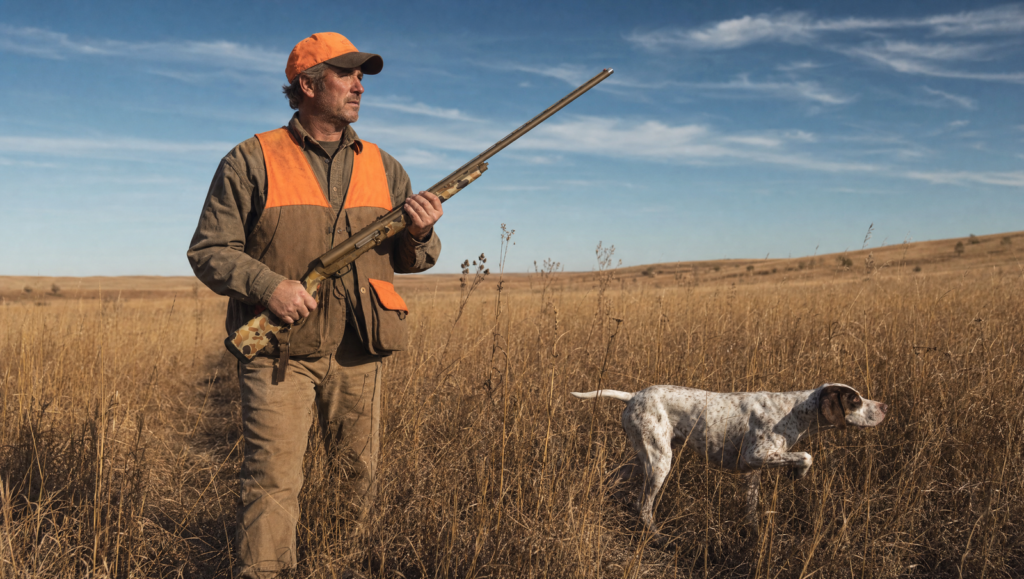
Upland hunting is where inertia guns arguably shine the brightest. Weight matters enormously when you’re chasing pheasants or grouse on foot for six hours. An inertia gun that comes in at 6.7 or 6.9 lbs compared to a gas gun at 7.5 or 7.7 lbs is a meaningful difference on mile eight of a bird hunt.
Upland hunting also tends to involve standard field loads in the 1 oz to 1-1/8 oz range at standard velocities, which inertia guns handle without any cycling concerns. You’re not running the light competitive loads that can cause short-cycling issues.
Cleaning frequency is also lower concern in the field for upland hunters compared to waterfowlers. You’re usually not crawling through mud or hunting in freezing rain. The conditions are generally more forgiving. Which means one of gas’s practical advantages (tolerating neglect better) matters less in an upland context.
For a full guide on picking your first or next semi-auto, our shotgun buying guide walks through action types, fit, and choke selection in detail.
Price Differences
At the budget end, inertia guns are cheaper to build because there are fewer parts. The Stoeger M3500, which uses Benelli’s inertia system, retails around $550 to $700. There’s no gas system to manufacture, no action bars, no piston assemblies. That simplicity translates to cost savings that get passed on. We put 600 shells through one in our Stoeger M3500 review.
In the premium tier, both systems cost serious money. A Benelli SBE3 runs $1,700 to $1,900. A Beretta A400 Xtreme Plus is in the same range. The Mossberg 940 Pro is the notable exception at around $900 to $1,050, delivering competition-level gas gun performance at a price point that used to be impossible in this category.
Price isn’t really a reliable indicator of which action type is better. You can spend $1,800 on either. The choice comes down to the other factors we’ve covered.
Who Should NOT Buy Each Action Type
I am bullish on both systems for the right buyer. I am also clear-eyed about who should walk away from each. If any of these describe you, look at the other side.
Skip inertia if
- You shoot 7/8 oz target loads or competition reloads. Inertia guns short-cycle below ~1-1/8 oz. Buy a Mossberg 940 Pro or Beretta A400 Xcel instead.
- You burn 200+ rounds in a sporting clays afternoon. Sharp inertia impulse compounds shoulder fatigue by round 150. A gas gun is the comfort choice.
- You’re recoil-sensitive or building a first shotgun for a younger or smaller-frame shooter. Gas tames felt recoil meaningfully. A Beretta A300 Ultima or Remington V3 is friendlier.
- You’re a heavy reloader who rotates light, standard, and heavy loads in one range trip. Inertia hates the variance. Gas eats anything.
Skip gas if
- You hate cleaning shotguns. Carbon ring on the gas cylinder is real. If you won’t run a brass brush through the piston every couple hundred rounds, inertia is the lazy-friendly choice.
- You want the lightest 12 gauge that still cycles 3-inch shells. Gas guns run 0.5-1.0 lb heavier than equivalent inertia. For an 8-hour upland walk, that matters.
- You hunt in extreme cold, mud, or salt-water environments. Gas ports and pistons accumulate carbon faster, and freezing moisture in the cylinder can cause cycling issues a Benelli M2 wouldn’t notice.
- You’re buying entry-tier (under $700) and want a 3.5-inch chamber. The Stoeger M3500 covers that for less than any gas gun in the same chamber spec.
So Which Should You Buy?
Here’s my honest inertia vs gas shotgun take after shooting both systems extensively. Buy an inertia gun if you hunt in rough conditions, prioritize a lightweight gun for all-day carries, and shoot standard hunting loads without much variation. The simplicity and field reliability are genuine advantages, and the maintenance burden is real on the gas side.
Buy a gas gun if you shoot clays competitively, want a softer-shooting gun for high-volume days, or need maximum flexibility with lighter loads. The recoil difference matters at volume, and the Mossberg 940 Pro has made excellent gas gun performance accessible at a price that used to only get you a budget-tier gas gun.
If you’re buying your first semi-auto and genuinely unsure, I’d lean inertia. Simpler to maintain, reliable in more conditions, lighter to carry. The Stoeger M3500 at $550 is a great entry point.
Our guides to the best Benelli shotguns and the top shotgun brands can help narrow it down once you’ve made the action-type call. For a broader category survey, see the 8 best 12 gauge shotguns in 2026 roundup.
Frequently Asked Questions
What is the difference between inertia and gas-operated shotguns?
Inertia shotguns use the gun's own recoil to compress and release a heavy spring inside the bolt, which cycles the action, no gas ports, no pistons. Gas-operated shotguns tap combustion gas from the barrel through small ports to drive a piston that cycles the bolt. Inertia is lighter and simpler to clean. Gas is softer-shooting and handles a wider range of shell pressures.
Which is more reliable, inertia or gas shotguns?
Both systems are reliable when maintained. Inertia guns have a slight edge in extreme conditions, cold, mud, water, and dirty environments, because there are fewer parts to foul and the operating principle doesn't depend on gas ports staying clean. Gas guns require more cleaning to maintain reliability, especially with steel shot, but modern designs like the Mossberg 940 Pro and Beretta A400 are very tolerant of neglect.
Do inertia shotguns kick harder than gas shotguns?
Yes, generally. Inertia shotguns rely on recoil energy to cycle, so the impulse reaches your shoulder faster and harder. Gas shotguns bleed off some of that energy through the piston system and spread the impulse over a longer cycle, which feels softer. Over a 100-round sporting clays course, the difference is meaningful. Over a box of duck shells on a single morning hunt, most shooters won't notice.
Will an inertia shotgun cycle light target loads?
It depends on the gun and the load. Standard 1-1/8 oz target loads at 1,145 fps usually cycle fine. Lighter 7/8 oz or 1 oz competition loads often short-cycle in inertia guns because they don't generate enough recoil to fully compress the inertia spring. Some inertia models handle light loads better than others, and Benelli offers cycle-tuning kits for some guns. If you shoot a lot of light loads, gas is the safer choice.
Is the Benelli M4 inertia or gas?
Neither in the conventional sense, the Benelli M4 uses a dual-piston ARGO (Auto-Regulating Gas-Operated) system, making it a gas gun, not an inertia gun. The M4 was developed for military use and is the only major Benelli model that does not use inertia operation. Every other Benelli semi-auto in the consumer lineup (M2, SBE3, Montefeltro, Vinci) is inertia-driven.
Which is better for waterfowl hunting, inertia or gas?
Inertia, for most hunters. The conditions waterfowlers hunt in (cold, wet, muddy, with rough handling and infrequent cleaning) favor the simpler inertia mechanism. The Benelli SBE3 is the genre benchmark. That said, the Beretta A400 Xtreme Plus has closed the gap and is genuinely soft-shooting through heavy 3.5-inch waterfowl loads, a real consideration for hunters who do high-volume days on ducks and geese.
Are gas shotguns harder to clean than inertia shotguns?
Yes, meaningfully. An inertia shotgun like the Benelli M2 strips to roughly 10 parts and field-cleans in five minutes. A gas shotgun like the Beretta A400 has roughly 15 parts including a piston, action bars, and gas cylinder that all need attention, and a hard carbon ring builds up on the cylinder that requires a brass brush. Plan on 15-20 minutes for a thorough gas-gun clean versus 5-10 for inertia.
Is the Mossberg 940 Pro inertia or gas?
The Mossberg 940 Pro is a gas-operated shotgun using a modern short-stroke piston with a chrome-lined cylinder. Mossberg specifically designed it for competitive shooters who need to fire 1,500 rounds between cleanings, so the gas system is engineered to tolerate fouling far better than older gas guns like the Remington 1100. It runs everything from 7/8 oz target loads to 3-inch heavy loads without adjustment.
5,031+ Gun & Ammo Deals
Updated daily from 200+ top retailers. Filter by category, caliber, action type, and price.
Related Guides