

Last updated May 2026 · By Nick Hall, CCW instructor who has trained shooters with and without manual safeties
Some of the links below are affiliate links, meaning I may earn a small commission if you make a purchase. This does not affect my editorial opinions or the price you pay.
- Treat every gun as loaded
- Point the muzzle in a safe direction
- Keep your finger off the trigger until you’re ready to shoot
- Know your target and what’s beyond
Table of Contents
The manual safety debate has been raging in the concealed carry community for as long as concealed carry has existed. One camp says a manual safety is an essential layer of protection. The other camp says it is one more thing that will get you killed when you need your gun in a hurry.
Both sides have valid points. The truth, as usual, lives somewhere in the middle. Whether a manual safety makes sense for your concealed carry gun depends on your experience level, your training habits, your carry method, and honestly, your personal comfort level.
Let me walk through both sides of this debate so you can make an informed decision instead of just repeating whatever your favorite YouTube gun guy told you.
What Is a Manual Safety and How Does It Work?
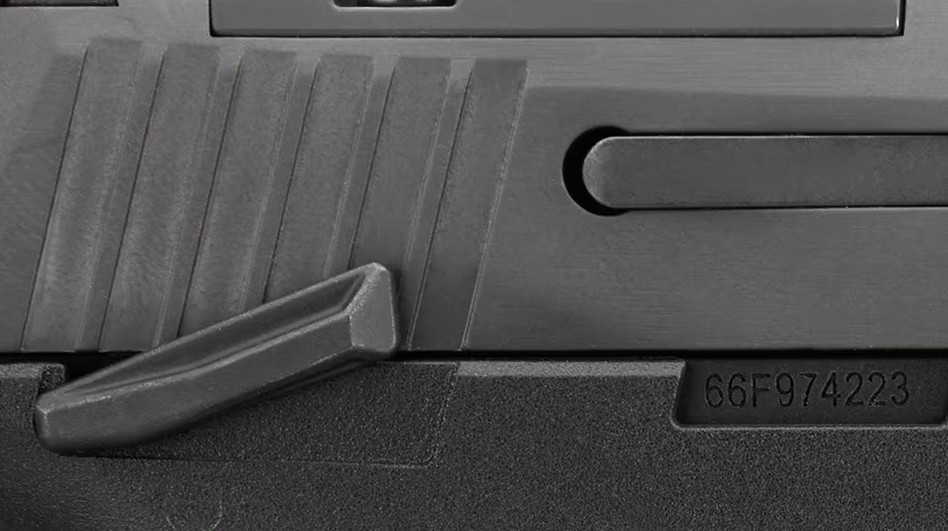
A manual safety is a mechanical lever or switch on the gun that, when engaged, physically prevents the trigger from being pulled or the firing pin from striking the primer. You have to consciously disengage it before the gun will fire. Single action carry guns such as the Kimber CDS9 are built around one.
This is different from internal or passive safeties that modern pistols have. Striker-fired guns like the Glock have a trigger safety (the little lever in the trigger), a firing pin safety, and a drop safety. These all work automatically without any input from the shooter. A manual safety is an additional, user-operated mechanism on top of those.
Common manual safety types include thumb safeties (like on a 1911 or Shield Plus), grip safeties (1911 again), and decocking levers that double as safeties (some Beretta and CZ models). Each operates differently, but they all share the same purpose: preventing the gun from firing until you deliberately make it ready.
The Case For a Manual Safety
Strongest argument for a manual safety is simple: it provides an extra physical barrier between a holstered gun and a negligent discharge. Yes, a proper holster covers the trigger guard. Yes, modern internal safeties are excellent. But a manual safety adds one more layer of protection, and in a world where the consequences of a mistake are catastrophic, extra layers matter.
For newer shooters, a manual safety can provide genuine peace of mind during the learning phase. When you are still building comfort and confidence with a loaded gun on your body, knowing that the safety is engaged can reduce anxiety. Less anxiety means clearer thinking, which is always good when firearms are involved.
1911 platform has relied on a thumb safety for over a century. Millions of military personnel and law enforcement officers have carried 1911s into combat and come home alive. The idea that a manual safety is inherently dangerous or outdated does not hold up against a hundred years of proven performance.
Manual safeties also make sense for specific carry scenarios. Off-body carry in a purse or bag, where other items might shift and press against the trigger guard, benefits from that extra safeguard. Same with carrying around small children who might grab at your waistband. An engaged safety buys you an extra moment of protection.
The Case Against a Manual Safety
primary argument against a manual safety on a carry gun is that under extreme stress, you might forget to disengage it. When adrenaline is flooding your system and fine motor skills are degrading, adding one more step to your draw sequence is adding one more potential point of failure.
There are documented cases of people drawing their gun in a defensive encounter and pulling the trigger on a still-engaged safety. In that fraction of a second, thinking “why is my gun not firing” can be the difference between life and death. This is a legitimate concern, especially for people who do not train regularly with their safety.
Modern striker-fired pistols have made external safeties largely unnecessary from a mechanical standpoint. A Glock, for example, has three internal safeties that make it physically impossible for the gun to fire unless the trigger is fully pressed. If the gun is in a proper holster, nothing can reach the trigger. The holster IS the safety.
Speed is another factor. Disengaging a safety adds time to your draw. Maybe only a tenth of a second for a well-trained shooter, but time matters in a lethal force encounter. Every fraction of a second counts when someone is closing distance or already attacking you.
Which Popular Carry Guns Offer Optional Safeties?
One of the nice things about the current handgun market is that many popular models come in both safety and no-safety variants. You can pick the same gun either way depending on your preference.
The Smith and Wesson Shield Plus is available with or without a thumb safety. Same gun, same trigger, same everything else. The Springfield Hellcat and Hellcat Pro also offer optional manual safety versions. The SIG P365 has a manual safety variant as well, giving you the option on one of the most popular micro-compact platforms.
On the full-size end, the Springfield SA-35 has a thumb safety, as does the classic 1911 platform from every manufacturer. The CZ 75 family offers both safety and decocker models. The Beretta 92 has a safety/decocker, though newer models like the 92X Performance use a decocker only.
Glocks do not offer a manual safety option. Neither do most CZ P-10 models or the Walther PDP. If you want a concealed carry handgun with an external safety, you have plenty of choices, but you need to specifically look for models that include one.
Training to Disengage on the Draw
If you choose to carry a gun with a manual safety, you must train to disengage it as part of your draw stroke. It cannot be a separate, conscious step. It needs to be an automatic, ingrained part of the motion that happens without thinking.
The way to build this is through repetition. During dry fire practice, always start with the safety engaged. Every single draw should include swiping the safety off as your hand establishes a firing grip. After a few hundred reps, it becomes muscle memory. You will disengage the safety without even thinking about it, just like you clear your cover garment without thinking about it.
Danger comes when people do not practice this. If you carry a safety-equipped gun but only train at the range with the safety already off, you are building bad habits. Practice the way you carry. Every time. Our draw stroke guide covers integrating the safety into your presentation.
One useful drill is to randomly load snap caps in your magazine mixed with live ammo. When you hit a snap cap and the gun clicks instead of bangs, you will immediately know if your safety was actually off. It is a simple but effective diagnostic tool.
The Holster-As-Safety Philosophy
Many experienced carriers subscribe to the “holster is the safety” philosophy. The logic is straightforward: if your gun is in a rigid Kydex holster that completely covers the trigger guard, nothing can manipulate the trigger. The gun cannot fire. Period.
When you draw the gun, it comes out of the holster with no external safety to remember. Point, shoot. This simplicity is appealing because it removes a potential failure point from a high-stress situation. The fewer steps between “draw” and “fire,” the fewer opportunities for something to go wrong.
This philosophy works well, but only if you are disciplined about your holster quality. A leather holster that has softened over time, a hybrid holster with a flexible backer, or a cheap Amazon holster with a loose fit can all allow something to press the trigger. The holster-as-safety concept requires a high-quality, rigid, gun-specific holster. No exceptions.
When a Manual Safety Absolutely Makes Sense
There are specific scenarios where a manual safety is genuinely the smart choice, regardless of what the internet argues. New shooters who are still developing safe handling habits benefit from the extra layer of protection while they build competence. There is nothing wrong with using a training wheel while you learn.
Off-body carry is another situation where a safety makes sense. Carrying in a purse, bag, or backpack means other objects can shift around and potentially contact the trigger area, even through a holster. A manual safety adds meaningful protection in these less controlled environments.
People who carry hammer-fired guns in single-action mode (like a cocked and locked 1911) should absolutely use the thumb safety. That is how the platform was designed to be carried. The light, crisp single-action trigger combined with no external safety would be genuinely reckless.
And honestly, if carrying with a manual safety gives you more confidence and makes you more likely to carry consistently, that alone is reason enough. The best gun is the one you actually carry every day. If a safety helps you do that, use it.
When You Can Skip the Manual Safety
If you are carrying a modern striker-fired pistol in a quality Kydex holster, a manual safety is genuinely optional. The internal safety mechanisms on guns like Glocks, SIGs, and M&Ps are solid and proven. Combined with a proper holster, the risk of a negligent discharge is essentially zero.
Experienced shooters who train regularly and have a well-practiced draw stroke often prefer the simplicity of no external safety. One fewer thing to think about under stress. Draw, present, press the trigger. The gun goes bang every time.
If you have been carrying for years and you are confident in your gear and your habits, you probably do not need an external safety. But “confident” means you have actually tested your skills, not just assumed you are good because you have been doing it a long time. Complacency is its own kind of safety issue.
The Bottom Line
Manual safety debate does not have a universally correct answer. It depends on your gun, your holster, your training level, and your carry method. Both approaches work. Both have been proven in real-world defensive encounters. The key variable is you and how well you train.
If you carry with a safety, train to disengage it unconsciously on every draw. If you carry without one, invest in the best holster you can afford and never get lazy about trigger discipline. Either way, the fundamentals of safe gun handling matter far more than the presence or absence of a little lever on the side of your gun.
Pick the option that makes you most confident, train with it religiously, and stop worrying about what the other camp thinks. Carry smart, carry consistently, and keep training.
FAQ: Manual Safety on a Carry Gun
Is it safe to carry a gun without a manual safety?
Yes. Modern striker-fired pistols have multiple internal safeties that prevent the gun from firing unless the trigger is deliberately pulled. When paired with a rigid holster that covers the trigger guard, carrying without an external manual safety is perfectly safe and is the standard for most law enforcement agencies.
Will a manual safety get me killed in a gunfight?
Only if you forget to disengage it, which happens when people do not train with their safety. If you practice disengaging the safety as part of every draw stroke until it becomes automatic muscle memory, it adds negligible time and does not create a meaningful disadvantage in a defensive encounter.
What guns come with an optional manual safety?
Popular concealed carry guns with optional safety variants include the Smith and Wesson Shield Plus, Springfield Hellcat, SIG P365, and Ruger Max-9. Full-size options with safeties include 1911-style pistols, the CZ 75, and Beretta 92 series. Glocks and Walther PDP do not offer manual safety options.
Do police officers carry guns with manual safeties?
Most modern law enforcement agencies issue striker-fired pistols without external manual safeties, such as the Glock 17 or SIG P320. However, some agencies still use guns with safeties, and many officers who carry 1911s off duty use the thumb safety. There is no universal standard.
Should beginners carry with a manual safety?
A manual safety can be a good choice for beginners who are still building safe handling habits and confidence. It provides an extra layer of protection during the learning phase. The key is to train from the very beginning to disengage the safety as part of the draw stroke so it becomes automatic.
Does a manual safety slow down your draw?
For a well-trained shooter, disengaging a thumb safety adds approximately 0.05 to 0.1 seconds to the draw. For someone who does not practice it regularly, it can add much more time or cause a complete failure to fire. The speed impact depends entirely on how much you train with your specific safety.
What is the holster-as-safety philosophy?
This is the idea that a quality rigid holster with full trigger guard coverage functionally serves as a safety by making it impossible for anything to press the trigger while the gun is holstered. Many experienced carriers rely on this instead of an external manual safety, but it requires a high-quality, gun-specific Kydex holster.
Can I add a manual safety to a gun that does not have one?
Aftermarket manual safety kits exist for some pistols, but modifying a carry gun is generally not recommended. Factory-engineered safety mechanisms are tested and proven. Aftermarket modifications can affect reliability and may create legal liability issues if you ever use the gun in self-defense.
4,644+ Gun & Ammo Deals
Updated daily from 200+ top retailers. Filter by category, caliber, action type, and price.
Related Guides