
Last updated August 2026 · By Nick Hall, carries both striker and hammer-fired daily, 10+ years
USA Gun Shop is reader-supported. When you buy through links on our site, we may earn an affiliate commission at no extra cost to you. Full disclosure here.
Affiliate disclosure: This article contains affiliate links. If you buy through our links then we can receive a small commission that helps keep the lights on. You don’t pay anything more.
- Treat every gun as loaded
- Point the muzzle in a safe direction
- Keep your finger off the trigger until you’re ready to shoot
- Know your target and what’s beyond
Quick Answer: A striker-fired pistol is the right choice for almost every new concealed carrier in 2026. Consistent trigger pull every shot, simpler manual of arms, and the broadest holster and accessory ecosystem. Glock, Sig P365, M&P Shield Plus, Springfield Hellcat, all striker-fired and all proven.
Hammer-fired (DA/SA) advantages: heavier first-trigger pull as an additional safety layer, lighter follow-up shots, and the ability to carry hammer-down for true mechanical safety. The Sig P229, HK USP, and CZ P-01 are excellent hammer-fired carry guns for shooters who prefer the system. The Beretta PX4 Storm rotating-barrel system also softens recoil noticeably more than tilt-barrel pistols.
The biggest mistake new CCW buyers make is choosing hammer-fired because it “feels safer” without committing to the training. DA/SA requires deliberate practice on the trigger transition between first and follow-up shots; if you skip the practice, the inconsistent trigger geometry actually hurts accuracy under stress. Start with a striker, get comfortable with the fundamentals, then branch out to hammer-fired if the trigger appeals.
Table of Contents
Striker-fired or hammer-fired. It’s one of those debates that can eat up an entire afternoon at the gun counter. Everybody’s got an opinion, and half the time they’re just repeating what some YouTube guy told them.
Here’s the thing. Both systems work. Both are proven. People carry both types every single day and defend their lives with them. But they feel different, they operate different, and one might suit your carry style better than the other.
I’ve carried both for years. Striker guns when I want simplicity, hammer guns when I want that buttery DA/SA trigger. So let me break down what actually matters when you’re picking a carry gun, not what sounds cool on a forum.
What Is a Striker-Fired Pistol?
A striker-fired pistol uses an internal spring-loaded firing pin (the striker) instead of an external hammer. When you rack the slide, it partially or fully cocks the striker. Pull the trigger, the striker releases and hits the primer. Done.
There’s no hammer to see or feel on the back of the slide. The whole mechanism lives inside. That’s why striker guns tend to have a slimmer profile and fewer external controls. Most don’t have a manual safety, though some (like the M&P Shield Plus) offer one as an option.
The trigger pull is consistent every time. Same weight, same travel, same break. Pull after pull after pull. That predictability is a huge deal under stress, and it’s the main reason striker-fired pistols dominate the concealed carry market right now.
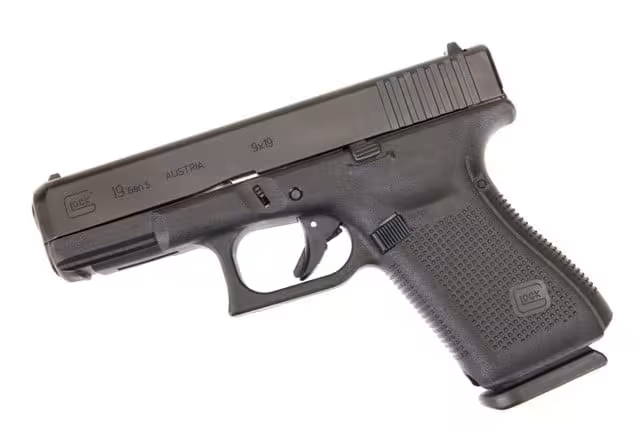
Glock pioneered the modern striker design in the 1980s, and basically every major manufacturer followed. The Glock 19, Sig P365, S&W Shield Plus, Springfield Hellcat. All strikers. All wildly popular for carry.
What Is a Hammer-Fired Pistol?
A hammer-fired pistol uses an external (or sometimes internal) hammer that swings forward to strike the firing pin. You can see it on the back of the slide. It’s the older design, but “older” doesn’t mean worse. Not by a long shot.
Most hammer-fired carry guns run a DA/SA (double-action/single-action) system. Your first trigger pull is long and heavy because it’s cocking and releasing the hammer at the same time. Every shot after that is short and light because the slide cocks the hammer for you. It’s two different trigger pulls in one gun.
Some hammer guns are SAO (single-action only), like the 1911. You have to manually cock the hammer or rack the slide first. Others are DAO (double-action only), where every pull is heavy. For carry, DA/SA is the sweet spot most people land on.
The CZ P-01, Beretta 92 Compact, Sig P229. These are proven hammer-fired carry guns that have been trusted by military and police for decades. They’re heavier and thicker than most strikers, but the people who love them really love them.
Trigger Comparison: Striker vs Hammer
This is where the real difference lives. Forget everything else for a second. The trigger is what you interact with every single shot, and these two systems feel completely different.
Striker-fired triggers are consistent. Usually around 5 to 6.5 pounds, with moderate travel and a clean break. Not amazing, not terrible. Just… the same every time. A stock Glock trigger is perfectly serviceable. A stock P365 trigger is a bit better. The Walther PDP trigger is outstanding. But they’re all in that same ballpark of predictable, medium-weight pulls.
Hammer-fired DA/SA triggers give you two very different experiences. That first double-action pull runs 10 to 12 pounds and travels a mile. It’s heavy on purpose. Think of it as a built-in safety. But once you fire that first round, subsequent shots drop to a crisp 3.5 to 5 pound single-action pull that makes most striker triggers feel like dragging a boot through mud.
The catch? You have to train that transition. Going from a 12-pound pull to a 4-pound pull between your first and second shot takes practice. A lot of practice. If you don’t put in the reps, that first DA pull will yank your shots low and left every time.
For pure trigger quality, a good DA/SA gun in single-action wins hands down. But for simplicity and consistency under stress, striker takes it. Pick your priority.
Safety Comparison
Both systems are safe when you follow the basic rules. Let’s get that out of the way first. But they approach safety from different angles.
Striker-fired guns rely mostly on internal passive safeties. A firing pin block, a trigger safety (that little blade in the middle of the trigger), and sometimes a manual thumb safety. The trigger weight itself provides some resistance against negligent discharge, but it’s not exactly heavy at 5-6 pounds.
Hammer-fired DA/SA guns have that heavy first trigger pull as a built-in layer of security. Twelve pounds of double-action is really hard to pull by accident. Many also come with a decocker, which safely lowers the hammer without firing. And some offer both a decocker and a manual safety.
If the idea of carrying a round in the chamber with a relatively light trigger pull makes you nervous, a DA/SA hammer gun might help you sleep better at night. That heavy first pull is reassuring, especially if you’re newer to carrying. But don’t let anyone tell you a striker gun is unsafe. Millions of people carry Glocks appendix every day. The safety is between your ears, not on the gun.
Carry Condition and the Decocker Question
How you carry a gun matters just as much as what you carry. This is where the striker vs hammer thing gets practical.
Striker-fired guns are dead simple. Load it, holster it, carry it. The trigger is always in the same state. There’s nothing to forget, nothing to fumble with. Under stress, you draw and press the trigger. That’s it. This simplicity is why law enforcement overwhelmingly switched to striker-fired pistols.
Hammer-fired DA/SA guns with a decocker give you more options, but also more to think about. The standard carry method is to load a round, decock the hammer (which drops it safely to the resting position), and holster. You’re now carrying with a round in the chamber and that long, heavy DA pull as your first shot.
So what exactly is a decocker? It’s a lever (usually on the slide or frame) that safely drops the hammer from the cocked position to the resting position without firing the gun. A firing pin block engages so even though the hammer falls, it can’t reach the primer. Sig Sauer P-series guns, CZ P-01, and Beretta 92 all have decockers. Some designs combine the decocker with a safety lever, others keep them separate.
If you carry a DA/SA gun, practice decocking every time you load up. It should be muscle memory. And train drawing from your holster with that long first pull. Don’t practice single-action only at the range and then carry in double-action. That’s a recipe for a missed first shot when it matters most. Check out our concealed carry tips guide for more on building solid carry habits.
Best Striker-Fired Guns for Concealed Carry
The striker-fired market is stacked right now. Genuinely hard to buy a bad one. But these four are the ones I keep coming back to.
Glock 19 Gen 6. The Honda Civic of carry guns. It just works. 15+1 capacity, eats any ammo, and aftermarket support is bottomless. Not the prettiest, not the best trigger, but the reliability reputation is earned. If you want a gun you can forget about and trust completely, this is it.
Sig Sauer P365 / P365X / P365XL. This gun changed the carry market overnight. 10 to 15 rounds in a micro-compact package that actually fits your hand. The trigger is solid for its size, accuracy is surprisingly good, and the entire P365 family gives you options from pocket-size to compact. I’ve carried a P365XL for months at a time without a single complaint.
Smith & Wesson M&P Shield Plus. The value play. Great trigger for a striker, 13+1 capacity, and it costs less than a Glock or Sig. Available with or without a manual safety if that matters to you. S&W nailed this one. If you’re looking for your first carry gun, the Shield Plus deserves serious consideration.
Springfield Hellcat Pro. Springfield took the original Hellcat, made it slightly bigger, and gave it a 15-round flush-fit magazine. The grip texture is aggressive and the sights are good out of the box. It’s a little snappy with hot loads, but that’s true of any micro-compact. Solid pick.
Best Hammer-Fired Guns for Concealed Carry
Hammer-fired carry guns are a smaller pond, but the fish are excellent. These are the ones worth your money.
CZ P-01. If I could only own one hammer-fired carry gun, this is it. Compact aluminum frame, 14+1 capacity, and a DA/SA trigger that smooths out into something beautiful after a few hundred rounds. It’s NATO-rated, which is a fun detail that means it survived a 15,000 round torture test. Carries well in a quality OWB or IWB holster.
Beretta 92 Compact / 92X Centurion. The full-size 92 is an icon but it’s huge for carry. The compact variants fix that. You still get the Beretta open-slide design, the smooth DA/SA action, and that gorgeous single-action pull. The slide-mounted safety/decocker takes getting used to, but plenty of people run it just fine.
Sig Sauer P229. The P229 in .357 SIG was the Secret Service’s gun for years. In 9mm, it’s a fantastic carry piece. The SRT (Short Reset Trigger) version is the one you want. Heavier than most of the strikers on this list, but that weight soaks up recoil beautifully. The P226 is the full-size big brother if you carry OWB and don’t mind the extra size.
HK USP Compact. Over-engineered in the best way. The USP Compact gives you a DA/SA trigger, multiple safety/decocker configurations, and HK’s legendary reliability. It’s chunky compared to modern options, and the grip is a love-it-or-hate-it thing. But if it fits your hand, you’ll wonder why everyone else is carrying plastic guns.
Which Is Better for Beginners?
Striker-fired. It’s not even close.
When you’re new to carrying, you have enough to worry about. Drawing from concealment, getting a solid grip, managing recoil, staying aware of your backstop. The last thing you need is a trigger system that changes pull weight between your first and second shot.
A striker-fired pistol gives you one trigger pull to learn. Same weight every time. Same break point every time. That consistency builds confidence fast, and confidence leads to competence. Most defensive shooting courses are built around striker guns for exactly this reason.
I’m not saying beginners can’t learn DA/SA. They absolutely can. But why make it harder than it needs to be? Start with a striker, get comfortable with the fundamentals, and then branch out to hammer guns later if the trigger appeal calls to you. That’s the smart path. Check out our best handguns for beginners guide for specific recommendations.
Which Is Better for Experienced Shooters?
This is where it gets interesting, because experienced shooters can actually exploit the advantages of both systems.
If you’ve put in the trigger time on DA/SA guns, that heavy first pull stops being a problem and starts being a feature. You master the transition, your first shots are accurate, and then you’re running that clean single-action for follow-ups. The SA pull on a CZ P-01 or a Sig P229 with SRT is legitimately better than any stock striker trigger on the market. It’s not even the same conversation.
Experienced shooters also tend to have stronger opinions about carry conditions and safety layers. Some want the simplicity of a Glock. Others want the heavy DA pull as a safety net for appendix carry. Both positions are valid if you’ve trained for them.
My honest take? Carry what you shoot best. If your groups tighten up with a DA/SA gun because that single-action pull lets you run precision shots, carry that. If you’re faster and more consistent with a striker, carry that. At the level where you’re making this decision based on performance rather than convenience, the “best” system is whichever one puts more rounds where you need them.
Striker-Fired vs Hammer-Fired: Summary Table
Here’s the quick-reference breakdown. This covers the major differences that matter for everyday carry.
| Feature | Striker-Fired | Hammer-Fired (DA/SA) |
|---|---|---|
| Trigger Pull | Consistent 5-6.5 lbs | DA: 10-12 lbs / SA: 3.5-5 lbs |
| Learning Curve | Low | Moderate to High |
| Carry Simplicity | Load and go | Load, decock, go |
| Safety Layers | Passive (trigger/firing pin block) | Heavy DA pull + decocker + optional safety |
| Best Trigger Feel | Good (consistent) | Excellent (SA mode) |
| Profile / Size | Slimmer, lighter | Thicker, heavier |
| Best For | Beginners, simplicity, deep concealment | Experienced shooters, trigger snobs, safety-conscious |
| Top Carry Pick | Sig P365 / Glock 19 | CZ P-01 / Sig P229 |
Neither system is objectively better. It comes down to your experience level, your training commitment, and what feels right in your hand. The best concealed carry handgun is the one you’ll actually practice with.
Frequently Asked Questions
What is the main difference between striker-fired and hammer-fired pistols?
Striker-fired pistols use an internal spring-loaded firing pin with a consistent trigger pull every shot. Hammer-fired pistols use an external hammer and typically offer a heavy double-action first pull followed by a lighter single-action pull for subsequent shots.
Is a striker-fired or hammer-fired pistol safer for concealed carry?
Both are safe with proper training and a quality holster. Hammer-fired DA/SA guns have a heavier first trigger pull that some carriers find reassuring. Striker guns rely on passive internal safeties. The biggest safety factor is the person carrying, not the action type.
What does a decocker do on a hammer-fired pistol?
A decocker is a lever that safely lowers the hammer from the cocked position without firing the gun. A firing pin block prevents discharge when the hammer drops. This lets you carry with a round chambered and the hammer down, giving you that heavy double-action first pull as a safety layer.
What is the best striker-fired pistol for concealed carry?
The Sig Sauer P365 family and Glock 19 are the top choices. The P365 offers 10-15 round capacity in a micro-compact size. The Glock 19 is the benchmark for reliability with 15+1 capacity. The S&W Shield Plus is an excellent budget-friendly alternative.
Can you safely carry a DA/SA pistol with a round in the chamber?
Yes. The standard carry method for DA/SA pistols is to load a round, decock the hammer, and holster. The heavy double-action trigger pull (10-12 pounds) provides significant resistance against accidental discharge. This is how military and police have carried DA/SA guns for decades.
Is a Glock a striker-fired pistol?
Yes. All Glock pistols are striker-fired. Glock pioneered the modern striker-fired polymer pistol design in the early 1980s with the Glock 17. Every model they make, from the subcompact G43X to the full-size G17, uses the same striker-fired action.
Are striker-fired pistols better for beginners?
Yes, for most beginners a striker-fired pistol is the better choice. The consistent trigger pull is easier to learn and builds confidence faster. There is no DA to SA transition to master. Most defensive shooting courses are designed around striker-fired guns for this reason.
What is the difference between a decocker and a manual safety?
A decocker lowers the hammer safely without firing and leaves the gun ready to fire in double-action mode. A manual safety physically blocks the trigger or firing mechanism until you disengage it. Some guns like the Beretta 92 combine both into one lever. Others like the CZ P-01 offer a decocker-only variant.
4,644+ Gun & Ammo Deals
Updated daily from 200+ top retailers. Filter by category, caliber, action type, and price.