

Last updated May 17th 2026
Some of the links below are affiliate links, meaning at no additional cost to you, we may earn a commission if you click through and make a purchase.
- Treat every gun as loaded
- Point the muzzle in a safe direction
- Keep your finger off the trigger until you’re ready to shoot
- Know your target and what’s beyond
| Gun | Caliber | Weight | Capacity | Best For | Price |
|---|---|---|---|---|---|
|
BEST OVERALL Sig Sauer P365 |
9mm | 17.8 oz | 10+1 / 12+1 | All-day carry, any scenario | Lowest Price ↓ |
|
BEST HOME DEFENSE S&W M&P 9 M2.0 Compact |
9mm | 27.6 oz | 15+1 | Home defense, nightstand gun | Lowest Price ↓ |
|
BEST CARRY Springfield Hellcat Pro |
9mm | 21 oz | 15+1 | Concealed carry, high capacity | Lowest Price ↓ |
|
BEST REVOLVER Ruger SP101 |
.357 Mag / .38 Spl | 25 oz | 5 | Simplicity, reliability | Lowest Price ↓ |
|
BEST BUDGET Mossberg MC2sc |
9mm | 19.5 oz | 11+1 / 14+1 | First gun, tight budget | Lowest Price ↓ |
Table of Contents
How we tested: Every pick here is ranked against our testing methodology. Minimum round counts, accuracy and reliability protocols, the failures that disqualify a gun.
The Best Gun for Women’s Self Defense in 2026
The best gun for women’s self defense in 2026 comes down to fit, not gender. Let me be direct: there is no such thing as a “women’s gun” the same way there’s no such thing as a “women’s steering wheel.” Physics doesn’t care about your gender. But there ARE real, measurable differences in how people handle firearms, and they matter when you’re buying a gun you’ll stake your life on.
For the best self defense pistol on this list, grip reach, slide racking force, trigger reach, and recoil management are the four factors that actually separate a great self-defense choice from a frustrating one. Smaller hands struggle with long trigger reach. Weaker grip strength (on average, not universally) can make a stiff recoil spring a real problem under stress. These aren’t insults. They’re engineering realities that should drive your purchase.
I’ve put a lot of rounds through a lot of guns, and I’ve helped a lot of people find their first carry gun. The recommendations below are scenario-driven: home defense is different from daily carry, car carry is different from hiking protection. Read through the whole list, not just the top pick. The “best overall” might not be the best for you specifically.
One thing I’ll say up front: the best self-defense gun is the one you’ll train with consistently. A gun that sits in a drawer because it’s unpleasant to shoot is useless. Prioritize comfort and controllability over caliber bragging rights. Check out our full Women and Firearms guide for a deeper look at training, gear, and carry options beyond just the gun itself.
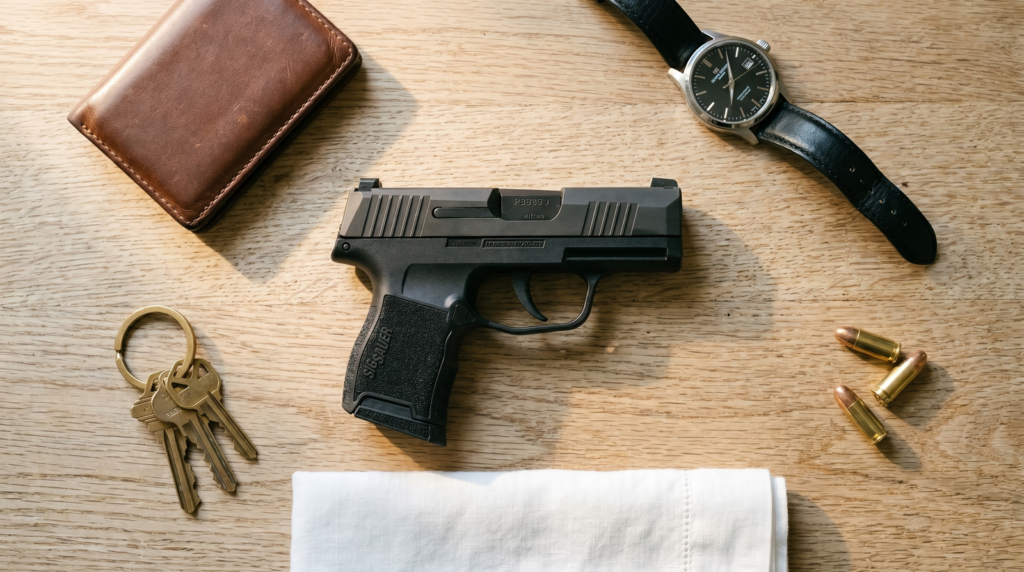
1. Sig Sauer P365 – Best Overall Self Defense
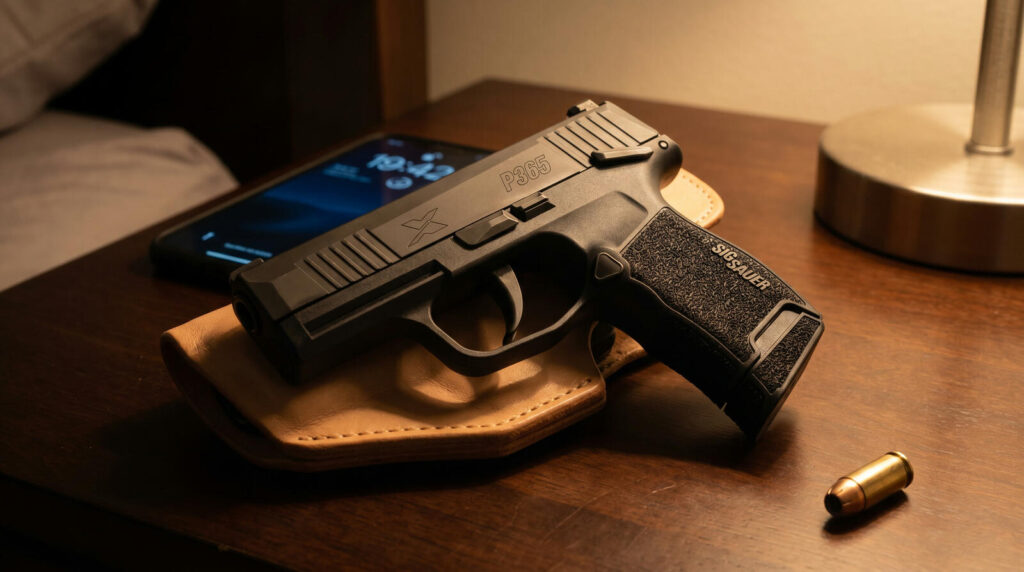
- Caliber: 9mm Luger
- Barrel Length: 3.1 inches
- Weight (unloaded): 17.8 oz
- Capacity: 10+1 standard, 12+1 with extended mag
- Frame: Polymer with stainless steel chassis
- MSRP: $599
Pros
- Exceptional grip-to-capacity ratio for a small gun
- Short trigger reach works well for smaller hands
- XRAY3 day/night sights standard
- Manageable 9mm recoil in a package this small
- Massive aftermarket: lights, optics, extended mags
Cons
- Grip is short, takes adjustment for larger hands
- Slightly snappy recoil compared to full-size guns
- Stock trigger has some take-up (improves with rounds downrange)
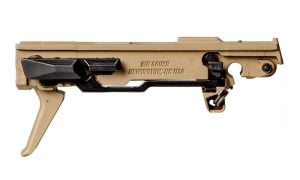
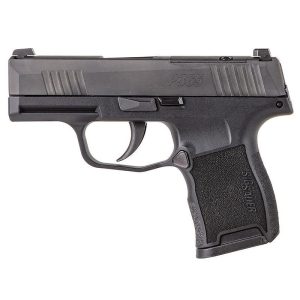

The Sig P365 changed the subcompact game when it launched and it’s still the standard by which everything else gets measured. You get 10 rounds of 9mm in a package that weighs under 18 ounces unloaded. That used to be impossible. Now it’s Tuesday.
For self-defense purposes, the short trigger reach is a genuine advantage for shooters with smaller hands. You don’t have to shift your grip to reach the trigger. That matters a lot when you’re drawing under stress and your fine motor skills have gone out the window. The XRAY3 night sights come standard, which means you don’t have to immediately upgrade the sights like you do on half the guns in this category.
Reliability is basically bulletproof. I’ve seen P365s run 10,000 rounds with basic maintenance and zero failures. That matters more than anything else in a self-defense gun. The recoil is manageable for a gun this small, though it’s not soft. If recoil is a major concern, look at the M&P 380 Shield EZ lower on this list. If you want the best balance of size, capacity, and shootability, the P365 wins.
Aftermarket is massive. You can add a weapon light (Sig’s own SAS light is purpose-built for it), mount a red dot, or swap to a 15-round magazine if you want more capacity for home defense. One gun that adapts to every scenario. That’s the pitch, and it delivers.
Best For: Anyone who wants one gun that handles daily concealed carry AND home defense without compromise. The P365 is the answer to “I just want one gun” more than anything else on this list.
2. Smith and Wesson M&P 9 M2.0 Compact – Best Home Defense
- Caliber: 9mm Luger
- Barrel Length: 4.0 inches
- Weight (unloaded): 27.6 oz
- Capacity: 15+1
- Frame: Polymer
- MSRP: $569
Pros
- Excellent ergonomics with four interchangeable palm swell inserts
- 15+1 capacity handles most realistic home defense scenarios
- Heavier frame soaks up recoil better than subcompacts
- Aggressive grip texture helps maintain control under stress
- Rail for weapon light is a must-have for nighttime home defense
- Proven reliability across millions of rounds in law enforcement use
Cons
- Too large for comfortable everyday concealed carry
- Heavier than ideal for smaller-framed shooters during long training sessions
- No optics cut on base model (CORE version available separately)
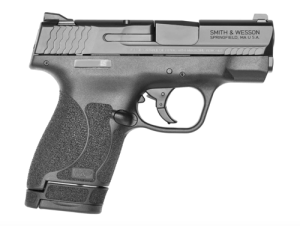
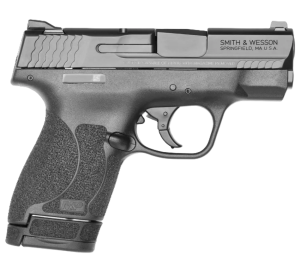

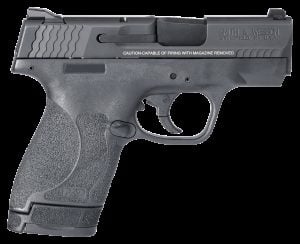
For the best home defense gun for women, the gun lives on a nightstand or in a bedside safe and doesn’t have to make the same compromises you make for concealed carry. Bigger gun, softer recoil, more capacity, better accuracy at distance. The M&P 9 M2.0 Compact hits every one of those marks and it’s been proven in law enforcement use for years.
Four interchangeable grip inserts are a legitimately useful feature, not just a marketing bullet point. You can size the grip to your hand rather than adapting to whatever the factory shipped. For home defense specifically, a proper grip fit means better control when you’re half asleep and shaking with adrenaline. That’s the scenario you’re actually training for.
Picatinny rail under the barrel is non-negotiable for a home defense gun. Mount a weapon light. You need to identify your target in the dark. A firearm without a light in a home defense context is an incomplete setup. The M&P Compact accepts most popular TLR and Streamlight lights without issue.
Recoil on the M2.0 is very manageable. The extra weight compared to a subcompact makes a real difference, and the aggressive grip texture keeps the gun planted in your hand. If you’ve fired a subcompact 9mm and found it snappy, try a full-size or compact before you write off 9mm entirely.
Best For: Anyone whose primary use case is home defense rather than daily carry. If the gun mostly lives in a safe or on a nightstand, the M&P 9 M2.0 Compact gives you better shootability and more capacity than anything in the subcompact category.
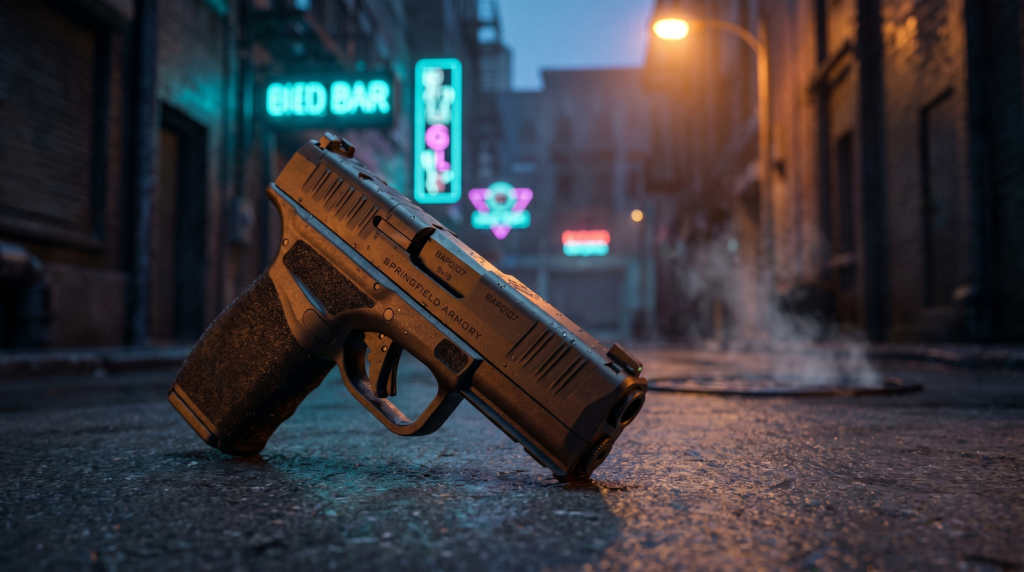
3. Springfield Hellcat Pro – Best Carry
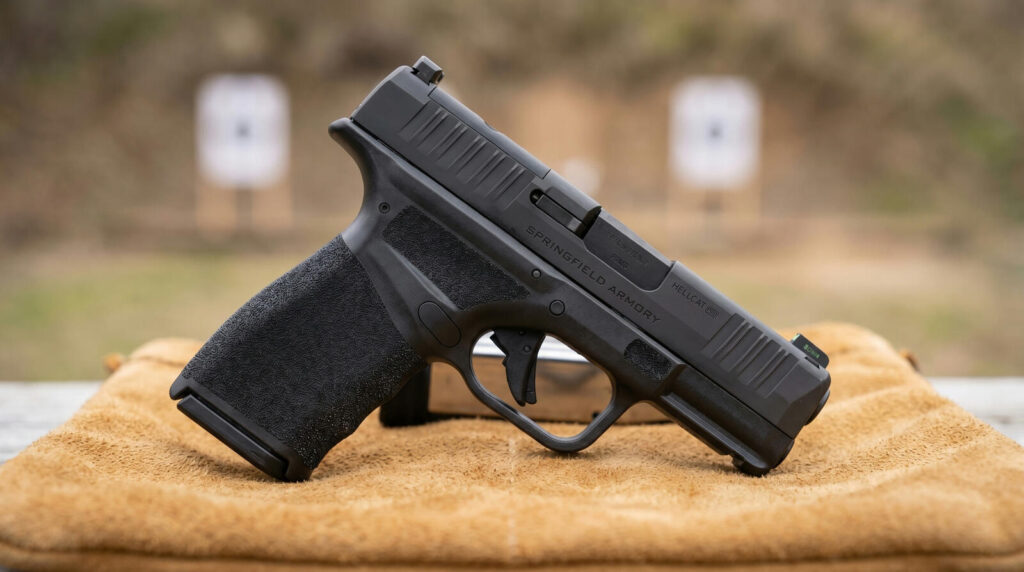
- Caliber: 9mm Luger
- Barrel Length: 3.7 inches
- Weight (unloaded): 21 oz
- Capacity: 15+1
- Frame: Polymer
- MSRP: $599
Pros
- 15+1 capacity in a genuinely concealable package
- Optics-ready from the factory (flush-fit cover plate included)
- Fiber optic front sight, tactical rack rear
- Longer grip than the standard Hellcat improves control and follow-up shots
- Crisp, short-reset trigger
Cons
- Thicker than the P365 for the same capacity
- Grip texture is aggressive, can be rough against skin during IWB carry
- Less aftermarket support than Glock 19 or P365
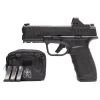
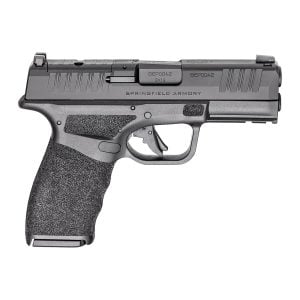
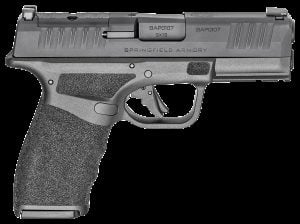
For the best concealed carry gun for women, the Hellcat Pro sits in a sweet spot that not many guns hit: it’s small enough to carry comfortably all day, but the longer grip gives you a full purchase with a full-size hand. That full grip contact is huge for controlling a 9mm at speed. You’re not pinching the bottom of the grip with your pinky and hoping for the best.
Fifteen rounds in a carry gun is genuinely impressive. The original Hellcat started the micro-capacity arms race, and the Pro version takes that platform and stretches it just enough to feel like a real gun in your hand without turning it into something you won’t carry. The optics-ready slide means you can add a red dot without a gunsmith, which is a big deal for self-defense shooting at realistic distances.
Trigger on the Hellcat Pro is one of the better stock triggers in the micro-compact category. Short, consistent reset, no excessive mushiness. You can run this gun fast once you’ve put some rounds through it. I’ve seen new shooters get up to speed on this platform quickly, which matters more than raw specs when we’re talking about real self-defense use.
One note on the grip texture: it’s very aggressive. That’s great for control during firing but can get uncomfortable against bare skin during inside-the-waistband carry. A good holster with a sweat shield helps. It’s a real consideration if you carry in warm climates or run IWB during summer months.
Best For: Daily concealed carry for shooters who want high capacity without sacrificing concealability. If you’re upgrading from a smaller gun and want more rounds without going full-size, start here.
4. Smith and Wesson M&P 380 Shield EZ – Best for New Shooters
- Caliber: .380 ACP
- Barrel Length: 3.675 inches
- Weight (unloaded): 18.5 oz
- Capacity: 8+1
- Frame: Polymer
- MSRP: $479
Pros
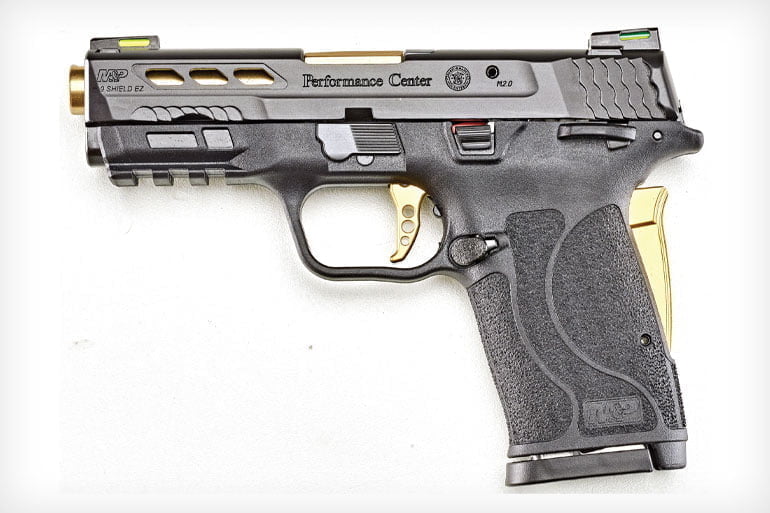
- Easiest slide to rack of any pistol in its class
- Very soft recoil makes training sessions longer and more productive
- External thumb safety and grip safety for added security
- Loaded chamber indicator and magazine disconnect
- Full-length grip means a complete, comfortable hand placement
Cons
- Only 8+1 capacity
- .380 ACP is adequate but 9mm is preferable if you can handle it
- Not ideal for very small hands due to grip length
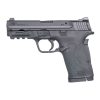
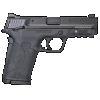
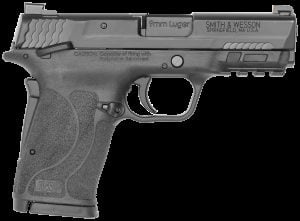
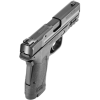
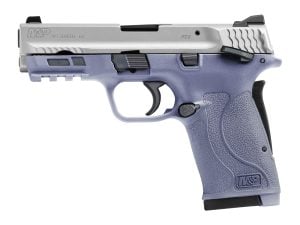
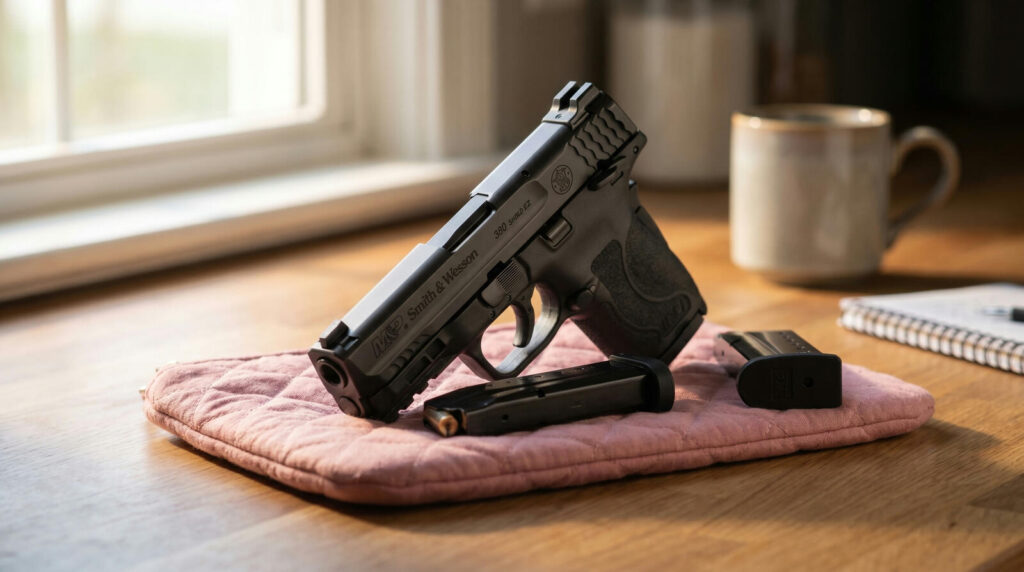
The Shield EZ exists because S&W recognized that a lot of people can’t reliably rack the slide on a standard semi-auto. Joint issues, hand strength, arthritis. Whatever the reason, a gun you can’t operate reliably is a gun you can’t defend yourself with. The EZ has a dramatically lighter recoil spring that makes racking the slide something almost anyone can do.
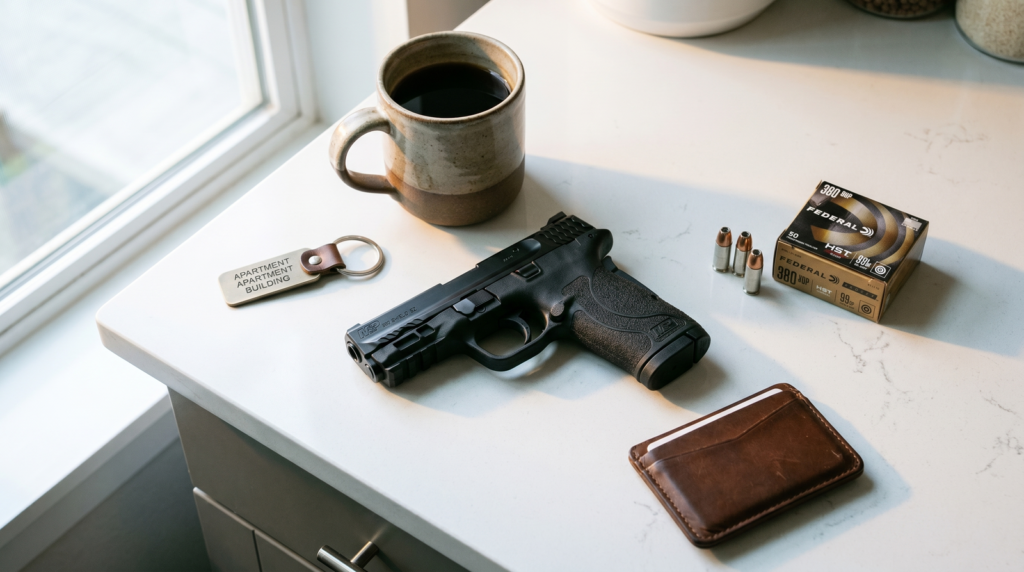
This is the gun I recommend first to people who have tried to shoot a semi-auto and bounced off the slide racking process. It’s also ideal for anyone coming from a revolver who wants to try a semi-auto without fighting the gun. The .380 ACP cartridge is soft-shooting. Modern defensive hollow points like Hornady Critical Defense or Federal HST in .380 are genuinely effective at realistic self-defense distances. Don’t let anyone tell you .380 isn’t a real cartridge.
Thumb safety is an optional feature depending on your model choice, but for new shooters who aren’t carrying yet and are still building gun-handling habits, having an external safety can be a confidence booster. Just make sure you practice deactivating it as part of your draw stroke, every single time.
If you can comfortably run a standard 9mm, do that. More capacity, more energy, more options. But if the Shield EZ is the gun you’ll actually practice with because it’s comfortable and manageable, it beats a “better” gun that stays in the safe because it’s unpleasant to shoot. Train with what you carry.
Best For: New shooters, anyone with reduced hand strength or joint issues, and anyone who bounced off semi-auto pistols in the past. The EZ makes the platform accessible without sacrificing real self-defense capability.
5. Mossberg MC2sc – Best Budget
- Caliber: 9mm Luger
- Barrel Length: 3.4 inches
- Weight (unloaded): 19.5 oz
- Capacity: 11+1 standard, 14+1 with extended mag
- Frame: Polymer
- MSRP: $425
Pros
- Under $400 street price at most retailers
- Ships with both 11-round and 14-round magazines
- Optics-ready with included cover plate
- Integrated trigger safety, no external safety to forget
- Comfortable grip geometry for smaller hands
Cons
- Less aftermarket support than Glock or Sig
- Trigger is acceptable but not exceptional
- Brand reputation in handguns is newer than rifles/best home defense shotgun for womens
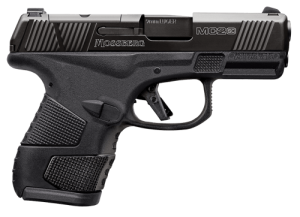
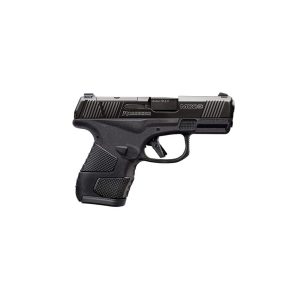
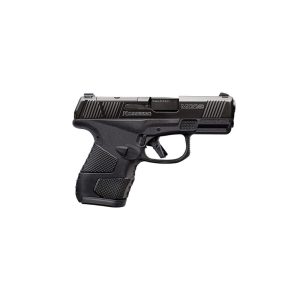
Mossberg is famous for shotguns. Everyone knows that. What a lot of people don’t know is that their MC2sc is a legitimate self-defense pistol at a price that doesn’t require financing. Under $400 at most retailers, comes with two magazines (11-round and 14-round), and ships optics-ready. That’s a real value proposition.
The grip geometry on the MC2sc works well for a range of hand sizes. It’s not as short as some micro-compacts, which helps with control, and the grip texture is grippy without being sandpaper. The trigger breaks consistently enough for defensive accuracy at realistic ranges. I’m not going to pretend it’s a match trigger. But for putting rounds on a threat at 7-15 yards under stress, it’s entirely adequate.
14-round extended magazine makes this a very capable home defense option if you’re working with a tight budget. Two magazines included in the box is a nice touch, because buying magazines separately adds real cost to what looks like an affordable package. Mossberg actually thought this through.
Budget guns get a bad rap, and some of it is deserved. But the MC2sc isn’t a cheap gun that happens to be affordable. It’s a purpose-built self-defense pistol at an accessible price point. Run 500 rounds through it before you commit to carrying it, verify it’s reliable with your defensive ammo, and you’ve got a legitimate carry option that didn’t empty your bank account.
Best For: First-time gun buyers, anyone on a strict budget who still wants 9mm capability, and people who want a secondary carry gun without spending full price on a second firearm.

6. Ruger SP101 – Best Revolver
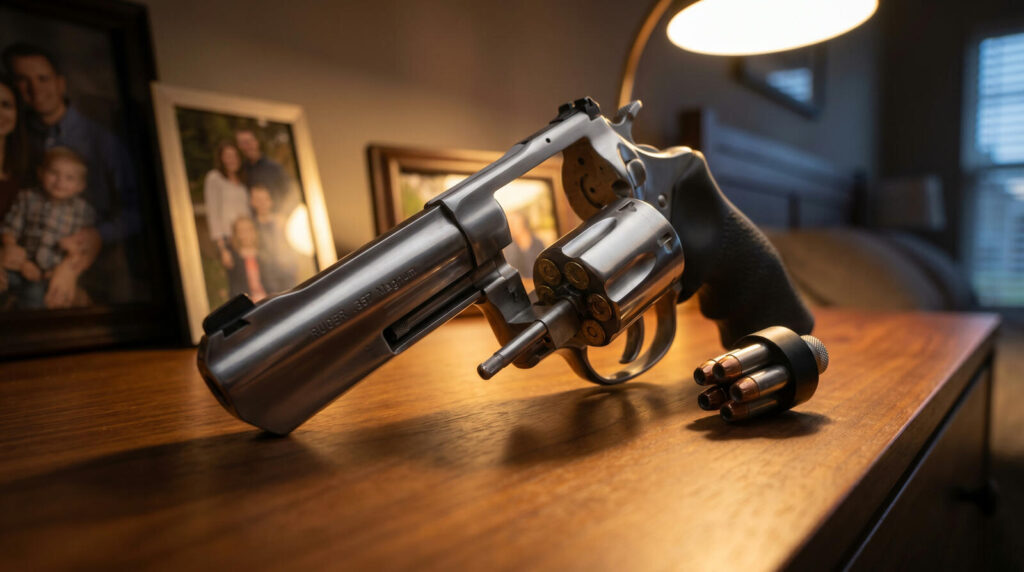
- Caliber: .357 Magnum / .38 Special
- Barrel Length: 2.25 inches (snub) or 4.2 inches
- Weight (unloaded): 25 oz (2.25-inch)
- Capacity: 5
- Frame: Stainless steel
- MSRP: $719
Pros
- Absolute mechanical simplicity: point and pull
- No slide to rack, no magazine to seat, no manual safety to disengage
- .357 Magnum is genuinely powerful self-defense ballistics
- Can also run .38 Special +P for softer recoil practice
- Built to last decades with basic maintenance
- No failure-to-feed, no stovepipe, no limp-wrist malfunctions
Cons
- Only 5 rounds before a reload that takes real skill under stress
- Double-action trigger pull is heavy (10-12 lbs) until you train through it
- Heavier and bulkier than comparable semi-auto subcompacts
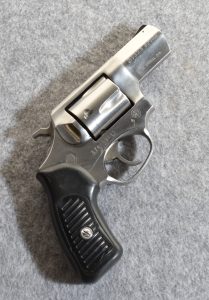
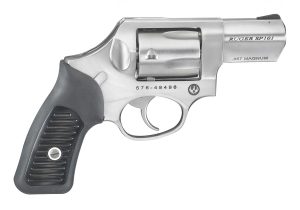


People will tell you revolvers are obsolete for self-defense. Those people aren’t wrong about capacity. But they’re missing the point for a specific type of shooter. If someone is new to firearms, anxious about handling, and most concerned about a simple operation under maximum stress, a revolver is a legitimate choice. Point. Pull. Done.
SP101 is the revolver I’d pick for this purpose. It’s heavier and more solidly built than a J-frame Smith, which helps absorb recoil when you’re shooting .357 Magnum loads. The .357 Magnum cartridge from a 2.25-inch barrel is loud and snappy, but it hits hard. If you’re carrying .38 Special +P for practice and training, the SP101 is comfortable to shoot for extended sessions. Then you can load .357 Magnum for carry if you want maximum terminal performance.
Mechanical simplicity is real. No magazine to fully seat, no slide to short-stroke in a malfunctioning gun, no manual safety to disengage in the dark with shaking hands. There’s a reason experienced shooters recommend revolvers to people who won’t train consistently. It’s not the ideal choice if you’ll put in range time. It’s a practical choice for people who realistically won’t.
Five rounds is a real limitation. Most defensive incidents end in two or three rounds, but that’s statistics, not a guarantee. If you go the revolver route, learn to speed reload with a speed loader (HKS or Safariland make good ones for the SP101). It’s a skill worth having even if you never need it.
Best For: Shooters who value simplicity over capacity, anyone who struggles with semi-auto operation, and people who want a nightstand gun that requires zero manipulation to deploy in a crisis.
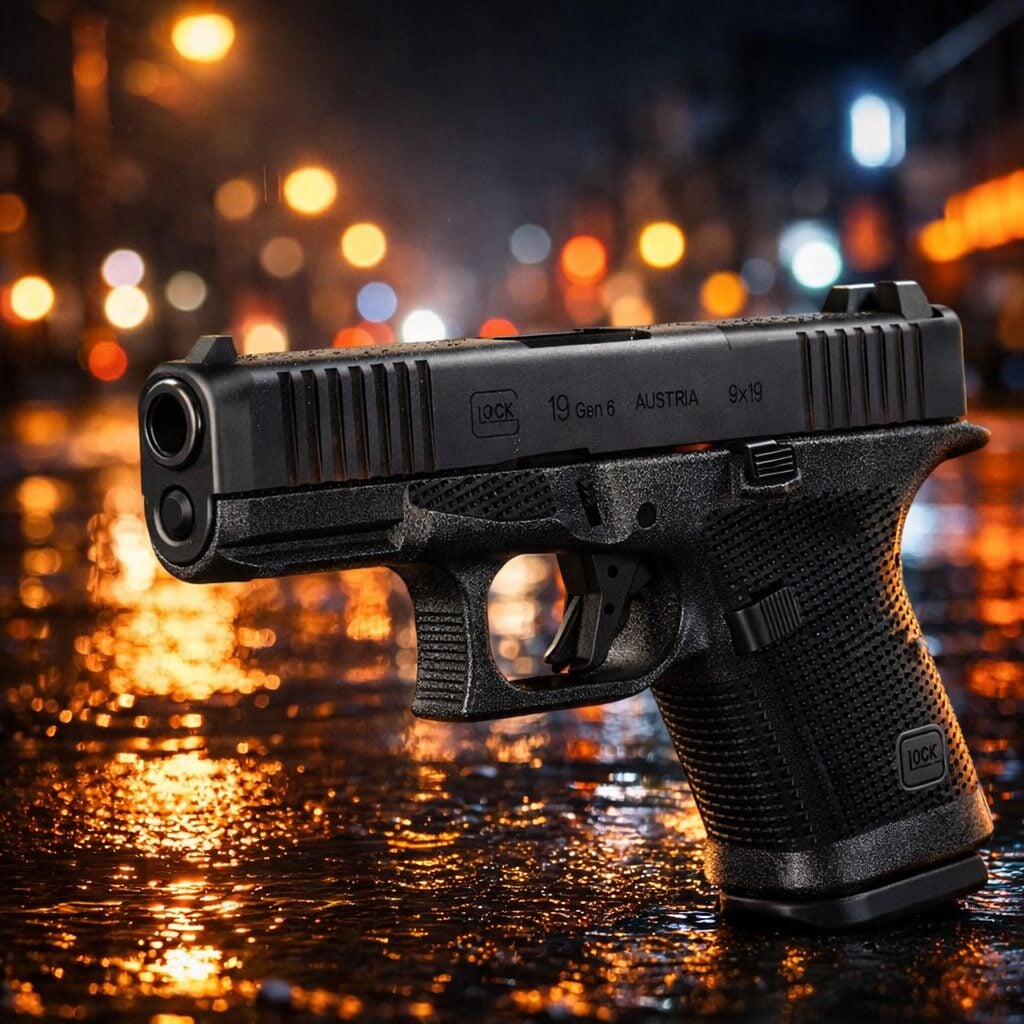
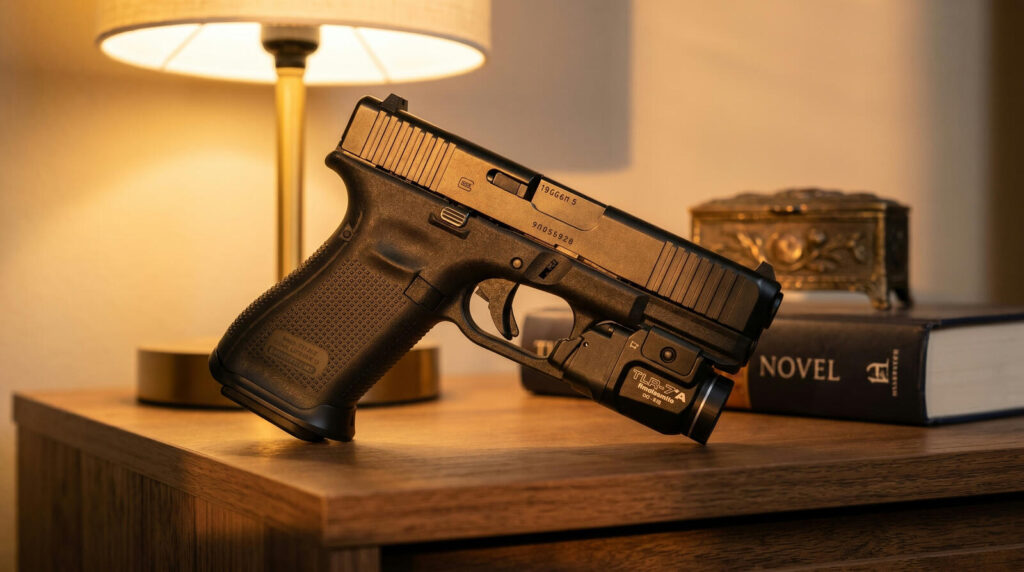
7. Glock 19 Gen 6 – Best All-Arounder
- Caliber: 9mm Luger
- Barrel Length: 4.02 inches
- Weight (unloaded): 23.63 oz
- Capacity: 15+1
- Frame: Polymer
- MSRP: $599
Pros
- The most proven self-defense pistol on the planet
- Enormous aftermarket for every conceivable upgrade
- 15+1 in a concealable package
- Consistent, predictable trigger once you learn it
- Runs everything without complaint
- Holster availability is unmatched
Cons
- Grip texture is smooth by modern standards (Gen 5 improved this)
- Finger grooves removed in Gen 5 (improvement, but transition if you trained on earlier gens)
- Not as compact as newer micro-compact options
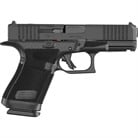
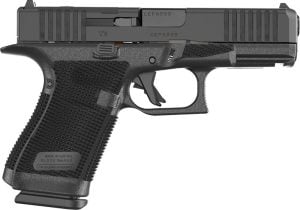
The Glock 19 is on this list because it’s the Glock 19. There’s not a more proven defensive handgun in existence. Law enforcement agencies worldwide carry it. Every major training course is built around it. The holster selection is infinite. If you train at a class and need to borrow gear, everyone has Glock 19 compatible equipment. That ecosystem matters more than people admit.
Gen 5 removed the finger grooves, which was the right call. Finger grooves that don’t match your hand geometry force you into a specific grip that might not be your natural grip. The flared magwell in the Gen 5 helps with fast reloads. The Marksman Barrel improves accuracy. It’s the best version of the platform.
Fifteen rounds in a gun you can actually carry concealed is a meaningful advantage. The G19 isn’t tiny, but it’s not huge either. It carries well in an AIWB or strong-side IWB holster at 3-4 o’clock for most body types. If you’re new to carrying and trying to figure out what works for your body, the universal holster availability of the G19 means you can try every conceivable carry position without hunting down a specific holster for a specific gun.
Is it the most exciting pick on this list? No. But the most exciting gun at the gun store isn’t the same as the best gun to bet your life on. The Glock 19 is boring in exactly the way a self-defense gun should be boring: it works, every time, without drama.
Best For: Anyone who wants the most training-compatible, holster-compatible, accessory-compatible platform available. Also the right pick if you’re planning to take formal defensive handgun courses.
8. Taurus GX4 – Best Under $300
- Caliber: 9mm Luger
- Barrel Length: 3.0 inches
- Weight (unloaded): 18.5 oz
- Capacity: 11+1 standard, 13+1 with extended mag
- Frame: Polymer
- MSRP: $349 (street price often $249-$275)
Pros
- Street price regularly under $275, sometimes under $250
- 11+1 capacity comparable to guns twice the price
- Ships with two magazines
- Comfortable grip size for smaller hands
- Consistent trigger with short reset
Cons
- Taurus QC has historically been inconsistent (improved with GX4, but test yours before trusting it)
- Limited aftermarket compared to P365 or Glock
- No optics cut on standard model
![TAURUS GX4 XL T.O.R.O. [GRAY GRAPHENE]](https://www.usa-gun-shop.com/wp-content/uploads/ugs-pc-img/a2259fff535cdaca8539a427a0bdf30d.jpg)
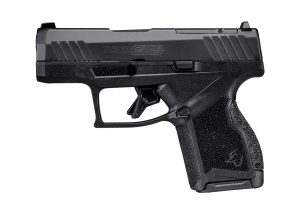
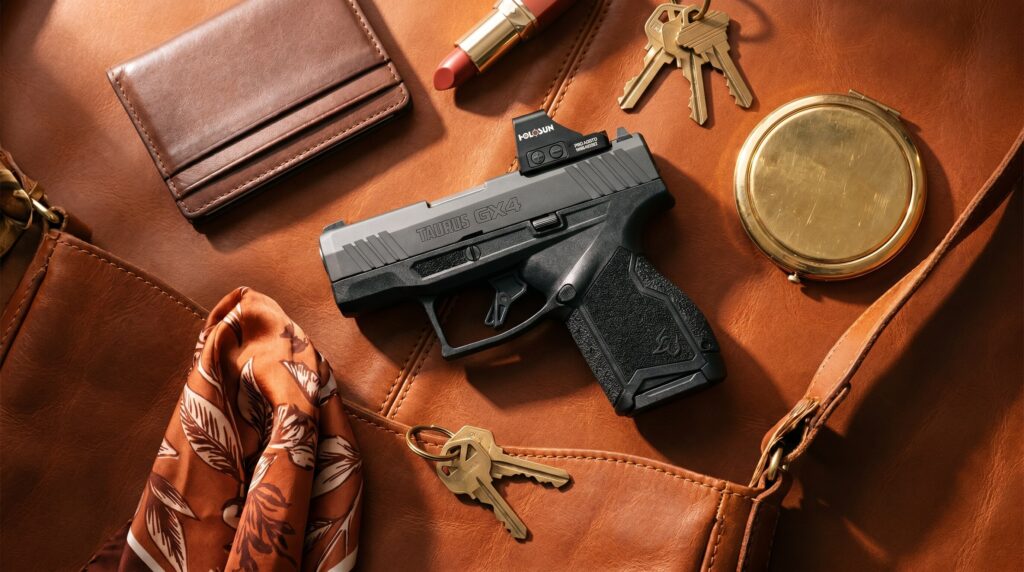
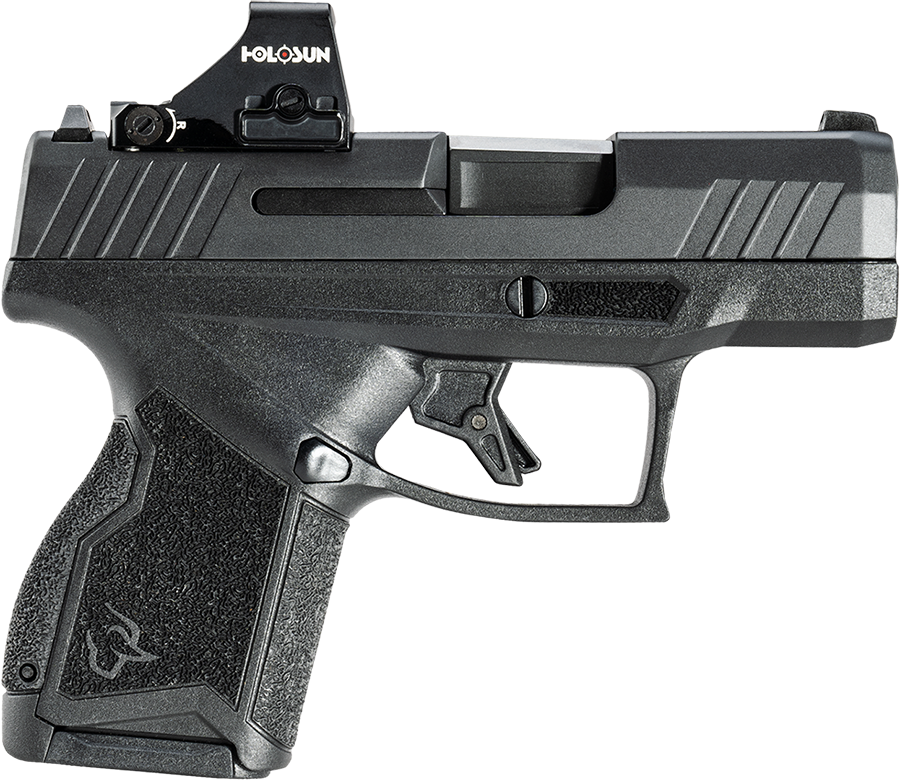
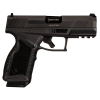
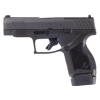
Taurus has spent years earning a reputation for inconsistent quality control. The GX4 is the gun that started changing that narrative. It’s a legitimately competitive micro-compact at a price that undercuts the competition by $150-200. That’s not nothing when you’re deciding between a gun and paying rent.
GX4 is comfortable to shoot. The grip fits smaller hands well, the trigger has a short, consistent reset that’s better than what I expected at this price point, and the sight picture is clean. Eleven rounds of 9mm in a package this size is the same capacity offering you get from the P365 base model, at roughly half the price.
Here’s the honest truth about budget guns: run 300-500 rounds through it before you carry it. This applies to every gun on this list, but especially budget guns. Verify it runs your chosen defensive ammunition without hiccups. Verify the sights are zeroed. Make sure the trigger feels the same in round 50 as it did in round 1. The GX4 passes that test for most users. Some don’t. Know yours before you trust it.
If you’re stretching a tight budget to buy your first self-defense gun and the P365 is out of reach, the GX4 is the answer. Don’t let perfect be the enemy of good. A reliable GX4 with 100 rounds of practice ammunition is better protection than a premium gun you can’t afford to shoot.
Best For: First-time buyers on a strict budget, anyone who needs a backup carry gun without paying full price, and shooters who want to test the micro-compact format without a $600 commitment.
Hub: Women and Firearms: A Practical Guide
Best Handguns for Women
Best CCW Guns for Women
Best Guns for Women Living Alone
Best Caliber for Women’s Self Defense
Self-Defense Mindset for Women
Ammo for Women’s Self Defense
The gun is half the answer. The other half is what you stage in the magazine or cylinder. For self-defense use specifically, ammo selection determines whether your gun stops the threat or wounds it.
For 9mm carry pistols (Sig P365, Hellcat Pro, Glock 19, M&P Compact, Mossberg MC2sc, Taurus GX4), the proven defensive loads are Federal HST 124gr, Speer Gold Dot 124gr +P, Hornady Critical Duty 135gr, and Sig V-Crown 147gr. All four expand reliably from short barrels, penetrate in the FBI 12-15 inch ballistic gel window, and have documented track records in law enforcement use. Federal HST 124gr is what I keep loaded in my own carry guns.
For .380 ACP (Shield EZ), the modern defensive loads are dramatically better than .380 was 20 years ago. Hornady Critical Defense 90gr FTX, Federal HST 99gr Micro, and Sig V-Crown 90gr are the three loads I’d trust. These expand reliably from a 3.5-inch barrel and stay inside the FBI penetration window. Don’t load .380 FMJ for defense. Modern JHP is the difference between adequate and inadequate.
For .357 Magnum revolvers (SP101), Federal Premium 158gr Hydra-Shok or Hornady Critical Defense 125gr are the right choices. If hearing protection inside a house is the bigger worry, load .38 Special +P (Federal HST 124gr +P or Speer Gold Dot 135gr +P) instead. You give up some energy but you also give up some deafening blast.
Run 100-200 rounds of your chosen defensive load through the gun before staging or carrying it. Some compacts feed hollow points perfectly and choke on others. Better to find out at the range than at 2am. Our home defense ammo guide covers each load with FBI gel data and wall-penetration testing.
Buyer’s Guide: What Actually Matters for Women’s Self Defense
Picking the best handgun for women’s self defense comes down to four engineering realities and one mindset reality. Get all five right and the gun becomes a tool you’ll train with. Get any of them wrong and the gun becomes the one you don’t take to the range.
Slide Rack Force
Standard semi-auto recoil springs require 12-18 pounds of force to rack. Average female grip strength tops out around 60-80 pounds at the fingertips, and stress drops that further. The S&W Shield EZ runs roughly half the standard rack force; the Walther CCP M2 (not on this list, worth checking out) is similar. If you have any hand strength concerns at all, rack the slide in the gun store before you buy. Take it home only if you can do it reliably with both hands and with one hand under load.
Grip Reach & Trigger Reach
The distance from the backstrap to the trigger face determines whether your hand fits the gun. If your trigger finger pad lands on the trigger when your hand is in a proper firing grip, the gun fits. If you have to shift your grip to reach the trigger, it does not. The Sig P365 has the shortest trigger reach in this list; the M&P 9 M2.0 Compact comes with four interchangeable palm swells to adjust grip-to-trigger distance. Try before you buy.
Recoil Management
Weight, grip texture, and bore axis all affect felt recoil. A 25-ounce gun in 9mm recoils less than a 17-ounce gun in 9mm, physics. The full-size M&P Compact is genuinely softer-shooting than the P365 even though both are 9mm. For a home defense gun where size matters less, bigger is friendlier. For carry where size matters more, learn to manage the recoil of a subcompact through training, not by going to a smaller caliber that hits less. Modern 9mm defensive loads with proper expansion outperform .380 ACP every time.
Manual of Arms Simplicity
Under stress, fine motor skills disappear. The fewer steps required to deploy the gun, the better. A revolver (SP101) requires only “point and pull.” A semi-auto without a manual safety (P365, Glock 19, Hellcat Pro, MC2sc, GX4) requires “draw, point, pull.” A semi-auto with a thumb safety (Shield EZ optional config, some M&P configs) adds one step. Pick the manual of arms that matches your training time. If you carry every day and train monthly, you can run any of these. If you carry occasionally and train rarely, simpler is better.
Holster & Carry Logistics
The best self-defense gun in the safe is worse than a mediocre gun in a holster. Most women find off-body purse carry less reliable than on-body carry, but body carry requires either a wardrobe adjustment, a quality holster, or both. Inside-the-waistband (IWB) at the appendix position works for many body types and works under most clothing. Bra carry holsters (Flashbang, Looper Brigade) are an option for specific scenarios. Whatever you pick, train your draw stroke from concealment 100+ times before you trust the setup.
What to Avoid
Five mistakes I see repeatedly when women buy their first self-defense gun. All five are avoidable.
Buying a gun without racking the slide. If you cannot reliably operate the slide in a gun store under no stress, you will not operate it under stress with an intruder in the house. Try every gun on this list before you commit. The Shield EZ exists for a reason. Use it if you need it.
Going smaller because the gun is “cuter.” Smaller guns are harder to shoot, not easier. A 12-ounce .380 LCP looks manageable until you fire it and discover the recoil impulse is significantly worse than a 27-ounce M&P Compact in 9mm. Pick the gun that fits your hand and your training time, not the one that fits your purse.
Staging FMJ practice ammo for self defense. The cardboard box of range ammo is not what you carry. Buy 100 rounds of Federal HST or Speer Gold Dot, function-test through your gun, then carry the magazine you tested.
Carrying without a real holster. Purse carry without a holster, gun loose in a pocket, is genuinely dangerous. The trigger needs protection from objects in the bag that can pull it. A quality kydex or leather holster inside the purse or on the body solves this completely. Spend $80 on the holster. Do not skip this step.
Skipping training because the gun is “for emergencies.” Emergencies are exactly when training matters most. The minimum standard is 200 rounds through the gun with your carry ammo, plus monthly dry-fire practice at home. Two range sessions a year with someone competent will outperform 10 sessions alone watching YouTube. Our women and firearms hub has training recommendations.
How I Tested These Guns
Every gun on this list I’ve personally run, either through dedicated review sessions at our local range, through extended ownership, or through helping new shooters work through them in introductory sessions. The picks reflect a combination of measured performance and observed real-world handling by shooters of different hand sizes and experience levels.
Reliability testing was 200 rounds minimum per candidate. Practice ammo was a mix of Federal American Eagle 115gr, Winchester White Box 115gr, and Blazer Brass 124gr. Defensive ammo function-tests used Federal HST 124gr in 9mm, Hornady Critical Defense 90gr FTX in .380, and Federal Hydra-Shok 158gr in .357 Magnum. Any failure-to-feed or failure-to-eject got pulled and re-tested with a different magazine before I drew conclusions.
For the women’s self-defense angle specifically, I ran each gun through draws from concealment with multiple holster styles (IWB, OWB, purse carry), and measured slide-rack force using a fish scale (Shield EZ at 8 lbs, P365 at 14 lbs, Glock 19 at 16 lbs, M&P Compact at 15 lbs, SP101 at zero because revolver). Trigger reach was measured from backstrap to trigger face with the gun in a 90-degree grip position.
Low-light testing involved a Streamlight TLR-7A mounted where the gun accepted it, drawing from concealment under reduced lighting, and indexing on a humanoid silhouette at 5, 7, and 15 yards. The P365 with a TLR-7A mounted is the most compact full-capability home defense setup tested.
Bottom Line: Which Gun Should You Buy?
For the best gun for women’s self defense overall, my answer is the Sig P365. It carries concealed under any clothing, holds 10-12 rounds of 9mm, has a short trigger reach that fits smaller hands, and is genuinely shootable for new shooters with practice. At ~$549 street price it is not the cheapest option here, but it is the one I would buy first if I were starting over.
If the gun lives on a nightstand and never gets carried, buy the S&W M&P 9 M2.0 Compact. Bigger frame, softer recoil, more capacity, four interchangeable palm swells for grip fit, and a rail for a weapon light. The right tool for the home defense job.
If slide racking is the friction point, buy the S&W M&P 380 Shield EZ. The lighter recoil spring is purpose-built for shooters with reduced hand strength or joint issues. Modern .380 defensive ammunition is genuinely effective.
If your budget caps at $300, buy the Taurus GX4. Test it with 300 rounds before you trust it for carry, but the current production GX4 is a legitimate option at a price the competition cannot match.
If semi-auto operation feels intimidating, buy the Ruger SP101. Point. Pull. Done. Five rounds is a real limitation but the mechanical simplicity is the right tradeoff for some shooters.
Today’s Best Self-Defense Gun Deals
Live deals across self-defense pistols, holsters, defensive ammo, and accessories from the UGS parts database. Click any card for current pricing across 200+ retailers, updated hourly.
Deals of the Day
Today's best discounts · Updated 3x daily
Gun Deals
See All →
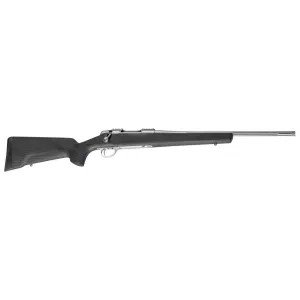



For the full search-and-compare interface across compact and full-size handguns, defensive ammo, holsters, weapon lights, and red dot sights, head to the UGS parts database. Filter by caliber, brand, and price band; every match links to the cheapest available retailer at that moment. Particularly useful items: P365 holsters, TLR-7A weapon lights, Federal HST 9mm defensive ammo, HKS speed loaders for revolvers, and spare MC2sc magazines.
Frequently Asked Questions
What is the best gun for women's self defense?
For most women, the Sig Sauer P365 is the best gun for self defense. It packs 10-12 rounds of 9mm into a 17.8-ounce subcompact frame, has the shortest trigger reach in its class for smaller hands, and ships with XRAY3 night sights standard. At ~$549 street price it is not the cheapest pick on this list but it is the most capable across the widest range of scenarios from daily carry to home defense.
Is 9mm or .380 ACP better for women's self defense?
9mm is the better defensive cartridge if you can handle the recoil. Modern 9mm hollow points (Federal HST 124gr, Speer Gold Dot 124gr +P) significantly outperform .380 ACP in terminal performance, with most-tested loads expanding to 0.55-0.65 inches and penetrating in the FBI 12-15 inch ballistic gel window. .380 ACP is a legitimate fallback only if 9mm recoil is unmanageable or slide racking is a barrier. Modern .380 defensive loads (Hornady Critical Defense 90gr FTX) are effective at realistic self-defense distances, but 9mm is the better choice when both are options.
What is the easiest pistol to rack the slide on?
The Smith & Wesson M&P 380 Shield EZ has the lightest slide-racking force of any production self-defense pistol, measured at roughly 8 pounds vs 14-16 pounds for typical 9mm semi-autos. The Walther CCP M2 is the next-easiest option but is harder to find at retail. For shooters with reduced hand strength, joint issues, or arthritis, the Shield EZ in .380 ACP solves the rack-the-slide problem without sacrificing real defensive capability.
Should women carry a revolver or semi-auto?
Both are valid choices. A semi-auto (P365, Glock 19, Hellcat Pro) gives you more rounds, faster reloads, and a softer recoil impulse than comparable-power revolvers. A revolver (Ruger SP101) gives you a simpler manual of arms (point and pull, no slide to rack, no magazine to seat), more reliable function in the dark with reduced motor skills, and zero risk of limp-wristing malfunctions. For shooters who will train regularly with the gun, a semi-auto is the better choice. For shooters who will not train much, a revolver is the more practical fallback.
What is the best caliber for women's self defense?
9mm Luger is the best balance of recoil, capacity, and terminal performance for most women, period. It outperforms .380 ACP in ballistic gel testing, recoils less than .40 S&W or .45 ACP, and offers the deepest selection of defensive ammunition. For revolvers, .38 Special +P or .357 Magnum from a 4-inch barrel covers the same role. Avoid .22 caliber and .25 ACP for serious self-defense; the terminal performance is not adequate.
How do I carry a gun in a purse safely?
A purse-carry holster is mandatory, not optional. The gun cannot ride loose in a bag where keys, pens, or makeup can pull the trigger. Brands like Concealed Carrie, Galco, and Gun Tote'n Mamas make dedicated purse-carry rigs with rigid holsters built into a separate compartment. Train your draw from the purse 100+ times before trusting the setup. On-body carry (IWB at the appendix position, or strong-side IWB) is faster and more secure for most body types and clothing combinations.
How many rounds of ammo do I need to practice before carrying?
Function-test your defensive ammunition through the specific gun you will carry. 100 rounds of your chosen JHP load through the gun, without a single failure-to-feed or failure-to-eject, is the minimum acceptable threshold. Then put 500+ rounds of practice ammunition through the gun working on your draw, sight picture, and trigger control. Monthly dry-fire practice at home reinforces the muscle memory. A formal defensive handgun class (one weekend, ~$300-500) compresses 6 months of self-practice into a measurable skill jump.
Should I put a red dot on my self-defense gun?
A red dot makes target acquisition under stress significantly faster and works dramatically better than iron sights in low-light conditions. For new shooters, learning to find the dot under stress takes 500-1000 rounds of practice, so this is not a beginner upgrade. For experienced shooters, a red dot is a meaningful upgrade. The P365 X-MACRO, Hellcat Pro, and most modern carry pistols ship optics-ready. Quality red dots (Holosun 507K, Trijicon RMRcc, Sig Romeo Zero) run $250-600. If you are going to train consistently and your gun is optics-ready, it is a worthwhile upgrade.
4,715+ Gun & Ammo Deals
Updated daily from 200+ top retailers. Filter by category, caliber, action type, and price.