

Last updated May 2026 · By Nick Hall, firearms instructor who has trained dozens of first-time women shooters across .380, 9mm, and .38 Special platforms
For pocket .380 buyers specifically, the new Smith & Wesson M&P Bodyguard 2.0 review walks through the 10+1 capacity, flat-faced striker trigger, and tritium night sight upgrades that finally make this platform worth carrying.
Some of the links below are affiliate links, meaning at no additional cost to you, we may earn a commission if you click through and make a purchase.
- Treat every gun as loaded
- Point the muzzle in a safe direction
- Keep your finger off the trigger until you’re ready to shoot
- Know your target and what’s beyond
Quick Answer: 9mm is the right caliber for women’s self-defense in 2026, modern hollow-points (Federal HST, Speer Gold Dot) deliver FBI-spec terminal performance with manageable recoil in compact and micro-compact pistols. .380 ACP is the right choice for shooters with hand-strength limitations who cannot reliably rack a 9mm slide.
.380 ACP advantages: easier slide manipulation, softer recoil, and modern hollow-points (Hornady Critical Defense, Federal HST Micro) close the terminal-ballistics gap with 9mm meaningfully. .38 Special revolver advantages: no slide manipulation, simpler manual of arms, and 5-shot capacity in a frame size suitable for pocket carry. Modern bonded 9mm hollow-points outperform standard-pressure .38 Special by every defensive ballistic metric.
The biggest mistake female defensive carriers make is choosing the caliber based on marketing rather than capability. The right caliber is the one you can shoot accurately under stress; for most shooters, 9mm in a quality compact pistol delivers the best balance of capacity, recoil, and terminal performance. Match the caliber to your training schedule and physical capability.
Table of Contents
The Caliber Wars Are Dumb (But the Question Isn’t)
The best caliber for women’s self defense is the one you can shoot accurately, repeatedly, under stress, from a gun you will actually carry. Every gun forum has a caliber thread where grown adults argue with religious conviction about whether 9mm or .45 ACP is better for concealed carry, and everyone leaves angrier and dumber than when they arrived. Those arguments miss the point entirely. The right answer is the compact pistol you train with most, loaded with quality defensive ammunition, in a caliber that fits your hand size and recoil tolerance.
That said, the question of which caliber makes sense for a specific person isn’t stupid. Recoil is real. So is concealability. A 115-grain 9mm +P out of a 15-ounce micro pistol kicks very differently than the same round out of a full-size service gun. If recoil causes you to flinch, anticipate, or limp-wrist the gun, you’re going to miss. And a miss with any caliber is useless.
I’ve been shooting for over twenty years and have watched plenty of people buy guns that were technically “powerful” and then shoot them terribly because the recoil was more than they could manage. I’ve also watched small women out-shoot most men at the range because they picked a gun and caliber that fit their hands and worked with their technique. This guide is about helping you land in the second category.
We’re going to look at the four main calibers that come up in self-defense conversations for women, be honest about the pros and cons of each, and give you a real answer instead of forum noise.

.380 ACP: The Low-Recoil Option
The .380 ACP (also called 9mm Kurz, 9mm Short, or 9x17mm) has been around since 1908. For decades it was considered a marginal self-defense round. Then ammunition technology caught up, and modern .380 defensive loads like the Hornady Critical Defense and Federal HST are genuinely effective stoppers. Not as effective as 9mm, but not the pea shooter it used to be.
Pros of .380 ACP
Low recoil. This is the main reason people choose .380. In a similarly-sized gun, .380 produces noticeably less felt recoil than 9mm. For shooters with arthritis, limited grip strength, or sensitivity to recoil, that difference is meaningful. The M&P 380 Shield EZ, for example, is genuinely soft-shooting in a way that makes it approachable for people who would otherwise struggle with a compact 9mm.
Easy slide manipulation. This matters more than people admit. Many women struggle to rack the slide on compact 9mm pistols because the recoil springs are stiff. .380 guns typically have lighter recoil springs. The M&P Shield EZ was specifically engineered around this, with a spring you can rack with two fingers if necessary.
Compact, pocketable guns. Because the cartridge is shorter and lower-pressure than 9mm, .380 handguns can be made extremely small. The Ruger LCP and LCP II are legitimately tiny. For deep concealment, pocket carry, or carry situations where printing is a serious concern, the smallest .380 guns are hard to beat on size alone.
Cons of .380 ACP
Less terminal performance than 9mm. The laws of physics apply to bullets too. The .380 runs slower (typically 900-950 fps) and carries less energy than 9mm. Modern expanding ammunition largely closes that gap, but it doesn’t eliminate it entirely. In full ballistic gel testing (Lucky Gunner Labs), 9mm consistently outperforms .380 on penetration depth and expansion.
Micro guns can actually kick more. Here’s the counterintuitive part: the lightest, smallest .380 guns can recoil almost as sharply as a compact 9mm. Physics again. A 10-ounce pistol with a .380 round produces comparable felt recoil to an 18-ounce 9mm because there’s so little mass to absorb the impulse. The benefit of .380 only materializes clearly in guns with real weight and a proper grip.
Limited ammo selection at the range. .380 is widely available, but your selection of quality training ammo is narrower than 9mm, and the price per round is often higher. You’ll be paying a premium to practice.
Best .380 defensive load: Federal Premium HST .380 Auto 99gr. It consistently achieves 12″+ of penetration in gel with good expansion. Hornady Critical Defense 90gr FTX is a solid second choice.
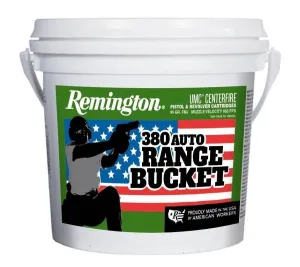
.380 ACP Ammo on Sale
On-sale .380 from 200+ retailers · Updated every 4 hours




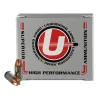

9mm: The Right Answer for Most People
Nine millimeter is the most popular defensive handgun cartridge in the world, and there’s a reason for that. It threads the needle between power, capacity, controllability, and cost better than any other handgun round. The FBI switched to 9mm from .40 S&W in 2015 after extensive testing showed modern 9mm defensive loads matched or exceeded .40 S&W performance while allowing faster follow-up shots and higher capacity. If it’s good enough for federal agents, it’s good enough for your carry gun.
Pros of 9mm
Best overall terminal performance at manageable recoil. Modern 9mm loads like the Federal HST 147gr, Speer Gold Dot 124gr +P, and Hornady Critical Duty 135gr +P have excellent real-world stopping records. The ballistics nerd arguments about .380 vs 9mm end here: 9mm wins. Not by a massive margin in modern loads, but consistently.
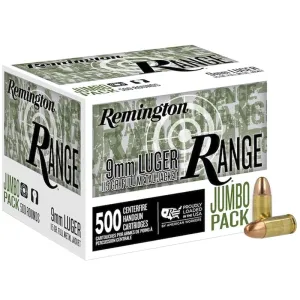
Massive ammo selection. You can train with cheap 115gr FMJ at under 25 cents per round and carry with premium HST at $1.50/round. The variety means you can optimize separately for practice and defense. That flexibility doesn’t exist to the same degree with any other caliber.
Higher capacity for the same gun size. Compare the Sig P365 to an equivalently-sized .38 Special revolver. The P365 holds 10+1 rounds. The revolver holds 5. In a worst-case defensive situation, you want more chances to end the threat, not fewer.
The market is built around it. Want a gun with an easy slide? There are 9mm guns for that. Want a lightweight carry gun? 9mm options exist. Want a full-size home defense gun? 9mm all day. The platform variety is enormous.
Cons of 9mm
More recoil in micro guns. The Sig P365 SAS, the Springfield Hellcat, the Kimber Micro 9 — these are tiny, lightweight 9mm guns that kick more sharply than their size suggests. For a new shooter or someone recoil-sensitive, a micro 9mm can be a rough experience if they’re not prepared for it.
Stiffer slides. Compact and subcompact 9mm guns typically have heavier recoil springs than .380 equivalents. Women with limited hand strength may struggle to rack some of them. The solution is technique — overhand grip, locking your wrist, using your body weight — but it does take practice.
Best 9mm defensive loads: Federal Premium HST 147gr (subsonic, great expansion, consistent), Speer Gold Dot 124gr +P (excellent real-world record), Hornady Critical Duty 135gr +P (designed for intermediate barrier penetration). Any of these three will serve you well.
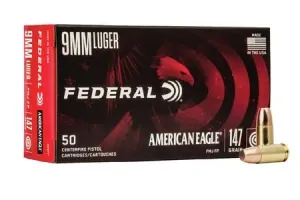
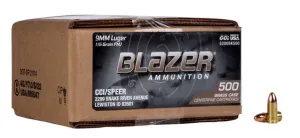
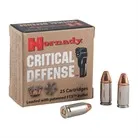
9mm Ammo on Sale
On-sale 9mm from 200+ retailers · Updated every 4 hours




.38 Special: The Classic Revolver Round
The .38 Special has been around since 1898 and it’s been a standard police and civilian defensive round for most of that time. It’s a proven cartridge. It’s also a cartridge that’s somewhat tied to the revolver platform, and revolvers come with their own set of tradeoffs that we’ll cover in detail in our revolver vs semi-auto guide.
Pros of .38 Special
Simple platform. A .38 Special revolver has no slide to rack, no magazine to seat, no decocker to remember. Point and press the trigger. For people who don’t want to learn a more complex system or who store a firearm for emergency home defense without regular practice, the revolver’s simplicity is a genuine advantage.
Moderate recoil in standard loads. Standard-pressure .38 Special in a medium-frame revolver like the Ruger SP101 or Smith & Wesson Model 10 is easy to shoot. It’s not snappy. It’s a gentle push. The all-steel revolvers that chamber .38 Special have enough weight to absorb the recoil into nothing.
Reliable operation. Revolvers don’t have the failure modes that semi-autos do. No failure to feed, no stovepipe, no failure to eject. If a round doesn’t fire, you just pull the trigger again and the cylinder rotates to the next cartridge. That mechanical simplicity appeals to some people.
Cons of .38 Special
Low capacity. Most .38 Special revolvers hold 5 rounds. Some hold 6. That’s it. No quick reload in a stress situation. For home defense against multiple threats or a sustained confrontation, you’re working with a significant capacity disadvantage compared to a semi-auto carrying 10-17 rounds.
Heavy double-action trigger. A double-action revolver trigger pull is typically 10-12 pounds. It’s a long, heavy pull that takes real practice to shoot accurately. New shooters often yank the trigger trying to get through it and throw shots wide. It’s learnable, but it takes more investment than a semi-auto with a 5-6 pound trigger.
Snub-nose .38s kick hard. The romantic vision of a small Smith & Wesson J-frame in your purse sounds appealing. The reality is that a 5-shot J-frame like the Model 642 weighs 15 ounces and produces sharp, stinging recoil with standard loads. With +P loads it gets worse. A lot of women who buy J-frames don’t practice with them because they don’t enjoy shooting them. That’s a real problem.
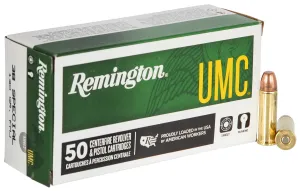
Best .38 Special defensive load: Speer Gold Dot Short Barrel 135gr +P is specifically designed for the velocity loss from short barrels. Federal 130gr HST is excellent in standard-barrel guns.
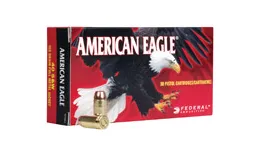
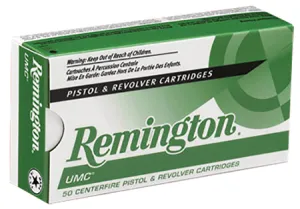
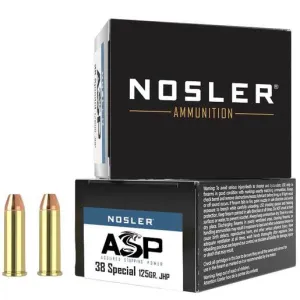
.38 Special Ammo on Sale
On-sale .38 Special from 200+ retailers · Updated every 4 hours




.357 Magnum: Usually Overkill, But Options Exist
The .357 Magnum is a genuinely powerful cartridge with excellent terminal ballistics. It’s also loud enough to cause permanent hearing damage with a single unprotected shot indoors, produces a fireball that can obscure your vision in low light, and in a small revolver produces recoil that most people find brutal. It’s not a bad choice, it’s just a choice that comes with significant compromises.
The upside is that .357 Magnum revolvers can also chamber .38 Special. You can practice cheaply with .38 Special and load .357 Magnum for carry. Some people find that appealing. The Ruger GP100 in .357 Magnum is actually pleasant to shoot with .38 Special loads because the gun is heavy enough to eat the recoil.
For carry in a snub-nose like the Ruger LCRx or S&W Model 60, I would load .38 Special +P and call it a day. The .357 Magnum out of a 2-inch barrel loses so much velocity that it performs closer to .38 Special +P than it does to full .357 loads from a 4-inch barrel. You get all the pain and little of the gain.
The right way to live with .357 Magnum as a defensive caliber is to buy a 4-inch or longer barrel and use it primarily for home defense, then practice with .38 Special +P loads to keep range time tolerable. The Ruger GP100 in a 4-inch barrel is the recoil-friendliest .357 Magnum on the market because the gun weighs 40 ounces and absorbs recoil into the frame instead of into your wrist. I have shot Magnum loads through a 6-inch GP100 and it still kicks more than a service 9mm, but it is manageable. A 2-inch snub firing full .357 Magnum is not for most people, full stop.
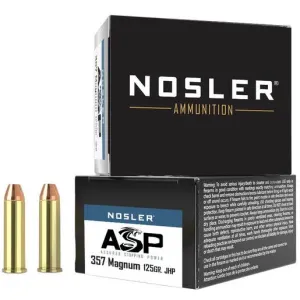
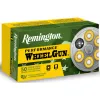
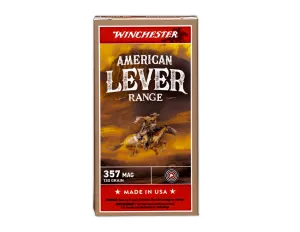
.357 Magnum Ammo on Sale
On-sale .357 Magnum from 200+ retailers · Updated every 4 hours



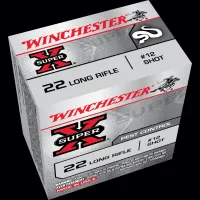
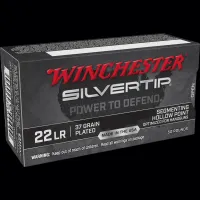
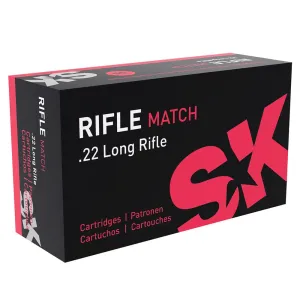
.22 LR: Train With It, Don’t Carry It
I’m going to be direct here: don’t carry a .22 LR for self-defense if you have better options. The cartridge was not designed for terminal performance and modern defensive .22 loads do not reliably expand or penetrate to the depths required by the FBI’s ballistic testing protocol.
That said, a .22 LR pistol like the Ruger Mark IV, Browning Buck Mark, or Smith & Wesson M&P 22 Compact is one of the most valuable training tools you can own. Ammunition is cheap. Recoil is essentially zero. You can practice the fundamentals — grip, trigger press, sight alignment — thousands of times without flinching, without fatigue, and without spending a fortune. Most skills you build in .22 transfer directly to centerfire shooting.
If your only option is a .22 LR or nothing, a .22 LR is better than nothing. But it should not be your defensive choice when .380, 9mm, or .38 Special guns are widely available and manageable.
The training math on .22 LR is what makes it valuable. A 500-round .22 LR practice session runs about $30 to $40. The same round count in 9mm runs $100 to $150 depending on brand. I have run thousands of .22 LR rounds through a Ruger Mark IV without flinching once, and the trigger discipline that builds transfers cleanly to my carry 9mm. The FBI ballistic protocol minimum is 12 inches of penetration in calibrated gel, and most defensive .22 LR loads top out around 8 to 10 inches even with hot ammunition. That gap is the reason it stays a training tool, not a defensive caliber.
.22 LR Ammo on Sale
On-sale .22 LR from 200+ retailers · Updated every 4 hours


How to Pick the Best Caliber for Women’s Self Defense
Here’s what all the caliber data boils down to: carry the largest caliber you can shoot accurately and quickly, from a gun you’ll actually have on you. That’s the whole answer.
If you can shoot a 9mm compact accurately, carry 9mm. If a 9mm micro pistol causes you to flinch and you shoot it poorly, a .380 that you shoot well is the better defensive choice. Shots that hit are infinitely more effective than shots that miss, regardless of caliber. This isn’t a cop-out. It’s a real principle that comes up constantly in defensive shooting research and case studies.
The practical priority order for most women looking at concealed carry: try a compact 9mm first. If you shoot it well in a gun that fits your hand, you are done. The Sig P365, Glock 43X, and Smith & Wesson Shield Plus are the three micro compact 9mm pistols that dominate women’s EDC choices today, and any of them will serve as a daily concealed carry pistol for years. If the recoil is a genuine problem, look at .380 in a properly-sized compact pistol. If you are committed to a revolver platform for legitimate reasons, .38 Special +P in a medium-frame gun is adequate.
The guns that make .380 easiest to shoot: M&P 380 Shield EZ, Glock 42, Ruger LCP Max. The guns that make 9mm most manageable: Walther PDP-F, Sig P365, S&W M&P Shield Plus, CZ P-10 S.
Ammo Recommendations by Caliber
.380 ACP Defensive Loads
Federal Premium HST .380 Auto 99gr: The gold standard for .380 defensive ammo. Consistent 12-14″ penetration in gel with excellent expansion to .55″+ diameter. This is what I’d carry in any .380 gun. It’s loaded to standard pressure so it works in any .380 chambered firearm.
Hornady Critical Defense .380 ACP 90gr FTX: The flex-tip bullet solves the reliability problem that hollow points can have in .380 (they sometimes plug with clothing and fail to expand). Slightly less gel performance than the HST but still a quality defensive load that feeds reliably.
Speer Gold Dot .380 Auto 90gr: Time-tested police and defensive ammunition with reliable expansion in .380 ACP. Widely available and backed by decades of real-world use.
9mm Defensive Loads
Federal Premium HST 9mm 147gr: Subsonic, heavy-for-caliber, excellent expansion and penetration. One of the top-tested defensive loads in any format. Excellent for short-barreled carry guns because it doesn’t need high velocity to expand properly.
Speer Gold Dot 9mm 124gr +P: The standard load for many law enforcement agencies for twenty-plus years. Exceptional field record. The +P designation adds velocity at the cost of slightly more recoil — in a carry gun, the difference is minimal.
Hornady Critical Duty 9mm 135gr +P: Designed specifically for barrier penetration (car glass, heavy clothing, wallboard). If you’re more worried about having to shoot through barriers than bare-gel performance, this is the choice.
.38 Special Defensive Loads
Speer Gold Dot Short Barrel 135gr +P: Specifically designed for 2-inch snub-nose barrels. The powder charge is optimized to reach adequate velocity from a short barrel where most standard loads fall short. If you’re carrying a J-frame or similar, this is the load.
Federal 130gr HST .38 Special: Standard pressure version designed to expand reliably even from shorter barrels. Good choice for medium-frame .38s where you want reliable expansion without the +P recoil.
But What About Stopping Power?
“Stopping power” is the most abused phrase in firearms discussion. It implies that some bullets reliably stop threats immediately and others don’t, and the difference is primarily caliber. The research doesn’t support that clean a narrative.
The FBI’s wound ballistic research and the Marshall-Sanow stopping power studies both point to the same conclusions: handguns are generally poor fight-stoppers compared to rifles and shotguns. The difference between calibers at handgun velocities is real but smaller than most people believe. Shot placement — hitting vital zones, specifically the cardiovascular system and central nervous system — drives outcomes far more than whether you’re shooting .380 or 9mm.
This doesn’t mean caliber selection is irrelevant. It means it’s one factor among several. Your ability to shoot quickly and accurately is worth more than optimizing caliber at the margins. Practice is worth more than premium ammunition. Carrying the gun consistently is worth more than spending weeks debating caliber online.
Shoot whatever caliber you shoot well. Load it with a quality hollow point. Train regularly. That formula beats caliber optimization every time.
Women and Firearms Hub Best Handguns for Women (2026) Best .380 Pistols for Women Best 9mm Pistols for Women Revolver vs Semi-Auto for Women Shooting Fundamentals for Women
Frequently Asked Questions
What is the best caliber for women's self defense?
Nine millimeter is the best caliber for most women. It offers proven terminal performance, manageable recoil in properly-sized guns, high capacity, and the widest selection of quality defensive ammunition on the market. The FBI switched back to 9mm after finding modern loads matched .40 S&W performance with less recoil. Start with 9mm unless you have a specific reason not to.
Is .380 ACP good enough for self defense?
Yes, with quality modern ammunition. Federal HST .380 99gr and Hornady Critical Defense 90gr FTX both achieve adequate penetration and reliable expansion in ballistic gel testing. .380 is not ideal, but it's a legitimate defensive choice for shooters who need lower recoil or easier slide manipulation. A .380 you shoot accurately is better than a 9mm you can't control.
Is 9mm too much recoil for a woman?
No. Millions of women carry and shoot 9mm daily. Recoil perception depends more on gun weight, grip design, and technique than caliber. A heavier 9mm like the Sig P365XL or Smith & Wesson M&P Shield Plus recoils less than a tiny lightweight .380. The key is choosing a gun with good ergonomics and practicing with it until your grip and stance manage the recoil effectively.
What is the difference between .380 and 9mm?
The .380 ACP is a shorter, lower-pressure cartridge running slower (around 900-950 fps) with less energy than 9mm. Nine millimeter typically runs 1,050-1,200 fps depending on load and produces more terminal energy. In modern defensive loads, 9mm consistently achieves better penetration and expansion in gel testing. The practical trade-off is that .380 guns can be made smaller and lighter, and the cartridge is softer-recoiling in equally-sized guns.
Is a .38 Special revolver good for women?
A medium-frame .38 Special revolver is a legitimate defensive choice, especially for home defense. The platform is simple to operate under stress. However, snub-nose J-frame revolvers in .38 Special can be surprisingly snappy with standard loads, and the 5-shot capacity is a real limitation. If you go this route, choose a gun with enough weight to absorb recoil and load it with Speer Gold Dot Short Barrel 135gr +P.
What caliber do most female police officers carry?
The overwhelming majority of female police officers carry 9mm, the same as their male counterparts. The FBI, DEA, and most major metro departments have standardized on 9mm service pistols. The Glock 17, Glock 19, Sig P320, and Smith & Wesson M&P 2.0 are all 9mm platforms that appear on most agency-approved lists. The caliber debate at law enforcement level was settled years ago in favor of 9mm.
Should I carry hollow point or FMJ ammunition?
Always carry hollow point ammunition for self defense. Full metal jacket (FMJ) rounds are for training. They're cheaper and feed reliably, but they pass through threats and continue into whatever is behind them. Hollow points expand on impact, transfer more energy to the target, and reduce the risk of over-penetration. Carry Federal HST, Speer Gold Dot, or Hornady Critical Defense in your defensive caliber.
Does caliber matter more than shot placement?
Shot placement matters more. All handgun calibers are relatively poor fight-stoppers compared to rifles and shotguns. The difference between .380, 9mm, and .38 Special in real encounters is smaller than internet debates suggest. Hits on vital zones, specifically the cardiovascular system, drive outcomes. A well-placed .380 round beats a missed 9mm every time. Invest in training and regular practice before obsessing over caliber selection.
6,867+ Gun & Ammo Deals
Updated daily from 200+ top retailers. Filter by category, caliber, action type, and price.
Related Guides