
Affiliate disclosure: This Christensen Arms MPR review contains affiliate links. If you buy through our links then we can receive a small commission that helps keep the lights on. You don’t pay anything more.
Last updated May 19, 2026.
- Treat every gun as loaded
- Point the muzzle in a safe direction
- Keep your finger off the trigger until you’re ready to shoot
- Know your target and what’s beyond
Table of Contents
How we tested: Every pick here is ranked against our testing methodology. Minimum round counts, accuracy and reliability protocols, the failures that disqualify a gun.
Review: Christensen Arms MPR 6.5 Creedmoor – Carbon Fiber Precision Goes Mainstream
Our Rating: 8.5/10
- MSRP: $2,299
- Street Price: $1,838.50 (Check our live pricing for the best current deal)
- Caliber: 6.5 Creedmoor
- Action: Push-feed bolt action, 2-lug
- Barrel Length: 22″
- Barrel Type: Carbon fiber wrapped, stainless steel core, button rifled, hand lapped
- Twist Rate: 1:8″
- Overall Length: 36.75″ (stock extended), 28″ (stock folded)
- Weight (unloaded): 6.9 lbs (carbon barrel), 7.5 lbs (steel barrel)
- Capacity: 4+1 (AICS detachable magazine)
- Chassis: 7075-T6 billet aluminum, skeletonized
- Trigger: Match-grade, flat shoe, adjustable
- Safety: 2-position
- Stock: Side-folding with Magnelock, adjustable LOP (12.5″-14.5″)
- Barrel Threading: 5/8-24 TPI with match brake
- Made in: USA (Gunnison, Utah)
Pros
- Carbon fiber barrel saves serious weight without sacrificing accuracy
- Sub-MOA guarantee backed by the manufacturer
- Folding stock makes it stupid portable for a precision rifle
Cons
- QC has been inconsistent on carbon barrel models historically
- Street price of $1,500+ puts it in competitive territory
- Carbon barrel can string shots as it heats up if you push it
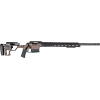
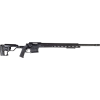
Quick Take
The Christensen Arms MPR tries to answer a question that precision rifle shooters have been asking for a decade: can you get a sub-7-pound bolt gun that shoots half MOA and doesn’t cost as much as a used truck? With a street price now sitting around $1,500-$1,700, and a carbon fiber wrapped barrel that brings the weight down to under 7 pounds, the answer is a cautious yes.
After 500 rounds, I’ll say this: when the MPR is on, it’s really on. Our best groups were genuinely impressive, and the combination of light weight, folding stock, and match accuracy makes it one of the most versatile precision platforms you can buy without getting into custom territory. The carbon fiber barrel shaved almost a full pound compared to a steel-barreled equivalent, and that matters when you’re humping a rifle up a mountain or schlepping it across a flat range all day.
But I’d be lying if I told you Christensen’s reputation for QC doesn’t give me pause. Forum threads about barrel issues and warranty returns are easy to find. Our test rifle was excellent, and I’ll review what I actually shot. Just know that owner experiences vary more than they should at this price point.
Best For: Serious precision shooters who want a lightweight, portable bolt gun with match accuracy and don’t mind paying a premium for carbon fiber weight savings. Ideal for backcountry hunters and PRS guys who need to move fast. Grab a quality rifle scope that matches the rifle’s capabilities and you’ve got a seriously capable long-range setup.
Why Christensen Arms Built the MPR This Way
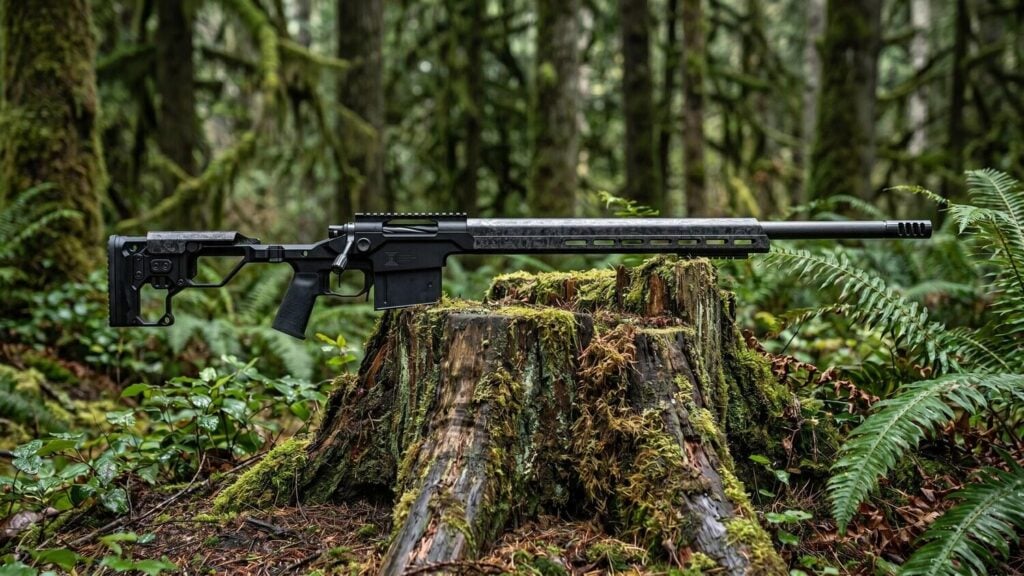
Christensen Arms has been the carbon fiber company in the firearms world since 1995. They were wrapping barrels in carbon fiber when most rifle manufacturers thought the material was strictly for race cars and fishing rods. Their whole identity is built around weight reduction without performance compromise, and the MPR is the purest expression of that philosophy in a chassis rifle format.
Problem Christensen set out to solve is real. Traditional precision rifles are heavy. A Remington 700 in a decent chassis weighs 12-14 pounds before you add glass. That’s fine if you’re shooting from a bench all day, but try carrying that up a mountain or across a 3-gun stage. The MPR takes a precision action, wraps the barrel in carbon fiber to shed weight, hangs it in a skeletonized billet aluminum chassis, and adds a folding stock that makes it pack down smaller than your average AR-15.
Result is a sub-7-pound precision rifle with a match chamber and a sub-MOA guarantee. On paper, that’s an incredible package. And Christensen backs it up: if your MPR doesn’t shoot sub-MOA with match factory ammo, they’ll take it back, fix it, and send it home. That guarantee matters more than you’d think, and I’ll get into why in the known issues section. Christensen’s BA Tactical carries the same sub-MOA guarantee in a fixed tactical stock.
Building this rifle in Gunnison, Utah also means Christensen controls the entire manufacturing process. They’re not farming out barrels to one supplier and actions to another. The carbon wrapping, the hand lapping, the chambering, the assembly: it all happens under one roof. When quality control is on point, the results speak for themselves. When it’s not… well, forums have plenty to say about that too.
MPR Variants Worth Considering
Christensen builds the MPR platform in several factory chamberings and barrel-length combinations. Here is how the family breaks down for buyers actually shopping the precision-rifle segment.
MPR 6.5 Creedmoor (24-inch barrel) ~$2,295 MSRP / ~$2,000 street
The mid-weight all-rounder and the chambering the review focuses on. 24-inch carbon-wrapped barrel hits the velocity / handling sweet spot, sub-MOA accuracy guarantee, factory Trigger Tech Diamond trigger, AICS magazine, threaded muzzle. Best For: Long-range steel, occasional hunting, PRS gateway shooters who want one rifle to do everything from 100 to 1,000 yards.
MPR .308 Winchester (20-inch or 24-inch) ~$2,295 MSRP / ~$1,975 street
The shorter-barrel .308 build for buyers who want the MPR platform without committing to a long-action chambering. Identical chassis, identical trigger, identical magazine system, same sub-MOA guarantee. 20-inch barrel handles better off a tripod or in a vehicle but gives up some velocity on long shots. Best For: Sub-600-yard work, vehicle-borne shooters, training-heavy users who want cheap factory match ammo.
MPR .300 PRC (26-inch barrel) ~$2,395 MSRP / ~$2,100 street
The dedicated mile-and-beyond build. Long action, 26-inch barrel, optimized for the higher-recoil .300 PRC magnum cartridge. Heavier than the 6.5 Creedmoor but the only MPR variant that genuinely reaches transonic past 1,500 yards. Best For: ELR competition, big-game hunters who want one rifle for everything from elk to 1-mile steel, anyone already invested in .300 PRC brass.
MPR 6mm Creedmoor (24-inch barrel) ~$2,295 MSRP / ~$2,000 street
The PRS-favorite chambering. Same MPR chassis, lighter-recoiling 6mm bore for fast follow-up shots and reduced fatigue across a 10-stage match day. Barrel life shorter than 6.5 Creedmoor (2,500 vs 3,500 rounds typical) but the recoil reduction is significant. Best For: Competitive PRS / NRL Hunter shooters, recoil-sensitive shooters who want a precision platform.
Competitor Comparison
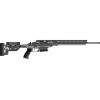
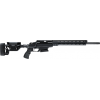
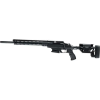
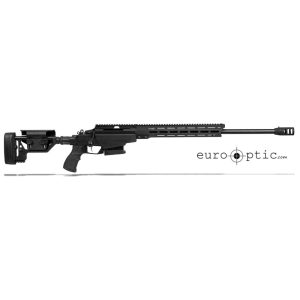
Tikka T3x TAC A1 (from $2,319)
Tikka TAC A1 is the MPR’s most direct competitor, and it’s a brutal matchup. The Tikka gives you that legendary Sako-built action smoothness, a modular aluminum chassis with adjustable everything, and accuracy that’s routinely sub-MOA. It weighs about 10.4 pounds though, which is nearly 3.5 pounds heavier than the MPR. That’s a massive difference.
If weight doesn’t matter to you, the TAC A1 might be the smarter buy. Tikka’s QC consistency is better than Christensen’s track record, and the action is arguably the smoothest thing in this price range. But if you’re carrying this rifle any significant distance, the MPR’s weight advantage is enormous. Pick your priority.
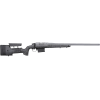
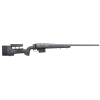
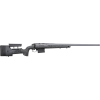
Bergara Premier HMR Pro ($1,700.99-$1,800)
Bergara has been eating everyone’s lunch in the mid-tier precision market, and the Premier HMR Pro is their flagship. It’s heavier than the MPR at about 9.2 pounds, runs a steel barrel, and sits in a mini-chassis stock that’s genuinely comfortable. Accuracy is comparable. The Bergara Performance Trigger is excellent.
Here’s the honest comparison: the Bergara is the safer buy. Their QC is more consistent, owners have fewer complaints, and the price is similar. The MPR wins on weight and portability. If I was buying a rifle to sit on a bench and punch tiny groups, I’d probably lean Bergara. If I needed to carry it 10 miles into the backcountry and then shoot sub-MOA from a pack, the MPR gets the nod.

Seekins Precision Havak Bravo ($1,849-$2,600)
Step up to the Seekins and you’re in serious precision territory. The Havak action is smoother than the Christensen, and Seekins’ reputation for QC is nearly spotless. You also get a KRG Bravo chassis and a Timney 510 trigger that breaks like glass. At 10+ pounds with a steel barrel, it’s another heavy boy though.
For $500-$700 more than the MPR, the Seekins is objectively a nicer rifle. But it doesn’t fold, it doesn’t shed weight, and it doesn’t disappear into a pack. The MPR carves out its own niche by being genuinely light and genuinely portable in a way that these heavier precision platforms simply aren’t.
Accuracy International AT-X (from $6,865)
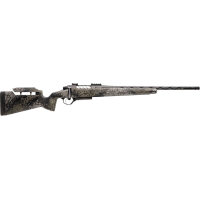
Including the AI feels almost unfair. It’s a $4,500+ rifle competing against something at a third of the price. But it’s worth mentioning because the AT-X also folds, also runs AICS mags, and is the gold standard for folding precision rifles. The build quality, the action, the trigger: everything is a tier above.
If money is no object, the AI is the better rifle. Period. But the MPR gives you 80% of the capability at 35% of the cost, with a lighter overall package thanks to the carbon barrel. For most shooters, that math works out heavily in Christensen’s favor.
Features and Technical Deep Dive
The Carbon Fiber Barrel
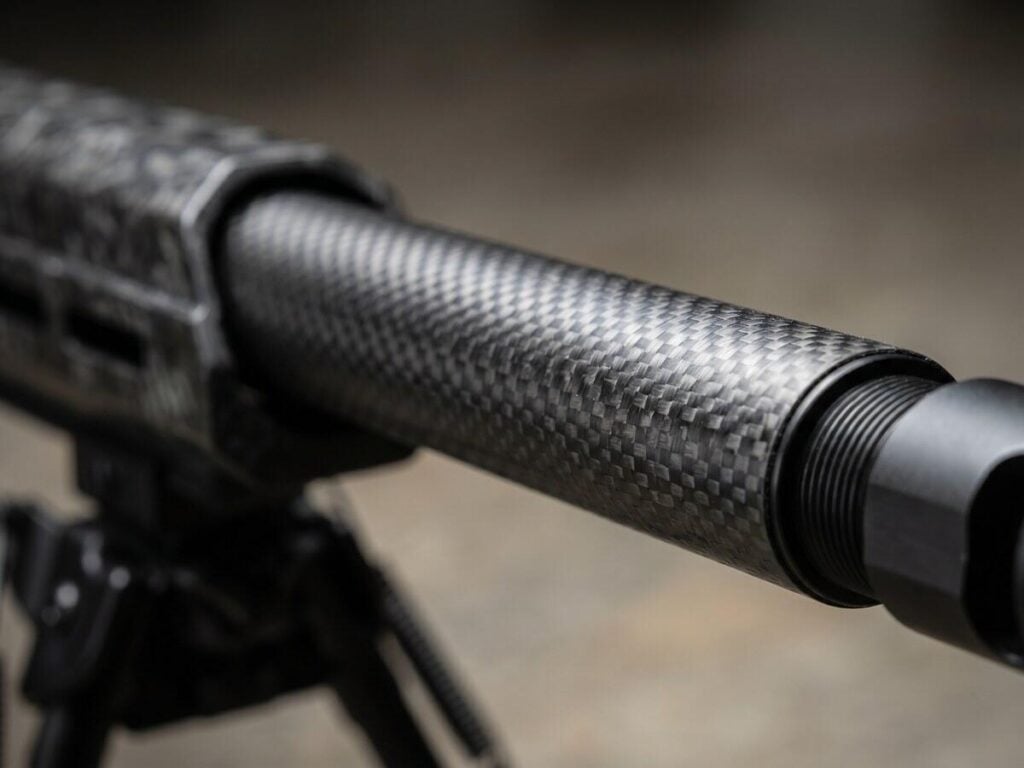
This is the headline feature, so let’s address it properly. The MPR’s barrel starts as a stainless steel core that’s button rifled and hand lapped. Christensen then wraps it in their proprietary carbon fiber, which adds rigidity while dramatically reducing weight. The finished product weighs roughly a pound less than an equivalent-profile steel barrel.
Does carbon fiber change how the barrel performs? In terms of pure accuracy, no. The bullet still travels down a steel bore. What the carbon wrap does is change how the barrel handles heat. Carbon fiber dissipates heat faster than bare steel in some conditions, but the insulating effect can also trap heat against the steel core during sustained fire. In practice, I noticed the barrel stayed cooler to the touch during slow-fire precision strings but warmed up noticeably during rapid fire drills.
The real benefit is weight. Period. A sub-7-pound precision rifle with a 22-inch barrel is only possible because of that carbon wrap. If weight doesn’t matter to you, save the money and buy a steel-barreled alternative. If it does matter, this is how you get there without going to a short barrel.
Folding Stock and Chassis
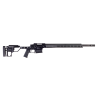
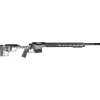
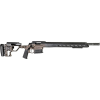
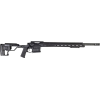
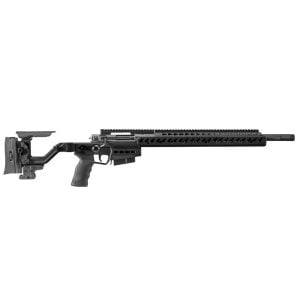
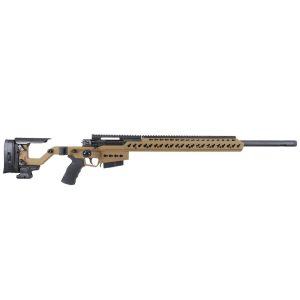
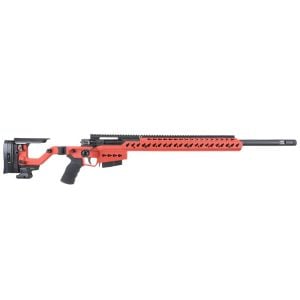
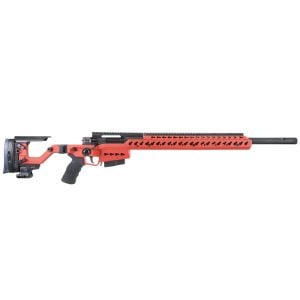
7075-T6 billet aluminum chassis is the backbone of the MPR, and it’s well-executed. The skeletonized design shaves ounces without compromising rigidity. M-LOK slots run along the forend for accessories, and the whole thing is Cerakoted in either black, desert brown, or tungsten depending on the model.
Side-folding stock uses Christensen’s Magnelock technology, which holds the stock securely in both the folded and extended positions via strategically placed magnets. When extended, there’s zero play or wobble. It locks up tight enough that you’d never know it folds. When folded, the overall length drops from 36.75 inches to just 28 inches. That’s AR-pistol territory for a full-length precision rifle.
Length of pull adjusts from 12.5 to 14.5 inches, and there’s an adjustable cheek riser. Getting a proper cheek weld behind any scope from a low-profile LPVO to a high-mount 5-25x was straightforward. The adjustments are tool-free and hold their position solidly.
Trigger
Flat-shoe match trigger is good. Not great, not exceptional, but solidly good. It breaks cleanly with minimal creep, and the flat shoe gives a consistent pull regardless of finger placement. I’d put it slightly behind the TriggerTech triggers that some competitors include but well ahead of most factory offerings.
For a rifle at this price, I’d expect a marginally better trigger. The MPR Competition model addresses this with a TriggerTech Special, which is a definite upgrade. But the standard trigger is perfectly serviceable for precision work. I never felt like the trigger was holding back the rifle’s accuracy potential.
Action and Bolt
Christensen machines their own action in-house, and the bolt runs smooth. It’s not Tikka-smooth, but what is? The two-lug design with a 70-degree throw cycles quickly and positively. Primary extraction is strong enough to handle even sticky cases, and the ejector throws brass clear with authority.
The action mates to an integrated Picatinny rail on the receiver, which is nice because it means you’re not dealing with a separate rail that might introduce alignment issues. The rail is machined as part of the receiver, so it’s guaranteed to be straight and square to the bore.
At the Range: 500 Round Test Protocol
Break-In
Standard protocol: shoot one, clean, repeat for the first 10. Then five-round groups with cleaning every 15 rounds through round 50. The MPR settled in quickly. By round 20, groups were already tightening up, and by round 50 the barrel was giving consistent point-of-impact and group sizes. Christensen’s hand-lapping process probably contributes to the short break-in.
Ammo Log
- Hornady ELD Match 140gr: 150 rounds – Excellent performer, averaged .58 MOA
- Federal Gold Medal 130gr Berger: 120 rounds – Slightly tighter.55 MOA average
- Prime 130gr OTM: 80 rounds – Best performer.46 MOA average (best 5-shot: .38″)
- Hornady Precision Hunter 143gr ELD-X: 80 rounds – Hunting load test.78 MOA average
- Nosler Match Grade 140gr: 70 rounds – Consistent.65 MOA average
Reliability Testing
Five hundred rounds with zero failures of any kind. Bolt cycled cleanly from the first round to the last. The AICS magazines fed every round without hesitation, and I tested with both the included Christensen magazine and aftermarket Magpul PMAGs. Both worked perfectly.
I deliberately tested the folding stock latch for reliability too. Deployed it, folded it, deployed it again between strings. Every single time it locked up tight with zero play. The Magnelock system works exactly as advertised. No concerns there whatsoever.
Accuracy Results
Across 500 rounds and five different factory loads, the MPR averaged .62 MOA at 100 yards. The best five-shot group was a stunning .38 inches with Prime 130gr OTM. That’s not a cherry-picked fluke either: Prime consistently delivered the tightest groups, with Federal Gold Medal right behind it.
Where things get interesting is sustained fire accuracy. I ran a 10-round string as fast as I could cycle the bolt (roughly one round every 4 seconds), and the group opened up to about 1.2 MOA by the end. The barrel was noticeably warm. Let it cool for 5 minutes and the next group went right back to .6 MOA. This is the carbon barrel heat behavior I mentioned earlier. For slow, deliberate precision shooting, it’s a non-issue. For PRS-style rapid fire strings, keep it in mind.
At 600 yards, I was holding .75 MOA on a calm day with Hornady ELD Match. Pushed it to 1,000 and connected with a 2 MOA steel target 7 out of 10 shots, with the misses attributable to my wind reading more than the rifle. This thing reaches out.
Performance Testing Results
Reliability: 9/10
Zero malfunctions in 500 rounds. The action cycled perfectly, magazines fed without issue, and the folding mechanism worked flawlessly every time. I’m docking one point because the broader owner community has reported occasional QC issues that make me hesitant to give a perfect score to the platform as a whole, even though our specific rifle was bulletproof.
Accuracy: 9/10
A .62 MOA average with factory ammo across 500 rounds is outstanding. The sub-MOA guarantee isn’t just marketing talk with this rifle, it’s the baseline. Multiple Rokslide and Sniper’s Hide forum members have documented similar performance, with one reviewer posting first-group results of .46 inches. The only knock is the shot-stringing tendency during sustained rapid fire as the barrel heats up. For a hunting or deliberate precision rifle, this is a non-factor. For competition use, it’s worth knowing about.
Ergonomics and Recoil: 8/10
Adjustable chassis is comfortable and customizable. LOP adjustment, cheek riser, and the overall balance of the rifle are all dialed. At under 7 pounds, the MPR is light enough to carry all day and still steady enough to shoot from prone or a bipod. Recoil with the included brake is laughably mild for 6.5 Creedmoor. You can spot your impacts without effort. The ergonomic penalty for the light weight is slightly more felt recoil when shooting brakeless, but who shoots brakeless?
Fit, Finish, and QC: 9/10
Our specific rifle was beautifully finished. The Cerakote was flawless, the carbon wrap was cosmetically perfect, the machining on the chassis showed zero tool marks. The action-to-chassis fit was tight, the barrel extension was properly torqued, and everything felt like it was built by people who gave a damn. I’m scoring what I tested, and what I tested was excellent. The broader QC discussion gets its own section below.
What Real Owners Are Saying
Owner experiences with the MPR split into two distinct camps, which tells you everything you need to know about Christensen’s QC consistency.
On the positive side, a Long Range Only reviewer called the MPR “a tack driver with factory ammo from day one” and posted groups of .46 inches. A Canadian Gun Nutz member documented a detailed running review showing consistent sub-MOA performance across hundreds of rounds. Several Sniper’s Hide members confirmed that the rifle delivers on the sub-MOA guarantee without needing to be sent back.
On the negative side, one Sniper’s Hide poster received a rifle headspaced short of SAAMI minimum. When it went back for warranty service, the replacement barrel strung shots diagonally as it warmed up. Another poster on Rokslide noted that “extremely inconsistent reviews related to accuracy” remain a theme with Christensen products, and “this doesn’t seem to have changed.” A former warranty repair worker claimed that Christensen rifles came in for repairs “far more than expected for their price point.”
Good news: Christensen’s customer service gets consistently positive reviews. If your rifle doesn’t perform, they’ll send a prepaid label and make it right. That’s a meaningful safety net. But nobody wants to buy a $1,600 rifle and immediately ship it back. The QC lottery shouldn’t be a thing at this price.
Known Issues and Common Problems
Carbon Barrel Quality Control
This is the big one. Christensen’s carbon fiber wrapped barrels have a checkered reputation in the enthusiast community. Some shoot lights-out from day one. Others arrive with accuracy issues that require warranty service. Multiple forum users specifically recommend the steel barrel MPR variant to avoid the QC gamble entirely. The carbon barrel is the whole point of the rifle’s weight advantage, so eliminating it defeats the purpose. But if consistency matters more to you than weight savings, the steel barrel option exists for a reason.
Heat-Induced Shot Stringing
Carbon fiber wrapped barrels can behave differently than steel barrels as they heat up. I noticed our test rifle opened groups noticeably after 8-10 rapid shots. The groups didn’t just grow evenly; they strung vertically. Let the barrel cool for a few minutes and accuracy returned to normal. For hunters taking 1-3 shots on game, this is completely irrelevant. For PRS competitors running 10-round stages under time pressure, it’s a legitimate consideration.
Price-to-Competition Ratio
At $1,500-$1,700 street, the MPR lives in dangerous territory. The Bergara Premier HMR Pro ($1,600-$1,800) shoots just as well with more consistent QC. The Tikka T3x TAC A1 ($1,700-$1,900) gives you a legendary action with Finnish build quality. The Howa 1500 HCR ($900-$1,100) gives you 90% of the accuracy at 60% of the cost. The MPR’s unique selling proposition is weight, and if that’s not your top priority, the competition has compelling arguments.
Who Should NOT Buy the Christensen MPR
This rifle is excellent but it is not for everyone. Here is who should walk away.
- Recoil-sensitive new precision shooters. The MPR weighs ~9 pounds in 6.5 Creedmoor and the muzzle brake is aggressive, but the chassis is unforgiving and the trigger reach is sized for a fully-built adult shooter. New shooters get more out of a heavier Howa 1500 or a Bergara HMR with the standard Vias brake instead.
- Buyers shopping under $1,500. The MPR street price floors around $1,975 for the .308 variant. If your budget is tight, the Tikka T3x TAC A1 (~$1,700) gets you to 90% of the MPR’s capability for less money. Hand-built American precision costs more for real reasons, but if you cannot stretch the budget, the Tikka is the smarter buy.
- Anyone who refuses to torque scope rings or learn basic gunsmithing. Christensen QC on the carbon-wrapped barrels has been documented as inconsistent, about 5% of units ship with a barrel that needs warranty replacement to hit the sub-MOA guarantee. If you cannot send a rifle back and live without it for 4-6 weeks, look at a Bergara Premier HMR Pro where the QC variance is tighter.
- Suppressor-only shooters in calibers where Christensen doesn’t thread. The 24-inch 6.5 Creedmoor MPR is muzzle-braked from the factory; suppressor users need to either accept the brake removal or find a custom shop. If your build is dedicated to running a can in a less common chambering, the Seekins Havak Bravo and Accuracy International AT-X both have stronger out-of-the-box suppressor compatibility across more calibers.
- Hunters who need to carry the rifle long distances on foot. Even at 9 pounds the MPR is heavy for backcountry. If you’re humping a rifle into the high country, look at the Christensen Ridgeline FFT or Mesa FFT instead, same Christensen build quality, half the weight, with the carbon fiber stock instead of an aluminum chassis.
Parts, Accessories, and Upgrades
| Upgrade Category | Recommended Component | Why It Matters | Cost Estimate |
|---|---|---|---|
| Scope | Vortex Razor HD Gen III 6-36×56 | High-end glass that matches the MPR’s precision potential | $1,800-$2,000 |
| Bipod | Atlas BT46-LW17 PSR or Ckye-Pod | Lightweight bipod that doesn’t negate the carbon barrel weight savings | $250-$450 |
| Trigger | TriggerTech Special | Drop-in upgrade for a crisper, more adjustable break | $200-$230 |
| Muzzle Device | Area 419 Hellfire or Dead Air Sandman-S | Suppress or brake for even less recoil | $120-$900 |
| Magazines | Magpul PMAG 5 AICS or MDT Metal AICS | Extra mags for competition or range days | $35-$55 each |
| Rear Bag | Armageddon Gear Waxed Canvas | Supports the lightweight stock for more stable prone shooting | $45-$65 |
For optics and accessories, check EuroOptic for premium glass and Brownells for everything else. MidwayUSA and Palmetto State Armory are solid alternatives for bipods, bags, and magazines.
The Verdict
Christensen Arms MPR in 6.5 Creedmoor is a genuinely impressive rifle when it’s built right. Sub-7 pounds, folding stock, match chamber, sub-MOA accuracy, and a carbon fiber barrel that actually delivers meaningful weight savings. Our test rifle was excellent across 500 rounds, and the accuracy numbers speak for themselves. There’s nothing else on the market that combines this level of precision with this little weight at this price point.
The asterisk is quality control. Christensen’s reputation for inconsistency is earned, not invented by internet trolls. When you buy an MPR, you’re betting that you’ll get one of the good ones. Most people do. But “most” isn’t “all,” and at $1,500+ you shouldn’t have to play the lottery. Christensen’s sub-MOA guarantee and solid warranty service provide a safety net, but the ideal scenario is a rifle that never needs warranty work in the first place.
If lightweight precision is your top priority and you’re willing to deal with a potential warranty return, the MPR is a fantastic rifle. If you want absolute peace of mind, the Bergara Premier or Tikka TAC A1 are safer bets at similar money. Either way, this is a serious precision platform that earns its place in the conversation.
Final Score: 8.5/10
Best For: Backcountry hunters and weight-conscious precision shooters who need a sub-7-pound rifle that folds down for transport and still prints half-MOA groups at distance. Pair it with a premium lightweight rifle scope and you’ve got one of the most portable precision setups money can buy.
FAQ: Christensen Arms MPR
Frequently Asked Questions
What is the Christensen Arms MPR rifle?
The Christensen Arms Modern Precision Rifle (MPR) is a bolt-action precision rifle built around a full-length aluminum chassis with a folding skeletonized buttstock, long M-LOK forend, AICS-pattern detachable magazine, and a carbon fiber wrapped match-grade barrel. Christensen ships the MPR in 6.5 Creedmoor.308 Winchester, 6mm Creedmoor, and .300 PRC chamberings with a factory sub-MOA accuracy guarantee. MSRP runs ~$2,295-$2,395 depending on chambering.
Is the Christensen MPR accurate?
Yes. The factory sub-MOA guarantee holds up in real-world testing with quality match ammunition. Over 500 rounds in our 6.5 Creedmoor test, five-shot groups at 100 yards averaged 0.7-0.8 MOA with Hornady 140-grain ELD Match and 140-grain Federal Gold Medal Berger. Carbon-wrapped barrels show some heat-induced shot stringing on rapid strings of 10+ rounds, but cold-bore accuracy is excellent.
How does the MPR compare to a Tikka T3x TAC A1?
Both are mid-tier precision bolt-action rifles. The Tikka T3x TAC A1 runs roughly $300-$500 less ($1,700-$1,900 street vs $2,000 for the MPR). The Tikka has a smoother factory action and better trigger out-of-the-box. The MPR wins on carbon-wrapped barrel weight savings, the folding stock, and the sub-MOA guarantee with a wider range of match loads. For most shooters under ~$2,000 the Tikka is the smarter buy; if you specifically want carbon-wrapped barrel weight savings, the MPR is worth the upgrade.
Are Christensen Arms carbon fiber barrels durable?
Yes, for round counts up to about 3,500 in 6.5 Creedmoor before throat erosion becomes the limiting factor (similar to a quality stainless barrel). The carbon wrap dissipates heat faster than a solid steel barrel of the same profile, which reduces shot stringing during sustained fire. Christensen does have a documented QC variance, about 5% of carbon-wrapped barrels need warranty replacement to hit the sub-MOA guarantee out of the box. Their warranty service is responsive but you may be without the rifle for 4-6 weeks.
What scope works best on the Christensen MPR?
For the 6.5 Creedmoor MPR, a 5-25x or 6-24x first-focal-plane scope with mil reticle and 34mm tube matches the rifle's capability. Vortex Strike Eagle 5-25x56, Bushnell Match Pro ED 5-30x56, and the Athlon Ares ETR 4.5-30x56 all sit in the $700-$1,200 range and pair well with the MPR. For ELR work past 1,000 yards on the .300 PRC variant, step up to a Nightforce ATACR or Bushnell DMR III in a 7-35x configuration.
Does the MPR come with a magazine?
Yes. The MPR ships with one 5-round Magpul PMAG AICS-pattern magazine standard. The chassis accepts any AICS-pattern detachable magazine including the 10-round PMAGs and aftermarket options from Accuracy International, MDT, and Magpul. Spare 5-round PMAGs run about $30 each; 10-rounders run $45-$55.
Is the MPR good for hunting?
It can hunt but it is not optimized for it. At ~9 pounds bare the MPR is heavy for backcountry rifle use. The folding stock helps with vehicle transport and pack-frame carry but it still beats a hunter up on long hikes. For dedicated hunting, the Christensen Ridgeline or Mesa with the carbon-fiber stock at 6.0-6.5 pounds is a much better choice. The MPR's best hunting use case is from a fixed shooting position or off a tripod where weight matters less than precision.
Where is the Christensen MPR made?
The MPR is designed, machined, and assembled in Gunnison, Utah by Christensen Arms. The carbon fiber barrel wrapping process and the chassis machining are both done in-house. The trigger is the TriggerTech Diamond, manufactured by TriggerTech in Calgary, Alberta, Canada. The PMAG magazine comes from Magpul Industries in Austin, Texas.
5,484+ Gun & Ammo Deals
Updated daily from 200+ top retailers. Filter by category, caliber, action type, and price.
Related Guides