
Last updated May 2nd 2026
Some of the links below are affiliate links, meaning at no additional cost to you, we may earn a commission if you click through and make a purchase.
- Treat every gun as loaded
- Point the muzzle in a safe direction
- Keep your finger off the trigger until you’re ready to shoot
- Know your target and what’s beyond
The Guns of Die Hard in 2026 at a Glance
| Gun | Details | Key Specs | Check Price |
|---|---|---|---|
 |
Best Overall IconicBeretta 92F (Modified) McClane’s barefoot-on-glass 9mm. The single most quoted action-movie pistol of the 1980s. |
Caliber: 9x19mm Capacity: 15+1 Origin: Italy |
Check Price ↓ |
 |
Best Villain BuildHK P7M13 Hans Gruber’s nickel-plated squeeze-cocker. The most architectural pistol ever to threaten Bonnie Bedelia. |
Caliber: 9x19mm Capacity: 13+1 Origin: Germany |
Check Price ↓ |
 |
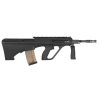
Best Bullpup CloneSteyr AUG A1 / A3 M1 Karl’s Austrian bullpup. The rifle that taught American audiences a 5.56 carbine could look like a sci-fi prop. For Steyr’s own civilian bullpup take, see our full Steyr AUG A3 M1 review. |
Caliber: 5.56 NATO Action: Short-stroke gas Origin: Austria |
Check Price ↓ |
 |
Best Subgun CloneHK SP5 (MP5 Civilian) The legal way to clone Theo’s MP5. The civilian-spec pistol HK still ships from Sterling, VA. |
Caliber: 9x19mm Capacity: 30 Origin: US (Oberndorf design) |
Check Price ↓ |
 |
Best Affordable BuildSmith & Wesson Model 15 Sgt. Al Powell’s K-frame service revolver. Standard LAPD issue and the cheapest screen-correct piece in the film. |
Caliber: .38 Special Capacity: 6 Origin: Springfield, MA |
Check Price ↓ |
The guns of Die Hard (1988) are eight named firearms across the Nakatomi takeover and the rooftop finale: John McClane’s modified Beretta 92F, Hans Gruber’s nickel-plated HK P7M13, Karl’s Steyr AUG A1, the terrorist crew’s HK 94 carbines dressed up to look like MP5s, Karl’s suppressed Walther PPK that takes out the lobby security guard, FBI Special Agent Johnson’s Steyr SSG 69 sniper rifle, Sgt.
Al Powell’s Smith & Wesson Model 15 LAPD service revolver, and the door-mounted M60E3 on the FBI helicopter that blows out the rooftop windows.
Table of Contents
The Christmas Movie That Reset Action Cinema
Die Hard dropped in July 1988 at the absolute peak of the Schwarzenegger-Stallone era, when every action film on the marquee was a 200-pound man with a belt-fed gun. John McTiernan and screenwriter Steven E. de Souza decided to do the opposite.
They put a 5’11” New York cop in a shirt and dress shoes, locked him in a high-rise full of European terrorists, and made him bleed for two hours. The film made $140 million on a $28 million budget, gave Bruce Willis his career, and rewired what an action lead was allowed to look like.
I rewatch this every December along with most of the country, and the gun work is a big part of why it holds up. The Beretta 92F was barely on screen in 1988 before Die Hard. After Die Hard it was the cop-movie pistol for a decade.
The HK P7M13 had no cinematic profile at all before Hans Gruber pulled it on Joseph Takagi. After Die Hard it became the most-recognized European pistol in American action film. Karl’s Steyr AUG was the first time most US audiences saw a bullpup. None of that happens by accident.
The arsenal Hans Gruber’s crew brings into the Nakatomi Building reads like a 1988 Cold-War weapons-export catalog. Italian Beretta sidearm, German HK pistols and subguns, Austrian bullpup and Austrian sniper rifle, suppressed Walther for the silent kills, an LAPD revolver for the cop on the curb, and a US-made M60E3 hanging off the side of the FBI helicopter.
The terrorist crew’s “MP5s” were almost all Heckler & Koch HK 94 civilian carbines modified by the prop department to look like full-auto MP5s, because real machine guns were a paperwork-and-supply problem nobody on a 1987 production wanted to solve.
Below: every named gun in Die Hard, with the scene it appears in, the production-side detail that the watching-it-on-cable version missed, current civilian alternatives, and live retail pricing if you want to clone a screen-correct piece in 2026.
1. Beretta 92F: John McClane’s Yippee-Ki-Yay Pistol
Detective John McClane (Bruce Willis) carries an LAPD-issued Beretta 92F throughout the entire film, modified by the production armorer with an extended slide release and an extended magazine release for one-handed manipulation.
- Caliber: 9x19mm Parabellum
- Capacity: 15+1
- Action: Short-recoil, locked breech, DA/SA
- Production armorer: Mike Papac, Cinema Weaponry
- Origin: Beretta, Gardone Val Trompia, Italy
| Rating | |
|---|---|
| Iconic Factor | 5/5 |
| Civilian Legality | 5/5 |
| Affordability | 4/5 |
| Period Authenticity | 5/5 |
| Scene Impact | 5/5 |
Pros
- The most quoted handgun of the 1980s action-film era
- Modern Beretta 92FS clones run $650-$800 at every major retailer
- Italian-built original or US-built (Tennessee), both screen-faithful
Cons
- 92F production ran 1976-1990; pure 92F is a collector hunt
- Bruce Willis’s extended-control modifications aren’t factory standard
- DA/SA trigger feels heavy after a decade of striker-fired carry guns
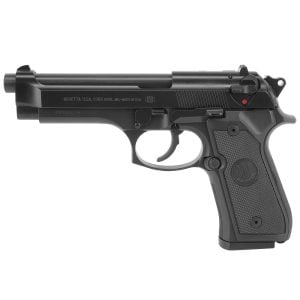
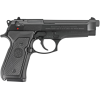

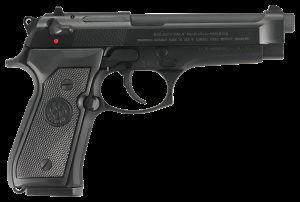
I have shot the 92FS for fifteen-plus years and the Die Hard model is functionally identical: same trigger pull, same feed angle, same overbuilt slide.
The Die Hard Beretta is the LAPD-issued service pistol McClane is carrying in his shoulder holster when he steps off the United flight at LAX in the opening minutes. He never sets it down for the rest of the film.
He shoots terrorists in the stairwell with it, slides on broken glass with it, breaks it down to zero rounds during the rooftop confrontation, and reloads it from the dropped Walther PPK he takes off Karl. By the time Hans Gruber falls out of the Nakatomi Plaza window, the Beretta is the only gun McClane has held for two hours of screen time.
Mike Papac at Cinema Weaponry was the production armorer. Papac modified the screen Berettas with extended controls because Bruce Willis spends a lot of the film operating the gun one-handed, often with his support hand wrapped in cloth or holding something else.
The factory-standard 92F slide release and magazine release are usable but require deliberate trigger-finger or thumb pressure. Papac’s extended versions are larger, more positive, and reachable in awkward grip positions. They aren’t a permanent factory option, but a good gunsmith can replicate the build for $80-$120 in parts and labor.
The 92F was the original Beretta variant adopted by the US military as the M9 in 1985. Beretta replaced it with the 92FS in 1990, after the well-documented USSOCOM slide-cracking issue led to a hammer-pin enlargement and a slide-retention modification. Almost every Beretta 92 you’ll find at retail today is a 92FS.
The screen-used 1988 Die Hard pistol is technically a pre-FS 92F, but visually it’s identical to the modern 92FS. Same lines, same proportions, same grip frame. A current Italian 92FS or US-built (Beretta USA, Tennessee) 92FS is a clean clone at $650-$800.
For a deeper look at the Beretta lineup including the 92, see our 11 Best Beretta Pistols roundup.
Best For: Anyone who wants the single most-recognized 1980s action-cinema pistol, period-correct and still in production at every major US retailer for under $800.
2. HK P7M13: Hans Gruber’s Nickel-Plated Squeeze-Cocker
Hans Gruber (Alan Rickman) carries a nickel-plated Heckler & Koch P7M13 throughout the film, used to execute Joseph Takagi in the boardroom and to threaten Holly Gennaro in the climactic confrontation.
- Caliber: 9x19mm Parabellum
- Capacity: 13+1 (the M13 is the high-cap variant of the P7M8)
- Action: Gas-delayed blowback, squeeze-cocking grip
- Production: 1982-2008 (P7M13 specifically)
- Origin: Heckler & Koch, Oberndorf am Neckar, Germany
| Rating | |
|---|---|
| Iconic Factor | 5/5 |
| Civilian Legality | 4/5 |
| Affordability | 1/5 |
| Period Authenticity | 5/5 |
| Scene Impact | 5/5 |
Pros
- Most architecturally distinctive pistol in 1980s action cinema
- Squeeze-cocker mechanism still has no real successor in the market
- The villain pistol that made HK a Hollywood-rolodex go-to
Cons
- HK discontinued the P7M13 in 2008; collector-only supply
- Used examples run $3,500-$6,500 at auction in 2026
- The polymer trigger guard is famously prone to heat-cracking under sustained fire
I handled a P7M13 at a SHOT Show range day a few years back. The squeeze-cocker takes about thirty minutes to stop feeling weird, and another hour before you stop unconsciously decocking it every time you adjust your grip.
The Hans Gruber P7M13 is the gun he uses to put a single round through Joseph Takagi’s forehead in the boardroom, the gun he tucks under his suit jacket while pretending to be the hostage Bill Clay, and the gun he’s still holding when he finally goes through the window.
Alan Rickman handled it with a quiet, almost professorial calm that turned it into the most architectural pistol in 1980s action cinema. Before Die Hard nobody outside German police academies knew what a P7 was. After Die Hard it became HK’s signature image piece for fifteen years.
The P7 series uses a gas-delayed blowback action and a unique squeeze-cocking grip. There’s no manual safety, no decocker, and no traditional cocked-and-locked carry. You squeeze the front of the grip to cock the striker, and as long as your hand is on the gun the striker stays cocked. Release the grip and it decocks instantly.
Helmut Weldle designed it for the West German police’s “PSP” (Polizei-Selbstlade-Pistole) competition in the late 1970s. The original P7 (P7PSP) had a heel mag release and an 8-round single-stack magazine. The P7M13, which is the Hans Gruber variant, is the high-capacity 13-round upgrade introduced in 1982 with a US-style push-button mag release.
The screen-used Hans Gruber pistol was nickel-plated for the production. HK never offered a factory nickel finish on the P7M13; the Die Hard armorer commissioned the plating specifically because Rickman wanted the gun to read as cold and reflective on screen against his black turtleneck.
NRA Museum displays one of the production-used examples (loaned by Cinema Weaponry, the same Mike Papac shop that handled the McClane Berettas). HK discontinued the P7M13 in 2008. Used examples run $3,500-$6,500 depending on condition, with nickel-plated examples adding a 30-50% premium because of the Die Hard association.
If you want a current-production Hans Gruber alternative without the collector premium, the closest thing is the HK P30 or VP9 in 9mm. Neither has the squeeze-cocker, but both share HK’s German engineering DNA and run $700-$900 at retail. The P7 squeeze-cock action has no living successor.
Best For: Collectors who want the single most-recognized European villain pistol in action cinema and who are comfortable with the $4,000+ used market.

3. Steyr AUG A1: Karl’s Austrian Bullpup
Karl (Alexander Godunov) carries a Steyr AUG A1 with the original 1.5x integrated optic during the Nakatomi assault, including the stairwell ambush sequence and the long hallway scenes hunting McClane.
- Caliber: 5.56x45mm NATO
- Capacity: 30-round translucent polymer magazine
- Action: Short-stroke gas piston, rotating bolt
- Optic: Integrated 1.5x Swarovski (A1 spec)
- Origin: Steyr Mannlicher, Steyr, Austria
| Rating | |
|---|---|
| Iconic Factor | 5/5 |
| Civilian Legality | 4/5 |
| Affordability | 2/5 |
| Period Authenticity | 5/5 |
| Scene Impact | 5/5 |
Pros
- The first bullpup most US audiences ever saw on a movie screen
- Current AUG A3 M1 is a near-perfect screen-correct clone
- Modular barrel-swap system covers 16″, 20″, and 24″ lengths
Cons
- Original A1 with integrated optic is a 1980s collector piece, $4,000+
- Modern A3 M1 retails $1,800-$2,200
- Translucent magazine and bullpup balance take getting used to
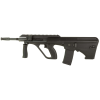
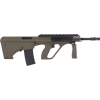
I have run an AUG A3 M1 on a 3-gun stage. The ergonomics feel alien for the first fifty rounds, then they click and you understand why the Austrian army stuck with the platform for five decades.
Karl is Hans’s second-in-command and Theo’s older brother. He spends most of the film stalking McClane through the Nakatomi maintenance levels with his AUG slung across his chest. The signature Karl moment is the moment in the elevator shaft where he and his AUG corner McClane and Argyle. The signature AUG moment is the muzzle-flash close-up as he sprays the C-4 stash in the executive office.
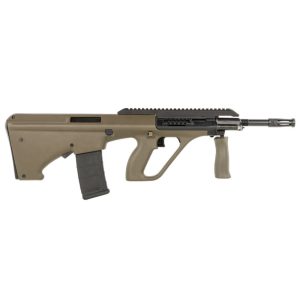
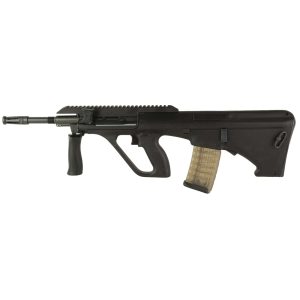
The Steyr AUG was a 1977 Austrian military adoption that took twenty years to become normal in the US civilian market. The original A1 has a 1.5x Swarovski optic permanently integrated into the carry handle, a translucent polymer magazine, and a folding vertical foregrip on the gas block.
The screen-used Karl AUG is the A1 spec with the integrated optic, sourced through the same Cinema Weaponry rental house that supplied the McClane Berettas. Steyr Mannlicher discontinued the A1 carry-handle housing in the late 1990s in favor of the A2 Picatinny-rail upper, then the A3.
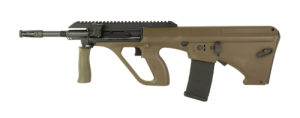
The current US-market clone is the Steyr AUG A3 M1. It’s still made in Austria, still uses the 30-round translucent magazine, still uses the short-stroke gas piston system, but ships with a Picatinny rail in place of the integrated optic so you can run a modern red dot or LPVO.
It runs $1,800-$2,200 at retail. If you specifically want the carry-handle integrated-optic look from the film, the original 1980s A1 imports show up at major auction sites in the $3,500-$5,000 band. Check out our best bullpup rifles post for this and others. Spoiler alert, the Steyr AUG wins.
Best For: Bullpup collectors who want the rifle that introduced US theatergoers to forward-magazine geometry, in a modern Picatinny-equipped configuration that’s still in production.

4. HK MP5 / HK 94: The Terrorist Crew’s Subgun
Most “MP5” subguns visible on Hans Gruber’s crew in Die Hard are actually Heckler & Koch HK 94 civilian semi-auto carbines, modified by the production armorer with shorter barrels and tri-lug front ends to mimic the look of a full-auto MP5A3.
- Caliber: 9x19mm Parabellum
- Capacity: 30-round curved magazine (some scenes use 15-round straight)
- Action: Roller-delayed blowback (the HK signature)
- Screen units: Real MP5A3 (selected hero shots) + HK 94 carbines (most crew shots)
- Origin: Heckler & Koch, Oberndorf am Neckar, Germany
| Rating | |
|---|---|
| Iconic Factor | 5/5 |
| Civilian Legality | 4/5 |
| Affordability | 2/5 |
| Period Authenticity | 5/5 |
| Scene Impact | 5/5 |
Pros
- The MP5 family is the most cinematic subgun in modern action film
- HK SP5 ships from Sterling, VA in a civilian-legal pistol configuration
- Roller-delayed blowback delivers the smoothest 9mm subgun cycle on the market
Cons
- Real pre-1986 transferable MP5 runs $25,000-$45,000 with NFA stamp
- HK 94 carbines (the screen units) were discontinued in 1989 with the import ban
- HK SP5 retails $2,800-$3,200, more than most clone-builders want to spend
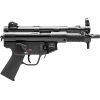
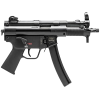
I tested an HK SP5 over 1,500 rounds for our standalone SP5 review. The roller-delayed action is so smooth at the trigger that the gun feels lighter shooting than it does carrying.
Theo, Eddie, Heinrich, and most of Hans Gruber’s eleven-man crew carry MP5-pattern subguns through the Nakatomi takeover. Theo’s the one you remember. He’s the hacker working the boardroom safe with a “Christmas come early” smile while his subgun rests on the desk.
Heinrich is the one McClane drops the C-4 satchel on. Eddie is the lobby greeter. The MP5 is the cinematic shorthand for “professional European bad guy with a 9mm subgun” and Die Hard wrote half the rules for that shorthand.
Production reality: real MP5s were a procurement headache for a 1987 Hollywood production. Each registered transferable MP5 required Class 3 paperwork, an armorer with an SOT, and a tightly limited rental window. So Mike Papac at Cinema Weaponry brought in a stock of HK 94 carbines, the civilian semi-auto version of the MP5 with a 16-inch barrel and a fixed buttstock, and modified them for screen use.
Shorter barrels, tri-lug-style fore-ends, and full-auto sear pin replicas turned the HK 94s into convincing MP5 visual matches without the paperwork. A handful of real MP5A3s were used for selected hero shots and close-ups.
If you want a screen-correct civilian build in 2026, the HK SP5 is the only legitimate path. SP5 is HK’s US-imported civilian-legal pistol-configured MP5, manufactured in Oberndorf and final-fitted in Sterling, Virginia.
It is a 9mm pistol with the iconic MP5 lower, paddle mag release, roller-delayed bolt, and tri-lug muzzle device. Add an SB Tactical SBT5KA brace or a Form 1 SBR application and an HKE collapsible stock for a full MP5A3 silhouette. Retail runs $2,800-$3,200.
For our deep look at the SP5 specifically, see HK SP5 Review: Is the Civilian MP5 Worth $2,800?. 1,500 rounds tested.
Best For: Roller-delayed blowback purists who want the cinematic Die Hard subgun build and are willing to pay HK Oberndorf premium for it.

5. Walther PPK Suppressed: The First Kill
Karl uses a suppressed Walther PPK to kill the Nakatomi lobby security guard in the opening minutes of the takeover, the first time a gun goes off in the film.
- Caliber: .32 ACP (7.65 Browning) or .380 ACP (9mm Kurz). Both produced
- Capacity: 7+1 (.32) or 6+1 (.380)
- Action: Straight blowback, DA/SA
- Suppressor: Production-fabricated screw-on can (the PPK isn’t factory-threaded)
- Origin: Carl Walther GmbH, Ulm, Germany
| Rating | |
|---|---|
| Iconic Factor | 4/5 |
| Civilian Legality | 5/5 |
| Affordability | 4/5 |
| Period Authenticity | 5/5 |
| Scene Impact | 3/5 |
Pros
- Carl Walther still produces the PPK; new examples ship from Fort Smith, AR
- The original “spy pistol” Walther has built continuously since 1931
- US-built (S&W license) and German-built (Ulm) examples both available
Cons
- Screw-on suppressor isn’t factory; needs threaded barrel + Form 4 NFA work
- Hand-bite from the slide is a known PPK ergonomic issue
- Tiny .32 ACP pocket pistol; not a primary defensive pistol by 2026 standards
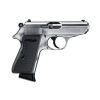
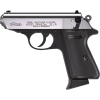
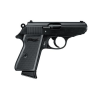
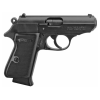
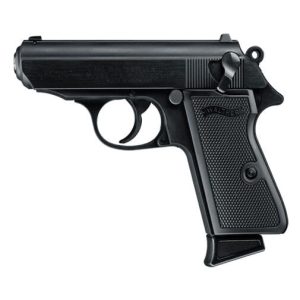
I carried a stainless PPK as a deep-concealment option for one summer. The bite at the web of the hand is real and the .380 round count is unforgiving, but the trigger reset is a small piece of mechanical art.
Karl’s PPK kill is the moment Die Hard tells the audience this isn’t a hostage stand-off, it’s a body count. The lobby guard checks Karl’s clipboard, looks up, and Karl thumbs the safety off and drops him with a single suppressed round through the chest.
McClane never sees it. The guard’s body is the reason the FBI shows up later. The PPK is on screen for less than thirty seconds total but it does more plot work than most of Karl’s AUG sequence.
The Walther PPK has been in continuous production since Carl Walther introduced it in 1931 as the “Polizei Pistole Kriminal,” the criminal-investigation police pistol, a shorter-frame version of the 1929 PP.
The PPK was famously the carry pistol of the German criminal-investigation branch in the 1930s and 40s, then the carry pistol of choice for Western intelligence agencies through the Cold War, and is most famous outside Walther’s catalog as James Bond’s gun from 1962 onward. Karl’s Die Hard PPK is the .380 ACP variant with a production-fabricated screw-on suppressor; the PPK doesn’t ship from the factory with a threaded barrel.
Walther still produces the PPK and ships it through Walther Arms USA from Fort Smith, Arkansas. New PPKs run $700-$850. Older S&W-license PPKs (made in Houlton, Maine, from 2002 to 2018) clear $500-$700 used.
If you want the suppressed Karl build, you’ll need a gunsmith to thread the barrel (1/2″-28 most common), a Form 4 NFA-stamped suppressor, and a 9-12 month wait. The whole package lands around $1,800 once you’re done.
Best For: Spy-pistol collectors who want the most-recognized covert carry handgun in cinema, with the Karl-build suppressor as an optional NFA upgrade.

6. Steyr SSG 69: The FBI Sniper Try
FBI Special Agent Johnson sets up a Steyr SSG 69 on a tripod across the street from Nakatomi during the FBI containment, attempting to put a round through McClane on the rooftop.
- Caliber: 7.62x51mm NATO / .308 Winchester
- Capacity: 5-round rotary magazine (or 10-round box)
- Action: Bolt-action, cold-hammer-forged barrel
- Production: 1969-present (one of the longest-running production sniper rifles)
- Origin: Steyr Mannlicher, Steyr, Austria
| Rating | |
|---|---|
| Iconic Factor | 3/5 |
| Civilian Legality | 5/5 |
| Affordability | 3/5 |
| Period Authenticity | 5/5 |
| Scene Impact | 3/5 |
Pros
- Steyr SSG 69 PII still in production after 55+ years
- Cold-hammer-forged barrel delivers sub-MOA out of the box
- The Austrian sniper rifle that beat Remington 700 to police adoption in Europe
Cons
- $2,800-$3,500 retail puts it above most US bolt-action competitors
- Rotary 5-round magazine is dated next to box-mag DMR rifles
- Limited US importer network (Steyr Arms, Bessemer, AL)
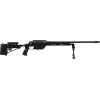
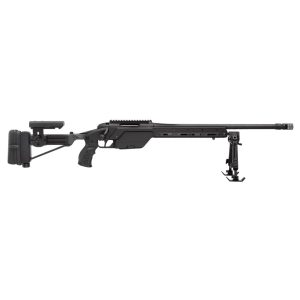
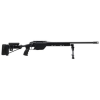
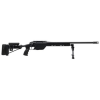
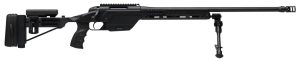
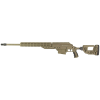
The Steyr SSG 69 is the rifle Special Agent Johnson uses (or tries to use) when the FBI takes containment from the LAPD. He sets up across the street, gets glass on McClane through the rooftop window, and is mid-pre-shot routine when Karl detonates the C-4 charges and blows out the rooftop.
The shot never connects. The SSG 69 is on screen briefly but it’s a notable inclusion because most 1988 American action films would have defaulted to a Remington 700 in police-marksman scenes. Die Hard’s prop department went to the European catalog instead.
I ran an SSG PII at 100 yards last fall. Sub-MOA cold-bore with factory Federal Gold Medal Match. Cold-hammer-forged barrel still tracks like the day Steyr cut it.
The SSG 69 is the original Steyr “Scharfschützengewehr 69” (sniper rifle, 1969), adopted by the Austrian army that year and the Vienna police shortly after. It uses a cold-hammer-forged barrel (a Steyr trademark process), a rotary 5-round magazine, and a synthetic stock that was unusual when it was introduced.
The PII variant added a heavier barrel profile and a 10-round box magazine. The SSG 69 has been in continuous production for over 55 years, which puts it in the same longevity bracket as the Remington 700 and the Mauser 98.
Steyr Arms (Bessemer, Alabama) imports the SSG 69 PII to the US market. Retail runs $2,800-$3,500 depending on configuration. It is not a budget bolt-action. At the same price point you can have a Bergara B-14 HMR or a Tikka T3x TAC A1 with rails to spare. But for collectors who want the screen-correct FBI sniper rifle from Die Hard, the modern SSG 69 PII is a direct production-line continuation of the screen-used unit.
Best For: Bolt-action collectors who want the Austrian sniper rifle that beat Remington to NATO police adoption, with screen-correct Die Hard provenance.
7. Smith & Wesson Model 15: Sgt. Al Powell’s LAPD Service Revolver
Sgt. Al Powell (Reginald VelJohnson) carries a Smith & Wesson Model 15 Combat Masterpiece, the standard LAPD service revolver from 1971 to 1988, which he draws to drop Karl in the film’s final beat outside the building.
- Caliber: .38 Special
- Capacity: 6-round cylinder
- Action: DA/SA, K-frame, swing-out cylinder
- Production: 1949-1999
- Origin: Smith & Wesson, Springfield, Massachusetts
| Rating | |
|---|---|
| Iconic Factor | 3/5 |
| Civilian Legality | 5/5 |
| Affordability | 5/5 |
| Period Authenticity | 5/5 |
| Scene Impact | 5/5 |
Pros
- Cheapest screen-correct Die Hard piece by a wide margin
- K-frame .38 Special is one of the best-balanced revolvers ever produced
- Used market is rich; LAPD trade-ins still surface at gun shows
Cons
- Discontinued in 1999; new production not available from S&W
- .38 Special is a ballistically modest service round in 2026
- Non-Performance-Center examples can need a trigger-job pass
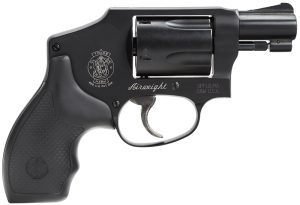
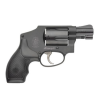
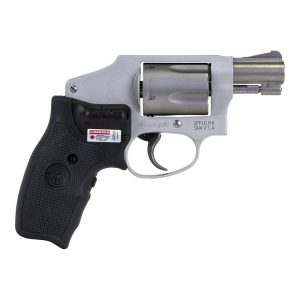
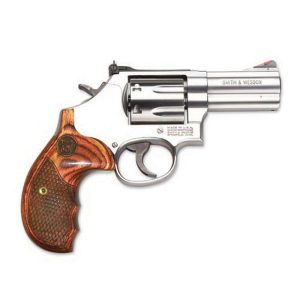
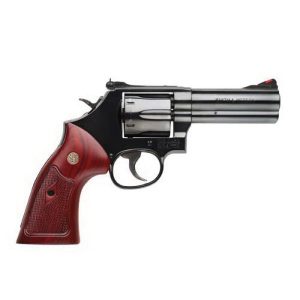
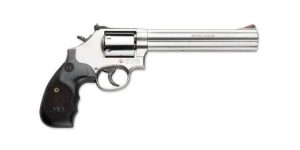
I keep an LAPD trade-in Model 15 in the safe. .38 wadcutter through a four-inch K-frame is one of the most pleasant pistol loads ever made, and the trigger on a well-broken-in Model 15 puts most modern double-actions to shame.
Sgt. Al Powell is the LAPD desk officer who buys Twinkies for his pregnant wife, gets pulled into the Nakatomi callout because he’s nearest, and spends the entire film as the only voice on McClane’s stolen radio.
He doesn’t fire his service revolver until the final scene, when Karl crawls out of the rubble of the lobby with an HK 94 and goes for McClane and Holly. Powell draws the Model 15 from his hip rig, fires once, and drops Karl. The Model 15 has zero rounds expended for two hours of screen time and one round expended in the last ninety seconds.
The Smith & Wesson Model 15 was Smith’s “Combat Masterpiece,” the K-frame .38 Special target revolver originally introduced in 1949 as the K-38 Combat Masterpiece, formally renamed Model 15 in the 1957 model-numbering revision.
The LAPD adopted the Model 15 as standard issue in 1971 and stayed on it until 1988, when the department finally transitioned to the Beretta 92F (the same pistol McClane is carrying). The screen-used Powell revolver is a period-accurate 4-inch-barrel blued example, exactly the configuration LAPD ordered.
Smith & Wesson discontinued the Model 15 in 1999. New production isn’t available, but used examples are abundant. LAPD trade-ins from the late-80s transition to the 92F still surface at gun shows and through police-supply auction channels. Expect $400-$700 for a clean K-frame in shootable condition. For a roughly screen-correct revolver build at the lowest entry cost in this entire Die Hard list, the Model 15 is the easy answer.
For broader revolver options including K-frame alternatives, see our Best Revolvers for Sale list.
Best For: Revolver collectors who want the cheapest screen-correct piece in the entire Die Hard arsenal, with deep used-market supply through LAPD trade-in channels.

8. M60E3: The FBI Helicopter Door Gun
The FBI helicopter circling Nakatomi during the rooftop sequence carries a door-mounted M60E3 belt-fed machine gun, fired at McClane and the hostages by the FBI agent inside the cabin in the final-act assault.
- Caliber: 7.62x51mm NATO
- Capacity: Belt-fed (100-round disintegrating-link belts most common)
- Action: Gas-operated, open-bolt, full-auto only
- Cyclic rate: ~550 rounds per minute
- Origin: Originally Saco Defense (Maine), now US Ordnance (Reno, NV)
| Rating | |
|---|---|
| Iconic Factor | 4/5 |
| Civilian Legality | 1/5 |
| Affordability | 1/5 |
| Period Authenticity | 5/5 |
| Scene Impact | 4/5 |
Pros
- The cinematic shorthand for “helicopter door gun” since Vietnam
- Pre-1986 transferable M60s exist; semi-auto Ohio Ordnance M60-SA available
- Same gun family as the Predator opening jungle ambush
Cons
- Pre-1986 transferable M60 runs $30,000-$45,000
- Ohio Ordnance M60-SA semi-auto retails $9,500-$11,500
- Belt-fed feeding is its own ammo-supply problem at $1+/round
I have fired a transferable M60 exactly once. It is not subtle. The recoil of a 7.62 belt-fed at cyclic rate moves the entire shooter, not just the gun.
The M60E3 in Die Hard hangs on a pintle mount in the door of the FBI helicopter. The agent inside opens up on the rooftop in the final act, mowing through Hans’s remaining men and forcing McClane and Holly off the building via the fire-hose rappel.
The M60 fire is one of the loudest moments in the film. The cinematography pushed handheld through the rotor wash, the foley team layered in 7.62 belt-fed cycle noise, and the muzzle flash off the door is the longest single weapons-fire shot in the third act.
The M60 family started in 1957 as the US Army’s adopted general-purpose machine gun, replacing the BAR and the M1919A6. The original M60 was made by Saco Defense in Saco, Maine; the lighter M60E3 carried-fighting variant came in the 1980s with a shortened barrel, redesigned bipod, and a forward grip ahead of the gas tube.
The Die Hard helicopter unit is the M60E3 spec, identifiable by the carry-handle gas tube grip and the shorter barrel. The same M60E3 family shows up in Predator (1987), where Blain (Jesse Ventura) carries the famous “Old Painless” custom variant. See our Guns of Predator breakdown for that build.
For civilian ownership, the only modern path is the Ohio Ordnance M60-SA, a semi-auto version made on M60E4 patterns from US Ordnance receivers. It runs $9,500-$11,500 and feeds from disintegrating-link belts. Pre-1986 transferable full-auto M60s clear $30,000-$45,000 with a Form 4 NFA stamp. Either way it’s a heavy-budget collector piece, not a clone-on-a-budget proposition.
Best For: Belt-fed collectors with a five-figure firearms budget who want the screen-correct helicopter door gun from the most-rewatched Christmas movie in American film.
The Standout Scene: Hans’s “Mr. Mystery Guest” Reveal
The single best gun moment in Die Hard isn’t the rooftop fall, the C-4 elevator, or the “yippee-ki-yay” shootout. It’s the moment in the executive office when Hans Gruber, posing as the hostage Bill Clay, talks his way to within arm’s length of McClane. McClane hands him an empty Beretta 92F.
Hans turns, draws the nickel-plated P7M13 from his waistband in one smooth motion, and is mid-aim when McClane reveals he’s been hiding a fully-loaded Beretta tucked in his back waistband under his shirt. Hans gets one shot off, McClane gets two, and Heinrich and Karl come through the door. The rest is the elevator-shaft sequence.
That moment works because the audience can see both pistols clearly. The empty 92F McClane handed over is visually identical to the loaded one in his back waistband. Hans’s P7M13 is unmistakable because it’s been on screen with him for an hour and a half and nickel-plated for maximum visual contrast.
McTiernan blocks the scene tightly so the audience reads the bluff at exactly the moment Hans does. It’s the most efficient gun-cinematography moment in the film, and one of the cleanest in 1980s action cinema generally.
If You Only Want One Die Hard Gun
Buy a Beretta 92FS. It’s the cheapest civilian-legal screen-correct piece short of the Model 15 revolver, it’s still in production, every retailer carries it, and it’s the gun on the poster. A Beretta USA 92FS in 9mm runs $700-$800 at most retailers. Add an extended slide release and extended mag release for $80-$120 in gunsmith parts and you have a screen-faithful John McClane build for under a grand.
If your budget is tighter, the S&W Model 15 is the cheapest period-correct piece in the entire arsenal. Used K-frame Combat Masterpieces in 4-inch blued configuration clear $400-$700 at gun shows and used-counter racks. It’s the Powell build, it’s screen-faithful, and it doesn’t require a single aftermarket part.
If you have collector money and want the villain build, the HK P7M13 is the right answer but accept that you’re spending $4,000-$6,500 used and that a nickel-plated Hans-faithful example will run an additional 30-50% premium. The squeeze-cocker has no living successor and the P7M13 is the most-recognized European villain pistol in cinema.
Related Reading
- The Guns of Scarface (1983)
- The Guns of The Matrix (1999)
- The Guns of Predator (1987)
- The Guns of Pulp Fiction
- The Guns of Léon: The Professional
- The Guns of Sicario
- The Guns of The Town (2010)
- 11 Best Beretta Pistols
- HK SP5 Review
FAQ: Guns of Die Hard
What guns does John McClane carry in Die Hard?
John McClane carries an LAPD-issued Beretta 92F throughout Die Hard, modified by production armorer Mike Papac with an extended slide release and extended magazine release for one-handed operation. He picks up a suppressed Walther PPK off Karl mid-film and uses an HK 94 carbine briefly after taking it from a dropped terrorist. The Beretta is the only firearm McClane carries from start to finish.
What pistol does Hans Gruber use in Die Hard?
Hans Gruber carries a nickel-plated Heckler & Koch P7M13 throughout Die Hard. The P7M13 is the 13-round high-capacity variant of HK P7 squeeze-cocker series, introduced in 1982. Hans uses it to execute Joseph Takagi in the boardroom and to threaten Holly Gennaro in the climactic confrontation. HK never offered a factory nickel finish; the Die Hard armorer commissioned the plating specifically for Alan Rickman.
Were the MP5s in Die Hard real machine guns?
Most of the MP5-style subguns visible on Hans Gruber crew in Die Hard are actually Heckler & Koch HK 94 civilian semi-auto carbines, modified by production armorer Mike Papac with shorter barrels and tri-lug-style fore-ends to look like full-auto MP5s. A handful of real registered MP5A3s were used for selected hero shots and close-ups, sourced through Cinema Weaponry rental house.
What rifle does Karl carry in Die Hard?
Karl carries a Steyr AUG A1 with the integrated 1.5x Swarovski optic in Die Hard. The AUG A1 is the original 1977 Austrian military spec, identifiable by the carry-handle housing rather than the Picatinny rail of the modern A3. Karl uses it for the elevator-shaft sequence and the long hallway pursuit of McClane through the maintenance levels.
What is the difference between a Beretta 92F and a 92FS?
The Beretta 92F was produced from 1976 to 1990 and adopted by the US military as the M9 in 1985. Beretta replaced it with the 92FS in 1990 after the documented USSOCOM slide-cracking issue, which led to an enlarged hammer pin and a slide-retention modification. The 1988 Die Hard pistol is technically a 92F. Modern retail Berettas are 92FS, visually identical to the screen pistol at normal viewing distance.
Can civilians legally own the guns from Die Hard in 2026?
Most Die Hard guns are legal for civilian ownership in 2026. The Beretta 92F or current 92FS, the HK P7M13 (used market only since 2008), the Steyr AUG A3 M1, the HK SP5 (civilian MP5 equivalent), the Walther PPK, the Steyr SSG 69, and the Smith and Wesson Model 15 are all available at retail or on the used market. The full-auto MP5 and M60E3 require a pre-1986 transferable NFA tax stamp, with prices starting at $25,000.
What revolver does Sgt. Al Powell carry in Die Hard?
Sgt. Al Powell carries a Smith and Wesson Model 15 Combat Masterpiece, the standard LAPD service revolver from 1971 to 1988. It is a K-frame, 6-shot, .38 Special revolver with a 4-inch blued barrel. Powell draws it in the final scene to drop Karl when Karl crawls out of the lobby rubble with an HK 94. It is the cheapest screen-correct piece in the entire Die Hard arsenal at $400 to $700 on the used market.
What was the helicopter door gun in Die Hard?
The FBI helicopter door gun in Die Hard is an M60E3, the lighter and redesigned 1980s variant of the M60 general-purpose machine gun. It is identifiable by the forward grip ahead of the gas tube and the shortened barrel. The agent inside the helicopter cabin fires it on the rooftop in the final-act assault, forcing McClane and Holly off the building via the fire-hose rappel. The same M60E3 family appears in Predator (1987).
6,216+ Gun & Ammo Deals
Updated daily from 200+ top retailers. Filter by category, caliber, action type, and price.