
Last updated May 20, 2026. This page contains affiliate links. If you buy through them, we earn a small commission at no extra cost to you. Full disclaimer.
- Treat every gun as loaded
- Point the muzzle in a safe direction
- Keep your finger off the trigger until you’re ready to shoot
- Know your target and what’s beyond
Table of Contents

Watch the CMP channel specifically. CMP has announced surplus M14 rifle sales with first order fulfilment pencilled in for late 2026 to early 2027.
Why Used Rifles Are Still the Smart Buy
Rifles age differently than handguns. A 1942 M1 Garand with a clean bore and matching serial numbers is more valuable today than it was twenty years ago. A 2024 AR-15 with a brand-new barrel will depreciate 25% the day you take it home. The used rifle market sits at the intersection of those two curves, and it rewards a buyer who understands which side they are shopping on.
Modern rifles (AR-15s, bolt-action hunters, lever-actions) depreciate like cars. The original owner buys it, shoots a thousand rounds or zero rounds, then trades it in or consigns it for 65-75% of new retail. The used market is deep, the inventory is graded by condition, and the warranty often transfers. This is the segment that fills our live used-rifle inventory below.
Surplus rifles run on a different clock. The supply was set decades ago when the parent military retired the contract. Pricing reflects scarcity (M1 Garands keep climbing as the CMP stock thins out), historical interest (matching serials, original bayonet, unit markings), and shootability (a pitted Mosin bore is worth half a clean one). Buy surplus for the history and the price-per-historical-significance ratio, not for tight groups, and you will be happy.
Used Rifle Categories Explained
Military Surplus Rifles
The classic surplus rifles are still arriving on the civilian market, though the pipeline is thinning. The M1 Garand (US service rifle 1936-1957) is distributed in part through the Civilian Marksmanship Program (CMP), which offers grade-stratified pricing ($800 service grade, $1,200 field grade, $1,800+ correct-grade). The Mosin-Nagant 91/30 (Russian/Soviet service 1891-1965) flooded the US market through Century Arms and Royal Tiger Imports between 2000-2015 at $99 prices that are now a $300-$500 distant memory.
The Mauser K98 (German service 1935-1945) commands $800-$1,800 for clean specimens, with Russian-capture (force-matched serial numbers, refurbished receivers) examples running cheaper. The M1 Carbine (US WW2/Korea/Vietnam service) runs $1,000-$1,800 in commercial inventory and $750-$1,000 via CMP when stock is available. The Springfield 1903 / 1903A3 (US service 1903-1942) lists $1,200-$2,500 depending on production era and matching parts. The Lee-Enfield Mk III / No. 4 (British service 1907-1957) is the budget collector rifle at $400-$700.
Police / LE Rifle Trade-Ins
Patrol rifles cycle through US police agencies at roughly the same rate as duty handguns, every 7-12 years. The Colt 6920 (M4 carbine pattern, the standard agency patrol rifle 2000-2020) is the most common trade-in by volume, with retired LE rifles listing $850-$1,200 at major dealers. The S&W M&P 15 (a Sandy Hook-era favorite of many municipal departments) trades at $650-$900 used.
Patrol rifle trades come with the same caveat as handgun trades: holster wear is replaced by sling wear on the receiver edge, and the round count is typically low because most patrol carbines never get unholstered outside the quarterly qualification course.
Civilian Consignment
The largest segment by volume. Modern AR-15s (Daniel Defense, BCM, LWRC, Aero Precision, Smith & Wesson, Ruger), bolt-action hunters (Remington 700, Tikka T3X, Browning X-Bolt, Winchester Model 70, Bergara B-14), and lever-actions (Marlin 336, Henry, Winchester 1894) all flow through dealer consignment. Condition varies wildly: an AR-15 fired twice and sold during the 2020-2022 panic-buy cooldown is essentially a new rifle at 30% off; a hard-used three-gun competition rifle with 30,000+ rounds is at the other end of the spectrum.
Factory Refurbished / Certified Pre-Owned
Fewer rifle manufacturers run formal CPO programs than handgun manufacturers. The notable exceptions are Springfield Armory M1A (factory rebuilds available occasionally), Ruger (selective CPO on Mini-14 and 10/22 trades), and FN America (FN SCAR refurbs). When a factory refurb is available, it typically runs 15-25% under MSRP with a full manufacturer warranty equivalent to new-rifle coverage. These programs do not run continuously, so check inventory monthly if you are targeting a specific model.
Curio & Relic Rifles
Rifles over 50 years old qualify for ATF Curio & Relic (C&R) classification. The 03 FFL home license costs $30 for three years and lets you take direct interstate delivery of C&R-listed rifles without going through a local FFL. The market is broad: pre-1968 Winchester 70s, Pre-WW2 Mausers and Lugers, M1 Carbines, pre-1968 lever-actions, original AK-pattern imports from the pre-import-ban era. Collector pricing rewards original finish, matching parts, and provenance.
Top Used Rifle Models on the Market
AR-15 (modern semi-auto, the dominant used segment)
Used AR-15 inventory is bottomless. Civilian trade-ins, panic-buy unloads, police carbine rotations, and competition-circuit upgrades all funnel into the used channel. Price ranges break out by builder: budget tier (Aero Precision, Smith & Wesson, Ruger, S&W M&P 15) $550-$900 used; mid-tier (Geissele, LMT, Sionics, BCM) $1,100-$1,800 used; premium (Daniel Defense MK18, LWRC SBR uppers, Knight’s Armament) $1,800-$3,500 used. Always check whether the upper and lower originated together , many used ARs are owner-built mismatched assemblies, which is fine but can affect resale.
Ruger 10/22 (.22 LR carbine, the universal trainer)
The 10/22 is the most-produced .22 rifle in history at over 8 million units since 1964. The used market for 10/22s is enormous and the pricing barely depreciates: used standard carbines run $180-$280 (versus $300-$350 new), Takedown and Target variants run $280-$480, and customized Volquartsen / Kidd / Tactical Solutions builds command $600-$2,000+. Always check the front sight band (commonly missing on owner-customized rifles), barrel-to-receiver fit (the V-block can develop play), and the magazine release (the original button-style release is iconic but the extended Ruger BX release is a common upgrade).
Marlin 336 / 1894 (American lever-action classic)
The .30-30 Marlin 336 is the deer rifle in much of America, with the .357/.44 Magnum Marlin 1894 as the carbine companion. Used JM-stamped Marlins (pre-2007 production from the Marlin Firearms plant in Connecticut, before Remington took over and quality suffered through 2020) carry significant value , JM-stamped 336s in clean condition run $700-$1,100. Post-Remington Marlins from 2007-2020 list cheaper but quality is uneven. The current Ruger-owned Marlin production (2021-) has restored quality and starts shipping a new used market over the next 5 years. The best .30-30 lever-action rifle guide covers the current market.
Remington 700 (bolt-action standard)
The Remington 700 is the most-produced bolt-action centerfire rifle in US history at over 6 million units since 1962. Used inventory is deep and varied: a 1980s ADL hunting rifle in .30-06 runs $450-$650; a custom-shop M40 sniper rifle clone in .308 Winchester runs $2,000-$4,000. The Remington bankruptcy in 2020 and subsequent rebirth as RemArms in 2021 caused a 3-year gap where new production stopped, and the used market filled the demand. Pre-bankruptcy 700s (2000-2019 production) are the safer used buy than the brief 2020-2022 transition period units.
M1 Garand (CMP surplus)
The Garand is the single most-collected US service rifle. CMP grades stratify supply: Rack Grade ($750) is the entry tier with visible service wear; Service Grade ($850-$950) is shootable with cleaner condition; Field Grade ($1,200) has light pitting and minor part substitutions; Correct Grade ($1,800+) is matching numbers with original finish; Special Grade is the high-end factory refurb. Commercial pricing (outside CMP) typically runs $400-$600 above CMP equivalent due to broker margin. The bore condition rules a Garand’s value: a clean bore with sharp rifling shoots 2-3 MOA all day; a dark pitted bore is collector-only and will not shoot reasonable groups.
Mosin-Nagant 91/30 (Soviet surplus, the budget collector)
The Mosin-Nagant flooded the US market between 2000 and 2015 at sub-$150 prices that defined a generation of first-time collectors. Those days are over. Current pricing runs $300-$500 for clean specimens, with Finnish-captured (SA marked) examples and pre-war hex receivers commanding $700-$1,200.
The 7.62x54R cartridge is the original belted big-game caliber and still loaded affordably as surplus. Inspection priority: bore condition (Russian-arsenal pitting is common), bolt-to-receiver matching numbers, stock condition (refurbished arsenal stocks are the norm, not the exception). See our Mosin-Nagant buyer’s guide for the specific dealer list.
Winchester Model 70 (pre-64 vs post-64)
The Winchester 70 split the rifle world in 1964. Pre-64 Winchester 70s are the “rifleman’s rifle” with controlled-round feed, hand-fitted parts, and walnut stocks , collector pricing runs $1,500-$3,500. Post-64 Model 70s (1964-1980) cost-reduced production with push-feed bolts and lower-grade walnut, listing $500-$900. Modern Model 70 production (FN USA-built since 2008) restored controlled-round feed and runs $700-$1,200 used. For a buying-to-shoot decision, the modern FN-built version offers the best balance; for a buying-to-collect decision, pre-64 controlled-round-feed in original chambering is the play.
Henry Lever-Actions (American-made modern classic)
Henry’s lever-action lineup (Big Boy in pistol calibers, Long Ranger in centerfire bolt-equivalent calibers, .22 lever) holds value better than most modern rifles. Used Henry .22 lever-actions run $300-$400 (versus $400-$500 new); Big Boys run $700-$950 used (versus $900-$1,200 new). Henry’s brand reputation for customer service drives the used market , buyers know that even a used Henry will be supported by the factory if something breaks.
What to Inspect on a Used Rifle
Five-point rifle inspection. Different from the handgun checklist because the failure modes are different.
1. Bore Condition
The bore is the most important thing on any used rifle. Pull the bolt or open the action and look through the barrel with a bore light or flashlight at the chamber end. Sharp lands and grooves, no visible pitting, smooth bore = good. Dull lands, visible pitting (especially in the first 6 inches from the chamber), or any “frosting” of the rifling = degraded. A pitted bore costs accuracy and reduces a rifle’s value by 50% or more.
2. Headspace
Especially critical on military surplus rifles. Headspace is the distance from the bolt face to the chamber datum line; out-of-spec headspace causes case head separations and is a safety problem. Most reputable dealers headspace-check surplus rifles before listing, but ask explicitly. A “GO” and “NO-GO” headspace gauge set runs $40-$60 and is the difference between confident shooting and a case head separation in your face. Modern commercial rifles rarely have headspace issues out of the factory, but high-round-count rifles can drift over time.
3. Crown Damage
The crown is the precision-cut muzzle that the bullet leaves last. Any nick, ding, or asymmetry at the crown destroys accuracy because the gas escapes the bore unevenly. Inspect the muzzle under direct light: the crown should be perfectly uniform and clean, with no visible damage from a dropped rifle or muzzle-down cleaning rod use. Recrowning is a $60-$100 gunsmith job and restores accuracy completely.
4. Stock Condition
Look for cracks at the wrist (the narrow grip area behind the trigger) and at the recoil lug area where the stock meets the receiver. Crack at the wrist is a structural failure and the stock needs replacement (which on a wooden military surplus stock can run $200-$500). Recoil pad rot or dry-rot in the buttstock area indicates poor storage. Refinished stocks on collectible rifles cut value significantly , collectors want original finish even with wear.
5. Action / Bolt / Lever Function
Cycle the action multiple times. On bolt-actions, the bolt should feel smooth, lock up positively, and extract a dummy round cleanly. On lever-actions, the lever should travel through its full arc without binding and the action should feed-and-eject a dummy round from the magazine reliably. On semi-autos (AR-15, M1 Garand, M1 Carbine), check the gas system condition (carbon buildup, ring wear on AR-15 bolt) and dry-fire the trigger group. Sloppy bolt fit, gritty cycling, or trigger creep all indicate use beyond what a dealer condition grade suggests.
Red Flags: Used Rifles to Walk Away From
- Mismatched serial numbers on collectible surplus rifles. Different rule than handguns: on a Mosin-Nagant or M1 Garand, force-matched (where Soviet/US arsenals electro-penciled or restamped numbers to match) is acceptable; on a Mauser K98, original matching numbers double the value over force-matched.
- Pitted bore on a shooter-grade rifle. Walks. Dark patches and frosted rifling mean accuracy is gone. Collector-grade pricing still applies if the rest is original, but as a shooter, no.
- Cracked stock at the wrist. Structural failure. Replacement is expensive on collectible rifles and impossible on certain rare patterns.
- Replaced or shot-out AR-15 barrel. A used AR-15 with a worn barrel is a $200 barrel away from being shootable, but verify the seller’s claim before agreeing to the price.
- Refinished receiver on a collectible. Drops collector value 30-50%. Common on military surplus rifles that went through arsenal refurbishment programs.
- “Bubba’d” sporterized military rifles. Sporterizing (cutting down the stock, drilling for a scope, refinishing) was popular in the 1950s-1970s. The result is neither a shooter nor a collector, just a damaged surplus rifle. Walk.
- No paperwork / no original box on a higher-end rifle. Not deal-breaking but worth 10-15% off the asking price.
Price Expectations by Category
| Category | Discount vs New / Market Logic | Price Range | Buyer Profile |
|---|---|---|---|
| Modern AR-15 (used) | 20-35% off retail | $550-$1,800 | Range, home defense, training |
| Police Patrol Rifle Trade-In | 30-45% off retail equivalent | $650-$1,200 | Best dollar-value modern carbine |
| Bolt-Action Hunter (used) | 25-40% off retail | $400-$900 | Deer / elk / general hunting |
| Marlin 336 JM-stamped | Holds value, appreciates slowly | $700-$1,100 | Deer hunting, woods carbine |
| Ruger 10/22 (used) | 15-30% off retail | $180-$480 | Training, plinking, .22 competition |
| M1 Garand (CMP) | Stratified by CMP grade | $800-$1,800 | Collector / shooter / historical |
| Mosin-Nagant 91/30 | 2x-3x from 2010 prices, still cheap | $300-$500 | Budget collector, plinking |
| Curio & Relic Collector | Collector pricing | $700-$5,000+ | Historical interest, original finish |
Where to Buy Used Rifles
- Civilian Marksmanship Program (CMP): The authorized US distributor for surplus M1 Garands, M1 Carbines, .22 trainers, and 1911A1s. Direct-to-buyer pricing with grade-stratified inventory. Requires CMP eligibility (proof of US citizenship + marksmanship club membership or equivalent).
- Guns.com: The volume leader in used civilian and police trade-in rifles. Deep inventory of AR-15s, bolt actions, and lever-actions. 30-day return window, ships to your FFL.
- Classic Firearms: The surplus specialist. Mosin-Nagants, K98s, Lee-Enfields, Soviet-bloc imports, SKS rifles. Inventory rotates quickly.
- Royal Tiger Imports: Direct importer of recently-released surplus from international markets (Ethiopian Mosin-Nagants, Argentine Mausers, Cetme rifles). Condition grading is honest but expect arsenal refurbishment patina.
- GunBroker: The auction marketplace for higher-end collector pieces, rare configurations, and individual seller listings. Verify the seller’s feedback and FFL transfer process before bidding.
Current Used Rifle Inventory
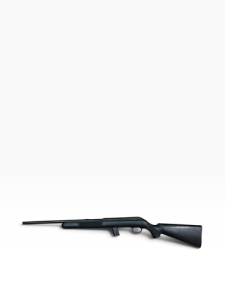
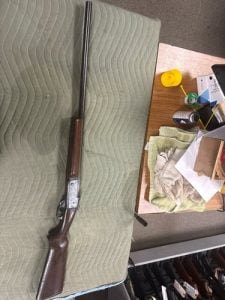
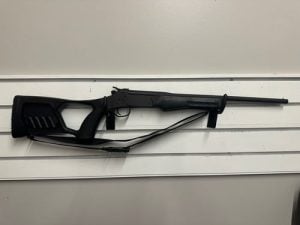
Live inventory from our partner dealer network. Filter by brand to narrow to specific platforms. New listings post every few hours.
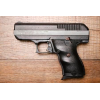
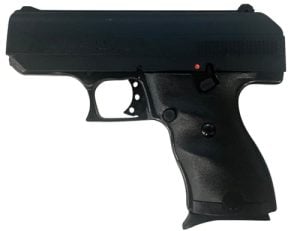
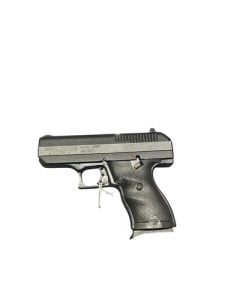
Hi-point CF380 380 ACP Police Trade-In Pistol
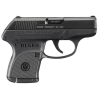 -17%
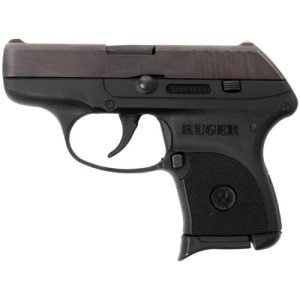
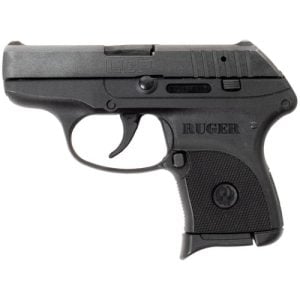
-17%Ruger LCP, 380 ACP, 2.75" Barrel, 6+1 Capacity, Black Finish - Law Enforcement Used - Good to Very Good Condition
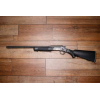
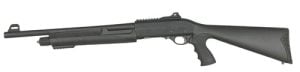
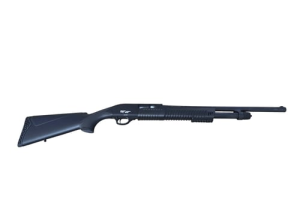
Rossi S201220BS 20GA Police Trade-In Shotgun
 -10%
-10%
Related Reading
- Used Guns Pillar: Surplus, Police Trade-Ins, and the Full Used Market
- Used Handguns: Police Trade-Ins, Pre-Owned & Surplus Pistols
- Used vs New Guns: When to Buy Each
- Where to Buy a Mosin-Nagant: The 2026 Source Guide
- Best .30-30 Lever-Action Rifles
- Best Online Gun Stores: Where to Buy
- US Gun Laws by State
Frequently Asked Questions
What is the best used rifle to buy under $500?
For modern semi-autos, a used Ruger 10/22 ($180-$280) is unbeatable as a trainer. For centerfire under $500, a budget-tier used AR-15 from Aero Precision, S&W M&P 15, or Ruger AR-556 runs $550-$650 used. For surplus collector value under $500, a Mosin-Nagant 91/30 at $300-$400 still represents the cheapest centerfire surplus rifle on the US market.
Are CMP M1 Garands a good deal?
Yes. The Civilian Marksmanship Program is the authorized US distributor for surplus M1 Garands and consistently undercuts commercial pricing by $400-$600 on equivalent grades. Service Grade at $800, Field Grade at $1,200, Correct Grade at $1,800+. Requires CMP eligibility (US citizenship plus marksmanship club membership or equivalent). Commercial M1 Garand inventory adds broker margin on top of CMP-equivalent pricing.
What is the difference between JM-stamped and post-Remington Marlin 336s?
JM-stamped Marlin 336s were produced 1948-2007 at the original Marlin Firearms plant in North Haven, Connecticut. Quality, fit, and finish were consistently strong. After Remington acquired Marlin in 2007, production moved to Ilion, NY and quality suffered through 2020 (the "Remlin" era). Ruger acquired Marlin in 2020 and restored quality starting in 2021. JM-stamped used 336s command 30-50% more than equivalent Remlins. The new Ruger-built Marlins are restoring the brand but the secondary market is still small.
How do I check headspace on a used military surplus rifle?
Headspace is the chamber-to-bolt-face dimension. Out-of-spec headspace causes case head separations and is a safety issue. A GO and NO-GO gauge set for your specific chambering runs $40-$60. Drop the bolt face onto the GO gauge: bolt should close fully. Drop the bolt face onto the NO-GO gauge: bolt should not close. Most reputable dealers headspace-check surplus rifles before listing, but ask explicitly before purchase. Higher-volume importers like Royal Tiger Imports and Classic Firearms routinely gauge before shipping.
Is a used AR-15 reliable for home defense?
Yes, with one inspection caveat. Replace the buffer spring, action spring, gas rings, and any worn extractor before relying on a used AR-15 for home defense. Total cost of those four parts is under $40. The platform itself is rated for 20,000-plus rounds of service life and is mechanically reliable across budget-tier (Aero Precision, S&W) through premium (Daniel Defense, BCM) builds. Police patrol rifle trade-ins are particularly low-mileage because most patrol carbines fire less than 500 rounds in their entire LE service life.
How much do used Mosin-Nagants cost in 2026?
Current pricing runs $300-$500 for clean specimens, up from sub-$150 between 2000-2015 when Century Arms and Royal Tiger imported them in volume. Finnish-captured (SA marked) examples run $700-$1,200; pre-WW2 hex receivers command similar premiums. The 7.62x54R cartridge is still loaded affordably as surplus. The supply has thinned considerably since 2015 and pricing continues to rise 8-12% per year. See our complete Mosin-Nagant buying guide for the current dealer landscape.
Can I buy a used rifle online and have it shipped to my home?
It depends on the rifle classification. Modern rifles (post-1968 production, semi-auto, bolt-action, lever-action) must ship to a local FFL dealer where you complete ATF Form 4473 and pass a NICS background check before taking possession. Curio & Relic (C&R) rifles over 50 years old can ship direct to a C&R licensee (03 FFL home license, $30 for three years) without going through a local dealer. The C&R route is the fastest and cheapest for surplus rifle collectors.
What is the difference between pre-64 and post-64 Winchester Model 70?
Winchester redesigned the Model 70 in 1964 with cost-reduced production: push-feed bolt instead of controlled-round-feed, machined receiver instead of forged, lower-grade walnut, simpler trigger. Pre-64 Winchester 70s are the "rifleman's rifle" with the original Mauser-style controlled-round-feed and command $1,500-$3,500 collector pricing. Post-64 Model 70s (1964-1980) list $500-$900. FN USA restored controlled-round-feed in 2008 production, and current FN-built Model 70s split the difference at $700-$1,200 used.
4,659+ Gun & Ammo Deals
Updated daily from 200+ top retailers. Filter by category, caliber, action type, and price.