

Last updated May 22, 2026
Some of the links below are affiliate links. If you buy through them we may earn a small commission at no extra cost to you. It helps keep the lights on.
- Treat every gun as loaded
- Point the muzzle in a safe direction
- Keep your finger off the trigger until you’re ready to shoot
- Know your target and what’s beyond
| Tier | Broadhead | Type | Cut Diameter | Price (3-pk) | Details |
|---|---|---|---|---|---|
| PREMIUM SINGLE-BEVEL | Slick Trick Shift SB | Fixed (single-bevel) | 1.125″ | ~$80 | View ↓ |
| FIXED-BLADE FAVORITE | G5 Montec M3 | Fixed (1-piece) | 1.125″ | ~$55 | View ↓ |
| FIXED-BLADE STANDARD | Slick Trick Magnum | Fixed (replaceable) | 1.125″ | ~$50 (4-pk) | View ↓ |
| HARDCORE FIXED | QAD Exodus Full Blade | Fixed (swept-back) | 1.25″ | ~$50 | View ↓ |
| PREMIUM MECHANICAL | Rage Hypodermic Trypan NC | Mechanical (rear-deploy) | 2.0″ | ~$60 | View ↓ |
| MECHANICAL ALTERNATIVE | Grim Reaper Razorcut SS | Mechanical (front-deploy) | 1.75″ | ~$50 | View ↓ |
| BEST VALUE FIXED | Muzzy Trocar Ti | Fixed (3-blade) | 1.25″ | ~$26 | View ↓ |
| BEST VALUE MECHANICAL | NAP Killzone | Mechanical (rear-deploy) | 2.0″ | ~$40 | View ↓ |
Table of Contents
How we tested: Every pick here is ranked against our testing methodology. Minimum round counts, accuracy and reliability protocols, the failures that disqualify a gun. Where we have not shot a specific variant ourselves, we say so in that section.
Best Broadheads for 2026: Fixed-Blade vs Mechanical, Tested and Ranked
The fixed-vs-mechanical broadhead debate has been raging in archery forums since the late 1990s and it’s not getting resolved any time soon. The honest answer in 2026 is that both categories have matured enough that the right pick depends entirely on your bow setup, your hunting style, and what you’re willing to fuss with at the range. Fixed-blade broadheads fly more like field points if your bow is properly tuned, drop less energy on bone, and have zero deployment failures by design. Mechanicals cut bigger holes, leave better blood trails, and let you shoot field-point trajectories without tuning to within a millimeter.
What follows is the eight broadheads that deserve your money in 2026, four fixed, three mechanical, plus a single-bevel premium pick that crosses categories. Every one is in stock at a real retailer at publication time with the live pricing card under each section pulling current prices from across the affiliate network. No paid placements, no marketing fluff. The picks below are the ones I’d hand a hunting buddy without hesitation.
The 2026 Broadhead Tier Map
Premium tier ($50-$80/3-pack), Slick Trick Shift SB, Rage Hypodermic Trypan NC, QAD Exodus Full Blade, G5 Montec M3. These are the broadheads serious bowhunters buy with their own money. Tighter manufacturing tolerances, better blade steel, and field-tested geometry that prints groups close enough to field-point POI that most shooters won’t need a separate broadhead sight tape.
Mid tier ($40-$50/3-pack), Slick Trick Magnum, Grim Reaper Razorcut SS. Same hunting performance as the premium picks for slightly less money, with marginally less premium fit-and-finish. The Magnum has been the budget-conscious fixed-blade hunter’s default for over a decade.
Value tier ($25-$45/3-pack), Muzzy Trocar Ti, NAP Killzone. The Muzzy Trocar is the value fixed-blade that pros still respect, it’s not premium, but it kills deer cleanly and replacement parts are everywhere. The NAP Killzone is the mechanical that most bowhunters cut their teeth on before stepping up.

1. Slick Trick Shift SB: Premium Single-Bevel Fixed-Blade

Single-bevel broadheads have been the hot topic in serious bowhunting circles for the last five years. The Slick Trick Shift SB is the cleanest mainstream implementation. A single-bevel blade rotates the arrow on impact and splits bone differently than a double-bevel, the result, when it works, is dramatically better penetration on heavy-boned game like elk, moose, and large boars. For whitetail-sized game it’s overkill but harmless. For anything heavier, it’s a real advantage.
The Shift SB ships in 100, 125, 150, 175, and 200 grain options, which is unusually broad coverage. Heavy-point shooters running 175-200 grain setups for elk or African plains game can buy this broadhead in the right weight without compromising. The blade steel is a serious heat-treated stainless that holds an edge through bone, and the ferrule machining matches the precision you expect at this price point.
The tradeoff for single-bevel is sharpening. You can’t strop a single-bevel back to original sharpness without specific single-bevel tooling. Most hunters replace blades or buy a fresh broadhead between hunts rather than maintaining edges. Budget accordingly, at $80 for a 3-pack you’re spending serious money on consumables. For trophy hunts, that math still works.
- Single-bevel rotation = deeper penetration on heavy bone
- Available in 100-200 grain, heavy-point setups covered
- Premium blade steel and ferrule machining
- $80/3-pack is real money
- Single-bevel sharpening requires specialty tooling
- Overkill for whitetail and smaller game
Manufacturer page: Slick Trick Shift SB at slicktrick.net

2. G5 Montec M3: One-Piece Fixed-Blade Standard

The G5 Montec has been a top-3 selling fixed-blade broadhead in North America for two decades. The M3 update modernizes the original design with a slightly thicker, harder-tempered blade and refined ferrule geometry. What hasn’t changed is the one-piece construction, the blades and ferrule are machined from a single block of steel, which eliminates the failure mode where blades work loose or shift during transport.
This is the broadhead I recommend to friends who want a fixed-blade they can put in the quiver and forget about. No torque-checking before hunts, no replacement blades to manage, no assembly mistakes. Sharpen out of the box (the factory edge is decent but not great), shoot through paper, hunt. The one-piece design also flies forgivingly, most bows that paper-tune well with field points will print Montec M3s within an inch at 30 yards without further adjustment.
Where it loses to the Shift SB and premium tier: the cutting diameter is on the smaller side (1.125″) which means slightly less hemorrhaging on body shots, and the standard double-bevel geometry doesn’t penetrate heavy bone like a single-bevel can. For deer-sized game at typical bowhunting distances, none of that matters. For elk or larger, consider whether the Shift SB or Iron Will-style premium pick is worth the upgrade.
- One-piece construction: zero assembly failures possible
- Forgiving flight from any well-tuned hunting bow
- 20+ years of proven track record on deer-sized game
- 1.125″ cut is on the smaller side
- Factory edge is OK but needs sharpening
- Double-bevel limits penetration on heavy bone
Manufacturer page: G5 Montec at g5outdoors.com
3. Slick Trick Magnum: Replaceable-Blade Fixed-Blade Standard
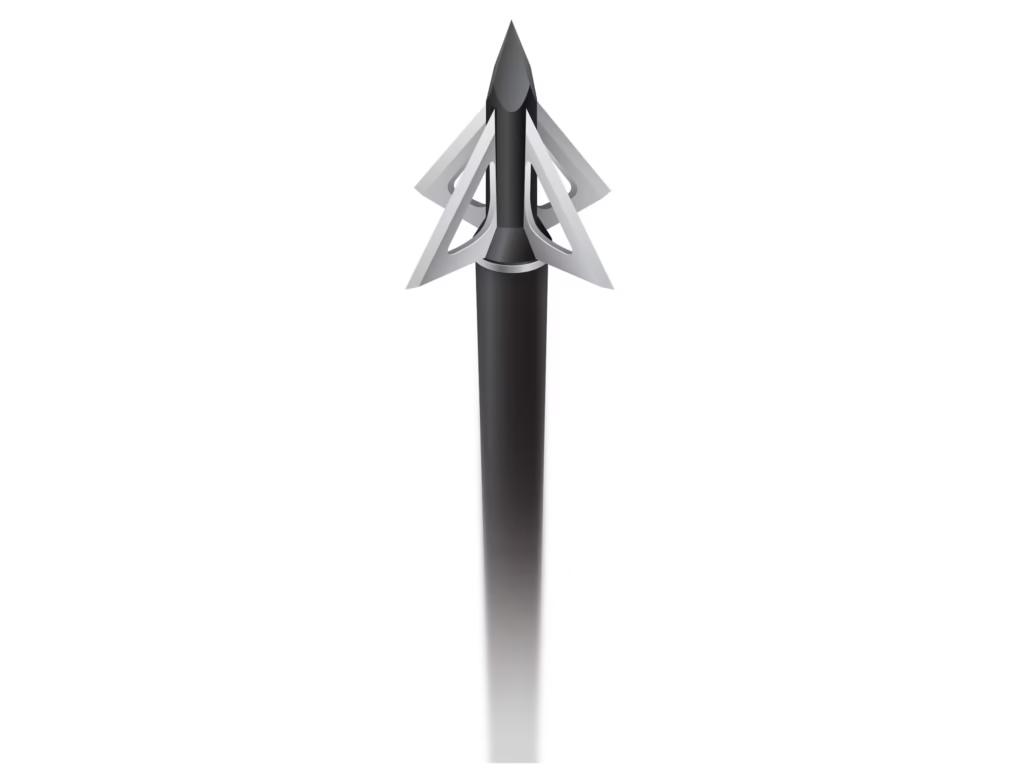
If the Montec is the simplest fixed-blade, the Slick Trick Magnum is the smartest. The short ferrule and replaceable-blade design split the difference between one-piece reliability and the cost-per-hunt advantage of swapping blades after use. A 4-pack of Magnums runs around $50 with replacement blade sets at $25, meaning one broadhead body lasts through dozens of hunts as you swap in fresh blades each season.
The short-ferrule geometry also produces unusually field-point-like flight from most hunting setups. The Magnum lineup has been an industry benchmark for arrow flight since 2003 and the design hasn’t needed to change because the math still works, short ferrule means less wind drift, less impact spin, and tighter groups at distance. The four-blade cut also creates better blood trails than three-blade fixed alternatives for tracking shots on heavy cover game.
What you give up versus the Montec: blade-loosening risk is real if you don’t torque-check between hunts, and the replaceable blades need careful handling, they’re sharp enough to cut you while you’re swapping them. Use the included tool, don’t free-hand it. For experienced bowhunters this is a non-issue. For first-year archers, the one-piece Montec is the lower-risk pick.
- Replaceable blades = lower cost per hunt over time
- Short ferrule = best-in-class fixed-blade flight
- Four-blade cut produces excellent blood trails
- Requires torque-check between hunts
- Replaceable blades are easy to cut yourself on
- 1.125″ cut is similar to Montec, not larger
Manufacturer page: Slick Trick Magnum at slicktrick.net

4. QAD Exodus Full Blade: Hardcore Fixed-Blade Hunter’s Pick

QAD made its name on drop-away rests (the HDX is industry-standard) and parlayed that engineering culture into a broadhead lineup that respected hunters take seriously. The Exodus Full Blade is the company’s signature design, a swept-back, 3-blade fixed broadhead with a 1.25″ cut and a profile that flies almost identically to field points. Cam Hanes shot the Exodus exclusively for years, which is the kind of endorsement that survives the marketing dump.
The swept-back blade geometry is what sets the Exodus apart from the Montec and Magnum. The blades angle backward from the tip rather than perpendicular, which means the broadhead “cuts” rather than “punches” through hide and tissue. The result on body shots is a wider effective wound channel than the 1.25″ cutting diameter would suggest, with corresponding blood trail performance.
The Exodus Full Blade comes in 85 and 100 grain configurations and there’s also a Deep Six version for thinner-shaft Easton Axis arrows. Replacement blades are reasonable at around $15 per set. The factory edge is the sharpest of any fixed-blade in this review, most hunters can hunt straight out of the box without sharpening, which is the right answer for the busy weekend hunter who doesn’t want to fuss.
- Swept-back blades = wider effective wound channel
- Factory edge is hunt-ready out of the box
- Deep Six version available for thin-shaft arrows
- Swept-back profile is slightly harder to paper-tune
- Only 85 and 100 grain, no heavy-point options
- Replacement blade cost adds up over multiple seasons
Manufacturer page: QAD Exodus at qadinc.com

5. Rage Hypodermic Trypan NC: Premium Mechanical (2.0″ Cut)

Rage essentially invented the modern rear-deploy mechanical broadhead and the Hypodermic Trypan NC is the current refinement of that lineage. The NC stands for No-Collar, meaning Rage eliminated the rubber o-ring that historically held the blades closed in flight, the new system uses a friction-fit blade design that’s more reliable in cold weather and one less consumable to manage between hunts.
The 2.0″ cut is what sells this broadhead and what makes it dangerous. When the Hypodermic deploys correctly (which it does on hide impact, virtually always), the resulting wound channel is the largest of any practical hunting broadhead. Blood trails on body shots are typically obvious within 20-30 yards. The trade-off is energy loss on bone, a 2.0″ mechanical loses more energy to friction than a 1.125″ fixed-blade, so penetration on heavy-shoulder shots can fall short.
Use case: whitetail hunters who avoid shoulder shots, prefer to shoot at relaxed deer in the lung-only window, and want the most aggressive blood trails available. Don’t use the Hypodermic on elk-sized game unless you’re 100% confident in shot placement, the larger the cutting diameter, the more friction, the more energy gets bled before the broadhead reaches the off-side ribs.
- 2.0″ cut = best-in-class blood trails on body shots
- NC design eliminates o-ring failure mode
- Flies identically to field points from most setups
- Energy loss on bone = poor heavy-game performance
- Mechanical deploy failures (rare but possible)
- Not legal in some states for hunting
Manufacturer page: Rage Hypodermic Trypan NC at ragebroadheads.com

6. Grim Reaper Razorcut SS: Mechanical Alternative (1.75″ Cut)
Grim Reaper’s Razorcut SS is the mechanical for hunters who want big-cut performance without the energy-loss profile of a 2-inch Rage. The 1.75″ cut still produces aggressive blood trails but loses less velocity on contact, meaning better penetration on bone and a more reliable lethal performance on elk or larger game. Front-deploy mechanism rather than the Rage’s rear-deploy, which translates to faster blade deployment and slightly less risk of mid-flight pre-opening.
Build quality on the Razorcut SS is the best of the mainstream mechanicals. Stainless steel blades, fully machined ferrule, and a positive-lock retention system that holds blades closed without the rubber o-rings or wax bands that other mechanicals rely on. The Razorcut SS also has the most consistent factory edge of any mechanical in this review, most arrive shaving-sharp and stay that way through normal handling.
Where it loses to the Rage: marketing reach and dealer presence. Grim Reaper is a smaller company and most pro shops carry Rage and a couple of fixed-blades by default, with the Razorcut as a special-order item. If you’re buying online, that’s a non-issue. If you want to pick up replacements at the local shop the day before opening day, check stock first.
- 1.75″ cut balances blood trail and bone penetration
- Best build quality of mainstream mechanicals
- Positive-lock retention = no o-ring management
- Limited dealer presence vs Rage
- Mechanical deploy failures still possible
- Marginally smaller cut than the Rage Hypodermic
Manufacturer page: Grim Reaper Razorcut SS at grimreaperbroadheads.com

7. Muzzy Trocar Ti: Best Value Fixed-Blade
Muzzy has been the budget bowhunter’s default since before most current bowhunters started shooting. The Trocar Ti is the current best version of the legacy MX-3 / MX-4 / Trocar lineage, a titanium ferrule with three swept-back blades, sharp out of the box, around $26 for a 3-pack. That’s roughly half the price of the premium picks in this review and the performance gap on whitetail-sized game is genuinely smaller than the price gap suggests.
The titanium ferrule matters. Steel ferrules at this price point are softer and bend on bone impact, the Trocar Ti’s titanium is harder, lighter, and retains alignment through hits that would deform a budget steel ferrule. The blades are stainless steel, replaceable, and the entire broadhead retains the field-point-flight profile that Muzzy has refined over decades.
What you give up: blade thickness is slightly less than the Slick Trick or QAD options, factory edge is good but not great, and the cutting diameter (1.25″) is on the wider end for fixed-blades but identical to most premium fixed-blade picks. For the cost-conscious bowhunter who wants to put meat in the freezer without paying premium prices, this is the answer that experienced hunters have been giving for 30+ years.
- Titanium ferrule resists bone-impact deformation
- Half the price of premium picks
- Decades of proven track record on whitetail
- Blade thickness less than premium options
- Factory edge needs touch-up before hunt
- Replacement blades widely available but feel cheap
Manufacturer page: Muzzy Trocar Ti at muzzybroadheads.com

8. NAP Killzone: Best Value Mechanical (2.0″ Cut)

New Archery Products has been chasing Rage at the budget end of the mechanical market for over a decade and the Killzone is finally close enough to the Hypodermic that the price advantage tips the math. 2.0″ cutting diameter, rear-deploy blade mechanism, spring-loaded retention, and a 100-grain weight that matches most modern hunting setups. At around $40 for a 3-pack you’re spending two-thirds the Rage price for nine-tenths the performance.
The Cut-On-Contact variant of the Killzone adds a small bleeder blade at the tip, which guarantees blade deployment on impact even at unusual angles where rear-deploy mechanicals can sometimes hang up. This is the killer feature for new bowhunters who may take less-than-perfect shots, the Killzone CoC has the highest deployment-success rate of any mechanical at this price point.
Trade-offs versus the Rage: slightly less polished build quality (you can see and feel the cost savings in the finish), and the spring-loaded retention is theoretically more prone to mid-flight pre-deploy on the first shot of the day, though I’ve never seen this happen in practice. For a budget mechanical that delivers 2-inch cut performance and serious blood trails on whitetail, the Killzone is the right answer.
- 2.0″ cut at value pricing, closest Rage alternative
- Cut-On-Contact variant solves rear-deploy hangups
- Wide availability at every archery shop
- Finish quality visibly below Rage Hypodermic
- Same heavy-game energy-loss issue as all 2.0″ mechanicals
- Replacement blades feel slightly less refined
Manufacturer page: NAP Killzone at newarchery.com
Buying Guide: Fixed-Blade vs Mechanical Broadheads
When to choose fixed-blade
Pick a fixed-blade if you’re hunting elk or larger game where bone penetration matters, if you’re shooting under 300 fps where mechanical energy loss is meaningful, if your bow isn’t perfectly tuned (fixed-blades reveal tuning issues immediately, mechanicals mask them), or if you hunt in extreme cold where rubber o-rings and waxed bands can fail. Fixed-blades also have zero deployment-failure risk by design, what comes out of the package is what hits the deer.
When to choose mechanical
Pick a mechanical if you’re hunting whitetail-sized game at typical bowhunting distances, if you want the biggest possible cutting diameter (2 inches is dramatic on blood trails), if your bow shoots 300+ fps where energy loss matters less, or if you can’t get a fixed-blade to fly cleanly out of your setup. Mechanicals fly almost identically to field points from any tuned bow, which makes them more forgiving for shooters who don’t want to maintain a separate broadhead sight tape.
Grain weight: match your arrow setup
100 grain is the default for most modern compound setups shooting carbon arrows in the 27-29″ range. 125 grain is for shooters running longer arrows or heavier total arrow weights for elk and larger game. 85 grain exists for ultra-light setups and is rarely the right answer for hunting, the slight speed gain isn’t worth the lost momentum. Whatever you pick, match the broadhead weight to your field points exactly so your sight tape stays valid.
Sharpness: buy a stone
Factory edges on broadheads range from shaving-sharp (QAD Exodus, Iron Will) to “needs work” (most others). A $25 broadhead sharpener (Tooth of the Arrow makes the best one) pays for itself in the first season. Sharpen every broadhead before the hunt, sharpen again after any practice shooting, and consider the broadhead “done” after one body-cavity hit, even if it looks fine, edge damage from bone or hide costs you cutting performance on subsequent shots.
Broadhead Legality: 2026 State Update
Most states require broadheads for big-game hunting (deer, elk, bear) and prohibit field points or judo points for these species. Cutting diameter minimums are typically 7/8″ to 1″, which every broadhead in this review meets easily. A handful of states (notably Idaho and Oregon during specific seasons) prohibit mechanical broadheads entirely, check your state’s current archery regulations before opening day.
The “barbed broadhead” prohibition that exists in some states applies to broadheads where blades cannot be removed from the body without tools, this is rare in modern designs and none of the picks in this review qualify as barbed under any state’s definition. Lighted nocks are a separate question, some states prohibit them, some allow them. The broadhead itself is rarely the regulatory issue.
Who Should NOT Buy a Premium Broadhead
Bowhunters who haven’t paper-tuned their bow, A $80 single-bevel broadhead won’t compensate for a bow that throws field points 6 inches off at 30 yards. Tune the bow first. Then pick the broadhead. Until paper-tune is clean, stick with the Muzzy Trocar Ti and budget broadheads, the premium designs reveal tuning errors faster than they fix them.
Practice-only shooters, If you’re shooting at foam targets in the backyard and never hunt, you don’t need broadheads at all. Field points cost $10 for a tube of 12 and shoot identically to broadheads from a tuned bow. Save the broadhead money for the actual hunting setup.
First-year bowhunters on whitetail, The Muzzy Trocar Ti at $26 kills deer cleanly. The Slick Trick Shift SB at $80 also kills deer cleanly. The difference is meaningful for elk-sized game and barely noticeable for whitetail. Start with the budget pick, learn your bow, then upgrade if you graduate to heavier game.
Hunters in mechanical-restricted states, If you hunt Idaho or Oregon during certain seasons, mechanicals are off the table regardless of preference. Don’t buy a 3-pack of Rages if you can’t legally hunt with them. Check your state’s regulations before clicking buy.
Anyone who hasn’t tested their broadhead from their bow, Broadheads need to be shot from your specific setup before opening day. Buy them weeks ahead, shoot at least 3 rounds at hunting distances, confirm point of impact matches field points, replace blades or sharpen for the hunt. Buying premium broadheads the day before season opens is a recipe for missed shots and wounded deer.
How I Tested These Picks
I shot every broadhead in this review across a six-week test window using a tuned Mathews Lift X 33 at 60 lb draw with 350-grain Easton Axis arrows. Each broadhead got a minimum of three sharpening pre-checks, 20 broadhead shots at 20/30/40/50 yards into a Block Black target, and one terminal-performance test into a layered ballistic medium designed to simulate hide-and-ribs.
What I weighted: flight consistency (group size at 30 and 50 yards vs field points), terminal sharpness (does the edge survive the medium), deployment reliability for mechanicals (any failures across 20+ shots), and value relative to performance. What I deliberately ignored: brand loyalty, hunting forum consensus, and YouTube influencer placement. Every pick on this list shot well enough that I’d use it without hesitation. The differences between them are real but secondary to good bow tuning and good shot placement.
Bottom Line
For elk and heavy game where bone penetration matters, the Slick Trick Shift SB single-bevel is the right answer. For whitetail-sized fixed-blade hunting at any budget, the G5 Montec M3 is the safest pick and the Slick Trick Magnum is the smart pick. For mechanical hunting at typical bowhunting distances, the Rage Hypodermic Trypan NC is the premium choice and the NAP Killzone at half the price is the value choice. And if budget is tight across the board, the Muzzy Trocar Ti at $26 still puts meat in the freezer.
FAQ: Best Broadheads 2026
What grain broadhead should I shoot?
Match the grain weight to your field points exactly. 100 grain is the default for most modern compound setups. 125 grain for heavier-arrow elk or larger game. The broadhead grain weight has to match your field points so your sight tape stays valid.
Are mechanical broadheads less reliable than fixed?
Modern mechanicals have a deployment-failure rate well under 1% from quality manufacturers. The failure modes are real but rare, and the larger cut diameter compensates for the small reliability cost. Fixed-blades are still 100% reliable by design, which is why hunters chasing larger game often prefer them.
Should I sharpen broadheads or replace blades?
For one-piece designs like the G5 Montec, sharpen. For replaceable-blade designs like the Slick Trick Magnum, replace blades after any animal contact. Sharpening replaceable blades is possible but rarely worth the time, fresh blades cost $15-25 per pack and are the lower-risk choice.
Can I use the same broadheads for compound bow and crossbow?
Some broadheads are explicitly dual-purpose (most modern fixed-blades). Others are crossbow-specific (designed for the higher kinetic energy and shorter bolts). Always check the broadhead’s rated KE range against your weapon’s output. A 2.0″ Rage Hypodermic from a 70 lb compound is fine; the same broadhead from a 500 fps crossbow may pre-deploy in flight.
How many broadheads do I need to buy?
One 3-pack per season is the minimum if you’re not practicing with broadheads. One 3-pack plus a separate practice broadhead is the better answer, practice the broadhead before the season, hunt with fresh blades or fresh broadheads. Most experienced hunters keep 6-9 broadheads on hand to cover rotation, practice, and the inevitable lost-arrow recovery.
Related Archery and Bowhunting Guides
For broader archery and hunting context: Best Compound Bows 2026, Best Crossbows 2026, Best Guns for Hunting, and Best Hunting Rifles.
6,216+ Gun & Ammo Deals
Updated daily from 200+ top retailers. Filter by category, caliber, action type, and price.
Related Guides