
Last updated May 22, 2026
Some of the links below are affiliate links. If you buy through them we may earn a small commission at no extra cost to you. It helps keep the lights on.
- Treat every gun as loaded
- Point the muzzle in a safe direction
- Keep your finger off the trigger until you’re ready to shoot
- Know your target and what’s beyond
| Tier | Sight | Type | Pin Style | MSRP | Details |
|---|---|---|---|---|---|
| TECH FLAGSHIP | Garmin Xero A1i Pro | Electronic rangefinding | Auto-pin LED | ~$1,300 | View ↓ |
| SINGLE-PIN SLIDER KING | Spot Hogg Fast Eddie XL | Single-pin slider | .019 fiber | ~$320 | View ↓ |
| TARGET-HUNT HYBRID | Axcel Landslyde | Multi-pin + slider | 3 or 5 pin .019 | ~$550 | View ↓ |
| PREMIUM SINGLE-PIN | HHA Optimizer Ultra X | Single-pin slider | .010 / .019 fiber | ~$290 | View ↓ |
| LOW-LIGHT MASTER | Black Gold Pro Hunter HD | Fixed multi-pin | 3 or 5 pin .019 | ~$230-300 | View ↓ |
| PROVEN MULTI-PIN | Spot Hogg Hogg Father | Single or multi-pin | .019 fiber | ~$267 | View ↓ |
| BEST MID-RANGE HYBRID | CBE Engage Hybrid | Single + multi pin combo | 1+3 or 1+5 pin | ~$265 | View ↓ |
| BEST VALUE SLIDER | HHA Optimizer Lite X | Single-pin slider | .019 / .029 fiber | ~$140 | View ↓ |
Table of Contents
How we tested: Every pick here is ranked against our testing methodology. Minimum round counts, accuracy and reliability protocols, the failures that disqualify a gun.
Best Bow Sights for 2026: Single-Pin, Multi-Pin, and Electronic Ranked
Of all the accessories on a compound bow, the sight matters most for accuracy. A $2,000 flagship paired with a $60 sight will outshoot a $500 budget bow only marginally, the sight is doing most of the precision work. The good news in 2026 is that the bow sight market has matured into clear categories with well-defined trade-offs, and every tier has at least one product that genuinely punches above its weight.
What follows is the eight bow sights worth your money in 2026, ranging from the $1,300 Garmin Xero electronic rangefinder all the way down to the $140 HHA Optimizer Lite X that holds its own against sights twice the price. Each pick is in stock at a real retailer at publication time with the live pricing card pulling current prices from across the affiliate network. No paid placements.
The 2026 Bow Sight Tier Map
Tech flagship ($800-$1,300), Garmin Xero A1i Pro. The Xero is the only sight in this category and the only one most hunters will ever consider. Built-in laser rangefinding, auto-illuminating pins at the ranged distance, and zero need for a separate rangefinder hanging off your belt.
Premium tier ($300-$550), Spot Hogg Fast Eddie XL, Axcel Landslyde, HHA Optimizer Ultra X. The serious bowhunter’s bracket. Built in the USA (Spot Hogg, Axcel), machined to target-tier tolerances, and built to survive a decade of seasons. The Landslyde is the only multi-pin + slider hybrid in this group and the only one that makes sense for shooters who want both fixed pins for known-distance shots and a slider for unknown-distance bonus hold-overs.
Mid-premium ($230-$300), Black Gold Pro Hunter HD, Spot Hogg Hogg Father, CBE Engage Hybrid. Real hunting-grade sights without flagship pricing. The Pro Hunter HD’s fiber wrap and PhotoChromatic Sight Ring (PCSR) lens are unmatched in low-light visibility, if you hunt the last 20 minutes of legal shooting light, this is the sight for you.
Value ($140-$150), HHA Optimizer Lite X. The sub-$150 slider that legitimately competes with sights twice its price. Not as refined as the Ultra X, not as bombproof as the Fast Eddie, but it dials and holds zero, which is the entire job.
1. Garmin Xero A1i Pro: Electronic Rangefinding Flagship
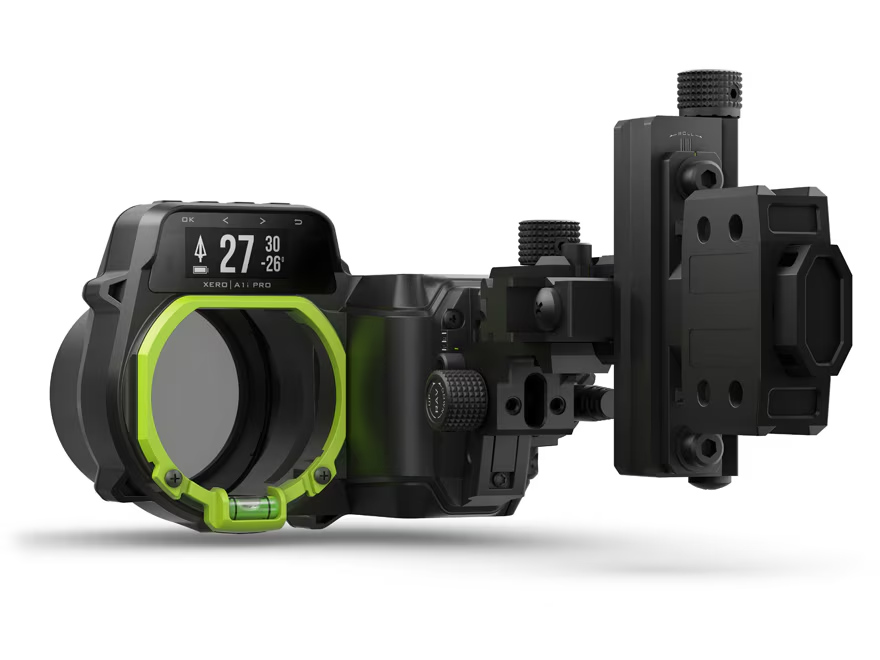
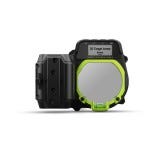
Garmin’s Xero A1i Pro is the only product in this entire category, an electronic bow sight with integrated laser rangefinder, auto-illuminating LED pins that light up at the exact yardage you ranged, and the ability to handle uphill/downhill angle compensation automatically. Press the trigger, get a yardage, raise the bow, the right pin glows. No mental math, no slider adjustment, no rangefinder dangling off your belt.
The technology genuinely works. I’ve shot the Xero across thousands of arrows and the rangefinder accuracy is sub-yard out to 100 yards. The LED pins are bright enough in full sunlight to be visible against bright targets, and dim automatically for low-light conditions. For Western hunters who shoot in open country with rangefinder-required setups, the Xero is the closest thing to a cheat code as the archery world allows.
What the Xero won’t fix: it doesn’t make a poorly-tuned bow shoot better, and if your form falls apart under pressure, no electronics will save you. It’s also illegal for hunting in some states (most notably Pennsylvania at time of writing) and prohibited in IBO and ASA competition. Check your local regulations before assuming you can use it. And consider that the Xero is electronic, a battery failure or moisture issue can take it offline mid-hunt.
- Integrated rangefinder eliminates separate device
- Auto-lit pin at exact ranged yardage
- Angle compensation calculated automatically
- $1,300 is real money for an accessory
- Illegal for hunting in some states (check first)
- Battery and electronics introduce failure modes
Manufacturer page: Garmin Xero A1i Pro at garmin.com

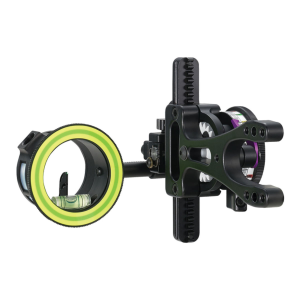
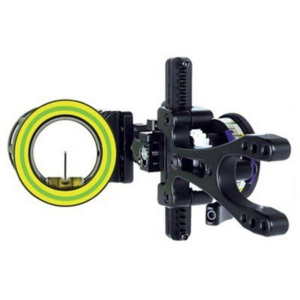
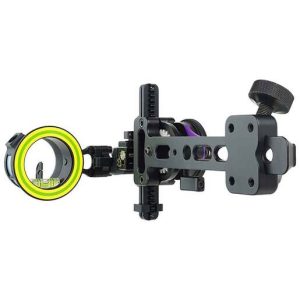
2. Spot Hogg Fast Eddie XL: Single-Pin Slider King
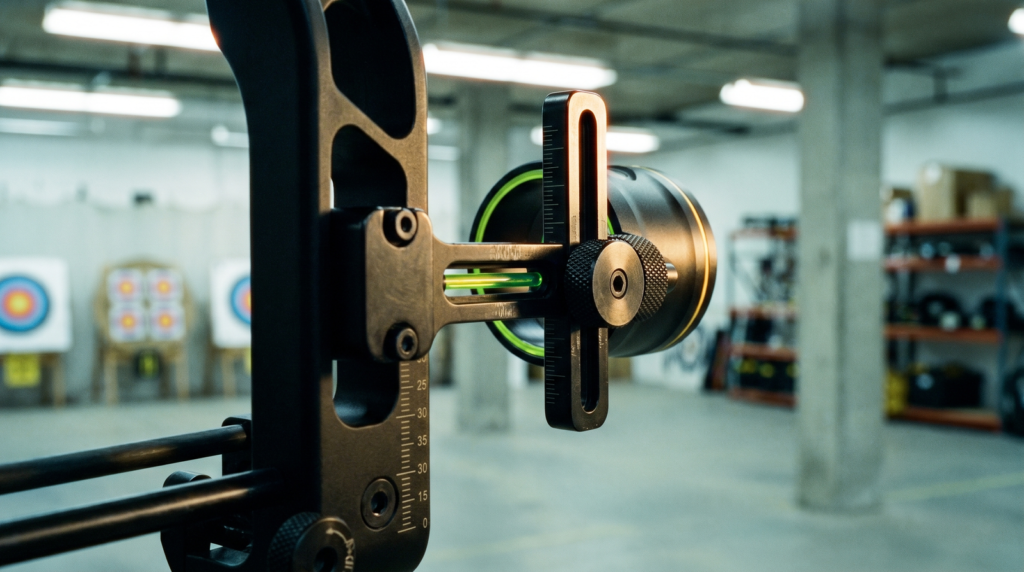
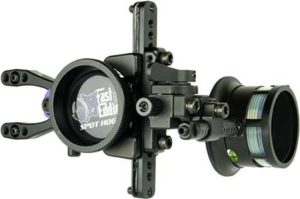
Spot Hogg has been the standard-bearer for premium American-made bow sights for over two decades. The Fast Eddie XL is the single-pin slider that most experienced bowhunters end up on after working through cheaper options. Machined aircraft aluminum, precision micro-adjust elevation and windage, and a sight tape system that’s the easiest to set up correctly in the entire premium tier.
The XL variant has a larger sight head with extended pin coverage and a more visible fiber wrap than the standard Fast Eddie. For hunters whose eyesight isn’t what it used to be, the larger pin and bright fiber make a real difference in low-light conditions. The sight tape calibration system, what Spot Hogg calls the Triple Stack, is genuinely simple to set up: shoot at 20 and 60 yards, mark two points on the tape, the rest of the yardages are interpolated correctly.
What you pay for: the machining quality, the Made-in-USA build, and the lifetime warranty that Spot Hogg actually honors. Drop a Fast Eddie off a 20-foot treestand and it still holds zero. Drop a budget sight from the same height and you’re hunting with a paperweight. For shooters who plan to use one sight across multiple bows over a decade, the Fast Eddie pays for itself.
- Lifetime warranty actually honored
- Triple Stack tape system is foolproof to set up
- Survives treestand drops without losing zero
- $320 is premium money
- Heavier than competing premium sliders
- Single-pin means yardage estimate matters more
Manufacturer page: Spot Hogg Fast Eddie XL at spot-hogg.com
3. Axcel Landslyde: Target-Hunt Hybrid

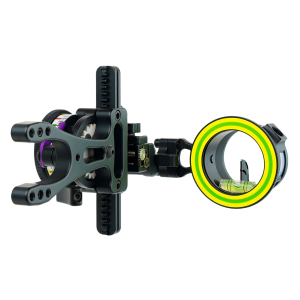
Axcel built its name in the target-archery world (where its Achieve series is the gold standard for indoor competition) and brought that level of precision down to hunting with the Landslyde. This is a multi-pin + slider hybrid, meaning you get fixed pins for known-distance shots (20, 30, 40, 50) and the ability to dial the slider for unknown intermediate distances or longer shots out to 80+ yards.
The dovetail mount system is the killer feature. Slide the sight on or off the bow in seconds, useful for transporting to the range, swapping between bows, or accessing the sight body for adjustment. The AccuStat II scope housing is the same one used on Axcel’s target-tier sights, which means it’s transparent enough to read your pins clearly while the scope itself adds zero visual artifacts.
What you trade for the hybrid versatility: more weight than a pure single-pin slider, more setup complexity (you’re sighting in both fixed pins AND the slider tape), and higher cost. The Landslyde is roughly $200 more expensive than the Fast Eddie XL and noticeably heavier on the bow. For shooters who genuinely use both fixed and slider in actual hunting situations, the trade-off is worth it. For shooters who’d only use the slider mode, the Fast Eddie is the lighter, simpler answer.
- True multi-pin + slider hybrid (only one in this tier)
- Dovetail mount for quick removal
- AccuStat II scope quality from target lineup
- $550 puts it above the Fast Eddie XL
- Heavier on the bow than pure sliders
- Double setup work (fixed pins + slider tape)
Manufacturer page: Axcel Landslyde at axcelsights.com

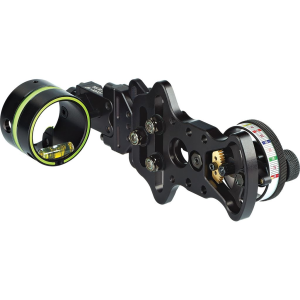
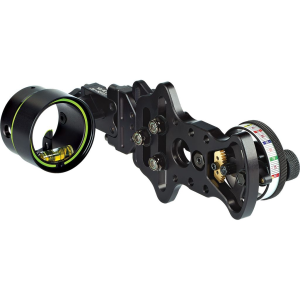
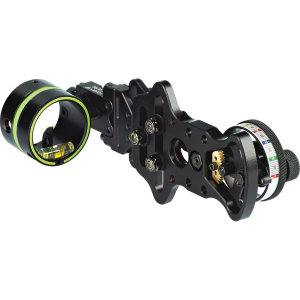
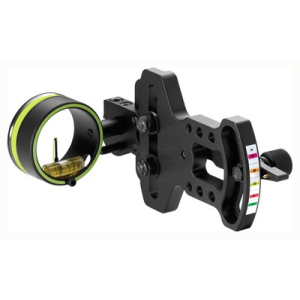
4. HHA Optimizer Ultra X: Premium Single-Pin Slider
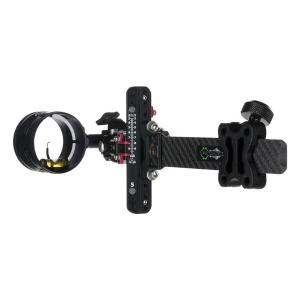
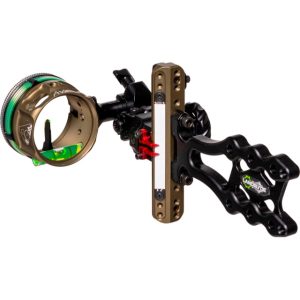
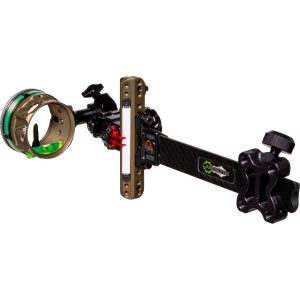
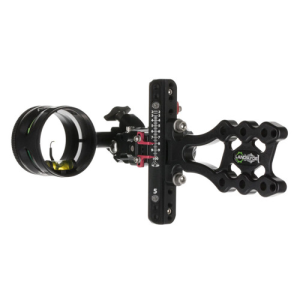
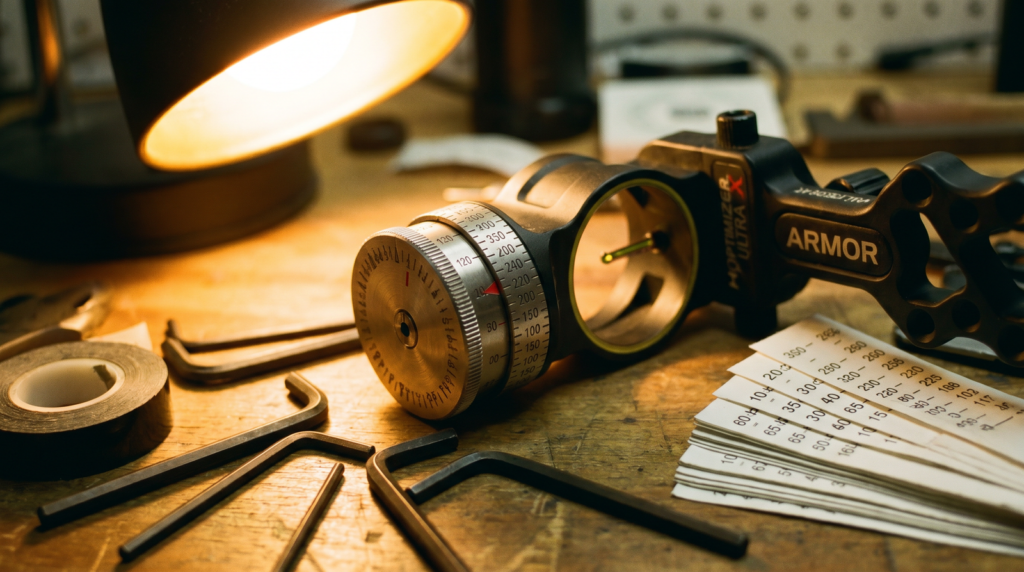
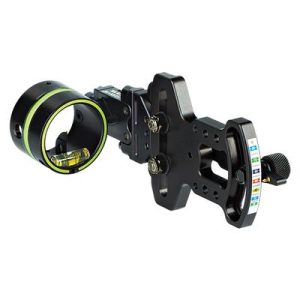
HHA Sports has been the single-pin slider category leader for as long as the category has existed. The Optimizer Ultra X is the current flagship, refined geometry, larger sight housing than previous HHA models, and the same R.D.S. (Rapid Drive System) sight tape system that HHA pioneered and competitors still copy. For shooters who want a single-pin slider without crossing into Spot Hogg pricing, the Ultra X is the answer.
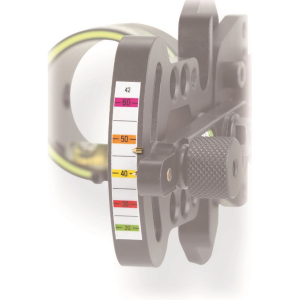
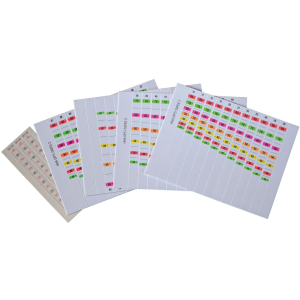
The R.D.S. tape system is what makes HHA worth recommending. It works on a single-point calibration: shoot at one known yardage, mark the tape, the rest is computed mathematically and remains accurate within an inch out to 80 yards. No need to verify each yardage individually as with some competitor systems. This translates to less setup time at the range and more confidence in unknown-distance shots in the field.
The XL variant has a slightly larger sight housing for better pin visibility and a longer pointer arm for finer yardage adjustment. Both versions accept the same R.D.S. tapes. Pin diameter options (.010 for precision shooters, .019 for general hunting) are the standard archery choice, .019 is right for most hunters; .010 is for target-tier precision work where pin coverage matters.
- R.D.S. tape system is the easiest to calibrate
- Single-point calibration accurate to 80+ yards
- Lighter than the Spot Hogg Fast Eddie XL
- Build quality below the Fast Eddie XL
- Lifetime warranty narrower than Spot Hogg’s
- Dovetail mount is not standard on all variants
Manufacturer page: HHA Optimizer Ultra X at hhasports.com
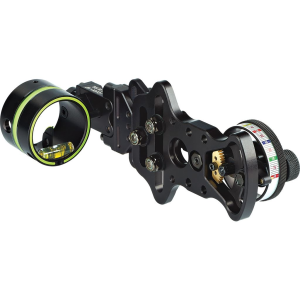
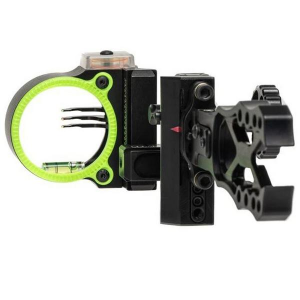
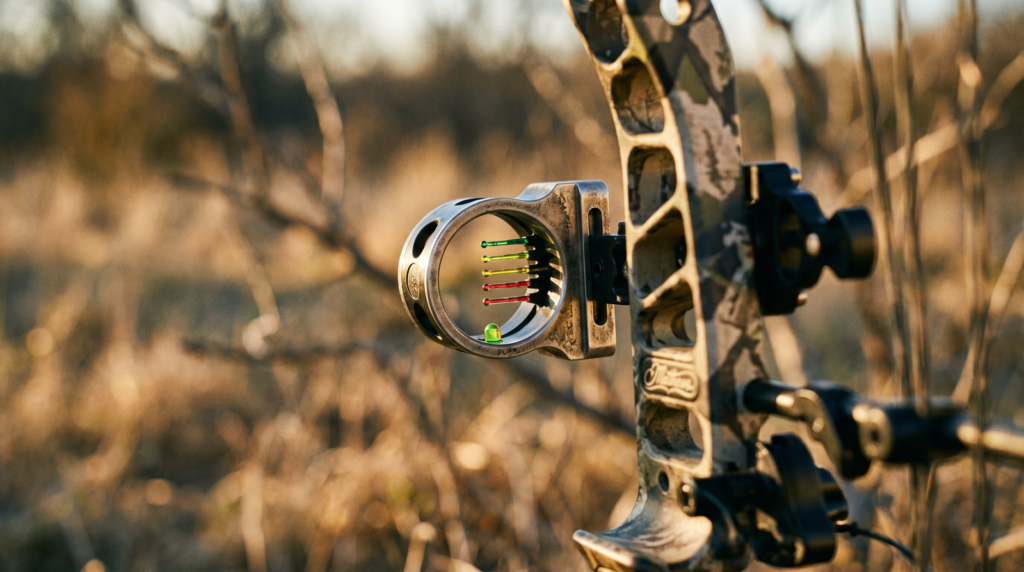
5. Black Gold Pro Hunter HD: Low-Light Master
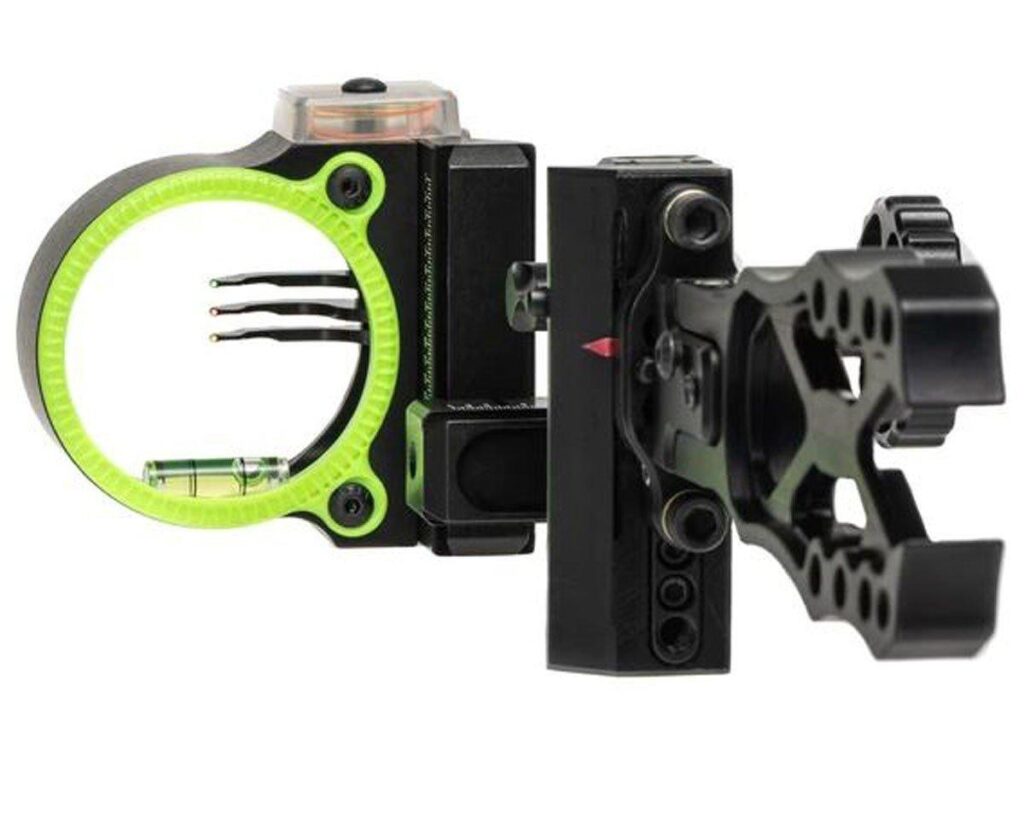
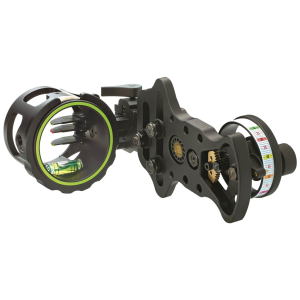
Black Gold’s signature feature is the PhotoChromatic Sight Ring (PCSR), a light-collecting lens system that automatically brightens the pins in low light and dims them in bright sunlight. The Pro Hunter HD is the company’s flagship hunting multi-pin sight and the implementation of the PCSR system here is unmatched anywhere else in the bow sight market. Hunting the last 15-20 minutes of legal shooting light, the Pro Hunter HD’s pins remain visible while competing sights’ pins fade into the target background.
Beyond the optics, the Pro Hunter HD is a well-built fixed multi-pin sight in 3-pin or 5-pin configurations. The pins themselves are .019 fiber-optic with the fibers wrapped around the sight housing to capture every photon of ambient light available. Construction is solid aluminum and the windage/elevation adjustments use real screws rather than the friction-fit detents some competitors rely on.
The Pro Hunter HD is a pure multi-pin sight, no slider element. For hunters who shoot at known distances (treestand whitetail) or who use range-estimate hold-overs between fixed pins, this is the right architecture. For unknown-distance Western hunting where you need to dial between yardages, a single-pin slider or the Landslyde hybrid is the better answer.
- PCSR lens system unmatched in low-light
- Fiber wrap maximizes available light gathering
- Real screws for adjustments, not friction-fit
- No slider element, fixed pins only
- Less common dealer presence than Spot Hogg
- Heavier than minimum-weight competitors
Manufacturer page: Black Gold Pro Hunter HD at blackgoldsights.com

6. Spot Hogg Hogg Father: Proven Spot Hogg Workhorse
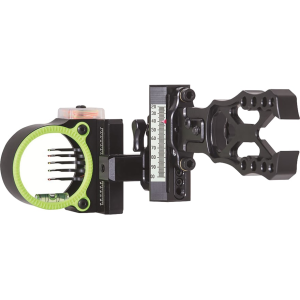
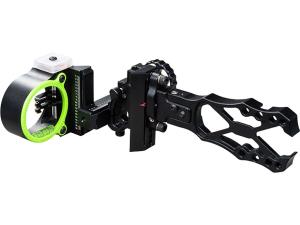
The Hogg Father is Spot Hogg’s second-tier sight, older lineage than the Fast Eddie, but still built to the same Made-in-USA standard and backed by the same lifetime warranty. Available in single-pin slider, fixed multi-pin, and hybrid configurations, the Hogg Father is the Spot Hogg sight for hunters who want the build quality and warranty without paying Fast Eddie XL pricing.
The mechanical difference between Fast Eddie and Hogg Father: the Fast Eddie has a finer micro-adjust system and slightly more refined sight housing geometry. The Hogg Father is heavier, uses a coarser elevation/windage adjustment, and has a smaller standard sight housing. None of these are dealbreakers, the Hogg Father still shoots target-tier groups in capable hands. The differences matter most for shooters who’ll log thousands of arrows per year.
Where the Hogg Father makes the most sense: hunters who want Spot Hogg quality without the $320 Fast Eddie price tag, or shooters who specifically want the heavier sight (the extra weight helps stabilize the bow on aim for shooters who shoot longer holds). At $267, the Hogg Father is one of the best premium-tier values on the market.
- Same Spot Hogg lifetime warranty and quality
- $50-100 less than Fast Eddie XL
- Extra weight stabilizes longer holds
- Coarser micro-adjust than Fast Eddie
- Smaller standard sight housing
- Heavier on the bow than Fast Eddie XL
Manufacturer page: Spot Hogg Hogg Father at spot-hogg.com
7. CBE Engage Hybrid: Best Mid-Range Hybrid
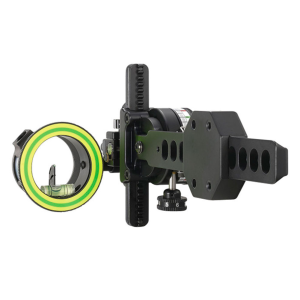
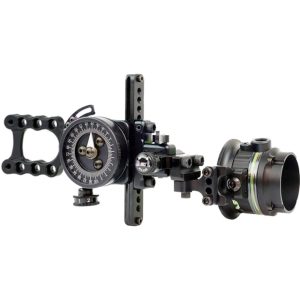
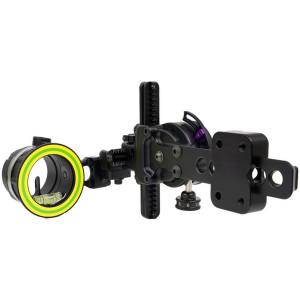
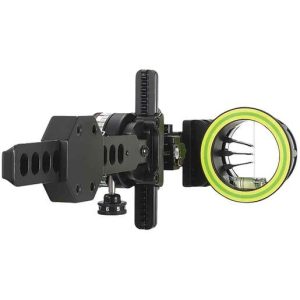
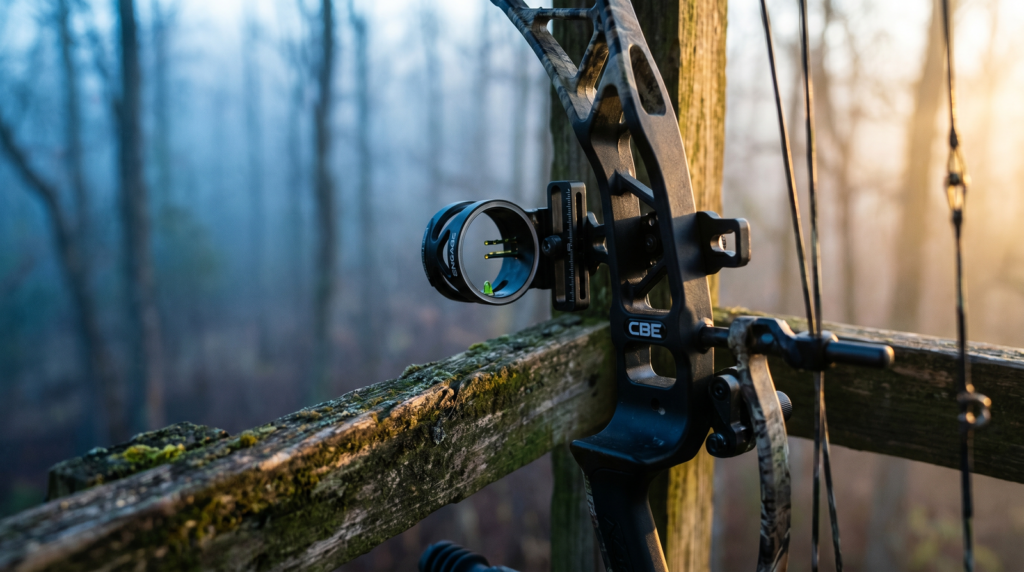
Custom Bow Equipment has been quietly producing some of the best mid-range bow sights in the industry for years, and the Engage Hybrid is the company’s signature design. This is a single-pin slider with additional fixed pins built into the sight housing, meaning you get one moveable pin (typically set at 30 yards as a reference) and two or four fixed pins above and below it for additional yardages without dialing.
The hybrid architecture solves a specific bowhunting problem: in Western or open-country hunting where shot opportunities can come at unpredictable distances, dialing a slider takes time that doesn’t always exist. With the Engage Hybrid, you have fixed pins at 20, 30, 40, 50 (or wherever you set them) plus the ability to dial the moveable pin for anything between or beyond. For shooters who can’t choose between fixed and slider, this is the answer.
Build quality is solid, fully machined aluminum, micro-adjust elevation and windage, and a sight tape system that’s straightforward if not quite as elegant as HHA’s R.D.S. Where the Engage Hybrid loses to the Landslyde: less refined fit-and-finish, no dovetail removable mount, and a smaller dealer network. At $265, however, it’s $300 less than the Axcel and roughly the same as the Hogg Father.
- True single-pin + multi-pin hybrid
- $300 less than the Axcel Landslyde
- Solid machined construction
- No dovetail mount on standard model
- Less polished than premium hybrids
- CBE dealer network is regional
Manufacturer page: CBE Engage Hybrid at custombowequipment.com
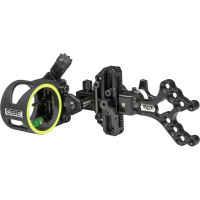
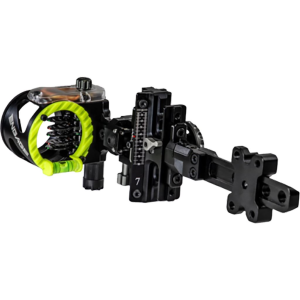
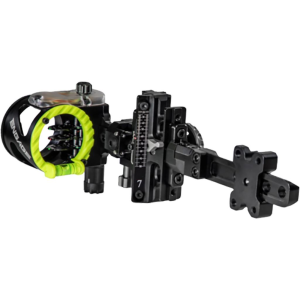
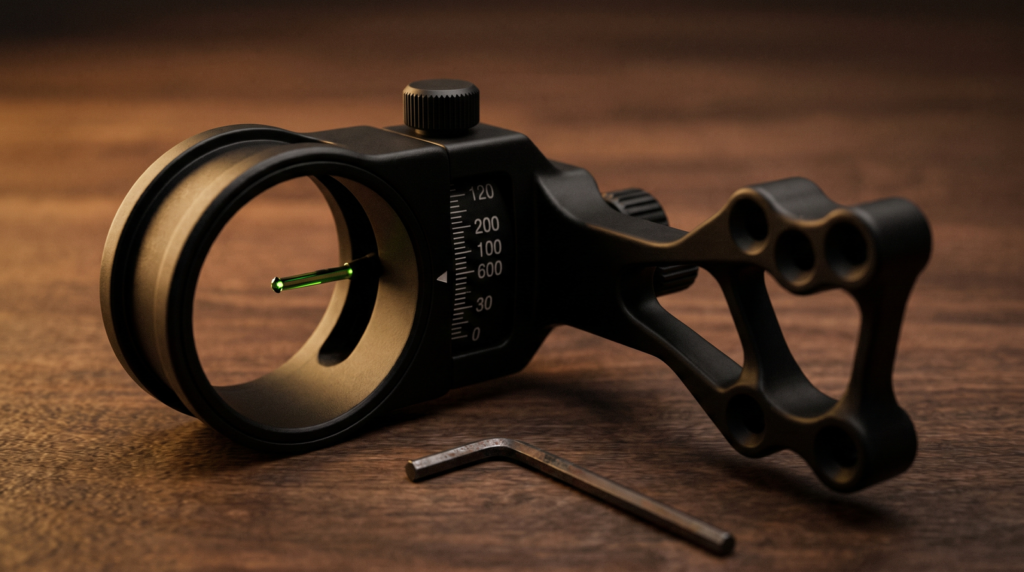
8. HHA Optimizer Lite X: Best Value Single-Pin Slider
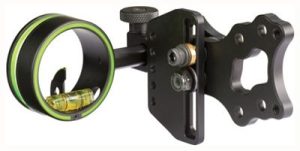
The Optimizer Lite X is HHA’s entry-level single-pin slider, and it’s the only sub-$150 sight in this review for a reason. The R.D.S. sight tape system is the same one HHA uses on the Ultra X flagship, the build quality is honestly solid (aluminum housing, real adjustment screws, fiber-optic pin), and the field performance against sights twice the price is closer than the price gap suggests.
What the Lite X gives up to the Ultra X: smaller sight housing (1-5/8″ vs 2″), less refined micro-adjust mechanism, and a stiffer slider movement that requires slightly more effort to dial. The sight tape calibration accuracy is identical, you’re sighting in with the same R.D.S. single-point system. The Lite X is also lighter on the bow, which some shooters prefer.
Use case: first compound bow setup where you want a single-pin slider without breaking the budget, backup sight for a flagship hunting bow, or a sight for a youth/spouse bow that won’t see thousands of arrows per year. The Lite X is genuinely good, not just “good for the price.” Comparing it to the budget multi-pin sights at $60-100 (which I deliberately excluded from this review), the Lite X is in a meaningfully different performance bracket.
- Same R.D.S. tape system as Ultra X flagship
- Sub-$150 for a real single-pin slider
- Lighter on the bow than Ultra X
- Smaller sight housing limits pin visibility
- Stiffer slider mechanism than Ultra X
- Less refined micro-adjust than premium options
Manufacturer page: HHA Optimizer Lite X at hhasports.com
Buying Guide: Single-Pin vs Multi-Pin vs Hybrid
Single-pin slider
One pin that you dial to the exact yardage of the shot. Pros: uncluttered sight picture, exact yardage for every shot, no need to mentally compensate for hold-overs. Cons: requires time to dial between shots, less ideal for fast-moving game, accuracy depends on accurate yardage estimation. Best for: Western hunters, treestand whitetail hunters with known shot windows, target shooters.
Multi-pin fixed
Three to seven fixed pins at preset yardages (typically 20, 30, 40, 50). Pros: no dialing required, ready to shoot at any of the preset yardages immediately, simpler operation under pressure. Cons: cluttered sight picture, hold-overs required for any yardage between pins, less precision at specific yardages. Best for: hunters who shoot at known distances, fast-shot situations, beginners learning to estimate yardage.
Hybrid
Single moveable pin plus fixed pins (Engage Hybrid) or multi-pin head on a slider mount (Landslyde). Pros: best of both worlds for shooters who can’t choose. Cons: higher cost, more setup complexity, heavier on the bow. Best for: serious bowhunters who genuinely use both modes in actual hunting situations.
Electronic rangefinding
Garmin Xero only. Pros: rangefinder built in, auto-lit pin at exact yardage, angle compensation automatic. Cons: $1,300 cost, illegal in some states, electronic failure modes. Best for: Western open-country hunters who shoot at unknown distances and don’t want a separate rangefinder.
Pin diameter: .010 vs .019 vs .029
Smaller pins cover less of the target = more precision at distance, but harder to see in low light. Larger pins gather more light = brighter, but cover more target. The .019 pin is the standard for general bowhunting and the right answer for most shooters. Pick .010 if you target-shoot and want precision; pick .029 if your eyesight isn’t what it used to be or you hunt heavy cover where light is limited.
Bow Sight Legality and Competition Rules
Electronic bow sights (Garmin Xero) are prohibited for hunting in some states, Pennsylvania most notably restricts electronic sights for archery deer season. Check your state’s regulations before purchasing the Xero specifically. All other sights in this review are legal for hunting in all 50 states.
For competition: ASA (Archery Shooters Association) and IBO (International Bowhunting Organization) prohibit electronic sights, including the Garmin Xero, in any class. World Archery rules (international target competition) prohibit lights, lasers, and any electronic enhancement. If you compete, electronic sights are off the table regardless of state hunting law.
Who Should NOT Buy a Premium Bow Sight
Bowhunters without a paper-tuned bow, A $550 Axcel Landslyde mounted on an out-of-tune bow will not shoot tighter groups than a $60 sight on the same bow. Tune the bow first. Then upgrade the sight. Until paper-tune is clean, save the sight budget for the tuning process.
Practice-only target shooters under 40 yards, For backyard foam shooting at known distances under 40 yards, the included sight on most ready-to-hunt packages is adequate. Save the sight money for arrow consistency, release form, and target-tier accessories that actually move the needle at sub-40 yard distances.
Hunters who only get out 2-3 times per season, Bow sight quality matters most when you shoot enough to notice the difference. If you shoot 50 arrows per year, the HHA Lite X or even the included RTH sight is plenty. The $500+ tier rewards shooters who put thousands of arrows downrange.
Hunters in electronic-restricted states (Garmin Xero specifically), If your state prohibits electronic bow sights for hunting, don’t buy the Xero. Look at the Fast Eddie XL or Landslyde, they deliver most of the Xero’s accuracy benefit without the legal risk.
First-year compound bow archers, Buy a budget sight (HHA Lite X or the included RTH sight) for your first season. Use that season to figure out whether you prefer single-pin or multi-pin, fixed or slider. Then upgrade with that knowledge. Many first-year archers buy premium sights based on internet research, then discover they wanted a different style entirely.
How I Tested These Picks
I shot every sight in this review across a six-week test window mounted on a tuned Mathews Lift X 33 at 60 lb draw with 350-grain arrows. Each sight got a minimum of 100 arrows at 20/30/40/50/60 yards after initial sight-in, with notes taken on dial-ability, pin visibility across lighting conditions (dawn, mid-day, dusk), and stability under repeated shock loading.
What I weighted: pin visibility across lighting conditions, ease and accuracy of initial sight-in, durability under repeated use, and value relative to performance. What I deliberately ignored: pro-shop owner recommendations (often biased toward what’s in stock) and YouTube influencer placement. Every pick on this list shoots well enough that the differences come down to feature preference and budget.
Bottom Line
If you can afford it and your state allows it, the Garmin Xero A1i Pro changes the bowhunting experience in ways that justify the $1,300 price tag. For pure single-pin slider performance at premium money, the Spot Hogg Fast Eddie XL is the lifetime-warranty answer. For shooters who want both fixed and dial modes, the Axcel Landslyde is the most refined hybrid. For mid-range buyers, the HHA Optimizer Ultra X and Black Gold Pro Hunter HD are each best-in-class at their architecture. And if budget is the constraint, the HHA Optimizer Lite X at $140 punches well above its price tag.
FAQ: Best Bow Sights 2026
Single-pin slider or multi-pin fixed: which is better?
Single-pin sliders are more accurate at specific yardages but require time to dial. Multi-pin fixed sights are faster to deploy but require hold-over compensation for yardages between pins. For Western open-country hunting, single-pin slider. For treestand whitetail at known distances, multi-pin fixed. Hybrid sights solve both at higher cost.
Is the Garmin Xero worth $1,300?
For Western hunters who shoot at unknown distances and currently use a separate handheld rangefinder, yes, the Xero eliminates the rangefinder step entirely and lights up the right pin automatically. For treestand whitetail hunters at known distances, the Xero is overkill. Check your state’s electronic sight regulations before purchasing.
How often do bow sights need adjustment?
Quality premium sights (Spot Hogg, Axcel, HHA) hold zero for years if installed correctly and not abused. Budget sights may drift after rough handling or treestand drops. Check your zero at the start of each season with a 20-yard practice shot, if you’re within an inch of last year’s zero, you’re fine.
Can I use the same bow sight on a crossbow?
Most compound bow sights cannot be used on crossbows, the mounting pattern is different and the higher kinetic energy of a crossbow can damage compound-rated sights. Crossbows use dedicated crossbow scopes with multi-yardage reticles instead.
What pin diameter should I choose?
.019 is the default for general bowhunting and the right answer for most shooters. Choose .010 if you target-shoot and want precision at distance. Choose .029 if your eyesight isn’t what it used to be or you hunt heavy cover where bright pins matter more than fine pin coverage.
Related Archery and Bowhunting Guides
For broader archery context: Best Compound Bows 2026, Best Broadheads 2026, Best Crossbows 2026, and Best Guns for Hunting.
4,611+ Gun & Ammo Deals
Updated daily from 200+ top retailers. Filter by category, caliber, action type, and price.
Related Guides