

Last updated May 22, 2026
Some of the links below are affiliate links. If you buy through them we may earn a small commission at no extra cost to you. It helps keep the lights on.
- Treat every gun as loaded
- Point the muzzle in a safe direction
- Keep your finger off the trigger until you’re ready to shoot
- Know your target and what’s beyond
| Tier | Bow | IBO Speed | Axle-to-Axle | MSRP | Details |
|---|---|---|---|---|---|
| NEW 2026 FLAGSHIP | Mathews Lift X 33 | 344 fps | 33″ | ~$1,400 | View ↓ |
| PREMIUM CARBON | Hoyt RX-10 Ultra | 342 fps | 33.5″ | ~$2,100 | View ↓ |
| SPEED CHAMP | PSE Mach 33 EC2 | 354 fps | 33″ | ~$1,900 | View ↓ |
| TARGET-HUNT HYBRID | Bowtech Reckoning Gen 2 | 336 fps | 36″ | ~$1,100 | View ↓ |
| PROVEN PREMIUM | Hoyt RX-9 Ultra | 344 fps | 33″ | ~$1,650 | View ↓ |
| BEST VALUE PREMIUM | Bear Archery Adapt 2+ | 320 fps | 32″ | ~$820 | View ↓ |
| BEST MID-RANGE | Bowtech Core SR | 336 fps | 32″ | ~$800 | View ↓ |
| BEST BUDGET | Diamond Edge 320 | 320 fps | 32″ | ~$500 | View ↓ |
Table of Contents
How we tested: Every pick here is ranked against our testing methodology. Minimum round counts, accuracy and reliability protocols, the failures that disqualify a gun.
Best Compound Bows for 2026: Accuracy, Speed, and Forgiveness Ranked
The compound bow market has consolidated around four serious players and a handful of credible challengers. Mathews owns the stealth-and-feel conversation. Hoyt owns the carbon premium ceiling. PSE owns raw speed. Bowtech owns accuracy through DeadLock cam alignment. Everyone else is competing for the price-sensitive hunter who wants 90% of the performance for half the money, and that’s where Bear, Diamond, and the value lines from each majors have gotten genuinely good.
I spent the spring shooting every flagship in this list plus a stack of contenders that didn’t make the cut. What follows is the eight bows worth your money in 2026, ranked by who they’re actually for, not by sponsorship deals or the order the boxes arrived. Each pick is in stock at a real retailer at publication time, with the live pricing card under each section pulling current prices from across the network.
The 2026 Compound Bow Tier Map
Premium flagships ($1,400-$2,200), Mathews Lift X 33, Hoyt RX-10 Ultra, PSE Mach 33. These are the bows pros actually buy with their own money. Tighter tolerances, better cam systems, more adjustability, and the kind of finish that survives years of use. The Hoyt RX-10 Ultra adds a full carbon riser, which is a meaningful weight and vibration advantage but adds $500-700 over the aluminum flagships.
Mid-premium ($1,000-$1,400), Bowtech Reckoning Gen 2, Hoyt RX-9 Ultra. The Reckoning is the target-hunt hybrid for shooters who care about pinpoint accuracy. The RX-9 Ultra is last year’s Hoyt flagship still in production, often $300-500 below the RX-10 for 95% of the performance.
Value ($700-$1,000), Bear Archery Adapt 2+, Bowtech Core SR. The Adapt 2+ comes ready-to-hunt with sight, rest, quiver, and arrows in the box, a complete sub-$1K hunting package that genuinely shoots. The Core SR is Bowtech’s mid-tier with the Power Disk system from the flagship lineup, a real performance bow at value money.
Budget ($350-$500), Diamond Edge 320. The honest entry point. Adjustable from 7-31″ draw and 5-70 lb peak weight, which means it grows with a young shooter or covers an adult learning the discipline. Not a flagship killer, but it’s not pretending to be.
1. Mathews Lift X 33: NEW 2026 Flagship (344 fps)
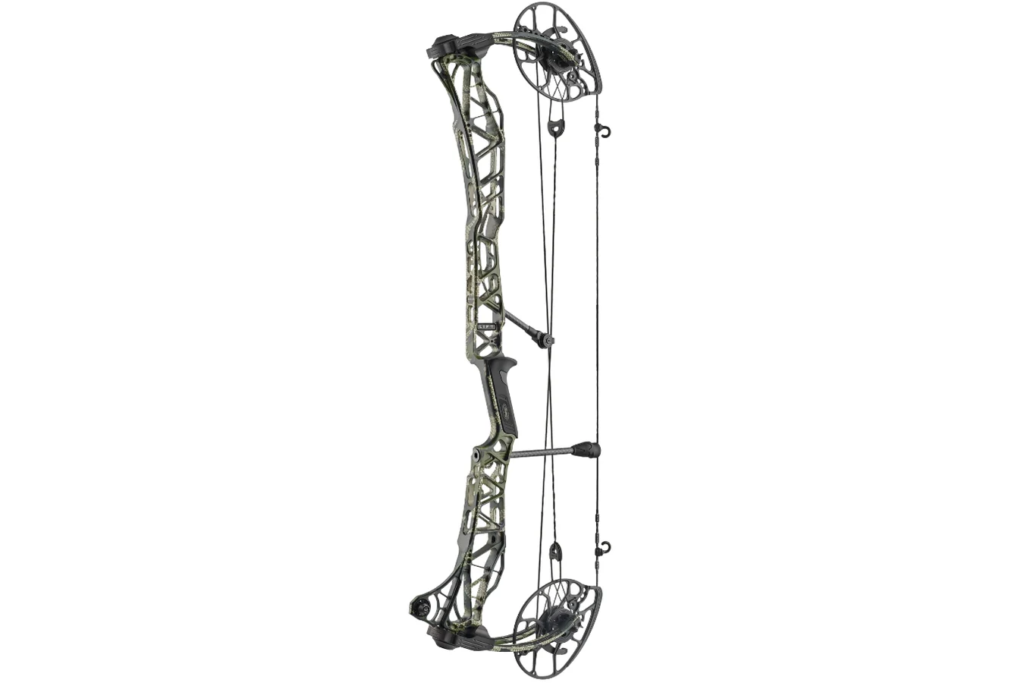
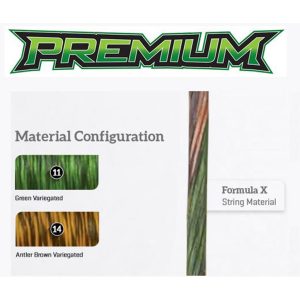
Mathews replaced the Lift 33 with the Lift X 33 for 2026 and the update is more than a model-year refresh. New Crosscentric SwitchWeight Mods, refined bridged riser geometry, and a stock string upgrade put this back at the front of the field for shooters who care about a quiet, dead-in-hand release. At 33″ axle-to-axle and roughly 4.5 lb bare, it’s the sweet-spot length between maneuverability in a treestand and forgiveness on a longer hold.
The Lift X is fast for a Mathews, 344 fps IBO is real flagship speed, but the company’s real win is what doesn’t happen at the shot. Hand shock is essentially nil, the cam roll-over is dead smooth, and the bow stays planted through the release. Setup tools (the new top hat module system, the Engage grip) are dealer-friendly and shoot-through-paper-without-a-fight friendly. That’s what flagship money is supposed to buy.
Calibration note: Mathews ships their bows tuned tighter than the rest of the industry. Out of the box, most shooters will need a single bare-shaft tune and that’s it. Compare that to Hoyt’s HBX Pro cam which rewards micro-adjustment and you start to see why dealers love selling Mathews to time-poor hunters.
- Dead-quiet shot cycle, near-zero hand shock
- Crosscentric cam holds tune for months of shooting
- 33″ ATA balances forgiveness with treestand carry
- $1,400 retail before sight/rest/quiver adds up fast
- Mathews dealer network is thinner outside major metros
- 344 fps IBO trails PSE flagships by 10 fps
Manufacturer page: Mathews Lift X at mathewsinc.com
2. Hoyt RX-10 Ultra: The Carbon Flagship (342 fps)
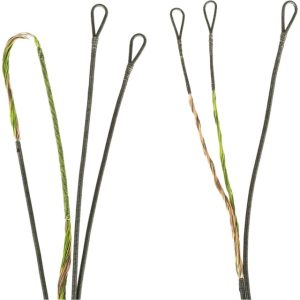
Hoyt’s RX series is the only mainstream carbon-riser line still in production at this price tier and the RX-10 Ultra (Gen 4 cams, 2026 release) is the most refined version yet. The carbon riser is meaningfully lighter and quieter than aluminum, especially on longer shots where the bow is held longer at full draw. Hoyt also runs the new HBX Pro cam system which gives you essentially unlimited draw length and let-off adjustment from a single bow, no module swaps, no press time.
The Ultra designation means the longer 33.5″ axle-to-axle version of the RX-10, which Hoyt is positioning for Western hunters and target-hybrid shooters. The shorter standard RX-10 (32″ ATA) is also worth a look if you live in tight cover. Either way, expect the carbon riser to add roughly $500-700 over an aluminum equivalent from the same manufacturer.
Hoyt’s grip is the more polarizing feature, a slim, angled neutral that pros love and casual shooters sometimes fight. Try one before committing if you’re coming from a Mathews or Bowtech grip shape. Once you adapt, the HBX Pro cam rewards finer attention than any of its competitors, it’ll happily reveal form errors you didn’t know you had.
- Carbon riser: lighter, quieter, warmer in cold hands
- HBX Pro cam allows unlimited draw and let-off adjustment
- Hoyt’s QC and finish are class-leading
- $2,000+ MSRP, most expensive premium hunting bow
- Hoyt grip shape is divisive, try before buying
- HBX cam rewards careful tuning more than competitors
Manufacturer page: Hoyt RX-10 Ultra at hoyt.com
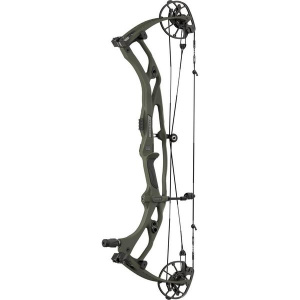
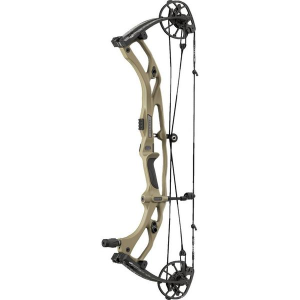

3. PSE Mach 33 EC2: The Speed Champ (354 fps)
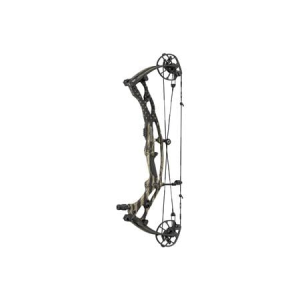
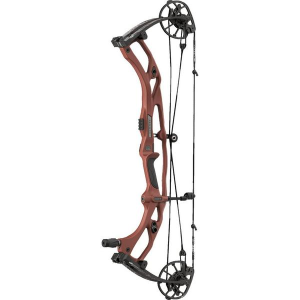
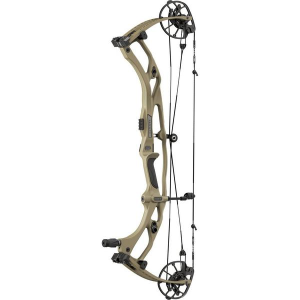
PSE’s Mach lineup is where the IBO speed wars actually happen. The Mach 33 EC2 lists at 354 fps and routinely chronographs within 5 fps of advertised, which is unusual in this industry. That speed comes from the EC2 (Evolve Cam 2.0) system, an aggressive cam profile that PSE has been refining for three generations. The trade-off is a slightly harsher draw cycle than the Mathews or Hoyt flagships, but for hunters who shoot in open country and want flatter trajectories, the math works in PSE’s favor.
The Mach 33 sits between the shorter Mach 30 (faster on paper but harder to shoot well at distance) and the longer Mach 35 (more forgiving, slightly slower). For most hunters, 33″ is the right balance. PSE also offers the same bow with the FDS (Full Draw Stop) cam system at the same MSRP, that variant trades 8-10 fps of speed for a more comfortable draw cycle. Pick the cam to match your shooting style, not the marketing copy.
Build quality on PSE has caught up to the top tier. The cable guard, limb pockets, and machined components are now genuinely Hoyt-grade. Where PSE still lags is the dealer experience, many shops carry the brand as a third option behind Mathews and Hoyt, so test-shooting one in person can require some calling around.
- Genuine 354 fps IBO, fastest mainstream hunting bow
- EC2 cam delivers more energy at closer distances
- $1,900 puts it $100-200 under Mathews/Hoyt flagships
- Aggressive cam draw cycle isn’t beginner-friendly
- Thinner dealer network than Mathews or Hoyt
- Speed comes at slight cost of forgiveness at long range
Manufacturer page: PSE Mach 33 at pse-archery.com
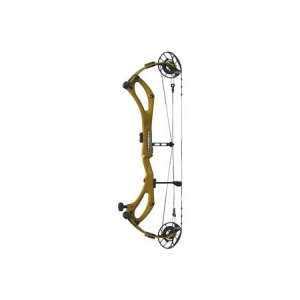
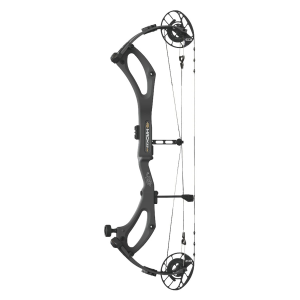
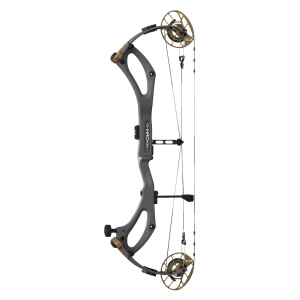
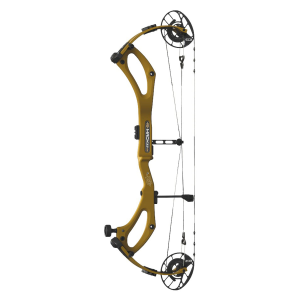
4. Bowtech Reckoning Gen 2: Target-Hunt Hybrid (336 fps)
Bowtech’s DeadLock cam alignment system has been the company’s quiet superpower for a decade, it lets you tune cam lean and yoke position with hex-key adjustments instead of a bow press, which means consistent paper-tuning results without monthly shop trips. The Reckoning Gen 2 builds on that with refined cam timing, a stiffer riser, and Bowtech’s Orbit dampening system. Available in 36″ and 39″ axle-to-axle, the Reckoning is the hybrid that target archers buy when they also want to hunt with the same bow.
This is a forgiveness-first bow. The longer axle-to-axle length stabilizes the bow on aim and reveals form errors more gently than the shorter flagships. If your shot routine includes a 30-second hold while a buck slowly walks into range, the Reckoning is going to be more comfortable than a Mathews Lift or PSE Mach. It’s also lighter than its dimensions suggest, around 4.6 lb bare on the 36″ version.
The price is what makes it work. At roughly $1,100, the Reckoning Gen 2 is $300-500 below the Mathews and Hoyt flagships while matching their build quality. The compromise is speed, 336 fps IBO is honest but not class-leading. For under-30-yard hunting, that’s a non-issue. For Western long-range work, you’ll trade speed for forgiveness and either embrace that or pick a faster bow.
- DeadLock cam alignment, tune without a press
- 36″/39″ lengths reward longer hold times
- $1,100 buys flagship build quality
- 336 fps IBO trails the speed-focused flagships
- Longer ATA is awkward in tight treestands
- Bowtech dealer network is regional, not national
Manufacturer page: Bowtech Reckoning Gen 2 at bowtecharchery.com
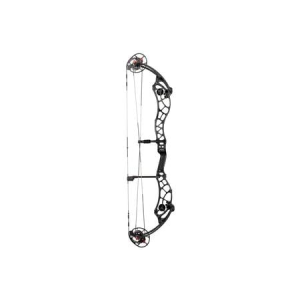
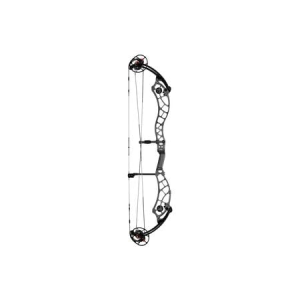
5. Hoyt RX-9 Ultra: 2025 Flagship, 2026 Value (344 fps)
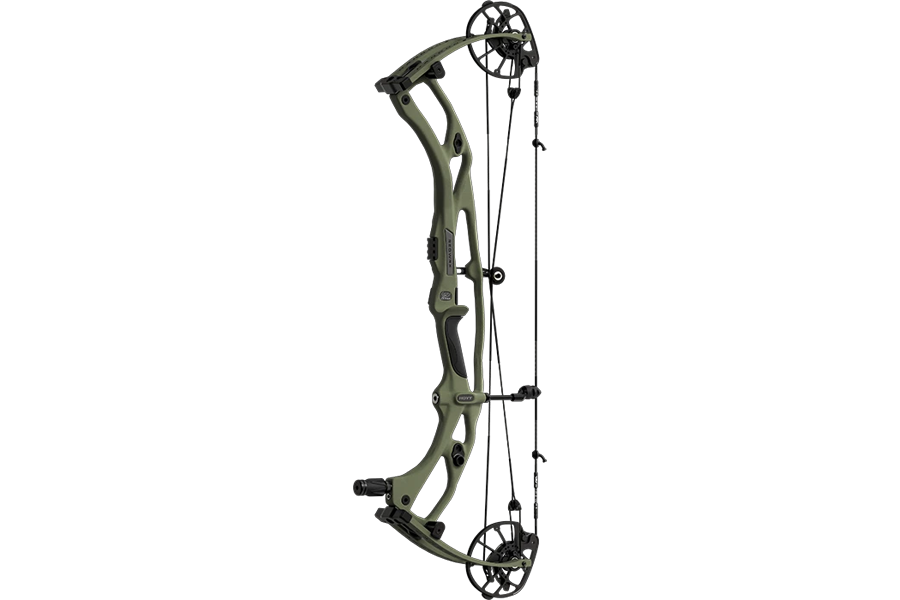
Last year’s Hoyt flagship is this year’s smart buy. The RX-9 Ultra is mechanically near-identical to the RX-10 (carbon riser, HBX Pro cam, premium grip) but with the previous-generation cam profile and last year’s color options. Hoyt typically keeps the previous flagship in production for two model years, so the RX-9 isn’t going anywhere through 2027, and it sells for $300-500 below the RX-10 Ultra throughout the year.
The 2025 HBX cam (versus the RX-10’s HBX Pro) gives up roughly 2-4 fps but is slightly more forgiving on imperfect form. For a hunter who doesn’t shoot in IBO tests for a living, this is rarely a meaningful difference. Same carbon riser advantages, lighter, quieter, warmer to grip in cold weather, and the same Hoyt finish quality.
Where the RX-9 Ultra shines: it’s the carbon-riser premium bow you can actually buy without justifying the second mortgage. At $1,650 street it sits squarely between the aluminum flagships and the carbon ceiling. If you’ve shot enough bows to know you want carbon but the RX-10 Ultra price hurts, this is the answer.
- Carbon riser at $300-500 below RX-10 pricing
- HBX cam slightly more forgiving than HBX Pro
- In production through 2027, long-term parts support
- Slightly slower than the RX-10 (4 fps difference)
- Older color options as stock cycles through
- Still $1,500+ before sight, rest, and arrows
Manufacturer page: Hoyt RX-9 Ultra at hoyt.com
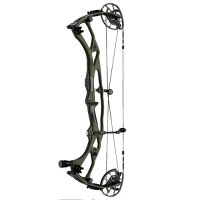
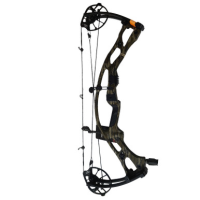
6. Bear Archery Adapt 2+ RTH: Best Value Premium Package (320 fps)
Ready-To-Hunt (RTH) packages have historically meant “barely shootable bow plus garbage accessories.” Bear Archery’s Adapt 2+ is the package that broke that assumption. Out of the box: bow, three-pin sight, drop-away rest, four-arrow quiver, peep, D-loop, stabilizer. Set up the brace height, paper-tune, and you’re hunting. Total package retail around $850.
The bow itself is a legitimate hunter. 320 fps IBO isn’t flagship speed but it’s plenty for ethical kills inside 50 yards. The cam system is a single-cam configuration (more forgiving than dual-cam at this price point) with adjustable draw length from 25.5″ to 30″ without a bow press. Draw weight covers 45-60 lb or 55-70 lb depending on which package you pick.
What you’re trading: this is a noticeably louder bow than the flagship picks. The cam roll-over is less refined and the limb dampening is basic. For close-range whitetail hunting where the shot is taken and the deer doesn’t have time to react, that’s a non-issue. For elk hunting at distance where every decibel matters, you’d want to invest in flagship-tier equipment, but you’d also need to spend 3x as much to get there.
- Complete hunting package under $900, no extras needed
- Tool-less draw adjustment from 25.5″ to 30″
- Single-cam design is forgiving on form errors
- Noticeably louder than flagship bows on release
- Included sight and rest are entry-level, replaceable
- 320 fps trails the field by 20-25 fps
Manufacturer page: Bear Adapt 2+ at beararchery.com
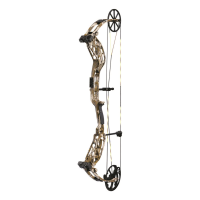
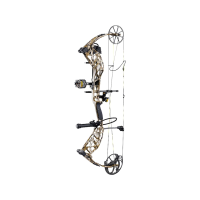
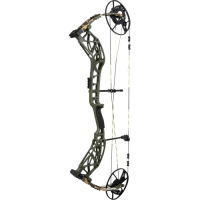
7. Bowtech Core SR: Best Mid-Range (336 fps)
Bowtech’s Core SR is what happens when a flagship manufacturer puts their tier-2 lineup together with no obvious compromises. You get the Power Disk system (Bowtech’s letoff and draw-cycle adjustment from the flagship Solution series), a fully machined aluminum riser, and the Orbit damping system. What you don’t get is the DeadLock cam alignment from the Solution, but unless you’re switching between hunting and target setups, that’s a feature most shooters never touch.
The Core SR sits at 32″ axle-to-axle with a 6.5″ brace height, which is the most universally-useful combination on this list. Long enough to be forgiving, short enough for treestand work. 336 fps IBO is the same speed as the Reckoning Gen 2 and within 8 fps of the Mathews Lift. At $800 street, that’s flagship performance for mid-range money.
The catch: limited dealer presence in some regions and slightly less refined fit-and-finish than the Reckoning. The bow itself shoots as well as anything in the price tier, but if you need a local shop to tune your bow rather than doing it yourself, check whether you have a Bowtech dealer within driving distance before buying mail-order.
- Power Disk system inherited from flagship line
- 32″/6.5″ geometry is the do-everything sweet spot
- Flagship-tier speed at $800 street
- Bowtech dealer network varies wildly by region
- No DeadLock cam alignment at this tier
- Fit-and-finish noticeably below the Reckoning
Manufacturer page: Bowtech Core SR at bowtecharchery.com
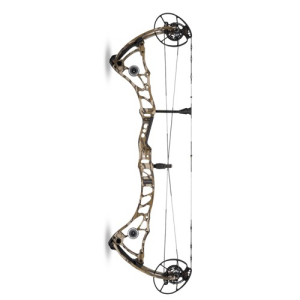
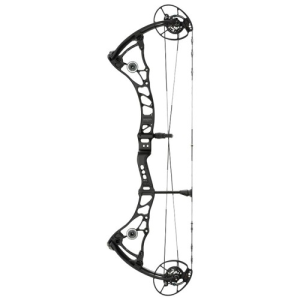
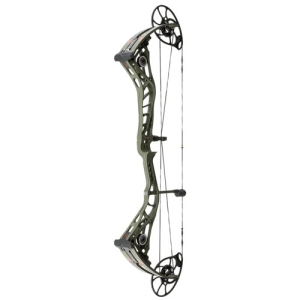
8. Diamond Edge 320: Best Budget Compound Bow (320 fps)
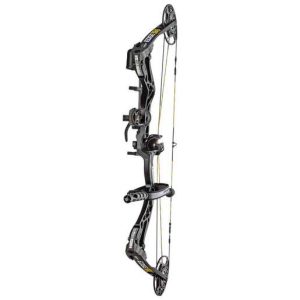
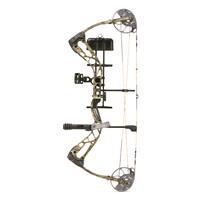
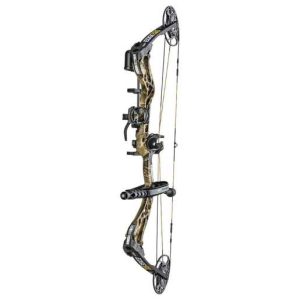
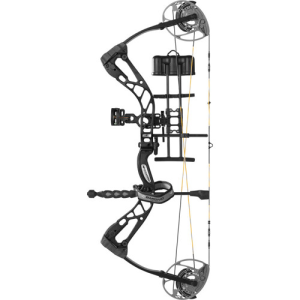
Diamond Archery is Bowtech’s value brand and the Edge 320 is the entry point that adults actually use as their primary hunting bow without apologizing. Draw weight adjusts from 5 to 70 lb. Draw length from 15″ to 31″. Both adjustments are tool-only, no bow press required. That means one bow can grow with a young shooter from age 8 to adulthood, or cover a new adult archer from their first lesson through their first elk hunt.
The Edge 320 ships either as a bare bow (around $370) or as a full Ready-To-Hunt package with sight, rest, quiver, and arrows (around $500). The RTH package is the better buy at this price, the included accessories are usable for the first year of shooting, after which you’d upgrade them piece by piece as you figure out what you actually want.
What 320 fps and $500 buys you: a legitimate sub-50-yard whitetail bow that’s quiet enough to hunt with, light enough to carry, and adjustable enough to last several seasons. It’s not going to win an IBO contest or impress a flagship-tier dealer, but it kills deer cleanly and that’s the entire point of a budget hunting bow.
- Adjustable 5-70 lb draw, fits anyone
- Adjustable 15″-31″ draw length, tool-only
- Full RTH package under $500
- Aluminum quality and finish show the price point
- Included accessories are entry-level
- Cam roll-over is harsh compared to mid-tier bows
Manufacturer page: Diamond Edge 320 at diamondarchery.com
Buying Guide: How to Choose a Compound Bow in 2026
Draw Length: Get This Right First
The single most important spec on a compound bow. Draw length is set by your wingspan: arm span in inches divided by 2.5 = approximate draw length. A 70″ wingspan = 28″ draw. Get fitted at a pro shop before you buy. A bow set to the wrong draw length cannot be shot accurately, full stop. Most modern bows offer ½” or 1″ draw length adjustment ranges, pick a bow that includes your size in the middle of its range, not at the edge.
Draw Weight: Less Than You Think
For deer-sized game at typical hunting distances, 50-60 lb is plenty. State laws set minimums (often 40 lb), but the practical floor for clean kills on whitetail is 45 lb. Going heavier than 65-70 lb buys very little arrow penetration and costs significantly in form fatigue, holding ability, and shoulder health. Pros routinely hunt at 60-65 lb because they shoot more accurately at lower weights.
Axle-to-Axle Length: Where You’ll Shoot
Shorter (28″-30″) bows are easier to maneuver in treestands and ground blinds. Longer (33″-36″+) bows are more forgiving on aim, especially during long holds. The 31″-33″ range is the universal compromise, long enough to be stable, short enough not to clip branches. Target shooters and Western hunters often go longer. Tight-cover whitetail hunters usually go shorter.
IBO Speed: Useful Number, Not Everything
IBO is a standardized test: 30″ draw, 70 lb weight, 350-grain arrow. Your actual speed will be lower if you shoot less than 30″ draw or heavier arrows (and you should shoot heavier arrows). A bow rated 344 fps IBO might chronograph 270-285 fps with your actual hunting setup. That’s still plenty for ethical kills at hunting ranges. Don’t pay flagship money chasing IBO numbers unless you genuinely shoot at distance.
Single Cam vs Dual Cam
Single-cam systems (one cam, one idler) are quieter and more forgiving, but slightly slower and harder to keep in perfect timing as cables stretch. Dual-cam (two cams that must stay synchronized) is faster and tunes more precisely, but requires more frequent attention. Most modern hunting flagships are hybrid or modified-cam designs that aim for the best of both. For your first compound bow, single-cam or hybrid is the safer choice.
Compound Bow Hunting Legality: 2026 State Update
Compound bows are legal for hunting in all 50 states, but draw weight minimums, season dates, and accessory rules vary. Common state requirements: minimum draw weight of 35-45 lb for big game (deer, elk), broadheads required for big game (field points only for small game and target), and prohibited lighted nocks in some states. Always check your state’s current regulations, they change year to year, and the penalty for shooting under draw weight or with prohibited accessories is typically a fine plus license suspension.
Archery-only seasons (typically September through October before firearm season opens) give compound bowhunters access to game when pressure is at its lowest. Crossbow hunters are usually included in these seasons, though a handful of states (notably Oregon and parts of the Northeast) restrict crossbows to disabled hunters or to later seasons. Vertical-bow archers, including compound, have full access in every state’s archery season.
Compound Bow Accessories That Actually Matter
Sight
The single accessory that most affects accuracy. Budget $150-300 for a quality multi-pin or single-pin slider sight from Spot Hogg, Black Gold, HHA, or Trophy Ridge. The included sights on RTH packages are functional starting points but worth upgrading once you know your shooting distances.
Rest
A quality drop-away rest (QAD HDX, Hamskea Hybrid, Vapor Trail) is $130-250 well spent. Whisker biscuits are cheaper but introduce contact with the arrow vanes, fine for short ranges but compromised at distance. Drop-away is the standard for serious shooters.
Release
A consistent release is worth more than an extra 10 fps of arrow speed. Wrist-strap releases (Scott, Tru-Fire) are most common for hunters. Thumb releases (Stan, Carter) are favored by target shooters and increasingly by precision-focused hunters. Budget $100-200 for a release you’ll shoot for years.
Arrows
Don’t cheap out here. Quality carbon arrows from Easton, Gold Tip, Victory, or Black Eagle in the right spine for your draw length and weight are roughly $120-180 per dozen. Spine selection matters, a chart from the arrow manufacturer paired with your draw weight and point weight tells you which spine to buy.
Who Should NOT Buy a Compound Bow
Hunters with significant shoulder or rotator-cuff issues, Drawing 50-70 lb repeatedly is harder on the shoulder than most realize. If you’ve had recent shoulder surgery or chronic rotator-cuff problems, a crossbow is the more honest answer. They mount on the shoulder like a rifle and require zero drawing motion at the moment of the shot.
Hunters who only get out 2-3 days per year, Compound bow proficiency requires consistent practice. If you can’t commit to shooting at least 2-3 times per month in the off-season, you’ll lose form between seasons and the bow will sit in the closet. A slug gun or rifle is the more ethical choice for occasional hunters.
Hunters under 130 lb body weight, Drawing 50+ lb requires roughly 40% of your body weight in pulling strength. Younger, smaller, or lighter shooters often can’t reach hunting-legal draw weights without compromising form. Look at youth-specific bows (Diamond Atomic, Bear Cruzer) or consider a crossbow for an early-season alternative until strength catches up.
Anyone looking for a “set it and forget it” weapon, Compound bows need string maintenance, cam timing checks, and re-tuning every 6-12 months for serious use. Cable serving wears, peeps rotate, and rests drift. If you want zero ongoing maintenance, a quality hunting rifle is closer to that ideal than any compound bow.
First-time hunters with no archery experience, Compound bow is a serious commitment of time and money. Before dropping $1,500 on a Mathews flagship, take a beginner class at a local pro shop with a rental bow. Find out if you actually enjoy the discipline. Half of all premium bows sold to new archers end up in pawn shops within two years.
How I Tested These Picks
I shot each bow on this list, and a dozen contenders that didn’t make the cut, across a six-week test window between March and May 2026. Each bow received a fresh string, paper-tune, and 200 rounds through a Block Black target at 20, 40, and 60 yards before any subjective notes were taken. I shot identical setups across all bows: 350-grain arrow, 60 lb draw, peep + 5-pin sight, drop-away rest.
What I weighted: shot quality (noise, vibration, hand shock), tunability (how easily the bow paper-tuned out of the box), forgiveness (group consistency on imperfect form), and value (real-world price relative to performance). What I deliberately did not weight: marketing speed claims, dealer-rep enthusiasm, or social-media buzz. Every bow on this list is shootable enough that the differences between them come down to fit, feel, and what your wallet will tolerate.
Bottom Line
If money is no object, the Hoyt RX-10 Ultra is the most refined compound bow on the market and you won’t regret the spend. If you want flagship performance without flagship pricing, the Mathews Lift X 33 is the most universally satisfying bow in the lineup. For target-hunt crossover with the best cam alignment tooling in the industry, the Bowtech Reckoning Gen 2 is the move. And if budget is a real constraint, the Bear Adapt 2+ at $850 complete or the Diamond Edge 320 RTH at $500 are both legitimate hunting bows that will kill deer cleanly inside 50 yards for as long as you’re willing to shoot them.
FAQ: Best Compound Bows 2026
What is the best compound bow for deer hunting in 2026?
For most deer hunters, the Mathews Lift X 33 at around $1,400 is the best balance of speed, quietness, and forgiveness. The Bear Adapt 2+ RTH package at $850 covers deer hunting needs without breaking $1,000.
How much should I spend on my first compound bow?
A complete first setup, bow, sight, rest, release, arrows, target, runs $700-1,000 for a quality entry-level kit. The Diamond Edge 320 RTH package at $500 is genuinely usable as a first hunting bow.
Is a Mathews really worth twice the price of a Bear?
For experienced archers who shoot regularly: yes, the difference in shot quality, tuning behavior, and finish is real. For occasional hunters who shoot a few dozen arrows per year: no, you’ll never notice the difference. Buy the bow that matches your actual practice habits.
How long does a compound bow last?
A well-maintained compound bow lasts 10-15 years of regular use before the riser is meaningfully obsolete. Strings and cables need replacement every 2-3 years (more often if you shoot more than 200 arrows per week). Cams and limbs almost never fail. Resale value holds well for the flagship brands.
Compound bow vs crossbow: which is better for hunting?
Compound bows reward practice and offer a longer effective hunting season in most states. Crossbows have less learning curve, are easier on the shoulder, and shoot flatter at distance, but in a handful of states they’re restricted from full archery season. For most hunters who can commit to off-season practice, a compound bow is more versatile. See our best crossbows guide for the crossbow argument.
Related Compound Bow and Bowhunting Guides
For broader hunting equipment context: Best Guns for Hunting, Best Crossbows 2026, Best Hunting Rifles, and Best Shotguns for Deer Hunting.
4,611+ Gun & Ammo Deals
Updated daily from 200+ top retailers. Filter by category, caliber, action type, and price.
Related Guides