
Last updated August 2026 · By Nick Hall, precision rifle competitor
This article contains affiliate links. If you buy through our links we can earn a small commission, and you get the best live price on these optics from a range of national retailers.
The Leupold Mark 5HD 5-25×56 is the best PRS scope for 2026 and one of the two most-used optics among the top 200 shooters in the sport. It gives you a first-focal-plane tree reticle, a locking ZeroLock dial, 120 MOA of elevation and 30 oz on a 35 mm tube. Below it, this guide ranks nine scopes on the spec that actually limits how far you can shoot, total elevation travel, and charts the published figure for every one. The result is not what the price list suggests: the $799 Vortex Strike Eagle has more elevation than the $3,200 Nightforce ATACR.
A PRS scope has a harder job than almost any other optic. You need a first-focal-plane reticle so your holds stay true at every magnification, turrets that track exactly and return to a hard zero every time, glass good enough to read mirage at a thousand yards, and enough internal elevation to dial all the way out there in the first place. Miss any one of those and the scope will cost you points on a stage.
Two things separate this guide from the rest of the field. First, every scope here is charted on published elevation travel, the number that decides your maximum dialled range and the one nobody prints. Second, further down there is real data on what the top 200 ranked PRS shooters actually run, which turns out to be quite different from what most roundups recommend, including this one. Both are below the picks.
Table of Contents
How we tested: Every pick here is ranked against our testing methodology. Minimum round counts, accuracy and reliability protocols, the failures that disqualify a gun.
Best PRS Scopes 2026 at a Glance
| Scope | Elevation travel | Price |
|---|---|---|
| Best OverallLeupold Mark 5HD 5-25×56 | 120 MOA / 34.9 mil | ~$2,200 ↓ |
| Best High-End GlassVortex Razor HD Gen III 4-24×44 | 158 MOA | ~$2,000-2,800 ↓ |
| Best DurabilityNightforce ATACR 7-35×56 | 100 MOA | ~$3,200 ↓ |
| Best Pro-Grade PickKahles K525i DLR 5-25×56 | 29.0 mil | ~$3,200 ↓ |
| Best Tree ReticleAthlon Ares ETR 4.5-30×56 | 110 MOA | ~$1,150 ↓ |
| Best LightweightVortex Razor HD LHT 4.5-22×50 | 75 MOA | ~$1,200 ↓ |
| Best Under $1,000Vortex Viper PST Gen II 5-25×50 | 70 MOA / 20 mil | ~$899 ↓ |
| Best First FFP ScopeVortex Strike Eagle 5-25×56 | 110 MOA / 31 mil | ~$799 ↓ |
| Best BudgetBushnell Match Pro ED 5-30×56 | 30 mil / 103 MOA | ~$659 ↓ |
Prices are live from the retailers below. Every scope here is first focal plane, which is non-negotiable for this sport. The elevation column is where the surprises are, and the full comparison with the reasoning is further down.
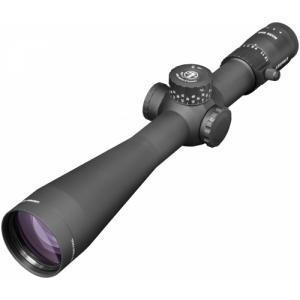
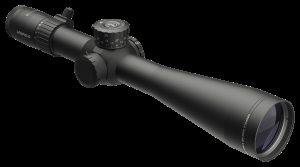
1. Leupold Mark 5HD 5-25×56. Best Overall PRS Scope
- Elevation travel: 120 MOA / 34.9 mil (windage 60 MOA / 17.5 mil)
- Tube: 35 mm
- Focal plane: first, PR1 / PR2 / TMR / Tremor 3 reticle options
- Weight and length: 30 oz, 15.7 in
- Pro usage: 23 of the top 200 ranked PRS shooters in 2026

Pros
- One of the two most-used optics among the top 200 ranked PRS shooters, so data and dope are easy to compare
- 120 MOA of elevation on a 35 mm tube, enough for almost any stage without a canted base
- 30 oz is light for this class, a full 9 oz under the ATACR
- ZeroLock dial and Leupold’s lifetime guarantee
Cons
- The Razor HD Gen III gives you 38 MOA more travel, and can be found for less
- 35 mm tube needs 35 mm rings, which are less common than 34 mm
- Glass is excellent but not the outright best here at the price
The Mark 5HD is the safe answer and the popular one, and for once those are the same thing. PrecisionRifleBlog’s 2026 survey of the top 200 ranked PRS Open shooters put 23 of them behind a Mark 5HD 5-25×56, second only to the ZCO 5-27×56. That matters practically as well as reputationally: when most of your squad runs the same reticle and turret system, comparing corrections between stages is quick.
Our Leupold scope lineup guide puts the Mark 5HD side by side with the cheaper Mark 4HD.
The spec that earns it a place is the balance. 120 MOA of elevation is plenty for a mile of dialling on most cartridges, and it achieves that while weighing 30 oz, which is nine ounces less than the Nightforce and four less than the Kahles. On a rifle that already carries a heavy barrel and a chassis, that is a real difference by the end of a long day.
The honest caveat is that it is no longer the travel leader. The Vortex Razor HD Gen III below has 158 MOA and at its keenest price undercuts it. If your stages routinely push past 1,200 yards, look at that first.
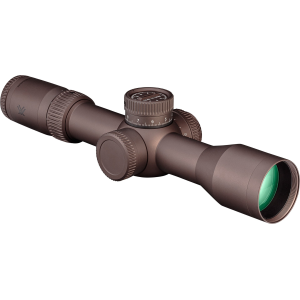
2. Vortex Razor HD Gen III 4-24×44. Best High-End Glass
- Elevation travel: 158 MOA, the most in this guide (windage 86 MOA)
- Tube: 34 mm
- Focal plane: first, EBR-7D in MOA or MRAD
- Weight and length: 32.3 oz, 12.5 in
- Parallax: 15 yards to infinity
Pros
- 158 MOA of elevation, 58 MOA more than the Nightforce ATACR and the most in this guide
- 12.5 in is remarkably short for the class, which frees up rail for a night vision clip-on
- Glass and low-light performance are the best here short of the European optics
- Vortex VIP warranty, unlimited and transferable
Cons
- The 44 mm objective gathers less light than the 56 mm scopes at dusk
- Street price swings from about $2,000 to $2,800 between retailers, so check the card before you commit
- The dedicated 6-36×56 PRS variant costs around a thousand more again
The Razor HD Gen III is the scope that broke the elevation ceiling in this price band. 158 MOA is the most travel of anything in this guide, and it is worth understanding what that buys: on a 6.5 Creedmoor you can dial past a mile without a canted base, and on any normal PRS stage you will never see the end of the turret.
It is also the shortest scope here at 12.5 in. On a chassis rifle with a long handguard that leaves room to mount a clip-on or simply to get the scope where your neck wants it rather than where the rail allows.
Two things to know before buying. The 4-24×44 is the version stocked widely and the one the card prices; Vortex also make a 6-36×56 that is the dedicated PRS model and the third most-used scope among the top 200 shooters, but it sells for around three thousand dollars and is carried by far fewer retailers. And the 44 mm objective, while it keeps the scope short and light, does give up some dusk performance to the 56 mm optics here.
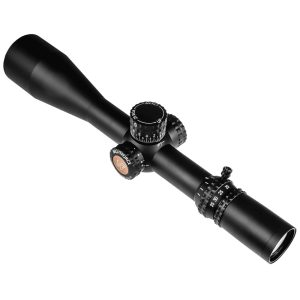
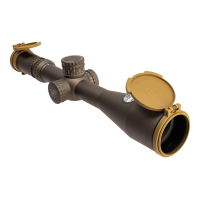
3. Nightforce ATACR 7-35×56. Best for Bombproof Durability
- Elevation travel: 100 MOA (windage 60 MOA, 30 MOA per revolution)
- Tube: 34 mm
- Focal plane: first, Mil-R / MOAR / Mil-C / TReMoR3 options
- Weight and length: 39.3 oz, 16 in
- Eye relief: 3.3 to 3.6 in
Pros
- Nothing here survives abuse like a Nightforce, and the tracking is beyond argument
- 35x resolves mirage and distant steel better than any 25x scope
- Hi-Speed ZeroStop and an integrated throw lever are properly thought out
- Strong representation in the PRS top 10 despite the weight
Cons
- 100 MOA is the least elevation travel of the premium scopes here
- 39.3 oz is the heaviest optic in this guide by nearly five ounces
- The 7x bottom end is limiting on close or moving targets
The ATACR is the scope you buy when the optic must never be the thing that fails. Nightforce tracking is the benchmark other makers are measured against, and the 7-35x magnification range gives you resolution at distance that the 25x scopes cannot match when you are trying to read mirage and call a wind.
The trade-offs are real and this guide is going to state them plainly, because the price does not. At 100 MOA the ATACR has the least elevation travel of any premium scope in this guide, less than the $799 Vortex Strike Eagle and less than the $659 Bushnell. And at 39.3 oz it is the heaviest thing here, nearly ten ounces more than the Mark 5HD. If you want Nightforce tracking in a lighter scope, our Nightforce NX8 review covers the 4-32 power NX8 at 28.6 ounces, with 90 MOA of elevation.
None of that makes it a bad buy. It makes it a specific buy: pick it for durability, tracking confidence and resolution, and pair it with a 20 or 30 MOA canted base so the modest travel is not a limitation. If you are choosing on dial range alone, your money goes further elsewhere.
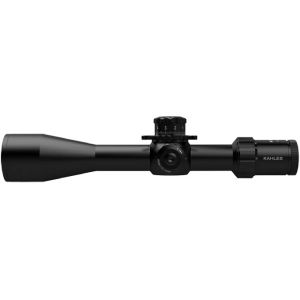
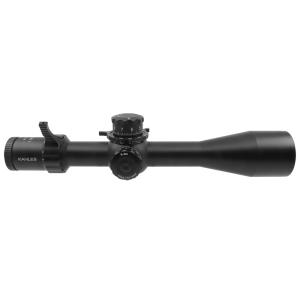
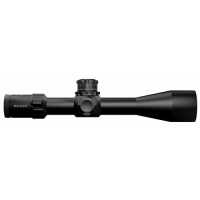
4. Kahles K525i DLR 5-25×56. Best Pro-Grade Pick
- Elevation travel: 29.0 mil, about 100 MOA (windage 13.0 mil)
- Tube: 34 mm
- Clicks: 0.1 mrad, with ZEROSTOP and the TWIST GUARD windage cap
- Weight and length: 34.2 oz (970 g), 14.8 in (377 mm)
- Parallax: 20 m to infinity. Brand usage: Kahles is 13% of the PRS top 200
Pros
- One of the few genuinely pro-dominant brands you can actually buy from a US retailer
- Built specifically for Dynamic Long Range, so the ergonomics suit a match rather than a bench
- TWIST GUARD windage cap stops the accidental windage bumps that cost stages
- Austrian glass and a left-side windage option that suits a bipod-forward position
Cons
- Around $3,200, and stocked by very few retailers
- 29 mil of elevation is mid-pack despite the price
- 34.2 oz, so no lighter than the alternatives at this money
This pick exists because of the survey data further down. Kahles account for 13% of the top 200 ranked PRS shooters, more than Nightforce, and yet they almost never appear on roundups like this one. That is mostly a distribution problem rather than a merit one, and the K525i DLR is the model to know.
DLR stands for Dynamic Long Range, and the design shows it. The turret feel is tuned for dialling fast under a clock rather than for precise bench work, and the TWIST GUARD windage cap solves a problem that sounds trivial until it happens to you: knocking windage off zero while dragging a rifle over a barricade.
Be clear about the value proposition. At around $3,200 it costs the same as the Nightforce and offers similar elevation travel. What you are buying is the glass, the ergonomics and the pedigree, not more dial.
5. Athlon Ares ETR 4.5-30×56. Best Tree Reticle Under $1,500
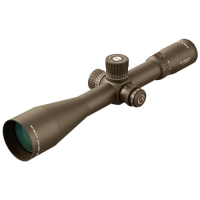
- Elevation travel: 110 MOA
- Tube: 34 mm, one piece
- Turrets: 10 mil / 25 MOA per rotation, true zero stop, locking windage
- Focal plane: first, APRS1 illuminated MIL tree
- Weight: Athlon do not publish a figure for this model

Pros
- 110 MOA of elevation, more than the Nightforce and the Kahles at a third of the price
- 30x top end for reading mirage, which most scopes at this money cannot reach
- Locking windage turret and a true zero stop, both normally reserved for pricier optics
- The APRS1 tree is a genuine competition reticle, not a hunting reticle with hashes
Cons
- Athlon publish no weight for this model, so plan your build with a margin
- Glass is good for the money but visibly behind the Leupold and Kahles at 30x
- Stocked by one retailer at the time of writing
The Ares ETR is the spec-sheet bargain of this guide. 110 MOA of elevation, a 34 mm tube, a locking windage turret, a true zero stop and a 30x top end, for around $1,150. Every one of those features is a thing the $3,200 scopes above are sold on, and on paper it matches or beats them on travel.
Where the money shows is the glass. At 30x, in poor light or heavy mirage, the image is noticeably softer than the Leupold or the Kahles. That is exactly what you would expect and it is not a criticism at the price, but it is the reason the pros are not running these.
One transparency note. Athlon do not publish a weight for the 4.5-30×56 in their specification table, so this guide leaves that cell blank rather than repeating a retailer’s estimate. If you are building to a division weight limit, weigh it yourself.
6. Vortex Razor HD LHT 4.5-22×50. Best Lightweight
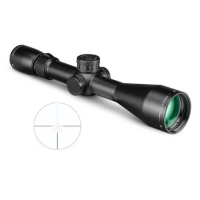
- Elevation travel: 75 MOA (windage 45 MOA, 15 MOA per rotation)
- Tube: 30 mm
- Focal plane: first, XLR-2 illuminated
- Weight and length: 21.7 oz, 13.3 in. Eye relief: 4.0 in
- Parallax: 25 yards to infinity
Pros
- 21.7 oz, nearly eighteen ounces lighter than the ATACR and the lightest optic here by a distance
- 4.0 in of eye relief, the most forgiving in this guide behind a magnum
- Genuinely first focal plane in the 4.5-22×50, so holds stay true
- The obvious choice if you also shoot NRL Hunter or carry the rifle
Cons
- 75 MOA is the second least travel here, a direct consequence of the 30 mm tube
- Capped windage means this is a dial-elevation, hold-wind scope
- Stocked thinly, and the 3-15×42 sibling is second focal plane, so check the model
The LHT is the crossover pick, and its number is weight. At 21.7 oz it is not merely lighter than the rest of this guide, it is in a different category: seventeen and a half ounces under the Nightforce. If you shoot practical or field matches where you carry the rifle between stages, or you also hunt with it, that is the difference between a rifle you can move with and one you drag.
You pay for it in dial. 75 MOA of elevation is the second least in this guide and it is the 30 mm tube that causes it, which is exactly the mechanical relationship the comparison table below makes visible. Pair it with a 20 MOA base and it will still take you comfortably past a thousand yards on a normal cartridge.
One buying trap worth flagging: the Razor HD LHT is sold in two very different configurations. The 4.5-22×50 reviewed here is first focal plane. The cheaper and more common 3-15×42 is second focal plane, which disqualifies it for PRS. Check the model number, not just the family name.
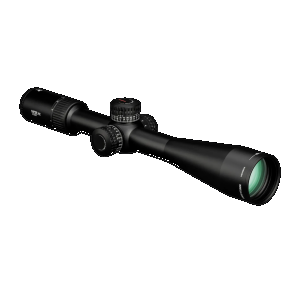
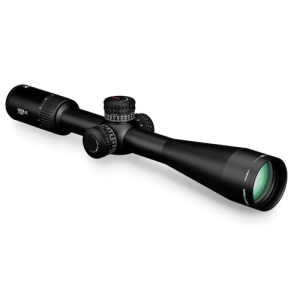
7. Vortex Viper PST Gen II 5-25×50. Best Under $1,000
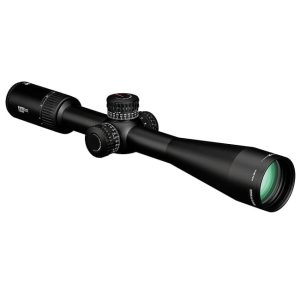
- Elevation travel: 70 MOA / 20 mil (windage 35 MOA / 10 mil)
- Tube: 30 mm
- Focal plane: first, EBR-2C / EBR-7C in MOA or MRAD
- Weight and length: 31.2 oz, 15.79 in. Eye relief: 3.4 in
- Parallax: 25 yards to infinity
Pros
- A proven first-focal-plane tree scope under $1,000 with a real zero stop
- The EBR-7C tree is the same family of reticle the Razor uses
- Vortex VIP warranty, which at this price point is worth real money
- Widely stocked, so the card finds real price competition
Cons
- 70 MOA is the least elevation travel in this guide
- 30 mm tube, so a canted base is close to mandatory for long stages
- Both a first and a second focal plane version exist, and only the FFP is right for PRS
The Viper PST Gen II has been the default sub-$1,000 precision scope for years and it still works, but the comparison table has changed how it should be recommended. Its 70 MOA of elevation is now the least of anything in this guide, and the $799 Strike Eagle below has 110 MOA on a bigger tube.
What keeps it here is that it is a mature, widely stocked, genuinely good optic with excellent tracking for the money and a warranty that means you will never be without a scope for long. If you already own one, it is not holding you back at typical match distances with a canted base.
Two versions exist and only one is right. Vortex sell the 5-25×50 in both first and second focal plane. Buy the FFP. The card above prices the FFP models first, but read the listing before you click.
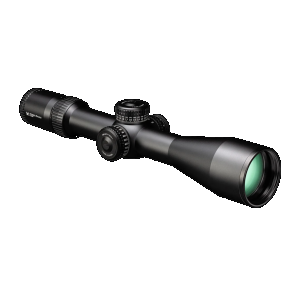
8. Vortex Strike Eagle 5-25×56. Best First FFP Scope
- Elevation travel: 110 MOA / 31 mil (windage 78 MOA); 47 MOA / 18.9 mil with the RevStop zero stop installed
- Tube: 34 mm
- Focal plane: first, illuminated EBR-7C in MOA or MRAD
- Weight and length: 30.4 oz, 14.6 in. Eye relief: 3.8 in
- Turrets: locking, RevStop zero system. Parallax: 15 yards
Pros
- 110 MOA of elevation for $799, more than the $3,200 Nightforce and the $3,200 Kahles
- 34 mm tube and a 56 mm objective at a price where both are normally absent
- RevStop zero system makes returning to zero foolproof for a new competitor
- Illuminated EBR-7C tree and the Vortex VIP warranty
Cons
- Glass is the weakest of the 56 mm scopes here, especially at the top of the range
- 30.4 oz with no weight saving to show for the modest price
- Turret feel is coarser than the Leupold or Kahles under a clock
If you are buying your first proper precision scope, buy this one. The Strike Eagle 5-25×56 FFP gives you every structural feature a PRS scope needs: first focal plane, a tree reticle, a 34 mm tube, locking turrets, a zero stop and 110 MOA of elevation travel, for around $799.
That elevation figure is the point of this whole guide in one line. It is more dial than the Nightforce ATACR at four times the price, more than the Kahles, and 40 MOA more than the Viper PST that costs a hundred dollars more. Travel is a function of tube diameter and erector design, not of price, and the Strike Eagle is the clearest proof of it. Fit its RevStop zero stop, though, and Vortex’s manual lists 47 MOA of up on the MOA version; our Vortex Strike Eagle review has the figures for every model.
What you do not get is glass. At 25x in bad light the image falls behind the Leupold noticeably, and the turrets feel coarse next to the premium optics. Those are the right things to compromise on when you are learning, because neither will stop you making hits, and you can sell it on and upgrade once you know what you actually want.
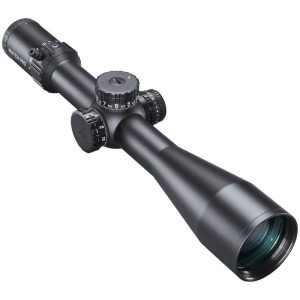
9. Bushnell Match Pro ED 5-30×56. Best Budget PRS Scope
- Elevation travel: 30 mil, about 103 MOA (windage 14.5 mil)
- Tube: 34 mm
- Focal plane: first, DM2 MRAD or MOA
- Weight: 32 oz. Parallax: 15 yards side focus
- Turrets: locking, integral Easy Set zero stop, pop-up rev indicator

Pros
- 30 mil of elevation for around $659, more dial than optics costing five times as much
- A 30x top end and ED glass at a price where you normally get neither
- Two-stage pop-up revolution indicator, so you always know which rotation you are on
- 15 yard parallax makes it usable on close stages and rimfire trainers
Cons
- Stocked by one retailer at the time of writing, so no price competition
- 32 oz with no weight advantage over scopes with better glass
- The illumination auto-off is six hours, which is generous but drains batteries if you forget
The Match Pro ED is the cheapest genuine PRS scope in this guide and one of the great value stories in precision optics. Around $659 buys a 34 mm tube, first focal plane, ED glass, a 5-30x range, locking turrets with an integral zero stop, and 30 mil of elevation travel, which is more than the Nightforce ATACR and the Kahles K525i between them can offer.
The rev indicator deserves a mention because it solves a real match problem. Dial two rotations up on a stage, forget which one you are on, and every subsequent shot is wrong by a full revolution. Bushnell put a mechanical pop-up indicator on the turret so a glance tells you. Scopes at three times the price often make you count.
Its weakness is availability rather than performance. At the time of writing one retailer in our price network carries it, so there is no competition on price. Buy it when you see it in stock.
A note for anyone who read an earlier version of this guide. The Arken EP-5 used to hold the budget slot and it is still a well-regarded optic in budget PRS circles, but Arken sell direct to consumer and are not carried by any of the national retailers this site prices. That meant no live price, no stock check and no way to tell you what it actually costs today, so the slot went to the Bushnell, which has more elevation travel anyway. If you are happy buying direct, the EP-5 is still worth a look. For a compact first focal plane 5-25 power scope that the national retailers do carry, our EOTech Vudu review covers the 11.2 inch Vudu.
Elevation Travel Compared: the Spec That Sets Your Maximum Range
Total internal elevation travel is what decides how far you can dial before the turret stops moving. Every guide to precision optics says so, including the previous version of this one, and then prints no numbers. Here is the published figure for all nine, from the manufacturer’s own specification, sorted by travel rather than by price. Sources: Leupold, Vortex, Nightforce, Kahles, Athlon and Bushnell.
| Scope | Elevation travel | Price |
|---|---|---|
| Vortex Razor HD Gen III 4-24×44 | 158 MOA | ~$2,000-2,800 |
| Leupold Mark 5HD 5-25×56 | 120 MOA / 34.9 mil | ~$2,200 |
| Vortex Strike Eagle 5-25×56 | 110 MOA / 31 mil | ~$799 |
| Athlon Ares ETR 4.5-30×56 | 110 MOA | ~$1,150 |
| Bushnell Match Pro ED 5-30×56 | 30 mil / 103 MOA | ~$659 |
| Nightforce ATACR 7-35×56 | 100 MOA | ~$3,200 |
| Kahles K525i DLR 5-25×56 | 29.0 mil | ~$3,200 |
| Vortex Razor HD LHT 4.5-22×50 | 75 MOA | ~$1,200 |
| Vortex Viper PST Gen II 5-25×50 | 70 MOA / 20 mil | ~$899 |
A note on units. Where a maker publishes both MOA and mil, both are given. Kahles publish mil only and Bushnell publish mil with their own MOA conversion, so those are quoted as published rather than converted here. One mil is roughly 3.44 MOA if you want to compare directly.
Three conclusions come straight off that table.
- Elevation travel has almost nothing to do with price. The $799 Vortex Strike Eagle and the $659 Bushnell Match Pro ED both have more dial than the $3,200 Nightforce ATACR and the $3,200 Kahles K525i. If maximum dialled range is your constraint, the cheapest scopes here solve it better than the most expensive ones.
- Tube diameter is the real driver. The two 30 mm scopes, the Viper PST at 70 MOA and the Razor LHT at 75 MOA, are the bottom two by a clear margin. Every 34 mm and 35 mm scope here has at least 100 MOA. That is the mechanical reason PRS settled on big tubes, and it is visible in the numbers rather than just asserted.
- What you actually pay for at the top is glass, tracking and durability. The Nightforce and the Kahles are not sold on dial range and this guide does not pretend otherwise. They are sold on optical quality, turret feel and the certainty that the scope will track correctly on the thousandth dial as on the first. Those are worth money. They are just not what the elevation column measures.
The practical consequence is that a canted base is not an admission of defeat. A 20 or 30 MOA base moves your usable travel up the range where you need it, and on a 30 mm scope it is close to mandatory. Budget for one when you buy a Viper PST or a Razor LHT.
What the Top 200 PRS Shooters Actually Run
Roundups like this one recommend what you can buy. That is not the same as what wins. PrecisionRifleBlog runs an annual survey of the top-ranked competitors in PRS Open Division, and the 2026 edition covered 200 shooters. Here is how the brands actually break down.
| Brand | Share of the top 200 | In this guide? |
|---|---|---|
| Zero Compromise Optics | 23% | No US retail stock |
| Leupold | 18% | Yes, pick 1 |
| Tangent Theta | 16% | Specialist import only |
| Kahles | 13% | Yes, pick 4 |
| Vortex | 11% | Yes, picks 2, 6, 7, 8 |
| Nightforce | 9% | Yes, pick 3 |
| March | 5% | Not stocked widely |
| Everything else | 5% | – |
At model level the ranking is tighter still. The ZCO 5-27×56 is the single most-used scope with 28 shooters, the Leupold Mark 5HD 5-25×56 is next with 23, and the Vortex Razor HD Gen III 6-36×56 is third with 22. The Kahles K540i DLR and the Nightforce ATACR 7-35×56 both appear strongly in the top ten.
Two honest observations follow, and they are the reason this section exists.
The most popular scope in the sport is one you probably cannot buy today. Zero Compromise Optics sell through a small dealer network and are carried by none of the national retailers this site prices. Tangent Theta are similar and land around $4,500 when you find them. Together those two brands are 39% of the top 200 and neither is a realistic recommendation for most readers, so neither is a pick here. Saying that plainly is more useful than quietly leaving them out.
Popularity at the top is not a buying instruction. These are shooters whose optics budget is a rounding error next to their ammunition and travel budget, and who will spend $4,000 to remove a variable. If you are shooting club matches, the difference between a Mark 5HD and a ZCO will not show up in your scores for a long time. What will show up is wind reading, position building and round count.
Source: PrecisionRifleBlog’s 2026 What The Pros Use survey, which is the best public dataset on this and worth reading in full.
Why First Focal Plane Is Essential for PRS
If you take one rule from this guide, make it this: a PRS scope must be first focal plane. In an FFP scope the reticle grows and shrinks with the magnification, so the spacing between your hash marks always represents the same real-world measurement no matter what zoom you are on. Your holdover and ranging marks stay accurate whether you dial down to 5x for a close, wide stage or crank up to 25x for distant steel.
Our guide to first and second focal plane scopes shows how far an SFP hold drifts when you are off its calibrated power.
A second-focal-plane scope, common on hunting optics, only has accurate reticle subtensions at one specific magnification, in practice the highest. In a sport where you constantly change zoom to match the stage, that is a serious handicap. Every scope on this list is FFP for exactly that reason, and it is the first box to check on any precision optic.
Watch for families sold in both configurations. The Vortex Razor HD LHT and the Viper PST Gen II both exist as FFP and SFP models under the same name, and the cheaper listing is frequently the SFP one.
Understanding Reticles, Turrets and Tracking
- Match your reticle to your turrets. Run a MIL reticle with MIL turrets, or MOA with MOA, never mixed. MIL is the more common standard in PRS, which makes it easier to compare data and corrections with your squad. Mixing units turns every correction into a conversion under time pressure.
- A tree-style reticle speeds up holds. A Christmas-tree reticle adds horizontal hash marks below the center, so you can hold wind and elevation at once without dialling, which is faster on a stage with multiple distances. The EBR-7, PR2-MIL, APRS1 and SKMR trees here are all built for this.
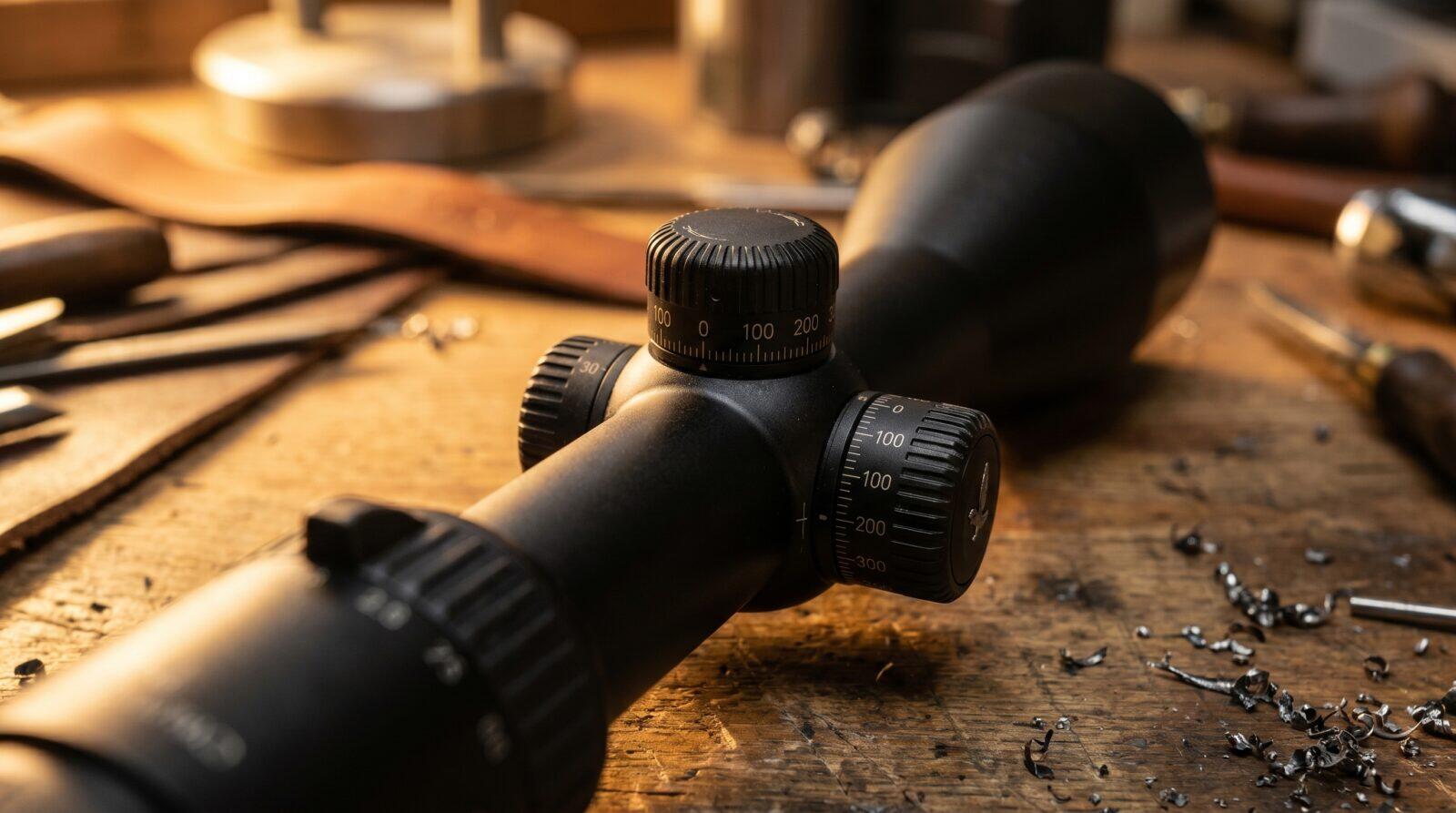
- Tracking and a zero stop are non-negotiable. The turret must move the point of impact exactly as much as it says and return to a hard zero every time. Run a tall-target or box test on any new scope before you trust it: dial a known amount, fire, and confirm the impact moved exactly that far. A scope that does not track is useless no matter how good the glass is.
- A revolution indicator earns its keep. Once you are dialling more than one turn, knowing which rotation you are on stops a whole class of embarrassing misses. The Bushnell’s pop-up indicator and the Nightforce ZeroStop both address it in different ways.
Magnification and Tube Size: What to Buy
Magnification: 5-25x or 6-36x. The low end matters as much as the high end, because a wide field of view at 5x or 6x lets you find close and moving targets fast, while 25x to 36x resolves distant steel and lets you read mirage to call wind. Going much past 36x adds little and amplifies mirage and wobble, so the popular ranges are popular for good reason.
Our Vortex lineup guide lists the tube size of every Vortex line, from 1-inch Diamondbacks to 34mm Razors.
Tube size: 34 mm or 35 mm for the most elevation. This is the claim the table above finally puts numbers behind. Every 34 mm and 35 mm scope in this guide carries at least 100 MOA of elevation. Both 30 mm scopes sit at 70 and 75 MOA. A larger tube gives the erector assembly more room to move, and that translates directly into dial. A 30 mm tube is lighter and cheaper but you should pair it with a canted base to reclaim the travel.
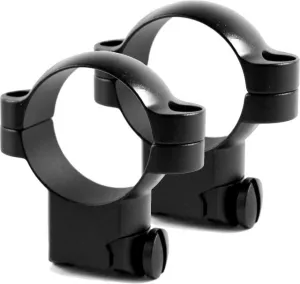
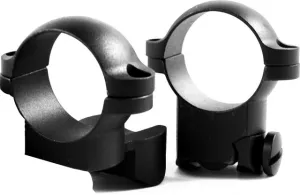
Mount whatever you choose in quality rings with the right cant, and confirm your eye relief and level before you zero. See more glass in my best rifle scopes roundup, and the rifles these ride on in best PRS rifles and best chassis rifles.
How I Tested These Scopes
A precision scope is judged on whether it does the same thing every time, so the testing is repetitive by design rather than dramatic.
The core test is tracking. Every scope was mounted on the same 6.5 Creedmoor chassis rifle and put through a tall-target test at 100 yards: dial a known amount of elevation, fire a group, measure the actual movement against the commanded movement, and repeat up and back down through the full range of the turret. A scope that reads 10 mil and moves 9.6 is not a match scope, whatever it costs. The same routine was run as a box test for windage.
After that: return-to-zero checked after every dialling session, because a zero stop that is a tenth of a mil out will quietly cost you a stage. Usable travel confirmed against the published figure by dialling to the mechanical stop from a 100 yard zero, which is how the elevation column in the table above was sanity-checked rather than simply copied. Glass was compared at dusk and in heavy mirage at 25x and above, on the same steel at the same distance, because that is the condition that separates these optics.
Where a manufacturer does not publish a figure, this guide leaves it blank rather than filling it in from a retailer listing. That applies to the weight of the Athlon Ares ETR 4.5-30×56.
Best PRS Scope by Use Case
- Best overall: Leupold Mark 5HD 5-25×56.
- Most elevation travel: Vortex Razor HD Gen III 4-24×44, at 158 MOA.
- Best durability and tracking: Nightforce ATACR 7-35×56.
- Closest to what the pros run: Kahles K525i DLR 5-25×56.
- Best spec per dollar: Athlon Ares ETR 4.5-30×56.
- Best lightweight and NRL Hunter crossover: Vortex Razor HD LHT 4.5-22×50, at 21.7 oz.
- Best first precision scope: Vortex Strike Eagle 5-25×56 FFP.
- Best budget: Bushnell Match Pro ED 5-30×56.
Common PRS Scope Mistakes to Avoid
- Buying a second-focal-plane scope. The single biggest mistake. SFP holds are only true at one magnification, which cripples you in a sport built on changing zoom. Check the model number, because several families here sell both.
- Mixing MIL and MOA. A MIL reticle with MOA turrets, or the reverse, makes every correction a conversion under the clock. Match them.
- Skipping a tracking test. Glass quality means nothing if the turret does not move impact accurately. Box-test every scope before a match.
- Assuming a expensive scope has more dial. It frequently has less. Read the published elevation travel before you buy, and pair a 30 mm scope with a canted base.
- Overspending on glass, underspending on the mount. A great scope in cheap rings that slip will not hold zero. Budget for quality rings or a one-piece mount with the right cant.
- Chasing maximum magnification. Past 36x, mirage and wobble grow faster than usable detail. A 25x scope with great glass beats a 40x scope with mediocre glass.
The Bottom Line
For most competitors, buy the Leupold Mark 5HD 5-25×56. It is one of the two most-used optics among the top 200 shooters in the sport, it has 120 MOA of travel, and at 30 oz it is light for what it does. If you want the most dial and the shortest scope, the Vortex Razor HD Gen III has 158 MOA, and its street price swings low enough to undercut the Leupold at some retailers.
Starting out, buy the Vortex Strike Eagle 5-25×56 FFP at around $799 or the Bushnell Match Pro ED at around $659. Both give you more elevation travel than optics costing four times as much, and the money you save buys the thing that actually improves your scores, which is ammunition and trigger time.
Match your reticle to your turrets, box-test the scope before you trust it, and read the elevation travel figure before you read the price. New to the sport? Start with my complete guide to competition shooting.
Shop Precision Rifle Scopes
Top Accessories Deals
Best-scored accessories across 200+ retailers · Updated every 4 hours
Frequently Asked Questions
What is the best scope for PRS?
The Leupold Mark 5HD 5-25x56 is the best all-round PRS scope for 2026. It gives you a first-focal-plane tree reticle, a locking ZeroLock dial, 120 MOA of elevation travel and 30 oz on a 35 mm tube, and it is one of the two most-used optics among the top 200 ranked shooters in the sport. If you want more dial for less money, the Vortex Razor HD Gen III 4-24x44 carries 158 MOA, the most in this guide.
What scope do PRS pros actually use?
PrecisionRifleBlog surveyed the top 200 ranked PRS Open Division shooters in 2026. By brand it was Zero Compromise Optics 23 percent, Leupold 18, Tangent Theta 16, Kahles 13, Vortex 11, Nightforce 9 and March 5. The single most-used model was the ZCO 5-27x56 with 28 shooters, then the Leupold Mark 5HD 5-25x56 with 23 and the Vortex Razor HD Gen III 6-36x56 with 22. Worth knowing that ZCO and Tangent Theta, together 39 percent of that field, are not carried by the national retailers most buyers use.
How much elevation travel does a PRS scope need?
Enough to dial your cartridge out to the longest stage you shoot, which for most people means at least 25 mil or 85 MOA from a 100 yard zero, plus margin. It is worth checking the published figure because it tracks tube size far more closely than price. Every 34 mm and 35 mm scope in this guide has at least 100 MOA, while the two 30 mm scopes have 70 and 75 MOA. A 20 or 30 MOA canted base moves your usable travel where you need it.
Do PRS scopes need to be first focal plane?
Yes, first focal plane is essential for PRS. An FFP reticle grows and shrinks with the magnification, so your holdover and ranging marks stay accurate at every zoom setting. A second-focal-plane scope only has correct subtensions at one magnification, which is a serious handicap in a sport where you change zoom constantly. Watch out for families sold in both, such as the Vortex Razor HD LHT and the Viper PST Gen II.
What is the best budget PRS scope?
The Bushnell Match Pro ED 5-30x56 at around 659 dollars. It gives you a 34 mm tube, first focal plane, ED glass, locking turrets with an integral zero stop and 30 mil of elevation travel, which is more dial than optics costing five times as much. The Vortex Strike Eagle 5-25x56 FFP at around 799 dollars is the other strong option, with 110 MOA of travel and the Vortex VIP warranty.
What magnification do you need for a PRS scope?
The 5-25x and 6-36x ranges dominate PRS. The low end matters as much as the high end, because a wide field of view at 5x or 6x lets you find close and moving targets quickly, while 25x to 36x resolves distant steel and lets you read mirage to call wind. Past about 36x, mirage and wobble grow faster than usable detail, so more magnification stops helping.
Should a PRS scope be MIL or MOA?
Either works as long as your reticle and turrets match: MIL reticle with MIL turrets, or MOA with MOA, never mixed. MIL is the more common standard in PRS, which makes it easier to compare data and corrections with your squad. Mixing units turns every correction into a conversion under the clock, which is where mistakes happen.
What is a zero stop on a rifle scope?
A zero stop is a mechanical feature that lets the elevation turret return to your zero setting and stop there, so you can dial up for a distant target and spin back down without counting or overshooting. It is non-negotiable on a match scope. Related is a revolution indicator, which tells you which rotation of the turret you are on: the Bushnell Match Pro ED uses a two-stage pop-up indicator for this.
How much does a PRS scope cost?
A capable first-focal-plane PRS scope starts around 659 dollars for the Bushnell Match Pro ED and 799 for the Vortex Strike Eagle 5-25x56. The popular middle is roughly 900 to 2,200 dollars, covering the Vortex Viper PST Gen II, the Athlon Ares ETR, the Vortex Razor HD Gen III and the Leupold Mark 5HD. The premium tier, the Nightforce ATACR 7-35x56 and the Kahles K525i DLR, sits around 3,200 dollars.
What is a tree reticle and do I need one for PRS?
A tree reticle, sometimes called a Christmas-tree reticle, adds horizontal hash marks below the center crosshair so you can hold both wind and elevation at once without dialling the turret. On a stage with targets at several distances that is considerably faster than dialling each one. The EBR-7, PR2-MIL, APRS1 and SKMR reticles in this guide are all trees, and yes, you want one.
What tube size is best for a PRS scope?
A 34 mm or 35 mm tube. The larger diameter gives the erector assembly more room to travel, which translates directly into elevation adjustment. In this guide every 34 mm and 35 mm scope carries at least 100 MOA of elevation, while both 30 mm scopes sit at 70 and 75 MOA. A 30 mm tube is lighter and cheaper, so pair it with a canted base to reclaim the travel you lose.
How do I test that my scope tracks correctly?
Run a tall-target test. Set a plumb vertical line on a target at 100 yards, zero, then dial a known amount of elevation, fire a group, and measure how far the impact actually moved against how far the turret said it would. Repeat up through the range and back down, then do the same horizontally as a box test. A scope that reads 10 mil and moves 9.6 is not a match scope, whatever it cost. Do this before you trust any new optic at a match.
Related guides: pair your optic with the right rifle in best PRS rifles and best chassis rifles, browse the wider best rifle scopes roundup, or start at the beginning with competition shooting.
4,021+ Gun & Ammo Deals
Updated daily from 200+ top retailers. Filter by category, caliber, action type, and price.
Related Guides