

Last updated September 2026 · By Nick Hall, multigun competitor
The Benelli M2 is the best 3-Gun shotgun for serious competitors, the long-reigning king of the sport with the deepest aftermarket and the fastest reloads, but the Mossberg 940 JM Pro is the best value, running light loads reliably with competition controls for several hundred dollars less. A 3-Gun shotgun is a different animal from a clay gun: you need a big loading port, a smooth tube you can quad-load, light-load reliability, and a semi-auto action that cycles fast. This guide ranks eight, with pros and cons, live prices, and the setup and rules that decide which one wins.
The shotgun is the leg of 3-Gun that humbles people, because it is the only gun you reload constantly under the clock, and a slow, fumbling reload costs you more time than any miss with a rifle or pistol. That makes a 3-Gun shotgun a very specific tool: it is built around loading speed, not patterning a clay target. A wide, beveled loading port, a smooth magazine tube, light-load reliability, and a fast semi-auto action matter far more than the choke selection that defines a clay gun. This is a different job from the clay sports, which my best shotguns for clay shooting roundup covers. New to the sport? Read what 3-Gun shooting is first.
Table of Contents
How we tested: Every pick here is ranked against our testing methodology. Minimum round counts, accuracy and reliability protocols, the failures that disqualify a gun.
Best 3-Gun Shotguns 2026: Quick Comparison
| Shotgun | Best for | Action | Light loads | From |
|---|---|---|---|---|
| Benelli M2 | Best overall / aftermarket | Inertia | Good | $1,149 |
| Mossberg 940 JM Pro | Best value | Gas | Excellent | $749 |
| Beretta 1301 Comp | Best gas-gun speed | Gas | Excellent | $1,475 |
| Beretta A300 Ultima Patrol | Best budget gas gun | Gas | Very good | $850 |
| Winchester SX4 | Best entry semi-auto | Gas | Good | $618 |
| Stoeger M3000 | Best budget inertia | Inertia | Fair | $519 |
| Franchi Affinity 3 | Best lightweight inertia | Inertia | Good | $695 |
| Retay Gordion | Best sleeper value | Inertia | Good | $613 |
Prices move with the market. The single biggest dividing line is the action: inertia guns like the Benelli are simple, light, and run dirty, while gas guns like the Mossberg 940 and Beretta 1301 shoot softer and run light target loads more reliably. I cover that trade-off, the loading-port question, and how to set one up after the picks.
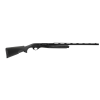
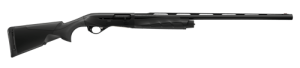
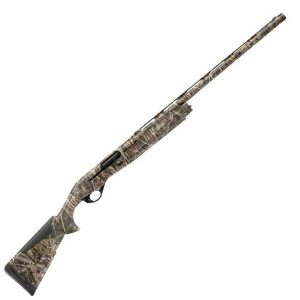
1. Benelli M2: Best Overall 3-Gun Shotgun
The Benelli M2 has been the king of competition shotguns for so long that it is the default answer when anyone asks what the pros run. Its inertia-driven action is utterly reliable, the gun is light and fast-handling, and crucially it has the deepest aftermarket of any shotgun, so every competition part you could want, oversized bolt handles and releases, lifted and beveled loading ports, magazine extensions, speed loaders, already exists for it. A Taran Tactical or Briley-tuned M2 is the gold standard of a 3-Gun shotgun.
The catch is cost. The M2 starts higher than the value guns at around 1,150 dollars, and a full competition build with a ported barrel, extended tube, and a worked loading port climbs well past that. Its inertia action also runs the very lightest target loads a little less reliably than a tuned gas gun, though it is still good. But for a committed competitor who wants the platform with the most support and the most wins, the M2 is the benchmark.
Pros
- Deepest competition aftermarket
- Utterly reliable inertia action
- Light and fast-handling
- The proven winner at the top
Cons
- Pricey, climbs fast with a build
- Lightest loads less reliable than gas
- Worked loading port costs extra
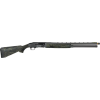
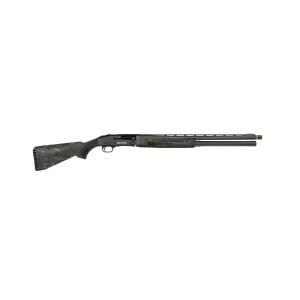
2. Mossberg 940 JM Pro: Best Value 3-Gun Shotgun
The Mossberg 940 JM Pro is the gun that changed the value equation, developed with multigun legend Jerry Miculek and tuned to his standards rather than just wearing his name. The thing that sets it apart at this price is light-load reliability: the gas system was specifically tuned to run the soft target loads that choke most affordable gas guns, which is exactly what a 3-Gun shooter feeds it. It also ships with competition controls out of the box, an enlarged loading port, an oversized bolt handle and release, and a fiber-optic sight.
At around 750 dollars it undercuts a Benelli M2 by several hundred dollars while arriving closer to match-ready, which is why it has flooded club 3-Gun. It is a gas gun, so it is a touch heavier and needs cleaning more often than an inertia gun, but the value and the factory competition features make it the smartest first 3-Gun shotgun. See it at Mossberg.
Pros
- Tuned for light-load reliability
- Competition controls factory-standard
- Enlarged loading port out of the box
- Undercuts the M2 by hundreds
Cons
- Gas gun, heavier and dirtier
- Needs more cleaning than inertia
- Not quite M2 aftermarket depth

3. Beretta 1301 Comp: Best Gas-Gun Speed
The Beretta 1301 is the fastest-cycling gas gun in the game, thanks to Beretta’s Blink gas system that the company claims cycles dramatically faster than rivals, and on the clock you feel it. It shoots exceptionally soft and flat, runs light loads beautifully, and the Comp version adds the competition features a 3-Gun shooter wants. For a shooter who prioritizes the softest, fastest-cycling action over the M2’s aftermarket, the 1301 is the pick.
At around 1,475 dollars it is the priciest gun here and the aftermarket, while growing fast, is not as deep as the Benelli’s. But the raw speed and soft shooting of the Blink system have made the 1301 a serious challenger to the M2 at the top of the sport, and many top shooters have switched to it. See it at Beretta.
Pros
- Fastest-cycling gas action
- Shoots very soft and flat
- Excellent light-load reliability
- Growing competition aftermarket
Cons
- Most expensive here
- Aftermarket trails the M2
- Gas gun maintenance
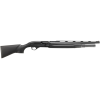
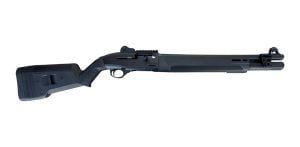
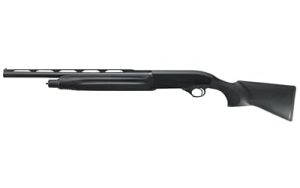
4. Beretta A300 Ultima Patrol: Best Budget Gas Gun
The Beretta A300 Ultima brings much of the 1301’s gas-gun pedigree to a lower price, around 850 dollars, and the Patrol version adds a usable loading port, an extended magazine, and ghost-ring or fiber sights. It runs the soft target loads well, shoots smoothly, and carries Beretta’s reputation for reliability, making it a strong value bridge between the budget guns and the premium 1301.
It is heavier than the 1301 and the action is not quite as fast, and the loading port still benefits from opening up for serious quad-loading. But for a shooter who wants a Beretta gas gun and competition features without the 1301 price, the A300 Ultima Patrol is an excellent middle-tier choice that punches above its cost.
Pros
- Beretta gas reliability for less
- Usable loading port and extended tube
- Runs soft loads well
- Strong value near 850 dollars
Cons
- Heavier than the 1301
- Action not as fast
- Port benefits from opening up
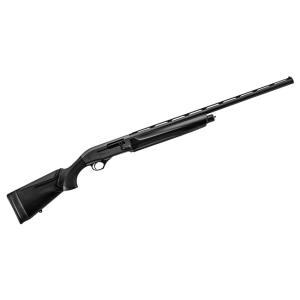
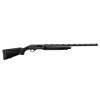
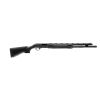
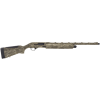
5. Winchester SX4: Best Entry Semi-Auto
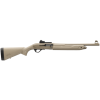
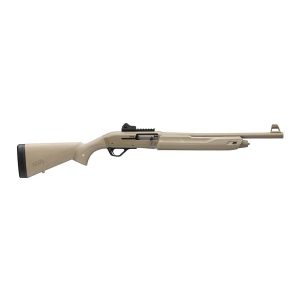
The Winchester SX4 is the value benchmark for an entry 3-Gun semi-auto, a reliable gas gun at around 620 dollars with a large loading port and a 3-inch chamber that handles the range of loads a stage throws at you. It is a proven, no-drama platform that gets a new shooter on the line affordably, and the controls are large enough to run reasonably fast out of the box.
It is not as tuned for the lightest competition loads as a Mossberg 940 JM Pro and the aftermarket is thinner, so it is more a starting point than a podium gun. But as the cheapest reliable gas semi-auto that will run a 3-Gun stage, the SX4 is a smart way to try the sport before committing to a dedicated competition shotgun.
Pros
- Cheapest reliable gas entry
- Large loading port stock
- Proven, no-drama platform
- Handles a range of loads
Cons
- Not tuned for the lightest loads
- Thinner aftermarket
- More starter than podium gun
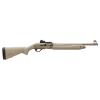
6. Stoeger M3000: Best Budget Inertia Gun
The Stoeger M3000 is the budget inertia option, built under the Benelli umbrella and sharing the same reliable inertia-driven action for around 520 dollars new. That Benelli DNA means it runs clean and reliable, and because it shares the action design, some Benelli-pattern parts and a healthy budget aftermarket let you add a loading-port bevel and a magazine extension to build a real entry 3-Gun gun cheaply.
It is more basic than a true M2, the lightest loads can be marginal as with any inertia gun, and the fit and finish are budget-grade. But for a shooter who wants the reliable inertia action and a path to a competition build at the lowest possible price, the M3000 is the value play, and many shooters run lightly-modified ones at club matches.
Pros
- Benelli inertia action at a budget price
- Reliable and runs clean
- Shares some Benelli-pattern parts
- Cheap path to a 3-Gun build
Cons
- Lightest loads can be marginal
- Budget fit and finish
- Not a top-level gun stock
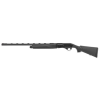

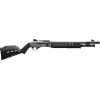
7. Franchi Affinity 3: Best Lightweight Inertia Gun
The Franchi Affinity 3, also a Benelli-family inertia gun, is the lightweight pick, a reliable, well-balanced semi-auto at around 700 dollars that handles fast and runs clean. Its inertia action is dependable, the gun points naturally, and the Sporting and competition-oriented versions add a longer barrel and better sights, making it a comfortable, fast-handling 3-Gun option for a shooter who values light weight.
Like all inertia guns it can be a little finicky with the very lightest loads, and the loading port benefits from opening up for serious quad-loading. But the Affinity 3 is reliable, affordable, and handles beautifully, and it is a strong mid-tier choice for a shooter who wants a light inertia gun without the Benelli M2 price.
Pros
- Light and fast-handling
- Reliable Benelli-family inertia action
- Points naturally
- Affordable mid-tier price
Cons
- Lightest loads can be finicky
- Port benefits from opening up
- Smaller competition aftermarket
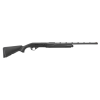
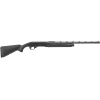

8. Retay Gordion: Best Sleeper Value
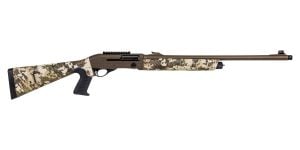
The Retay Gordion is the sleeper of the group, a Turkish-made inertia gun that has earned a strong reputation for quality well above its roughly 615 dollar price. It uses an inertia action with a clever bolt-release feature, runs reliably, and the fit and finish embarrass guns costing more, which has made it a quiet favorite among value-minded shooters who have discovered it.
As a less mainstream brand the aftermarket is thinner and resale is less certain than a Benelli or Beretta, and the lightest loads carry the usual inertia caveat. But for a shooter willing to look past the big names, the Gordion delivers genuine quality and reliability at a price that makes it one of the best values in a 3-Gun-capable semi-auto.
Pros
- Quality well above its price
- Reliable inertia action
- Excellent fit and finish
- Clever bolt-release feature
Cons
- Thinner aftermarket
- Less certain resale
- Lightest loads carry inertia caveat
Best 3-Gun Shotgun by Use Case
Sorted by what you actually need, here is how these guns stack up.
- Best overall: Benelli M2, the proven king with the deepest aftermarket.
- Best value: Mossberg 940 JM Pro, factory competition features and light-load reliability.
- Best gas-gun speed: Beretta 1301 Comp.
- Best budget gas gun: Beretta A300 Ultima Patrol or Winchester SX4.
- Best budget inertia: Stoeger M3000.
- Best lightweight: Franchi Affinity 3.
- Best sleeper value: Retay Gordion.
Inertia vs Gas: Which Action for 3-Gun?
The biggest decision in a 3-Gun shotgun is the action type, and it shapes how the gun shoots and how it runs. The two systems each have a real case.
- Inertia guns, such as the Benelli M2, Stoeger, Franchi and Retay, use the recoil-driven inertia of the bolt to cycle. They are simpler, lighter, and run a long match without cleaning because they stay clean, since gas and fouling do not blow back into the action. The trade-off is more felt recoil and slightly less reliability with the very lightest target loads, which a 3-Gun shooter often uses to save money and recoil.
- Gas guns, such as the Mossberg 940, Beretta 1301 and A300, and Winchester SX4, tap gas to cycle, which makes them shoot noticeably softer and flatter and run the lightest loads more reliably. The trade-off is more weight, more cleaning, and a more complex action. For 3-Gun specifically, the soft recoil and light-load reliability of a tuned gas gun like the 940 JM Pro or 1301 are real advantages.
For 3-Gun, the case for a gas gun has grown stronger as the Mossberg 940 JM Pro and Beretta 1301 have shown how soft and reliable a tuned gas action can be. The Benelli M2 inertia gun still wins on aftermarket and simplicity. Either can win matches; it comes down to whether you value the soft recoil of gas or the simplicity and parts support of inertia.
The Loading Port and Reloads: Where Matches Are Won
If you remember one thing about 3-Gun shotguns, make it this: the shotgun is won and lost on the reload. You will reload the shotgun constantly during a stage, and the difference between a smooth quad-load and a fumbling one-at-a-time reload is enormous over a match. That is why competition shotguns and competition modifications focus so heavily on the loading port and the magazine tube.
- A wide, beveled loading port. The single most important competition modification. Opening up and beveling the loading port lets you push two or four shells in at once, which is the foundation of every fast reload technique.
- A smooth, polished magazine tube. Shells need to slide in without catching. Many competition guns and gunsmiths polish the tube and follower for friction-free loading.
- A magazine extension. 3-Gun stages reward capacity, so an extended tube that holds eight or more rounds reduces how often you reload, within your division’s rules.
- An oversized bolt handle and release. Large controls you can hit fast under stress, standard on guns like the 940 JM Pro and a common upgrade on others.
This is exactly why the Mossberg 940 JM Pro and a tuned Benelli M2 dominate: they come with, or are built around, a competition-ready loading port. A cheaper gun with a worked port will out-run a more expensive gun with a tight factory port, so prioritize the port over almost everything else.
How to Set Up a 3-Gun Shotgun
Beyond the gun itself, a few additions turn any quality semi-auto into a competitive 3-Gun shotgun.
- Open and bevel the loading port if it is not already, the highest-value modification by far.
- Add a magazine extension for capacity, sized to your division rules, and a polished tube and follower for smooth loading.
- Oversized controls. A larger bolt handle and bolt release you can hit fast under stress.
- A fiber-optic front sight for fast target acquisition on close, fast clay and steel arrays.
- Practice the quad-load. The gear only helps if you drill loading two or four shells at a time until it is automatic, which is the single most valuable shotgun skill in 3-Gun.
Round out your kit with the other two guns: see my best 3-Gun rifles for the rifle leg and the best competition pistols for the handgun.
3-Gun Shotgun Rules to Know
Before you build, know that the divisions shape what is legal. Most 3-Gun divisions limit the shotgun to a tube magazine fed by hand, no detachable box magazines or speed-loaders during the stage in the more restrictive divisions like Limited and Heavy Metal, so hand-loading speed is everything. Open division allows the most, including detachable magazines on some guns and the longest tube extensions. Heavy Metal requires a 12-gauge pump with iron sights and no porting, the hard-mode throwback. Confirm your division’s rules on magazine capacity, porting, and optics before you spend on modifications, and read what 3-Gun shooting is for the full division breakdown.
The Bottom Line
For a serious competitor who wants the best, the Benelli M2 is the proven king with the deepest aftermarket, though a tuned Beretta 1301 now challenges it on soft, fast cycling. For value, nothing beats the Mossberg 940 JM Pro, with factory competition features and the light-load reliability 3-Gun demands. Starting out or on a budget, a Winchester SX4 or Stoeger M3000 gets you on the line. Whatever you pick, prioritize the loading port, add a tube extension, and drill your quad-load, because the shotgun is won on the reload far more than the gun. New to it all? Start with my complete guide to competition shooting.
Frequently Asked Questions
- Treat every gun as loaded
- Point the muzzle in a safe direction
- Keep your finger off the trigger until you’re ready to shoot
- Know your target and what’s beyond
What is the best 3-Gun shotgun?
The Benelli M2 is the best 3-Gun shotgun for serious competitors, the long-reigning king of the sport with the deepest aftermarket and fastest reloads. The Mossberg 940 JM Pro is the best value, running light loads reliably with factory competition controls for several hundred dollars less, and the Beretta 1301 Comp is the fastest-cycling gas gun. The right choice depends on your budget and whether you prefer inertia or gas.
What makes a good 3-Gun shotgun?
A good 3-Gun shotgun is built around loading speed, not patterning clays. The key features are a wide, beveled loading port for fast quad-loading, a smooth magazine tube, light-load reliability, a fast semi-auto action, and oversized controls. Because you reload the shotgun constantly under the clock, the loading port and reload speed matter far more than choke selection or anything else.
Is the Mossberg 940 JM Pro good for 3-Gun?
Yes, the Mossberg 940 JM Pro is one of the best value 3-Gun shotguns. Developed with multigun legend Jerry Miculek, its gas system is tuned to run the light target loads that choke most affordable gas guns, and it ships with competition controls and an enlarged loading port. At around 750 dollars it undercuts a Benelli M2 by several hundred dollars while arriving closer to match-ready.
Should a 3-Gun shotgun be gas or inertia?
Both win matches. Inertia guns like the Benelli M2 are simpler, lighter, run clean without frequent cleaning, and have the deepest aftermarket, but recoil more and can be marginal with the lightest loads. Gas guns like the Mossberg 940 JM Pro and Beretta 1301 shoot softer and run light loads more reliably at the cost of weight and cleaning. For 3-Gun, a tuned gas gun's soft recoil and light-load reliability are real advantages.
What is the best budget 3-Gun shotgun?
The Winchester SX4 at around 620 dollars and the Stoeger M3000 at around 520 dollars are the best budget 3-Gun shotguns. The SX4 is a reliable gas gun with a large loading port, while the Stoeger shares Benelli's inertia action and budget aftermarket. The Mossberg 940 JM Pro at around 750 dollars is the best value once you can stretch the budget, since it arrives closest to match-ready.
Why is the loading port so important on a 3-Gun shotgun?
Because the shotgun is won and lost on the reload. You reload the shotgun constantly during a 3-Gun stage, and a wide, beveled loading port lets you push two or four shells in at once, the foundation of every fast reload technique. A cheaper gun with a worked loading port will out-run a more expensive gun with a tight factory port, so the port is the single most important competition feature.
Why do 3-Gun shooters use light loads?
3-Gun shooters use light target loads because they recoil less, which means faster follow-up shots and less fatigue over a match, and they cost less than heavier loads. The catch is that the lightest loads can be marginal in some semi-autos, especially inertia guns, which is why light-load reliability is a key feature. Gas guns like the Mossberg 940 JM Pro and Beretta 1301 are specifically tuned to run them.
What shotgun does Jerry Miculek use for 3-Gun?
Jerry Miculek helped develop the Mossberg 940 JM Pro, which carries his initials and was tuned to his competition standards. The gun was built with his input rather than just his name, specifically tuned for light-load reliability and fitted with competition controls. It has become one of the most popular value 3-Gun shotguns precisely because of that competition-focused development.
How much does a 3-Gun shotgun cost?
A 3-Gun shotgun ranges from around 520 dollars for a budget Stoeger M3000 up past 1,475 dollars for a Beretta 1301 Comp, with the Benelli M2 around 1,150 and the value-leading Mossberg 940 JM Pro around 750. Budget for competition modifications too: opening the loading port, a magazine extension, and oversized controls can add a few hundred dollars to a gun that does not come competition-ready.
What is the difference between a 3-Gun shotgun and a clay shotgun?
A 3-Gun shotgun is built around loading speed and reliability with a wide loading port, magazine extension, and fast semi-auto action, since you reload constantly under the clock. A clay shotgun like a sporting clays over-under is built around patterning a flying target with choke selection, fit, and a smooth swing. The two jobs are different enough that a great clay gun makes a poor 3-Gun gun and vice versa.
4,021+ Gun & Ammo Deals
Updated daily from 200+ top retailers. Filter by category, caliber, action type, and price.
Related Guides