

Last updated September 2026 · By Nick Hall, multigun competitor
The Stag 15 3-Gun is the best factory 3-Gun rifle for 2026, a light, flat-shooting .223 Wylde AR-15 with a superb Hiperfire competition trigger for around 1,499 dollars. For a no-compromise race build, the JP Enterprises JP-15 is the benchmark, the Springfield SAINT Victor is the best value, and an Aero Precision M4E1 is the best budget base. A 3-Gun rifle wants a light build, a 16 to 18-inch barrel, a low-recoil setup and a great trigger. This guide ranks nine competition AR-15s with full specs, pros and cons, live prices, and a deep look at the optics, calibers and setup that decide which one fits your division.
The rifle is the leg of 3-Gun where matches are won and lost, because it engages the longest and hardest targets, sometimes out to 500 yards, and then has to come down off the shoulder fast for the next gun. A competition 3-Gun rifle is a specialized AR-15: lighter than a duty gun for fast transitions, equipped with a flat-shooting muzzle device and a crisp trigger, and topped with the right optic for your division. That is a different job from a general-purpose or home-defense AR, which my best AR-15 rifles roundup covers.
I have run multigun matches and watched plenty of new shooters show up with the wrong rifle for their division, so this guide sorts the picks by where they fit your budget and your goals, then digs into the optic, caliber and setup choices that matter more than the brand on the lower. New to the sport? Read what 3-Gun shooting is first, because your division decides what rifle and optic are even legal.
Table of Contents
How we tested: Every pick here is ranked against our testing methodology. Minimum round counts, accuracy and reliability protocols, the failures that disqualify a gun.
Best 3-Gun Rifles 2026: Quick Comparison
| Rifle | Best for | Caliber | Barrel | Weight | From |
|---|---|---|---|---|---|
| JP Enterprises JP-15 | Best overall race build | .223 Wylde | 18 in | ~7 lb | $2,200+ |
| Stag 15 3-Gun | Best factory 3-Gun rifle | .223 Wylde | 18 in | ~6.2 lb | $1,499 |
| Springfield SAINT Victor | Best value | 5.56 NATO | 16 in | ~6.9 lb | $899 |
| BCM RECCE-16 | Best quality all-rounder | 5.56 NATO | 16 in | ~6.7 lb | $1,099 |
| Daniel Defense DDM4 V7 | Best premium reliability | 5.56 NATO | 16 in | ~6.3 lb | $1,189 |
| Sig M400 Tread | Best mid-tier value | 5.56 NATO | 16 in | ~7 lb | $899 |
| PSA Sabre | Best budget premium feel | 5.56 NATO | 16 in | ~6.6 lb | $899 |
| LWRC IC-DI | Best premium lightweight | 5.56 NATO | 16 in | ~6.5 lb | $1,099 |
| Aero Precision M4E1 | Best budget base | 5.56 NATO | 16 in | ~6.5 lb | $799 |
Prices move with the market. The pattern to notice: the dedicated competition rifles run .223 Wylde for accuracy and ship with great triggers, while the value and all-rounder ARs use 5.56 and reward a trigger and optic upgrade. I cover triggers, optics and calibers in depth after the picks.
1. JP Enterprises JP-15: Best Overall 3-Gun Rifle
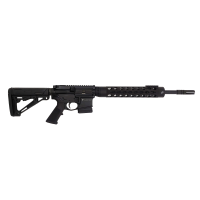
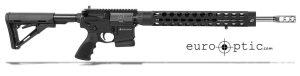
Ask top 3-Gun shooters what they run and JP Enterprises comes up again and again. The JP-15 is built to order, so almost every one is a little different, but they all share JP’s reputation for the smoothest-shooting ARs on the planet. A muzzle brake that tames recoil to almost nothing, the silent captured spring system, a heat sink to keep the barrel cool in rapid fire, and a superb JP trigger combine into a rifle that just floats from target to target.
On a stage, that flatness is a real time advantage: the rifle barely moves under recoil, so you can spot your own hits on distant steel and run fast follow-ups without losing the dot. The catch is price and lead time. A JP build runs well north of 2,000 dollars and you order it through the company or a dealer. But if 3-Gun is your sport and you want the best, this is the rifle. See it at JP Enterprises.
Pros
- Flattest-shooting AR out of the box
- Match trigger and tuned recoil system
- Built to order to your spec
- Holds value
Cons
- Premium price over 2,000 dollars
- Long lead time, order through dealer
- Overkill for a casual shooter
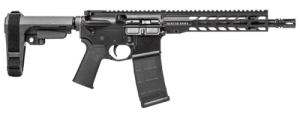
2. Stag 15 3-Gun: Best Factory 3-Gun Rifle
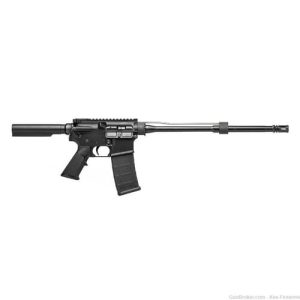
If you want a turnkey competition rifle without a custom bill, the Stag 15 3-Gun is the best buy in the category. Stag built it light at just over six pounds, chambered it in accurate .223 Wylde, and, crucially, fitted the excellent Hiperfire Hipertouch Competition flat trigger, which is about as good as a single-stage AR trigger gets. That trigger alone makes it a standout, and the rest of the rifle, from the long handguard to the flat-shooting muzzle device, is purpose-built for the game.
At around 1,499 dollars it is not cheap, but it is a complete, match-ready package that would cost more to assemble piece by piece once you priced the Hiperfire trigger and a quality barrel separately. For most competitors who want to buy once and shoot, this is the pick. See it at Stag Arms.
Pros
- Excellent Hiperfire competition trigger
- Light at just over 6 pounds
- Accurate .223 Wylde chamber
- Match-ready out of the box
Cons
- Pricey for a factory rifle
- Less customizable than a JP build
- Single configuration
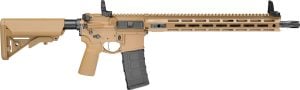
3. Springfield SAINT Victor: Best Value 3-Gun Rifle
The Springfield SAINT Victor is the value champion that gets new shooters into 3-Gun without breaking the bank. For around 900 dollars you get a lightweight build with a free-float M-LOK handguard, a nickel-boron flat trigger, an accurate barrel and quality furniture, all from a major maker with a solid warranty. It is competitive in Tactical or Limited straight out of the box and leaves money for an optic and ammo.
It is not as refined as a JP or as feature-rich as the Stag 3-Gun, and the trigger, while good for the price, is a notch below a Hiperfire. But the value is hard to argue with, and a SAINT Victor will carry a new competitor through a couple of seasons before they feel the need to upgrade. For a first competition AR, it is a smart buy.
Pros
- Outstanding value near 900 dollars
- Free-float handguard and flat trigger
- Light, accurate, name-brand warranty
- Competitive out of the box
Cons
- Trigger below premium rifles
- Not as refined as a custom build
- Basic muzzle device
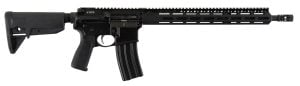
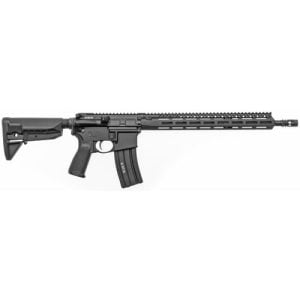
4. BCM RECCE-16: Best Quality All-Rounder
Bravo Company’s RECCE-16 is the rifle for a shooter who wants one AR that does everything, including 3-Gun. BCM builds to a hard-use standard with a cold-hammer-forged barrel and mil-spec internals, so it is utterly reliable, yet it stays light and handy enough to run a stage fast. Drop a low-power variable optic and a better trigger on it and it competes in Tactical while doubling as a defensive carbine.
It is more duty-focused than a dedicated race gun, so you give up a compensator and a match trigger out of the box, and the standard A2-style flash hider is not a competition muzzle device. But the bombproof reliability and excellent balance make it a favorite all-rounder, and few rifles inspire more confidence that they will simply run.
Pros
- Legendary BCM reliability
- Cold-hammer-forged barrel
- Light and well-balanced
- Doubles as a duty carbine
Cons
- No comp or match trigger stock
- Duty-focused rather than race-tuned
- Upgrades needed to optimize
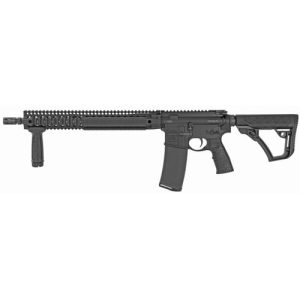
5. Daniel Defense DDM4 V7: Best Premium Reliability
The Daniel Defense DDM4 V7 is the premium reliability pick, with a cold-hammer-forged barrel, a slim free-float rail, and the fit and finish Daniel Defense is famous for. At around 1,190 dollars it splits the difference between a value AR and a full race build, giving you a light, accurate, supremely dependable rifle that will run a long match without a hiccup.
Like the BCM, it ships as a hard-use carbine rather than a race gun, so you will want to add an optic and a competition trigger to optimize it for Tactical. But the foundation is exceptional, and a DDM4 with a good LPVO and trigger is a genuinely competitive 3-Gun rifle that will also outlast almost anything else you own.
Pros
- Daniel Defense fit and finish
- Cold-hammer-forged barrel
- Light and accurate
- Supremely reliable
Cons
- Needs optic and trigger to optimize
- Premium price for a duty config
- No factory compensator
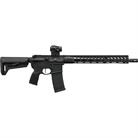
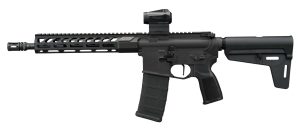
6. Sig M400 Tread: Best Mid-Tier Value
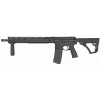
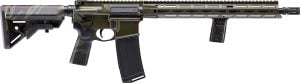
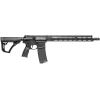
The Sig M400 Tread is one of the best value ARs from a major maker, a complete, free-floated 5.56 rifle with M-LOK and decent furniture for around 900 dollars. It is a popular choice for a shooter who wants a recognizable brand and a solid base that competes in Limited or Tactical with an optic and a trigger upgrade.
The stock trigger is a standard mil-spec unit, so it is the first thing to upgrade, and the Tread is a little heavier than the lightest competition rifles. But the value, the free-float rail and the Sig name make it a dependable mid-tier pick that punches at its price.
Pros
- Strong value from a major brand
- Free-float M-LOK handguard
- Reliable and accurate enough
- Easy to upgrade
Cons
- Basic mil-spec trigger
- Slightly heavier
- Not race-tuned out of the box
7. PSA Sabre: Best Budget Premium Feel
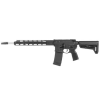
Palmetto State Armory’s Sabre line is its premium tier, and it brings a genuinely upgraded AR to a value price. For around 900 dollars the Sabre gives you a quality barrel, a slick handguard, an upgraded trigger and better furniture than PSA’s base rifles, making it a strong, affordable platform for Tactical or Limited.
PSA’s quality control is less consistent than a Daniel Defense or BCM, so it is more of a value play than a buy-it-for-life rifle. But the Sabre punches well above its price, and for a budget-minded competitor who wants more than a bare-bones AR, it is a lot of rifle for the money.
Pros
- Premium features at a value price
- Upgraded trigger and handguard
- Good accuracy for the money
- PSA warranty
Cons
- Quality control less consistent
- Resale value lower than top brands
- Not a lifetime hard-use gun
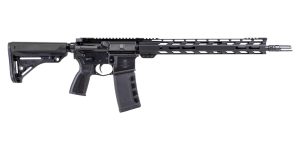
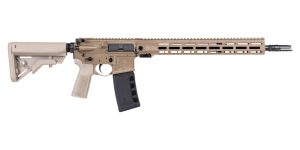
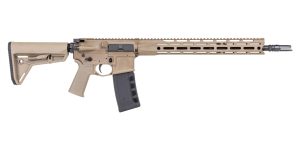
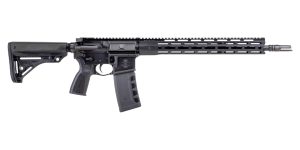
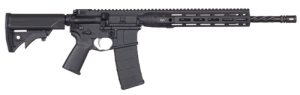
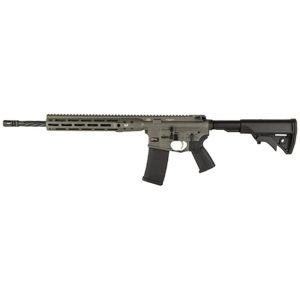
8. LWRC IC-DI: Best Premium Lightweight
The LWRC IC-DI brings the company’s high-end engineering to a direct-impingement rifle that stays light and fast. Known for monoforge upper receivers, quality barrels and excellent fit, LWRC builds a rifle that handles beautifully on a stage, and the IC-DI is the more affordable, competition-friendly member of the lineup at around 1,100 dollars.
It is a premium-priced rifle that, like the BCM and DD, ships duty-focused rather than race-tuned, so budget for a trigger and optic. But the build quality and handling are top-tier, and for a shooter who wants something a cut above the mainstream brands without going full custom, it is a standout.
Pros
- High-end LWRC build quality
- Light, fast-handling
- Excellent fit and finish
- Quality barrel
Cons
- Premium price
- Needs trigger and optic upgrades
- Smaller aftermarket than mil-spec
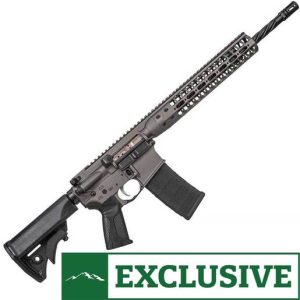
9. Aero Precision M4E1: Best Budget Build Base
For the shooter who wants to build rather than buy, the Aero Precision M4E1 is the best foundation. Aero’s complete rifles and uppers offer excellent machining and value, and the M4E1 platform is endlessly configurable, so you can start affordable and upgrade the trigger, handguard and muzzle device over time into a real 3-Gun rifle. A complete M4E1 starts well under 1,000 dollars.
It ships more basic than the dedicated competition rifles, so budget for a few upgrades, and the standard trigger and muzzle device are the first things to change. But as a value base to grow from, with Aero’s strong reputation for machining and value, nothing beats it for a builder.
Pros
- Excellent value build base
- Endlessly configurable
- Great machining for the price
- Upgrade over time
Cons
- Ships basic, needs upgrades
- Standard trigger and muzzle device
- More project than turnkey
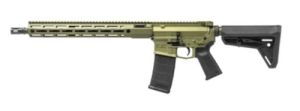
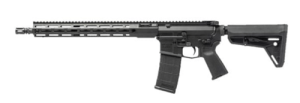
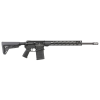
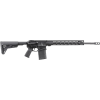
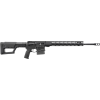
10. Ruger SFAR: Best for the Heavy Metal Division
If you want to shoot the Heavy Metal division, where the rules demand a .308-class rifle with iron sights, the Ruger SFAR is the rifle that makes it bearable. The Small-Frame Autoloading Rifle packs a full 7.62 NATO into a receiver and weight class barely larger than a standard AR-15, so you get the power Heavy Metal requires without lugging a traditional, heavy AR-10. At around 960 dollars it is a remarkable value for a lightweight .308 semi-auto.
It is still a .308, so recoil is sharper than a 5.56 rifle and it kicks the dot harder between targets, which is exactly the Heavy Metal challenge. But the SFAR’s light weight makes it the most competitive way into the division for a shooter who wants to run the hard mode without an arm-tiring rifle. Pair it with quality match .308 and a set of good irons or, where allowed, a low-power optic.
Pros
- Full .308 power in an AR-15-size package
- Light for a 7.62 semi-auto
- Ideal for Heavy Metal division
- Excellent value near 960 dollars
Cons
- Sharper recoil than 5.56
- Heavy Metal is a tougher division
- Pricier ammo than 5.56
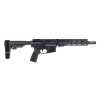
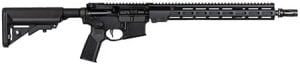
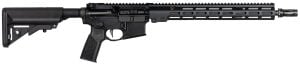
11. Geissele Super Duty: Best Premium Duty-Grade Build
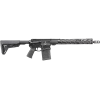
For a shooter who wants a premium, no-excuses rifle from one of the most respected names in the AR world, the Geissele Super Duty is the pick. Geissele built its reputation on the best triggers in the business, and the Super Duty rifle wraps that pedigree around a top-tier barrel, bolt carrier group and handguard, delivering a rifle that runs flawlessly and shoots beautifully right out of the box.
At around 1,800 dollars it is priced with the premium competition rifles, and it ships duty-focused rather than race-tuned, so you may still add a comp for 3-Gun. But the Geissele trigger and build quality are exceptional, and for a competitor who also wants a hard-use rifle that will never let them down, it is a standout that splits the difference between a JP race gun and a working carbine.
Pros
- Legendary Geissele trigger
- Top-tier barrel and BCG
- Flawless reliability
- Duty and competition crossover
Cons
- Premium price near 1,800 dollars
- Duty config, no factory comp
- More than a casual shooter needs
Heavy Metal Division: The .308 Iron-Sight Challenge
Most 3-Gun shooters run a 5.56 AR-15, but the Heavy Metal division, sometimes called HeMan, is the old-school hard mode that deserves its own explanation. The rules require a rifle in 7.62×51 or larger, iron sights only, a 12-gauge pump shotgun with iron sights, and a .45-caliber-or-larger pistol with no optics. It is a deliberate throwback that rewards raw shooting skill over gear, and it has a devoted following among shooters who want to prove they can run the harder guns.
The rifle is the heart of the Heavy Metal challenge, because a .308 kicks far harder than a 5.56 and you have to manage that recoil with iron sights on targets out to 500 yards. A light .308 like the Ruger SFAR makes the division accessible, while traditional AR-10-pattern rifles deliver the power at the cost of weight. If Heavy Metal appeals to you, train your iron-sight shooting hard and pick a rifle whose recoil you can actually control fast, because in this division the gun fights back.
Gas Systems, Barrels and Reliability in a 3-Gun Rifle
Beyond the trigger and optic, a few mechanical choices decide whether your rifle runs flawlessly through a long, fast match, and reliability is everything in a timed sport where a single malfunction can blow your stage.
- Gas system length. A mid-length gas system is the sweet spot for a 16 to 18-inch 3-Gun barrel, giving a smoother, softer recoil impulse than a carbine-length system while staying reliable. The smoother the cycle, the flatter the rifle shoots.
- Adjustable gas block. Many competition rifles add an adjustable gas block so you can tune the rifle to run softly with your match ammo, or dial it down further when running suppressed. It is a worthwhile upgrade for squeezing out the flattest possible recoil.
- Barrel profile and length. A mid-weight profile balances accuracy and weight, and 16 inches keeps the rifle fast while 18 inches adds velocity for distant steel. Avoid pencil-thin barrels that heat up and wander over a high-round-count stage.
- Bolt carrier group and buffer. A quality BCG and a properly tuned buffer keep the action running clean and the recoil flat. Many race builders run a lighter buffer with an adjustable gas block to minimize muzzle movement.
- Reliability over everything. Run proven magazines and quality ammo, keep the rifle lubricated, and test your match setup in practice. The fastest rifle in the world is useless if it chokes on the clock.
Get these right and your rifle becomes a non-issue on the clock, which is exactly what you want: a gun that simply runs so you can focus on the stage. For the optic that tops it, revisit the division guide above, and for the other two guns in the game see my best competition pistols roundup.
Best 3-Gun Rifle by Use Case
Sorted by what you actually need, here is how these rifles stack up.
- Best for winning: JP Enterprises JP-15, with the Stag 15 3-Gun close behind.
- Best turnkey: Stag 15 3-Gun, ready to shoot out of the box.
- Best value: Springfield SAINT Victor, Sig M400 Tread and PSA Sabre.
- Best all-rounder that doubles as a defensive gun: BCM RECCE-16 or Daniel Defense DDM4 V7.
- Best for builders: Aero Precision M4E1 base.
- Best lightweight: Stag 15 3-Gun and LWRC IC-DI.
- Best for Heavy Metal: Ruger SFAR.
- Best premium duty crossover: Geissele Super Duty.
Choosing a 3-Gun Rifle Optic by Division
The optic matters as much as the rifle, and your division decides what is legal. Getting this right is the difference between hitting distant steel and flailing at it.
- Tactical division: a low-power variable optic. A 1-6x or 1-8x LPVO is the standard, giving you true 1x speed up close and magnification to reach steel at 300 to 500 yards. This is the single most popular 3-Gun optic setup.
- Limited division: a single non-magnified red dot. Limited allows one unmagnified optic, so a large-window red dot is the tool. You give up magnification, so you learn to hold over distant targets.
- Open division: anything goes. Magnified optics, offset red dots, and more. Many Open shooters run an LPVO with a 45-degree offset mini red dot for instant close-range transitions.
- Heavy Metal: iron sights only. The old-school challenge, where your skill with irons carries the day.
Mount your optic as far forward as your eye relief allows for the widest field of view, and if you run an offset dot, set it up so a slight rifle cant puts it instantly on target. See my best rifle scopes roundup for LPVO options.
Caliber, Barrel and Trigger: What Actually Matters
Beyond the brand, three specs decide how a 3-Gun rifle performs.
- Caliber: .223 Wylde or 5.56 NATO. The .223 Wylde chamber safely fires both .223 and 5.56 while delivering better accuracy, which is why the dedicated competition rifles use it. A 5.56 chamber is perfectly competitive and a touch more tolerant of mixed ammo. Both shoot the cheap, low-recoil ammo that suits the game.
- Barrel: 16 to 18 inches. Sixteen inches keeps the rifle light and handy for fast transitions; eighteen inches squeezes out more velocity for distant steel. Most competitors land on 16 for speed or 18 for reach, with a mid-weight profile that balances accuracy and weight.
- Trigger: a flat, crisp single-stage. A good competition trigger is the biggest upgrade you can make to any rifle here. The Stag and JP come with great triggers; the value and duty rifles benefit hugely from a drop-in like a Hiperfire, Geissele or Timney.
How to Set Up a 3-Gun Rifle
Buying the rifle is the start. A few choices turn any quality AR into a competitive 3-Gun gun.
- The right optic for your division, mounted as far forward as eye relief allows.
- A flat-shooting muzzle device. A good compensator or brake keeps the rifle flat so you can spot your own hits and run fast follow-ups.
- A light, crisp trigger if your rifle did not come with one.
- A light build. Keep total weight down for fast transitions; six to seven pounds before the optic is the sweet spot.
- A sling and several reliable 30-round magazines. A two-point sling lets you stage the rifle safely between guns.
Round out your kit with the other two guns: see my best competition pistols for the handgun leg, and the best 3-Gun shotguns for the third gun in the game.
Choosing Ammo for Your 3-Gun Rifle
Ammo choice matters more in 3-Gun than new shooters expect, because the rifle leg asks one cartridge to do two very different jobs: blaze through close, large steel and then connect on small, distant targets. Most competitors keep it simple with quality 55 or 62-grain 5.56, which is cheap, low-recoil and accurate enough for the vast majority of stages. A 55-grain load is the affordable default for practice and most matches.
If a match features long rifle targets past 300 yards, a heavier 69 or 77-grain match load bucks wind better and holds accuracy at distance, and many shooters carry a few magazines of the heavier stuff for those specific stages. Match your bullet weight to your barrel twist: a 1:8 twist, common on competition barrels, stabilizes everything from 55 to 77 grains, while a slower 1:9 prefers lighter bullets. Whatever you choose, confirm it runs reliably and hits to your zero before the match, because untested ammo is a stage-ender.
How the Rifle Leg Wins or Loses Matches
The rifle is where 3-Gun matches are most often won and lost, and understanding why shapes how you set yours up. Rifle targets span the widest range of any gun in the game, from a steel plate a few feet away to a distant popper at 400 or 500 yards, so the rifle leg punishes a setup that is good at only one end of that range. A pure close-quarters build flails at distance, and a heavy precision build is slow on the close array. The winning rifle does both acceptably.
That is why the low-power variable optic dominates Tactical: 1x speed up close and enough magnification to connect far. It is also why a flat-shooting, reliable rifle with a good trigger matters so much, since a missed distant target costs you far more time than a slightly slower close array. Practice your transitions onto the rifle and your distant shooting under time pressure, because the shooter who calmly connects on the far steel while others miss and make up shots is the one who climbs the standings. The rifle rewards composure as much as speed.
Common 3-Gun Rifle Mistakes to Avoid
- Building too heavy. A heavy rifle is slow to transition and tiring over a long stage. Resist the urge to bolt on every accessory.
- Wrong optic for your division. A red dot in Tactical leaves you holding way over on distant steel; an LPVO you never zoom is dead weight. Match the optic to how you shoot.
- Skipping the trigger. A mil-spec trigger holds back your accuracy and speed. On a value or duty rifle, the trigger is the first upgrade.
- Cheap magazines. Reliability is everything in a timed sport. Run proven 30-round magazines, not bargain-bin mags.
- Ignoring the muzzle device. A plain flash hider lets the rifle climb. A comp keeps the dot flat for faster follow-ups, within your division rules.
The Bottom Line
For most competitors, the Stag 15 3-Gun is the smart buy, a match-ready rifle with a brilliant trigger that you can shoot out of the box. If you want the best and have the budget, build a JP-15 and never look back. Starting out or on a budget, the Springfield SAINT Victor, Sig M400 Tread or an Aero Precision M4E1 base will get you on the line competitively. Whatever you pick, set it up light with the right optic and a good trigger for your division, and remember that smooth transitions and reps win matches far more than the rifle. New to it all? Start with my complete guide to competition shooting.
Upgrading your trigger? See my best competition triggers guide by platform.
Set up your reloads with my best competition magazines and pouches guide.
Related Guides
- 10 Best AR-15 Rifles, the wider AR field, not just competition builds
- Best LPVO Scopes, the optic that decides your 3-gun division
- Best Steel Challenge Guns, the other action-shooting discipline worth starting with
Frequently Asked Questions
- Treat every gun as loaded
- Point the muzzle in a safe direction
- Keep your finger off the trigger until you’re ready to shoot
- Know your target and what’s beyond
What is the best 3-Gun rifle?
The Stag 15 3-Gun is the best factory 3-Gun rifle for 2026, a light .223 Wylde AR-15 with an excellent Hiperfire competition trigger for around 1,499 dollars. For a no-compromise custom race build, the JP Enterprises JP-15 is the benchmark, while the Springfield SAINT Victor is the best value and an Aero Precision M4E1 is the best budget base to build from.
What rifle do you need for 3-Gun?
You need a reliable AR-15 in .223 or 5.56, ideally a lighter build with a 16 to 18-inch barrel, a flat-shooting muzzle device, a good trigger and an optic suited to your division. You do not need a dedicated competition rifle to start, since a quality AR-15 you already own will compete in Tactical or Limited with a few small upgrades.
What optic is best for a 3-Gun rifle?
A low-power variable optic, such as a 1-6x or 1-8x, is the standard for the Tactical division because it lets you shoot fast up close at 1x and reach distant steel at magnification. Limited-division shooters run a single non-magnified red dot, and Open shooters often pair an LPVO with an offset red dot. Mount the optic as far forward as your eye relief allows.
What caliber is a 3-Gun rifle?
Most 3-Gun rifles are chambered in 5.56 NATO or the more accuracy-oriented .223 Wylde, which safely fires both .223 and 5.56. These cartridges are cheap, low-recoil and effective from close range out to 500 yards. The dedicated competition rifles favor .223 Wylde for accuracy, while the Heavy Metal division requires a larger .308-class rifle with iron sights.
How much does a 3-Gun rifle cost?
A 3-Gun rifle ranges from around 800 dollars for a value option like the Springfield SAINT Victor, Sig M400 Tread or an Aero Precision M4E1 build, up past 2,000 dollars for a custom JP Enterprises race rifle. The popular factory competition pick, the Stag 15 3-Gun, runs about 1,499 dollars. You can start competitively for under 1,000 dollars and upgrade over time.
Do you need a special rifle for 3-Gun?
No, especially to start. A reliable AR-15 you already own will compete in the Tactical or Limited division, and many shooters begin with exactly that. Dedicated competition rifles are lighter, with better triggers, comps and longer handguards, but those are upgrades you grow into. Reliability and a trigger you can shoot well matter more than a race-specific build at first.
What is the best budget 3-Gun rifle?
The Springfield SAINT Victor, Sig M400 Tread and PSA Sabre, all around 900 dollars, are the best budget 3-Gun rifles, giving you a light, free-floated AR-15 with a decent trigger from a reputable maker. An Aero Precision M4E1 build under 1,000 dollars is the best base for a builder. All are competitive in Tactical or Limited and leave room for an optic and ammo.
How heavy should a 3-Gun rifle be?
A 3-Gun rifle should be on the lighter side, typically between six and seven pounds before the optic, because lighter rifles transition faster between targets and are less tiring over a long stage. The best factory competition rifles, like the Stag 15 3-Gun at just over six pounds, prioritize that low weight while keeping a 16 to 18-inch barrel for velocity.
Is .223 Wylde better than 5.56 for 3-Gun?
The .223 Wylde chamber is a bit more accurate while still safely firing both .223 Remington and 5.56 NATO, which is why dedicated competition rifles like the Stag 15 3-Gun and JP-15 use it. A 5.56 chamber is perfectly competitive, slightly more tolerant of mixed ammo, and found on most value and duty ARs. For most shooters the difference is small, but .223 Wylde has a slight accuracy edge.
What trigger is best for a 3-Gun rifle?
A flat, crisp single-stage competition trigger is ideal for 3-Gun, and it is the single biggest upgrade you can make to any AR-15. The Stag 15 3-Gun ships with an excellent Hiperfire, and JP rifles come with JP triggers, while value and duty rifles benefit hugely from a drop-in like a Hiperfire, Geissele or Timney. A two-stage trigger is also popular for precise distant shots.
What barrel length is best for a 3-Gun rifle?
A 16 to 18-inch barrel is ideal for 3-Gun. Sixteen inches keeps the rifle light and quick to transition between targets, while eighteen inches adds velocity for hitting distant steel out to 500 yards. Most competitors choose 16 inches for speed-focused stages or 18 inches for matches with longer rifle targets, usually with a mid-weight profile to balance accuracy and weight.
Can you use the same AR-15 for 3-Gun and home defense?
Yes, a quality all-rounder like the BCM RECCE-16 or Daniel Defense DDM4 V7 works for both. A reliable 16-inch 5.56 AR with a good optic serves as a defensive carbine and competes in 3-Gun Tactical. A dedicated race rifle is lighter and more comp-equipped for competition, but for a shooter who wants one do-everything AR, a hard-use carbine covers both jobs well.
4,021+ Gun & Ammo Deals
Updated daily from 200+ top retailers. Filter by category, caliber, action type, and price.
Related Guides