

MOA and MRAD are just two different units for measuring angle, and neither one is more accurate than the other. MOA, or minute of angle, measures roughly 1 inch at 100 yards, while MRAD, or milliradian, measures about 3.6 inches at the same distance. What actually matters is that your scope’s reticle and its adjustment turrets speak the same language, so you can see a miss and dial or hold the exact correction. Here is how each system works and how to choose.
Table of Contents
How we tested: Every pick here is ranked against our testing methodology. Minimum round counts, accuracy and reliability protocols, the failures that disqualify a gun.
The Short Answer
Pick MRAD if you shoot precision, compete, or shoot alongside people who call corrections in mils. Pick MOA if you hunt, think in inches and yards, and mostly dial modest corrections. Then stop worrying about it, because the choice matters far less than the one rule underneath it.
That rule: your reticle and your turrets must use the same unit. A mil reticle belongs with mil turrets, an MOA reticle with MOA turrets. Get that wrong and you will be converting units on every shot under time pressure, which is how people miss. Get it right and either system does the job perfectly.
Everything below explains why, including how to check a scope’s spec sheet for a mismatch before you spend the money.
Why a rifle scope needs an angular unit
A bullet drops and drifts more the farther it travels, so the correction you need is not a fixed number of inches, it is an angle measured from the muzzle. That is why scopes adjust in angular units rather than inches. One click moves your point of impact a set angle, which translates to more inches of movement the farther away the target is. Both MOA and MRAD are simply ways to measure that angle, and your scope uses one or the other for both its reticle marks and its turret clicks. For the wider optics picture, our gun optics guide covers how reticles and turrets fit together.
MOA explained
A minute of angle is one-sixtieth of a degree. At 100 yards, one MOA subtends about 1.047 inches, which shooters round to a convenient 1 inch. So at 100 yards 1 MOA is roughly an inch, at 200 yards it is about 2 inches, at 300 yards about 3 inches, and so on. The angle stays the same; the inches grow with distance.
Most MOA scopes adjust in quarter-MOA clicks, so four clicks move your impact about 1 inch at 100 yards. If you shoot 2 inches low at 100 yards, that is roughly 2 MOA, or 8 clicks up. The appeal of MOA for many American shooters is that it maps naturally onto the inches-and-yards thinking they already use, which makes the corrections intuitive.
MRAD explained
A milliradian, called a mil or MRAD, is one-thousandth of a radian. At 100 yards one mil subtends about 3.6 inches, and at 100 meters it is a clean 10 centimeters, which is why the metric world loves it. Like MOA, the angle is fixed and the linear size grows with distance: one mil is about 3.6 inches at 100 yards and roughly 36 inches at 1,000 yards.
Most MRAD scopes adjust in tenth-mil clicks, so ten clicks equal one mil. The mil system runs in tidy units of ten, which makes the mental math fast once it clicks, and it is the standard for military and competition shooters who communicate corrections to each other. If you shoot a target at a known mil holdover, dialing it is simple decimal arithmetic.
The real difference: the system, not the accuracy
Here is the point that trips people up: MOA and MRAD are equally precise. Neither system makes your rifle shoot tighter. They are just two rulers for the same distance, like inches versus centimeters. A quarter-MOA click is a slightly finer adjustment than a tenth-mil click, but the difference is tiny and irrelevant to all but the most extreme precision work, and a finer click is not the same as a more accurate rifle.
What truly matters is consistency within one system. As long as your reticle and your turrets both use the same unit, you can measure a miss in the reticle and apply the exact correction on the turret, or hold it directly. Mixing the two is where shooters get into trouble, which is the one rule you cannot break.
Match your reticle to your turrets
The single most important rule is that your reticle and your turrets must use the same unit. A mil reticle belongs with mil turrets, and an MOA reticle with MOA turrets. When they match, you can range a target or spot a miss using the reticle, then dial the identical number on the turret, or simply hold the correction using the reticle markings. It is fast, repeatable, and intuitive.
A mismatched scope, say a mil reticle with MOA turrets, forces you to convert between units on every shot, which is slow and a recipe for errors under pressure. Reputable scopes pair matching reticles and turrets, but always confirm before you buy. This matching matters most on a precision rifle scope or an LPVO where you actually use the reticle to range and hold. Nightforce pairs them for you, and our Nightforce NX8 review lists which NX8 reticles come with MOA turrets and which with MRAD.
How to Check a Scope Before You Buy

Reputable makers pair matching reticles and turrets, and the trap still catches people, most often on budget optics and on older models that predate the current naming conventions. It costs nothing to check, so check.
Three things to look for on the spec sheet before you buy:
- Reticle unit. The reticle name tells you: anything with MOA in the name is MOA, anything with MIL, MRAD or P4F is mils. A BDC reticle is neither, it is calibrated to a specific load, which is a separate conversation.
- Turret click value. Quarter MOA and tenth mil are the two common ones. If the reticle says mil and the turret says 1/4 MOA, walk away.
- Focal plane. First focal plane keeps the reticle subtensions honest at every magnification. Second focal plane only gets them right at one power, which is printed on the spec sheet and is nearly always the top of the range.
That last one is the trap inside the trap. A second focal plane scope calibrated at 24x, used at 8x, has reticle marks that mean roughly a third of what you think they mean. Dial your corrections on that scope rather than holding them, or run it at the stated magnification when you need the reticle to be truthful.
First focal plane and holding versus dialing
How you use the reticle ties into focal plane. In a first focal plane scope, the reticle grows and shrinks with the magnification, so the mil or MOA marks are accurate at any power, which is why precision and PRS shooters favor it for holding corrections. In a second focal plane scope, the reticle stays the same size and the subtensions are only correct at one specified magnification, nearly always the top power.
When each plane makes sense for hunting, LPVOs and PRS is covered in our guide to FFP vs SFP scopes.
If you prefer to dial your corrections on the turret, focal plane matters less. If you prefer to hold using the reticle, a first focal plane scope in your chosen unit is the better tool. Either way, the unit-matching rule above still applies, and a good rangefinder gives you the distance you need to know your correction in the first place.
A Worked Example: Turning a Miss Into a Correction
This is where the matching rule stops being abstract. You are on a steel plate at 400 yards, and your shot lands low and a little left. You saw the splash in the scope, so you know roughly where it went.
On a mil scope. The impact sat one and a half mil-dots below the crosshair and half a dot left. You come up 1.5 mils and hold 0.5 mils right. On tenth-mil turrets that is fifteen clicks up, or you simply hold the correction in the reticle and send it. You never converted anything and you never thought about inches.
On an MOA scope. The impact sat five MOA low and two MOA left in the reticle. You come up 5 MOA and hold 2 MOA right, which on quarter-MOA turrets is twenty clicks. Same shot, same correction, different ruler, and just as fast.
On a mismatched scope. Your reticle reads in mils and your turrets click in MOA. You measure 1.5 mils of drop, multiply by 3.43 to get 5.1 MOA, then multiply by four to get twenty clicks, and you do all of that with a timer running and a crosswind picking up. That is the entire argument, and it is why the unit you choose matters far less than choosing one and staying inside it.
Notice what never came up: inches. At 400 yards nobody sane is measuring a miss in inches, because you cannot see inches through a scope. You can see reticle marks. That is what angular units are for.
Dialing Versus Holding
How you plan to shoot pushes the decision more than the units do. If you range a target, dial the elevation on the turret and break the shot, you are doing arithmetic once, slowly, with time to think. Either unit is fine for that, and MOA’s finer quarter-minute clicks are pleasant.
If you hold corrections in the reticle, which is what timed positional shooting demands, you are reading the reticle and applying it in the same motion. Mils win here for most people, not because they are more precise but because the numbers are smaller and decimal. Holding 1.5 mils is easier to keep straight under a timer than holding 5.2 MOA, and the correction you spot in the reticle is the number you hold. That is the whole reason competition went that way.
What the People You Shoot With Use
This is the most practical tiebreaker and it gets mentioned least. Corrections get called out loud. A spotter who says “come up point four and hold point two left” is speaking mils, and if your turrets are in MOA you are converting in your head while the wind changes.
So if you shoot with a club, a squad or a coach, match them. If you shoot alone and hunt, use whatever you think in. American hunters raised on inches and yards find MOA intuitive, and there is nothing second-rate about it. The mil system is the standard in military and competition circles, so if you are heading that way, learning it now saves relearning later. Our best PRS scopes guide notes the unit on each pick.
Should you choose MOA or MRAD?
For most American hunters who think in inches and yards and mostly dial or hold modest corrections, MOA feels natural and there is nothing wrong with it. For precision and long-range shooters, especially anyone who shoots in a community that talks in mils, like PRS or the military world, MRAD is the common language and worth learning. If you shoot with a group or a coach, match whatever they use so you can communicate corrections without converting.
Honestly, either system will serve you well if you commit to it and pair a matching reticle and turret. The worst choice is no choice: a mismatched scope or jumping between systems. Pick one, learn it until the corrections are second nature, and stick with it. Our best rifle scopes guide and best PRS scopes guide note the reticle and turret units for each pick.
Quick reference: MOA and MRAD at distance
Both units grow linearly with distance. This is roughly how much one MOA and one mil cover at common ranges, which is handy for sanity-checking a correction in the field.
| Distance | 1 MOA | 1 MRAD |
|---|---|---|
| 100 yd | ~1.0 in | ~3.6 in |
| 200 yd | ~2.1 in | ~7.2 in |
| 300 yd | ~3.1 in | ~10.8 in |
| 500 yd | ~5.2 in | ~18 in |
| 1,000 yd | ~10.5 in | ~36 in |
To convert between the two, one mil equals about 3.43 MOA, which falls out of the definitions: a milliradian is one thousandth of a radian and a minute of angle is one sixtieth of a degree, so the ratio is fixed by geometry rather than by convention. The NIST reference on SI units covers the radian if you want the underlying definition. So a 2-mil holdover is roughly 6.9 MOA, and a 12-MOA come-up is about 3.5 mils. You should rarely need this if your reticle and turrets match, but it is useful when reading data from another shooter who runs the other system.
Bottom Line
MOA and MRAD are two units for the same job, and neither is more accurate than the other. MOA is about an inch at 100 yards and suits shooters who think in inches and yards. MRAD is about 3.6 inches at 100 yards, runs in tidy tens, and is the standard for precision and military shooters. The only rule that truly matters is to match your reticle to your turrets and commit to one system. Once you do, dialing and holding corrections becomes second nature. Ready to put it to use? See how to sight in a rifle scope, then pick your glass from our best rifle scopes guide.
Last updated June 4th 2026
MOA Scopes: Live Prices

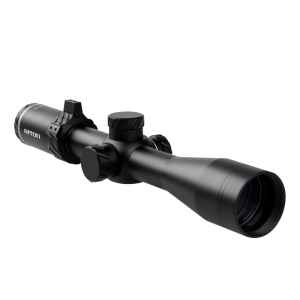
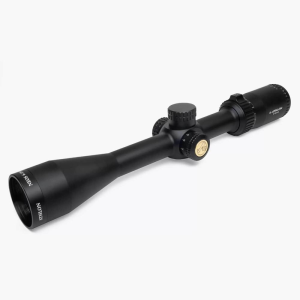
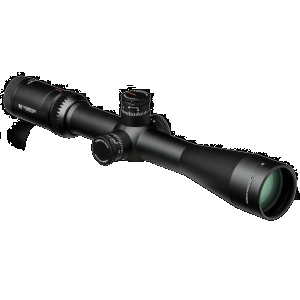
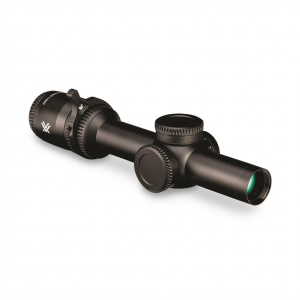
MOA scopes dominate the hunting shelf, where capped turrets and an inches-and-yards mindset are the norm. Prices below are live across the retailers we track.


MRAD Scopes: Live Prices
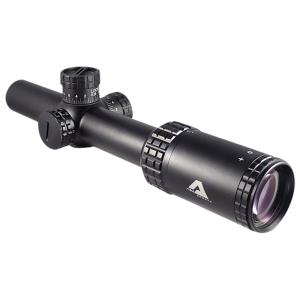
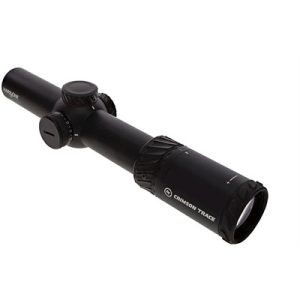
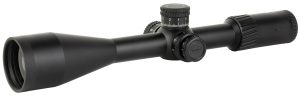
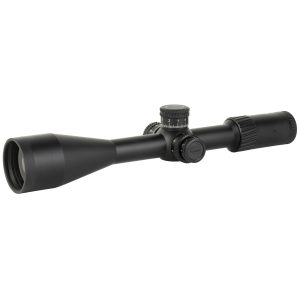
MRAD scopes cluster at the precision end, with exposed turrets and first focal plane reticles built for holding and dialing at distance.


Is MOA or MRAD more accurate?
Neither. MOA and MRAD are just two different units for measuring angle, like inches versus centimeters, and neither makes a rifle shoot tighter. A quarter-MOA click is slightly finer than a tenth-mil click, but the difference is negligible for nearly all shooting. What matters is matching your reticle and turrets and being consistent within one system.
What is 1 MOA at 100 yards?
One minute of angle subtends about 1.047 inches at 100 yards, which shooters round to 1 inch. Because it is an angle, it grows with distance: roughly 1 inch at 100 yards, 2 inches at 200 yards, and 3 inches at 300 yards. Most MOA scopes adjust in quarter-MOA clicks, so four clicks move impact about an inch at 100 yards.
What is a mil or MRAD?
A milliradian, called a mil or MRAD, is one-thousandth of a radian. It subtends about 3.6 inches at 100 yards and a clean 10 centimeters at 100 meters. Most MRAD scopes adjust in tenth-mil clicks, so ten clicks equal one mil. The mil system runs in tidy units of ten, which makes the math fast once it is familiar.
Why do your reticle and turrets need to match?
So you can measure a miss in the reticle and apply the exact same correction on the turret, or hold it directly. A mil reticle with mil turrets, or MOA with MOA, lets you work in one language with no conversion. A mismatched scope forces you to convert units on every shot, which is slow and error-prone under pressure.
Is MRAD the same as metric?
Not exactly, though it fits metric thinking neatly. A mil subtends 10 centimeters at 100 meters, which is why it is popular in metric countries, but it works just as well in yards, where it is about 3.6 inches at 100 yards. MRAD is an angular unit, not a metric one, and you can use it with yards or meters.
Do snipers and the military use MOA or MRAD?
Most military and precision communities use MRAD, because the tidy tenth-mil adjustments and mil-based reticles make communicating corrections between a shooter and a spotter fast and consistent. Competition disciplines like PRS are also largely mil-based. If you shoot in those circles, learning MRAD lets you speak the same language as everyone else.
Can you mix MOA and MRAD on one scope?
You should not. A scope with a mil reticle and MOA turrets, or the reverse, forces a unit conversion on every correction, which is slow and invites mistakes. Always pair a matching reticle and turret in the same unit. Reputable scopes are sold matched, but confirm the reticle and turret units before you buy.
Which is easier for beginners, MOA or MRAD?
For shooters who already think in inches and yards, MOA often feels more intuitive at first because one MOA is about an inch at 100 yards. MRAD takes a short adjustment but rewards you with simple tens-based math and is the standard in precision circles. Either is easy once you commit, so pick one, pair a matching reticle and turret, and learn it.
4,021+ Gun & Ammo Deals
Updated daily from 200+ top retailers. Filter by category, caliber, action type, and price.
Related Guides