

Last updated September 9, 2026 · By Nick Hall
This article contains affiliate links. If you buy through our links we can earn a small commission, and you get the best live price on these binoculars from a range of national retailers.
The best binoculars for most hunters in 2026 are the Vortex Diamondback HD 10×42 at around $250. They give you a 4.2 mm exit pupil, 330 ft of view at 1,000 yards and 21.3 oz on a harness, which is the configuration the great majority of hunting is done with. Spend more only when you know which specific thing you want to improve. This guide ranks eleven pairs from $160 to $1,700 and charts the two numbers that actually predict low-light performance, exit pupil and twilight factor, which no other binocular roundup publishes.
The best binoculars are hard to shop for because the marketing and the physics pull in opposite directions. Bigger magnification sounds better and narrows your field of view. A bigger objective sounds better and adds weight you carry all day. And the number everyone quotes as “light gathering” is not a number the manufacturer chooses at all, it is simple arithmetic you can do on the box.
So this guide does something the rest of the field does not. Every pair here is charted on exit pupil and twilight factor, both derived from the published magnification and objective, alongside field of view and weight. The result is uncomfortable for the price list: the cheapest binocular in this guide puts more light into your eye than the most expensive one.
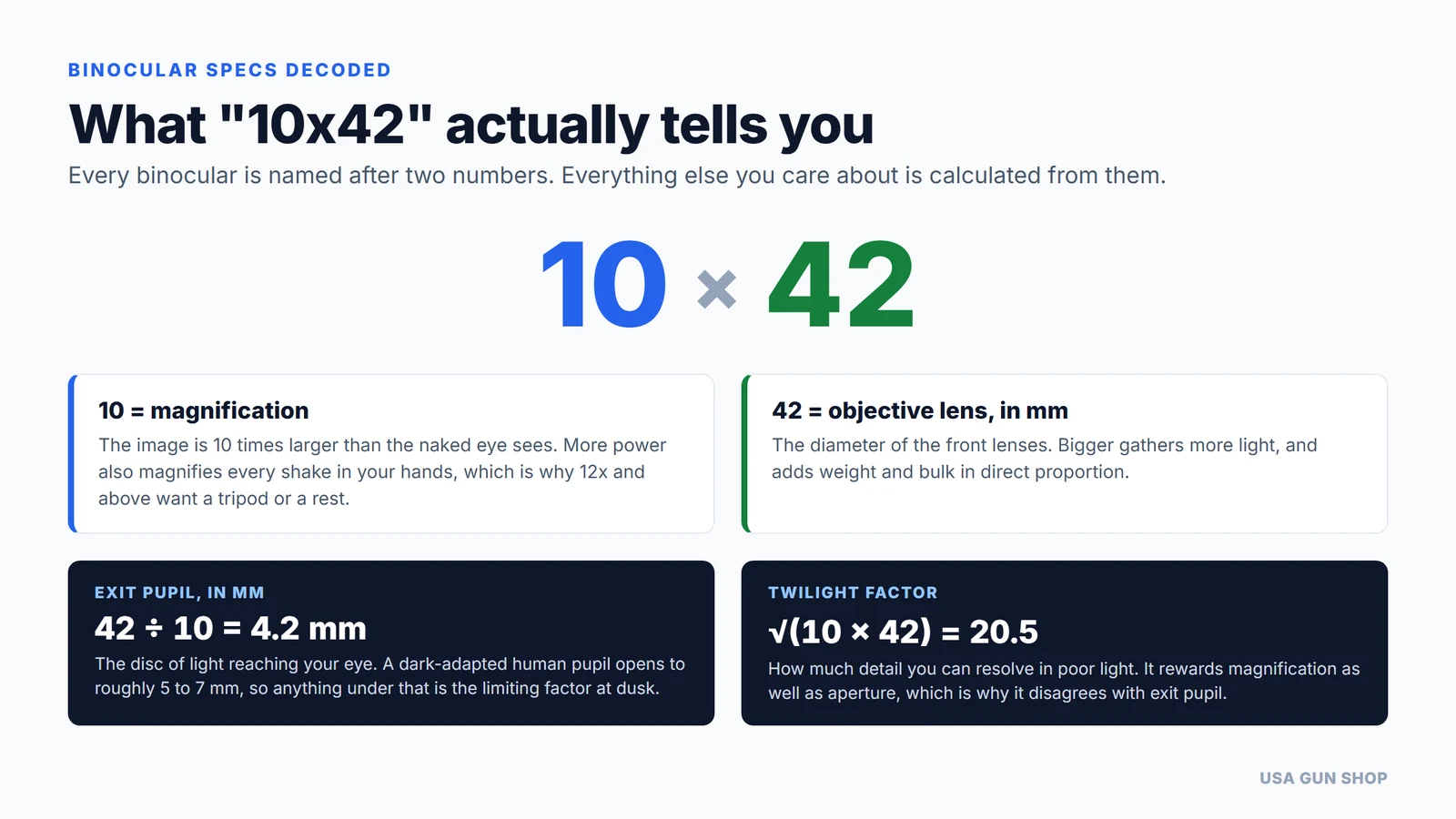
Table of Contents
How we tested: Every pick here is ranked against our testing methodology. Minimum round counts, accuracy and reliability protocols, the failures that disqualify a gun.
Binoculars by the Numbers
Binocular marketing runs on adjectives. These are the numbers underneath it, taken from the published configurations of the pairs below and from our own live price feed.
- A 10.6x price spread: the eleven picks run from $159.97 to $1,699.99, and the cheapest puts the most light into your eye.
- Four identical 10x42s: every 10×42 here has the same 4.2 mm exit pupil, yet they span $249 to $546.95.
- 48 feet of difference: at 1,000 yards the Nikon Monarch M7 shows 362 ft where the Leupold BX-4 shows 314 ft, for similar money.
- 71 percent more ground: an 8×42 sweeps 394 ft at 1,000 yards; a 15×56 sees 230 ft of the same hillside.
- 332 against 330 feet: the 13.7 oz compact shows a wider field than the 21.3 oz full-size pair ranked first.
- 564 against 269: our feed prices 564 binoculars in 10×42 and 269 in 8×42, so the market leans two to one toward 10x.
- 2,863 live listings: binocular prices tracked across 33 retailers, which is where every price on this page comes from.
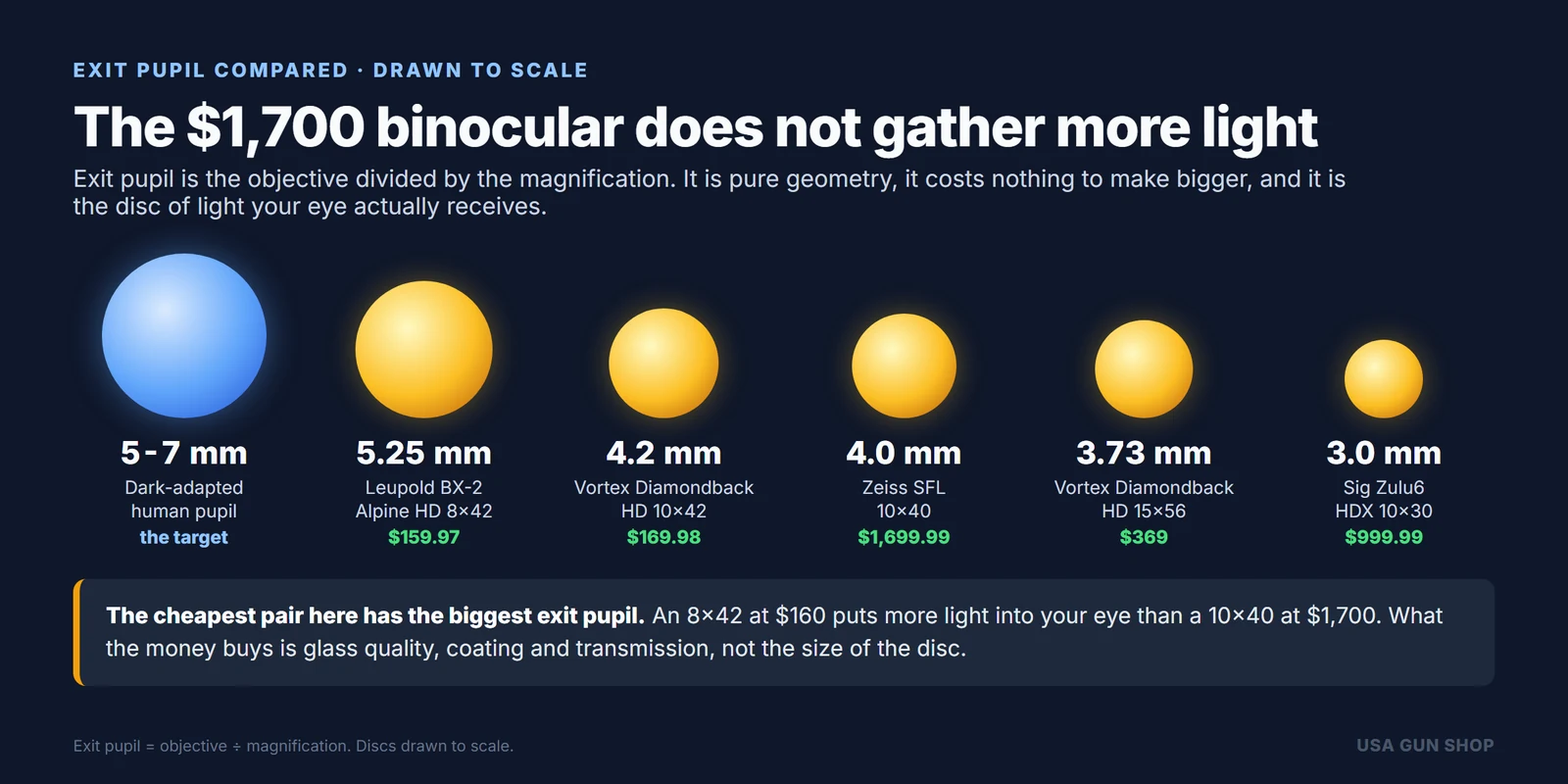
The uncomfortable one is the second. Exit pupil is objective divided by magnification, so four binoculars separated by $430 are putting an identical disc of light into your eye. What the extra money buys is transmission, edge sharpness and color, none of which appears in a configuration number.
Best Binoculars 2026 at a Glance
| Binocular | Config | Price |
|---|---|---|
| Best OverallVortex Diamondback HD | 10×42 | ~$250 ↓ |
| Best for HuntingLeupold BX-4 Pro Guide HD | 10×42 | ~$400 ↓ |
| Best Mid-RangeVortex Viper HD | 10×42 | ~$300 ↓ |
| Best Budget & Low LightLeupold BX-2 Alpine HD | 8×42 | ~$160 ↓ |
| Best Field of ViewNikon Monarch M7 | 10×42 | ~$547 ↓ |
| Best for Open CountryVortex Diamondback HD | 12×50 | ~$279 ↓ |
| Best PremiumVortex Razor HD | 12×50 | ~$935 ↓ |
| Best High PowerVortex Diamondback HD | 15×56 | ~$315 ↓ |
| Best Image-StabilizedSig Sauer Zulu6 HDX | 10×30 | ~$1,000 ↓ |
| Best at Any PriceZeiss SFL | 10×40 | ~$1,700 ↓ |
| Best CompactVortex Diamondback HD | 8×28 | ~$160 ↓ |
Prices for the best binoculars below are live from the retailers. Exit pupil is the objective divided by the magnification, so it is fixed by the configuration rather than by the price, which is exactly why the $160 pair leads that column and the $1,700 pair does not. There is a full explanation of what that does and does not mean below the picks.
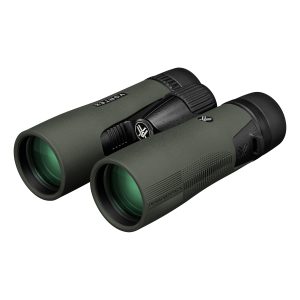
1. Vortex Diamondback HD 10×42. Best Binoculars Overall
- Exit pupil: 4.2 mm · Twilight factor: 20.5
- Field of view: 330 ft at 1,000 yards
- Weight: 21.3 oz, the lightest full-size pair here
- Eye relief: 15 mm · Close focus: 5 ft
- Warranty: Vortex VIP, unlimited and transferable
Pros
- Lightest full-size pair here, 21.3 oz
- Real HD glass for about $250
- Close focus of 5 feet
Cons
- Edge sharpness trails the Viper
- Coarse focus wheel on moving game
- Basic strap and case included
If you buy one pair of binoculars and want to stop thinking about it, buy these. The Diamondback HD 10×42 is the configuration most hunting is actually done with, at a price that leaves money for the harness and the rangefinder, and Vortex’s warranty removes the main risk of buying at this end of the market.
The number that surprises people is the weight. At 21.3 oz these are lighter than the $1,700 Zeiss and nearly a pound lighter than the 15×56. Binocular weight is the spec you feel every hour of every day you carry them, and it is routinely ignored in favour of glass quality you will only notice in the last ten minutes of legal light.
Be clear about what you give up. Look at a high-contrast edge, a bare branch against a bright sky, and you will see softness at the edges of the field that the Viper and the Zeiss do not have. That is what the money buys further up this list. It is a real difference and it is not the difference between seeing an animal and not seeing one.
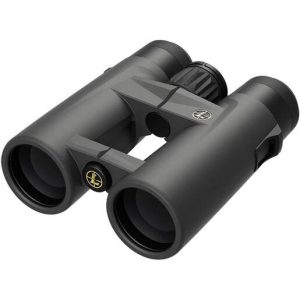
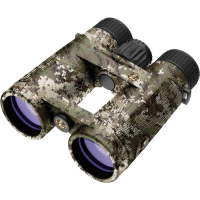
2. Leupold BX-4 Pro Guide HD 10×42. Best for Hunting
- Exit pupil: 4.2 mm · Twilight factor: 20.5
- Field of view: 314 ft at 1,000 yards
- Weight: 25 oz · Close focus: 9.3 ft
- Glass: Leupold Elite Optical System, Guard-ion hydrophobic coating
- Also sold as: 8×42 and 10×50 at the same price

Pros
- Guard-ion coating sheds rain and fog
- Built and assembled in Oregon
- Open-bridge body suits big hands
Cons
- Narrowest 10×42 field here, 314 ft
- Close focus of 9.3 feet
- Monarch M7 gives 48 ft more
The BX-4 Pro Guide HD is the hunting specialist. Everything about it is aimed at bad weather and long days: the Guard-ion hydrophobic coating genuinely works, water beads and runs off rather than smearing when you wipe it, and the open-bridge body is easy to hold one-handed while you are doing something else with the other.
The thing worth knowing is that Leupold sell three configurations at the same price. If you hunt thick country, the 8×42 gives you a much wider field and a 5.25 mm exit pupil. If you glass open ground at last light, the 10×50 gives you a 5 mm exit pupil. Same money, materially different binocular. Choose deliberately rather than defaulting to 10×42 because it is the standard.
Its weak spot on paper is field of view. At 314 ft it is the narrowest 10×42 in this guide, 48 ft behind the Nikon Monarch M7 that costs about the same.
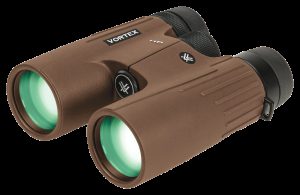
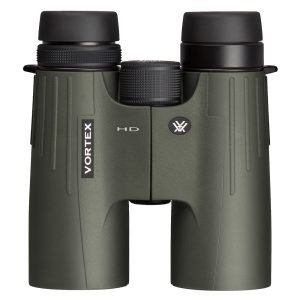
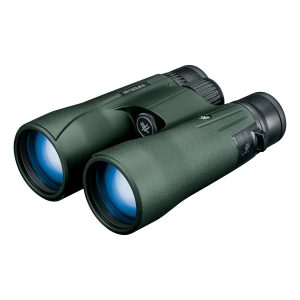
3. Vortex Viper HD 10×42. Best Mid-Range
- Exit pupil: 4.2 mm · Twilight factor: 20.5
- Field of view: 319 ft at 1,000 yards
- Weight: 24.6 oz · Close focus: 5.1 ft
- Eye relief: 16.5 mm, the most generous here
- Warranty: Vortex VIP
Pros
- 16.5 mm eye relief for glasses
- Better edge sharpness than the Diamondback
- Smooth wheel, 5.1 ft close focus
Cons
- Only 3 oz lighter than the Razor
- 319 ft of view is unremarkable
- Twice the Diamondback, not twice the glass
The Viper HD is the sensible upgrade, and the specific reason to buy it is eye relief. At 16.5 mm it is the most generous figure in this guide, and if you wear glasses that single number decides whether you see the full field or a tunnel. Nothing else on this list solves that as well at this price.
Optically it sits exactly where the price suggests. Put it next to the Diamondback and the edges are cleaner and the color is a little truer. Put it next to the Zeiss and the gap opens again. That is the whole story of binocular pricing in one comparison: each doubling of money buys a smaller improvement than the last.
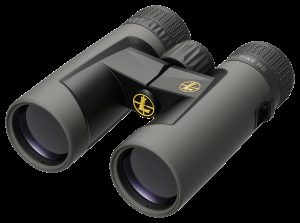
4. Leupold BX-2 Alpine HD 8×42. Best Budget and Best Low Light
- Exit pupil: 5.25 mm, the largest in this guide
- Twilight factor: 18.3, the second lowest
- Field of view: 394 ft at 1,000 yards, the widest here
- Weight: 28 oz · Close focus: 13.5 ft
- Also sold as: 10×42 for about $60 more
Pros
- Only 5.25 mm exit pupil here
- Widest view in this guide, 394 ft
- Steady handheld without any rest
Cons
- Worst close focus here, 13.5 feet
- Heavy for an 8×42 at 28 oz
- Lowest twilight factor here, 18.3
This is the pick that the exit pupil table forces onto the list, and it is the most interesting binocular here. At $159.97 it has the largest exit pupil in this guide by a comfortable margin, the widest field of view, and it is the only pair you can genuinely hold rock steady without a rest.
The reason is not that Leupold built something special. It is that 42 divided by 8 is 5.25, and 42 divided by 10 is 4.2. Dropping two powers of magnification widens the exit pupil by 25 percent, which is 56 percent more light by area, and hands you 19 percent more field for free. Everyone defaults to 10×42 because it is the standard, and for a lot of hunting in thick country or at last light, 8×42 is simply the better instrument.
The honest counterweight is twilight factor. At 18.3 it is second from bottom, because resolving fine detail in poor light rewards magnification as well as aperture. So the 8×42 gives you a brighter, wider, steadier image with less fine detail in it. Which of those you want depends on whether you are finding animals or judging them.
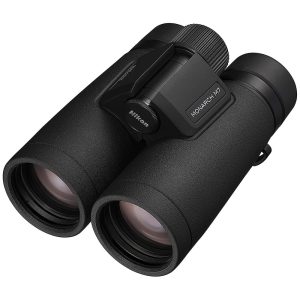
5. Nikon Monarch M7 10×42. Best Field of View
- Exit pupil: 4.2 mm · Twilight factor: 20.5
- Field of view: 362 ft at 1,000 yards, the widest 10x here
- Weight: 24 oz
- Glass: ED glass, locking dioptre, oil and water repellent coating
Pros
- 362 ft, the widest 10×42 here
- Locking dioptre stops accidental drift
- ED glass at just 24 oz
Cons
- Thin US stock, so weak price competition
- No 8x version currently stocked
- No published US close-focus figure
The Monarch M7 wins the field of view column among the 10x42s and it is not close. 362 ft against 330 for the Diamondback, 319 for the Viper and 314 for the Leupold BX-4. If you glass moving animals or you hunt with a partner who calls out positions, that extra window is the most useful thing on this page.
The locking dioptre deserves its own mention. Every binocular has a dioptre adjustment to compensate for the difference between your eyes, and on most of them it is a friction ring that drifts in a pack until one barrel is out of focus and you cannot work out why. Nikon lock theirs. It is a small thing that removes a recurring irritation.
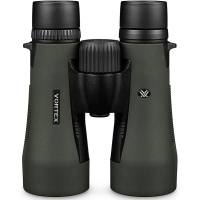
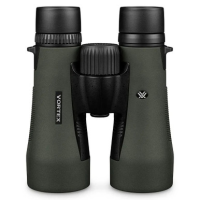
6. Vortex Diamondback HD 12×50. Best for Open Country
- Exit pupil: 4.17 mm · Twilight factor: 24.5
- Field of view: 271 ft at 1,000 yards
- Weight: 28.9 oz · Close focus: 6 ft
- Eye relief: 14 mm
Pros
- Twilight factor 24.5, four above any 10×42
- Keeps a 4.17 mm exit pupil
- Close focus of 6 feet
Cons
- Tight 271 ft field of view
- 28.9 oz wants a rest
- Least eye relief here, 14 mm
This is the pair for glassing big open ground where you sit down, get steady and pick a hillside apart. The twilight factor of 24.5 is the number that matters: it is four points clear of every 10×42 here, and that translates into resolving whether the thing on the far ridge has antlers rather than just seeing that something is there.
Note what Vortex did with the objective. Going from 10×42 to 12×50 keeps the exit pupil essentially the same, 4.2 mm down to 4.17 mm, because they grew the front lens in step with the magnification. That is the right way to add power. Adding magnification without adding aperture is what produces a dim binocular.
Be realistic about handholding. Twelve power magnifies your pulse as well as the animal. Braced against a pack or a tree you are fine; standing free after a climb you are not.
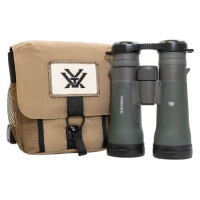
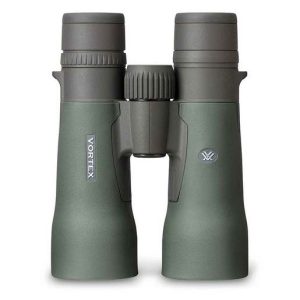
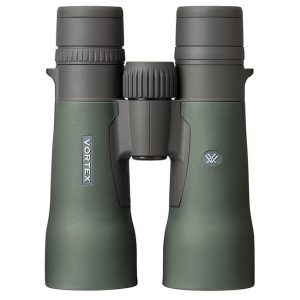
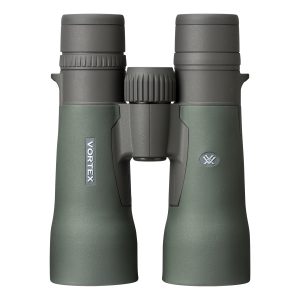
7. Vortex Razor HD 12×50. Best Premium
- Exit pupil: 4.17 mm · Twilight factor: 24.5
- Field of view: 285 ft at 1,000 yards
- Weight: 28.7 oz · Close focus: 10 ft
- Eye relief: 15.5 mm
Pros
- Best Vortex glass short of UHD
- 285 ft, wider than the Diamondback
- Lighter than the cheaper 12×50
Cons
- Same exit pupil as the $279 pair
- Worst Vortex close focus, 10 feet
- Triple the price for glass alone
The Razor HD 12×50 is the premium version of the pair above it, and the comparison between the two is the clearest demonstration on this page of what money does and does not buy in binoculars.
The Razor and the Diamondback 12×50 have the same exit pupil and the same twilight factor, because they are the same configuration. Every geometric advantage is identical. What the extra $620 buys is glass: better coatings, better control of color fringing, a cleaner image at the edge of the field, and a body that feels like it will outlast you. On a hillside at last light that difference is real and you will see it. On a spec sheet it is invisible, which is exactly why the spec sheet is not enough on its own.
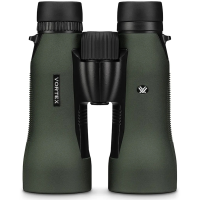
8. Vortex Diamondback HD 15×56. Best High Power
- Exit pupil: 3.73 mm · Twilight factor: 29.0, the highest here
- Field of view: 230 ft at 1,000 yards, the narrowest here
- Weight: 34.8 oz · Close focus: 14 ft
- Eye relief: 15.6 mm · Tripod adapter included
Pros
- Highest twilight factor here, 29.0
- Fifteen power for mid-range money
- Tripod adapter included in the box
Cons
- Dimmest 3.73 mm exit pupil here
- Narrowest view in this guide, 230 ft
- 34.8 oz, unusable handheld
The 15×56 is a specialist and it is on this list because it is the pair that shows exit pupil and twilight factor pulling in opposite directions. It has the highest twilight factor here at 29.0 and one of the smallest exit pupils at 3.73 mm. Those are not contradictory, they measure different things: brightness against resolving power.
What that means on the hill is that at last light the image through these is dimmer than through an 8×42, and yet you can pick out more detail in what you can see. For judging an animal at a thousand yards in the final twenty minutes, that trade is often worth making. For finding one in the first place, it is not.
Buy them as a second pair, on a tripod, alongside a 10×42 on your chest. They are not a do-everything binocular and Vortex do not pretend otherwise, which is why the tripod adapter is in the box rather than an accessory.
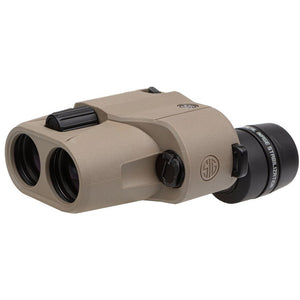
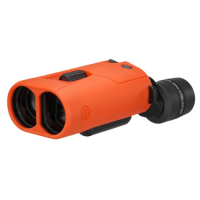
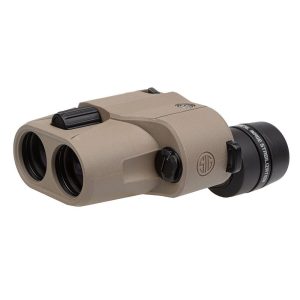
9. Sig Sauer Zulu6 HDX 10×30. Best Image-Stabilized
- Exit pupil: 3.0 mm, the smallest here · Twilight factor: 17.3
- Field of view: 5.2 degrees, roughly 272 ft at 1,000 yards
- Weight: 19.2 oz, the lightest in this guide
- Power: one CR2 battery, 20 hours peak, 10 minute auto shutoff
- Close focus: 8.2 ft · Rating: IPX7
Pros
- Stabilised 10x beats a handheld 8x
- Lightest pair here at 19.2 oz
- IPX7 rated against any weather
Cons
- Dimmest here, 3.0 mm exit pupil
- CR2 battery death kills the feature
- A thousand dollars for 30 mm
Image stabilization is the one binocular feature that genuinely changes what you can see, and the Zulu6 HDX is the reason it is on this list. A stabilized 10x image reveals detail that an unstabilized 10x image simply does not, because the limiting factor at that magnification is your hands rather than the glass.
The trade-off is written into the configuration and it is worth stating plainly. Stabilization lets Sig use a small 30 mm objective, which is how the pair weighs 19.2 oz. It also gives it a 3.0 mm exit pupil, the smallest in this guide. In good light that is irrelevant and the steadiness wins easily. In the last twenty minutes of legal light, a $160 8×42 with a 5.25 mm exit pupil will show you a brighter image.
So buy these for daytime glassing where steadiness and weight matter, not for low light. And carry a spare CR2, because the whole value proposition depends on a battery.
A note for anyone who read an earlier version of this guide. The larger Sig Zulu9 HDX held the low-light slot here and has been removed: no retailer in our price network carries it any more, so there was no live price and no way to check stock. If you want a stabilised binocular with a real low-light exit pupil, that is the model to look for direct from Sig rather than the 10×30 above.
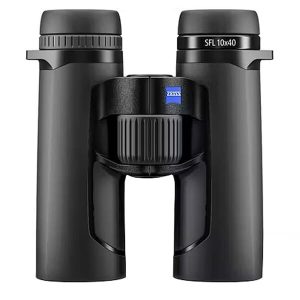
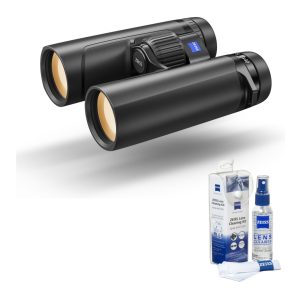
10. Zeiss SFL 10×40. Best at Any Price
- Exit pupil: 4.0 mm · Twilight factor: 20.0
- Field of view: 345 ft at 1,000 yards
- Weight: 22.6 oz · Close focus: 4.9 ft, the closest here
- Glass: Zeiss SmartFocus, Ultra-High-Definition optical concept
Pros
- Best glass on this page
- 22.6 oz, lighter than cheaper pairs
- Closest focus here at 4.9 feet
Cons
- Exit pupil smaller than the Diamondback
- Lowest twilight factor of the 42s
- Ten times the best overall pick
The SFL is the best binocular on this page and it is also the clearest illustration of why the spec table cannot be read on its own. Its 40 mm objective and 10x magnification give it a 4.0 mm exit pupil, smaller than the $249 Vortex Diamondback HD, and a twilight factor of 20.0, the lowest of any 42 mm class pair here. On geometry alone it loses to binoculars costing a tenth as much.
And it is still the best glass here, comfortably. What Zeiss sell is transmission and correction: how much of the light that enters actually reaches your eye rather than scattering inside, how well color is held together, how sharp the image stays at the edge of the field. None of that appears in a configuration number, and all of it is what you notice when you put an SFL down and pick up a Diamondback.
The practical case for it is weight rather than optics. At 22.6 oz with that field of view and that close focus, it is a binocular you will actually carry all day. Whether that is worth ten Diamondbacks is a question only your budget can answer.
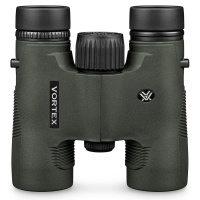
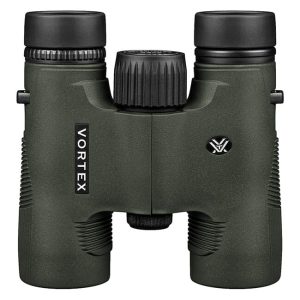
11. Vortex Diamondback HD 8×28. Best Compact
- Exit pupil: 3.5 mm · Twilight factor: 15.0
- Field of view: 332 ft at 1,000 yards
- Weight: 13.7 oz · Close focus: 6.0 ft
- Eye relief: 18 mm, the most generous in this guide
Pros
- 332 ft of view, full-size width
- 13.7 oz, a third of a pound
- 18 mm eye relief for glasses
Cons
- 3.5 mm exit pupil, dim at dusk
- Twilight factor of 15.0, lowest here
- 28 mm objective limits low light
Every other pair on this page assumes you are willing to carry a pound and a half. This one does not, and the number that makes it interesting is the field of view. At 332 ft it shows more ground at 1,000 yards than the 21.3 oz Diamondback HD 10×42 ranked first, in a body that weighs 13.7 oz. For a truck, a pack lid or a coat pocket, that is a genuinely different proposition.
The bill comes due at dusk. A 28 mm objective at 8x gives a 3.5 mm exit pupil and a twilight factor of 15.0, both the lowest in this guide, so it is the wrong binocular for the last twenty minutes of legal light. In daylight it gives up far less than the size difference suggests, which is the whole argument for owning one alongside a full-size pair rather than instead of one.
It is also the only binocular here that one of the five retailers we quote headline prices from actually stocks, so the price on the card is a price you can act on rather than an average of listings. Worth knowing, because optics pricing is unusually noisy.
Best For: A second pair. Truck glass, a pack lid, or anyone who has stopped carrying binoculars because of the weight.
The Two Numbers the Best Binoculars Are Really Judged On
Every binocular guide talks about light gathering. None of them give you the number. That is odd, because it is not a number the manufacturer chooses or protects. It is arithmetic you can do on the box, and it explains most of what people find confusing about binocular prices.
- Exit pupil is the objective divided by the magnification, in millimeters. It is the diameter of the disc of light leaving the eyepiece. A dark-adapted human pupil opens to roughly 5 to 7 mm, so once the exit pupil drops below that, the binocular is the thing limiting how much light reaches your retina. Bigger is brighter.
- Twilight factor is the square root of the magnification multiplied by the objective. It estimates how much fine detail you can resolve in poor light, and it rewards magnification as well as aperture. Bigger is more detailed.
They frequently disagree, and understanding why is the single most useful thing on this page.
| Binocular | Config | Exit pupil | Twilight factor | Price |
|---|---|---|---|---|
| Leupold BX-2 Alpine HD | 8×42 | 5.25 mm | 18.3 | $159.97 |
| Vortex Diamondback HD | 10×42 | 4.2 mm | 20.5 | $249 |
| Vortex Viper HD | 10×42 | 4.2 mm | 20.5 | $299.97 |
| Nikon Monarch M7 | 10×42 | 4.2 mm | 20.5 | $546.95 |
| Leupold BX-4 Pro Guide HD | 10×42 | 4.2 mm | 20.5 | $399.99 |
| Vortex Diamondback HD | 12×50 | 4.17 mm | 24.5 | $279 |
| Vortex Razor HD | 12×50 | 4.17 mm | 24.5 | $934.99 |
| Zeiss SFL | 10×40 | 4.0 mm | 20.0 | $1,699.99 |
| Vortex Diamondback HD | 15×56 | 3.73 mm | 29.0 | $314.49 |
| Sig Sauer Zulu6 HDX | 10×30 | 3.0 mm | 17.3 | $999.99 |
| Vortex Diamondback HD | 8×28 | 3.5 mm | 15.0 | $159.99 |
Four things fall out of that table that no other binocular guide will tell you.
- The cheapest binocular here has the biggest exit pupil. The $159.97 Leupold BX-2 Alpine HD 8×42 delivers 5.25 mm. The $1,699.99 Zeiss SFL 10×40 delivers 4.0 mm. Geometrically, the Leupold puts more light into your eye. That is not a criticism of Zeiss, it is a demonstration that exit pupil is free and glass quality is not.
- Price predicts almost nothing in this table. The Viper at about $300, the BX-4 at about $400 and the Monarch M7 at $547 have identical exit pupils and twilight factors, because they are all 10×42. What separates them is field of view, eye relief, weight and glass.
- Exit pupil and twilight factor point in opposite directions. The 15×56 has the highest twilight factor here at 29.0 and one of the smallest exit pupils at 3.73 mm. It gives you a dimmer image with more detail in it. The 8×42 does the reverse. Neither is better in the abstract, and any guide that quotes one number as “low-light performance” is telling you half the story.
- Image stabilization is paid for in brightness. The Zulu6 HDX is bottom of both columns because stabilization allowed Sig to fit a 30 mm objective. That is a deliberate engineering trade, not a defect, but it means a $1,000 stabilized pair is dimmer at dusk than a $160 one.
The practical rule: pick your configuration from these two numbers, then spend whatever your budget allows on glass quality within that configuration. Choosing 10×42 over 8×42 is a decision about physics. Choosing a Zeiss 10×40 over a Vortex 10×42 is a decision about money.
All figures are derived from the manufacturers’ published magnification and objective. Sources: Vortex, Leupold, Nikon, Zeiss and Sig Sauer.
Field of View: What the Best Binoculars Show You at 1,000 Yards
The other number that gets buried is field of view, the width of ground you can see at 1,000 yards. It falls as magnification rises, and it is the spec that decides how quickly you find something rather than how well you see it once found.
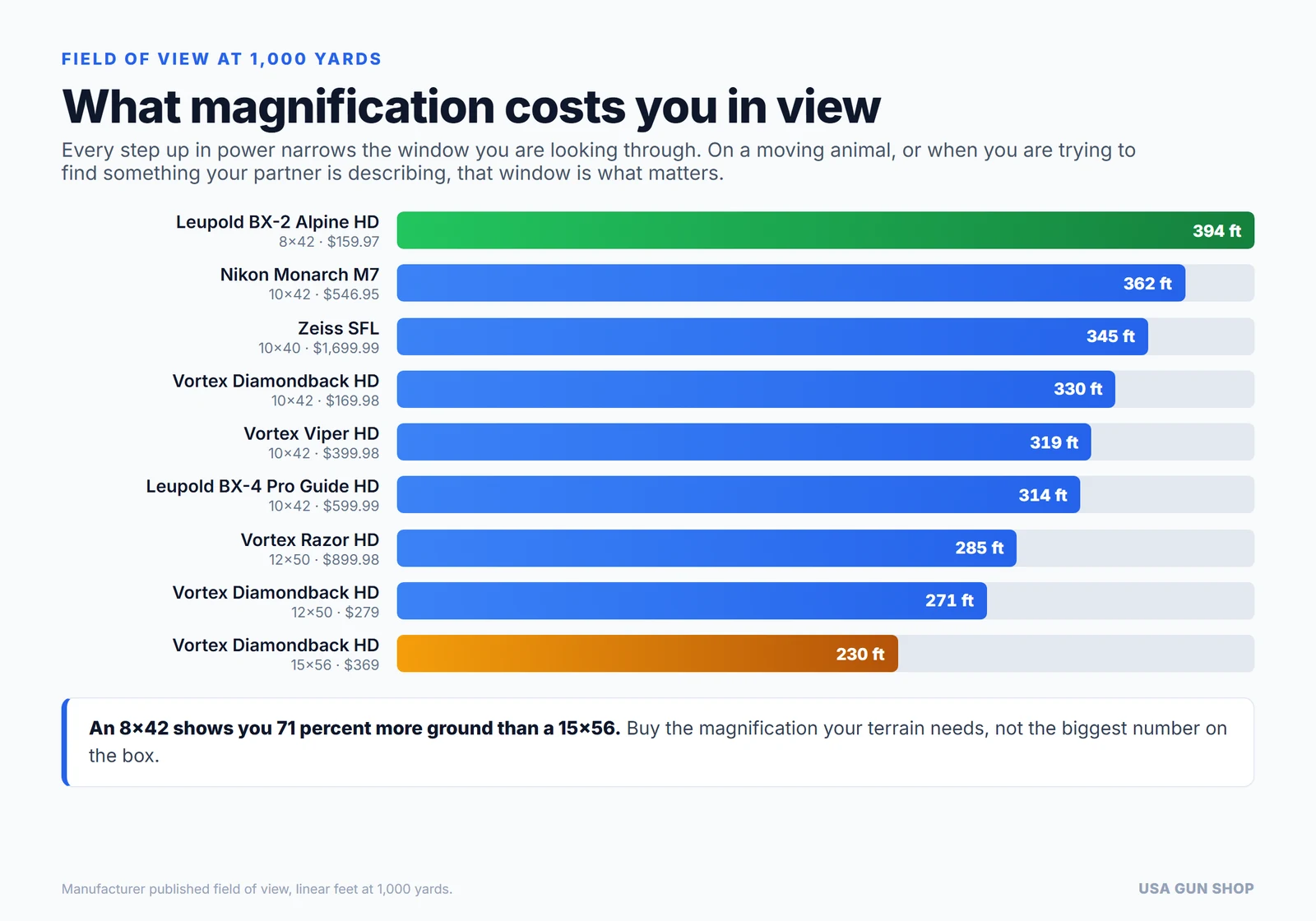
An 8×42 shows you 71 percent more ground than a 15×56. That is the difference between sweeping a hillside and searching it. It is also why the standard advice to buy the most magnification you can afford is wrong for most hunting: in timber, in broken country, or on anything that moves, the wider window finds more animals than the stronger one resolves.
Note too that field of view varies meaningfully within a configuration. All four 10x42s here have identical exit pupils, but the Nikon Monarch M7 shows 362 ft where the Leupold BX-4 shows 314 ft. That is a 15 percent difference for roughly the same money, and it is invisible unless someone puts the numbers side by side.
How to Choose the Best Binoculars for You
Magnification: 8x, 10x, 12x or 15x
8x is the choice for timber, thick country, moving animals and anyone who wants a steady image without a rest. It is also the brightest option in a 42 mm body. 10x is the all-round standard and the right default if you are unsure. 12x starts to demand a rest and pays you back with resolving power on open ground. 15x is a tripod instrument that replaces a spotting scope for a lot of western hunting.
The honest test is whether you can hold the image still. A wobbling 12x image shows you less than a steady 8x one, and no amount of glass quality fixes hands.
Objective size and weight
A bigger objective gathers more light and adds weight roughly in proportion. The useful way to think about it is that objective and magnification should rise together: 8×42, 10×42, 12×50 and 15×56 all keep the exit pupil in a sane band, whereas a 12×42 would drop it to 3.5 mm and a 16×50 to 3.1 mm. Configurations that pair high magnification with a small objective are how you end up with a dim binocular.
Weight matters more than most buyers expect. The range here runs from 19.2 oz to 34.8 oz, which is nearly a pound of difference hanging off your chest on a long climb.
Glass, coatings and prism type
This is what the money actually buys, and none of it appears in the configuration number. ED or HD glass reduces the color fringing you see on high-contrast edges. Phase correction and dielectric coatings on a roof prism recover light and contrast that would otherwise be lost. Fully multi-coated means every air-to-glass surface is treated, and it is the minimum worth buying.
Roof prisms, which every binocular in this guide uses, are slimmer and tougher than the older porro design but need that phase correction to match it optically. That is why a cheap roof-prism pair can look worse than a cheap porro one, and why the coatings list is worth reading.
Eye relief, especially if you wear glasses
Eye relief is how far behind the eyepiece your eye can sit and still see the full field. If you wear glasses you need roughly 15 mm or more, and the range here runs from 14 mm on the Diamondback 12×50 to 16.5 mm on the Viper HD. Buying a pair with too little eye relief means looking through a tunnel, and no other spec compensates.
Image stabilization
Stabilization is genuinely transformative at 10x and above, because your hands are the limit long before the glass is. The catch, as the table above shows, is that it is normally paired with a small objective to keep the weight down, so you trade brightness for steadiness. Excellent in daylight, a poor choice as a dedicated low-light pair.
Binoculars, or rangefinding binoculars
Combining the two saves weight and an item round your neck, but costs considerably more than buying good binoculars and a separate rangefinder, and it puts both functions in one thing that can fail. If budget is the constraint, a $250 Diamondback plus a decent rangefinder beats a cheap combined unit. See our best rangefinders guide for that side of it.
One honest caveat on that default. This is a hunting and range guide, and 10×42 is the right starting point for both. The general-purpose binocular guides, the ones written for birding, hiking and travel, overwhelmingly start at 8×42 instead: wider field, brighter exit pupil, steadier in the hand. If your glassing is mostly in timber, from a moving vehicle or on anything closer than a few hundred yards, buy the 8×42 and do not feel short-changed. The Leupold BX-2 Alpine HD above is that binocular, and it is also the cheapest pair here.
How I Evaluated These Binoculars
Ranking the best binoculars honestly is hard, because the differences that matter appear in conditions you cannot summon on demand. So the work splits into two halves, and this guide is explicit about which is which.
The measured half. Exit pupil, twilight factor, field of view, eye relief, close focus and weight are all published by the manufacturer or derived from figures they publish. Every number in the tables above comes from the maker’s own specification, is recorded in this article’s fact-check ledger with its source, and can be checked against the links at the end of the exit pupil section. Where a maker does not publish a figure, this guide leaves it out rather than repeating a retailer’s estimate. That applies to Nikon’s close focus for the Monarch M7.
The observed half. Glass quality, edge sharpness, color fidelity and low-light behavior were judged by comparison at last light on the same ground, on the same targets, switching between pairs rather than assessing them in isolation. That is the only method that reliably separates optics at this level, because the eye adapts too quickly for absolute judgements to mean much. Every comparative claim in the reviews above, such as the Diamondback’s edge softness or the gap between the Viper and the SFL, comes from that side-by-side work rather than from a spec sheet.
The two halves disagree often, which is the point. The spec table says the $160 Leupold gathers more light than the $1,700 Zeiss, and it does. Looking through both at dusk, the Zeiss still shows you more. A guide that gives you only one of those is not giving you enough to spend money on.
Mistakes to Avoid When Buying the Best Binoculars
- Buying the highest magnification you can afford. It narrows your field, dims your image and magnifies your pulse. Most hunters are better served by 8x or 10x than by 12x.
- Assuming a bigger price means a brighter image. Exit pupil is set by the configuration, not the budget. Check it before you assume the expensive pair wins at dusk.
- Ignoring eye relief because you do not currently wear glasses. You may later, and the binocular will outlast your eyesight.
- Spending the whole budget on the binocular and nothing on the harness. A neck strap turns any good pair into something that swings, bounces and eventually stays in the pack. A chest harness is the cheapest meaningful upgrade you can make.
- Buying a 12x or 15x with no plan to steady it. Above 10x you need a tripod, a bipod or at least a pack to lean on, or you are paying for magnification you cannot use.
- Treating a combined rangefinding binocular as a free upgrade. It is two instruments in one housing, priced accordingly, and one failure takes out both.
The Bottom Line
The best binoculars for most people are the Vortex Diamondback HD 10×42 at around $250. It is the configuration most hunting is done with, it is the lightest full-size pair in this guide at 21.3 oz, and the VIP warranty removes the risk of buying at that price. Nothing else here improves on it enough to justify the step up for a general-purpose pair.
If you hunt thick country or you are mostly out at first and last light, buy the Leupold BX-2 Alpine HD 8×42 instead and spend the difference on a harness. It has the biggest exit pupil and the widest field of view on this page, for ten dollars less.
Above that, be specific about what you are buying. The Nikon Monarch M7 buys field of view, the Viper HD buys eye relief, the BX-4 Pro Guide HD buys weatherproofing, the Diamondback 12×50 buys resolving power on open ground, and the Zeiss SFL buys glass. Work out which of those you actually lack before you spend, because the configuration numbers will not tell you and the price will not either.
Best Binoculars: Frequently Asked Questions
What are the best binoculars for hunting?
The Vortex Diamondback HD 10x42 at around $250 is the best binocular for most hunters. It is the configuration the great majority of hunting is done with, it weighs 21.3 oz which is the lightest full-size pair in this guide, it shows 330 ft of ground at 1,000 yards, and Vortex back it with an unlimited transferable warranty. If you hunt thick country or mostly at first and last light, the Leupold BX-2 Alpine HD 8x42 at around $160 is the better instrument.
What do the two numbers on binoculars mean?
The first is magnification and the second is the objective lens diameter in millimeters, so 10x42 magnifies ten times through 42 mm front lenses. Two more numbers come straight out of those. Exit pupil is the objective divided by the magnification, 42 divided by 10 is 4.2 mm, and it is the disc of light your eye receives. Twilight factor is the square root of the two multiplied, so about 20.5, and it estimates how much detail you can resolve in poor light.
What is the difference between 8x42 and 10x42 binoculars?
More than most guides admit. They share a 42 mm objective but they do not deliver the same amount of light to your eye. The 8x42 has a 5.25 mm exit pupil against 4.2 mm for the 10x42, so its exit pupil is 25 percent wider, which is 56 percent more light by area, and it shows 394 ft of view against 330 ft at 1,000 yards. The 10x42 resolves more fine detail, reflected in a higher twilight factor of 20.5 against 18.3. The 8x is brighter, wider and steadier; the 10x shows more detail.
What is exit pupil on binoculars, and what is a good figure?
Exit pupil is the objective lens diameter divided by the magnification, measured in millimeters. It is the width of the beam of light leaving the eyepiece. A dark-adapted human pupil opens to roughly 5 to 7 mm, so once the exit pupil falls below that the binocular becomes the limiting factor on brightness. Anything of 5 mm or more is excellent for low light, 4 to 4.5 mm is the normal range for a 10x42, and below about 3.5 mm you will notice the image dimming at dusk.
Do expensive binoculars gather more light?
Not necessarily, and this surprises people. Exit pupil is fixed by the configuration, not the price. The $159.97 Leupold BX-2 Alpine HD 8x42 has a 5.25 mm exit pupil while the $1,699.99 Zeiss SFL 10x40 has 4.0 mm, so on pure geometry the cheap pair delivers more light. What the money actually buys is transmission and correction: how much of the light entering the front lens reaches your eye instead of scattering, how well color is held together, and how sharp the image stays at the edge of the field. That is real, and it is invisible in the configuration number.
Are expensive binoculars worth it?
For someone who glasses for hours at a time, yes. Better glass and coatings reduce eye strain and hold detail together in the last twenty minutes of legal light, which is when most hunting is decided. For someone who lifts binoculars a dozen times on a walk, the money is better spent on a chest harness and a rangefinder. Work out which of field of view, eye relief, weight, weatherproofing or glass quality you actually lack before spending, because price alone will not tell you.
What objective size is best for low-light hunting?
Objective size alone does not decide brightness, the ratio does. A 12x50 has a 4.17 mm exit pupil while an 8x42 has 5.25 mm, so the smaller objective is the brighter binocular to your eye despite being 8 mm narrower at the front. What you want for low light is a large exit pupil, which means keeping magnification modest relative to the objective. An 8x42, a 10x50 or an 8x56 all sit at 5 mm or better.
What is twilight factor and how is it different from exit pupil?
Twilight factor is the square root of magnification multiplied by objective diameter, and it estimates resolving power in poor light rather than brightness. The two often disagree. A 15x56 has a twilight factor of 29.0, the highest in this guide, but an exit pupil of only 3.73 mm. So it gives you a dimmer image with more fine detail in it than an 8x42 does. Use exit pupil to judge how bright, and twilight factor to judge how much detail. Any guide quoting one of them as low-light performance is giving you half the picture.
Do you need image-stabilized binoculars?
Only if steadiness is your limiting factor, which it often is above 10x. Stabilization genuinely reveals detail that a shaking image hides. The catch is the trade: the Sig Zulu6 HDX uses a 30 mm objective to keep weight to 19.2 oz, which gives it a 3.0 mm exit pupil, the dimmest in this guide. Excellent for daylight glassing where steadiness and weight matter, a poor choice as a dedicated low-light pair, and it depends on a CR2 battery.
Should I buy binoculars or rangefinding binoculars?
Rangefinding binoculars save weight and one item round your neck, which suits Western and mountain hunting where you glass and range constantly. They also cost considerably more than good binoculars plus a separate rangefinder, and a single failure takes out both functions. If budget is the constraint, a $250 Diamondback HD plus a decent standalone rangefinder gets you more capability than a cheap combined unit.
How much eye relief do I need if I wear glasses?
Around 15 mm or more. Eye relief is how far behind the eyepiece your eye can sit and still see the whole field, and glasses push your eye further back. Among the pairs in this guide it runs from 14 mm on the Diamondback HD 12x50 to 16.5 mm on the Vortex Viper HD 10x42, which is why the Viper is the pick for spectacle wearers. Too little eye relief means looking down a tunnel and no other specification compensates for it.
Do I need a binocular harness?
It is the cheapest upgrade that will change your experience. A harness holds the binocular against your chest instead of swinging from your neck, which keeps it still while you walk, out of the way when you shoulder a rifle, and clean and dry in bad weather. A binocular that swings and bangs ends up in the pack, and a binocular in the pack finds nothing.
More optics guides: pair your glass with a rangefinder or a spotting scope, put the right optic on the rifle with our best rifle scopes roundup, and if you are working out how the whole system fits together start with the gun optics guide.
4,021+ Gun & Ammo Deals
Updated daily from 200+ top retailers. Filter by category, caliber, action type, and price.
Related Guides