

Last updated June 13th 2026
Some of the links below are affiliate links, meaning at no additional cost to you, we may earn a commission if you click through and make a purchase.
- Treat every gun as loaded
- Point the muzzle in a safe direction
- Keep your finger off the trigger until you’re ready to shoot
- Know your target and what’s beyond
Table of Contents
Quick Verdict: .44 Magnum vs .357 Magnum
Both are legendary magnum revolver cartridges, but they serve different masters. Choose the .357 Magnum for self-defense, all-around use and an easier-shooting revolver that also fires mild .38 Special, making it the more versatile everyday choice. Choose the .44 Magnum when you need serious power for handgun hunting, big game or defense against large animals in the backcountry, and you can handle the stout recoil. If that is the direction you are leaning, start with our best .44 Magnum revolvers roundup. In short, the .357 is the better do-everything and defensive round, while the .44 Magnum is the power specialist for hunting and the wilderness.
Specs Comparison: .44 Magnum vs .357 Magnum
| Metric | .44 Magnum | .357 Magnum |
|---|---|---|
| Bullet diameter | .429 in | .357 in |
| Common bullet weight | 240 gr | 125 to 158 gr |
| Typical velocity | ~1,350 fps | ~1,450 fps (125 gr) |
| Muzzle energy | ~900 to 1,000 ft-lbs | ~550 to 650 ft-lbs |
| Recoil | Heavy | Moderate to stout |
| Also fires | .44 Special | .38 Special |
| Best for | Hunting, big game, bear defense | Defense, all-around, carry |
| Year introduced | 1955 | 1934 |
Pros
- Tremendous power and energy
- Excellent for handgun hunting and big game
- Trusted for bear and wilderness defense
- Also fires mild .44 Special
- Iconic, proven big-bore cartridge
Cons
- Heavy recoil that intimidates many shooters
- Big, heavy revolvers that are hard to conceal
- Ammo costs more and kicks hard to practice with
- More gun than self-defense usually requires
Pros
- Proven, effective self-defense round
- Also fires affordable, mild .38 Special
- More manageable recoil than the .44
- Available in carry-size revolvers
- Excellent all-around versatility
- Cheaper to practice with
Cons
- Less power than the .44 for big game
- Stout recoil in lightweight carry guns
- Loud with a sharp muzzle blast
- Not ideal for the largest dangerous animals
The Core Difference: Power and Size
Both are powerful magnum revolver cartridges, but they sit at different points on the power scale. The .44 Magnum fires a big .429-inch bullet, usually 240 grains, with roughly 900 to 1,000 foot-pounds of energy, putting it firmly in big-game and dangerous-animal territory. It is one of the most powerful common revolver cartridges and was once billed as the most powerful handgun cartridge in the world.
The .357 Magnum fires a smaller .357-inch bullet, typically 125 to 158 grains, with around 550 to 650 foot-pounds of energy, which is plenty for self-defense and medium game but well short of the .44’s authority. That power gap drives everything else: the .44 needs bigger, heavier guns and produces more recoil, while the .357 fits smaller revolvers and is easier to shoot. The .44 is about maximum power; the .357 is about balance.
A Brief History of Both Cartridges
The .357 Magnum came first, introduced in 1934 as a high-pressure, lengthened version of the .38 Special, created to offer better penetration and stopping power for law enforcement during the Prohibition era. It quickly earned a fearsome reputation as a manstopper and became a standard police cartridge for decades, beloved for its balance of power and shootability in a service revolver.
The .44 Magnum followed in 1955, developed with the help of Elmer Keith, who wanted a heavy-hitting revolver round for hunting and the outdoors. The Smith and Wesson Model 29 chambered for it, and its fame exploded in 1971 when Clint Eastwood’s Dirty Harry called it the most powerful handgun in the world. That cultural moment cemented the .44 Magnum as the iconic big-bore revolver cartridge it remains today.
Stopping Power and Energy
On raw energy the .44 Magnum clearly leads, carrying roughly half again to nearly double the muzzle energy of a typical .357 Magnum load. That extra power translates into deeper penetration and more authority on large, tough targets, which is exactly why the .44 is chosen for hunting and animal defense. When the job calls for maximum power from a revolver, the .44 delivers it.
The .357 Magnum is no weakling, and for self-defense against human threats it has one of the most respected track records of any handgun cartridge, with proven effectiveness from quality loads. For defensive purposes the .357 has all the power most people need, and the .44’s extra energy becomes overkill that brings punishing recoil. For people, the .357 is enough; for big animals, the .44’s power matters.
Recoil
This is the .357’s practical advantage. While it produces a sharp, stout recoil and a loud muzzle blast, especially in lightweight guns, it is far more manageable than the .44 Magnum, and most shooters can learn to shoot a .357 well with practice. In a medium or full-size revolver, .357 recoil is firm but controllable for accurate, repeated shots.
The .44 Magnum kicks hard, with a heavy, abrupt recoil that intimidates many shooters and can build a flinch quickly. Full-power loads in anything but a heavy revolver are genuinely punishing, and follow-up shots are slower. Experienced shooters manage it with a firm grip, a heavy gun and practice, but recoil is the .44’s biggest drawback and a real barrier for many. The .357 is simply easier to shoot well.
The Dual-Caliber Bonus
Both cartridges share a brilliant feature: each can safely fire a milder parent cartridge. A .357 Magnum revolver also chambers and fires .38 Special, which is cheaper, much softer-shooting and ideal for practice or for recoil-sensitive shooters. This dual-caliber flexibility is one of the .357’s greatest strengths, letting one revolver be both a gentle plinker and a serious defensive gun.
Likewise, a .44 Magnum revolver also fires .44 Special, a lower-pressure round with much less recoil that makes for comfortable practice and a viable defensive load in its own right. Many .44 owners shoot .44 Special most of the time and save full magnums for hunting. Both cartridges therefore offer two guns in one, but the .357’s .38 Special option is cheaper and more widely available, giving it the edge for affordable, flexible practice.
Handgun Hunting
For handgun hunting, the .44 Magnum is the clear winner and a true classic. Its heavy bullet and high energy cleanly take deer, hogs and even larger game at moderate handgun ranges, and from a longer-barreled revolver or a carbine it becomes a genuinely capable hunting tool. Generations of handgun hunters have relied on the .44 Magnum precisely because it has the power the job demands.
The .357 Magnum can take deer and hogs at close range with good bullets and careful shot placement, and many hunters have done so, but it is closer to the minimum for deer-sized game and lacks margin on anything bigger. For a dedicated hunting handgun the .44 is far better suited, while the .357 works for smaller game and close, well-placed shots on deer rather than as a big-game cartridge.
Self-Defense and Home Defense
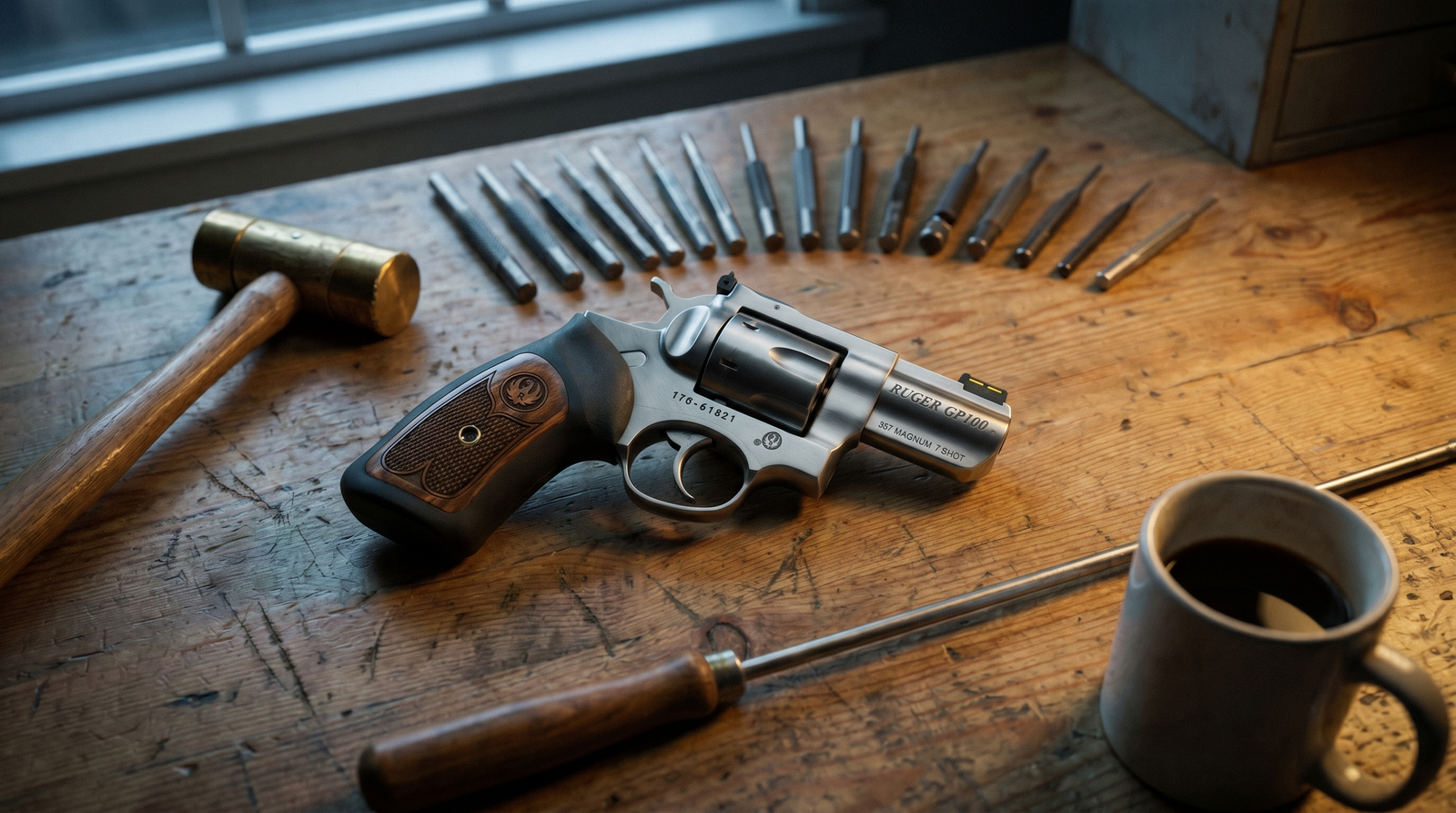
For self-defense and home defense, the .357 Magnum is the better and more sensible choice. It has a legendary defensive track record, manageable enough recoil for fast follow-up shots, and the option to practice with cheap .38 Special, and it lives in revolvers sized for carry and home use. For stopping a human threat, the .357 has everything you need without excess.
The .44 Magnum will certainly stop a threat, but it is more power than self-defense requires, with heavy recoil that slows follow-ups, a blinding muzzle flash indoors, and serious over-penetration concerns in a home. The big revolvers it lives in are also harder to handle quickly. For defense against people, the .357 is the smarter tool, and the .44’s strengths lie elsewhere.
Bear and Wilderness Defense
When the threat is a large animal rather than a person, the calculus flips toward the .44 Magnum. Its heavy, deep-penetrating bullets give backcountry hikers, hunters and anglers real authority against bears and other big animals, which is why the .44 Magnum has long been a trusted trail and wilderness defense cartridge. For dangerous game, penetration and power matter most, and the .44 has both.
The .357 Magnum is considered marginal for large bears, though it has been used for black bear defense with hard-cast deep-penetrating loads and good placement. For serious bear country, most experts favor the .44 Magnum or larger. If wilderness defense against big animals is your primary concern, the .44’s power is reassuring, while the .357 sits at the lower end of adequate for that role.
Concealed Carry
For concealed carry the .357 Magnum is far more practical. It is offered in compact and even small-frame revolvers that conceal and carry comfortably, and the option to load mild .38 Special makes those guns more pleasant to shoot. A .357 snub-nose or a compact GP100-class revolver is a viable everyday carry, balancing power and concealability.
The .44 Magnum lives in large, heavy revolvers that are difficult to conceal and uncomfortable to carry all day, since the cartridge needs a substantial gun to handle its recoil and pressure. While short-barreled .44 Magnums exist, they are brutal to shoot and still bulky. For everyday concealed carry the .357 is the realistic choice, and the .44 is better suited to a holster in the field than under a shirt in town.
The Guns: .357 Magnum Revolvers
The .357 lives in a huge range of excellent revolvers, from compact carry guns to full-size duty wheelguns. Favorites include the Ruger GP100 and SP101, the Smith and Wesson 686 and Model 66, and the Colt Python, spanning sizes from snub-nose carry pieces to heavy target guns. This breadth means you can find a .357 sized for almost any purpose, from pocket carry to range work.
Because .357 revolvers also fire .38 Special and come in so many sizes, they are among the most versatile handguns you can own. A medium-frame .357 can serve as a home-defense gun, a trail gun and a range gun all at once, and a small-frame model handles carry. That deep, varied gun selection is a big part of the .357’s all-around appeal.
The Guns: .44 Magnum Revolvers
The .44 Magnum lives in large, robust revolvers built to handle its power, and many are legendary. The Smith and Wesson Model 29 and stainless 629, the Ruger Super Redhawk and Redhawk, and the Ruger Super Blackhawk are classic choices, typically with longer barrels for hunting. These are substantial guns, heavy by design so they can tame the recoil and endure the pressure.
That size and weight are features for hunting and field use, where the heft soaks up recoil and a long barrel wrings out velocity, but they make the .44 a poor fit for concealment or all-day carry. The gun selection is excellent for the .44’s intended roles of hunting and wilderness defense, just narrower and larger than the .357’s wide-ranging lineup.
Lever-Action Carbines
Both cartridges shine in lever-action carbines, which is a fun and practical bonus. A .44 Magnum lever gun like a Henry or Marlin gains significant velocity and energy from the longer barrel, making it an excellent close-range deer and hog rifle and a handy woods gun that pairs with a .44 revolver on shared ammo. The .44 carbine is a genuinely capable hunting tool.
The .357 Magnum also makes a delightful lever-action carbine, soft-shooting, accurate and able to fire .38 Special for cheap plinking, ideal for small to medium game and recreational shooting. Pairing a revolver and a carbine in the same caliber is a classic combination for both cartridges, letting you carry one type of ammunition for two guns, which is practical and appealing for outdoors use.
Ammo Cost and Availability
The .357 Magnum is cheaper to shoot and more widely available, and the ability to practice with inexpensive .38 Special slashes training costs further. Both .357 and .38 Special are stocked almost everywhere, making the .357 an easy cartridge to live with and to practice often, which builds the skill that matters most.
The .44 Magnum costs noticeably more per round and is less commonly stocked in quantity, and its heavy recoil makes high-volume practice tiring as well as expensive. Shooting .44 Special helps with cost and comfort but adds another ammo type to source. For affordable, frequent practice the .357 has a clear advantage, while the .44 is more of an occasional-use cartridge for most owners.
Shootability and Practice
Skill comes from repetition, and the .357 makes repetition easier and cheaper. Its more manageable recoil, lower ammo cost and .38 Special practice option encourage the regular range time that builds proficiency, and most shooters can become genuinely good with a .357 through normal practice. That accessibility is a real, practical advantage.
The .44 Magnum demands more deliberate practice to master its heavy recoil, and the cost and punishment of full-power loads discourage high-volume shooting. Many .44 owners practice mostly with .44 Special and shoot magnums sparingly. A shooter who practices often with a .357 will usually be more capable than one who rarely shoots a hard-kicking .44, so honest assessment of practice habits should weigh on the choice.
Reloading
Both are favorites among handloaders, since revolver cartridges are easy to reload and components are widely available. Reloading lets you tailor loads to your purpose, from mild target rounds to full-power hunting loads, and it meaningfully cuts the cost of feeding either cartridge, which matters most for the pricier .44 Magnum.
Handloading also lets .44 shooters craft comfortable practice loads and .357 shooters tune defensive or hunting performance, and hard-cast bullets for deep penetration are popular in both for hunting and animal defense. For a reloader, both are rewarding and economical to load, and rolling your own is one of the best ways to enjoy the .44 Magnum without the full retail cost or recoil.
New and Recoil-Sensitive Shooters
For a newer or recoil-sensitive shooter, the .357 Magnum is the far friendlier introduction, especially because it fires mild .38 Special, letting a beginner learn the fundamentals comfortably before working up to full magnum loads. That gentle on-ramp is a major advantage and one of the best reasons to choose a .357 as a first revolver.
The .44 Magnum is a poor first cartridge for most people, since its heavy recoil can quickly build a flinch and discourage practice, though shooting .44 Special softens the introduction. For a beginner who wants a powerful revolver, starting on a .357 with .38 Special and progressing is the wiser path, while the .44 is better suited to shooters who already have recoil tolerance and a specific need for its power.
Common Myths
Myth: the .44 Magnum is too much for anything but hunting. It is excellent for hunting and bear defense, just more than self-defense against people requires. Myth: the .357 is weak. It has one of the best defensive track records of any handgun cartridge. Myth: these guns only fire magnums. A .357 also fires .38 Special and a .44 Magnum also fires .44 Special. Myth: more recoil always means more effective. The cartridge you shoot well beats the one you flinch with.
Barrel Length and Performance
Both cartridges are sensitive to barrel length, and both lose velocity in short barrels. A snub-nose .357 from a 2-inch barrel gives up a chunk of its velocity and energy compared to a 4 or 6-inch barrel, which is worth remembering if you carry a small .357, since some of its famous power lives in longer tubes. A medium-barrel .357 is where the cartridge really performs.
The .44 Magnum likewise rewards a longer barrel, which is part of why hunting revolvers wear 6 to 8-inch barrels to wring out maximum velocity, and why short-barreled .44s are both punishing and less efficient. From a carbine, both cartridges gain substantial velocity. Match the barrel to the job: longer for hunting and power, shorter only when concealment or handiness truly demands it.
Muzzle Blast and Flash
Both magnums are loud and produce a bright muzzle flash, which matters indoors and in low light. The .357 Magnum is notorious for a sharp, concussive report and a vivid flash, especially from short barrels, which can be disorienting in a home-defense situation at night. This is one reason some defenders load .38 Special or choose lower-flash defensive loads in a .357.
The .44 Magnum’s blast and flash are even more dramatic given its greater power, making full-power loads genuinely unpleasant and disorienting indoors. For any indoor or low-light use, both benefit from flash-reduced loads and hearing protection where possible, but the .357’s milder .38 Special option again gives it an edge for comfortable, controllable defensive shooting in confined spaces.
A Note on .357 Magnum vs .357 SIG
It is worth clearing up a common confusion: the .357 Magnum and the .357 SIG are completely different cartridges that are not interchangeable. The .357 Magnum is a rimmed revolver cartridge from 1934, while the .357 SIG is a modern bottlenecked semi-automatic pistol cartridge introduced in the 1990s to mimic .357 Magnum ballistics from a service pistol.
They share a name and a similar bullet diameter but nothing else, and you cannot fire one in a gun chambered for the other. If you are shopping for a revolver and the comparisons in this guide, the cartridge you want is the .357 Magnum. Mentioning this saves real confusion at the ammo counter, since the two names look alike but the rounds and the guns that fire them are entirely separate.
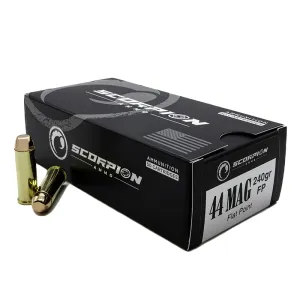
Compare Live .44 Magnum Deals
On-sale 44 magnum from 200+ retailers · Updated every 4 hours

Compare Live .357 Magnum Deals
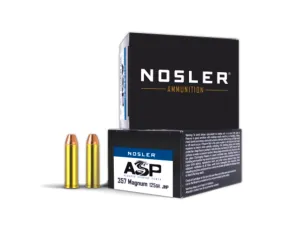
On-sale 357 from 200+ retailers · Updated every 4 hours




Which Should You Buy?
Buy a .357 Magnum if you want a versatile, do-everything revolver for self-defense, carry and the range, you value manageable recoil and cheap .38 Special practice, or you want one gun that does many jobs well. This fits most shooters. Buy a .44 Magnum if you hunt with a handgun, you want serious power for big game, or you need wilderness defense against large animals, and you can handle the recoil. The honest take: the .357 is the smarter all-around and defensive choice, while the .44 Magnum is the power specialist for hunting and the backcountry.
How I Compared These
This comparison draws on published ballistic data for both cartridges, their long track records in defense, hunting and the field, and the practical realities of recoil, gun size, cost and availability. I weighed energy, recoil, gun selection and intended use against how shooters actually carry, hunt and practice with these revolvers, and I checked current ammo pricing across the retailers we track. The goal is an honest, use-case-based recommendation, because the right pick depends entirely on whether you want a defensive all-rounder or a big-bore power cartridge.
Bottom Line
The .357 Magnum and .44 Magnum are both legendary, but they answer different needs. The .357 is the more versatile and practical choice for self-defense, carry and all-around use, with manageable recoil and the bonus of cheap .38 Special practice. The .44 Magnum is the power specialist, unmatched among common revolver rounds for handgun hunting, big game and defense against large animals, at the cost of heavy recoil and big guns. Decide whether you want defensive versatility or big-bore power, and the right magnum is clear.
Frequently Asked Questions
Is the .44 Magnum more powerful than the .357 Magnum?
Yes, significantly. The .44 Magnum carries roughly 900 to 1,000 foot-pounds of energy versus about 550 to 650 for the .357 Magnum, and it fires a much heavier bullet. That extra power makes the .44 better for hunting and big animals, while the .357 has all the power most defensive uses require.
Which is better for self-defense, .44 or .357 Magnum?
The .357 Magnum. It has a proven defensive track record, more manageable recoil for fast follow-up shots, the option to practice with cheap .38 Special, and it comes in carry-size revolvers. The .44 Magnum is more power than self-defense against people requires, with heavy recoil and over-penetration concerns.
Can a .357 Magnum shoot .38 Special, and can a .44 Magnum shoot .44 Special?
Yes to both. A .357 Magnum revolver safely fires the milder, cheaper .38 Special, and a .44 Magnum revolver fires the lower-recoil .44 Special. This dual-caliber flexibility lets each gun serve as both a gentle practice gun and a powerful magnum.
Is the .357 Magnum enough for bear defense?
It is considered marginal for large bears. The .357 has been used for black bear defense with hard-cast deep-penetrating loads and good shot placement, but most experts favor the .44 Magnum or larger for serious bear country. For dangerous big animals, the .44 Magnum is the more reassuring choice.
Which is better for handgun hunting?
The .44 Magnum. Its heavy bullet and high energy cleanly take deer, hogs and larger game at handgun ranges, especially from a longer barrel or a carbine. The .357 can take deer at close range with good bullets and placement, but it lacks the .44s margin on bigger game.
Want a lever gun in either caliber? Read our full Marlin 1894 review, the best pistol-caliber lever-action carbine on the market.
For a reborn stainless .44 Magnum revolver, read our Colt Anaconda review.
For a Western lever gun in either caliber, see our Winchester 1892 review.
3,979+ Gun & Ammo Deals
Updated daily from 200+ top retailers. Filter by category, caliber, action type, and price.
Related Guides