

Last updated June 13th 2026
Some of the links below are affiliate links, meaning at no additional cost to you, we may earn a commission if you click through and make a purchase.
- Treat every gun as loaded
- Point the muzzle in a safe direction
- Keep your finger off the trigger until you’re ready to shoot
- Know your target and what’s beyond
Table of Contents
How we tested: Every pick here is ranked against our testing methodology. Minimum round counts, accuracy and reliability protocols, the failures that disqualify a gun.
Quick Verdict: Sig P320 vs S&W M&P 2.0
Both are excellent modular striker-fired pistols, and you can carry either with confidence. Choose the Sig P320 if you want the platform the U.S. military adopted, a serialized fire control unit you can move between grip modules and calibers, and a vast factory lineup. Choose the Smith and Wesson M&P 2.0 if you want a refined grip and trigger, a strong police track record, a lower price and a deep aftermarket. The P320 wins on modularity and military pedigree, while the M&P 2.0 wins on ergonomics, value and a quieter safety history.
Specs Comparison: P320 vs M&P 2.0
| Metric | Sig P320 (Compact) | S&W M&P 2.0 (Compact) |
|---|---|---|
| Caliber | 9mm (also .40, .45, .357 SIG) | 9mm (also .40, .45) |
| Capacity | 15+1 | 15+1 |
| Trigger | Striker, decent stock | Improved 2.0 striker, crisp reset |
| Modularity | Serialized fire control unit swaps frames and calibers | Removable chassis; grip modules less central |
| Grip | Swappable grip modules, multiple sizes | Interchangeable palmswell backstraps, aggressive texture |
| Manual safety | Optional | Optional (thumb safety models) |
| Military / police | U.S. military M17 / M18 | Widely adopted by police |
| Typical price | $550 to $700 | $480 to $600 |
Pros
- Serialized fire control unit swaps frames, sizes and calibers
- Adopted by the U.S. military as the M17 and M18
- Huge factory lineup from subcompact to full-size
- Optics-ready models widely available
- Clean, modern ergonomics
Cons
- Uncommanded-discharge controversy and lawsuits on early guns
- Stock trigger is good but not the best in class
- Costs a bit more than the M&P 2.0
Pros
- Excellent grip ergonomics and aggressive texture
- Improved 2.0 trigger with a crisp reset
- Strong police adoption and track record
- Lower price than the P320
- Deep aftermarket and holster support
- Interchangeable palmswell backstraps
Cons
- Less radically modular than the P320 fire control unit
- No military contract pedigree
- Some shooters still prefer a flatter aftermarket trigger
Two Modular Striker Pistols
The P320 and M&P 2.0 are both modern, polymer-framed, striker-fired 9mm duty pistols built for carry, police work and home defense. On the core numbers they are close, with the same caliber, the same 15+1 compact capacity, similar size and similar weight, and both are optics-ready and available with or without a manual safety. The decision lives in feel, modularity, track record and price.
Both are also modular in design, built around a removable metal chassis or fire control group, but they take that idea to different degrees. The P320 makes the serialized fire control unit the heart of the gun, while the M&P uses a chassis more as an internal feature than a sell-it-separately module. Understanding how each approaches modularity, ergonomics and its safety history explains the practical differences below.
Background and Track Record
Smith and Wesson introduced the original M&P in 2005 and the refined M&P 2.0 in 2017, addressing early criticisms with a better trigger, more aggressive grip texture and improved reliability. The M&P line earned wide police adoption and a reputation as a comfortable, dependable workhorse, and the 2.0 cemented it as a serious Glock alternative with excellent ergonomics.
Sig Sauer launched the P320 in 2014 and scored a major coup when the U.S. Army selected it as the M17 and M18 in 2017, replacing the Beretta M9 and giving the platform unmatched military pedigree. That contract drove huge civilian interest and a sprawling product line. Both pistols are proven and popular, but the P320 carries the prestige of a military adoption while the M&P 2.0 carries a long, quiet record of police service.
The Modular Fire Control Unit
The P320’s defining feature is its serialized stainless fire control unit, the actual firearm in legal terms, which lifts out and drops into different grip modules, slide sizes and even calibers. This lets one P320 become a full-size duty gun, a compact carry gun or a subcompact simply by changing parts around the same serialized core, a genuinely flexible system that enthusiasts love.
The M&P 2.0 also uses a removable stainless chassis, but Smith and Wesson treats it more as an internal design element than a consumer-swappable module, so changing the M&P’s size means buying a different gun rather than reconfiguring one. For a shooter who values the ability to reshape a single registered pistol across roles and calibers, the P320’s fire control unit is the clear winner and one of its biggest draws.
Trigger
The M&P 2.0 has the better-regarded stock trigger of the two, with the 2.0 update bringing a noticeably crisper break and a more tactile, audible reset than the original M&P, which many shooters appreciate for fast, accurate fire. It is a comfortable, shootable trigger out of the box and a real selling point for the platform.
The P320’s stock trigger is good and serviceable, smooth with a clean enough break, and the X-series and aftermarket flat triggers improve it further, but the base trigger is generally rated a step behind the M&P 2.0 by many reviewers. Both can be upgraded easily, so the gap narrows with aftermarket parts, but stock for stock the M&P 2.0 edges the P320 on trigger feel.
Ergonomics and Grip
Ergonomics are the M&P 2.0’s strong suit. Its grip angle is widely praised as natural and pointable, the aggressive 2.0 texture locks the gun into your hand, and the interchangeable palmswell backstraps let most shooters dial in a comfortable fit. Many people find the M&P one of the most comfortable duty pistols to hold and shoot, which is a genuine advantage.
The P320 has clean, modern ergonomics and offers fit adjustment through its swappable grip modules, which come in different sizes and can be changed entirely rather than just adding a backstrap. That makes the P320 highly adjustable in a different way. Grip feel is personal, but many shooters give the M&P the nod for out-of-the-box comfort, while the P320 wins for the sheer range of grip configurations available.
The P320 Discharge Controversy
Honesty requires addressing the P320’s most discussed issue. Early P320 pistols were the subject of a drop-safety concern that Sig addressed with a voluntary upgrade program, and the platform has since been the focus of lawsuits and reports alleging uncommanded discharges, which Sig disputes and attributes to other factors. This is a real and ongoing controversy that any buyer should be aware of and research for themselves.
Many P320s serve reliably in military and police hands every day, and Sig maintains the pistol is safe, so this is a matter of informed personal judgment rather than a simple verdict. The M&P 2.0 has not faced a comparable high-profile safety controversy, which some buyers weigh heavily. We mention this not to condemn the P320 but because a fair comparison must include it, and you should make your own informed decision.
Reliability
Both are reliable, proven duty pistols. The M&P 2.0 has a long police track record and a reputation for running dependably with little fuss, and the 2.0 update improved reliability over the original. It is a trustworthy gun that agencies and civilians rely on daily without drama.
The P320 is also reliable in the field and has performed well in demanding military service as the M17 and M18, which speaks to its core dependability. Setting aside the separate discharge controversy discussed above, both pistols feed and run well with quality ammunition. For straightforward feeding-and-functioning reliability, the two are closely matched, and either will serve dependably as a duty or carry gun.
Capacity and Calibers
Capacity is a tie at 15+1 in their compact forms, with both accepting larger magazines and offering full-size models with higher counts, so neither has an edge there. Both are primarily 9mm, the sensible modern default for capacity, mild recoil and low cost.
On caliber breadth, the P320 is offered in 9mm, .40 S&W, .357 SIG and .45 ACP, and the fire control unit can be moved between calibers in some configurations, which appeals to shooters who want one registered core across chamberings. The M&P 2.0 covers 9mm, .40 and .45 as well. Both give you caliber choices, with the P320’s caliber-swapping modularity being the more flexible of the two for those who want it.
Optics Ready
Red dots are standard equipment now, and both platforms support them well. The P320 is widely available in optics-ready and RXP configurations, and many models come cut for popular dots, making a red-dot setup easy. The military M17 and M18 themselves are optics-capable, reflecting how central this is to the platform.
The M&P 2.0 is offered in optics-ready M2.0 versions with a plate system for mounting common dots, so it is equally capable of running a modern optic. Both make red dots straightforward as long as you buy the optics-ready variant. This category is a wash, with each platform fully supporting the dot-equipped setup most serious shooters now want.
Sizes and Variants
Both come in deep families. The P320 spans subcompact, compact, carry and full-size frames, plus the upgraded X-series with better triggers and grips, the military M17 and M18, and various optics-ready and TacOps models, all sharing the fire control unit. That breadth, combined with modularity, gives the P320 enormous configurability.
The M&P 2.0 family includes compact, full-size, the longer-slide and the premium M2.0 Metal with an aluminum frame, plus thumb-safety options and optics-ready versions, covering carry through duty roles well. Both lineups let you find the right size and features, with the P320 offering more radical reconfiguration of a single gun and the M&P offering a clean spread of purpose-built models.
Recoil and Shootability
Both are mild, controllable 9mm pistols, and the M&P 2.0’s excellent grip and trigger give it a slight edge in how easy it is to shoot well for many people, since the secure grip and crisp trigger help with fast, accurate strings. Shooters often praise the M&P as one of the more comfortable duty guns to run hard.
The P320 is also very shootable, with a low bore axis that helps keep muzzle flip in check, and the X-series in particular is praised for its shooting manners. A skilled shooter will run either fast and accurately. The differences come down to the M&P’s grip and trigger feel versus the P320’s balance and low bore axis, both of which make for controllable, accurate pistols.
Accuracy
Both are accurate enough for any practical defensive or duty purpose, and at typical distances the difference on target comes down to the shooter. The M&P 2.0’s crisper stock trigger can make precise shots a little easier, since trigger quality drives practical accuracy more than anything else, giving it a small edge in deliberate fire.
The P320 is plenty accurate and the X-series triggers close any gap, and mechanically both are quality, accurate pistols. As with most modern striker guns, the gap between them is small and shooter skill dominates. Either will deliver the accuracy you need for carry, duty or the range, with the M&P offering a slight head start from its trigger.
Aftermarket and Holsters
Both enjoy strong aftermarket and holster support, well behind the Glock but solid in their own right. The M&P 2.0 has a deep, mature aftermarket with abundant holsters, sights, triggers and parts, reflecting its long popularity, so accessorizing one is easy and affordable.
The P320’s aftermarket is also large and growing fast, boosted by the military adoption and the enthusiast modularity scene, with plentiful grip modules, holsters, optics plates and parts. Both are easy to accessorize, and holster selection is good for each. This category is roughly even, with both offering far more support than newer entrants and enough options to set up either gun the way you want.
Duty and Military Adoption
The P320 owns the prestige here. Its selection as the U.S. Army’s M17 and M18, replacing the Beretta M9, is a landmark adoption that drove its popularity and signals serious institutional confidence in the platform. Many police agencies have also adopted the P320, and that military pedigree is a genuine draw for buyers who value it.
The M&P 2.0 counters with broad and long-standing police adoption across the United States, where it has served as a duty pistol for many departments and earned a reputation as a dependable, comfortable workhorse. So both are proven in professional service, with the P320 carrying the headline military contract and the M&P carrying a deep, quiet record of everyday police duty use.
Price and Value
The M&P 2.0 is generally the more affordable of the two, often noticeably cheaper than a comparable P320, while still delivering an excellent trigger, grip and reliability, which makes it a strong value pick. For a shooter who wants a refined duty pistol without paying the Sig premium, the M&P 2.0 is hard to beat on dollars.
The P320 costs a bit more, and you are paying for the modular fire control system, the military pedigree and Sig’s brand. It holds value well and the modularity can save money long-term if you reconfigure rather than buy multiple guns. Still, for pure up-front value the M&P 2.0 leads, while the P320 justifies its price with modularity and pedigree.
Common Myths
Myth: the P320 is unsafe, period. It serves widely in the military and police; the discharge controversy is real and worth researching, but it is a matter of informed judgment, not a settled verdict. Myth: the M&P is just a Glock clone. It has its own grip, trigger and chassis, and many prefer its ergonomics. Myth: only the P320 is modular. Both use a removable chassis, though the P320’s is far more central. Myth: you must pick the military gun. Buy the one that fits your hand and budget.
Concealed Carry
Both conceal well in their compact and carry forms, and both come in smaller variants for deeper concealment, so neither has a decisive edge for everyday carry. The compact P320 and compact M&P 2.0 ride comfortably inside the waistband in a good holster and hide under normal clothing for most carriers, making either a viable daily gun.
For maximum concealment, the P320 offers subcompact and carry configurations, and the M&P line includes the Shield and smaller M2.0 models, though those subcompacts blur into a different size class. Holster availability is good for both. Practically, your carry choice between these two comes down to grip feel and the other factors in this guide rather than concealability, since both hide about equally well at a given size.
Maintenance and Disassembly
Both are simple to maintain and field strip without much fuss, asking only for routine cleaning and lubrication to keep running. A notable difference is takedown: the P320 disassembles using a takedown lever and does not require pulling the trigger, which some shooters prefer on principle, while the M&P uses its own takedown process with a sear-deactivation lever that also avoids a trigger pull.
Neither is fussy day to day, and both tolerate the normal neglect of a working pistol. Parts and armorer support are solid for each given their wide adoption, so long-term upkeep is straightforward. For most owners, maintenance is a non-issue with both guns, and the small differences in takedown procedure come down to personal preference rather than any real advantage.
The X-Series and Premium Variants
Both platforms offer upgraded premium versions worth knowing about. The Sig P320 X-series brings better triggers, optics-ready slides and improved grip modules, addressing the stock trigger criticism and representing the platform at its best, and it is a popular step up for shooters who want a more refined P320 from the factory.
Smith and Wesson answers with the M&P M2.0 Metal, which swaps the polymer frame for aluminum to add weight and a different feel, plus various optics-ready and competition-oriented models. If you are weighing these two, it is worth comparing the premium variants as well as the base guns, since the X-series and the Metal series shift the value and performance equation in each platform’s favor.
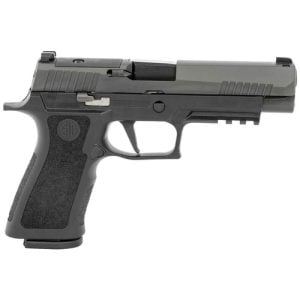
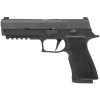
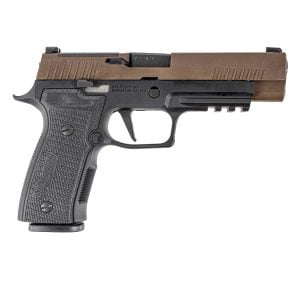
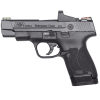
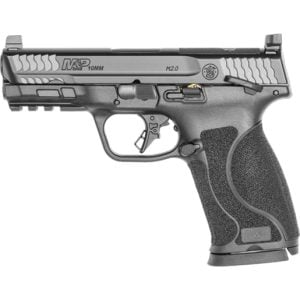
Sig P320 Live Prices
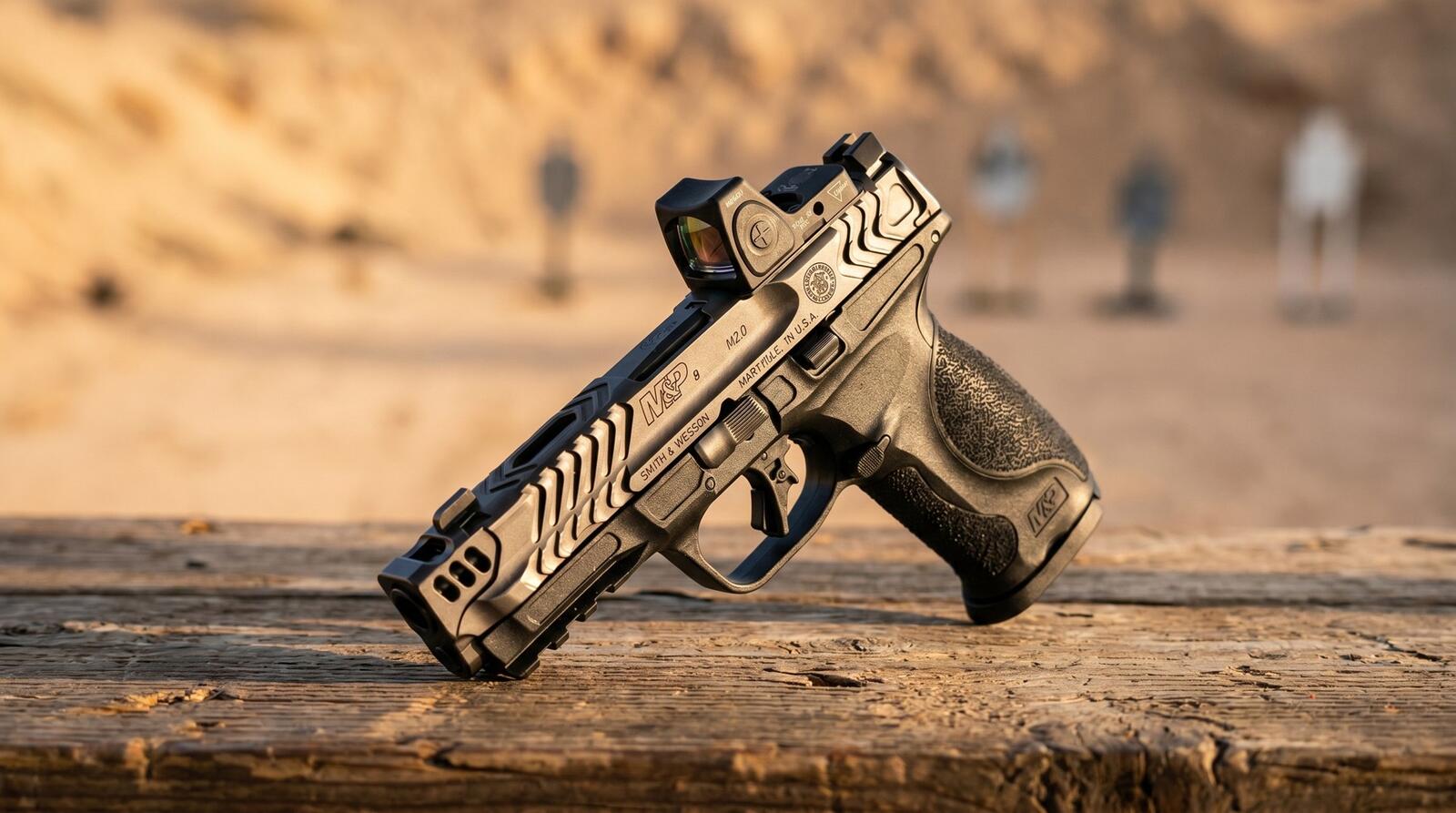
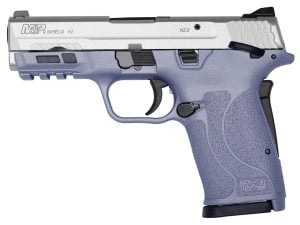
S&W M&P 2.0 Live Prices
Which Should You Buy?
Buy the Sig P320 if you want the platform the U.S. military adopted, the flexibility of a serialized fire control unit you can move between frames and calibers, and the broadest factory lineup, and you are comfortable after researching the discharge controversy. Buy the M&P 2.0 if you want the better stock trigger and grip, a strong police track record, a lower price and a deep aftermarket. The honest take: the M&P 2.0 is the better value and the more comfortable gun out of the box, while the P320 offers unmatched modularity and military pedigree.
How I Compared These
This comparison is based on hands-on experience with both pistols, their published specifications, their service records, and the practical realities of carrying, shooting and supporting each. I weighed trigger, ergonomics, modularity, reliability, price and aftermarket against how these guns perform for carry and duty, and I addressed the P320 discharge controversy honestly because a fair comparison must. I also checked live pricing across the retailers we track, so the recommendation reflects real-world cost as well as performance.
Bottom Line
The Sig P320 and Smith and Wesson M&P 2.0 are both outstanding modular striker pistols, and either makes a capable carry or duty gun. The P320 wins on modularity and the prestige of its military adoption, offering a serialized fire control unit and a vast lineup, though buyers should research its discharge controversy. The M&P 2.0 wins on ergonomics, stock trigger, price and a quieter safety history. Decide whether modularity and pedigree or comfort and value matter more, and the right pistol is clear.
Frequently Asked Questions
Is the Sig P320 or M&P 2.0 better?
Both are excellent. The P320 wins on modularity, with a serialized fire control unit that swaps frames and calibers, plus the prestige of being the U.S. military M17 and M18. The M&P 2.0 wins on stock trigger, grip ergonomics, lower price and a quieter safety history. The right pick depends on what you value.
Which has the better trigger, the P320 or M&P 2.0?
Out of the box, the M&P 2.0. Its 2.0 trigger has a crisper break and a more tactile reset than the stock P320 trigger, which is good but generally rated a step behind. Both can be improved with aftermarket triggers, and the Sig X-series triggers narrow the gap.
What is the P320 discharge controversy?
Early P320s were subject to a drop-safety concern that Sig addressed with a voluntary upgrade program, and the platform has since faced lawsuits and reports alleging uncommanded discharges, which Sig disputes. Many P320s serve reliably in the military and police. It is a real, ongoing issue buyers should research and weigh for themselves.
Is the M&P 2.0 used by police?
Yes, widely. The M&P line has been adopted by many U.S. police departments and has a long track record as a dependable duty pistol. The P320 also has police and military adoption, including the U.S. Army M17 and M18, so both are proven in professional service.
Which is cheaper, the P320 or M&P 2.0?
The M&P 2.0 is generally the more affordable of the two, often noticeably cheaper than a comparable P320, while still offering an excellent trigger and grip. The P320 costs more, with the price reflecting its modular fire control system and military pedigree.
3,979+ Gun & Ammo Deals
Updated daily from 200+ top retailers. Filter by category, caliber, action type, and price.
Related Guides