

For more than 170 years, the name Smith & Wesson has been almost a synonym for “revolver.” The company put the first practical cartridge revolver in America’s hand, gave the world the .357 Magnum and the .44 Magnum, armed generations of police with the Military & Police revolver, and then did it all again in the polymer age with the striker-fired M&P pistol and the runaway-hit Shield. Here is who they are, what they make, and what is worth buying.
Table of Contents
Who Smith & Wesson is
Smith & Wesson is a 170-year-old American gunmaker, founded in 1852, that is almost synonymous with the revolver. It produced the first practical cartridge revolver, invented the .357 and .44 Magnum, and now builds the striker-fired M&P pistol line from Maryville, Tennessee.
Horace Smith and Daniel B. Wesson first went into business together in 1852, and their first venture was a flop. They built a clever lever-action repeating pistol called the Volcanic, ran out of money, and sold the company to one of their investors — a shirt manufacturer named Oliver Winchester, who turned it into Winchester Repeating Arms. So the same two men who founded Smith & Wesson also, by accident, founded Winchester. Undeterred, Smith and Wesson regrouped and re-formed their partnership in 1856 in Springfield, Massachusetts, where the company would stay for the next 167 years.
Their second act changed firearms forever. Wesson had secured the rights to a patent for a cartridge that fit a “bored-through” cylinder, and in 1857 Smith & Wesson released the Model 1 — the first commercially successful revolver to fire a self-contained metallic cartridge instead of loose powder and ball. From there came the Old West top-breaks, then the 20th-century icons: the .357 Magnum in 1935, the Model 29 in .44 Magnum in 1955 (made famous a generation later as Dirty Harry’s “most powerful handgun in the world”), and the Model 10 Military & Police, one of the most-produced handguns in history.
Smith & Wesson spans the value-to-premium range. A basic M&P or a stainless J-frame is an affordable working gun; a Performance Center revolver or a tuned 1911 is a genuinely premium piece. In 2023 the company moved its headquarters and much of its manufacturing from Massachusetts to Maryville, Tennessee — a notable chapter for a brand that had called Springfield home since before the Civil War.
What Smith & Wesson makes
Revolvers
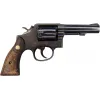
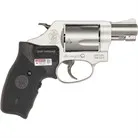
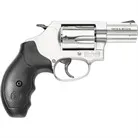
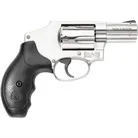
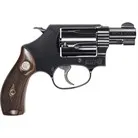
This is the heart of the company. The small-frame J-frame — the Model 36 Chief’s Special and its many descendants — is the classic snub-nose pocket revolver. The medium K and L frames cover .38 Special and .357 Magnum duty and carry guns, and the big N and X frames handle the .44 Magnum and the monstrous .500 S&W Magnum, one of the most powerful production handgun cartridges ever made.
The M&P pistol line
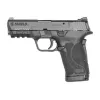
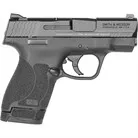
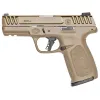
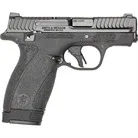
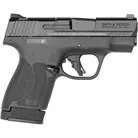
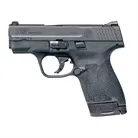
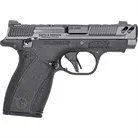
Launched in 2005, the M&P (Military & Police) is Smith & Wesson’s polymer striker-fired answer to the Glock. The current M&P M2.0 full-size and compact guns fixed the early triggers and added aggressive grip texture, and the slim M&P Shield and Shield Plus became some of the best-selling concealed-carry pistols in America.
Easy-rack and rimfire pistols
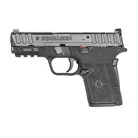
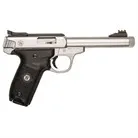
The M&P EZ series — in .380 and 9mm — uses a light, easy-to-rack slide and a grip safety aimed at new shooters and anyone with limited hand strength, and it found a big audience. The SW22 Victory covers affordable .22 target and plinking duty.
1911s, rifles, and the Performance Center
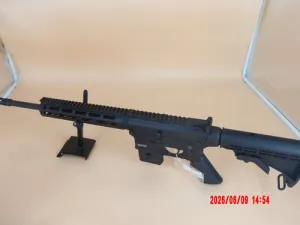
Smith & Wesson builds the SW1911 in standard and Performance Center trims, the M&P15 AR-15 and the newer Volunteer and Response rifles. The Performance Center is the in-house custom shop that tunes actions, ports barrels, and turns the standard catalog guns into competition-ready pieces.
Build quality and the internal lock
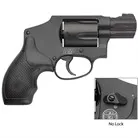
Smith & Wesson guns are American-made, and the steel revolvers in particular have a deserved reputation for lasting lifetimes. There is one honest sticking point worth naming: since around 2001, most S&W revolvers ship with an internal lock above the cylinder release — derided by purists as the “Hillary hole” — that a vocal share of revolver shooters dislikes on principle and occasionally blame for reliability gripes. The company still sells some no-lock models, and the lock is a non-issue for most owners, but it is the one feature long-time S&W fans will warn you about. On the pistol side, the early M&P triggers were merely okay; the M2.0 generation fixed that.
How Smith & Wesson compares
In revolvers, the real rival is Ruger — Ruger guns are famously overbuilt and lock-free, while S&W actions are generally smoother out of the box and the catalog is far deeper. In striker pistols, the M&P goes head to head with the Glock and the SIG P320: the M&P arguably has the most natural grip angle and best stock ergonomics of the three, while Glock wins on aftermarket breadth. For easy-racking carry guns aimed at new shooters, the M&P EZ has no real direct equal.
Who should buy what
- The pocket-carry revolver fan: a J-frame in .38 Special or .357 Magnum.
- The everyday concealed carrier: an M&P Shield Plus.
- The new or recoil-sensitive shooter: an M&P 380 or 9mm EZ.
- The home-defense buyer: a full-size M&P M2.0 or a 4-inch .357 revolver.
- The big-bore hunter: an N- or X-frame in .44 or .500 Magnum.
If you specifically want a lock-free revolver above all else, you may end up looking at Ruger instead — but for nearly everyone, S&W’s depth of catalog makes it the first stop.
The Smith & Wesson philosophy
Smith & Wesson has always been the company that brings a big idea to the mass market. They did not invent the metallic cartridge, but they built the first revolver everyone could actually buy to fire one. They did not invent the magnum, but the .357 and .44 Magnum are theirs. They were late to the polymer striker pistol, then built one of its best-selling examples. The throughline is range and reach: more frames, more calibers, more configurations than anyone else, so there is a Smith & Wesson for almost every job.
How to choose your Smith & Wesson setup
Decide first between a revolver and a semi-auto. If you want simplicity, a fixed manual of arms, and a gun that handles the heaviest loads, go revolver — pick the frame size for your caliber and carry method, and choose a no-lock model if the internal lock bothers you. If you want capacity and a modern carry gun, go M&P — Shield Plus for concealment, full-size M2.0 for duty and home defense, EZ if racking a slide is a challenge. From there, spare factory magazines and a holster matched to the exact model are the only must-have accessories; everything else is preference.
From Springfield to Springfield
For 167 years Smith & Wesson built guns in Springfield, Massachusetts — the same city, by coincidence, that gave the Springfield Armory its name. The company armed Union officers in the Civil War, lawmen in the Old West, beat cops through the entire 20th century, and Hollywood’s most famous detective. It survived British and conglomerate ownership, a controversial 2000 agreement that triggered a boycott, and the slow shift from wheelguns to polymer. Through all of it the silver S&W monogram stayed one of the most recognized marks in American manufacturing — and in 2023 it started a new chapter in Tennessee. The parts and accessories on this page are how you keep your piece of that history running.
What Smith & Wesson owners upgrade
The striker-fired M&P is one of the most upgraded pistols in America, and the single most common change is the trigger. Apex Tactical built much of its name on M&P trigger kits that clean up the somewhat mushy factory pull. After that come better sights, whether suppressor-height or tritium, an optic plate or a milled slide for a red dot, an extended magazine release, and aftermarket match barrels. On the carry-size Shield, owners add grip tape, extended magazines and pocket clips to tailor the gun for everyday carry.
On the revolver side, the classic upgrades are grips and springs. A Hogue or VZ grip reshapes the gun to fit the hand, a Wolff spring kit lets you tune the double-action pull, and a brighter front sight transforms the older fixed-sight guns. Some owners of recent revolvers have a gunsmith remove or plug the internal lock.
The common thread is that almost everything worth changing on a Smith & Wesson is a drop-in part rather than a gunsmithing job. Whether you run a polymer M&P or a steel wheelgun, the trigger kits, sights, grips and springs that make the biggest difference are in the carousels below.
Shop Smith & Wesson Parts & Prices
Live Smith & Wesson products and current prices, organized by department and updated automatically.
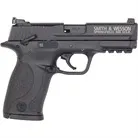
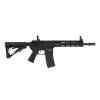
Smith & Wesson Pistols

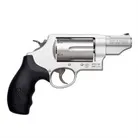
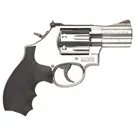
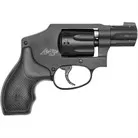
Smith & Wesson Revolvers
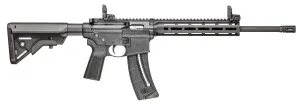
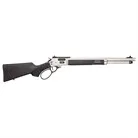
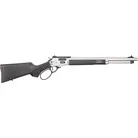
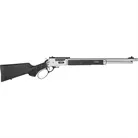
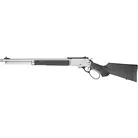
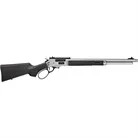
Smith & Wesson Rifles
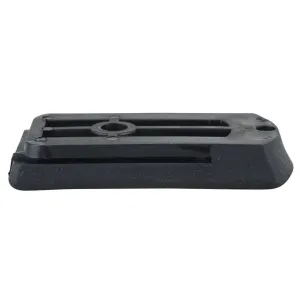
Magazines




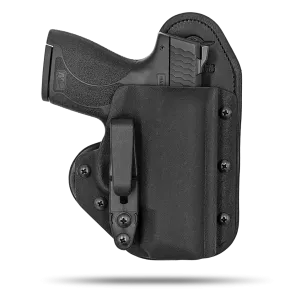
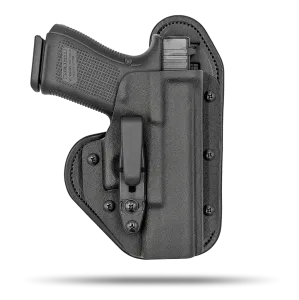
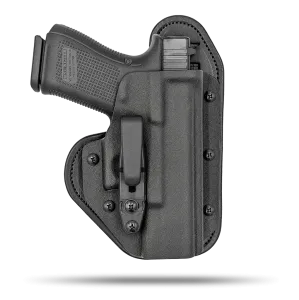
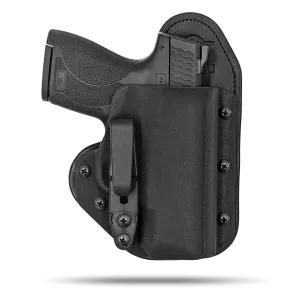
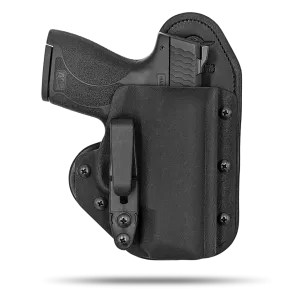
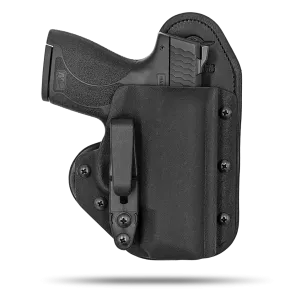
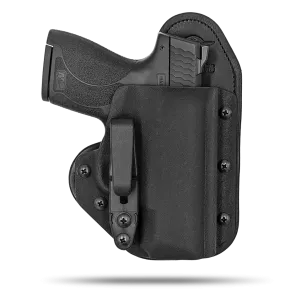
IWB Holsters
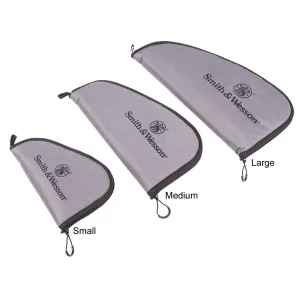
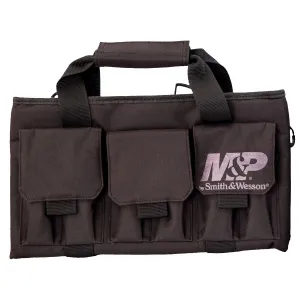
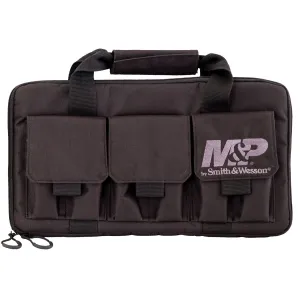
Pistol Cases





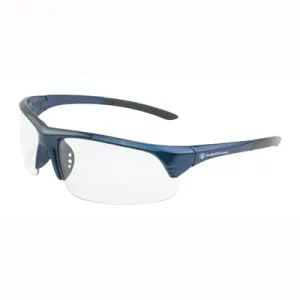
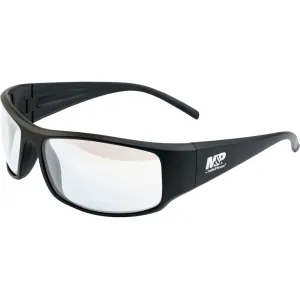
Eye Protection



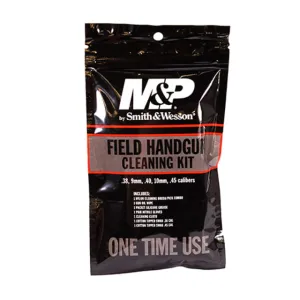
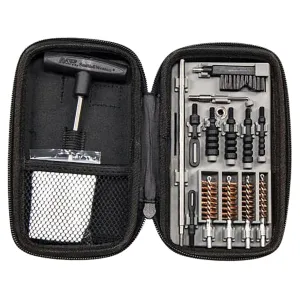
Cleaning Kits


Where Smith & Wesson Fits in Our Buying Guides
- Best Smith & Wesson Pistols
- The Best .357 Magnum Revolvers
- The Best .44 Magnum Revolvers
- The Best .38 Special Revolvers
- The Best Home-Defense Revolvers
- The Best Compact 9mm Pistols
- The Best 1911 Pistols Under $1,000
Smith & Wesson FAQ
Where are Smith & Wesson guns made?
In the United States. After 167 years in Springfield, Massachusetts, the company moved its headquarters and much of its manufacturing to Maryville, Tennessee in 2023.
Did Smith & Wesson really start Winchester?
Indirectly, yes. Smith and Wesson’s first company built the Volcanic pistol, failed, and was sold to investor Oliver Winchester, who reorganized it into Winchester Repeating Arms. The two men then re-founded Smith & Wesson in 1856.
What is the “Hillary hole” on S&W revolvers?
It is the nickname for the internal lock added above the cylinder release around 2001. Many revolver purists dislike it; the company still offers some no-lock models, and for most owners it is a non-issue.
Did Smith & Wesson invent the .357 and .44 Magnum?
Yes. S&W introduced the .357 Magnum in 1935 and the .44 Magnum, in the Model 29, in 1955 — the latter made famous by the Dirty Harry films.
What is the M&P Shield?
A slim, single-stack-width concealed-carry pistol in the M&P family. The Shield and Shield Plus are among the best-selling carry guns in America.
M&P or Glock?
Both are excellent polymer strikers. The M&P generally has the more natural grip angle and ergonomics; Glock has the larger aftermarket. It comes down to which fits your hand.
What was the first Smith & Wesson revolver?
The Model 1, introduced in 1857, was the first successful metallic-cartridge revolver in America, the design that made the company and changed handguns for good.
What tier is Smith & Wesson?
Full range — affordable working revolvers and M&P pistols at the value end, Performance Center guns at the premium end, all American-made.
Related Firearm Manufacturers Brands
USA Gun Shop may earn a commission on purchases made through the links on this page, at no extra cost to you. We list products on merit; prices and availability are pulled live and can change.
5,743+ Gun & Ammo Deals
Updated daily from 200+ top retailers. Filter by category, caliber, action type, and price.