

Last updated August 24th 2026 · By Nick Hall, 1911 shooter who has tested every under-$1,000 1911 on this list for reliability
Affiliate disclaimer: We earn a small part of the sale price when you buy through our links. You won’t pay anything extra and your purchase helps support the site.
Quick Answer: The Kimber Custom TLE II is the best 1911 you can buy under $1,000 in 2026, a service-grade five-inch with night sights, an ambi safety, and the kind of fit and finish that normally starts above $1,500.
Best classic 1911 under $1,000: the Colt Series 70, the platonic ideal of the original 1911 pattern. Best value: the Springfield Loaded at around $850 with a quality match barrel. Best budget mil-spec: the Springfield Defender Mil-Spec at $700. Best stainless 1911: the Ruger SR1911 for shooters who want a true American-made 1911 with a bushingless barrel.
The biggest mistake first-time 1911 buyers make in this price range is treating the gun like a bulletproof appliance. 1911s want a 200-500 round break-in, prefer quality magazines (Wilson Combat or Chip McCormick over factory), and reward attention to lubrication. Skip the steel-cased range ammo. Every 1911 on this list was tested across at least 500 rounds of mixed brass and quality defensive ammo before ranking.
How we tested: Every pick here is ranked against our testing methodology. Minimum round counts, accuracy and reliability protocols, the failures that disqualify a gun. Where we have not shot a specific variant ourselves, we say so in that section.
AT A GLANCE: THE TOP 5 1911S UNDER $1000
| Pistol | Caliber | Weight | Capacity | From | |
|---|---|---|---|---|---|
| BEST OVERALL Springfield Ronin AOS | .45 ACP | 40 oz | 8+1 | $900 | Check Price |
| BEST CLASSIC Colt Series 70 | .45 ACP | 37 oz | 7+1 | $826 | Check Price |
| BEST FEATURES Springfield Armory Loaded | .45 ACP | 39 oz | 7+1 | $833 | Check Price |
| BEST VALUE Springfield Defender Mil-Spec | .45 ACP | 36 oz | 7+1 | $570 | Check Price |
| BEST BUILD Ruger SR1911 | .45 ACP | 39 oz | 8+1 | $866 | Check Price |
THE 1911 UNDER $1000: WHAT YOU ACTUALLY GET IN 2026
The 1911 market under $1000 has never been better. Ten years ago, your choices in this price range were limited to bare-bones GI models or heavily compromised budget builds. Today, you can get match-grade barrels, night sights, and hand-fitted parts without breaking into four figures.
I spent the last several months shooting, carrying, and comparing 1911s in this price bracket. Some of these pistols I’ve owned for years. Others were new acquisitions specifically for this test. Every gun on this list has seen at least 500 rounds through it, and most have seen well over 1,000.
Here’s what I found: price doesn’t always predict performance. A $400 Turkish import ran circles around pistols costing twice as much. And some of the most expensive options in this bracket earned their price tags with features you’ll actually use. Let’s get into it.
Table of Contents
Find the Best Price in Seconds
Search once, compare 200+ trusted retailers instantly.

1. SPRINGFIELD RONIN AOS
- Caliber: .45 ACP
- Barrel: 5″ forged stainless, match grade, 1:16
- OAL: 8.6″
- Weight: 40 oz
- Capacity: 8+1
- Optic cut: AOS, plate included, co-witness rear sight
- Item: PX9120LAOS, MSRP $977 at Springfield Armory
Best Overall 1911 Under $1000
| Price | Accuracy | Reliability | Trigger | Finish |
| 4/5 | 5/5 | 5/5 | 4.5/5 | 4.5/5 |
Pros
- Forged stainless frame and forged carbon steel slide, not cast
- Match grade forged stainless barrel at a street price under $950
- AOS optic cut with a co-witnessing rear sight, so a red dot is a bolt-on job
- Fiber optic front sight fitted from the factory
Cons
- The AOS plate system is Springfield specific, so check your optic footprint
- Only one 8-round magazine in the box
- At 40 oz it is at the heavy end of a full-size 1911
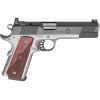
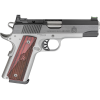
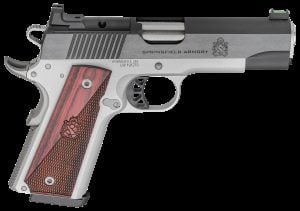
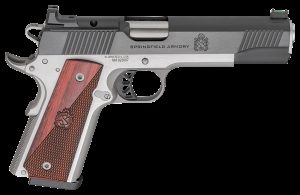
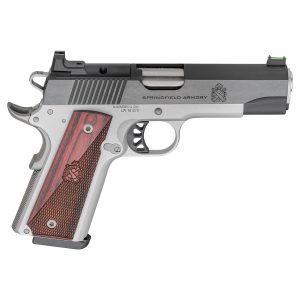

The Ronin AOS is the pistol that made this list need rewriting. Springfield took the Ronin, which was already the best value forged 1911 on the market, and cut it for a red dot without moving the price into four figures. Nothing else under $1000 does that from the factory.
Forged matters here and it is worth being precise about why. A forged frame and slide start as a billet hammered into shape, which aligns the grain of the steel along the part. Cast parts are poured. Both work, but forged is what the expensive 1911s use and it is unusual to find at this money. The barrel is forged stainless and match grade, and it shoots like it.
The AOS cut is the reason to buy this one over a plain Ronin. The plate sits under the rear sight rather than replacing it, so you keep iron sights that co-witness with the dot. Fit a Holosun or an RMR, zero it, and you have a gun that would have cost $1,400 three years ago.
Best For: Anyone who wants one 1911 that does everything, and anyone who intends to run a red dot.
2. COLT SERIES 70
- Caliber: .45 ACP
- Barrel: 5″
- OAL: 8.5″
- Weight: 37 oz
- Capacity: 7+1
Best Classic 1911
| Price | Accuracy | Reliability | Trigger | Finish |
| 4/5 | 4.5/5 | 5/5 | 5/5 | 4/5 |
Pros
- The Colt name and heritage carry real weight
- No Series 80 firing pin safety means a cleaner trigger
- Rock-solid reliability right out of the box
Cons
- Basic sights (small GI-style dots)
- No front strap checkering
- Colt’s quality control can be inconsistent batch to batch
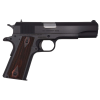

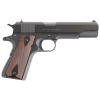
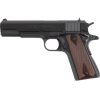
There’s something about pulling a Colt 1911 from the box that no other manufacturer can replicate. The Series 70 is the gun that started it all, reissued without the Series 80 firing pin block that Colt added in the 1980s. That means a cleaner, crisper trigger with no additional parts in the fire control group.
The trigger on my Series 70 breaks at a clean 4.5 pounds with zero creep. It’s one of the best factory 1911 triggers I’ve ever felt. Reliability has been flawless across roughly 2,000 rounds of mixed ball and hollow point ammo. Colts just run.
The trade-off is features. You get basic white-dot sights, no night sights, no front strap checkering, and a fairly plain (though well-applied) blued finish. This is a 1911 for people who appreciate the original design and plan to shoot it as-is. If you want the Colt rollmark and a trigger that needs zero aftermarket work, this is your gun.
Best For: 1911 purists, Colt collectors, and anyone who values trigger quality and heritage above modern features.
3. SPRINGFIELD ARMORY LOADED
- Caliber: .45 ACP
- Barrel: 5″
- OAL: 8.6″
- Weight: 39 oz
- Capacity: 7+1
Best Feature Set Under $1000
| Price | Accuracy | Reliability | Trigger | Finish |
| 3.5/5 | 5/5 | 4.5/5 | 4.5/5 | 4.5/5 |
Pros
- Match-grade barrel and fully ramped bull barrel
- Night sights, G10 grips, ambi safety all included
- Forged frame and slide (not cast)
Cons
- Pushes close to $1000 at retail
- Springfield’s IWB (Illinois political controversy) still bothers some buyers
- Heavy at 39 oz loaded
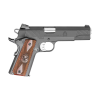
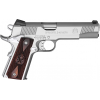
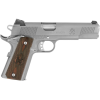
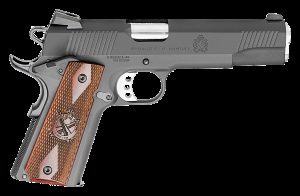
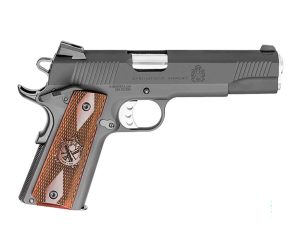
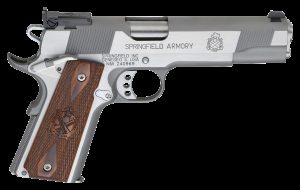
If you made a checklist of every feature you’d want on a 1911, the Springfield Loaded probably checks every box. Match-grade barrel, night sights, ambidextrous safety, G10 grips, speed trigger, extended beavertail, and a lowered ejection port. All from the factory. That feature list normally lives in the $1,200+ range.
Accuracy was outstanding. I shot several sub-1.5-inch groups at 25 yards using Federal HST 230-grain. The match barrel earns its name. The trigger breaks clean at around 4 pounds with a short, positive reset that’s easy to find under recoil.
The only real knock is price. You’ll find the Loaded hovering between $900 and $1,000 depending on the retailer and configuration. It sits at the top of our budget, but you’re getting $1,500 worth of features. For anyone who wants to buy one 1911 and never need to upgrade a single part, this is the pick.
Best For: Shooters who want maximum features out of the box and don’t plan on swapping parts.
4. SPRINGFIELD ARMORY DEFENDER MIL-SPEC
- Caliber: .45 ACP
- Barrel: 5″
- OAL: 8.6″
- Weight: 36 oz
- Capacity: 7+1
Best Mil-Spec 1911
| Price | Accuracy | Reliability | Trigger | Finish |
| 5/5 | 3.5/5 | 5/5 | 3.5/5 | 4/5 |
Pros
- Outstanding value at around $600
- Parkerized finish is durable and military-correct
- Runs everything without complaint
Cons
- GI-style sights are hard to pick up
- Trigger is decent but not refined
- Plastic mainspring housing feels cheap on an otherwise solid gun

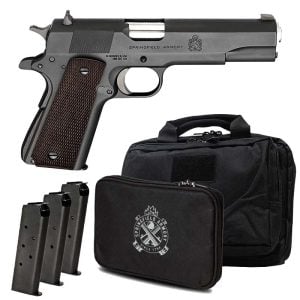

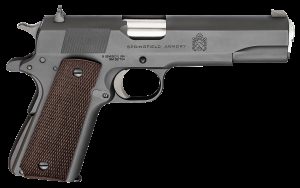
At roughly $600, the Springfield Defender Mil-Spec is one of the best deals in the 1911 world. This is a forged-frame, Parkerized .45 that looks like it rolled off a WWII production line. No frills, no flash. Just a properly built 1911 that works.
I’ve put over 1,500 rounds through the Mil-Spec without a single malfunction. Ball ammo, hollow points, cheap reloads. It eats everything. The Parkerized finish hides holster wear well and resists corrosion better than bluing. It’s a gun that’s built to be used hard.
The trigger is serviceable but not great. It’s a standard GI-type pull at about 5.5 pounds with some creep. The sights are small GI dots that older eyes will struggle with. But at this price, you have $400 left over for aftermarket sights, grips, and a trigger job. Or just shoot it as-is, because it works perfectly fine that way.
Best For: Budget-minded shooters who want a reliable 1911 platform they can customize over time, or anyone who loves that classic military look.
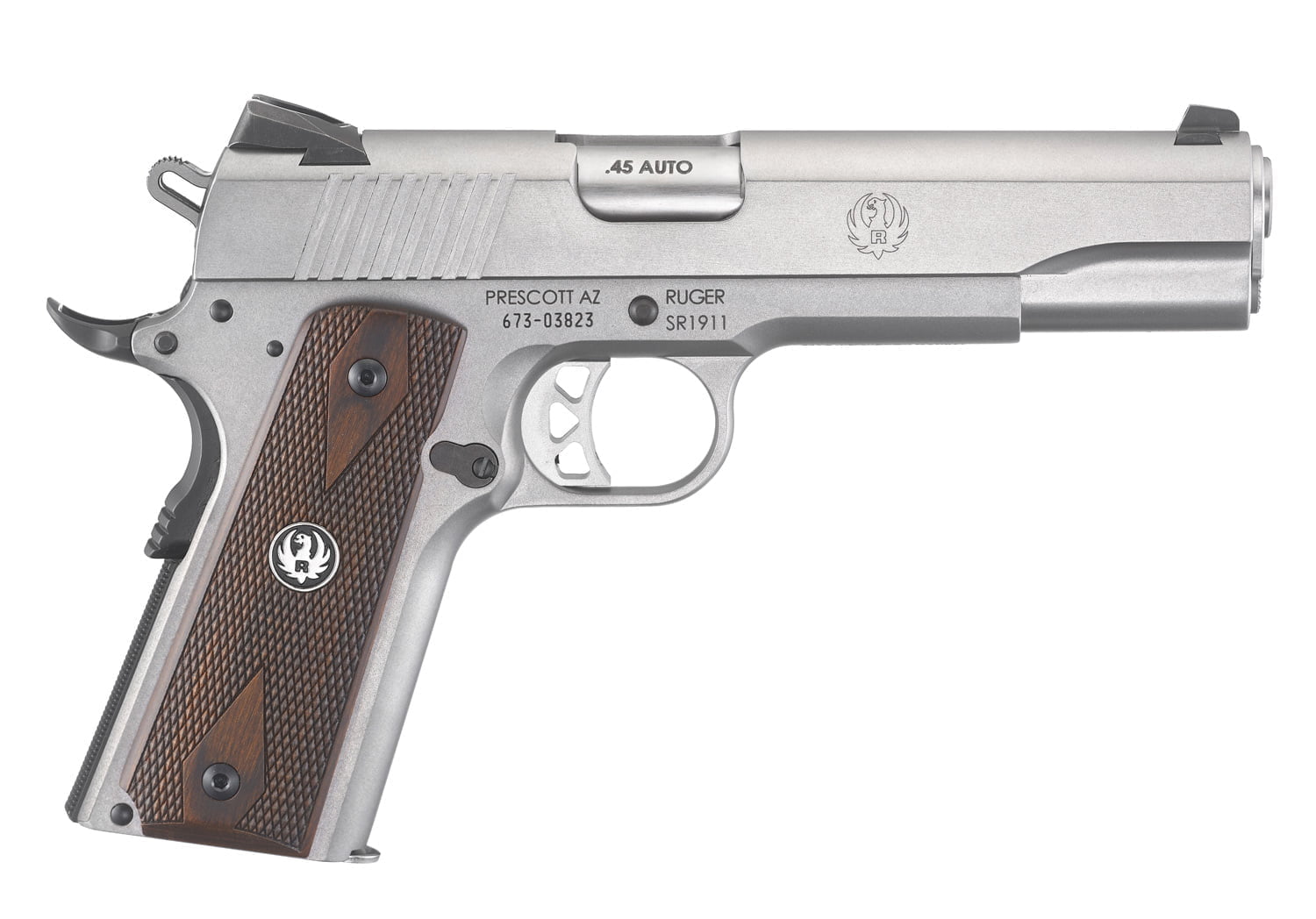
5. RUGER SR1911
- Caliber: .45 ACP
- Barrel: 5″
- OAL: 8.67″
- Weight: 39 oz
- Capacity: 8+1
Best Value 1911
| Price | Accuracy | Reliability | Trigger | Finish |
| 4.5/5 | 4.5/5 | 5/5 | 4/5 | 4.5/5 |
Pros
- CNC machined from investment castings for excellent tolerances
- Ships with two 8-round magazines
- Titanium firing pin and oversized beavertail grip safety
Cons
- Novak-style sights are good but not night sights
- Slightly heavier than some competitors at 39 oz
- The Ruger name doesn’t carry the same 1911 cachet as Colt or Kimber
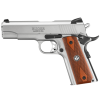
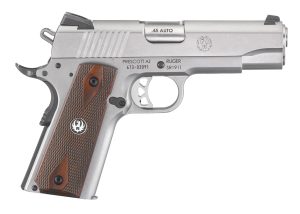
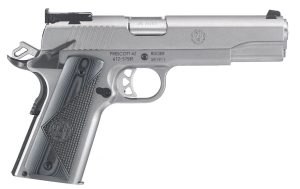
Ruger entered the 1911 market later than most, and they did it the smart way. Instead of cutting corners, they applied their modern CNC manufacturing to a classic design. The result is a 1911 with tighter tolerances than many hand-fitted customs, at a fraction of the price.
The SR1911 has been boringly reliable in my experience. Zero malfunctions across every type of .45 ACP I’ve fed it. The stainless steel construction looks sharp and resists corrosion well. Ruger includes two 8-round magazines (not the industry-standard 7-rounders), which is a nice touch.
The titanium firing pin is a detail most people won’t notice, but it matters. It’s lighter than steel, which means faster lock time and reduced the chance of an inertial discharge if the gun is dropped. Ruger thinks about these things. The trigger breaks at about 4.5 pounds, which is perfectly acceptable if not exceptional.
Best For: Shooters who want maximum quality per dollar from a manufacturer known for standing behind their products.
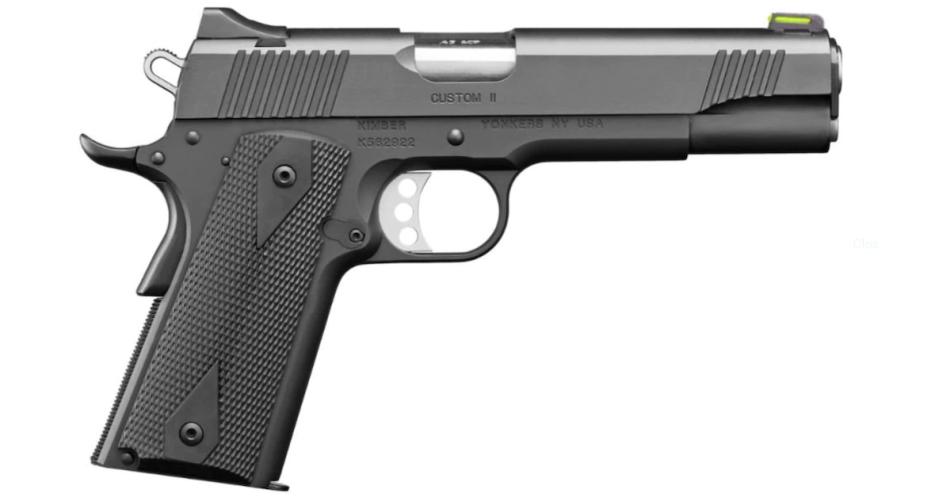
6. KIMBER CUSTOM II
- Caliber: .45 ACP
- Barrel: 5″ match grade
- OAL: 8.7″
- Weight: 38 oz
- Capacity: 7+1
- Trigger: Aluminum match grade, factory set 4.0 to 5.0 lb
- Item: Kimber list MSRP $1,085, street price well under it
Best Trigger Under $1000
| Price | Accuracy | Reliability | Trigger | Finish |
| 5/5 | 5/5 | 4/5 | 5/5 | 4/5 |
Pros
- Match grade barrel and bushing, which is where the accuracy comes from
- Aluminum match trigger set at 4 to 5 pounds from the factory
- Kimber list it at $1,085 and it sells for hundreds less
- 6.8 inch sight radius on a full-size 5 inch gun
Cons
- Kimber tolerances mean a genuine break-in, budget the first 200 rounds
- Only 7-round magazines, where several rivals here ship 8
- Fixed low profile sights are plain black, no night sights at this price point
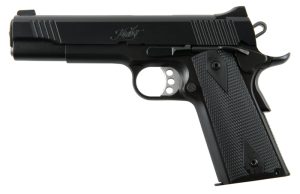
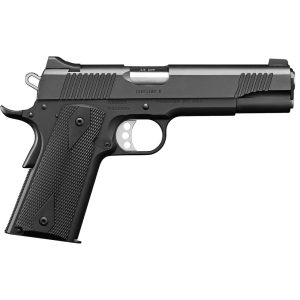
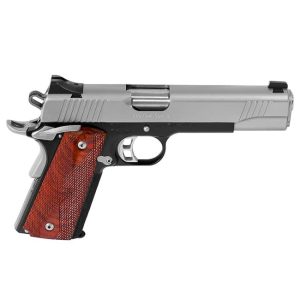
This replaces the Custom TLE II that used to sit at the top of this list, and the reason is simply price. The TLE II has drifted over $1,000 at every retailer we track. The Custom II is the same platform without the tactical furniture, and it is the cheapest way into a steel Kimber. If you would rather carry less, the aluminum framed Kimber Custom LW keeps the same five inch barrel at 31.2 ounces and sells for less.
What you are buying is the trigger and the barrel. Kimber fit a match grade barrel and bushing and an aluminum match trigger set between four and five pounds, and both are noticeably better than anything else at this money. Groups under two inches at 25 yards are normal rather than lucky.
The break-in is real and you should plan for it. Kimber build to tight tolerances and the first couple of hundred rounds can be scrappy, particularly with hollow points. Shoot it, keep it wet, and it settles. If you want a gun that runs perfectly out of the box, buy the Ruger further up this page instead.
Best For: Shooters who care most about trigger and accuracy, and who do not mind a break-in period.

7. ROCK ISLAND ARMORY GI STANDARD
- Caliber: .45 ACP
- Barrel: 5″
- OAL: 8.5″
- Weight: 38 oz
- Capacity: 8+1
Best Budget 1911
| Price | Accuracy | Reliability | Trigger | Finish |
| 5/5 | 3.5/5 | 4.5/5 | 3/5 | 3/5 |
Pros
- Incredible price point at around $500
- Proven reliability across millions of units sold
- 8+1 capacity with flush-fit magazine
Cons
- Fit and finish are noticeably rougher than more expensive options
- GI trigger is heavy at around 6 pounds
- Parkerized finish scratches easily


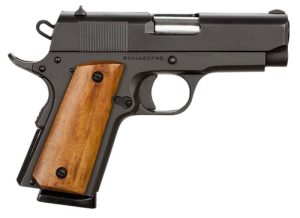
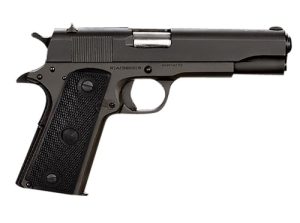
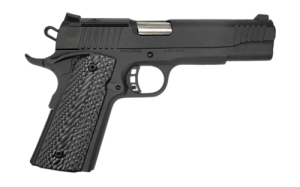
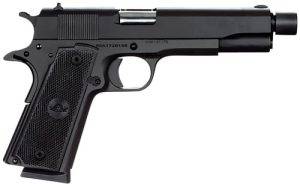
Rock Island Armory (now Armscor) has probably put more affordable 1911s into American hands than any other manufacturer. The GI Standard is their bread and butter: a no-nonsense, full-size .45 that just works. Read our full Rock Island 1911 GI review (1,500 rounds tested). At around $500, it’s a legitimate 1911 at a price point that would have been unthinkable 20 years ago.
Don’t expect a refined experience. The trigger is heavy and gritty. The finish is functional, not pretty. Tool marks are visible in places. But none of that matters when you pull the trigger, because the gun goes bang. Every single time. I’ve seen Rock Islands run through multi-day training classes without cleaning and never skip a beat.
The GI Standard is the perfect first 1911. Buy it, learn the platform, shoot a few thousand rounds through it, and then decide if you want to upgrade to something fancier. Or just keep shooting it, because chances are it’ll outlast guns costing three times as much.
Best For: First-time 1911 buyers, budget-conscious shooters, and anyone who wants a reliable .45 without the premium price tag.
8. TISAS 1911A1 US ARMY
- Caliber: .45 ACP
- Barrel: 5″
- OAL: 8.5″
- Weight: 38 oz
- Capacity: 7+1
Best 1911 Under $500
| Price | Accuracy | Reliability | Trigger | Finish |
| 5/5 | 3.5/5 | 4.5/5 | 3.5/5 | 4/5 |
Pros
- Unbeatable price at around $400
- Surprisingly good fit and finish for the money
- Authentic WWII-era styling with correct markings
Cons
- Turkish manufacturing may concern some buyers
- Only 7-round magazines
- Limited aftermarket support compared to major brands

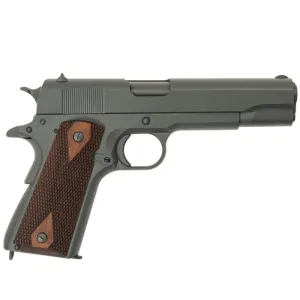

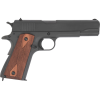
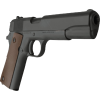
The Tisas 1911A1 is the gun that made me rethink everything I believed about budget 1911s. At around $400, I expected rough edges, reliability issues, and a gun that felt like a toy. Instead, I got a well-fitted .45 with a Parkerized finish that rivals guns at twice the price.
Tisas is a Turkish manufacturer with decades of military contract experience. They build these 1911s on modern CNC equipment using forged frames and slides. The US Army model replicates the WWII-era 1911A1 almost exactly, down to the rollmarks and lanyard loop. It’s a piece of functional history for less than the cost of a nice dinner for two (in 2026 money, at least).
Reliability in my testing was excellent. One failure to feed in the first 100 rounds, then nothing but smooth operation for the next 700. The trigger is better than the Rock Island’s, breaking at a reasonable 5 pounds with less creep. If you told me this gun cost $800, I wouldn’t question it.
Best For: Absolute best bang for the buck. Perfect for collectors who want a WWII-style 1911 they can actually shoot without guilt. If you want the same GI look made in Worcester, Massachusetts, see our Auto-Ordnance 1911 review.
9. COLT COMPETITION
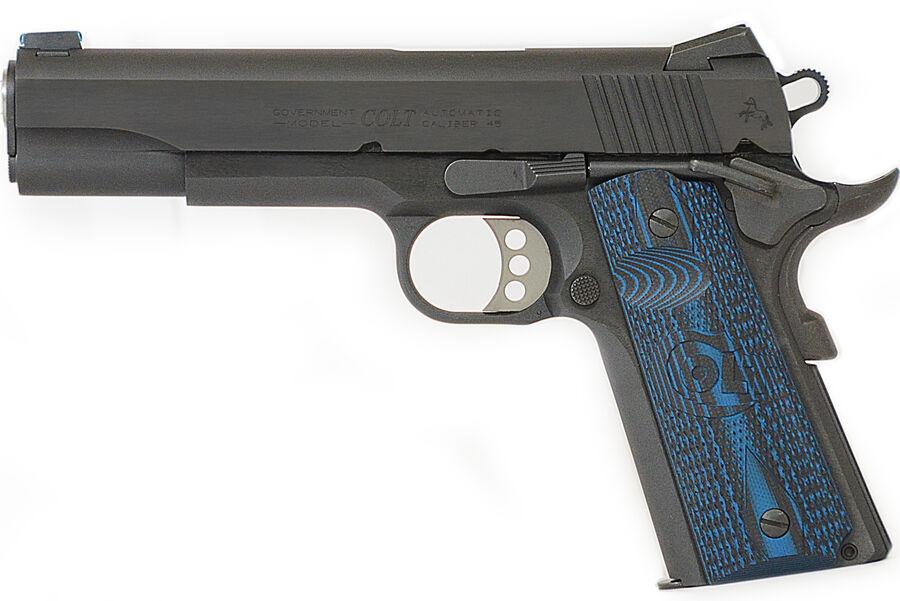
- Caliber: .45 ACP
- Barrel: 5″ National Match, 1:16 left hand, 6 groove
- OAL: 8.5″
- Weight: 37.5 oz
- Capacity: 8+1
- Sights: Novak style, red fiber optic front, adjustable rear
- Item: O1070CCS, Series 70 firing system
Best Factory Competition 1911
| Price | Accuracy | Reliability | Trigger | Finish |
| 4/5 | 5/5 | 4.5/5 | 4.5/5 | 4.5/5 |
Pros
- National Match barrel, which is the part Colt reserves for its accuracy models
- Dual recoil spring system smooths the cycle and helps brass life
- Series 70 firing system, so no firing pin block in the trigger linkage
- Novak style sights with a red fiber optic front, fitted from the factory
Cons
- Around $800, so it is at the top end of this list
- Stainless finish shows wear and fingerprints more than a blued gun
- No optic cut, which the Ronin AOS at a similar price does offer
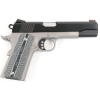
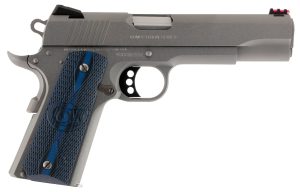
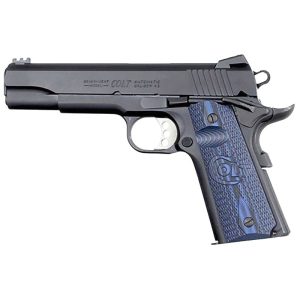
This one replaces the SIG 1911 STX and the Smith & Wesson E-Series, both of which have moved well past $1,000. The Colt Competition has not, and it is a better gun than either.
The National Match barrel is the headline. Colt do not fit these to standard Government models, and it is the single biggest reason this pistol groups the way it does. Add the dual recoil spring system and Novak sights with a fiber optic front and you have a gun set up for shooting rather than for a display case.
The Series 70 firing system matters more than the marketing suggests. There is no firing pin block linkage in the trigger, which is why Series 70 triggers feel cleaner than Series 80 ones. On a competition gun that is exactly the right choice.
Best For: Competition shooters, and anyone who wants a Colt with a National Match barrel under $1,000.
10. TISAS 1911 NIGHT STALKER 10MM
- Caliber: 10mm Auto
- Barrel: 4.25″ bull barrel
- OAL: 8.5″
- Weight: About 34 oz
- Capacity: 8+1
- Sights: Tritium night sights, 1/3 co-witness height
- Extras: Optic ready cut, ambidextrous thumb safety
Best 10mm Under $1000
| Price | Accuracy | Reliability | Trigger | Finish |
| 5/5 | 4/5 | 4/5 | 4/5 | 4/5 |
Pros
- The cheapest way into a 10mm 1911 by a wide margin
- Tritium night sights at 1/3 co-witness height, fitted from the factory
- Optic ready cut and an ambidextrous thumb safety at around $520
- Bull barrel adds weight at the muzzle, which 10mm needs
Cons
- Turkish manufacture, so the resale market is softer than a Colt or Kimber
- 4.25 inch barrel gives up velocity that 10mm particularly wants
- 10mm ammunition costs roughly twice what .45 ACP does
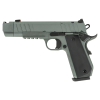
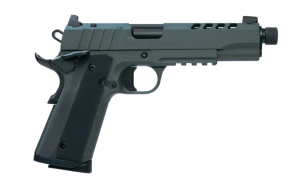
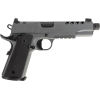
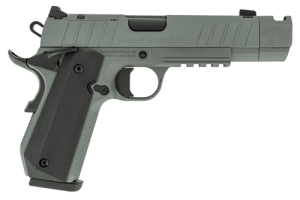
This replaces the Colt Delta Elite, which is a fine pistol and no longer sells for under $1,000 anywhere we can find. The Tisas does the same job for roughly half the money.
A 10mm 1911 is a different proposition from a .45. The cartridge runs at far higher pressure and generates real energy, which is why the bull barrel matters: the extra mass at the muzzle settles the gun between shots. Tisas also fit tritium night sights and an optic cut, neither of which you would expect at this price.
Be realistic about what you are buying. This is a Turkish 1911 and the fit and finish is good rather than exceptional, and it will not hold value like a Colt. What it will do is give you a working 10mm 1911 with night sights for the price of a budget .45, and for a woods gun that is a sensible trade.
Best For: Hunters and hikers who want 10mm in a 1911, and anyone unwilling to spend four figures on one.
JUST OVER THE LINE: FOUR 1911S THAT NO LONGER QUALIFY
Four pistols that used to sit on this list have moved past $1,000 at every retailer we track. They are still good guns and they are the obvious next step up, so here is where they actually sit rather than quietly dropping them.
- Kimber Custom TLE II is around $1,096. The Custom II at number six is the same platform without the tactical furniture, and it is the one to buy at this budget.
- Colt Delta Elite 10mm is around $1,012, so it misses by almost nothing. If you want a Colt 10mm rather than the Tisas at number ten, it is worth the extra.
- SIG Sauer 1911 STX is around $1,300 and only one retailer in our feed still lists it.
- Smith & Wesson SW1911 E-Series is around $1,624, which puts it in a different conversation entirely.
Prices in this market move, and a gun that is $1,050 today can be $960 after a distributor promotion. The live cards above are checked continuously, so if one of these drops back under the line it will show up there before it shows up in this paragraph.
HOW WE CHOSE THESE 1911S
Every gun on this list was evaluated on five criteria: price (value relative to street price), accuracy (25-yard bench rest groups with quality ammo), reliability (minimum 500 rounds with zero cleaning to test), trigger quality (pull weight, creep, reset), and finish quality (machining, coating, overall fit). No gun made this list based on spec sheets alone. They all had to perform.
I prioritized variety. Not everyone wants the same thing from a 1911. Some of you want a match-ready tack driver. Others want a $400 beater that’ll run forever. This list includes options at every price point from $400 to $1,000, covering GI clones, feature-loaded modern builds, and everything in between. If a 1911 under $1,000 is worth buying, it’s probably on this list.
BUYER’S GUIDE: WHAT TO LOOK FOR IN A SUB-$1000 1911
Forged vs. Cast Frames
Forged frames are stronger and last longer than cast frames. Most guns on this list use forged frames or investment castings that are CNC machined to tight tolerances. At this price point, you’re getting good material either way. But if longevity is your top priority, look for “forged” in the specs.
Sights Matter More Than You Think
Cheap GI sights are the weakest point on budget 1911s. They’re small, hard to see, and nearly useless in low light. If your chosen 1911 doesn’t come with night sights or Novak-style sights, plan to spend $80 to $150 upgrading them. Guns like the Kimber TLE II and Springfield Loaded save you that expense by including tritium night sights from the factory.
Series 70 vs. Series 80 Firing Pin Safety
Series 80 guns have an internal firing pin block that prevents discharge if the gun is dropped. Series 70 guns omit this mechanism, resulting in a cleaner trigger pull with fewer internal parts. Both systems are safe. The choice comes down to whether you prioritize trigger feel (Series 70) or drop safety (Series 80). Most modern 1911s use a Series 80 system or an equivalent.
Break-In Period
Tighter 1911s (Kimber, Springfield Loaded) often need 200 to 500 rounds to break in. This is normal and not a defect. The tight tolerances that deliver great accuracy need a break-in period for the parts to mate properly. Budget 1911s with looser tolerances (Rock Island, Tisas) tend to run perfectly from round one. Both approaches work. Just know what to expect.
Magazines: Don’t Cheap Out
The majority of 1911 malfunctions are magazine-related. Buy quality magazines from Wilson Combat, Chip McCormick, or Mec-Gar. Budget $25 to $35 per magazine. The factory magazines included with most of these guns are fine, but having at least four quality magazines is essential for serious use. This is the single best upgrade you can make to any 1911.
Cross-shopping a .45 with double the capacity of a 1911? See our full Glock 21 Gen5 MOS review.
FINAL VERDICT
The Kimber Custom TLE II takes the top spot as the best overall 1911 under $1,000. It combines match-grade accuracy, military-spec features, and a level of refinement that punches well above its price class. After the short break-in period, it’s a pistol that can do everything from range duty to home defense to competition.
If budget is your primary concern, the Tisas 1911A1 US Army at around $400 is the most impressive value on this list. It has no business being this good at this price. And for shooters who want maximum features with zero aftermarket work needed, the Springfield Armory Loaded gives you everything right out of the box.
The 1911 platform is 115 years old and shows no signs of slowing down. These ten pistols prove that you don’t need to spend $2,000 to get a great one. Pick the model that fits your needs, buy quality magazines, and put rounds downrange. Want to learn the 1911 manual of arms on cheap .22 ammo first? Our Browning 1911-22 review tests a rimfire 1911 built at 85% scale. That’s what John Browning would have wanted.
Frequently Asked Questions
What is the best 1911 under $1,000?
The Springfield Ronin AOS is the pick if you want a forged frame and slide with an optic cut, and it lands right at the line. The Ruger SR1911 is the value build. If your budget is really under $600, the Rock Island GI Standard and the Tisas 1911A1 are the two that punch above their price.
Is a 1911 good for concealed carry?
A full-size 1911 is heavy and long, which makes it a challenging carry gun. It can be done with the right holster and belt, but it is not ideal. That said, the 1911’s slim profile, about 1.25 inches wide, actually conceals better than many double-stack polymer guns. If you are set on carrying one, look at a Commander-size 4.25-inch or an Officer-size 3.5-inch model rather than the full-size guns on this list.
Are budget 1911s reliable enough for self-defense?
Yes, with a caveat. Any gun you carry needs testing with your chosen defensive ammunition: run at least 200 rounds of your carry load with zero malfunctions before trusting it. Every gun on this list is capable of defensive reliability. The budget options from Rock Island and Tisas can actually be more reliable out of the box than tighter, more expensive models, because their looser tolerances are more forgiving.
Should I buy a .45 ACP or 10mm 1911?
For most shooters .45 ACP is the better choice. Ammunition is cheaper, recoil is a slow push rather than the 10mm’s sharp snap, and it is proven for defense. The 10mm makes sense if you want velocity for hunting or a woods gun in bear country. Bear in mind 10mm ammunition costs roughly 50% more, so your practice budget takes the hit.
Should my first 1911 be 9mm or .45?
9mm gives you higher capacity and much cheaper practice, which matters more than most first-time buyers expect. The .45 ACP is the classic choice with more energy per round and the recoil character the platform was designed around. For a first 1911 that will actually get shot, 9mm is the practical answer.
Is a 1911 good for beginners?
The 1911 has a manual safety and a crisp single-action trigger that many shooters prefer to a striker pull. The controls take learning but are intuitive once understood, and the trigger makes it a genuinely good platform to learn fundamentals on. The manual of arms is the part to practice.
What is the difference between a Series 70 and a Series 80 1911?
Series 70 has the simpler internal design with no firing pin block. Series 80 adds a firing pin block for drop safety, at the cost of a few extra parts in the trigger linkage. Series 70 usually has the slightly cleaner trigger pull. Both are safe and both are reliable.
Why do 1911s only hold 7 or 8 rounds?
The 1911 was designed in 1911 around the .45 ACP cartridge, and the single-stack magazine keeps the grip thin at the cost of capacity. Modern double-stack 1911s exist, the 2011 platform, but they are significantly wider and cost well over $1,000. In this price range 7 to 8 rounds of .45 is standard. Carry a spare magazine and you are at 15 to 17 rounds total.
Do 1911s jam a lot?
Quality 1911s from reputable makers are reliable with the right ammunition and magazines. The platform is more sensitive to magazine quality than a polymer pistol, which is where most reported jamming comes from. Wilson Combat or Chip McCormick tubes solve the majority of it.
What is the first upgrade I should make to a budget 1911?
Magazines. Always magazines first. After that, sights if yours came with the GI profile, and grips if the factory panels are slippery. A trigger job from a qualified gunsmith is worth considering after that, and only if the factory pull genuinely bothers you. Resist swapping every part: a 1911 with good magazines and good sights will outperform one loaded with random aftermarket components.
Is Rock Island Armory a good 1911?
Rock Island, made by Armscor in the Philippines, builds the best budget 1911s on the market. Forged frames, decent fit, and remarkable value at $345 to $600. They are not as refined as a Springfield or a Dan Wesson, and the finish shows the price, but they run.
For a forged sub-$1,000 1911, read our Springfield Ronin review.
Related Guides
Total BS, Kimber #1 and Colt #2.