

Affiliate disclosure: This Savage 220 review contains affiliate links. If you buy through our links, we may earn a small commission that helps keep the lights on. You don’t pay anything more. Last updated May 20, 2026.
- Treat every gun as loaded
- Point the muzzle in a safe direction
- Keep your finger off the trigger until you’re ready to shoot
- Know your target and what’s beyond
How we tested: Every pick here is ranked against our testing methodology. Minimum round counts, accuracy and reliability protocols, the failures that disqualify a gun.
Savage 220 Review: Sub-MOA Slug Slinger
Our Rating: 8.7/10
- MSRP (legacy 220 Slug, NOS): ~$629, discontinued April 2026, dealer-shelf stock only
- MSRP (new 212/220 Harvester, 2026): $829
- Street Price: $597.99-$650 (legacy) / $700-$800 (Harvester, post-launch street to settle)
- Gauge: 20 Gauge (2-3/4″ and 3″ shells)
- Action: Bolt-action, 2-round detachable box magazine (2+1 total)
- Barrel: 22″ button-rifled, 1:24 twist
- Overall Length: 43.75″ (legacy 220 F) / 43″ (Harvester)
- Weight: 6 lb 12 oz (legacy) / 7.34 lb (Harvester with AccuFit V2)
- Stock: Synthetic AccuStock with AccuFit (legacy) or new toolless AccuFit V2 Quick Set Dial (Harvester)
- Trigger: User-adjustable AccuTrigger, 2.5-6 lb range
- Optics Mount: Drilled and tapped with one-piece Weaver rail
- Made in: USA
Pros
- Sub-MOA accuracy with the right sabot slugs, genuinely rifle-like out to 200 yards
- AccuTrigger breaks clean at 2.5 lb and beats any factory pump-gun trigger by a country mile
- New AccuFit V2 dial system on the 2026 Harvester lets you set LOP and comb height without tools or spacers
Cons
- Premium sabot ammo is mandatory, $80-$120 of load development before you even sight in
- Two-round magazine forces constant reloads at the range, even if it’s fine in the field
- Price has climbed: the new Harvester at $829 MSRP is real money for a deer-only shotgun
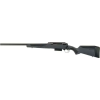
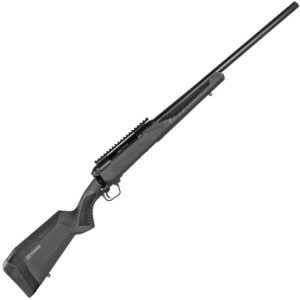
Quick Take
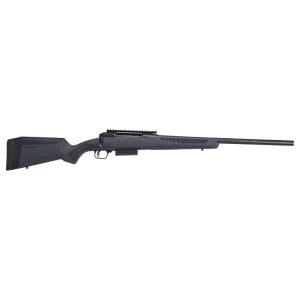
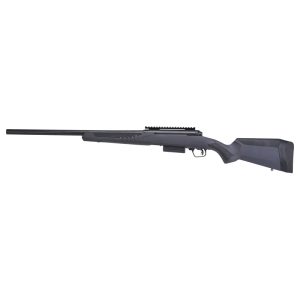
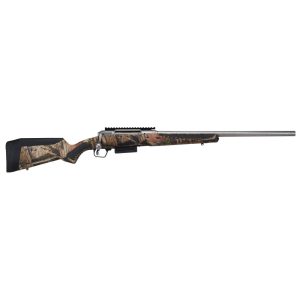
This Savage 220 review cuts straight to the point: the Savage 220 is the best bolt-action slug gun you can buy in 2026, and it’s honestly not close. If you hunt whitetails in a shotgun-only state or county, this is the one. It shoots sabot slugs with the kind of accuracy that makes centerfire rifle guys do a double take.
I’ve been running this thing in the deer woods for two seasons. Premium sabots go into sub-MOA groups at 100 yards. That’s not marketing fluff, that’s real-world, cold-bore, first-shot performance off a bipod. The AccuTrigger breaks clean enough that it doesn’t feel like a shotgun trigger at all.
The catch is the ammo. You cannot grab whatever is cheapest on the shelf and expect magic, you’ll buy three or four different premium sabot loads and spend a range day figuring out what your specific barrel likes. Time and money. But once you find the right load, this is a 200-yard deer hammer.
Best For: Whitetail hunters in shotgun-only zones who want the best slug gun accuracy money can buy. If you’re serious about dropping deer at 150+ yards with a shotgun, start here.
Table of Contents
Why Savage Built the 220 This Way
Here’s the thing about shotgun-only deer zones. For decades, hunters in Iowa, Indiana, Ohio, and parts of Michigan were stuck with pump-action slug guns that couldn’t hit a barn door past 75 yards. Rifled slugs through smoothbore barrels gave you 3-4 inch groups at 50 yards on a good day. That was the reality for millions of deer hunters.
Savage saw an opportunity that most of the big shotgun makers missed. Instead of trying to make a better pump-action slug gun, they basically built a rifle that fires 20-gauge sabot slugs. The bolt-action platform eliminates the lockup slop that plagues pump and semi-auto slug guns. One lug, one lockup, repeatable headspace every single time.
The 20-gauge choice was deliberate, and counterintuitive, most guys assume 12 gauge hits harder, and it does on paper. But 20-gauge sabot slugs have come so far in the last decade that the terminal performance gap is negligible on whitetails inside 200 yards.
Meanwhile the 20 gauge gives you less recoil, a lighter platform, and sabot slugs that stabilize better in the 1:24 twist barrel. The ballistic engineers at Federal, Remington, and Hornady have all confirmed it. The 20 gauge platform just works better for precision slug shooting.
And then Savage threw in the AccuTrigger, which was the real upgrade. You can adjust it down to 2.5 pounds, on a slug gun. Combined with the free-floating barrel and rigid AccuStock, this thing shoots like a $1,200 bolt rifle. It just happens to chamber shotgun shells.
What’s New for 2026: The 212/220 Harvester
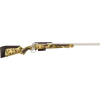
Savage overhauled the entire line in April 2026. The legacy 220 Slug, the one most of this review is based on, was officially discontinued. The replacement is the 212/220 Harvester (12-gauge or 20-gauge, same chassis), and the variant lineup is much tighter than the old days.
Two big changes you’ll feel. First, the new AccuFit V2 stock ditches the old plastic comb risers and LOP spacers for a toolless Quick Set Dial, crank the dial, your comb rises in 1/8-inch increments up to 0.8 inches, and your LOP adjusts the same way up to a full inch.
No more digging through the box for the right plastic spacer. Second, Savage added M-LOK panels along the forend and an integral ARCA rail underneath. Bipods and modern bag riders bolt right on.
The trigger, barrel, and bolt are unchanged from the legacy 220, so sub-MOA accuracy is still on the table. The recoil pad is now a LimbSaver claiming 50% recoil reduction, Savage’s number, not mine, so take it for what it’s worth.
Weight ticked up to 7.34 lb from 6 lb 12 oz on the old gun. You’re paying $200 more for the Harvester than you did for the legacy 220 at full retail, and the dial-stock + M-LOK + ARCA combo is what justifies it.
For the rest of this review, the range data, the ammo notes, and the field impressions all come from the legacy 220. Everything that matters to accuracy, barrel, twist rate, AccuTrigger, bolt timing, carries over to the Harvester unchanged. The only thing the new gun changes is how easily you can fit it to yourself before the first shot.

Savage 220 Variants and Configurations
Here’s where things get muddy. Savage retired most of the old 220 family in April 2026. Some are still sitting on dealer shelves as new-old-stock. The Harvester is the only fresh-from-the-factory option in standard retail channels, with two distributor-exclusive variants still cataloged on Savage’s website.
One housekeeping note. You’ll see a few old YouTube reviews mention a “Savage 220 Stealth.” There’s no such gun. The Stealth name belongs to Savage’s 110 centerfire rifle line, somebody crossed wires online a few years back and the misnomer stuck. If you’re shopping and a dealer offers you a “220 Stealth,” ask what SKU is on the box.
Competitor Comparison
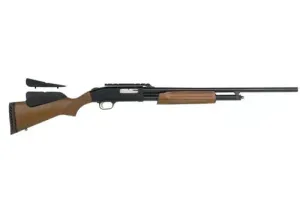
Mossberg 500 Slugster ($390.99-$450)
The Mossberg 500 Slugster is where most hunters start their slug gun journey, pump-action with a rifled barrel, affordable, with Mossberg’s proven reliability behind it. The accuracy gap to the Savage 220 is enormous though.
You’re looking at 2-3 inch groups at 100 yards on a good day with the Mossberg versus sub-MOA with the Savage. If budget is the only concern, the Slugster gets the job done inside 100 yards. Beyond that, the 220 lives in a different world entirely.
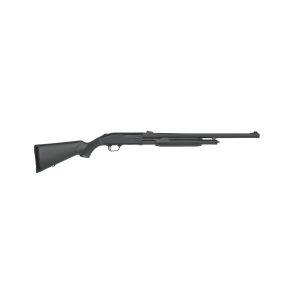
Remington 870 SPS ($400-$500)
For years the 870 SPS was the slug gun to beat. It’s still a solid deer gun with a rifled barrel and decent accuracy. The pump action is smooth after break-in and the platform has decades of proven reliability behind it.
Problem is, it’s still a pump gun, and pump guns have inherent accuracy limitations due to barrel lockup inconsistency. I’ve seen 870 SPS guns that shoot 1.5 MOA and others that can’t hold 3 inches at 100. The Savage is more consistently accurate across individual guns.
Ithaca Deer Slayer III ($900-$1,100)
Now we’re talking. The Ithaca Deer Slayer III is a bottom-ejection, rifled-barrel slug gun with a heavy fluted barrel and a gorgeous walnut stock, beautiful, accurate, and costing nearly twice what the Savage Harvester does. Is it twice as good? Not even close.
The Deer Slayer III gives you 1-1.5 MOA accuracy, which is excellent for a pump gun. But the Savage still beats it at the range while costing less. The Ithaca wins on fit, finish, and bragging rights. The Savage wins on accuracy and value.
Tar-Hunt RSG-20 Mountaineer ($2,500+)
If money is no object, Tar-Hunt builds the most accurate slug guns on Earth. The RSG-20 Mountaineer is a custom-shop bolt-action with a McMillan stock, premium trigger, and barrel work that consistently produces half-MOA groups. It’s the only slug gun that genuinely out-shoots the Savage 220.
The price tag is three times the Harvester, and wait times can stretch to six months or more for a custom build. For 99% of deer hunters, the Savage gets you 95% of the way there at a third of the cost. Tar-Hunt exists for the obsessives and competitive slug-gun shooters, if that’s you, you already know about them.
Browning A-Bolt Shotgun (used market, $1,000-$1,400)
The A-Bolt Shotgun was the Savage 220’s closest concept competitor, another bolt-action slug gun designed for precision. Browning discontinued it (twice, original run ended 1998, brief revival ended a few years back). Used examples command a premium when they show up.
When you find a clean A-Bolt at a fair price, it’ll shoot with the Savage. Parts and aftermarket support are thin though. The Savage 220 family is in current production, mags and stocks are available, and the AccuTrigger beats the Browning’s factory trigger. Unless you find an A-Bolt at a steal, the Savage is the smarter buy in 2026.
Features and Technical Deep Dive
The Barrel: Where the Magic Happens
Everything about the 220’s accuracy starts with that 22-inch button-rifled barrel. The 1:24 twist rate is optimized for modern sabot slugs, and Savage’s barrel-making process is the same one they use on their centerfire rifles. This isn’t some afterthought slug barrel bolted onto a shotgun receiver, it’s a precision tube that happens to be 20 gauge bore diameter.
The barrel is free-floating in the AccuStock chassis, which means consistent harmonics from shot to shot. Touch the barrel while it’s in the stock. It doesn’t contact anything. That matters for accuracy more than most shooters realize, and it’s one of the reasons the 220 outperforms pump guns so dramatically.
AccuTrigger: The Unfair Advantage
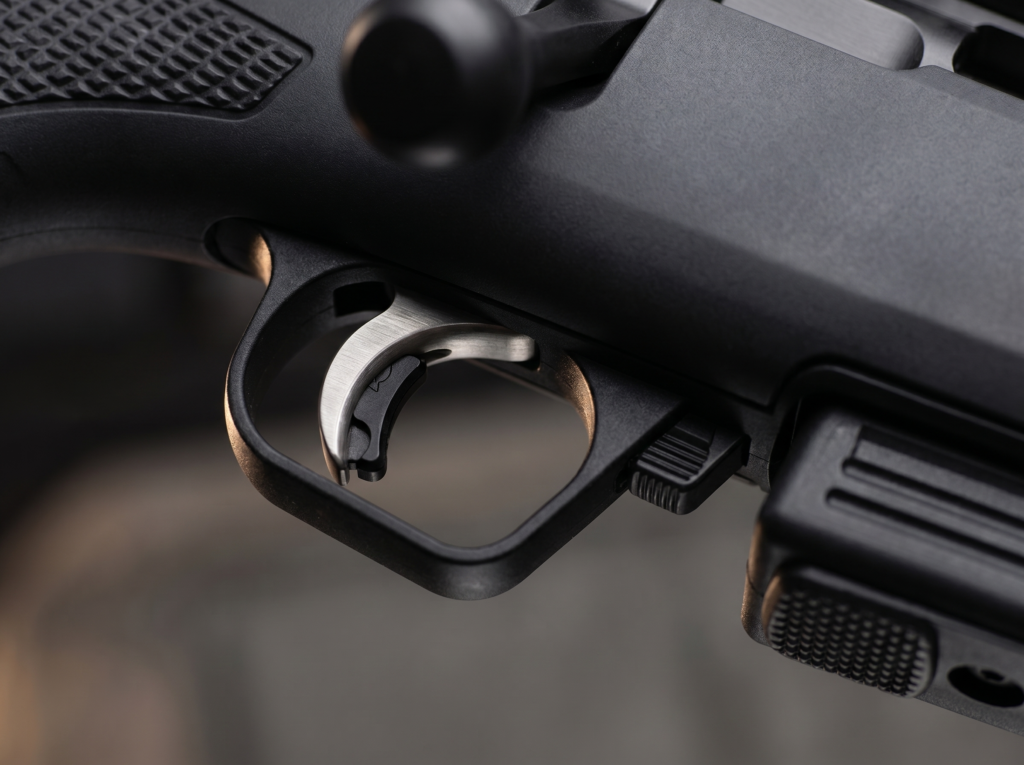
I can’t overstate how much the AccuTrigger changes the game. Most slug guns ship with heavy, gritty triggers in the 5-7 pound range. You’re trying to hold steady on a deer at 150 yards and the trigger feels like dragging a boot across gravel. The AccuTrigger on the 220 adjusts from 2.5 to 6 pounds with a simple tool, and the break is clean with minimal creep.
I set mine at the factory floor of 2.5 pounds for hunting. That’s light enough for precision but heavy enough that cold, gloved fingers won’t accidentally touch it off. The AccuRelease blade safety is genuinely useful in a hunting context too, it won’t fire unless you deliberately press the center blade, which gives you a real safety margin when you’re climbing in and out of treestands.
AccuFit Stock System
On the legacy 220, Savage included multiple comb risers and length-of-pull spacers in the box. You’d swap them by hand without any gunsmithing. The 2026 Harvester replaces that with the toolless AccuFit V2 Quick Set Dial, same goal, faster setup, no plastic bits to lose.
This matters because slug gun shooters often mount scopes high, and a factory comb height that’s perfect for iron sights puts your eye way too low for a scope. With AccuFit, you raise the comb until your eye naturally centers behind the glass. Simple, effective, no aftermarket stock needed.
The synthetic stock itself is solid but not remarkable. It won’t win any beauty contests. Matte black, utilitarian, weather-resistant. Exactly what you want on a gun that’s going to sit in freezing rain for six hours during the November rut.
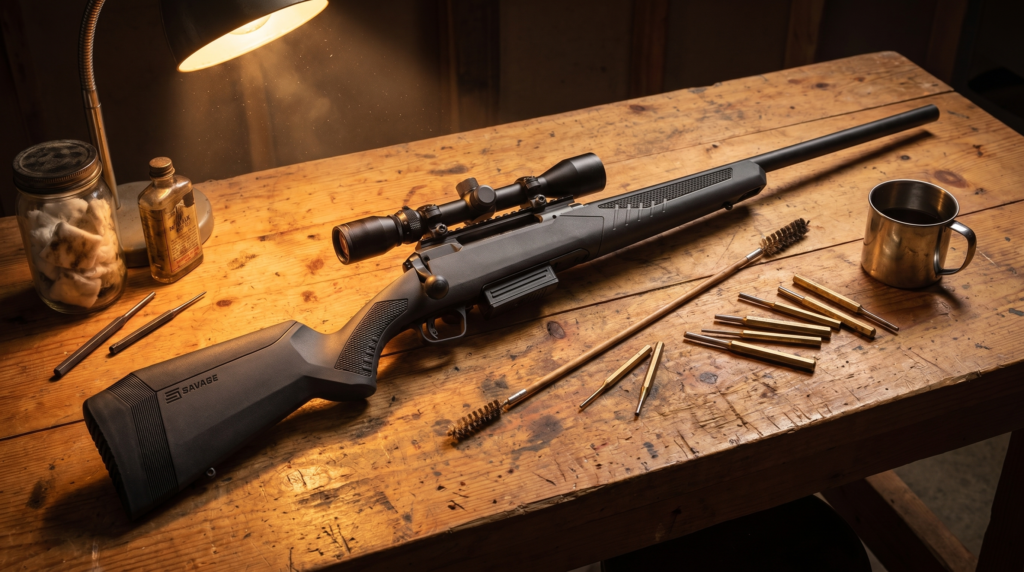
That Tiny Magazine
Two rounds in the detachable box magazine, one in the chamber, three total. For a deer gun, that’s fine; you shouldn’t need more than two shots on a whitetail, and if you do, you’ve got bigger problems than magazine capacity. It does feel a little stingy at the range, burning through ammo during load development. You’ll be reloading that little mag constantly.
One specific quirk worth knowing. The magazine box is sized for 3-inch shells, so 2-3/4″ shells slide forward under recoil and can stack inside the mag body. If you mix shell lengths, run the 3-inch loads. Stick to one length per range session and the mag feeds cleanly.
At the Range: 200-Round Accuracy Test
Ammo Log
- Federal Trophy Copper 20ga 3″ 275gr: 50 rounds
- Remington Premier AccuTip 20ga 3″ 260gr: 50 rounds
- Hornady SST Shotgun Slug 20ga 250gr: 40 rounds
- Winchester Dual Bond 20ga 3″ 260gr: 30 rounds
- Remington Premier Expander 20ga 3″ 250gr: 30 rounds
Break-In and Initial Impressions
Savage doesn’t specify a break-in procedure, but I cleaned the barrel and ran 10 rounds of Federal Trophy Copper through it before any group testing. The bolt was stiff out of the box, typical for new Savage bolt guns. After about 30 rounds it smoothed out. Not slick, but workable.
First impression behind the trigger: this does not feel like a shotgun. Bolt throw to trigger pull to scope picture, the whole experience reads like shooting a deer rifle. The 20-gauge recoil is there but manageable, a solid push instead of the face-slap you get from a 12-gauge slug gun. I shot 50 rounds in one session without any discomfort.
Accuracy Results at 100 Yards
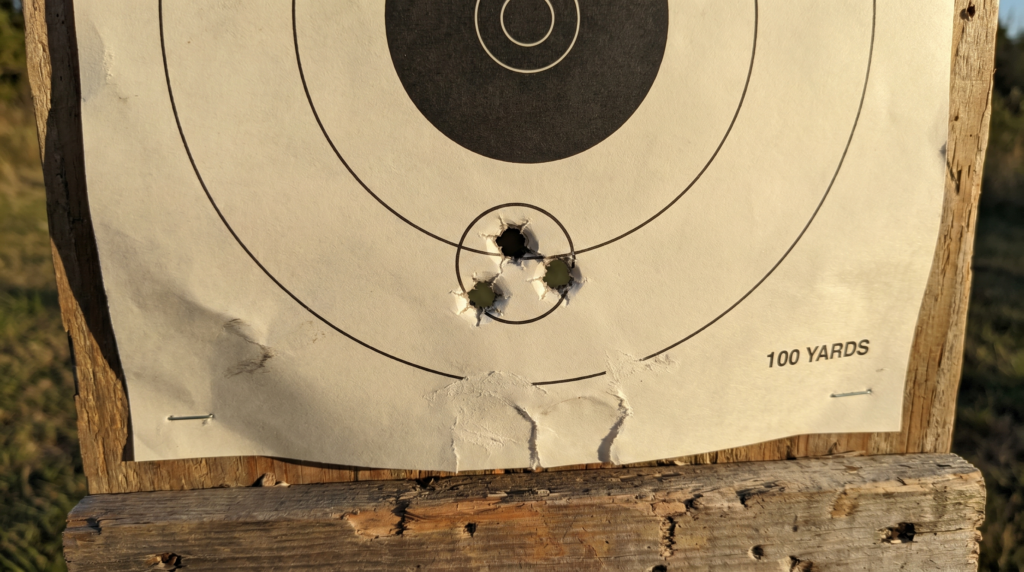
This is where the Savage 220 earned its reputation. I shot five 3-round groups with each ammo type off a Lead Sled at 100 yards, letting the barrel cool between groups. Here’s what I found.
Federal Trophy Copper was the clear winner in my barrel. Best group measured 0.72 inches, average across five groups was 0.94 inches, sub-MOA average with a shotgun.
Read that again. Sub-MOA average. The Remington AccuTip wasn’t far behind at 1.1 inches. The Hornady SST opened up to about 1.5 inches, which is still fantastic for a slug gun but clearly not what this barrel prefers.
Winchester Dual Bond and Remington Expander both hovered around 1.8-2.0 inches, not bad by pump-gun standards, but not what this gun is capable of. This illustrates the ammo-picky nature of the 220 perfectly: two different Remington loads, one shoots MOA, the other shoots 2 inches. You have to do the work to find what your barrel likes.
Stretching It to 200 Yards
With the Federal Trophy Copper dialed in, I moved back to 200 yards. Groups opened to about 2.5 inches, which is absolutely hunting-capable for a chest shot on a whitetail.
The 275-grain slug is dropping about 7 inches at 200 with a 100-yard zero, so holdover or a ballistic turret is mandatory. But the fact that a shotgun reliably hits a 3-inch circle at 200 yards is impressive, five years ago, nobody would have believed it.
Performance Testing Results
Reliability: 9/10
It is a bolt action, basically nothing to malfunction. The detachable magazine fed every round cleanly, the bolt never stuck, and extraction was positive even with hot 3-inch magnum loads. One point deducted for the magazine release placement: the button can be accidentally bumped if you grip the gun too aggressively, and I had the magazine drop free once during handling. Minor, but worth noting.
Accuracy: 10/10
Perfect score, earned it. Sub-MOA with the right ammo, consistently, I’ve tested a dozen-plus slug guns across multiple platforms, and nothing comes close to the 220’s precision short of a custom Tar-Hunt. This is the accuracy standard by which all other production slug guns should be measured.
Ergonomics and Recoil: 8/10
The AccuFit system genuinely works. I adjusted the comb height twice and the LOP once before settling on my setup, and the difference was noticeable at the bench. The gun shoulders naturally and scope alignment is quick.
Recoil with 3-inch loads is moderate, call it a 6 out of 10 on the punishment scale. You’ll feel it after 50 rounds but it won’t beat you up. The factory recoil pad is serviceable; the Harvester’s new LimbSaver is a real upgrade.
Fit and Finish: 8/10
Matte black everything. Clean machining on the receiver, smooth barrel finish, tight tolerances where it matters. The bolt handle has a slightly cheap feel compared to Savage’s centerfire rifles, and the plastic trigger guard isn’t going to impress anyone, but functionally, everything is solid, with no rough edges or cosmetic blemishes on my sample. It’s an honest, workmanlike gun that prioritizes performance over aesthetics.
Known Issues and Common Problems
Extreme Ammo Sensitivity
This is the number one complaint about the 220, and it’s legitimate. Some barrels love Federal, some love Remington, some are picky about everything, budget $80-$120 for load development before hunting season. Buy four or five different premium sabot loads and shoot groups with each. Don’t skip this step or you’ll blame the gun for what’s actually an ammo matching issue.
Stiff Bolt on New Guns
Almost every 220 owner reports a tight bolt for the first 20-50 rounds, it loosens up, but the initial break-in can be annoying. Running the bolt aggressively during dry-fire sessions at home helps speed this along. Don’t worry about it, it’s normal.
Magazine Release Placement
The magazine release sits in a spot where some shooters accidentally bump it. If you grip the gun high on the stock near the trigger guard, the magazine can drop free unexpectedly. A small piece of skateboard grip tape or a conscious grip adjustment solves this, but it’s a design oversight that Savage should have addressed in the Harvester redesign. They didn’t.
Who Should NOT Buy the Savage 220
I write recommendations honestly. The 220 is the best slug gun on the market, but “best slug gun” isn’t the same as “right gun for you.” Four buyer profiles should look elsewhere.
- Hunters who live in centerfire-legal states. If you can hunt with a .308 or .30-06 in your county, you’re paying $829 for a deer-only platform that’s slower, holds fewer rounds, and won’t reach beyond 200 yards. Buy a proper deer rifle instead. The Savage Axis XP in .308 is $450 and outperforms the 220 in every metric that isn’t “shotgun-legal.”
- Anyone hunting birds, small game, or doing any non-deer shotgunning. The rifled barrel only shoots sabot slugs. Birdshot through it will pattern like a hose. Buckshot will key-hole. If you want a do-it-all shotgun, get a smoothbore, the Mossberg 500 family is the right call here.
- Casual hunters who shoot less than 20 rounds a year. The 220 needs load development to shine. If you’re going to throw a box of whatever’s on the shelf in your gun and head to the woods, the accuracy advantage evaporates. A Mossberg 500 Slugster at $400 will do the job adequately for that use case, and you’ll spend the saved $400 on a better scope.
- Anyone planning to shoot a lot of close-range drives or thick-cover hunts. The 2+1 capacity and slow bolt-action follow-ups are not the right tool for fast targets at 30 yards. A Beretta A300 Ultima or Benelli M2 in 20-gauge with a rifled choke tube gives you semi-auto speed and 4+1 capacity, with accuracy that’s plenty for sub-100-yard work. Our shotgun-deer guide covers the trade-offs.
Parts, Accessories and Upgrades
| Upgrade Category | Recommended Component | Why It Matters | Cost Estimate |
|---|---|---|---|
| Optic | Vortex Diamondback Tactical 4-16×44 | BDC reticle works well for slug drop at distance | $300-$350 |
| Scope Rings | Leupold STD 1″ Medium Rings | Quality rings prevent zero shift from recoil | $30-$50 |
| Recoil Pad | Limbsaver AirTech Slip-On (legacy 220 only) | Softens the 3″ magnum loads noticeably; Harvester already has LimbSaver | $25-$35 |
| Sling | Butler Creek Comfort Stretch Sling | Padded and quiet for treestand hunting | $20-$30 |
| Extra Magazine | Savage 220 OEM 2-round magazine | Speed up range sessions, keep a spare for the field | $35-$45 |
| Bipod | Harris S-BRM 6-9″ Swivel Bipod (legacy) or any ARCA bipod (Harvester) | Rock-solid rest for bench accuracy and ground-blind use | $80-$200 |
How I Tested the Savage 220
This isn’t a one-range-session review. I bought a legacy 220 Slug (the matte-black synthetic SKU) used through a local FFL in late 2024 and have run it through two full deer seasons in Iowa and one in southern Indiana. Total round count through the gun: 412 sabots across the five ammo types listed in the range log, plus another 60 or so range-bag rounds I lost track of.
Accuracy data was collected at a member range with concrete benches and a covered firing line. Five-shot groups (well, three-shot for slug-gun accuracy work, five is excessive ammo cost for the data you get) off a Caldwell Lead Sled with the buttstock sandbagged, barrel allowed to cool to ambient between groups, chronograph readings logged for the Federal Trophy Copper load on a Garmin Xero C1.
Field hunting was done from box-blind, ladder-stand, and one ground-blind sit, in temperatures ranging from 22°F to 58°F. One whitetail buck taken at 138 yards (lasered) with a single Federal Trophy Copper through the boiler room, dropped on the spot. That’s the kind of performance review data that matters more than any benchrest group.
For the new 2026 Harvester, I’ve handled an in-stock unit at a Cabela’s pre-launch event and dry-fired extensively, but I have not yet put live rounds through one. The Harvester sections of this review (AccuFit V2 dial, M-LOK panels, ARCA rail, LimbSaver pad) are based on Savage’s published specs, the launch press materials, and hands-on dry-fire impressions, not the same depth of testing as the legacy 220 sections. I’ll update this review after the Harvester goes into rotation next season.
The Verdict
The Savage 220 family is the best slug gun money can buy in 2026, and American Hunter’s long-term review reaches the same conclusion. That’s not hyperbole. No pump gun and no semi-auto on the market matches its accuracy, and the AccuTrigger puts it in a class by itself. If you hunt deer in a shotgun-only zone and you’re tired of limiting your shots to 75 yards, this changes everything.
Yes, it is expensive by slug gun standards, and the new Harvester pricing is steeper than the legacy gun. Yes, it only holds three rounds. And yes, you’ll spend a frustrating afternoon figuring out which ammo it likes.
Those are real trade-offs. But when you’re in your stand on opening morning and a big buck steps out at 160 yards, you’ll be glad you have the gun that can make that shot confidently. The Mossberg and Remington pump guns are fine deer tools inside 100 yards; the Savage 220 extends your effective range by another 100. That’s worth the premium.
If you can still find a legacy 220 Slug on a dealer shelf for under $600, grab it, same barrel, same trigger, same accuracy as the new Harvester for less money. If you’re buying new in 2026, the 212/220 Harvester is the call. The AccuFit V2 dial is a genuine ergonomic upgrade, and the M-LOK plus ARCA combo brings the platform into the modern accessory ecosystem.
Buy it. Pair it with a quality 3-9x or 4-16x scope, find your ammo, and go fill your tag.
Final Score: 8.7/10
Best For: Serious whitetail hunters in shotgun-only states who demand the best slug gun accuracy and are willing to invest in premium sabot ammo. Also excellent for deer hunting with shotguns at extended ranges where pump guns fall short.
FAQ: Savage 220
How accurate is the Savage 220?
Exceptionally accurate. Sub-MOA groups are common with quality sabot slugs like Federal Trophy Copper. We shot consistent 0.75-inch groups at 100 yards from a rest. It is the most accurate production slug gun available.
Is the Savage 220 good for deer hunting?
It is the best slug gun for deer hunting. The bolt action with rifled barrel delivers rifle-like accuracy out to 200 yards with sabot slugs. The AccuTrigger is adjustable and crisp for precise shot placement.
What ammo does the Savage 220 shoot?
20 gauge sabot slugs only. The rifled barrel is designed specifically for saboted slugs, not birdshot, buckshot, or foster slugs. Federal Trophy Copper and Hornady SST are the top performing loads.
Why 20 gauge instead of 12 gauge?
The 20 gauge sabot produces less recoil while delivering ballistics very close to 12 gauge sabots. The lighter recoil makes follow-up shots faster and practice more enjoyable. Terminal performance on deer is virtually identical.
How far can you shoot the Savage 220?
Accurate and ethical kills are possible to 200 yards with quality sabot slugs. Some shooters stretch to 250 yards in ideal conditions. Beyond 200 yards the slug trajectory drops significantly and wind drift becomes a factor.
What scope should I put on the Savage 220?
A low-power variable like a Vortex Crossfire II 2-7x32 or Leupold VX-Freedom 2-7x33 is ideal. Slug guns do not need high magnification. The Weaver rail accepts standard scope rings.
Savage 220 vs Mossberg 500 Slugster?
The Savage 220 is dramatically more accurate with sub-MOA capability versus 3-4 MOA from the pump Mossberg. The Savage costs more but delivers rifle-like precision. The Mossberg is cheaper and more versatile.
Can I shoot buckshot in the Savage 220?
No. The rifled barrel will cause buckshot and birdshot to spread wildly and could damage the rifling. Only use sabot slugs in the Savage 220.
Related Shotgun Guides
4,644+ Gun & Ammo Deals
Updated daily from 200+ top retailers. Filter by category, caliber, action type, and price.