

The Frankford Arsenal Platinum Series rotary tumbler is the best brass cleaner for most serious reloaders, scrubbing cases factory-clean inside and out with stainless pins. If you want the simplest possible process, the dry Frankford Arsenal Quick-N-EZ vibratory is the budget pick that most people are happiest with. Here are the six best brass tumblers and case cleaners for 2026, across wet, dry, and ultrasonic, and how to choose between them.
Some of the links below are affiliate links, meaning at no additional cost to you, we may earn a commission if you click through and make a purchase.
Table of Contents
How we tested: Every pick here is ranked against our testing methodology. Minimum round counts, accuracy and reliability protocols, the failures that disqualify a gun.
Best brass tumblers at a glance
| Cleaner | Best for | Method | Cleans primer pockets? |
|---|---|---|---|
| Frankford Arsenal Platinum Rotary | Overall | Wet, stainless pins | Yes |
| Frankford Arsenal Quick-N-EZ | Budget | Dry vibratory | No |
| Lyman Cyclone Rotary | Rotary value | Wet, stainless pins | Yes |
| Thumler’s Model B | Built to last | Wet or dry, heavy-duty | Yes, run wet |
| Lyman Turbo Sonic | Ultrasonic | Ultrasonic | Yes |
| Hornady Sonic Cleaner | Ultrasonic volume | Ultrasonic | Yes |
How to choose a brass tumbler
Cleaning brass is not just cosmetic. Grit and carbon on dirty cases scratch your sizing dies and can cause inconsistent neck tension, so clean brass protects your gear and helps accuracy. The choice comes down to three methods: dry vibratory, wet rotary with stainless pins, and ultrasonic. Each has a different balance of cleanliness, convenience, and cost. If you are new to the process, our complete guide to reloading covers where case cleaning fits in the workflow.
Budget matters too. A dry vibratory and a bag of media is the cheapest way into clean brass, and it covers the majority of reloaders. A wet rotary setup costs more once you add the pins, the separator, and a way to dry cases, but it buys cleanliness nothing else matches. Ultrasonic lands in the middle on both cost and result. Decide how clean you actually need your brass before you spend, because the most expensive method is not automatically the right one for how you load.
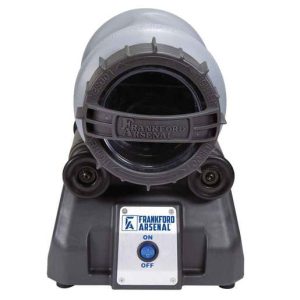
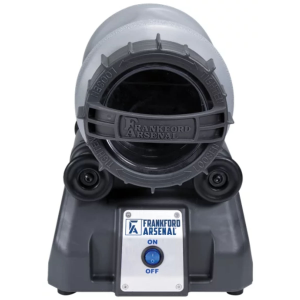
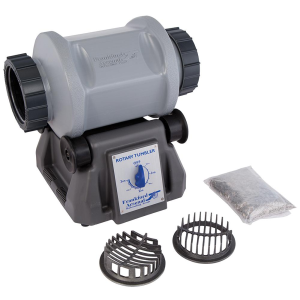
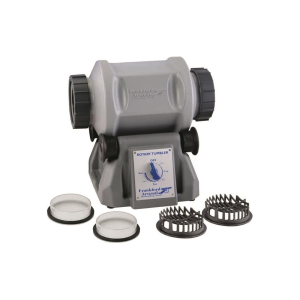
1. Frankford Arsenal Platinum Series Rotary Tumbler: Best Overall
If you want the cleanest brass and you do not mind a little extra process, a wet rotary tumbler is the answer, and the Frankford Arsenal Platinum Series is the one I recommend most. It uses stainless steel pins, water, and a drop of soap to scrub brass inside and out, including the primer pockets, leaving cases that look factory-new. Nothing dry-tumbled ever comes out this clean.
The Platinum Series earns its spot on build quality and capacity. The drum is generously sized, the motor runs quietly for a rotary, and Frankford includes the sifting lid and accessories that make separating pins from brass painless. For a reloader who cares about pristine, uniform brass, especially for precision rifle, this is the standard everyone else gets compared to.
The trade-off with any wet system is the extra steps. You have to separate the stainless pins and then dry the brass before loading, which adds time a dry tumbler skips. If that does not bother you, the results are worth it. If it does, look at the vibratory options below. Either way, clean brass protects your dies from grit.
Pros
- Cleans brass inside, out, and in the primer pockets
- Factory-new results no dry tumbler matches
- Large capacity and solid build
- Sifting lid and pins included
Cons
- Requires separating pins and drying brass
- More process than a dry tumbler
Best for: Reloaders who want the cleanest possible brass and accept the extra steps.
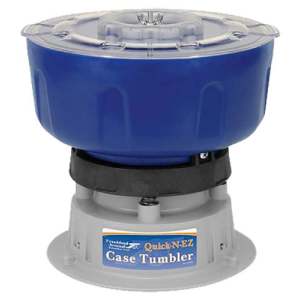
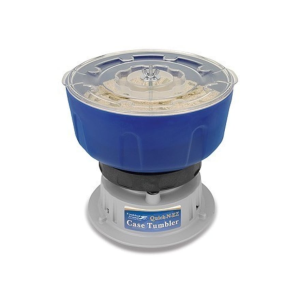
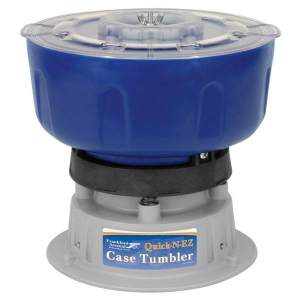
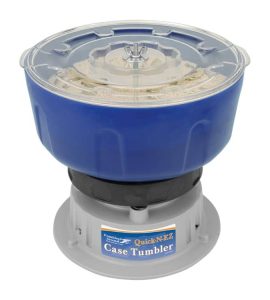
2. Frankford Arsenal Quick-N-EZ Vibratory: Best Budget
For most reloaders most of the time, a dry vibratory tumbler is all you need, and the Frankford Arsenal Quick-N-EZ is the value pick. You pour in corncob or walnut media, drop in your brass, and let it buzz for an hour or two while you do something else. The brass comes out clean enough to reload, and the whole thing costs a fraction of a wet setup.
The Quick-N-EZ is simple and reliable, which is exactly what you want from a tool that runs unattended. It handles a healthy batch of pistol or rifle brass, and adding a capful of polish brings out a nice shine. It will not scrub the primer pockets the way wet tumbling does, but for general reloading that is rarely necessary.
This is the tumbler I steer new reloaders toward, because it is cheap, foolproof, and skips the pin-separating and drying that wet systems demand. Tumble, sift the media out, load. For plinking ammo and general use, it is hard to justify spending more.
Pros
- Cheap, simple, and reliable
- No pins to separate or brass to dry
- Runs unattended while you do other things
- Polish additive brings a nice shine
Cons
- Does not clean primer pockets like wet tumbling
- Media needs occasional replacement
Best for: Most reloaders, especially beginners and high-volume plinkers.
3. Lyman Cyclone Rotary Tumbler: Best Rotary Value
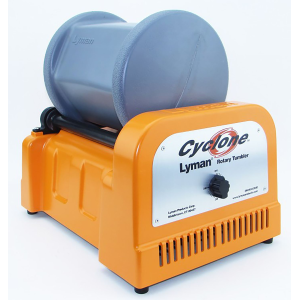
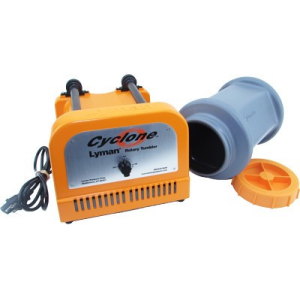
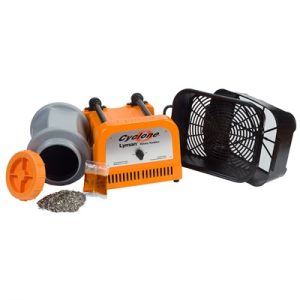
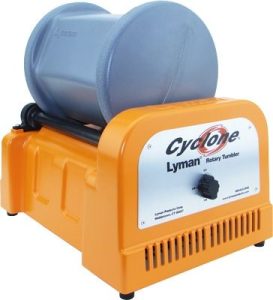
The Lyman Cyclone is the wet rotary tumbler to look at if the Frankford Arsenal Platinum is more than you want to spend. It delivers the same stainless-pin, water-and-soap cleaning that gets brass spotless inside and out, in a well-built drum at a friendlier price. The results rival the more expensive rotary units.
Lyman includes the media separator and the pins to get started, and the rubber drum runs reasonably quiet. It is a genuine alternative for the reloader who wants wet-tumble cleanliness without paying top dollar, and Lyman has been making reloading gear long enough to trust the durability.
Like any wet system, it asks for the separate-and-dry routine, so it is not the pick if you want the simplest possible process. But for the cleanest brass at a sensible price, the Cyclone is a smart buy and a strong runner-up to the Platinum Series.
Pros
- Wet-tumble cleanliness at a friendlier price
- Media separator and pins included
- Well-built rubber drum, reasonably quiet
- Trusted Lyman durability
Cons
- Same separate-and-dry routine as any wet system
- Slightly smaller capacity than premium rotary units
Best for: Reloaders who want spotless wet-tumbled brass without the premium price.
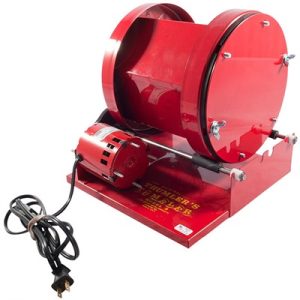
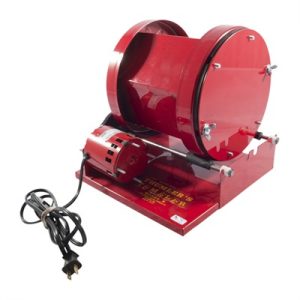
4. Thumler's Tumbler Model B: Best Built-to-Last
Thumler’s Model B is the tumbler that outlives everything around it. It started life as a rock tumbler, and that heavy-duty industrial build is exactly why brass reloaders adopted it. The metal drum and stout motor are made to run for years, and high-volume loaders who wear out consumer-grade tumblers swear by it.
You can run it wet with stainless pins for the cleanest results, and the big drum swallows a serious batch of brass at once, which matters when you process thousands of cases. It is louder and more utilitarian than the polished consumer units, but that is the point: this is a workhorse, not a showpiece.
For a casual reloader, the Model B is more tumbler than you need. For someone running big volume or who simply wants to buy once and never replace it, it is the durability champion. Pair it with stainless pins and it cleans as well as anything on this list.
Pros
- Industrial, buy-once durability
- Large drum handles big batches
- Runs wet with stainless pins for top results
- Trusted by high-volume reloaders
Cons
- Louder and more utilitarian than consumer units
- Overkill for low-volume reloaders
Best for: High-volume reloaders who want a tumbler they will never replace.
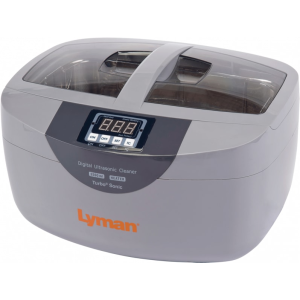
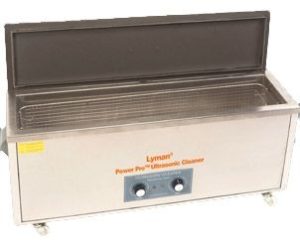
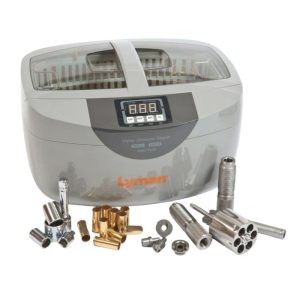
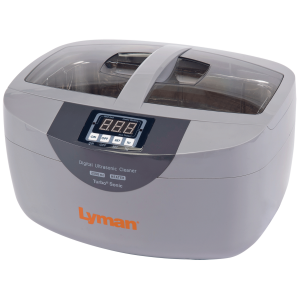
5. Lyman Turbo Sonic Ultrasonic Cleaner: Best Ultrasonic
Ultrasonic cleaning is the third path, and the Lyman Turbo Sonic is the reloader-focused pick. It uses high-frequency sound waves in a heated cleaning solution to lift carbon and grime out of brass, including the primer pockets and the inside of the case, without any pins to separate. For some reloaders, that is the perfect middle ground.
The Turbo Sonic is sized and tuned for cartridge brass, with a solution formulated for the job, and it doubles as a cleaner for small gun parts, which is a handy bonus. Cleaning is fast, and there is no media to manage, just solution to refresh periodically.
Ultrasonic brass still needs drying like wet tumbling, and it does not leave the bright polished shine that stainless pins do, so it trades a little cosmetics for convenience and parts-cleaning versatility. For a reloader who wants clean primer pockets without stainless media, it is the easiest route.
Pros
- Cleans primer pockets and case interiors, no pins
- Doubles as a small-parts cleaner
- Fast, with no media to manage
- Solution tuned for brass
Cons
- Brass still needs drying
- Less bright shine than stainless wet tumbling
Best for: Reloaders who want clean primer pockets without dealing with pins.
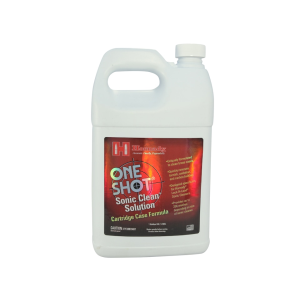
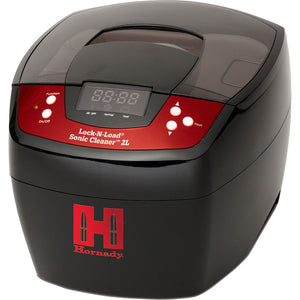
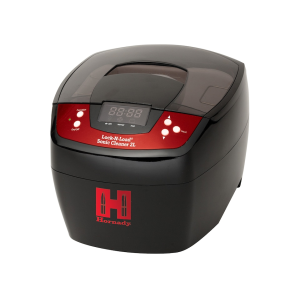
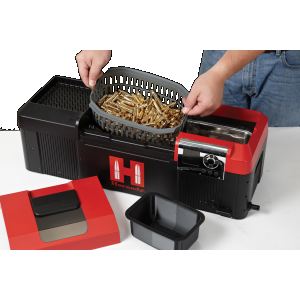
6. Hornady Lock-N-Load Sonic Cleaner: Best Ultrasonic for Volume
If you like the ultrasonic approach but want to clean more brass per cycle, the larger Hornady Lock-N-Load Sonic Cleaner is the step up. The bigger tank takes a heftier batch of cases, and the heater and timer let you set it and walk away. It is the volume answer for the ultrasonic crowd.
Like the Lyman unit, it cleans inside the case and the primer pockets without any media or pins, and it handles small gun parts too. Hornady builds it to take regular use, and the larger capacity means fewer cycles when you are processing a big range pickup.
It costs more than the compact ultrasonic units, and as with any ultrasonic system the brass needs drying afterward. But for a reloader who has settled on ultrasonic cleaning and wants to do it in bigger batches, the Hornady is the practical choice.
Pros
- Larger tank cleans bigger batches
- Heater and timer for set-and-forget runs
- Cleans primer pockets and parts, no media
- Built for regular use
Cons
- Pricier than compact ultrasonic units
- Brass still needs drying afterward
Best for: Ultrasonic users who process brass in larger batches.
Brass cleaning buyer’s guide
Wet vs dry vs ultrasonic
Dry vibratory tumbling uses corncob or walnut media to polish the outside of the brass. It is simple, cheap, and runs unattended, but it does not clean inside the case or the primer pockets. Wet rotary tumbling with stainless steel pins, water, and soap cleans everything, inside, out, and the pockets, and leaves brass looking factory-new, at the cost of separating pins and drying the cases. Ultrasonic sits in between: it cleans interiors and pockets without media, but needs drying and gives less shine. Most reloaders are happy with dry; precision and high-volume reloaders lean wet.
Do you need to clean primer pockets?
For general plinking ammo, no, a dry tumbler that polishes the outside is plenty. Clean primer pockets matter most for precision rifle, where consistent primer seating helps ignition uniformity, and that is where wet tumbling or ultrasonic earns its place. If you are loading match ammo for the X-ring, the pocket-cleaning methods are worth the extra steps. If you are loading bulk 9mm, they are not.
Tumbling media and what to use
Dry tumblers run on crushed corncob, which polishes and is gentle, or crushed walnut, which is more aggressive on heavy grime. A capful of polish additive brings out shine. Wet tumblers use stainless steel pins plus water and a little dish soap, sometimes with a touch of citric acid. Media wears out and gets dirty over time, so plan to top it up or replace it periodically.
Separating media and drying brass
Every method needs a separation step. Dry tumblers use a sifting media separator to shake the corncob out of the cases. Wet systems need a separator to pull the stainless pins out, plus a drying step before you load, since loading wet brass is asking for trouble. A cheap rotary media separator and a towel or a low oven, or a dedicated case dryer, handle this. Factor the drying time into your workflow if you go wet or ultrasonic.
Capacity and noise
Match the tumbler to your volume. A compact vibratory handles a few hundred cases; a large rotary or a Thumler’s drum swallows thousands. Noise varies too, and these run for an hour or more, so a quieter unit or a spot in the garage matters if you tumble while the household is home. High-volume reloaders should size up; occasional loaders can stay compact.
Where case cleaning fits in your workflow
Cleaning is one step in the case-prep chain, and where you put it matters. Many reloaders tumble dirty range brass first to knock off grit before it ever touches a die, which protects the sizing die from scratches. Others deprime first, then wet tumble so the primer pockets come clean, then size. Either order works; the key is that grit never rides into your dies. If you run a progressive, a quick pre-clean keeps the press running smoother and the dies lasting longer. Tumbling sits right alongside the press and dies as core bench gear, not an afterthought.
Stainless pins vs dry media: the real difference
The gap between methods is most obvious inside the case and in the primer pockets. Dry corncob or walnut polishes the outside beautifully and leaves the inside largely untouched, which is fine for plinking. Stainless pins, tumbling in soapy water, scrub the case walls and the pocket bottoms until they shine like new, because the tiny pins reach where media cannot. Ultrasonic cavitation does something similar chemically rather than mechanically. If you have ever cut a dry-tumbled case in half and seen the carbon still lining the inside, you understand why precision reloaders go wet. If you have never felt the need to look inside, dry is serving you just fine.
How I evaluated these cleaners
I judged these on how clean the brass actually comes out, how much hands-on process each method demands, build quality and motor durability over years of use, capacity against real-world batch sizes, and value for the money. Cleanliness is not the only thing that matters, because the cleanest method that you stop using because it is a hassle is worse than a simpler one you actually run. I weighed the convenience cost of pins and drying honestly, since that is what decides whether a reloader sticks with wet tumbling or drifts back to dry.
Mistakes to avoid when buying a brass tumbler
- Buying a wet system you will not maintain. Stainless tumbling is the cleanest, but if separating pins and drying brass annoys you, you will quit using it. Be honest about your patience.
- Loading wet brass. Brass from any wet or ultrasonic system must be fully dry before loading. Loading damp cases invites corrosion and inconsistent ignition.
- Chasing clean primer pockets you do not need. For plinking ammo, polished outsides are plenty. Pocket cleaning matters for precision, not for bulk range loads.
- Undersizing for your volume. A tiny vibratory is a bottleneck if you process thousands of cases. Match capacity to how much brass you actually clean at once.
- Forgetting the supporting gear. Wet systems need a media separator and a way to dry brass. Budget for those, not just the tumbler.
Bottom Line
For the cleanest brass and serious or precision reloading, the Frankford Arsenal Platinum Series rotary is the pick, with the Lyman Cyclone as the value runner-up. For most people who just want clean, reloadable brass with zero fuss, the dry Frankford Arsenal Quick-N-EZ is all you need and the easiest to live with. Want clean primer pockets without pins? Go ultrasonic with the Lyman Turbo Sonic. And if you load by the thousand and want a tumbler for life, the Thumler’s Model B is the workhorse. Whatever you choose, clean brass protects your dies and helps your ammo. When you are ready for the rest of the bench, see our guides to the best presses, best dies, and best kits, or start with the complete reloading guide.
Last updated June 4th 2026
What is the best way to clean brass for reloading?
It depends on your priorities. Dry vibratory tumbling is simplest and cheapest and polishes the outside. Wet rotary tumbling with stainless pins gets brass factory-clean inside, out, and in the primer pockets. Ultrasonic cleans interiors and pockets without media. Most reloaders are happy with dry; precision shooters lean wet.
Do you need to clean primer pockets when reloading?
For general plinking ammo, no. A dry tumbler that polishes the outside is plenty. Clean primer pockets matter most for precision rifle, where consistent primer seating aids ignition uniformity, which is where wet tumbling and ultrasonic cleaning earn their place.
Is wet or dry tumbling better?
Wet tumbling with stainless pins cleans more thoroughly, including primer pockets and case interiors, and leaves a brighter finish. Dry vibratory tumbling is simpler and faster end to end because there are no pins to separate and no brass to dry. Most reloaders pick dry for convenience and wet for the cleanest results.
Do you have to dry brass after wet tumbling?
Yes, always. Brass from any wet or ultrasonic process must be fully dry before reloading, because loading damp cases invites corrosion and inconsistent ignition. A towel and air, a low oven, or a dedicated case dryer all work. Factor drying time into your workflow if you go wet.
What media do you use in a vibratory tumbler?
Crushed corncob is the gentle, polishing standard, and crushed walnut is more aggressive for heavy grime. A capful of polish additive brings out shine. The media wears out and gets dirty over time, so plan to top it up or replace it periodically.
How long does it take to tumble brass?
Most dry vibratory cycles run one to three hours depending on how dirty the brass is and how clean you want it. Wet rotary tumbling is often faster to clean, commonly under two hours, but the separating and drying steps add time on the back end.
Can you clean brass in an ultrasonic cleaner?
Yes. An ultrasonic cleaner uses high-frequency sound waves in a heated solution to lift carbon and grime from brass, including primer pockets and case interiors, with no media to manage. The brass still needs drying afterward, and the finish is less bright than stainless wet tumbling, but it is fast and doubles as a parts cleaner.
Does cleaning brass actually matter for reloading?
Yes, beyond looks. Grit and carbon on dirty cases scratch your sizing dies and can cause inconsistent neck tension, so clean brass protects your gear and supports more consistent ammo. You do not need it spotless for plinking, but it should at least be free of grit before it goes into a die.
4,021+ Gun & Ammo Deals
Updated daily from 200+ top retailers. Filter by category, caliber, action type, and price.
Related Guides