

The RCBS Full-Length Die Set is the best reloading die set for most people, a reliable, well-supported workhorse that loads almost any cartridge and fits any press. If you swap calibers constantly, the Hornady Custom Grade set with its quick-change bushings is the move, and precision bolt-gun shooters should look at the Redding Type S. Here are the six die sets worth your money in 2026, who each one is for, and how to choose between die types.
Some of the links below are affiliate links, meaning at no additional cost to you, we may earn a commission if you click through and make a purchase.
Table of Contents
How we tested: Every pick here is ranked against our testing methodology. Minimum round counts, accuracy and reliability protocols, the failures that disqualify a gun.
Best reloading dies at a glance
| Die set | Best for | Type | Lube needed? |
|---|---|---|---|
| RCBS Full-Length | Overall | Standard 2 or 3-die | Rifle yes, carbide pistol no |
| Hornady Custom Grade | Quick caliber changes | Lock-N-Load bushing | Rifle yes, carbide pistol no |
| Redding Type S | Precision | Bushing neck die | Yes |
| Lee Precision | Value | Standard, carbide pistol | Carbide pistol no |
| Forster Bench Rest | Seating concentricity | Sliding-sleeve seater | Yes |
| Dillon Carbide | Progressive pistol | Carbide pistol, toolhead | No |
How to choose reloading dies
Dies are caliber-specific tools that do the mechanical work of reloading: they resize the fired case, seat the new bullet, and apply crimp. Picking the right set is mostly about matching the die type to what you load and how you load it. The good news is that all standard dies use a 7/8-14 thread, so any die fits any normal press regardless of brand. If you are new to the whole process, our complete guide to reloading covers how dies fit into the workflow.
1. RCBS Full-Length Die Set: Best Overall
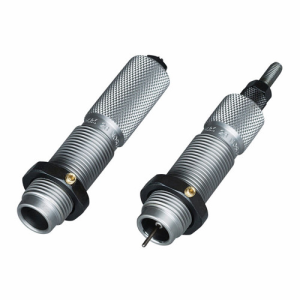
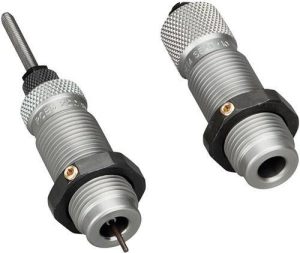
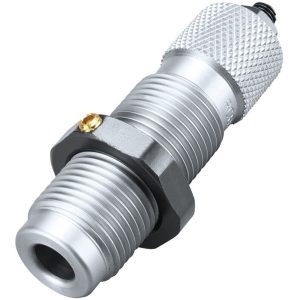
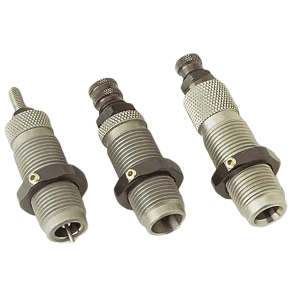
If someone is buying their first die set and asks me what to get, the answer is almost always RCBS. The full-length sizing die resets the whole case for reliable feeding, the seating die handles bullet seating and a light crimp, and the whole thing is built like it will outlast the press it screws into. RCBS has been making these dies for decades, and the consistency from set to set is exactly what you want when you are learning.
What sells me on RCBS over the years is the support. Spindles, decapping pins, and expander balls are the parts that wear or break, and RCBS will send you replacements without a fight. The dies use the standard 7/8-14 thread, so they fit any normal press, and they come with the correct shell holder noted right on the box. For a do-everything set that you will not second-guess, this is the one.
I have RCBS dies on my bench in calibers I have loaded for years, and they have simply never given me a reason to switch. The sizing is repeatable load after load, the seater stem is easy to set, and when I finally wore out a decapping assembly, the replacement was a few dollars and a week in the mail. That kind of boring reliability is exactly what you want from the tool that shapes every round you fire.
Pros
- Reliable, consistent sizing set after set
- Outstanding warranty and parts support
- Standard 7/8-14 thread fits any press
- Available for nearly every cartridge made
Cons
- Standard lock rings use a set screw, not a cross-bolt
- No micrometer seating adjustment at this price
Best for: First-time reloaders and anyone who wants one trustworthy set for life.
2. Hornady Custom Grade New Dimension: Best for Quick Caliber Changes
Hornady’s Custom Grade dies are the set I reach for when I am loading several calibers in a session. They pair with Hornady’s Lock-N-Load bushing system, which lets you pop a die in and out of the press in a quarter turn without losing your adjustment. If you swap calibers a lot, that one feature saves real time and frustration.
The dies themselves are excellent. The elliptical expander reduces friction and case stretch on the downstroke, and the zip spindle makes adjusting the decapping assembly tool-free. The Sure-Loc lock rings clamp with a cross-bolt instead of digging a set screw into the die threads, which is the detail precision reloaders care about. For a high-volume, multi-caliber bench, these are hard to beat.
The time savings are real once you load more than one or two calibers. Instead of unscrewing a die and resetting it every swap, you twist out a bushing and twist in the next, and your adjustment comes back with it. Over a season of loading pistol and rifle, that convenience adds up to hours you spend shooting instead of fiddling with a wrench.
Pros
- Lock-N-Load bushings make die swaps instant
- Cross-bolt Sure-Loc rings protect the threads
- Elliptical expander reduces case stretch
- Tool-free zip-spindle adjustment
Cons
- Bushing system shines most if you buy Hornady's press too
- Slightly pricier than a basic RCBS set
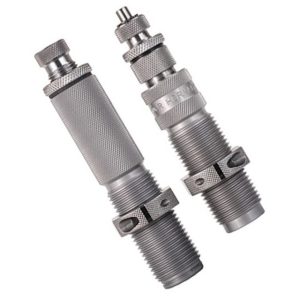
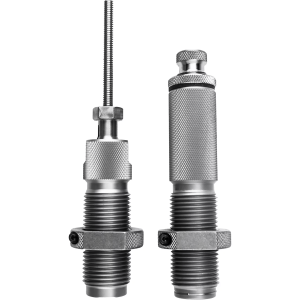
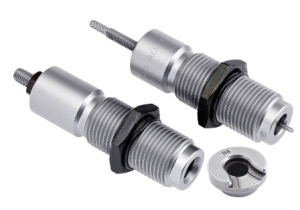
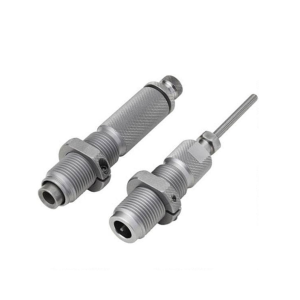
Best for: Reloaders who load many calibers and want fast, repeatable die changes.
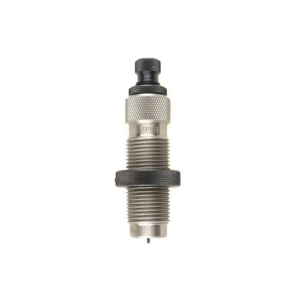
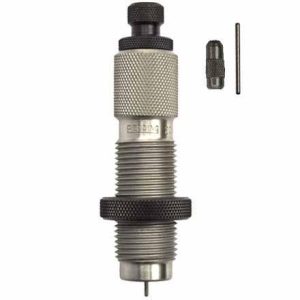
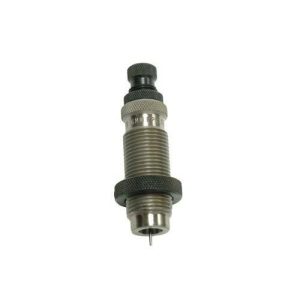
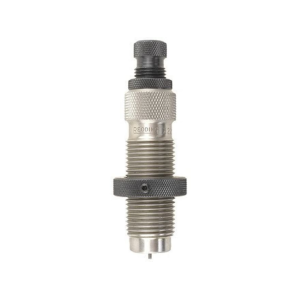
3. Redding Type S Match Bushing Set: Best for Precision
When accuracy is the whole point, Redding is the name that comes up, and the Type S bushing die is why. Instead of a fixed neck, it uses interchangeable bushings so you can dial in exactly how much neck tension you want, and you can size just the neck to preserve the fit of brass to your chamber. For a bolt-gun precision shooter chasing small groups, that control matters.
Redding’s machining is a step above, and it shows in the runout numbers and the feel of the dies in use. The Competition seating die in the same family adds a micrometer top and a sliding sleeve that aligns the bullet before seating. It costs more, and a beginner does not need it, but for the precision rifle crowd loading 6.5 Creedmoor or .308 for the X-ring, the Type S setup earns every dollar.
The payoff shows up on paper. Controlling neck tension with the right bushing, and sizing only the neck so the body stays fitted to your chamber, takes a meaningful slice out of group size for a load that is already good. It will not turn a rough rifle into a tack driver, but for a capable barrel and careful brass prep, the Type S is the die that lets the rest of your work show.
Pros
- Interchangeable bushings tune neck tension precisely
- Lets you neck-size only for bolt-gun accuracy
- Superb machining and low runout
- Pairs with Redding Competition micrometer seaters
Cons
- Bushings are sold separately, adding to the cost
- More die than a casual or semi-auto reloader needs
Best for: Precision bolt-gun handloaders tuning neck tension for the smallest groups.
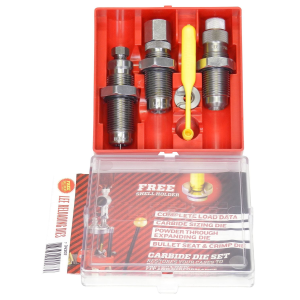
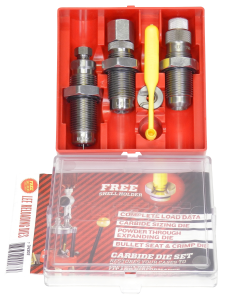
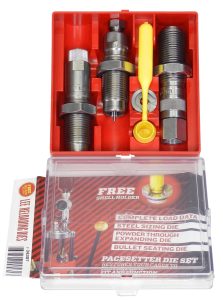
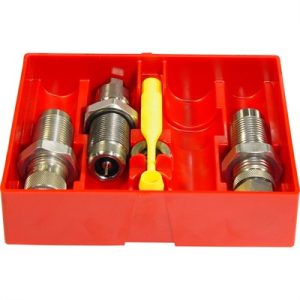
4. Lee Precision Die Set: Best Value
Pound for pound, nothing gives a new reloader more for the money than a Lee die set. It costs a fraction of the premium brands, yet it sizes, seats, and crimps perfectly good ammunition, and the pistol sets use a carbide sizing ring so you can skip case lube entirely. Lee even throws in the correct shell holder and a powder dipper, which is genuinely useful when you are starting out.
Are these as refined as a Redding or a Forster set? No, and they do not pretend to be. The lock rings use a rubber O-ring rather than a cross-bolt, which some reloaders love for being tool-free and others find less repeatable. But for plinking ammo, for a caliber you only load occasionally, or for testing the water before you commit, Lee dies punch far above their price.
I keep a few Lee sets around for exactly the cases this paragraph describes: an oddball caliber I load twice a year, or a new chambering I want to try before committing real money. They do the job, the carbide pistol dies genuinely save the lube step, and nobody can tell a Lee-loaded plinking round from one off a thousand-dollar setup downrange. For the money, that is a remarkable amount of capability.
Pros
- Lowest price of any credible die set
- Carbide pistol dies need no case lube
- Includes shell holder and powder dipper
- Loads perfectly serviceable ammo
Cons
- O-ring lock rings divide opinion on repeatability
- Fit and finish is good, not premium-tier
Best for: Budget-minded and new reloaders, or anyone loading a caliber occasionally.
5. Forster Bench Rest Die Set: Best Seating Concentricity
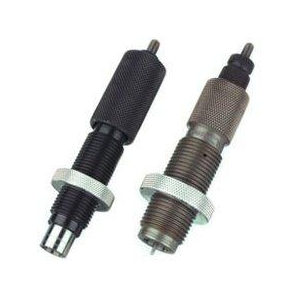
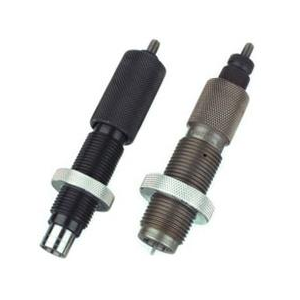
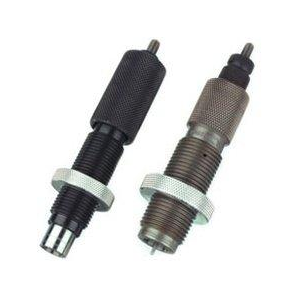
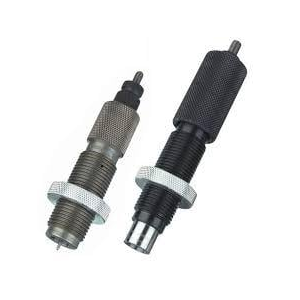
Forster has a cult following among accuracy reloaders, and the Bench Rest seating die is the reason. It uses a spring-loaded sliding sleeve that grips and aligns the case and bullet before the bullet ever starts into the neck, which produces some of the lowest runout numbers you can get from a standard seating die. Concentric ammo shoots straighter, and Forster builds it in.
The full-length sizing die is excelently made too, with a high-mounted expander that pulls through the neck closer to the case mouth for less distortion. Forster also offers an inexpensive honing service to open the neck of the sizing die to your spec. For the handloader who wants premium concentricity without going full custom, Forster is the sweet spot, and it is my pick when seating quality is the priority.
What I appreciate most is that Forster gives you precision-shooter results without precision-shooter complexity. There are no bushings to buy, no micrometer to learn, just a beautifully made seater that aligns the bullet and a sizer that treats the neck gently. Drop it in, set it once, and the concentricity is simply better than a standard set delivers. For a lot of accuracy-minded reloaders, that is the upgrade that matters most.
Pros
- Sliding-sleeve seater delivers exceptional concentricity
- High-mounted expander reduces neck distortion
- Inexpensive neck-honing service available
- Beautifully machined at a fair price
Cons
- No bushing-style neck-tension control like Redding
- Premium price versus a basic set
Best for: Accuracy handloaders who want the straightest ammo a standard seater can give.
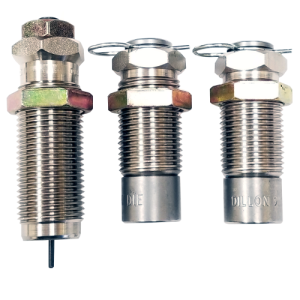
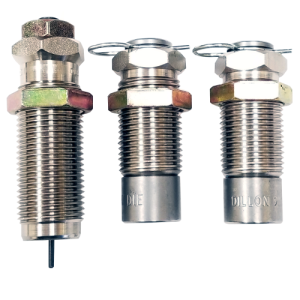
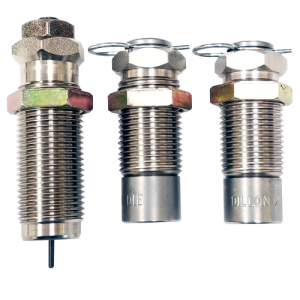
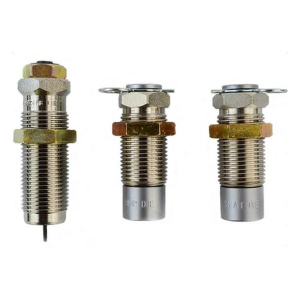
6. Dillon Carbide Pistol Die Set: Best for Progressive Pistol Volume
If you run a Dillon progressive and load pistol by the thousand, Dillon’s own carbide dies are built for exactly that job. They are designed to be set up and left in the toolhead, with easy-access spindles you can clear without tearing the die down, which matters when a piece of media or a stuck case interrupts a long session. The carbide sizing ring means no lube on straight-wall pistol brass.
These are a volume tool, not a precision-rifle tool, and that is the point. Paired with a 750 or a 550 on our best reloading presses list, they keep a progressive running smoothly through long pistol runs. For a high-round-count 9mm or .45 shooter, the time they save is the whole value, and they carry Dillon’s no-nonsense support.
Pros
- Built for fast clearing on a progressive toolhead
- Carbide sizing, no lube on pistol brass
- Designed to stay set up between sessions
- Backed by Dillon support
Cons
- Pistol-focused, not for precision rifle
- Best value only if you run a Dillon press
Best for: High-volume pistol reloaders running a Dillon progressive.
Reloading dies buyer’s guide
Full-length vs neck sizing dies
A full-length sizing die resets the entire case back to spec, which is what you want for reliable feeding and for any semi-auto. A neck-sizing die works only the case neck, leaving the body fire-formed to your chamber, which can wring out a little extra accuracy in a bolt gun shooting its own brass. Most reloaders full-length size and never look back. Precision bolt-gun shooters are the ones who benefit from neck sizing, and a bushing die like the Redding Type S gives you the most control.
Seating dies and why concentricity matters
The seating die presses the bullet into the case to your overall length. A basic seater works fine, but a precision seater, like the Forster Bench Rest or a micrometer-topped competition die, aligns the bullet to the case before it starts into the neck. That alignment lowers runout, and straighter ammo shoots tighter groups. If you load match ammo, the seating die is where the upgrade money goes first.
Carbide vs steel dies
Carbide sizing rings on straight-wall pistol dies let you skip case lube entirely, which is a huge convenience on a high-volume pistol setup. Bottleneck rifle dies are steel and still need lube, because the case has to be pushed hard into the die to reshape the shoulder. So for pistol, buy carbide. For rifle, steel is the norm and lube is part of the job.
How many dies are in a set
Rifle sets are usually two dies: a full-length sizer that also decaps, and a seater. Pistol sets are three or four dies, adding a separate expander or flare die and often a dedicated taper-crimp die. Check what is included, because some budget sets bundle a shell holder and others sell it separately. Our presses guide covers the press these all thread into.
Lock rings and thread standard
Every standard die uses a 7/8-14 thread, so cross-brand mixing is fine. Where brands differ is the lock ring. Set-screw rings dig into the die threads, cross-bolt rings like Hornady’s Sure-Loc and Forster’s clamp without marring, and Lee’s rubber O-ring is tool-free but less repeatable. None of this changes whether the die works, but the cross-bolt rings are nicer to live with.
Decapping pins, expander balls, and stuck cases
The parts that actually break or wear on a die set are small: the decapping pin that punches out spent primers, and the expander ball that opens the case neck. Bent a pin on a stubborn military primer? It happens, and the brands that ship spares or replace them cheaply save you a dead evening. This is where RCBS and Hornady earn loyalty, because a quick email gets you parts. A stuck case is the other classic headache, almost always from skipping lube on a rifle die, and a stuck-case remover is a cheap insurance buy if you load bottleneck brass.
Do you need a separate crimp die?
Most seating dies can roll or taper crimp while they seat the bullet, and for a lot of loads that is perfectly fine. A separate crimp die earns its place in two situations. Heavy-recoiling revolver and semi-auto rounds benefit from a dedicated, repeatable crimp that keeps bullets from moving under recoil, and precision shooters like to seat and crimp as two separate steps so neither operation compromises the other. For straight-wall pistol especially, a separate taper-crimp die is cheap insurance against setback and feeding trouble. If you load .45 ACP or 9mm in volume, it is worth the few extra dollars.
Die sets vs buying dies individually
You can buy a matched set or piece together individual dies, and for most people the set is the better deal. The exception is precision rifle, where reloaders often mix a premium bushing sizer from one brand with a competition micrometer seater from another, because the 7/8-14 thread lets any die run in any press. Forster also offers an inexpensive service to hone a sizing die’s neck to your exact spec, which is a quiet trick the accuracy crowd uses to perfect neck tension without buying bushings. Start with a set, then upgrade the individual die that limits your accuracy.
Bushing dies and tuning neck tension
Neck tension is how tightly the case neck grips the bullet, and it is one of the quiet levers behind a consistent, accurate load. Standard dies set neck tension with a fixed expander, take it or leave it. A bushing die like the Redding Type S lets you swap in bushings of different diameters to dial that grip up or down a thousandth at a time. Too little tension and bullets can move; too much and you work the brass harder and shorten case life. For precision rifle, being able to tune it is a real advantage, which is why bushing dies are standard kit on a serious bolt-gun bench. For pistol and general loading, the fixed expander in a standard set is all you need.
How I evaluated these die sets
I weighed these on the things that actually matter at the bench: how consistently they size and seat, runout on the finished round, parts availability when a decapping pin or spindle breaks, and how easy they are to adjust and clean. Price counted, but against value. A cheap set that makes good ammo is a bargain, and an expensive set that does not improve your groups is not. I leaned on years of loading across pistol and rifle, plus the consensus of the precision community, where Redding and Forster have earned their reputations honestly.
Mistakes to avoid when buying reloading dies
- Buying a precision die you do not need. A bushing die or competition seater is wasted on plinking ammo. Match the die to the job.
- Forgetting the shell holder. Some sets include it, some do not, and it is caliber-specific. Check before you order or you cannot load.
- Skipping carbide on pistol dies. Carbide pistol dies mean no lube, which saves a messy, tedious step on every case.
- Lubing inside the neck wrong, or not at all on rifle. Rifle dies need lube or a case will stick and tear. Too much lube dents shoulders. Find the middle.
- Assuming brand lock-in. The 7/8-14 thread is universal, so you can run RCBS dies in a Hornady press and vice versa. Buy the best die, not the matching logo.
Bottom Line
For most reloaders, the RCBS Full-Length Die Set is the right answer: reliable, supported for life, and made for nearly every cartridge. Load a lot of different calibers? The Hornady Custom Grade set with quick-change bushings will save you real time. Chasing the smallest groups out of a bolt gun? The Redding Type S for neck-tension control and the Forster Bench Rest for seating concentricity are the precision picks. And if you are watching the budget or running a Dillon progressive, the Lee and Dillon sets each earn their place. Match the die to how you load, and any set here will serve you for decades. When you are ready to load a specific caliber, our guides for 9mm, .223/5.56, .308, 6.5 Creedmoor, and .45 ACP walk through the specifics, and the cost breakdown shows what the whole setup runs.
Last updated June 3rd 2026
What reloading dies should a beginner buy?
An RCBS or Lee die set in your caliber is the best beginner choice. RCBS offers the best balance of quality and lifetime support, while Lee is the cheapest credible option and includes a shell holder. Both load perfectly safe, accurate ammunition while you learn the process.
Do all reloading dies fit all presses?
Yes, almost always. Standard reloading dies use a 7/8-14 thread, so any brand of die fits any standard single-stage, turret, or progressive press. You can run RCBS dies in a Hornady press or Lee dies in a Dillon, so buy the best die rather than matching the press brand.
What is the difference between full-length and neck sizing dies?
A full-length die resizes the entire case for reliable feeding and is required for semi-autos. A neck-sizing die works only the neck, leaving the body fitted to your chamber, which can improve accuracy in a bolt gun shooting its own brass. Most reloaders full-length size; precision bolt-gun shooters often neck size.
Do you need carbide dies?
For straight-wall pistol cartridges, carbide sizing dies are well worth it because they let you skip case lubrication entirely. For bottleneck rifle cartridges, dies are steel and you still need lube regardless, because the case must be pushed hard into the die to reshape the shoulder.
How many dies come in a reloading set?
Rifle sets are usually two dies, a full-length sizer that also decaps and a bullet seater. Pistol sets are typically three or four dies, adding an expander or flare die and often a separate taper-crimp die. Check whether the shell holder is included, since some brands sell it separately.
Are expensive reloading dies worth it?
For precision rifle loading, yes. Bushing dies like the Redding Type S let you tune neck tension, and concentric seaters like the Forster Bench Rest produce straighter ammo that shoots tighter groups. For plinking and general use, a standard RCBS or Lee set makes ammo that is just as reliable for far less money.
What is the best reloading die brand?
There is no single best brand. RCBS is the best all-around choice, Hornady leads on quick caliber changes, Redding and Forster are the precision favorites, Lee is the value king, and Dillon is best for progressive pistol loading. The right brand depends on what and how you load.
Can you reload without buying a separate crimp die?
Often yes. Most seating dies can apply a crimp at the same time they seat the bullet, which is fine for many loads. A separate crimp die gives you independent control and is preferred for heavy-recoiling rounds, semi-autos, and anyone who wants to seat and crimp as two distinct steps for consistency.
4,021+ Gun & Ammo Deals
Updated daily from 200+ top retailers. Filter by category, caliber, action type, and price.
Related Guides