

The Howard Leight Impact Sport is the best shooting ear protection for most people, an affordable electronic earmuff that amplifies range commands while clamping down on the gunshot. Rifle shooters who need slim cups should take the Walker's Razor Slim, indoor ranges call for the NRR 30 Impact Pro, and the highest-rated protection here is not a muff at all but the Decibullz custom-molded earplugs. Here are the 12 best hearing protection options for 2026, electronic and passive, muffs and plugs, and what the ratings on the box actually mean.
Some of the links below are affiliate links, meaning at no additional cost to you, we may earn a commission if you click through and make a purchase.
Table of Contents
How we tested: Every pick here is ranked against our testing methodology. Minimum round counts, accuracy and reliability protocols, the failures that disqualify a gun.
Best ear protection at a glance
| Protection | Best for | Type | NRR |
|---|---|---|---|
| Howard Leight Impact Sport | Overall value | Electronic muff | 22 |
| Walker’s Razor Slim | Rifle / slim | Electronic muff | 23 |
| 3M Peltor Sport Tactical 500 | Premium sound | Electronic muff | 25 |
| Howard Leight Impact Pro | Indoor ranges | Electronic muff | 30 |
| Pyramex Venture Gear Sentinel | Budget | Electronic muff | 26 |
| Walker’s Silencer 2.0 | Discreet | Electronic earbuds | 25 |
| Howard Leight Leightning L3 | Max passive | Passive muff | 30 |
| 3M Peltor Sport Shotgunner II | Shotgun / clays | Passive muff | 24 |
| Decibullz Custom Molded Earplugs | Best earplugs | Custom-molded plugs | 31 |
| SureFire EP4 Sonic Defenders Plus | Hear and protect | Filtered plugs | 24 |
| Walker’s Youth and Women’s Folding Muff | Kids / small heads | Passive muff | 23 |
| AXIL GS Extreme 2.0 | Rechargeable buds | Electronic earbuds | 13-23 |
Hearing protection by the numbers
These are the figures that decide what you should buy, and most of them are not on any product page. They come from the federal noise standard and from NIOSH's own measurements of firearms at the shooter's ear, not from another review.
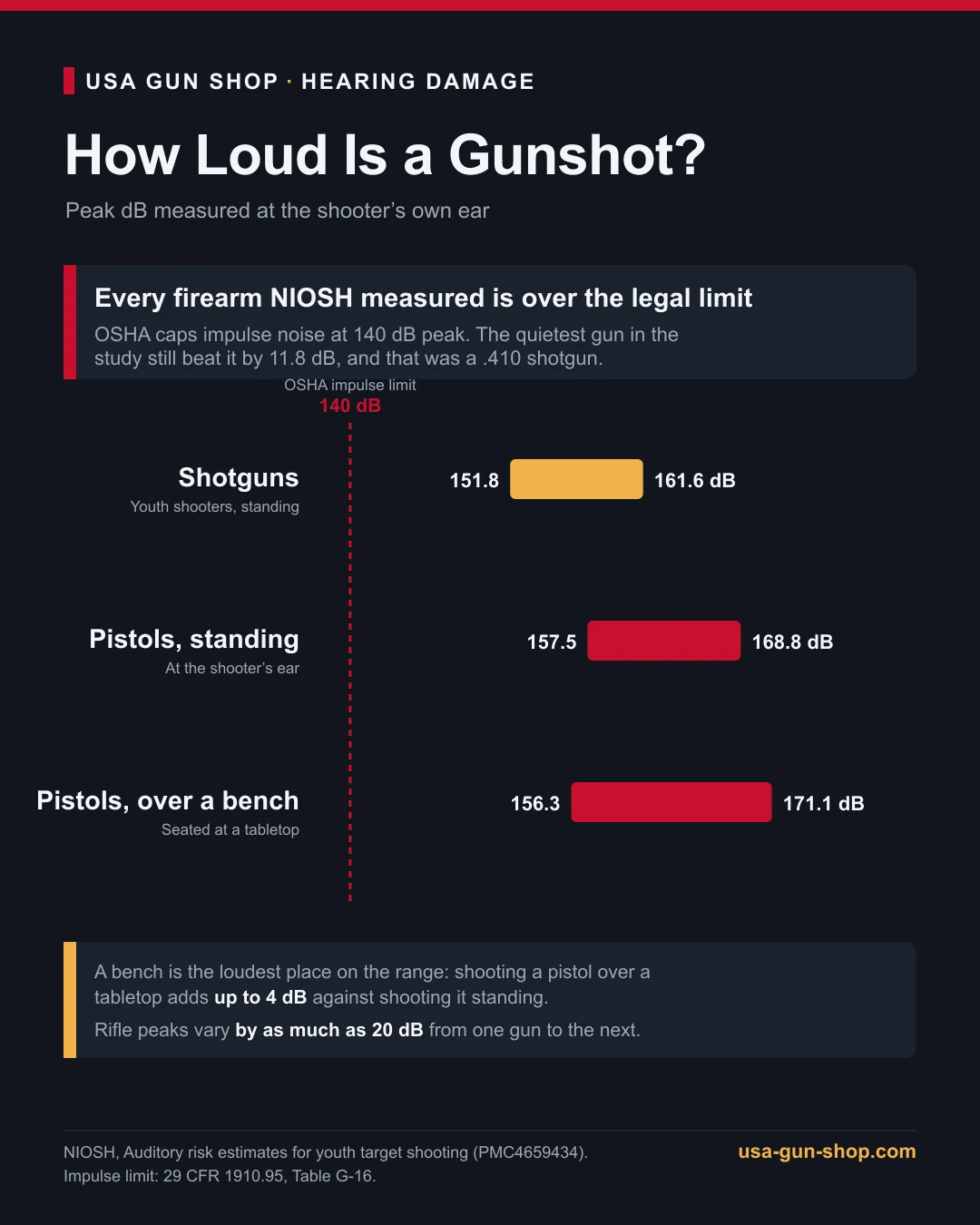
- 140 dB peak: OSHA's ceiling for impulse noise, written into 29 CFR 1910.95: “Exposure to impulsive or impact noise should not exceed 140 dB peak sound pressure level.” Every firearm NIOSH has measured is over it.
- 151.8 to 161.6 dB: the measured peak range for shotguns at the shooter's own ear in the NIOSH youth target shooting study. The quietest gun in that set is still eleven decibels past the legal impulse limit.
- 157.5 to 171.1 dB: the same study's range for pistols. The top of it is a pistol fired over a bench, not standing.
- Up to 4 dB louder: what shooting a pistol over a tabletop adds versus standing, because the bench reflects the muzzle blast straight back at you. The bench is the loudest place on the range and nobody tells you that.
- 20 dB: how much rifle peak levels vary across guns in that study. Two rifles are not two similar noises.
- 5.7 dB: the gap between two .410 shotguns. NIOSH found the acoustics “are not orderly as a function of caliber/gauge, but vary as a function of manufacturer/model and ammunition.” Gauge does not predict loudness. The gun and the load do.
- 4.5 dB: how much louder one 12 gauge load was than another out of the same Remington 870. Changing shells changes your exposure as much as changing guns.
- 3 dB: the amount that halves the sound energy reaching your ear, because the decibel scale is logarithmic. This is why an NRR 30 muff is not “a bit better” than an NRR 22 one.
- Subtract 7: what OSHA's Appendix B tells you to take off the NRR before applying it to a dBA measurement. The number on the box is not the number at your eardrum.
- 2025: the year NIOSH replaced its 1998 NRR derating scheme with individual fit testing. Its new recommendations “supersede the HPD derating guidance” that half the internet still quotes as gospel.
- 85 dBA over 8 hours: OSHA's action level for continuous workplace noise. Gunfire is not continuous noise, which is exactly why the NRR is an imperfect tool for it: it was built for factories.
Two of those are worth reading twice. Gauge and caliber do not tell you how loud a gun is, so the .410 you handed a child is not automatically the quiet option. And the bench you shoot from makes your pistol louder than shooting it standing up.
How to choose hearing protection
Hearing damage from gunfire is permanent and cumulative, so protection is not optional gear, it is the first thing you buy. The real decisions are electronic against passive, muffs against plugs, and how much attenuation the place you shoot actually demands. The right pick balances protection, awareness and comfort, because the protection you will wear every single time is the protection that matters. Pair it with proper eye protection for a complete eyes-and-ears setup.
1. Howard Leight Impact Sport: Best Overall
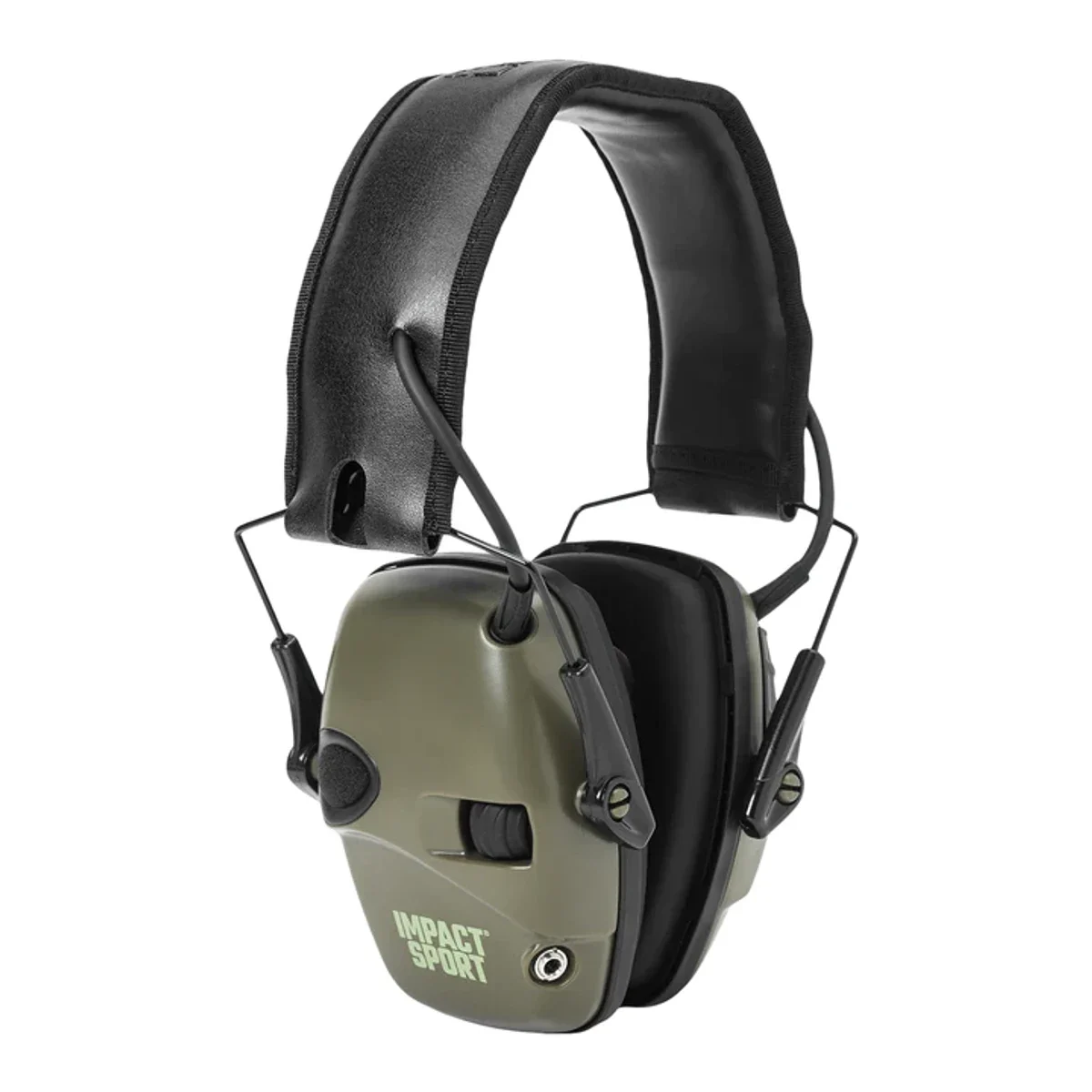
The Howard Leight Impact Sport has protected more new shooters' hearing than any other muff, and it is still the default recommendation. It amplifies range commands and conversation, then clamps down on the gunshot, so you hear everything you want and none of what hurts, at a price that makes buying electronic protection an easy decision.
It carries an NRR of 22, runs a long time on two AAA batteries, folds flat for a range bag, and takes an audio input jack. The slim cups clear a rifle stock reasonably well and the sound is perfectly good for situational awareness. For a first pair of electronic muffs nothing beats it on value.
The catch is that NRR 22 is the lowest figure on this page. Outdoors with a pistol or a rimfire that is fine. On an indoor range, or beside a braked rifle, step up to the Impact Pro or put plugs in underneath. This is the pair I tell every new shooter to buy first, and many never upgrade.
Pros
- Amplifies range commands, clamps the shot
- The cheapest credible electronic protection
- Long AAA life, folds, audio input
Cons
- Sound quality is good, not premium
- Cups are bulky against a rifle
- NRR 22 is the lowest here
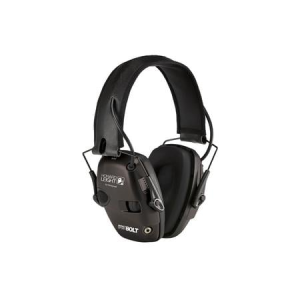
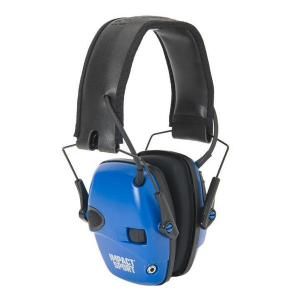
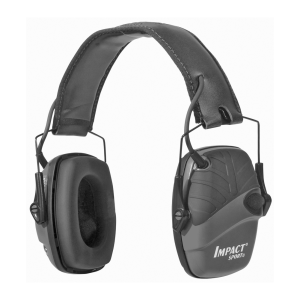
Best for: Almost every shooter as a first pair of electronic earmuffs.
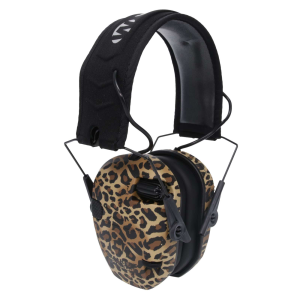
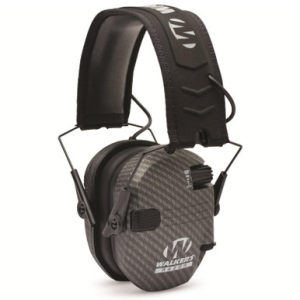
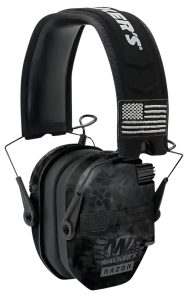
2. Walker's Razor Slim: Best for Rifle Shooters
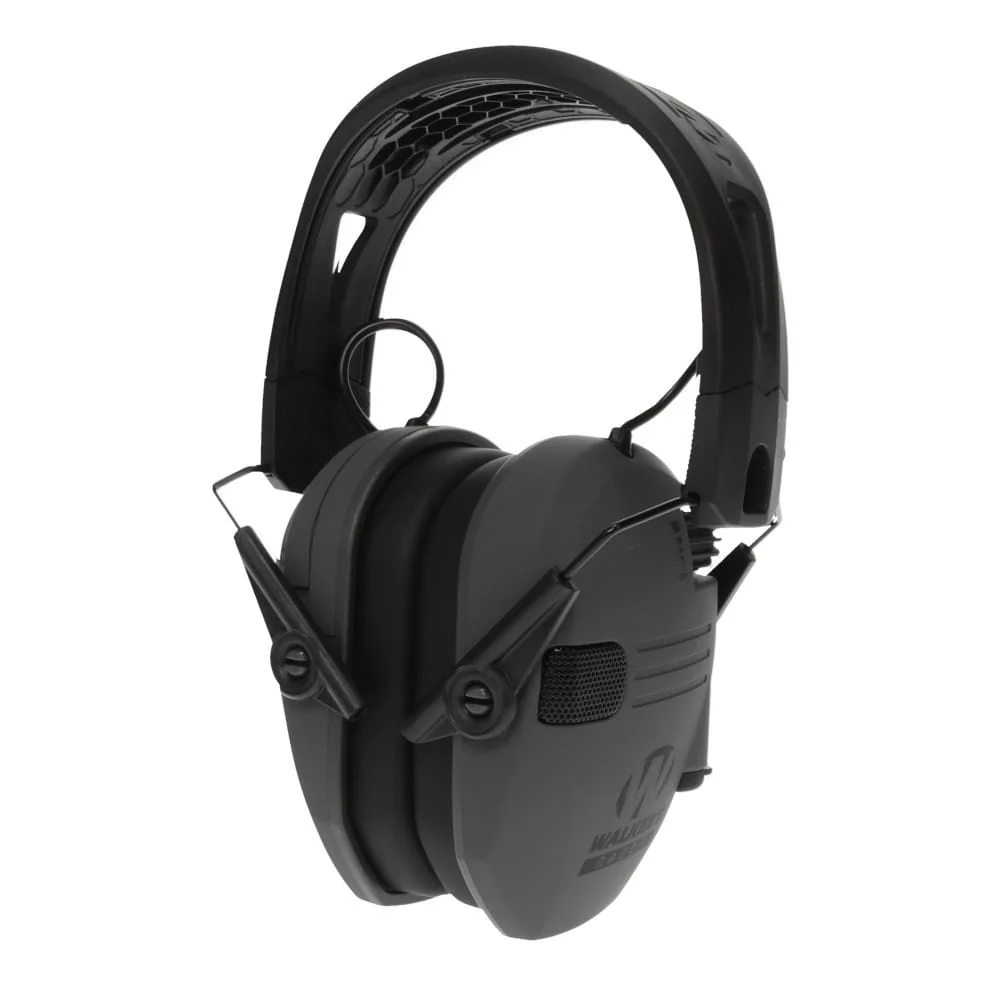
The Walker's Razor Slim is the muff built for people who shoot long guns, because its low-profile cups clear a stock far better than a tall muff does. That is why it is everywhere on AR and precision lines: you get a consistent cheek weld instead of a muff being shoved off your head every time you mount the rifle.
It uses sound-activated compression to cut the report while amplifying ambient sound, and Walker's publishes a noise-reduction rating of 23dB for it. Omnidirectional microphones, an audio jack, and a range of rechargeable and Bluetooth versions mean you can pick the features you want without paying for the ones you do not.
The trade for slim cups is less passive bulk, so for the loudest indoor bays a taller muff or plugs underneath is the wiser call. But as a do-everything rifle-friendly electronic muff at a fair price, the Razor has earned its place as a perennial best-seller.
Pros
- Slim cups clear a rifle stock
- Maker-published noise-reduction rating of 23
- Rechargeable and Bluetooth versions exist
Cons
- Less passive bulk than tall cups
- Pair it with plugs for indoor bays
- Battery door feels cheap

Best for: Rifle and AR shooters who need slim cups for a clean cheek weld.
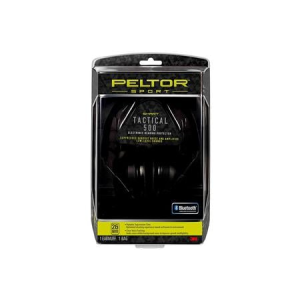
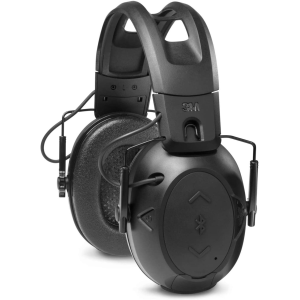
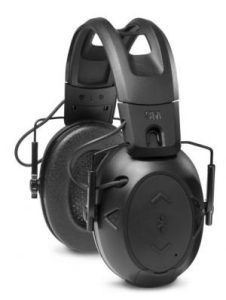
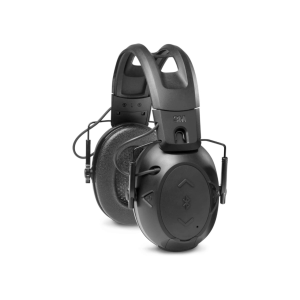
3. 3M Peltor Sport Tactical 500: Best Premium Muff
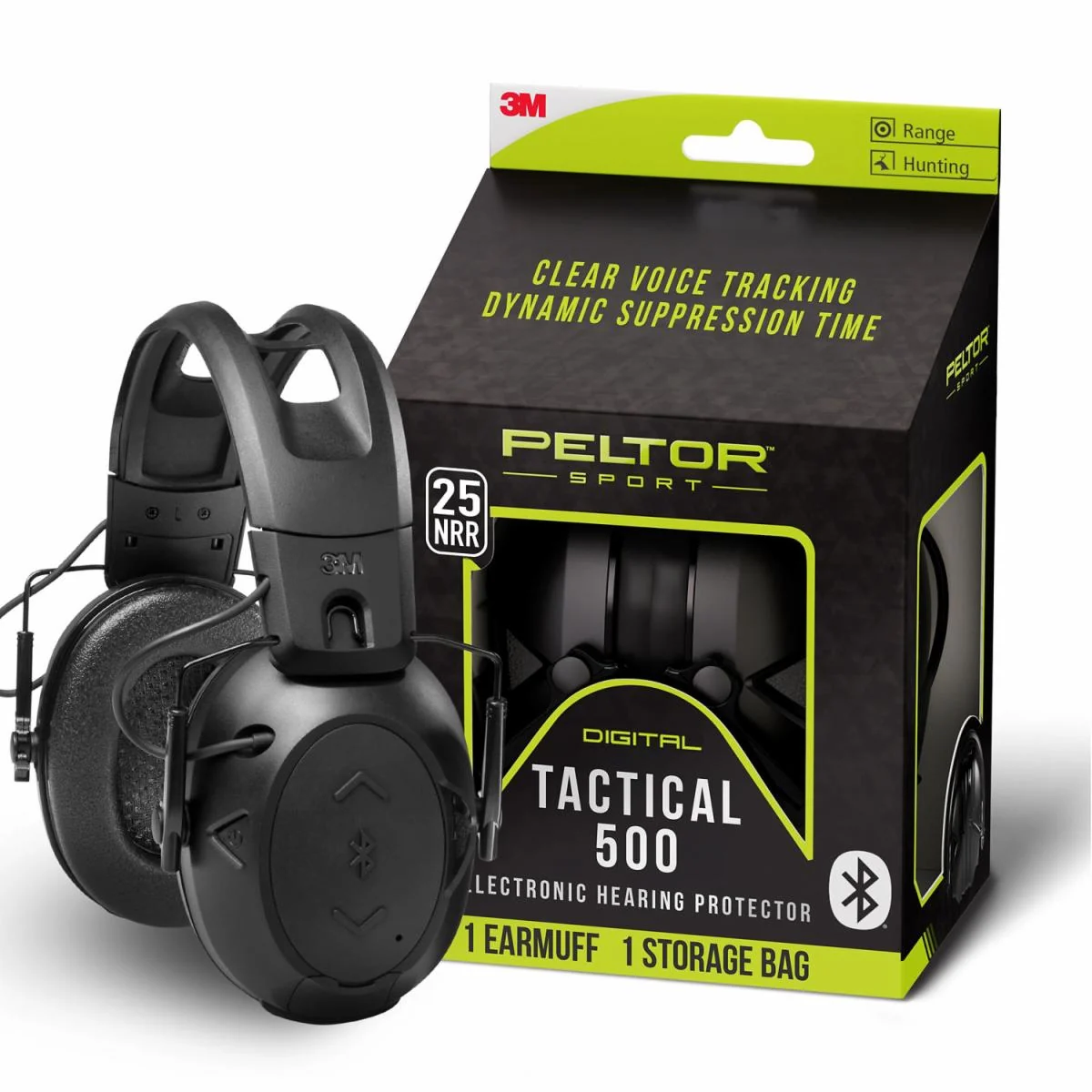
The 3M Peltor Sport Tactical 500 is the premium electronic muff for someone who lives at the range. Its standout is clear, natural voice tracking and a dynamic suppression circuit that adapts to the environment rather than simply chopping every loud sound, backed by 3M's genuine hearing-protection pedigree.
It carries an NRR of 25, higher than most slim electronic muffs, with recessed microphones that cut wind noise and padding that stays comfortable through a long session. The audio reproduction is audibly better than the budget muffs, which matters when you wear them for hours, and the Bluetooth is a real convenience in a stand or on a long range day.
It costs considerably more than the value muffs and the cups are not the slimmest against a rifle stock. But for premium sound, higher attenuation, and Bluetooth in one muff, this is the upgrade that people who shoot every week actually make.
Pros
- Clear voice tracking, dynamic suppression
- NRR 25 in an electronic muff
- Bluetooth for streaming and calls
Cons
- Costs several times the value muffs
- Cups are not the slimmest available
- More muff than occasional shooters need
Best for: Frequent shooters who want premium sound, higher NRR, and Bluetooth.
4. Howard Leight Impact Pro: Most Protective Electronic Muff
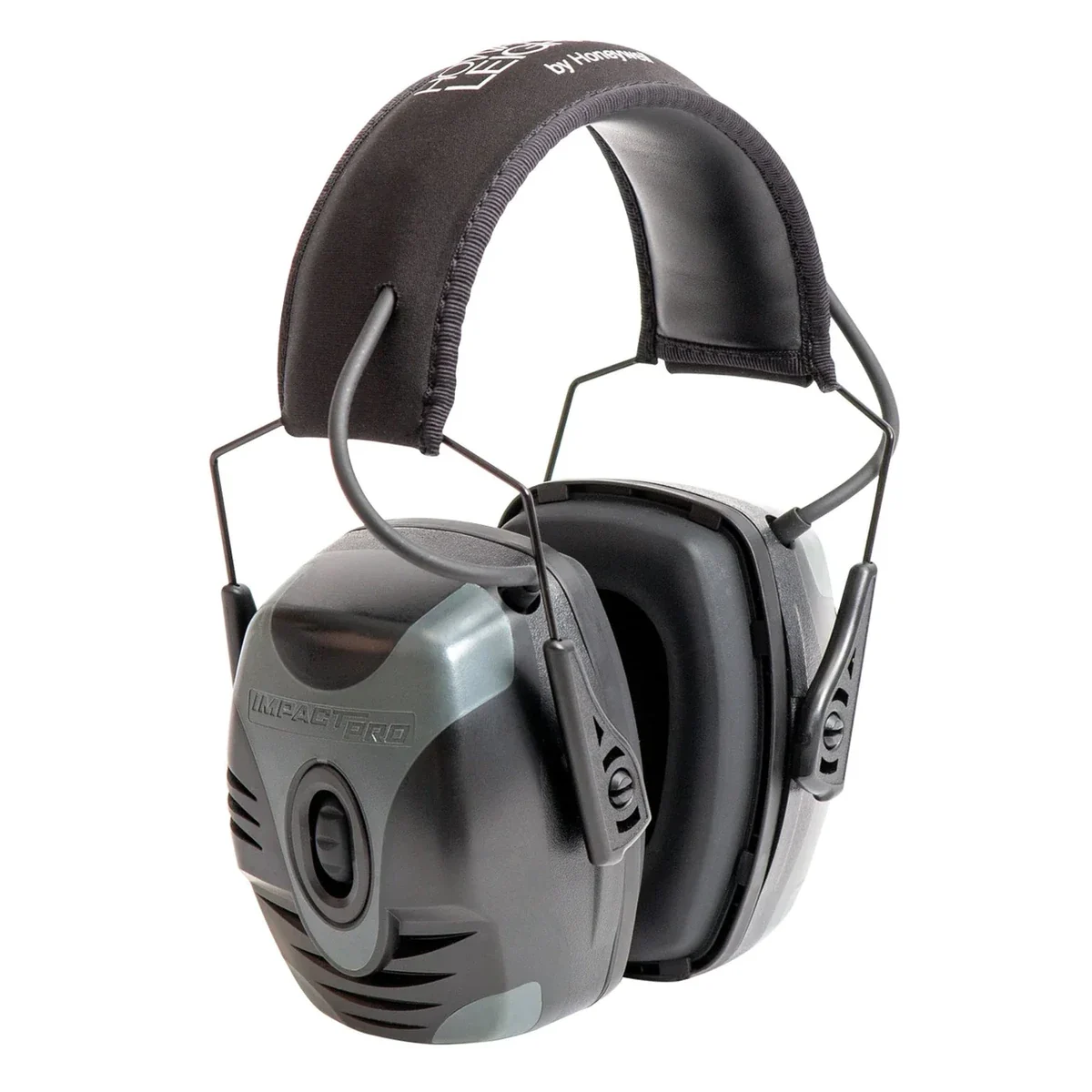
The Howard Leight Impact Pro is what you buy when the Impact Sport is not enough muff. It is the same idea, amplification of speech and instant compression of the shot, wrapped in a much taller cup with far more foam in it, and the rating goes from 22 to 30.
That eight-decibel difference is not a small thing. The decibel scale is logarithmic, so every three decibels halves the sound energy reaching your ear. On an indoor range, where the report comes back off three walls, it is the difference between a session you tolerate and one that leaves your ears ringing on the drive home.
The price of that foam is bulk. These are tall cups and they will argue with a rifle stock, so run them for pistol work, indoor bays, and standing beside anyone with a muzzle brake. For a rifle bench, use the Razor or drop to plugs.
Pros
- NRR 30, the highest electronic rating here
- Still amplifies range commands normally
- The proven Howard Leight circuit
Cons
- Tall cups fight a rifle stock
- Heavier than the Impact Sport
- Costs more than the Sport

Best for: Indoor ranges and anyone shooting beside muzzle brakes.
5. Pyramex Venture Gear Sentinel: Best Budget Electronic
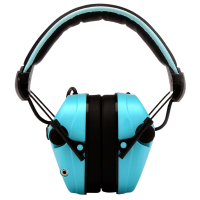
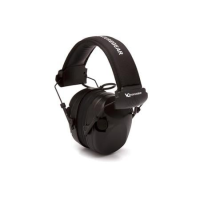
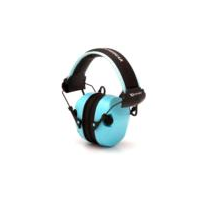
The Pyramex Venture Gear Sentinel proves you do not need to spend much to get electronic hearing protection. It amplifies ambient sound and compresses the gunshot with an NRR of 26, at a price that often undercuts the Howard Leight, which makes it a genuine value pick and an easy second pair to keep in the truck for guests.
It runs on common batteries, includes an audio jack, and folds for storage, so it covers the core electronic-muff feature set without frills. The sound quality and the build are basic, but it does the essential job of letting you hear a range command while cutting the report.
It will not match the clarity, comfort, or lifespan of the premium muffs, and the stock clearance is only average. But as the cheapest credible electronic muff with a rating in the mid-twenties, the Sentinel removes the last excuse for shooting in passive muffs you cannot hear through.
Pros
- Electronic protection at the lowest price
- NRR 26 beats muffs costing more
- Folds, and takes an audio input
Cons
- Basic sound quality and build
- Only average clearance for a rifle
- Not built for daily abuse
Best for: Budget shooters and anyone needing an inexpensive spare electronic muff.
6. Walker's Silencer 2.0: Best Electronic Earbuds
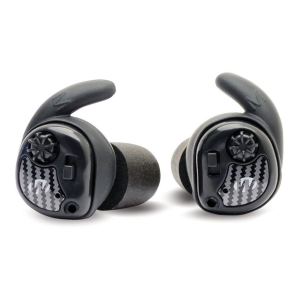
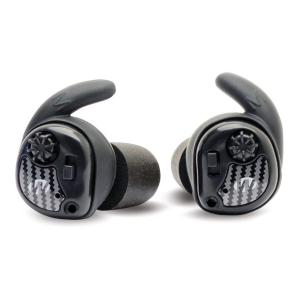
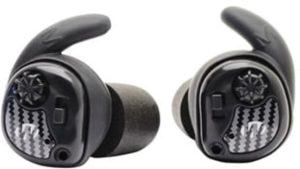
When you want hearing protection that disappears under a hat, a hood, or behind a rifle, the Walker's Silencer in-ear electronic buds are the answer. They deliver amplification and gunshot suppression in a form that leaves your ears clear of cups entirely, which is a real advantage for a consistent cheek weld and for all-day comfort in the heat.
The rechargeable 2.0 version carries an NRR of 25, which is strong for an in-ear device, plus independent volume control for each side. Hunters like them for staying aware in the field while still being covered for the shot, and rifle shooters like that nothing interferes with the stock.
In-ear protection lives or dies on fit, so work through the supplied tips until you get a proper seal, and remember they need charging before a range day rather than a spare battery in the bag. For discreet protection you will actually keep in, they are excellent.
Pros
- Nothing on your head at all
- NRR 25 is strong for an in-ear
- Independent volume for each ear
Cons
- Needs charging before a range day
- Fit decides whether it seals
- Small enough to lose in leaves
Best for: Hunters and rifle shooters who want discreet, comfortable protection.
7. Howard Leight Leightning L3: Most Protective Passive Muff
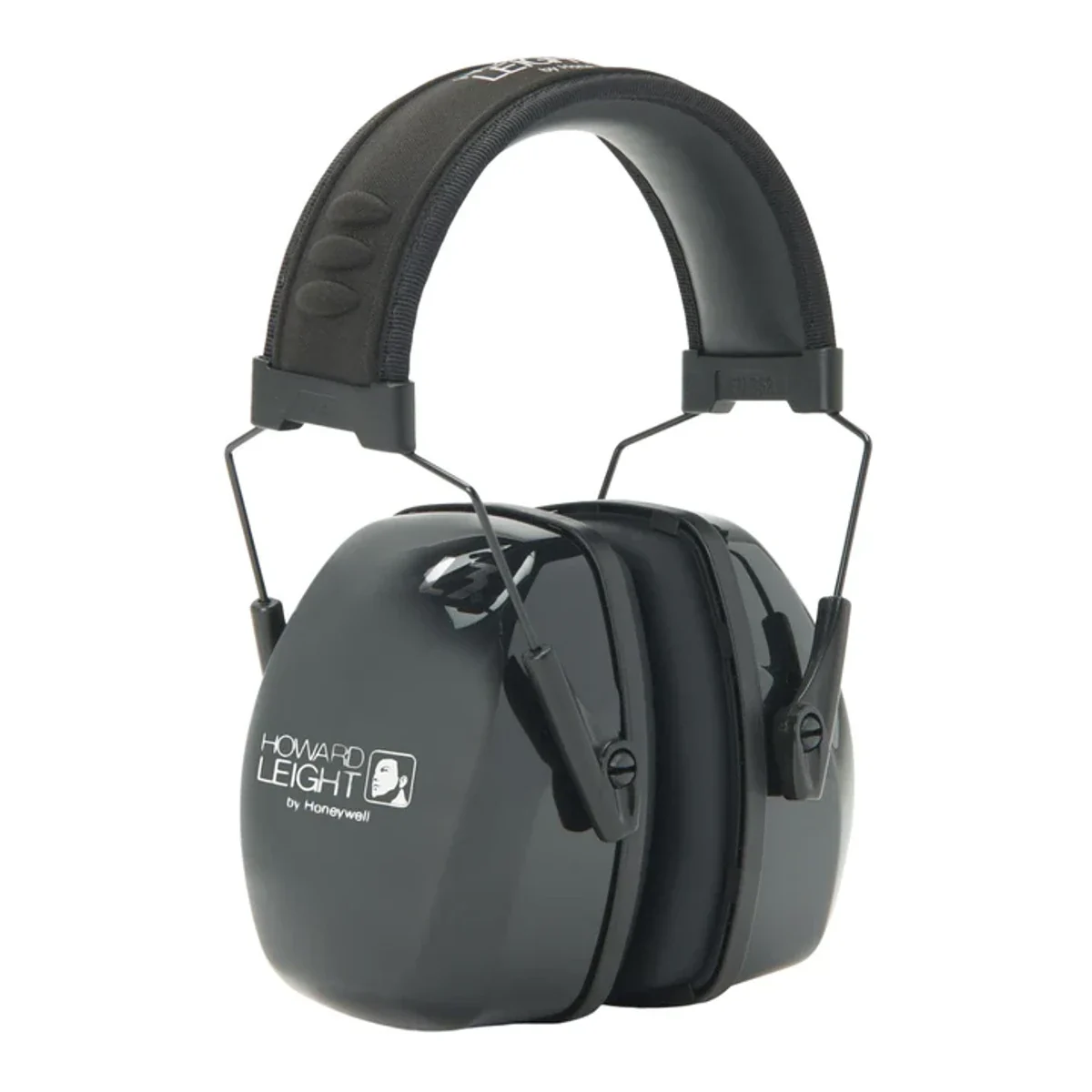
Sometimes you want the most attenuation for the least money with nothing to fail, and the Howard Leight Leightning L3 is that muff. It is a purely passive earmuff with a steel headband and deep, well-damped cups, rated at NRR 30, which is as much as any electronic muff on this page and more than most of them.
Passive muffs are the right answer more often than people admit. There is no circuit to introduce hiss, no batteries to die halfway through a session, and no compression delay at all, because there is nothing to delay. Attenuation here is a function of mass, foam, and a good seal, and this muff has all three.
The obvious cost is awareness. You will not hear a range command or a conversation, which is why this is a specialist rather than an everyday muff. Keep a pair for indoor bays, for sighting in next to someone with a brake, and as the muff that goes over plugs when it really matters.
Pros
- NRR 30 with no batteries involved
- Steel headband survives a range bag
- A fraction of electronic muff money
Cons
- You hear nothing, including commands
- Tall cups fight a rifle stock
- No audio input of any kind
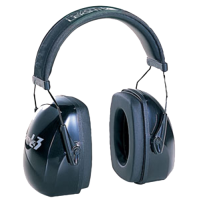
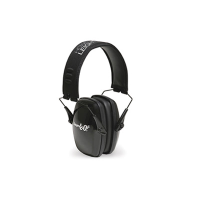
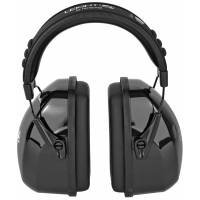
Best for: Shooters who want the highest passive attenuation for the least money.
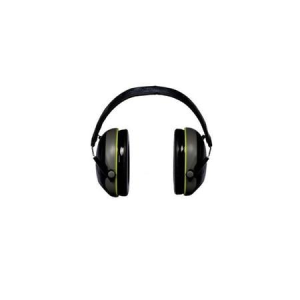
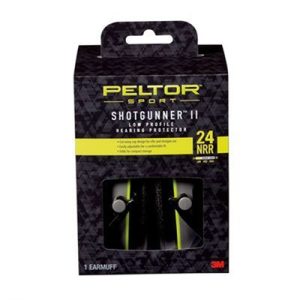
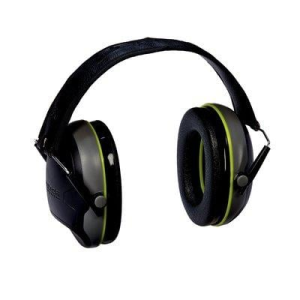
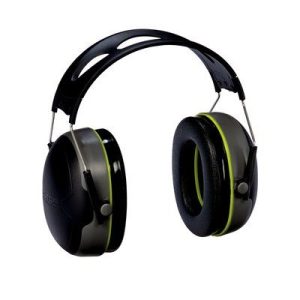
8. 3M Peltor Sport Shotgunner II: Best Low-Profile Passive
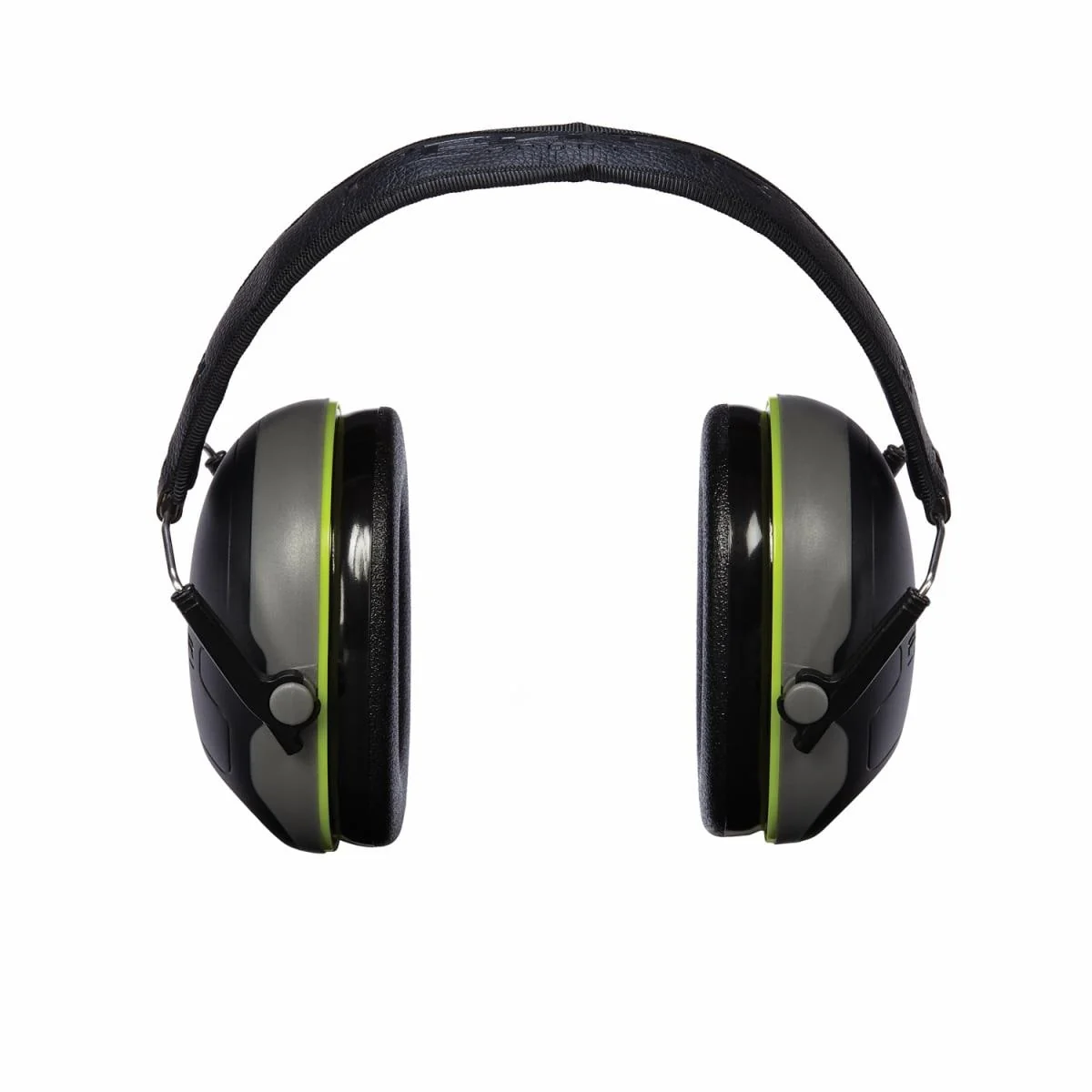
The 3M Peltor Sport Shotgunner II exists for one specific problem: a normal earmuff gets in the way when you mount a shotgun. Its cups are cut away at the bottom rear so the stock can come up to your face without the muff riding up and breaking the seal, which is exactly what happens with a conventional muff on a clays station.
It is passive, rated NRR 24, and light enough that you forget it is there over a full round. For trap, skeet, sporting clays, and upland work it is the muff that stays sealed while you actually shoot, rather than the one that seals beautifully right up until you mount the gun.
There is no amplification, so you will miss quiet conversation, and 24 is short of what the Leightning L3 offers. But for gun-mount clearance in a passive muff at this money nothing else comes close, and it is cheap enough to leave a pair in every bag.
Pros
- Cups cut away for a gun mount
- NRR 24 from a passive muff
- Cheap enough to own several pairs
Cons
- Passive, so no amplification at all
- Not the highest rating available
- Headband padding is thin
Best for: Clays and shotgun shooters who need the cups out of the gun mount.
9. Decibullz Custom Molded Earplugs: Best Earplugs
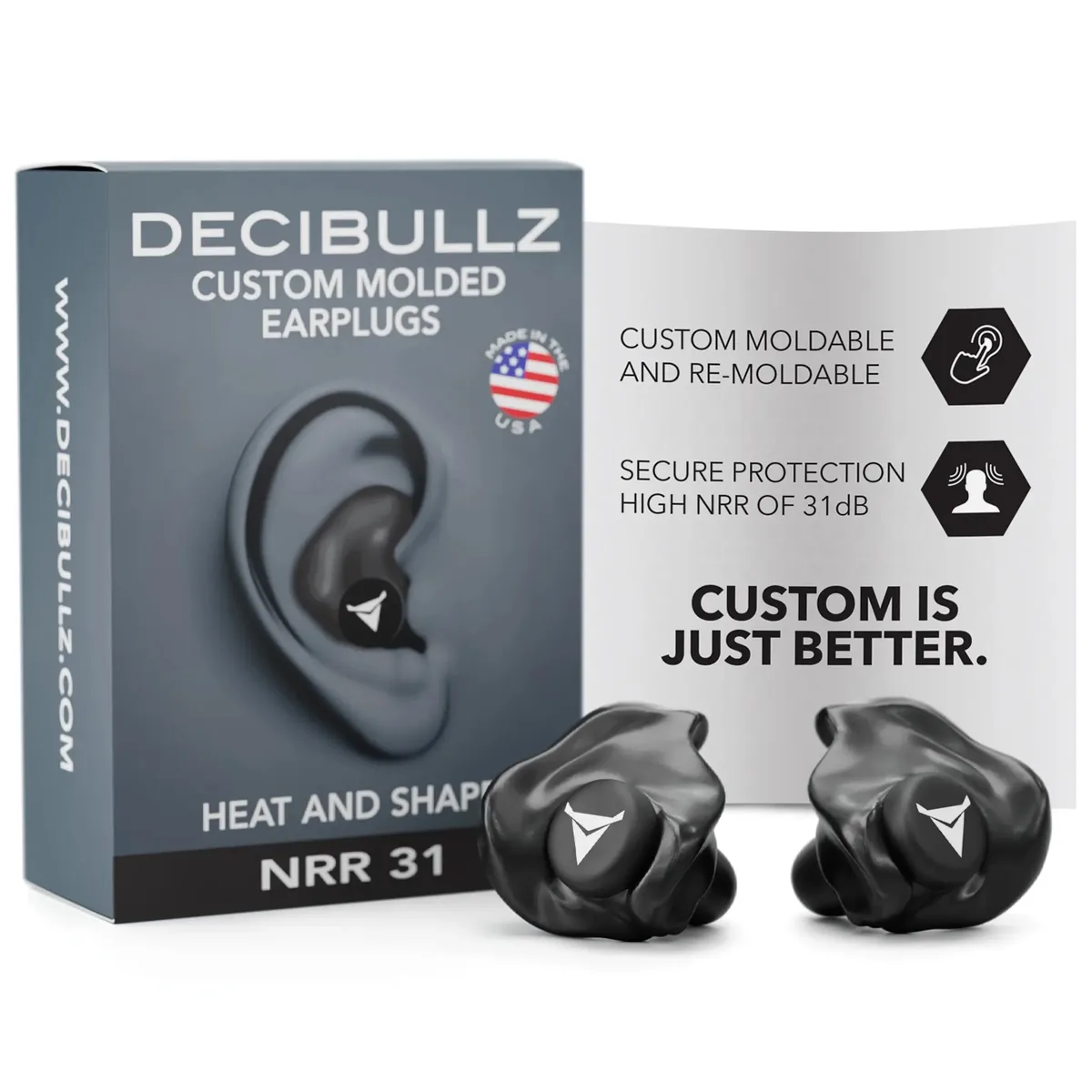
The Decibullz Custom Molded Earplugs are the highest-rated protection on this page, and the reason is fit. You heat the thermoplastic earpieces in water, press them into your own ears, and they set to your exact anatomy, which removes the leak path that makes ordinary plugs underperform their rating so badly.
Decibullz states that they meet ANSI S3.19 with an independently lab-tested NRR of 31. That is higher than every muff here, from a device that weighs nothing, sits under a hat or a helmet, and cannot be knocked out of position by a rifle stock. If the first mold is wrong you re-heat them and do it again, which is a genuinely useful safety net.
They give you no amplification at all, so they are a doubling-up layer or a dedicated indoor plug rather than an everyday hunting solution. Take the molding process slowly and follow the instructions, because a rushed mold gives away the whole advantage.
Pros
- Independently lab-tested NRR of 31
- Molds to your own ear in minutes
- Re-heat and re-mold if it fails
Cons
- The molding process takes patience
- No amplification whatsoever
- Small enough to lose easily
Best for: Anyone who has never found an earplug that stays put.
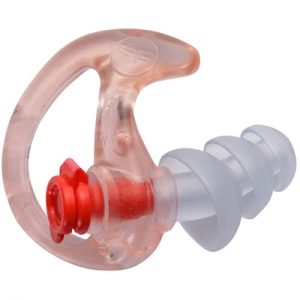
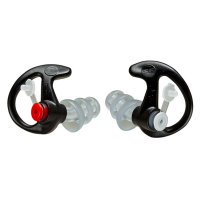
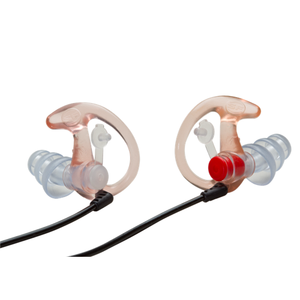
10. SureFire EP4 Sonic Defenders Plus: Best Filtered Earplugs
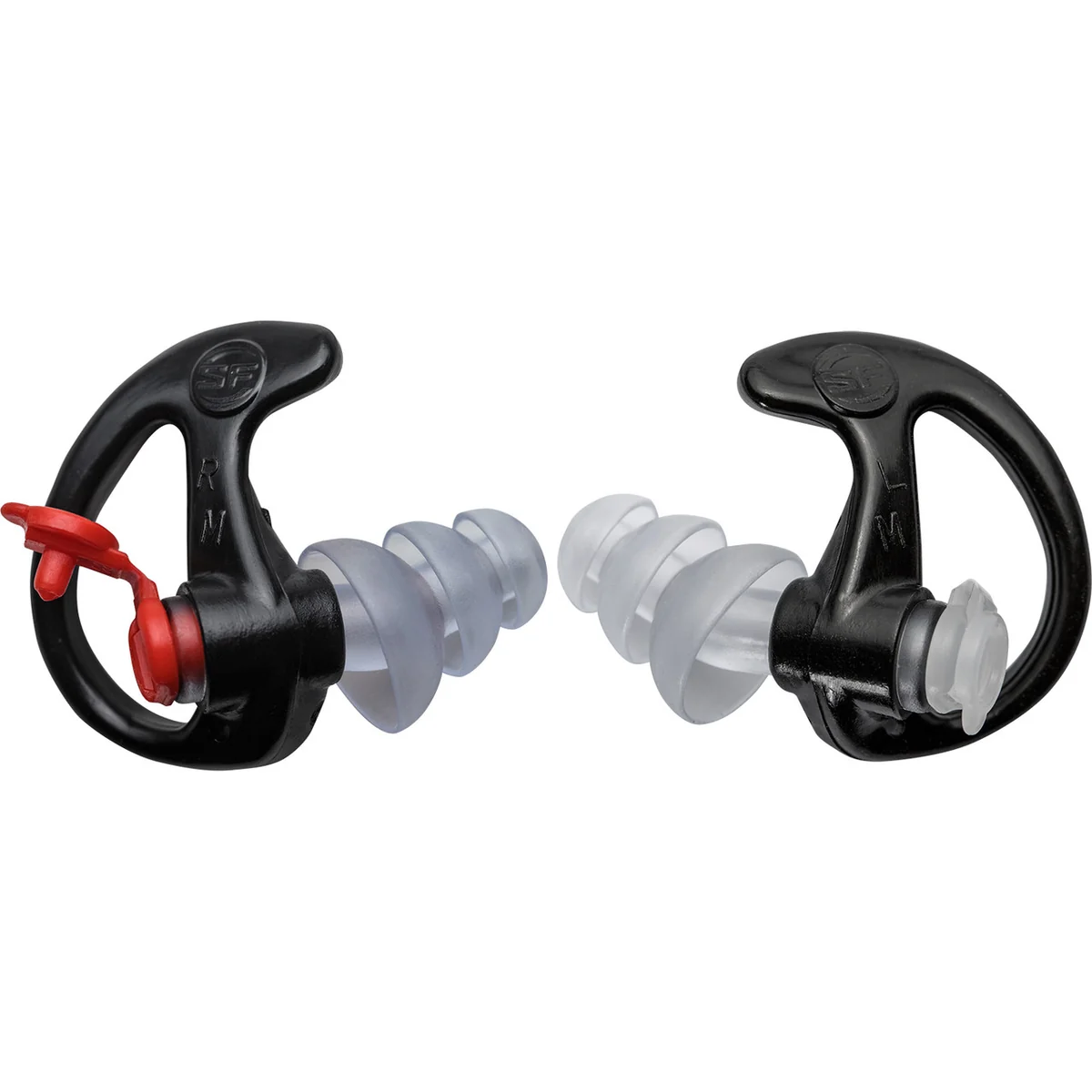
The SureFire EP4 Sonic Defenders Plus solve the problem that makes people take their protection out between strings: you cannot hear anyone. A filter in the stem passes speech and low-level ambient sound while attenuating the impulse of a gunshot, so you can hold a conversation without unplugging and then forgetting to plug back in.
They are rated NRR 24 with the stems closed, and the design includes a retention ring that locks into the ridge of your ear so they stay put through recoil and movement. They cost very little, weigh nothing, and live permanently in a range bag or a hunting pack.
This is a mechanical filter, not electronics, so it does not amplify anything: it lets ordinary conversation through rather than making it louder. Size matters more here than with foam, so buy the size that actually seals rather than the one that feels easiest to insert.
Pros
- Filtered vent passes speech through
- Close the stem for full attenuation
- Retention ring keeps them seated
Cons
- Sizing matters more than with foam
- A filter, not electronics
- Stems can catch on a collar
Best for: Hunters and instructors who need to hold a conversation between shots.
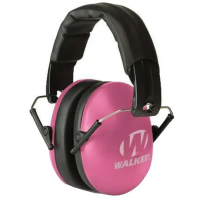
11. Walker's Youth and Women's Folding Muff: Best for Kids
Adult muffs do not seal on a child's head, and a muff that does not seal is decoration. The Walker's Youth and Women's Folding Muff is a properly sized passive muff, rated NRR 23, built for smaller heads and narrower jaws, and it is the one piece of range gear most families get wrong.
This matters more than it sounds. The NIOSH measurements of youth target shooting found that every firearm tested produced peak levels above the 120 dB limit the World Health Organization suggests for children, including the rimfires that get handed to beginners precisely because they seem gentle.
It is passive, so there is no amplification and no batteries, and a growing child will be out of it in a few seasons. At this price that is not much of an argument against it. Buy the muff that fits the head in front of you, not the spare adult pair in the bag.
Pros
- Sized to actually seal on children
- NRR 23 in a real muff
- Folds small and costs very little
Cons
- Outgrown within a few seasons
- Passive, so no amplification
- Headband adjustment is limited

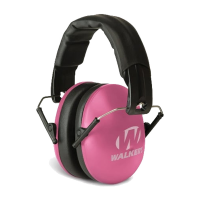
Best for: Young shooters and anyone a full-size muff will not seal on.
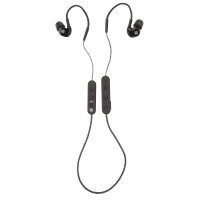
12. AXIL GS Extreme 2.0: Best Rechargeable Earbuds
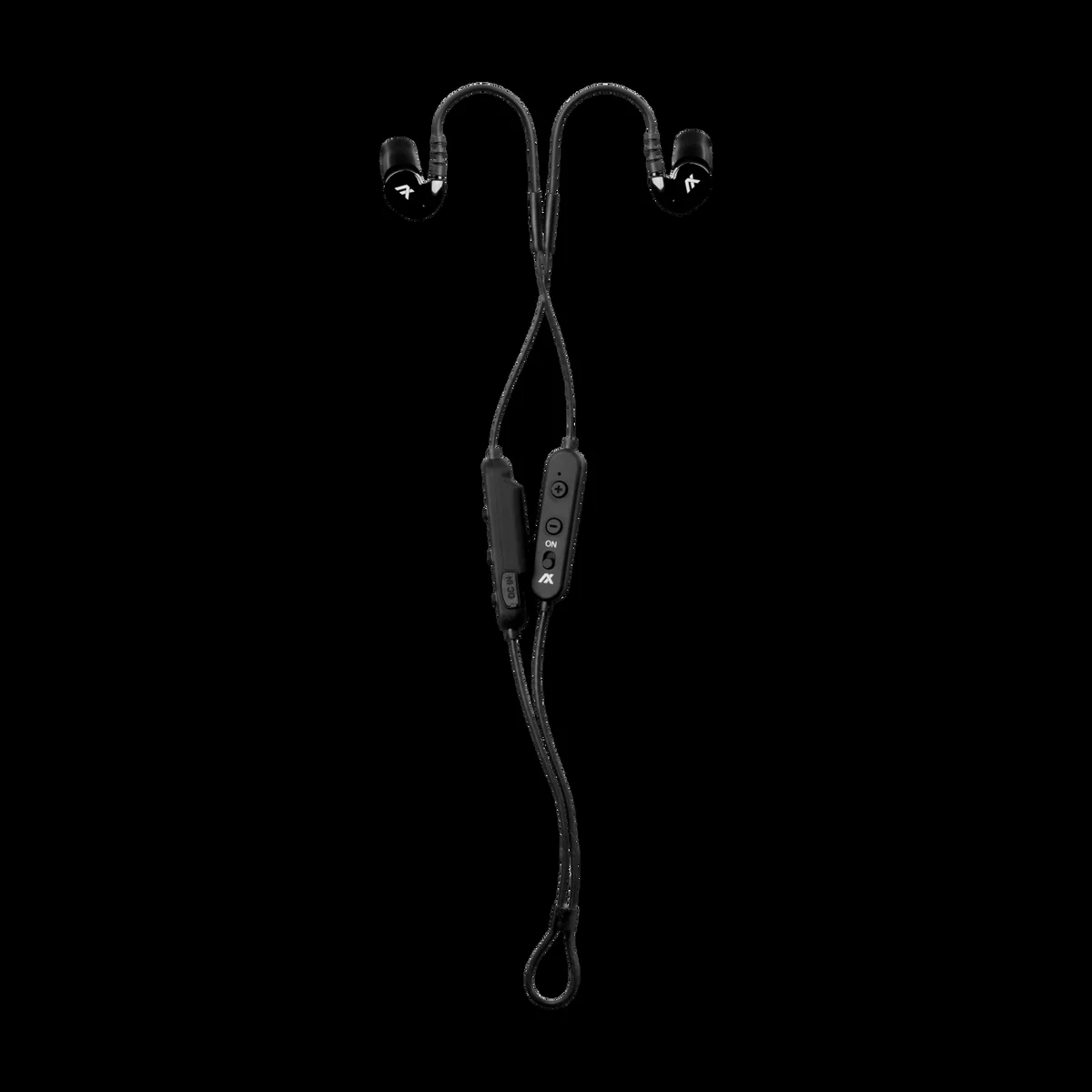
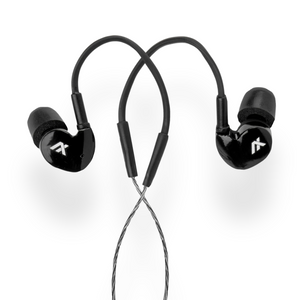
The AXIL GS Extreme 2.0 is the earbud for the shooter who wants Bluetooth and amplification without anything on their head. It combines sound amplification, impulse suppression, and music or call streaming in a rechargeable bud with its own charging case, which is a genuinely modern take on range protection.
Read its rating carefully, because this is where in-ear protection catches people out. AXIL publishes 19 to 29 dB SNR and 13 to 23 dB NRR for it, depending on which ear tip you fit. SNR is the European metric and it always reads higher than the American NRR for the same device, so the big number you see quoted is not the one that compares with the muffs on this page. Fit the foam tips and you get 23, in the same territory as the Impact Sport. Fit the silicone ones and you are down at 13, which is not enough for centerfire.
So this is the right buy for a hunter or a rifle shooter who wants nothing on their head and will run the foam tips, and the wrong buy for an indoor range. If you want the same idea for less, the Walker's Silencer covers the ground at a lower price.
Pros
- Bluetooth streaming plus impulse suppression
- Rechargeable, with a charging case
- Nothing between stock and cheek
Cons
- The tip you fit changes the rating
- Silicone tips drop it to 13
- Costs as much as premium muffs
Best for: Shooters who want Bluetooth and amplification with nothing on their head.
Hearing protection buyer's guide
What the NRR actually measures, and what it does not
The Noise Reduction Rating is an EPA figure, and under the federal standard it “must be shown on the hearing protector package.” It is produced in a laboratory using continuous noise, which is the first thing to understand about it: a gunshot is impulse noise, and OSHA regulates the two separately. There is no consumer-facing impulse rating on any of this gear, so the NRR is the tool we have rather than the tool the job wants. Treat it as a ranking, not a promise.
OSHA's own Appendix B tells employers to subtract 7 from the NRR before applying it to an A-weighted measurement. NIOSH went further in 1998 and published derating percentages by protector type, and those percentages are still quoted everywhere. They should not be. NIOSH updated its recommendations in 2025 to use individual fit testing instead, and OSHA states plainly that the 2025 guidance supersedes the old derating chapters. What replaced it is a measurement of how much attenuation you get, in your ear, which is the honest answer.
Check the rating on the box, not in the listing
While researching this page I found the same popular passive muff listed at NRR 31 by one retailer and NRR 22 by two others, with no figure published by the manufacturer at all. That is a nine-decibel disagreement about a safety product, and nine decibels is a lot of sound energy. The EPA rating is required to be on the package, so when a listing and a box disagree, believe the box, and treat any rating that a manufacturer will not publish on its own product page as unproven.
SNR is not NRR, and in-ear ratings depend on the tip
Two numbers get printed on earbud packaging and they are not the same thing. NRR is the American rating and SNR is the European one, and SNR reads several decibels higher for the identical device, so a listing that leads with the bigger figure is not comparing like with like against the muffs on this page. AXIL publishes both for the GS Extreme 2.0: 19 to 29 dB SNR against 13 to 23 dB NRR. Notice the ranges. On any in-ear device the tip you fit decides the rating, and the spread between the foam tip and the silicone one is ten decibels, which is the difference between adequate protection and none. Fit the foam.
Electronic against passive
Passive protection blocks sound with mass, foam and a good seal. It gives you the most attenuation per dollar with nothing to fail, but you hear nothing, including range commands. Electronic protection uses microphones to amplify ambient sound to a safe level and then compresses or cuts the gunshot, so you stay aware while covered. Electronic is the better experience for almost all shooting. Passive still wins on maximum attenuation, on price, and on the day your batteries die.
Earmuffs against earplugs
Muffs are quick to put on and take off, give consistent protection, and house the electronics, but they are bulky and they argue with a rifle stock and a hat brim. Plugs are discreet, comfortable in heat and under gear, and clear a stock perfectly, but they depend entirely on fit: a plug that is not sealed is not protecting you, whatever the label says. The highest-rated item on this page is a plug, not a muff, and that is not an accident. Many shooters own both and use muffs at the bench and plugs in the field.
Doubling up, and what it really buys you
Wearing plugs under muffs is the standard advice for indoor ranges and for standing beside a muzzle brake, and it is good advice. What it is not is additive: you do not add NRR 31 plugs to an NRR 30 muff and get 61. The two protectors share the same bone-conduction path into your inner ear, and the combination is worth a handful of decibels over the better of the two, not the sum. OSHA notes that fit testing “does not measure the combined attenuation of two HPDs worn together” at all, so nobody is going to hand you a verified number for your particular combination. Double up anyway when it is loud. Just do not treat it as permission to shoot indoors in thin muffs.
How much protection for what you shoot
Match the gear to the place. An outdoor range with pistols and rimfires is well covered by a mid-twenties electronic muff. An indoor bay, where the report comes back off concrete, or a line with braked rifles on it, wants the highest rating you can get and probably plugs underneath as well. Remember that the NIOSH figures put every firearm well past OSHA's 140 dB impulse ceiling, and that the bench adds up to another 4 dB. Suppressed shooting is quieter and still needs protection on most setups. When in doubt, take the extra decibels, because this damage does not heal.
Fit and comfort for a rifle
If you shoot long guns, cup profile matters as much as the rating, because a tall muff gets shoved off your head by the stock and destroys your cheek weld, and a muff that has been lifted off your ear is protecting nothing at all. Slim muffs like the Razor and the Shotgunner II solve it, and electronic plugs sidestep it completely. For pistol and bench work a fuller cup with a higher rating is fine. Comfortable protection you wear every time beats high-rated gear you take off because it pinches.
How I evaluated this hearing protection
I weighed these on what decides whether you stay protected and aware: the published attenuation and whether the manufacturer will actually stand behind it, the quality and speed of the electronic amplification and gunshot suppression, comfort over a long session, clearance for a rifle stock, battery life or the simplicity of a passive design, and value against the job. Price counted against the task, because an indoor-range muff and a discreet hunting earbud are different tools. Where a rating could not be traced to the manufacturer or to consistent retail data, the product did not make the list, which is why one very popular budget muff is missing from it.
Mistakes to avoid with hearing protection
- Skipping it for a quick trip. Damage is permanent and cumulative. A few unprotected shots while sighting in still count.
- Assuming a small bore is quiet. NIOSH measured a 5.7 dB spread between two .410s. Gauge and caliber do not predict loudness.
- Wearing a tall muff behind a rifle. The stock lifts the cup, breaks the seal, and you are shooting unprotected without noticing.
- Reading the NRR as a promise. It is a lab figure from continuous noise, and OSHA tells you to subtract 7 before you even start.
- Adding up doubled protection. Plugs under muffs are worth a few decibels over the better one, not the sum of the two.
- Putting adult muffs on a child. If it does not seal it does not work, and every gun NIOSH tested exceeded the WHO limit for children.
- Trusting suppressed to mean safe. A suppressor lowers the report. Most setups are still loud enough to need protection.
Bottom Line
For one pair that covers almost everything, the Howard Leight Impact Sport is still the value benchmark, with the Pyramex Venture Gear Sentinel the cheaper way in. Rifle and AR shooters want the slim Walker's Razor Slim or the Walker's Silencer 2.0 buds for a clean cheek weld. Indoor ranges and braked rifles call for the NRR 30 Howard Leight Impact Pro, or the passive Leightning L3 if you do not need to hear anything. Clays shooters should take the Peltor Sport Shotgunner II, and the highest-rated protection on this page is the Decibullz Custom Molded plugs at NRR 31. Whatever you pick, wear it every time, put plugs under muffs when it gets loud, and round the kit out with shooting glasses and a solid gun case.
Last updated September 10th 2026
What is the best hearing protection for shooting?
For most shooters, an electronic earmuff like the Howard Leight Impact Sport is the best all-around choice, because it amplifies range commands and conversation while instantly cutting the gunshot, all at a low price. Rifle shooters often prefer slim muffs or electronic earplugs for stock clearance, and indoor shooters want the highest NRR passive muff. The best pair is the one you will wear every time.
What is NRR and what number do I need?
NRR, or Noise Reduction Rating, measures how many decibels a device blocks under lab conditions, so higher is more protection. Real-world reduction is less than the label. For outdoor shooting, a mid-20s NRR electronic muff is solid; for indoor ranges or the loudest calibers, use the highest NRR you can, around 30, or double up plugs under muffs.
Are electronic or passive earmuffs better?
It depends. Electronic muffs amplify ambient sound so you hear commands and conversation, then cut the gunshot, which makes them the better experience for most shooting. Passive muffs offer the highest NRR for the money with nothing to fail, but block all sound. Many shooters use electronic for general range use and passive for the loudest indoor sessions or as a backup.
Should I use earmuffs or earplugs for shooting?
Earmuffs are easy to use, consistent, and house the best electronics, but they are bulky and can interfere with a rifle stock. Electronic earplugs are discreet, comfortable under gear and in heat, and clear a rifle stock, but their rating swings hard on the seal and the tip. Ratings here run from 13 to 31, so a plug can be the weakest protection on a page or the strongest. Many shooters own both. For loud indoor ranges, doubling plugs under muffs gives the most protection.
Do you need hearing protection with a suppressor?
Yes, on almost every setup. A suppressor lowers the report, but most suppressed setups are still loud enough to cause hearing damage over time, especially with supersonic ammo or indoors. Only certain subsonic, suppressed combinations approach hearing-safe levels. To be safe, wear protection unless you have specifically confirmed your setup is hearing-safe, because the damage is permanent.
Can you double up on hearing protection?
Yes, and it is the best way to maximize protection in brutal environments. Wearing foam or electronic earplugs under earmuffs adds protection beyond either alone, though not the simple sum of the two ratings. This is the standard approach for indoor ranges, shooting next to muzzle brakes, or anyone with sensitive hearing. It is cheap, simple insurance for your ears.
What hearing protection is best for rifle shooting?
Slim-profile electronic muffs like the Walker's Razor or electronic earplugs like the Walker's Silencer are best for rifles, because they clear the stock and preserve a consistent cheek weld that bulky muffs disrupt. Earplugs are especially good for a tight cheek weld. Whatever you choose, prioritize a low-profile design so the buttstock does not knock your protection loose.
Is electronic hearing protection worth it?
For most shooters, yes. Electronic protection lets you hear range commands, conversation, and game while still cutting the gunshot, which improves safety and the experience without sacrificing protection. Entry-level electronic muffs like the Howard Leight Impact Sport cost little more than quality passive muffs, making the awareness benefit easy to justify for anyone who shoots regularly.
How loud is a gunshot?
Louder than the law allows without protection. OSHA caps impulse noise at 140 dB peak, and NIOSH measurements of real firearms at the shooter's ear put shotguns between 151.8 and 161.6 dB and pistols between 157.5 and 171.1 dB. Gauge and caliber do not predict it: NIOSH found 5.7 dB between two different .410 shotguns, and one 12 gauge load ran 4.5 dB hotter than another out of the same gun.
What is the difference between NRR and SNR?
NRR is the American rating and SNR is the European one, and SNR reads several decibels higher for the identical device, so the two numbers are not comparable. AXIL publishes both for its GS Extreme 2.0 earbuds: 19 to 29 dB SNR against 13 to 23 dB NRR. If a listing leads with the bigger figure, check which metric it is before comparing it with an earmuff.
4,021+ Gun & Ammo Deals
Updated daily from 200+ top retailers. Filter by category, caliber, action type, and price.
Related Guides