
The Wiley X Saber Advanced is the best shooting glasses for most people, pairing true ANSI and military ballistic protection with interchangeable lenses at a fair price. For premium optical clarity the Oakley SI Ballistic M Frame is the upgrade, and on a budget the Walker’s Shooting Glasses cover the basics for a few dollars. Here are the eight best shooting glasses and eye protection options for 2026, and how to choose.
Some of the links below are affiliate links, meaning at no additional cost to you, we may earn a commission if you click through and make a purchase.
Table of Contents
How we tested: Every pick here is ranked against our testing methodology. Minimum round counts, accuracy and reliability protocols, the failures that disqualify a gun.
Shooting glasses by the numbers
Eye protection is the cheapest insurance on a range and the easiest thing to get wrong. These are the numbers that decide it, with every price a live headline from the cards below.
- $1.99 to $132: the live spread across these eight picks. Certified eye protection starts at the price of a coffee, so there is no budget excuse for shooting bare-eyed.
- ANSI Z87.1 is the floor: the civilian impact standard and the minimum you should accept. Ordinary sunglasses carry no impact rating at all and can shatter into the eye.
- Two standards, not one: above ANSI sits the military ballistic fragmentation spec, tested against faster and heavier projectiles. The Wiley X, Oakley SI and ESS picks meet it; the budget pairs do not.
- Three of eight are under $10: the Pyramex Intruder, the Walker’s set and the Peltor over-the-glasses pair. Cheap enough to leave one in every range bag.
- Zero seconds of warning: a ruptured case or a ricochet gives none. This is the one piece of range gear where the failure is instant and permanent.
- One pair will not do everything: clear for indoors and low light, smoke for glare, amber or rust for contrast on flat days. Interchangeable-lens kits exist for that reason.
The first and the last are the ones worth acting on. A certified pair costs less than a box of ammo, and the shooters who end up happy are the ones who bought a lens kit rather than a single tint.
Best shooting glasses at a glance
| Glasses | Best for | Rating | Lenses |
|---|---|---|---|
| Wiley X Saber Advanced | Overall | ANSI Z87.1 + ballistic | Interchangeable |
| Oakley SI Ballistic M Frame | Premium | Military ballistic | Interchangeable |
| ESS Crossbow | Mil-spec | Military ballistic | Interchangeable |
| Wiley X Valor | Coverage | ANSI Z87.1 + ballistic | Interchangeable |
| Walker’s Shooting Glasses | Budget | ANSI rated | Multi-lens set |
| Pyramex Intruder | Value | ANSI Z87.1 | Single |
| Magpul Defiant | Polarized | Ballistic rated | Polarized option |
| Peltor Sport OTG | Over-the-glasses | ANSI Z87.1 | Single |
How to choose shooting glasses
Eye protection is non-negotiable range gear, because a single piece of ejected brass, a ruptured case, or a ricocheted fragment can blind you, and it happens with no warning. The key things to weigh are the impact rating, lens tint and clarity, coverage and fit, and whether you need prescription or anti-fog options. The most important rule is simple: your eye protection must be rated for impact, ideally to a ballistic standard, not just ordinary sunglasses. Pair it with proper hearing protection for a complete eyes-and-ears setup.
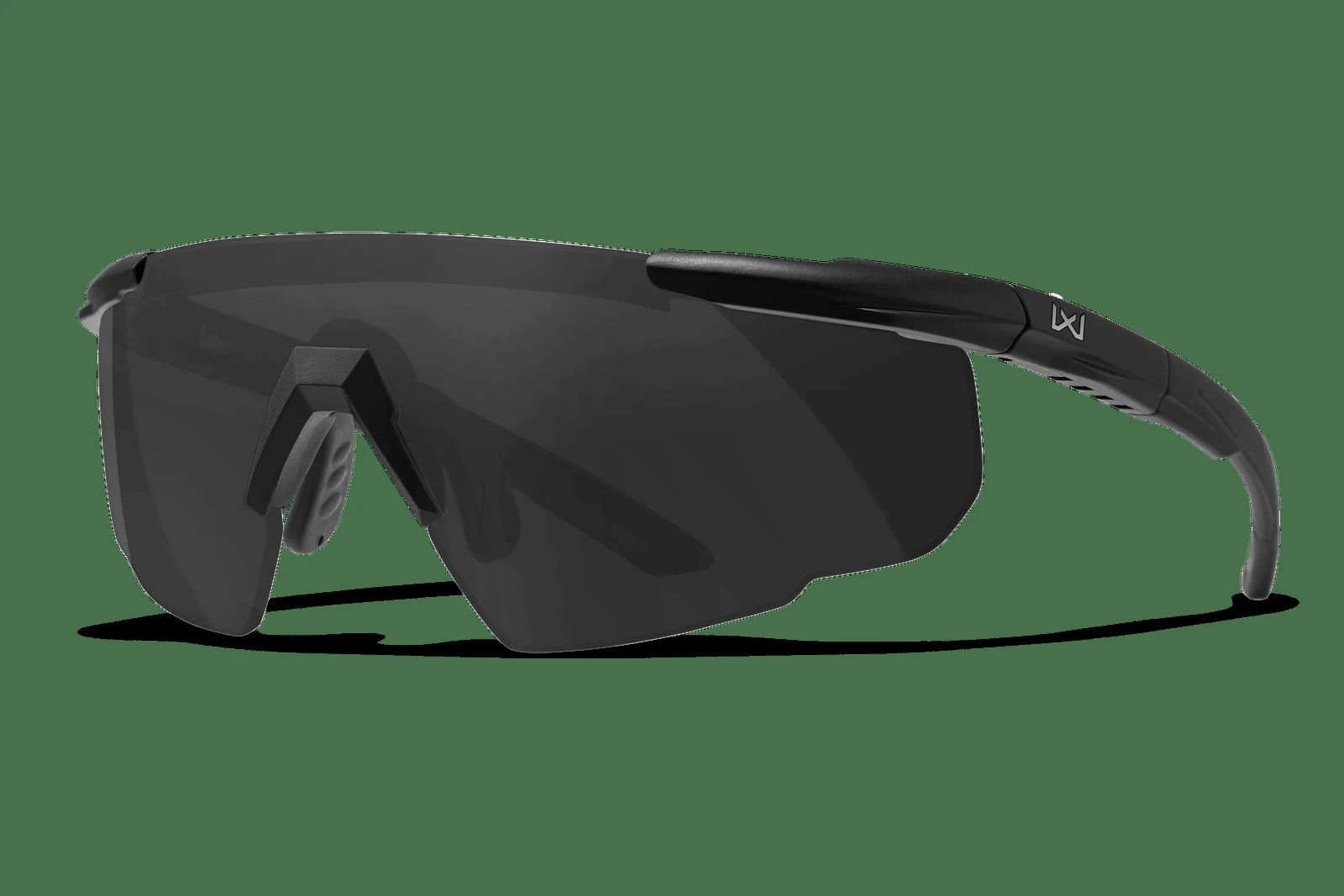
1. Wiley X Saber Advanced: Best Overall
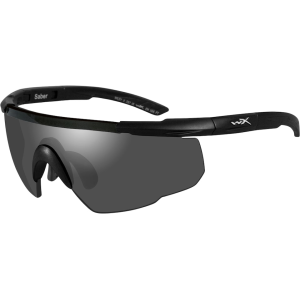
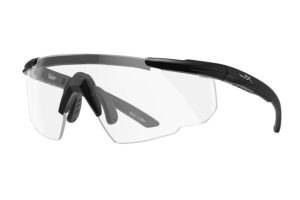
The Wiley X Saber Advanced is the shooting glasses I recommend to most people, because it hits the rare combination of true ballistic protection, interchangeable lenses, and a price that does not require a second thought. It meets both the ANSI Z87.1 safety standard and the tougher military ballistic impact spec, so it actually stops the fragments and ejected debris that range eye protection exists to stop.
It ships with multiple interchangeable lenses, clear, smoke gray and light rust, so you can match the lens to the light and target. The wraparound frame gives good coverage and stays put, and an optional removable gasket seals out dust and wind for prone or windy-range work. For most shooters, it does everything needed.
Premium glasses offer slightly better optical clarity and comfort, but the Saber delivers real ballistic protection and lens versatility for a fraction of the price. It is the easy default, and the one I tell new shooters to buy first. Pair it with proper hearing protection for a complete safety setup.
Pros
- ANSI Z87.1 and military ballistic rated
- Multiple interchangeable lenses included
- Wraparound coverage, optional dust gasket
Cons
- Optical clarity below the premium tier
- Styling is purely utilitarian
- Dust gasket is a separate purchase
Best for: Almost every shooter as a first pair of true ballistic shooting glasses.
2. Oakley SI Ballistic M Frame: Best Premium
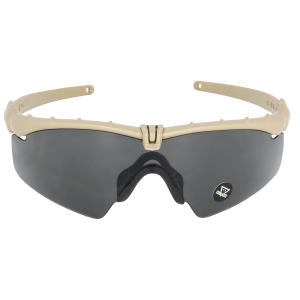
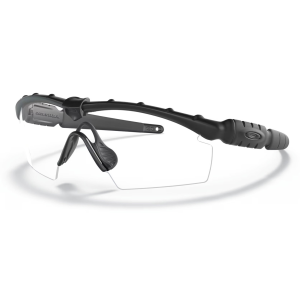
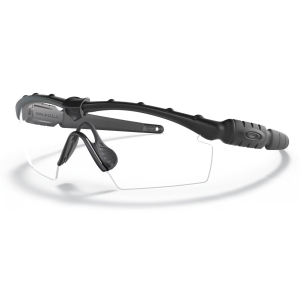
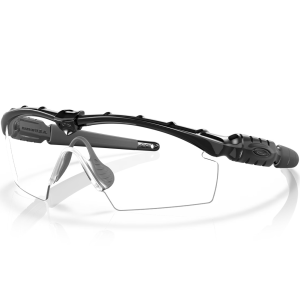
The Oakley SI Ballistic M Frame is the premium pick for shooters who want the best optical clarity and the comfort that comes with it. Oakley’s Plutonite lenses are crystal clear and distortion-free edge to edge, the ballistic rating is military-grade, and the M Frame has been issued to and trusted by US military units for years. This is eyewear that protects without you ever noticing it is there.
The interchangeable lenses snap in and out easily, the half-frame design maximizes your field of view, and the optical quality genuinely reduces eye fatigue over a long day, which matters if you shoot or compete for hours. The fit and finish are a clear step above the budget tier, as they should be at this price.
It costs considerably more than value glasses, and you are paying for the optics and the brand pedigree, but for a shooter who lives behind glasses and wants the clearest, most comfortable ballistic protection, the M Frame is the standard. It is the upgrade that pays off in all-day comfort.
Pros
- Crystal-clear distortion-free Plutonite lenses
- Military-grade ballistic rating
- Half frame maximizes field of view
Cons
- Premium price
- Lens kits add to the cost
- Half frame covers less than a wraparound
Best for: Shooters who want the clearest optics and all-day comfort.
3. ESS Crossbow: Best Mil-Spec
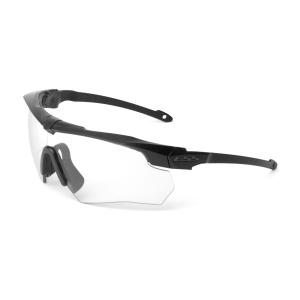
The ESS Crossbow is the mil-spec workhorse, issued across the US military and built to a standard that shrugs off abuse. It meets the demanding military ballistic fragmentation spec and ANSI Z87.1, with ClearZone anti-fog and scratch-resistant coatings that keep the lenses usable in the conditions that fog and scratch lesser eyewear. For hard use, it is proven.
The lenses swap quickly via a simple system, the frame is tough and grippy, and the coverage is excellent, sealing close to the face to keep debris out. It is the eye pro a lot of shooters who came from the military reach for out of habit, because they trust it after relying on it downrange. The durability is the headline.
The styling is purely functional and the optics, while very good, are not quite Oakley-clear, but the combination of proven ballistic protection, anti-fog coatings, and toughness at a mid price makes it a standout. For a do-everything hard-use pair, the Crossbow is hard to beat.
Pros
- Military-issued, proven ballistic protection
- ClearZone anti-fog and scratch coatings
- Quick lens swaps, tough frame
Cons
- Utilitarian styling
- Optics good, not Oakley-clear
- Close fit feels tight for some
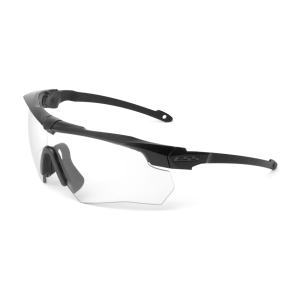
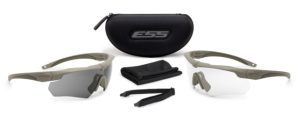
Best for: Hard-use shooters who want proven military-grade durability.
4. Wiley X Valor: Best for Coverage
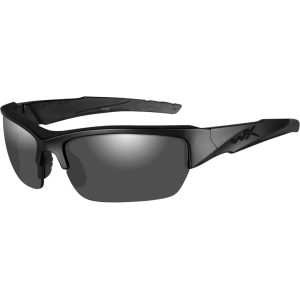
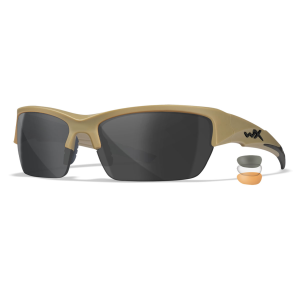
The Wiley X WX Valor is the pick when you want maximum wraparound coverage in a pair that still looks good enough for everyday wear. The large lenses and tall frame protect more of your eye socket from angled debris and bright peripheral light, and like all Wiley X eyewear it meets both ANSI Z87.1 and the military ballistic standard for genuine protection.
It comes with interchangeable lenses for different light, the wraparound shields against wind and side debris, and the styling is clean enough to wear off the range, which makes it a versatile do-it-all pair. The coverage is the standout, sealing out more than a smaller-lens design without feeling bulky.
It sits a bit above the budget tier in price, and the larger lenses are more glasses than a minimalist wants, but for a shooter who values coverage and a pair that pulls double duty as everyday eye protection, the Valor is an excellent choice. It is Wiley X protection in a more wearable package.
Pros
- Large lenses, maximum wraparound coverage
- ANSI Z87.1 and military ballistic rated
- Interchangeable lenses included
Cons
- Pricier than the budget picks
- Large lenses are more than some want
- No gasket option like the Saber
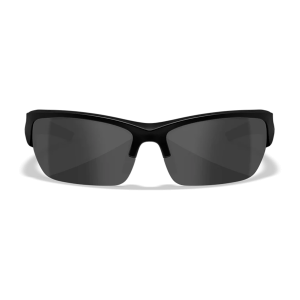
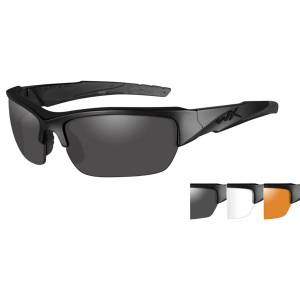
Best for: Shooters who want maximum coverage in a wearable everyday pair.
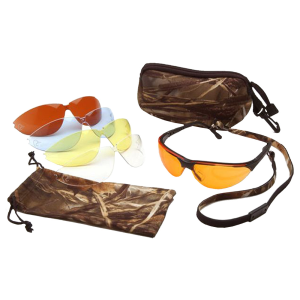
5. Walker's Shooting Glasses: Best Budget
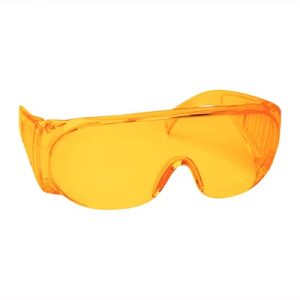
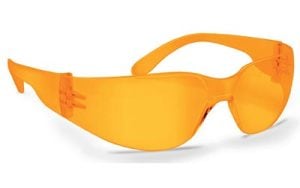
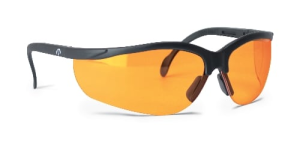
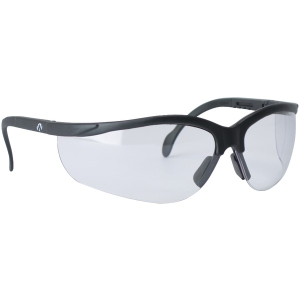
The Walker’s Shooting Glasses are the honest budget pick that removes any excuse to shoot without eye protection. For a few dollars you get ANSI-rated impact protection, a lightweight wraparound frame, and often a multi-lens set with clear, smoke, and amber options to match the light. For a first pair or a spare, they cover the basics.
They are simple and comfortable enough for a range day, the lens variety is genuinely useful, and at the price you can keep a pair in every range bag and hand a set to a guest without a thought. Walker’s has built a reputation on affordable shooting accessories, and the glasses reflect that practical value.
They lack the premium optics, the higher military ballistic rating, and the durability of the top picks, so they are not the choice for hard professional use. But as cheap, ANSI-rated protection that you will actually keep on hand, they are a smart buy and a great way to make sure nobody shoots bare-eyed.
Pros
- Lowest price for ANSI-rated protection
- Often includes a multi-lens set
- Lightweight and comfortable
Cons
- Basic optics and durability
- ANSI rated, not ballistic spec
- Frames flex and wear quickly
Best for: Budget shooters and anyone needing cheap spare or guest eye protection.
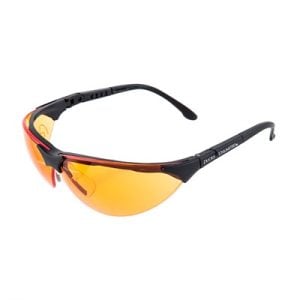
6. Pyramex Intruder: Best Value Safety Glasses
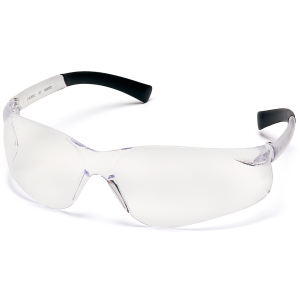
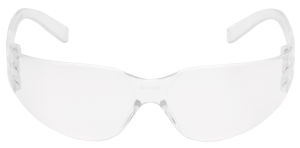
The Pyramex Intruder is the rock-bottom value pick, an ANSI Z87.1-rated safety glass that costs so little you can buy them by the box. They are popular well beyond shooting, in workshops and industrial settings, precisely because they deliver certified impact protection in a simple, light frame for pocket change.
For the range, they do the essential job: a hard-coated impact-rated lens between your eye and flying brass or debris, with clear and tinted options available. They are the glasses to scatter through your range bags, your workbench, and your truck so there is always a certified pair within reach when you need one.
They are basic, with none of the lens-swap systems, wraparound coverage, or military ballistic rating of the dedicated shooting glasses, and the comfort is functional at best. But for certified eye protection at the lowest possible price, or to keep guests covered, the Intruder is unbeatable value.
Pros
- ANSI Z87.1 certified at pocket-change prices
- Cheap enough to buy by the box
- Clear and tinted options
Cons
- No lens-swap or wraparound system
- ANSI rated, not ballistic spec
- Comfort is functional at best
Best for: Anyone who wants cheap certified eye protection to keep everywhere.
7. Magpul Defiant: Best Polarized
The Magpul Defiant is the pick if glare is your problem rather than fragments. It is a full-frame ballistic pair built to the same impact standards as the rest of this list, but the reason to buy it is the polarized lens option, which kills reflected glare off water, car glass and wet ground in a way a plain tint cannot.
Magpul builds it the way they build everything, which is to say it is heavier and blunter than an Oakley and it will outlast one. The frame takes a beating, the fit is secure under a hat and behind a rifle, and the lens coverage is generous without being a shield.
The catch is price spread. A clear-lens Defiant runs about $75, while the polarized versions sit between $95 and $132 depending on frame and lens. Polarization is what you are paying for, so if you shoot indoors or at paper it is money spent on nothing.
Pros
- Polarized option kills reflected glare
- Built to survive genuine abuse
- Secure under a hat or helmet
Cons
- Heavier than the premium picks
- Polarized versions cost real money
- Polarization is useless indoors
Best for: Outdoor shooting in bright glare, and anyone who wants one pair that survives being sat on.
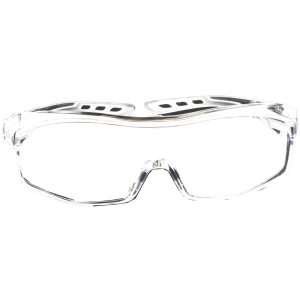
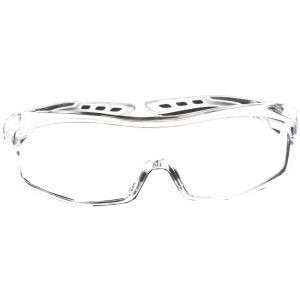
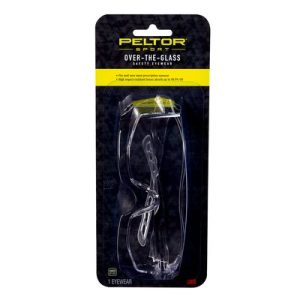
8. Peltor Sport Over-The-Glass: Best Over-The-Glasses
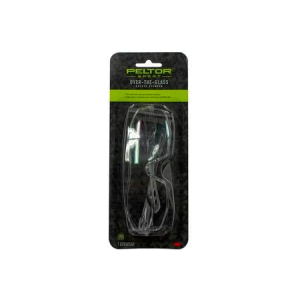
If you wear prescription glasses, this is the cheapest honest answer on the page. The Peltor Sport OTG is sized to fit over your everyday frames rather than replace them, so you keep your correction and gain a certified impact-rated lens in front of it.
It is not elegant. It is a wide, slightly bulky wraparound that sits over your glasses and looks exactly like what it is. What it does is remove the excuse, because the alternative most people choose is shooting in unrated prescription lenses, and most everyday lenses are not impact-rated.
For under ten dollars it is worth owning even if you also run a prescription insert setup, because it lives in a range bag and covers a guest who turns up in their reading glasses. The optics are basic and the coverage is what matters here.
Pros
- Fits over prescription glasses
- Certified impact protection under $10
- Covers guests who wear glasses
Cons
- Bulky and unflattering
- Basic optics, no lens swaps
- ANSI rated, not ballistic spec
Best for: Anyone who wears prescription glasses and will not buy a second prescription setup.
Shooting glasses buyer’s guide
Impact ratings: ANSI Z87.1 and ballistic
This is the rule that matters most. Ordinary sunglasses can shatter into your eye on impact, so shooting glasses must carry a real impact rating. ANSI Z87.1 is the civilian safety-glasses standard, written by ISEA, and the minimum you should accept. The tougher military ballistic fragmentation spec, met by glasses like the Wiley X, Oakley SI, and ESS, tests against faster, heavier projectiles and is the gold standard. Never shoot in eyewear that is not at least ANSI Z87.1 rated, no matter how good it looks.
Lens color and tint
Lens tint changes what you see. Clear lenses are the all-purpose default and best for indoor ranges and low light. Smoke or gray cuts glare in bright sun without shifting color. Amber, yellow, and rust tints boost contrast, making targets pop against backgrounds and helping in flat or overcast light, which is why many shooters favor them. A glasses kit with interchangeable lenses lets you match the tint to the day, which is a real advantage of the better picks.
Coverage and fit
Eye protection only works if it covers your eyes from the angles debris actually comes from. A wraparound frame shields the sides, where a flat lens leaves a gap, and a snug fit keeps the glasses from sliding when you get behind a rifle. Look for adjustable or grippy temples and nose pieces, and for prone or windy shooting, a gasketed model seals out dust. Comfort matters too, because glasses you push up onto your head are not protecting anything.
Prescription and over-the-glasses options
If you wear prescription glasses, you have options: prescription inserts that clip behind ballistic lenses, over-the-glasses models sized to fit over your regular frames, or full prescription ballistic eyewear. Do not just shoot in your everyday prescription glasses unless they are impact-rated, because most are not. A prescription insert behind a ballistic lens is the common, affordable solution that keeps you both corrected and protected.
Anti-fog, coatings, and photochromic lenses
A lens that fogs at the wrong moment is useless, so anti-fog coatings are worth having, especially in humidity or when moving between temperatures. Scratch-resistant hard coatings extend lens life, and photochromic or transition lenses darken automatically in sun and clear in shade, which spares you swapping lenses. These features add cost but genuinely improve the experience, so weigh them against how and where you shoot.
How I evaluated these shooting glasses
I weighed these on what decides whether eye protection actually protects: the impact rating, with a strong preference for true ballistic-rated lenses over basic ones, optical clarity and the lens-tint options for different light, coverage and a fit that stays put behind a rifle, useful features like anti-fog coatings and interchangeable lenses, and value for the protection delivered. Price counted against the job, because a hard-use ballistic pair and a cheap certified spare serve different roles, and the best glasses are the rated pair you will actually keep on every time you shoot, since an eye injury is permanent and instant.
Mistakes to avoid with eye protection
- Shooting in regular sunglasses. Ordinary lenses can shatter into your eye. Wear only ANSI Z87.1 or ballistic-rated eye protection on the range.
- Leaving gaps at the sides. Debris comes from angles. A wraparound frame protects where a flat lens leaves your eye exposed.
- Wrong tint for the conditions. A dark lens indoors or a clear lens in glare hurts your shooting. Match the tint, or carry an interchangeable-lens pair.
- Skipping eye pro for a quick shot. Injuries happen instantly and without warning, even sighting in. Put the glasses on before the first round, every time.
- Trusting non-rated prescription glasses. Most everyday prescription lenses are not impact-rated. Use a prescription insert behind ballistic lenses or rated prescription eyewear.
Bottom Line
For one pair that protects, lasts, and does not cost a fortune, the Wiley X Saber Advanced is the benchmark, with the Wiley X Valor the pick if you want maximum coverage. Shooters who want the clearest optics should step up to the Oakley SI Ballistic M Frame, and hard-use shooters trust the proven ESS Crossbow. On a budget, the Walker’s Shooting Glasses and the certified Pyramex Intruder make sure nobody shoots bare-eyed. Whatever you choose, make sure it is at least ANSI Z87.1 rated and wear it every time, alongside good hearing protection and a solid gun case for the range.
Last updated September 10, 2026
Do you really need special shooting glasses?
Yes. A piece of ejected brass, a ruptured case, or a ricochet can cause permanent eye injury instantly and without warning, and ordinary sunglasses can shatter on impact. Shooting glasses are rated to resist impact, at minimum to ANSI Z87.1 and ideally to a military ballistic standard. They are essential safety gear from your very first range trip.
What does ANSI Z87.1 mean on shooting glasses?
ANSI Z87.1 is the American safety standard for eye protection, certifying that the lenses and frame resist a defined impact without shattering. It is the minimum rating you should accept for shooting. The tougher military ballistic fragmentation spec, met by glasses like Wiley X and Oakley SI, tests against faster, heavier projectiles and offers an even higher level of protection.
What color lens is best for shooting?
It depends on the light. Clear lenses are the all-purpose choice and best indoors or in low light. Smoke or gray cuts bright-sun glare without distorting color. Amber, yellow, and rust tints increase contrast to make targets stand out, especially in flat or overcast conditions. A kit with interchangeable lenses lets you match the tint to the day, which is ideal.
Are expensive shooting glasses worth it?
For frequent shooters, yes. Premium glasses like the Oakley SI offer clearer, distortion-free optics that reduce eye fatigue over long sessions, plus better comfort and a military ballistic rating. For occasional use, a value pair like the Wiley X Saber or even budget Walker's glasses provides solid certified protection for far less. Buy the clarity and rating that match how much you shoot.
Can you wear regular glasses for shooting?
Only if they are impact-rated, and most everyday prescription glasses are not. Ordinary lenses can shatter into your eye. The safe options are prescription inserts that sit behind ballistic lenses, over-the-glasses models that fit over your frames, or full prescription ballistic eyewear. Never rely on standard prescription or fashion glasses as range eye protection.
What is the difference between ANSI and ballistic-rated glasses?
ANSI Z87.1 is the civilian safety standard, testing impact resistance against a defined projectile and speed. The military ballistic fragmentation standard is tougher, testing against faster and heavier fragments, so ballistic-rated glasses offer a higher margin of protection. Both are far safer than unrated eyewear; ballistic-rated is the gold standard, while ANSI Z87.1 is the minimum you should wear to shoot.
Do shooting glasses fog up, and how do you prevent it?
They can, especially in humidity or when moving between temperatures, which is dangerous if it happens at the wrong moment. Look for glasses with anti-fog coatings, which most quality shooting glasses like the ESS Crossbow include, and consider anti-fog sprays or wipes for tough conditions. Good ventilation in the frame design also helps keep the lenses clear.
Should my shooting glasses match my hearing protection?
They should work together, which mainly means the glasses' temples should not break the seal of your earmuffs. Thin, flat temple arms on shooting glasses are designed to slip under muff cushions without creating a gap that leaks noise. If you wear muffs, choose glasses with slim temples, or consider electronic earplugs that avoid the issue entirely.
4,798+ Gun & Ammo Deals
Updated daily from 200+ top retailers. Filter by category, caliber, action type, and price.
Related Guides