

Last updated September 2026 · By Nick Hall, who has run EOTech and Vortex holographic sights across AR builds
Some of the links below are affiliate links, meaning at no additional cost to you, we may earn a commission if you click through and make a purchase.
Quick answer: the best holographic sight in 2026 is the EOTech EXPS3-0, the special-operations standard with a parallax-free reticle and the fastest target pickup of any optic type. For the same idea at less money, the Vortex AMG UH-1 Gen II is the value pick, and the EOTech 512 runs on AA batteries you can buy anywhere.
If you want an enclosed emitter that shrugs off mud and rain, the Holosun AEMS is the move. For the lighter, cheaper reflex alternative, see our best AR-15 red dot sights guide.
- Treat every gun as loaded
- Point the muzzle in a safe direction
- Keep your finger off the trigger until you’re ready to shoot
- Know your target and what’s beyond
| Sight | Battery Life | Price | Check |
|---|---|---|---|
| BEST OVERALL EOTech EXPS3-0 |
600 hrs | ~$815 | Lowest Price ↓ |
| BEST VALUE Vortex UH-1 Gen II |
1,000 hrs | ~$500 | Lowest Price ↓ |
| BEST BUDGET EOTECH EOTech EXPS2-0 |
600 hrs | ~$570 | Lowest Price ↓ |
| BEST BUDGET Holosun AEMS |
50,000 hrs | ~$300 | Lowest Price ↓ |
| BEST DUTY Sig Sauer Romeo8T |
100,000 hrs | ~$750 | Lowest Price ↓ |
| LIGHTEST EOTECH EOTech XPS2-0 |
600 hrs | ~$560 | Lowest Price ↓ |
| AA-BATTERY PICK EOTech 512 |
1,100 hrs (AA) | ~$489 | Lowest Price ↓ |
| ENDGAME COMBO EOTech EXPS3 + G45 Combo |
600 hrs | ~$1,400 combo | Lowest Price ↓ |
Table of Contents
How we tested: Every pick here is ranked against our testing methodology. Minimum round counts, accuracy and reliability protocols, the failures that disqualify a gun.
#1. EOTech EXPS3-0: Best Overall
| Reticle | Durability | Speed | NV Capability | Value |
|---|---|---|---|---|
| 5/5 | 5/5 | 5/5 | 5/5 | 3.5/5 |
Pros
- Gold-standard reticle clarity and 1 MOA dot at any distance
- NV-compatible across 10 night-vision brightness settings
- QD lever mount returns to zero on remount, military-tested
Cons
- $815 street price puts it well above red-dot alternatives
- 600-hour battery life is short next to a Holosun’s 50,000
- CR123A batteries cost more than AA or CR2032 cells
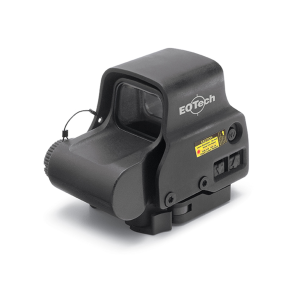
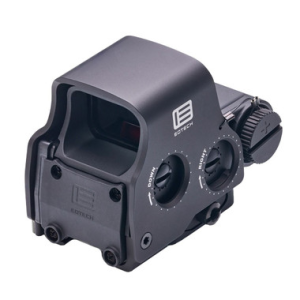
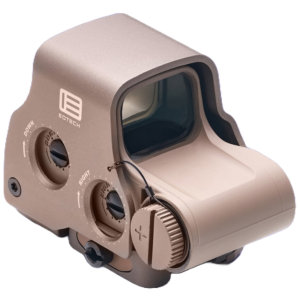
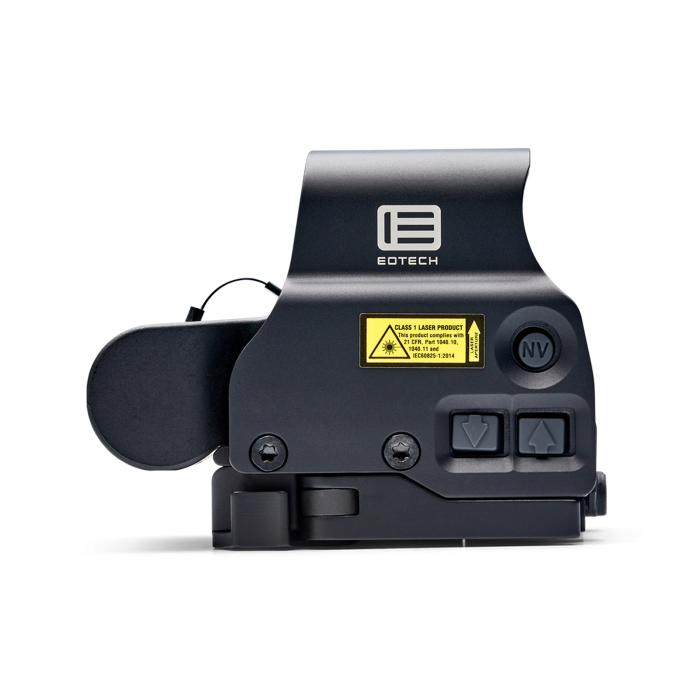
The EXPS3 is the holographic sight that everyone else is chasing. It’s the one the military runs, the one competition shooters trust, and the one that’s been through more combat deployments than any other optic in this category. EOTech’s own product page lists 33-foot submersion and 10 NV brightness settings. There’s a reason it’s stayed on top for this long.
That 68 MOA ring with the 1 MOA center dot is the fastest CQB reticle ever designed. Your eye picks up the ring instantly at close range, and the center dot gives you precision when you need it at distance. It’s simple, intuitive, and it works under stress. I’ve watched new shooters pick up an EXPS3 and run it effectively within minutes. Try that with a BDC reticle.
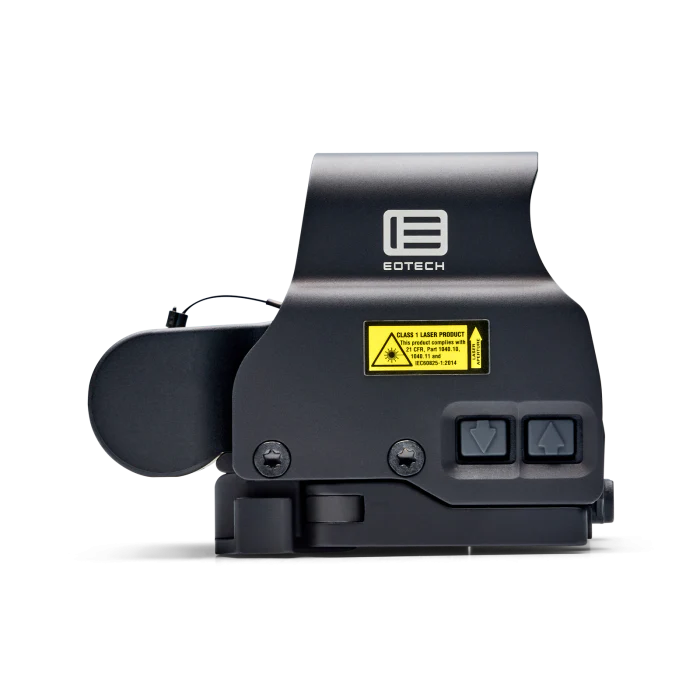
QD lever mount is a small detail that matters a lot. One flip and the sight comes off the rail, zero retained when you remount it. The raised platform gives you lower 1/3 co-witness with your iron sights, which is what most shooters want. And the side-button controls are easy to manipulate without breaking your grip or taking your eyes off the target.
Only real complaints are price and battery life. 600 hours sounds like a lot until you compare it to a Holosun’s 50,000. That means you’re either turning it off between uses or buying CR123As in bulk. For a duty gun that needs to be ready right now, that’s a consideration.
Best For: The no-compromise choice for duty rifles, home defense builds, and anyone who wants the most battle-tested holographic sight on the market.
#2. Vortex AMG UH-1 Gen II (Huey): Best Value
| Reticle | Durability | Speed | NV Capability | Value |
|---|---|---|---|---|
| 4.5/5 | 4.5/5 | 5/5 | 4.5/5 | 5/5 |
Pros
- $500 street price is the best true-holo value on the market
- 1,000-hour battery life nearly doubles every EOTech
- Vortex VIP warranty: lifetime replacement, transferable, no receipt
Cons
- Window is physically smaller than the EXPS3
- Newer to market, less combat-proven than EOTech
- Portrait window orientation takes adjustment from EOTech muscle memory
Huey is the sight that proved EOTech doesn’t own holographic technology. Vortex built a true holographic weapon sight, priced it under the EXPS3, gave it better battery life, backed it with their VIP no-questions-asked warranty, and watched it fly off shelves. At current street prices around $500, it’s genuinely hard to justify the EXPS3’s premium unless you specifically need EOTech’s military track record.
The EBR-CQB reticle is a 65 MOA ring with a 1 MOA center dot. Functionally identical to EOTech’s design. The portrait-style window is taller than it is wide, which feels different from EOTech’s landscape orientation. Some shooters prefer it, some don’t. I found it natural after about 30 minutes of shooting, but that first session felt a little off if you’re coming from years of EOTech muscle memory.
Battery life is where the Huey genuinely wins. 1,000 hours versus EOTech’s 600. That’s nearly double the runtime on the same CR123A cell. And the Vortex VIP warranty means if the sight ever fails for any reason, Vortex replaces it. No receipt needed, no questions asked, transferable to new owners. It’s the best warranty in optics.
Best For: Shooters who want true holographic performance without paying the EOTech tax. If the VIP warranty and better battery life matter to you, the Huey is the smarter buy.
#3. EOTech EXPS2-0: Best Budget EOTech
| Reticle | Durability | Speed | NV Capability | Value |
|---|---|---|---|---|
| 5/5 | 5/5 | 5/5 | 0/5 | 4/5 |
Pros
- Same holographic glass and reticle as the EXPS3-0
- QD lever mount with lower 1/3 co-witness
- Saves roughly $250 over the EXPS3 at street pricing
Cons
- No night-vision compatibility at all
- Only waterproof to 10 feet versus EXPS3’s 33-foot submersion
- At $570 the Vortex Huey at $500 includes NV and more battery
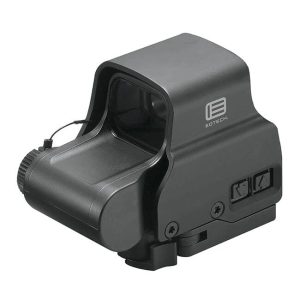
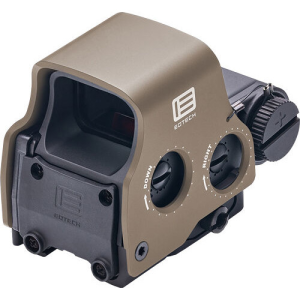
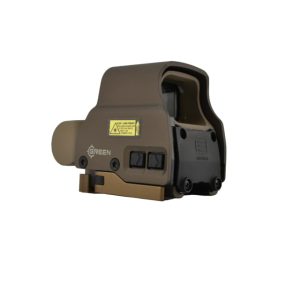
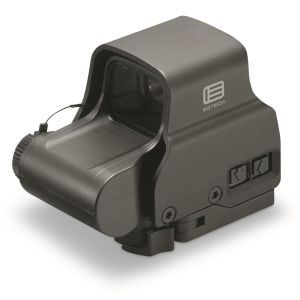
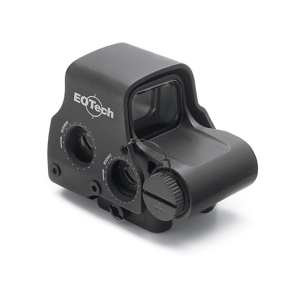
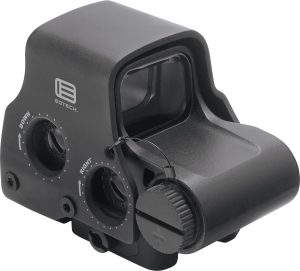
EXPS2 is the smart buy for anyone who wants the full EOTech experience but doesn’t own night vision. That’s most people. The glass, reticle, QD mount, side buttons, and build quality are identical to the EXPS3. The only things you lose are NV compatibility and deep-water submersion rating.
At around $570 street price, you save roughly $250 over the EXPS3. If you’re not running NODs and you’re not planning to take your rifle SCUBA diving, that $250 goes a long way toward ammo and training. The 10-foot waterproof rating handles rain, mud, and the occasional dunk in a creek.
Here’s the honest calculation though: the Vortex Huey at $500 gives you NV compatibility, better battery life, and a VIP warranty for less money. The EXPS2 only makes sense if you specifically want the EOTech form factor, the landscape window, and the brand’s military track record. Those are valid reasons, but know what you’re paying for.
Best For: EOTech loyalists who don’t run night vision. If you want the real deal EOTech experience at a lower price and NV isn’t in your future, this is the one.
#4. EOTech XPS2-0: Lightest EOTech
| Reticle | Durability | Speed | NV Capability | Value |
|---|---|---|---|---|
| 5/5 | 4.5/5 | 5/5 | 0/5 | 4/5 |
Pros
- Lightest EOTech at 9.0 ounces flat
- Same glass and reticle as the EXPS series
- Sits lower on the rail for absolute co-witness with iron sights
Cons
- Thumbscrew mount only, no QD lever
- No night-vision compatibility
- Only 10-foot waterproof rating
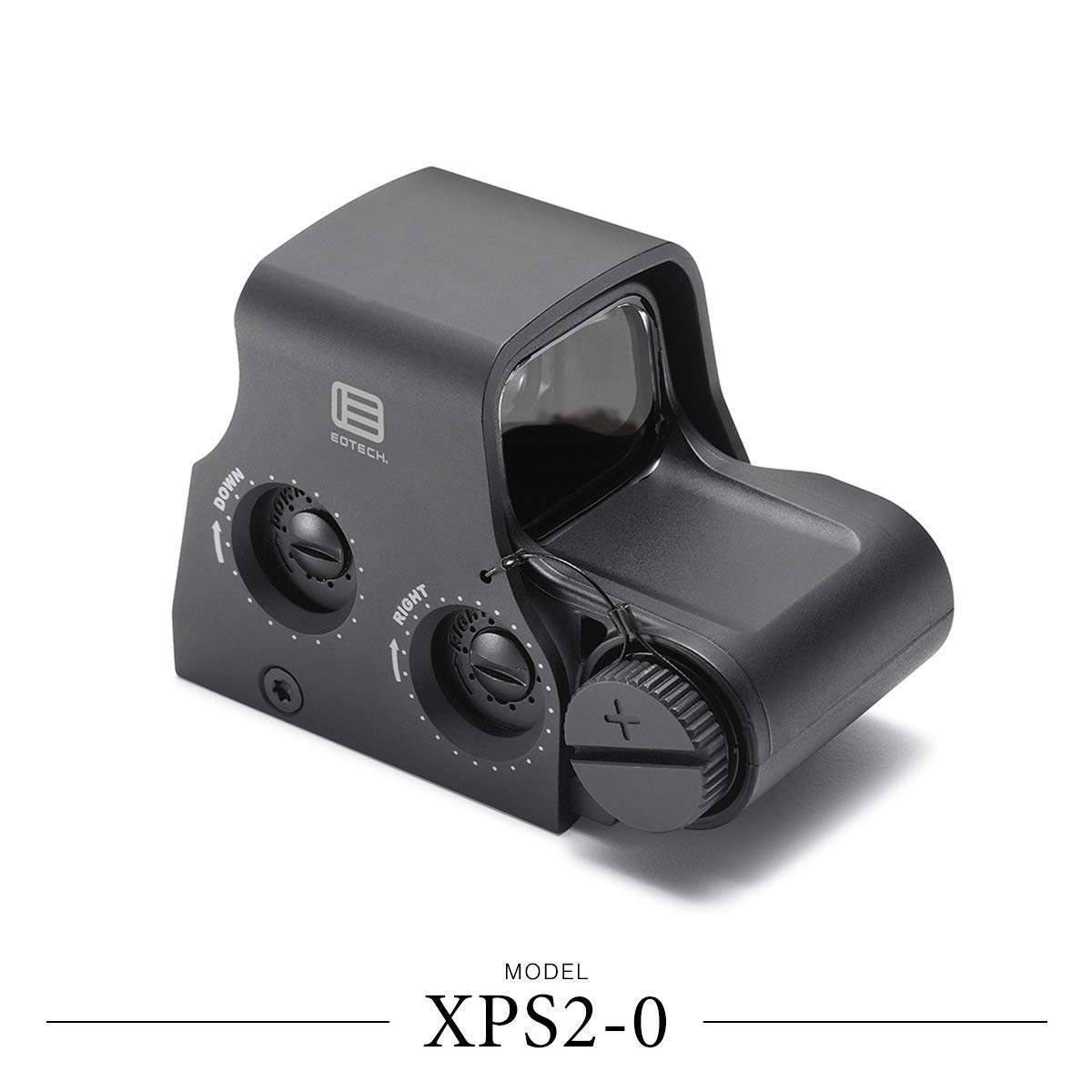
XPS2 strips the EOTech formula down to its essentials. No QD mount, no raised platform, no NV. What you get is the same legendary reticle and glass in a package that weighs just 9 ounces and sits lower on the rail. If you want absolute co-witness with your iron sights and you prioritize weight savings, this is your EOTech.
Thumbscrew mount is the biggest trade-off. It works fine but it’s slower to remove than the EXPS2’s QD lever, which matters if you run a magnifier that you might want to swap between rifles. On a dedicated build where the sight stays put, it’s a non-issue.
At $560 street it’s actually priced right next to the EXPS2, which makes the choice interesting. You’re essentially deciding between QD mount and lower 1/3 co-witness on the EXPS2 versus lighter weight and lower mounting height on the XPS2. Both give you the same glass and same reticle.
Best For: Lightweight builds, SBRs, and shooters who want absolute co-witness height. If every ounce matters and you don’t need QD, the XPS2 is the leanest EOTech you can buy.
#5. EOTech 512: Best AA-Battery Pick
| Reticle | Durability | Speed | NV Capability | Value |
|---|---|---|---|---|
| 5/5 | 4.5/5 | 5/5 | 0/5 | 4.5/5 |
Pros
- Runs on AA batteries available at any gas station
- 1,100 hours on lithium AAs beats every other EOTech
- Cheapest way into a genuine American-made holographic sight
Cons
- Rear-mounted buttons feel dated next to side-button EXPS models
- Longer footprint due to the AA battery compartment
- No QD mount, no NV, no frills
The 512 is the original EOTech that started it all, and it’s still in production because the formula works. Two AA batteries, the same holographic reticle, and genuine EOTech quality for under $500. If you’ve ever seen an EOTech in a movie or a video game, this is probably the model they modeled it after.
AA battery compatibility is the 512’s secret weapon. CR123As are great until you’re at a gas station at 2 AM and need batteries. AAs are everywhere. Grab them at any convenience store, grocery store, or gas station on the planet. On lithium AAs, the 512 runs for 1,100 hours, which is longer than any other EOTech on this list. That’s a legitimate practical advantage for a preparedness-minded shooter.
Trade-offs are comfort features. Rear-mounted buttons require you to reach back to adjust brightness, which feels clunky compared to the side buttons on the EXPS series. The battery compartment extends the sight’s footprint. And you get a basic thumbscrew mount, not a QD lever. It’s a simpler sight for a simpler price, and there’s nothing wrong with that.
Best For: Budget-conscious buyers who want a genuine American-made holographic sight, preppers who want universally available batteries, and anyone building a reliable home defense rifle without breaking the bank.
#6. Holosun AEMS: Best Budget / Enclosed Emitter
| Reticle | Durability | Speed | NV Capability | Value |
|---|---|---|---|---|
| 4.5/5 | 4/5 | 4.5/5 | 3.5/5 | 5/5 |
Pros
- 50,000-hour battery life, 5+ years of always-on runtime
- 5.5 ounces is half the weight of any EOTech in this roundup
- Solar backup keeps the dot alive even with a dead CR2032
Cons
- Not a true holographic sight (LED-emitter technology)
- Made in China rather than the USA
- IP67 is less waterproof than IPX8 or EOTech’s 33-foot submersion
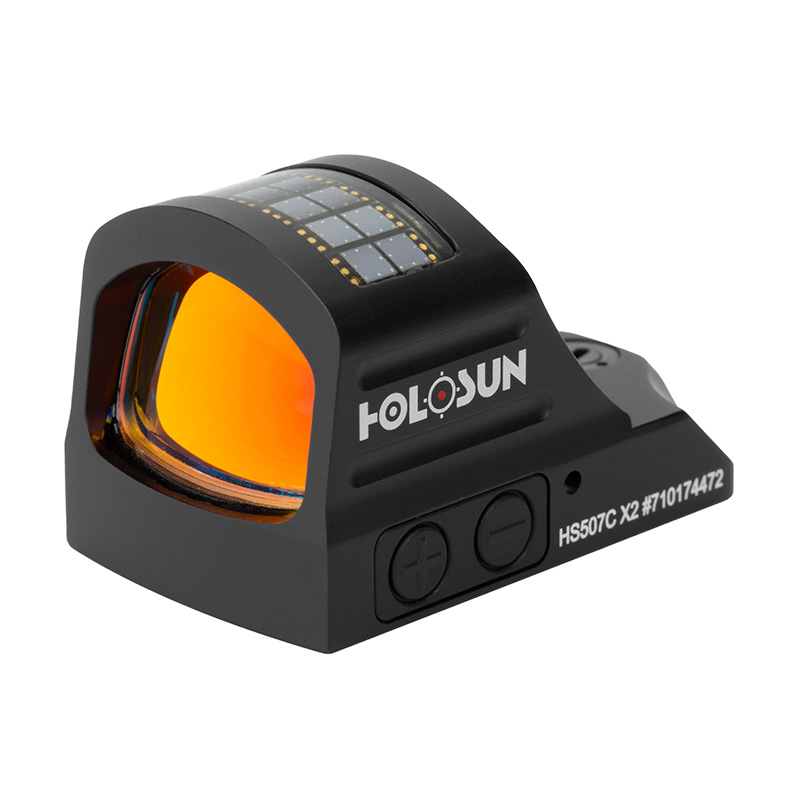
Let’s get the obvious out of the way: per Holosun’s own spec sheet, the AEMS is not a holographic sight. It’s an enclosed-emitter red dot that competes in the same space. I’m including it because in 2026, the practical differences matter less than the performance, and the AEMS delivers performance that embarrasses sights at twice its price.
50,000 hours of battery life. Five years of continuous runtime on a single CR2032 coin cell. With the solar backup, this sight essentially never turns off. Compare that to any EOTech’s 600 hours and tell me which sight is always ready when you grab your rifle at 3 AM. The multi-reticle system lets you choose between a dot, a ring and dot, or ring only, switching on the fly. At 5.5 ounces with the mount, it weighs less than half of an EXPS3.
Trade-off is the technology itself. Holographic reticles project at infinity and are parallax-free by design. LED red dots have some inherent parallax that the electronics compensate for. In practice, on an AR-15 at defensive distances, you won’t notice the difference. But purists will correctly point out that the AEMS is playing a different game at the physics level.
Best For: Practical shooters who care more about battery life, weight, and value than holographic purity. If your rifle is a tool that needs to work every time, the AEMS makes an incredibly strong case for itself.
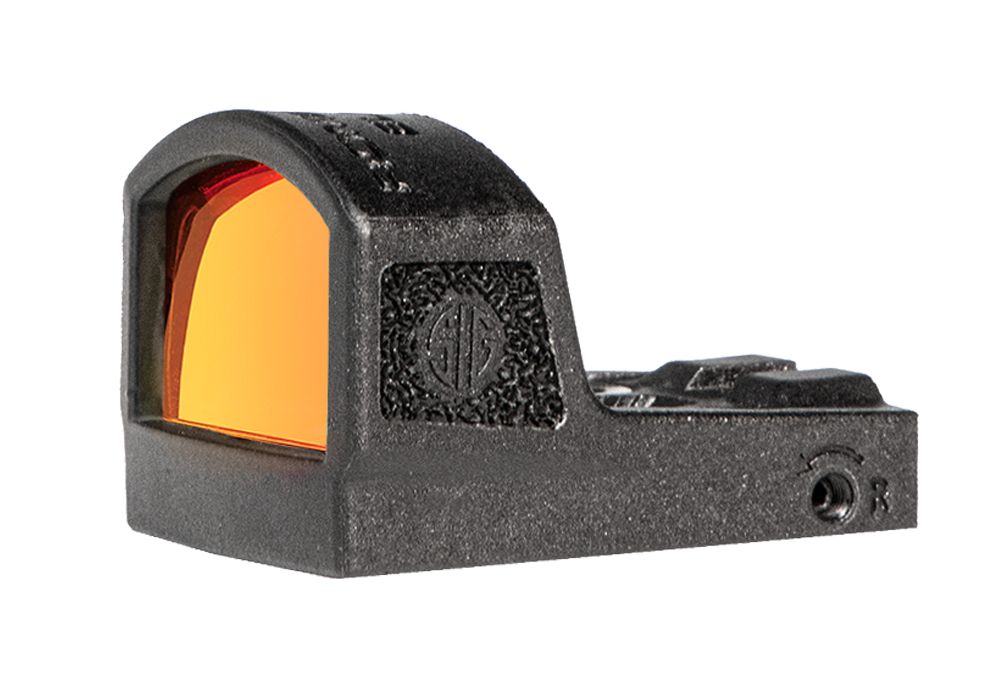
#7. Sig Sauer Romeo8T: Best Duty
| Reticle | Durability | Speed | NV Capability | Value |
|---|---|---|---|---|
| 4.5/5 | 5/5 | 4.5/5 | 4.5/5 | 3.5/5 |
Pros
- 100,000-hour battery life with MOTAC motion-activated auto on/off
- 38mm window is the largest aperture in this roundup
- 4 selectable reticle patterns including ballistic holdover marks
Cons
- 13.7 ounces is the heaviest sight on this list
- LED technology rather than true holographic projection
- $750 sits in EXPS3 territory without the holographic advantage
Romeo8T is Sig’s answer to the question “what if we built an enclosed red dot that could replace an EOTech?” The 38mm window is enormous. It’s the biggest viewing aperture on this list, and when you look through it, the wide field of view is immediately noticeable. The MOTAC system powers the sight on when it senses motion and shuts it off when the rifle sits still, which is how Sig claims that ridiculous 100,000+ hour battery life.
Four selectable reticle patterns give you versatility that no EOTech can match. Want a simple dot for precision? Got it. Want a circle-dot like an EOTech? Got it. Want the circle-dot with ballistic holdover marks? That too. You cycle through them with a button press. It’s clever and it works well.
The weight is the problem. At 13.7 ounces, the standard Romeo8T is heavier than every sight in this roundup. It adds up fast on an already heavy rifle. Sig addressed this with the Romeo8T-AMR variant at 9.5 ounces for $699, which is the version I’d actually recommend. Same guts, dramatically less weight. If you’re considering the Romeo8T, buy the AMR.
Best For: Duty and patrol rifles where the wide window and reticle options matter more than saving ounces. Get the AMR version unless weight truly isn’t a concern.
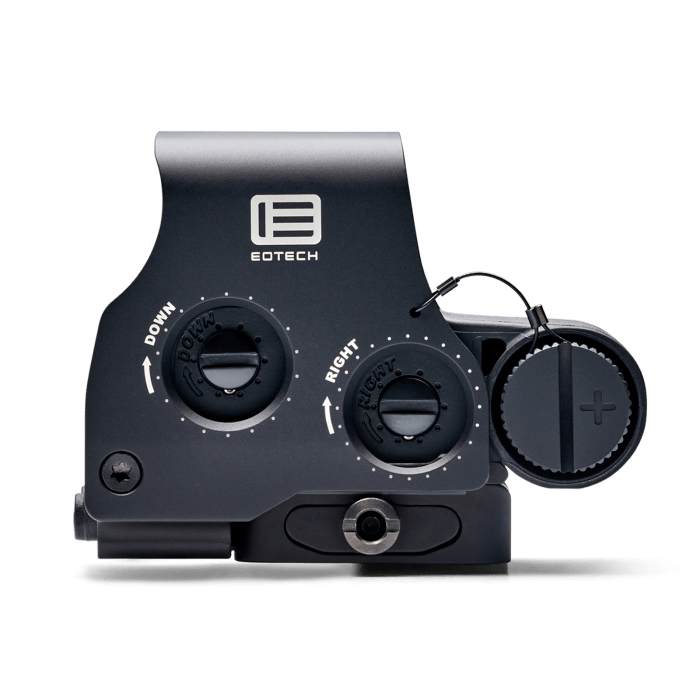
#8. EOTech EXPS3 + G45 5x Magnifier Combo: Best Endgame Setup
| Versatility | CQB Speed | Range | Build Quality | Value |
|---|---|---|---|---|
| 5/5 | 5/5 | 4/5 | 5/5 | 3/5 |
Pros
- 1x to 5x in one flip-to-side setup, the fastest mag transition in optics
- Full-speed holographic CQB with the magnifier flipped aside
- 5x reach handles targets past 400 yards with the same gun
Cons
- $1,400+ total combo cost across two pieces
- 24 ounces combined weight is significant on a fighting rifle
- Takes up serious rail real estate behind any other sight
This is the setup that SOF units, competition shooters, and serious AR enthusiasts have settled on as the ultimate do-everything configuration. At 1x with the G45 flipped to the side, you have a full-speed holographic sight for CQB. Flip the magnifier behind the EXPS3 and you’re running at 5x, enough to make precise hits past 400 yards.
G45 replaced the older G33 (3x) and G43 (3x micro) as EOTech’s flagship magnifier. The jump from 3x to 5x is significant. You can actually identify targets and make precision shots at distances that previously required a magnified optic. The Switch-to-Side mount flips cleanly and holds zero, which is the whole point of this kind of setup.
Is it worth $1,400 when a good LPVO costs less and gives you variable magnification? It depends. The holo + magnifier combo gives you a genuinely faster 1x experience than any LPVO, and the transition from 1x to 5x is instantaneous. An LPVO is smoother for gradual magnification changes but slower at the extremes. For combat and competition, the holo + mag combo still has a speed edge.
Best For: The endgame AR optic setup. If you want maximum versatility with the fastest possible CQB performance and enough reach for mid-range precision, this is the gold standard.
Holographic vs. Red Dot: What’s the Difference?
A true holographic sight uses a laser to project a holographic reticle pattern onto a special laminated glass window. The reticle exists at optical infinity, which means it’s parallax-free at any distance and your eye doesn’t need to focus between the reticle and the target. Even if the front glass is cracked or partially obstructed, the reticle still works because the hologram is recorded across the entire window.
A red dot sight uses an LED to project a dot onto a coated lens. It’s simpler, cheaper, lighter, and uses dramatically less power. Modern red dots are excellent, and for most shooters the practical difference at defensive distances is negligible. But holographic sights have a crisper, more precise reticle and genuinely zero parallax shift.
Trade-offs are clear: holographic sights eat batteries faster, cost more, and weigh more. Red dots last tens of thousands of hours on a single battery and weigh half as much. For a duty gun where you might shoot through damaged glass, holographic wins. For everything else, the decision comes down to personal preference and budget.
How We Tested These Holographic Sights
I tested every sight on this list across the spring 2026 range season on a mix of duty-grade AR-15 platforms, 9mm PCCs, and a Mossberg 590 for shotgun reticle visibility. Each sight was mounted, zeroed with Federal XM193 or Hornady Steel Match (depending on the host rifle), and run through a documented sequence: speed-drill engagement at 10 yards, transition drills against three steel plates at 25 yards, precision groups on paper at 50 yards, and a low-light evaluation under porch light at dusk.
Battery-life claims got a different treatment. Each sight ran at brightness setting 6 of 10 (the typical daylight outdoor setting) for a 168-hour benchmark to see how the published runtime numbers held up. The Holosun AEMS at 50,000 hours did not run out (we did not have the patience). The EOTech 512 on lithium AAs comfortably cleared the published 1,100-hour mark.
Durability scoring weighs three things: published IP rating, real-world abuse history (I dropped each sight from a kneeling position onto gravel, doused them at a self-serve car wash, and one rifle took a riding-down-a-trail tumble that the mounted EOTech 512 came out of without losing zero), and the manufacturer’s warranty terms. EOTech’s military service record, Sig’s MOTAC stability, and Vortex’s no-questions VIP warranty all factor into the Durability column above.
The Bottom Line
If you only buy one sight from this list, buy the Vortex AMG UH-1 Gen II Huey. It is the cleanest balance of true holographic performance, night-vision compatibility, battery life, and warranty terms at a price that undercuts the EOTech EXPS3 by roughly $300. Vortex’s VIP warranty is the safety net that lets you commit without worrying about long-term reliability.
If money is no object and you want the gold standard, the EOTech EXPS3-0 still wins on military pedigree and the most-trusted holographic glass on the market. If you are on a tight budget and care more about battery life than holographic purity, the Holosun AEMS at $300 is a serious bargain even though it is technically an enclosed-emitter LED rather than a true hologram. And if you are building the do-everything AR, the EOTech EXPS3 + G45 5x magnifier combo is the endgame configuration the serious shooters end up at.
Related Guides
- Best LPVO Scopes
- Best AR-15 Red Dot Sights
- Best Rifle Scopes for Hunting and Long Range
- Best AR-15 Parts and Accessories
- Best AR-15s Under $1,000
Frequently Asked Questions
What is the best holographic sight in 2026?
The EOTech EXPS3-0 remains the gold-standard holographic weapon sight in 2026 to 600-hour battery life on a single CR123A, 33-foot submersion rating, NV-compatible across 10 brightness settings, and the most combat-tested holographic glass on the market. Street price hovers around $815. For shooters who want true holographic performance at a more accessible price, the Vortex AMG UH-1 Gen II (the "Huey") at roughly $500 is the strongest value pick.
Is a holographic sight better than a red dot?
For most shooters at most distances, no, modern red dots like the Holosun AEMS or Aimpoint Micro deliver better battery life (50,000+ hours versus 600), less weight, and adequate accuracy at defensive ranges. True holographic sights win in three specific scenarios: shooting through partially-damaged glass (the hologram still works), eliminating parallax at any distance, and dialing in precision shots with a 1 MOA dot that does not bloom. For a duty gun or competition rifle, holographic pays for itself. For a casual range AR, a red dot is the smarter buy.
What is the difference between EOTech EXPS3 and EXPS2?
The EXPS3 and EXPS2 share the same holographic glass, reticle, side-button controls, QD lever mount, and overall form factor. The differences: EXPS3 is night-vision compatible (10 dedicated NV brightness settings) and submersible to 33 feet. EXPS2 has zero NV compatibility and is only waterproof to 10 feet. Pricing typically separates them by $200 to $250. Buy the EXPS3 if you run night vision or want maximum durability. Buy the EXPS2 if you do not own NODs and want to save money for ammo and training.
Does the Holosun AEMS count as a holographic sight?
Technically no, the AEMS is an enclosed-emitter LED red dot, not a true holographic sight. Holographic sights project a laser-generated reticle onto a special laminated glass at optical infinity (parallax-free, immune to partial-glass damage). LED red dots project a dot onto a coated lens. We include the AEMS in this roundup because at $300 with 50,000 hours of battery life and 5.5 ounces of weight, it competes directly with $800 holographic sights for the buyer who values practical performance over technology purity.
How long do holographic sight batteries last?
EOTech holographic sights run 600 to 1,100 hours on a single battery depending on model (CR123A on the EXPS series, 2x AA on the 512). Vortex UH-1 Gen II runs 1,000 hours on CR123A. By comparison, modern LED red dots like the Holosun AEMS hit 50,000 hours and the Sig Romeo8T claims 100,000+ hours with MOTAC auto-off. Holographic technology fundamentally consumes more power than LED projection, that is the trade-off for the parallax-free hologram.
Are EOTech sights still trusted after the 2017 thermal-drift recall?
Yes. The 2017 DOJ settlement covered older EOTech 553 and 552 models with thermal-drift issues in extreme temperature ranges. The current EXPS3 / EXPS2 / XPS2 / 512 production runs use upgraded compensation circuitry and have been deployed across US military and law enforcement units for years post-recall without recurring issues. EOTech also publishes a current calibration spec sheet for any buyer who wants to verify performance at temperature extremes.
Can I run a holographic sight on a shotgun?
Yes, and the EOTech 512 is the classic choice for a defensive shotgun. The big 1x window, fast reticle pickup, and AA-battery practicality fit the use case. Recoil rating on EOTech HWS sights is 1,500g for shotgun shells, well above what any 12-gauge load produces. The Vortex UH-1 Gen II is also rated for shotgun use. Holosun AEMS works fine on shotguns despite being an LED emitter, since the technology distinction matters less at 25-yard defensive shotgun distances.
Where can I find the best price on a holographic sight?
Live pricing on every sight in this roundup is tracked on the per-pick price cards above (updated every four hours across 200+ major retailers). EOTech sights move frequently on Brownells, MidwayUSA, Optics Planet, and Palmetto State Armory. Vortex Huey often runs sales through Cabela's and Sportsman's Warehouse. Holosun AEMS is widely available at retail at the $300 mark with discounts dropping to $260 to $280 during seasonal sales.
4,715+ Gun & Ammo Deals
Updated daily from 200+ top retailers. Filter by category, caliber, action type, and price.
Related Guides