

Last updated September 2026 · By Nick Hall, after a full review pass against FBI Heavy Clothing Protocol data, Lucky Gunner Labs, the Box O’ Truth wall-penetration archive, and Dr. Gary Roberts’ published recommendations.
Some of the links below are affiliate links, meaning at no additional cost to you, we may earn a commission if you click through and make a purchase.
- Treat every gun as loaded
- Point the muzzle in a safe direction
- Keep your finger off the trigger until you’re ready to shoot
- Know your target and what’s beyond
Quick answer: the best home-defense setup that will not over-penetrate in 2026 is a 9mm handgun loaded with 147-grain subsonic JHP, a load that expands reliably and dumps its energy into the threat instead of the next room. For an apartment, a .380 with JHP or a 9mm PCC punches through even fewer walls.
Rifle shooters actually get the best wall safety with soft-point 5.56 from an AR-15, which fragments on drywall instead of sailing through it. The wrong answer is cheap FMJ or birdshot, so match the load to your walls and your neighbors. For the full lineup, see our best home defense guns guide.
| Platform | Caliber / Load | Drywall Risk | Stopping Power | Best Use Case | Buy |
|---|---|---|---|---|---|
| Ruger AR-556 | 5.56 NATO / Federal 64gr SP | Low | High | Best rifle option for a house | See ↓ |
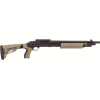
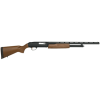
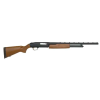
| Mossberg 500 Tactical | 12ga / Federal Premium #4 Buck | Moderate | High | Best 12ga shotgun option | See ↓ |
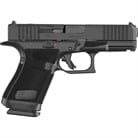
| S&W M&P 380 Shield EZ | .380 ACP / Federal HST 99gr | Low | Moderate | Best apartment pistol | See ↓ |
| Ruger PC Carbine | 9mm / Federal HST 124gr | Low-Mod | High | Best long-gun for an apartment | See ↓ |
| Glock 19 Gen 6 | 9mm / Federal HST 147gr | Moderate | High | Best overall balance for most homes | See ↓ |
Table of Contents
How we tested: Every pick here is ranked against our testing methodology. Minimum round counts, accuracy and reliability protocols, the failures that disqualify a gun.
The Overpenetration Problem Nobody Talks About Honestly
Almost every conversation about home defense overpenetration is either oversimplified or wrong. Here is the actual truth. Every firearm caliber capable of reliably stopping a violent attacker will also penetrate drywall. That is physics, not a design flaw. There is no magic round that incapacitates an intruder but stops politely at a sheetrock seam.
What we actually mean by overpenetration is degree and probability. Some loads pass through far fewer walls than others. A 64gr soft-point .223 fragments and tumbles aggressively through drywall and loses energy quickly. A .45 ACP full metal jacket round sails through four or five walls without drama. The goal is not zero wall penetration, that is unachievable with anything strong enough to stop a person. The goal is minimizing how many walls a round penetrates and maximizing how fast it dumps its energy.
The FBI Ballistic Research Facility at Quantico conducted the foundational drywall and barrier penetration testing as part of their post-1986-Miami ammunition evaluation protocols. The 2014 FBI 9mm Justification white paper updated those findings and concluded modern bonded JHP 9mm equals .40 S&W and .45 ACP in terminal performance. Independent work by Dr. Gary K. Roberts (IWBA), Old Painless at The Box O’ Truth, Lucky Gunner Labs, and Eric Hung’s published Pew Pew Tactical overpenetration study gives us actual layer counts and gel-penetration numbers to work with. The recommendations in this post are anchored on that published research, not opinion.
One more thing before specific picks. Overpenetration is one part of defensive ammunition selection. You also need adequate terminal performance, the round must reliably stop a threat, not just fail to go through walls. The worst outcome is not overpenetration. The worst outcome is a round that does not stop the attacker and then overpenetrates anyway. Stopping power and wall penetration are both real concerns, and you need a load that addresses both.
What the Research Actually Shows About Drywall Penetration
Standard residential interior walls are two layers of half-inch drywall over a 3.5-inch air gap with 2×4 studs every 16 inches. Testing protocols typically fire through four such wall segments at 10-foot spacing to simulate a bullet traveling through two rooms. Here is what the published data shows.
Old Painless’s Box O’ Truth #14 found that 12 gauge 00 buckshot penetrated all four walls (eight sheets) at 10-foot spacing. Pew Pew Tactical’s controlled study using FBI-spec gel plus simulated interior and exterior walls confirmed 00 buck pushed through every barrier. Net assessment: 00 buckshot is a poor overpenetration choice for indoor defense in any structure with neighbors or family on the other side of walls.
12 gauge #4 buckshot was the only shotgun load in Pew Pew’s testing that partially stopped within wall structures. Most pellets stopped in the 12-inch gel block or the first drywall sheet after the gel. That’s not zero risk, but it’s meaningfully better than 00 buck for a home where overpenetration matters.
5.56 NATO with M193 ball tumbles and fragments aggressively through drywall, typically passing through 2-3 wall sections as fragments before stopping. Federal Power-Shok 64gr soft point stopped inside the interior wall in Pew Pew’s testing after passing through the gel block. Inceptor 35gr SRR frangible 5.56 showed variable behavior, fragments passed through interior wall but the projectile reached the exterior wall when missing studs. Bottom line: 64gr or 75gr soft points and bonded JHPs are the consensus picks for 5.56 home defense, not frangibles.
9mm FMJ penetrates all simulated interior and exterior walls in published tests with no significant energy loss. 9mm 124gr Federal HST averages 14-15 inches in bare gel and 1 of 12 sample shots ran past 18 inches in Lucky Gunner Labs testing, overpenetration-prone in heavy-clothing barriers. The slower 147gr subsonic HST drove through the first wall plus gel block and stopped at the rear wall in Pew Pew testing. 9mm 124gr Hornady Critical Defense stopped after the first half-inch drywall sheet post-gel, the best 9mm result Pew Pew recorded.
.380 ACP JHP from a compact pistol expands quickly and decelerates faster than 9mm through barriers. Most quality .380 JHP loads stop within 1-3 wall sections after expansion. .45 ACP 230gr FMJ penetrated all barriers in Pew Pew testing; .45 ACP 230gr Federal Hydra-Shok stopped behind the interior wall. The takeaway: ammo selection within a caliber matters more than the caliber choice itself for overpenetration. As Old Painless wrote in Box O’ Truth #14: “Sheetrock doesn’t slow any round down much. If you shoot in the house, walls will not stop any serious round.”
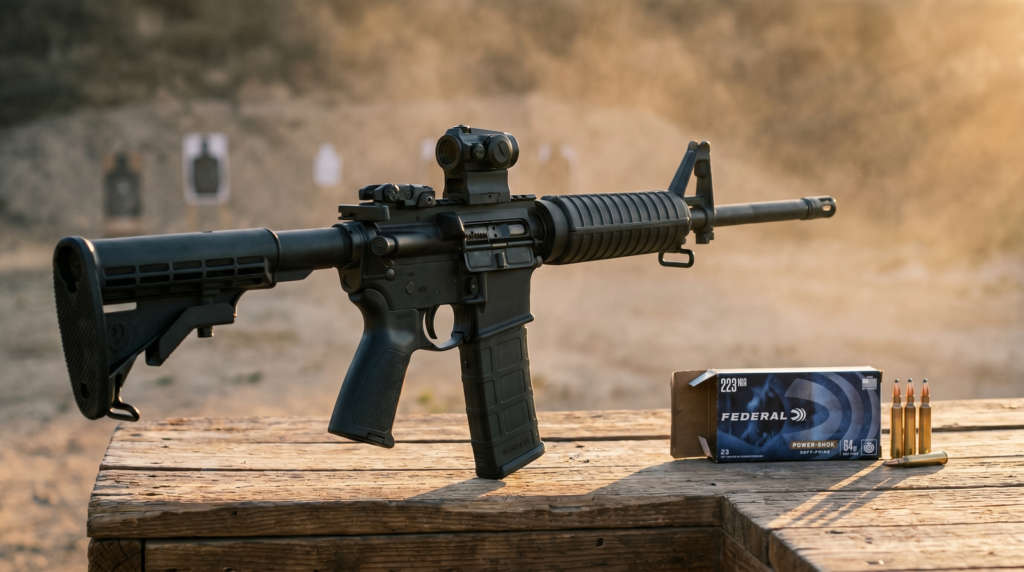
1. AR-15 with Soft-Point 5.56: Best Rifle Platform
- Recommended Platform: Ruger AR-556 (~$515-640 street)
- Premium Alternative: BCM Recce-16 or Daniel Defense DDM4 V7
- Recommended Ammo: Federal Power-Shok 64gr SP or Hornady BLACK HD SBR 75gr InterLock
- Capacity: 30+1 (standard PMag)
- Barrel: 16.1″
Pros
- 5.56 soft-point ammo fragments and tumbles in drywall, actually safer than most pistol calibers in wall-penetration testing
- 30-round capacity gives you margin to make hits under stress
- Long-gun stability and a red dot make accurate shots vastly easier than a handgun under pressure
Cons
- A 16-inch barrel maneuvers poorly through tight hallways and doorways without practice
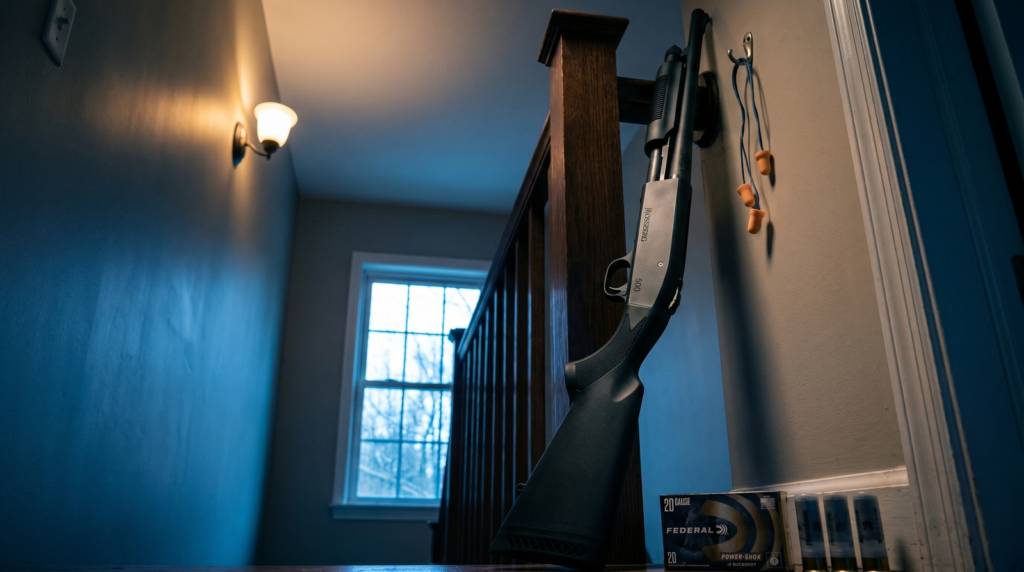
- Indoor discharge will permanently damage your hearing without ear pro
- Quality defensive ammo runs $1.50-$2.50 per round vs $0.40 for bulk 5.56
The counterintuitive truth about rifle rounds and drywall is that properly loaded 5.56mm can actually be safer in an apartment than pistol rounds. The high velocity causes the bullet to tumble and fragment aggressively on contact with drywall and 2×4 studs. Once the projectile destabilizes, it sheds energy fast.
The expert consensus position has shifted in recent years on which 5.56 load is right for home defense. Frangibles like the Inceptor 35gr SRR were popular for a while because of their advertised “wall-safe” behavior, but Dr. Gary Roberts and the IWBA point out that most frangibles fail the FBI Heavy Clothing Protocol, under-penetration in gel risks failing to stop a threat. American Rifleman’s 2014 testing reached the same conclusion. The current consensus picks for AR-15 home defense are 64gr or 75gr soft points (Federal Power-Shok 64gr, Hornady BLACK HD SBR 75gr InterLock) or controlled-expansion 62-77gr bonded designs. Frangibles still have a role for steel-target training and refinery or shipboard environments where ricochet is the dominant risk, but not general residential HD.
Platform-wise, a 16-inch AR with a Trijicon MRO or EOTech EXPS2 and a weapon-mounted light is the canonical home defense setup. The Ruger AR-556 covers the budget end with mil-spec components at $515-640 street. BCM and Daniel Defense are the premium options if budget allows. Whichever platform you pick, practice maneuvering with it indoors, corners, doorways, stairs. Long guns require specific technique for indoor use that you will not figure out under stress without rehearsal.
For a detached house or a duplex with a clear wall between you and the threat, the AR-15 with soft-point ammo is the highest-performance home defense option on this list. For high-density apartments with shared walls, the picks lower on this list (.380 ACP, 9mm PCC, .410 Judge) are still safer choices.
Best For: Single-family homes and rural properties where rifle capability matters and apartment-style overpenetration risk is lower. Anyone who already owns or trains with an AR and wants the right ammunition for indoor use.
2. 12 Gauge with #4 Buckshot: Best Shotgun Platform
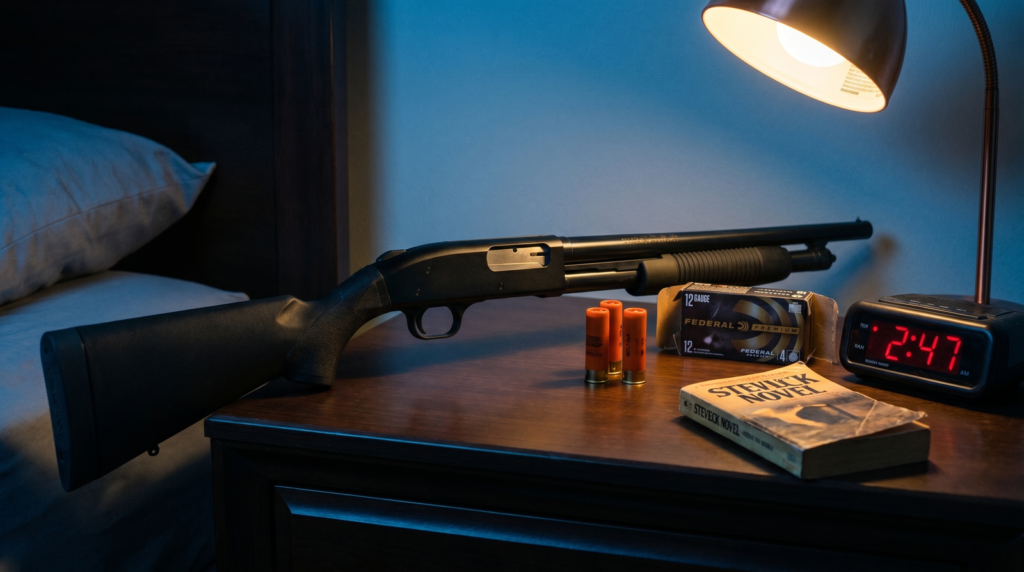
- Recommended Platform: Mossberg 500 Tactical (~$325-360 street)
- Premium Alternative: Mossberg 590A1 Tactical (~$620-770)
- Recommended Ammo: Federal Premium Personal Defense 12ga #4 Buckshot (F127 4B) with Flite Control wad
- Capacity: 5+1 (Persuader) or 8+1 (590A1)
- Barrel: 18.5″
Pros
- 27 pellets of #4 buck is devastating at 7-15 feet, the actual distances of home defense engagements
- Pew Pew Tactical’s overpenetration study found #4 buck was the only shotgun load that stopped within the first drywall sheet after gel
- Mossberg 500 platform is bombproof reliable and starts under $360 street
Cons
- Recoil from full-power 12 gauge requires regular practice
- A pump shotgun is harder to maneuver than a handgun in tight hallways
- Capacity (5-8 rounds) is limited compared to a rifle or carbine
If you are committed to a shotgun but worried about overpenetration, switching from 00 buckshot to #4 buckshot is the single highest-impact change you can make. A standard 12 gauge 00 buck load fires 8 to 9 pellets of 0.33-inch shot. A 12 gauge #4 buckshot load fires 27 pellets of 0.24-inch shot. More pellets per shell, but each pellet carries less energy and decelerates faster through barriers.
Federal Premium Personal Defense 12 gauge #4 buckshot (F127 4B) is engineered specifically for home defense patterns. The Flite Control wad holds the pellets together longer out of the muzzle for a tighter pattern at room distances, then releases the pellets to spread on impact. At 10-15 feet, you get a concentrated impact rather than a scattered pattern that might miss the threat and hit adjacent walls.
Reduced-recoil loads are worth considering. Federal’s Reduced Recoil 12ga #4 buckshot cuts felt recoil significantly while keeping adequate terminal performance at indoor distances. Hornady’s American Gunner Reduced Recoil 00 buckshot is another option for shooters who prefer 00 over #4. The lower recoil produces faster follow-up shots and more shooters willing to practice. Better to train consistently with reduced-recoil loads than to avoid practicing with full-power loads.
Platform pick is the Mossberg 500 Tactical for budget shooters or the 590A1 Tactical for shooters who want the heavy-wall barrel and aluminum trigger guard. Our Mossberg 500 vs 590 head-to-head covers the family differences in depth. Either platform paired with quality #4 buck Flite Control is one of the most-tested combinations in defensive shotgun use.
Best For: Shotgun owners who want a defensive load that punches above its weight on terminal performance while penetrating fewer walls than 00 buck. Anyone transitioning from a hunting shotgun to a dedicated home defense setup.
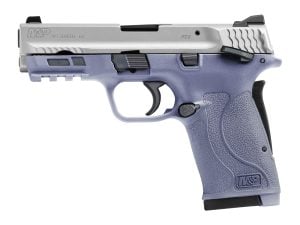
3. .380 ACP Pistol with JHP: Best Apartment Option
- Recommended Platform: S&W M&P 380 Shield EZ (~$340-400 street)
- Alternative: S&W Bodyguard 2.0 (12+1 capacity, ~$340-400) or Ruger LCP Max (10+1)
- Recommended Ammo: Federal HST .380 99gr JHP (P380HST1S) or Speer Gold Dot .380 Short Barrel 90gr
- Capacity: 8+1 (Shield EZ) / 10+1 (LCP Max) / 12+1 (Bodyguard 2.0)
- Barrel: 3.0-3.8″
Pros
- Best pistol overpenetration profile of any caliber with meaningful stopping power
- Federal HST .380 99gr is engineered to expand reliably from compact barrels, the load-bearing issue with most .380 ammo
- Very mild recoil makes accurate, fast follow-up shots possible for almost any shooter
Cons
- Lower terminal performance than 9mm, requires careful ammo selection
- Requires accurate shot placement more than larger calibers
- Generic .380 JHP often fails to expand from short barrels, load selection is non-negotiable
For apartment dwellers sharing walls with neighbors, .380 ACP with quality JHP is the most defensible overpenetration choice in the pistol category. The lower velocity and lighter bullet of a .380 JHP that expands properly will decelerate through drywall barriers faster than a 9mm or .40 round. After expansion, .380 typically stops in 1-3 wall sections. That gap matters when the wall behind your target shares a bedroom with a sleeping child.
The qualifier, and it is a serious one, is quality ammunition. Not all .380 JHP expands reliably, especially from short-barreled pistols where velocity is already marginal. Federal HST .380 99gr (P380HST1S) and Speer Gold Dot .380 Short Barrel 90gr are both specifically engineered to expand from compact barrels. Both have extensive lab and field data confirming reliable expansion. Use these loads. Discount-brand .380 JHP without published expansion testing data is a coin flip.
The S&W M&P 380 Shield EZ is our platform recommendation. The easy-rack slide makes it accessible to shooters with limited hand strength, the 8+1 capacity is adequate for home defense, and the S&W reliability record means it will cycle quality defensive loads consistently. The newer Bodyguard 2.0 gives you 12+1 capacity in a smaller package for $340-400 street if you prefer maximum capacity over the easy-rack slide. The Ruger LCP Max splits the difference at 10+1.
Be honest about the tradeoff: .380 requires better shot placement than 9mm to reliably stop a determined attacker. The stopping power gap between .380 HST and 9mm HST is real. For apartment use where overpenetration matters more, .380 is the responsible choice. For a single-family home, 9mm is the better stopping power pick, see picks 4 and 7 below.
Best For: Apartment and condo dwellers, renters in multi-unit buildings, anyone in high-density housing where wall penetration carries the highest stakes, and recoil-sensitive shooters who need something they will actually train with.
![SMITH AND WESSON M&P 380 SHIELD EZ [REB]](https://www.usa-gun-shop.com/wp-content/uploads/ugs-pc-img/6a11a5dbbd46e9f6b1e081dcbfd15ad0.jpg)
4. 9mm PCC with JHP: Best Long Gun for an Apartment
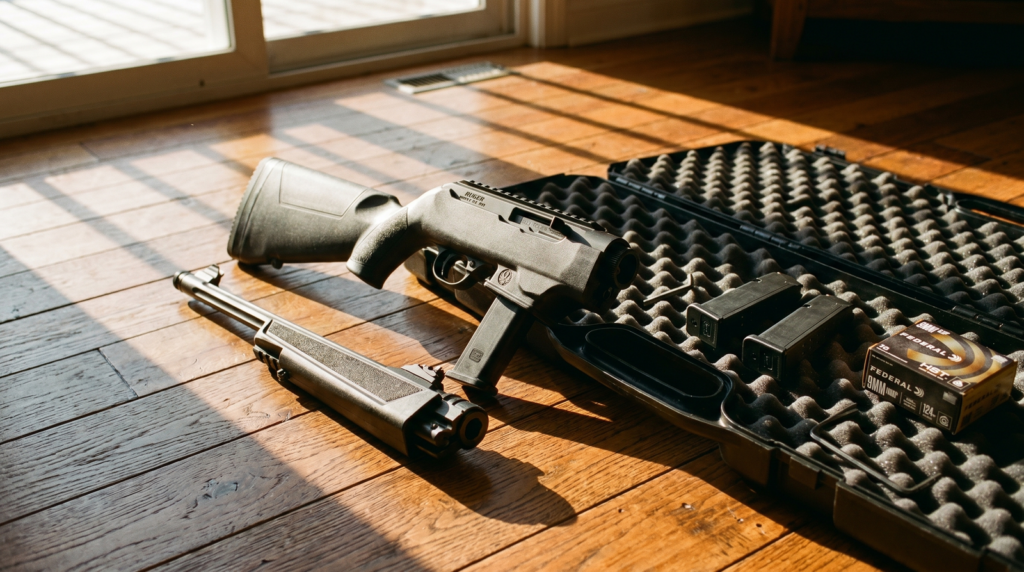
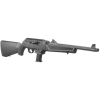
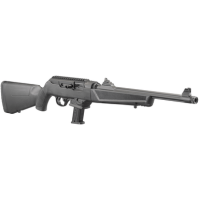
- Recommended Platform: Ruger PC Carbine takedown (~$640-665 street)
- Premium Alternative: Sig MPX 9mm PCC (~$1,799-2,100)
- Budget Alternative: Henry Homesteader 9mm or KelTec SUB 2000 Gen 3
- Recommended Ammo: Federal HST 9mm 124gr JHP (P9HST1) or Hornady Critical Defense 9mm 115gr FTX
- Capacity: 17+1 (Glock magazine compatibility on Ruger PC)
- Barrel: 16″
Pros
- Long-gun stability lets you make accurate hits under stress that would miss with a handgun
- 9mm JHP overpenetration profile through drywall is similar to 9mm pistol, manageable risk
- Higher velocity from a 16-inch barrel (vs 4-inch pistol) helps JHP expand more reliably
Cons
- Longer overall length than a handgun means more practice for indoor maneuvering
- 9mm does not have the stopping power of rifle calibers
- KelTec SUB 2000 has documented reliability issues, pick Ruger PC Carbine or Henry Homesteader
A 9mm pistol-caliber carbine is a clever answer to the overpenetration problem. You get better accuracy and stability than a handgun thanks to long-gun ergonomics, while keeping the 9mm JHP’s manageable wall-penetration profile. The higher velocity from a 16-inch barrel (versus a 4-inch pistol barrel) helps JHP bullets expand more reliably, which means they shed energy faster and penetrate fewer walls after expansion.
Federal HST 9mm 124gr from a 16-inch Ruger PC Carbine barrel runs around 1,350 fps. That is meaningfully hotter than pistol velocity. The expansion is excellent, the terminal performance is devastating, and the post-expansion penetration through drywall is roughly 2-4 wall sections before stopping, comparable to 9mm from a pistol. You get carbine benefits without adding overpenetration risk.
The Ruger PC Carbine is our platform recommendation at $640-665 street. It is significantly more reliable than the KelTec SUB 2000 (which has a documented mixed reliability history), accepts Glock or Ruger-pattern magazines depending on the model, and the takedown design makes cleaning and storage easy. For the money, it is excellent. The Sig MPX is the premium pick at $1,799-2,100 if you want full mil-spec quality. Henry’s newer Homesteader at around $1,000 is a third option with a more traditional rifle aesthetic.
Best For: Apartment dwellers who want long-gun accuracy with pistol-caliber overpenetration risk. Anyone who already runs 9mm pistols and wants a compatible long gun for the bedside or closet. Recoil-sensitive shooters who can’t manage a 12-gauge shotgun.
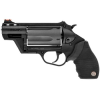
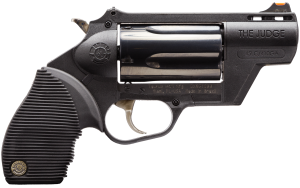
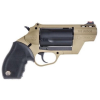
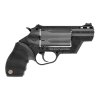
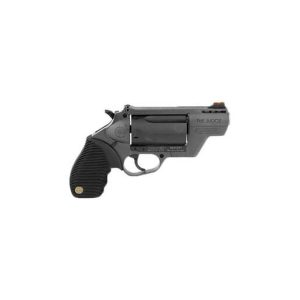
5. .410 Revolver (Taurus Judge), Apartment Close-Quarters Defense
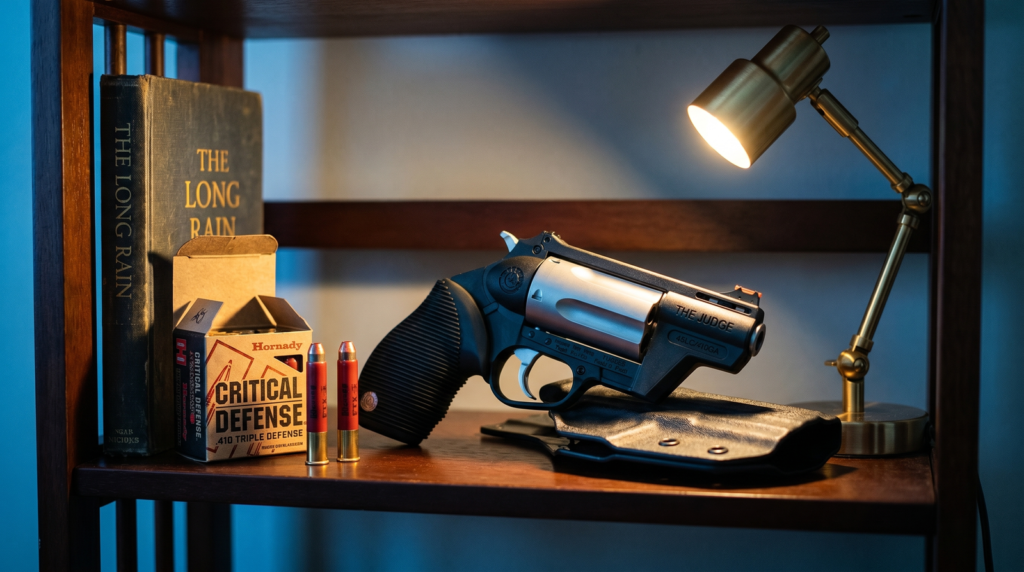
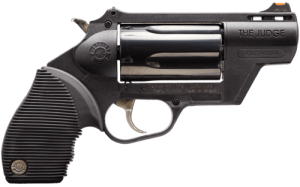
- Recommended Platform: Taurus Judge Public Defender Polymer 2″ (~$396-500 street)
- Premium Alternative: S&W Governor (~$750-900)
- Recommended Ammo: Hornady Critical Defense .410 Triple Defense (FTX slug + two round balls), plus .45 LC backup load
- Capacity: 5 rounds
- Barrel: 2-3″
Pros
- .410 shot loads disperse energy faster than any solid bullet option through drywall
- Mix-load capability, lead with .410 for first shot at close range, follow with .45 LC for stopping power
- Simple revolver manual of arms, no slide manipulation under stress
Cons
- Stopping power is the lowest of any pistol on this list
- Short barrel limits shot velocity and pattern at any meaningful distance
- Heavy double-action trigger requires practice
The .410 bore shotshell from a Judge has a genuinely interesting overpenetration profile. Small shot pellets and the Hornady Critical Defense Triple Defense load (FTX slug plus two round balls) lose energy through drywall barriers quickly. ShootingTheBull410’s gel work on .410 defensive loads shows the Triple Defense slug penetrating 10.5-12 inches in calibrated gel, which is at the FBI minimum threshold. The two round balls dump energy faster than the slug and are the apartment-safer projectiles in the load.
The tradeoff is stopping power. A .410 shell carries a thin payload, especially from the 2-inch barrel of a Judge Public Defender. At 5-10 feet, the Triple Defense load has real effect. At 15-20 feet, the pattern opens up and energy disperses. This is a close-quarters tool, and “close quarters” means within a room, not across a room.
The smart play with a Judge for HD is to lead with .410 shotshells in the first chambers for the close-range opening shot, then follow with .45 Colt rounds in chambers 3-5 for stopping power if the threat continues. The .45 Colt penetrates more walls than .410 but is still significantly better than centerfire rifle. Pick a priority, if minimum overpenetration is paramount, stay on .410. If stopping the threat is paramount, transition to .45 LC.
One honest caveat: most defensive firearm instructors do not recommend the Judge as a primary home defense gun. It is a specialty tool for a specialty environment. If you live in a top-floor city apartment with thin shared walls and a strong personal preference for revolvers, the Judge has a defensible role. For most homes, picks 1 through 4 and 7 will serve you better.
Best For: Apartment dwellers in dense urban housing where minimum overpenetration outranks all other concerns. Revolver-only shooters who want a multi-purpose .45 LC / .410 platform. Close-quarters defensive scenarios within a single room.
6. 20 Gauge with #3 Buckshot, Balanced Shotgun Option
- Recommended Platform: Mossberg 500 Bantam Cruiser 20ga (~$400-450 street)
- Alternative: Mossberg Maverick 88 20ga or Winchester SXP 20ga
- Recommended Ammo: Federal Power-Shok 20ga #3 Buckshot (F203 3B)
- Capacity: 5+1 to 7+1 depending on configuration
- Barrel: 18.5-20″
Pros
- Better overpenetration profile than 12 gauge 00 buck while keeping meaningful close-range terminal performance
- Significantly less recoil than 12 gauge, faster follow-up shots, easier for smaller-framed shooters
- Mossberg 500 Bantam Cruiser ships in short-LOP configuration ideal for hallway maneuvering
Cons
- Defensive ammo selection is thinner than 12 gauge
- Still overpenetrates 1-2 drywall sections, not apartment-safe
- Limited platform options compared to 12 gauge
20 gauge with #3 buckshot is the thoughtful compromise for shotgun users who want better than 12ga 00 buckshot wall penetration but more than .380 ACP stopping power. #3 buck pellets are 0.25 inches in diameter, between 12 gauge 00 (0.33 inches) and 12 gauge #4 (0.24 inches). Federal Power-Shok’s 20 gauge #3 load (F203 3B) puts 20 of these pellets in each shell. At room distances, that’s substantial.
Smaller pellets decelerate faster through drywall than larger shot. After one interior wall section, most #3 buck pellets have lost 30-40% of their energy. After two sections, they’re at marginal energy levels. Compare to 12 gauge 00 buck pellets, which retain dangerous energy through four or five wall sections in Box O’ Truth’s testing. For a single-family home with sleeping family members in adjacent rooms, that difference matters.
Pair it with a Mossberg 500 Bantam Cruiser 20 gauge for a lighter, more maneuverable platform than 12 gauge with better recoil management. The short LOP is genuinely useful for hallway and doorway clearing. The Federal Power-Shok 20 gauge #3 load patterns tightly at close range and disperses at longer distance, appropriate for indoor distances.
Best For: Shotgun users who want a better overpenetration profile than 12 gauge while keeping shotgun stopping power. Smaller-framed shooters who benefit from reduced recoil. Defenders in single-family homes who want shotgun authority without the wall-penetration penalty of 00 buck.

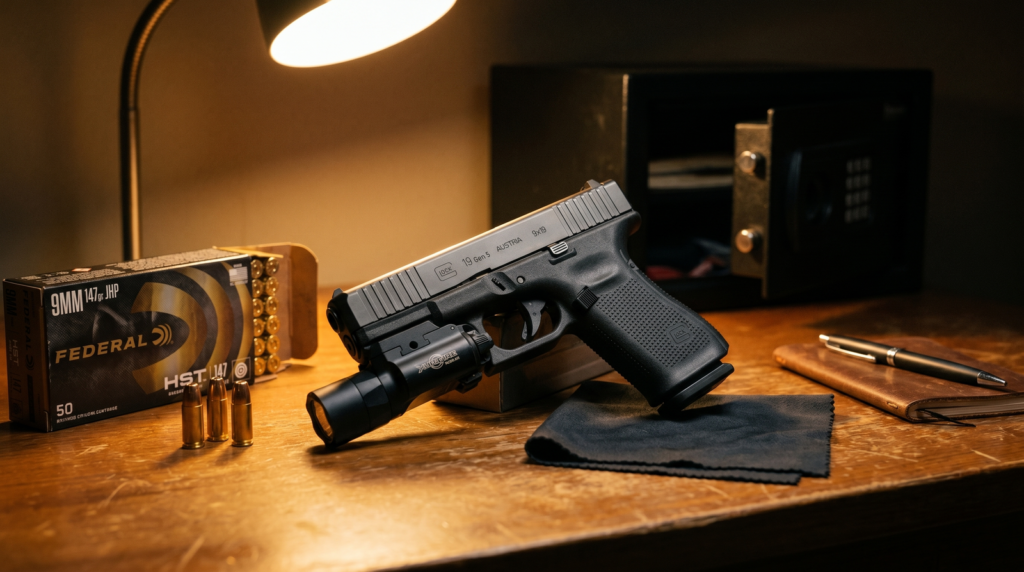
7. 9mm Handgun with 147gr Subsonic JHP: Best Overall Balance
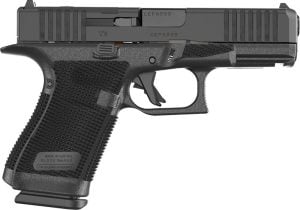
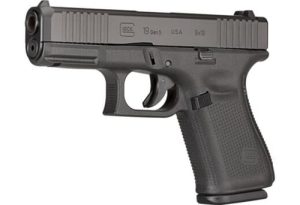
- Recommended Platform: Glock 19 Gen 6 (~$449-485 street)
- Alternatives: S&W M&P 9 M2.0, Sig Sauer P320, Walther PDP, Sig P365
- Recommended Ammo: Federal HST 9mm 147gr subsonic JHP, Winchester PDX1 9mm 147gr, Sig V-Crown 124gr
- Capacity: 15+1 (G19) to 17+1 (full-size)
- Barrel: 4-4.5″
Pros
- Best overall balance of stopping power, capacity, and manageable wall penetration for most homes
- 147gr subsonic loads expand early and penetrate fewer walls than lighter 115gr or 124gr loads
- Massive ammunition selection lets you optimize for overpenetration specifically
Cons
- More wall penetration than .380, not the right choice for dense apartment buildings
- Requires specifically selecting low-penetration JHP loads, 9mm FMJ is dangerous for HD
- Ammo discipline is non-negotiable, never use range ammo as defensive ammo
9mm with the right ammunition is probably the best overall home defense answer for most people, and ammo selection is what makes the overpenetration story work in your favor. The key insight: heavier, slower 147gr subsonic 9mm loads expand earlier and decelerate faster through barriers than lighter, faster 115gr or 124gr loads. Federal HST 147gr is the most-recommended 9mm HD load among defensive firearms instructors and IWBA-aligned trainers for exactly this reason.
FBI Heavy Clothing Protocol testing shows 147gr HST penetrating approximately 14 inches in bare ballistic gel, within the FBI’s 12-18 inch standard for reliable wound channel depth. After expansion to approximately 0.70 inches, the 147gr round sheds energy rapidly through drywall sections. In Pew Pew Tactical’s controlled testing, expanded 147gr 9mm rounds drove through the first wall plus gel and stopped at the rear wall structure. That’s not zero risk, but it’s meaningfully better than FMJ and better than most lighter 9mm loads.
Per the 2014 FBI 9mm Justification, modern bonded JHP 9mm equals .40 S&W and .45 ACP in terminal performance with superior capacity, controllability, and lower training cost. For home defense, that translates to: 9mm 147gr HST or comparable, in a quality service pistol, with deliberate practice. Our 9mm pistol coverage and platform reviews cover specifics.
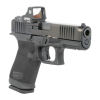
The Glock 19 Gen 6 is the platform recommendation. Widely used, extensively tested, 15+1 capacity, and a massive aftermarket for weapon lights and accessories. The new Gen 6 brings updated RTF-6 hexagonal grip texture and improved ergonomics over the Gen 5 (which is still in production and still a defensible choice if you find a deal). Load it with Federal HST 147gr, keep 15 rounds in the magazine plus one in the chamber. Verify your chosen load functions reliably in your specific pistol before depending on it.
Best For: The majority of home defenders who want the best overall package of stopping power, capacity, and manageable overpenetration risk. Anyone in a single-family house where some wall penetration is acceptable. Defenders who want a do-everything platform that also serves as a daily concealed carry.
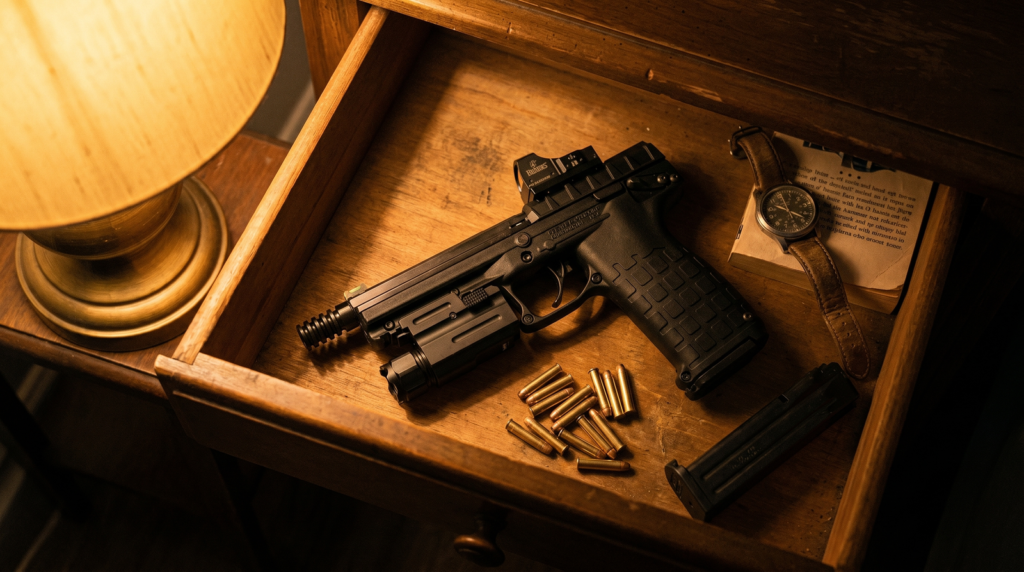
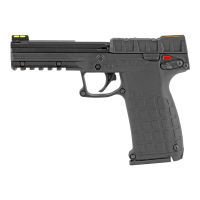
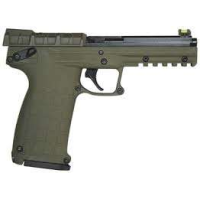
8. .22 Magnum (Last Resort Only), Ultra-Low Penetration
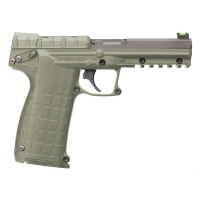
- Recommended Platform: Kel-Tec PMR-30 (30+1 capacity) or Ruger LCRx .22 WMR (SKU 5439, 1.87″ barrel)
- Recommended Ammo: CCI Maxi-Mag .22 WMR 40gr JHP (CCI 0024) or Hornady Critical Defense .22 WMR 45gr FTX
- Capacity: 30+1 (PMR-30) / 5 rounds (LCRx)
- Barrel: 1.87-4.3″
Pros
- Extremely low overpenetration through drywall, .22 WMR JHP typically stops in 1 wall section
- 30+1 capacity on the PMR-30 means controlled aimed fire over many rounds is possible
- Very mild recoil, manageable for any shooter, including those who can’t run .380 reliably
Cons
- Not a reliable primary defensive caliber, inadequate stopping power for determined attackers
- Rimfire reliability is statistically lower than centerfire
- Do not pick this if you have any centerfire option you can shoot competently
The .22 Magnum slot exists for one specific use case: the apartment with extremely thin shared walls and a shooter with severe recoil sensitivity who cannot reliably operate even a .380 ACP. In that narrow window, .22 WMR is better than nothing and meaningfully better than a non-defensive .22 LR. The Kel-Tec PMR-30’s 30-round capacity means a controlled, deliberate string of fire delivers more total energy than five rounds of .380.
The wall-penetration profile is genuinely excellent. .22 WMR hollow-points through drywall essentially stop after a single wall section. The CCI Maxi-Mag 40gr JHP (CCI 0024) and Hornady Critical Defense .22 WMR 45gr FTX are the two loads to consider. Both have published gel data and are widely available. There is no Sig V-Crown .22 WMR, that load doesn’t exist despite what some older articles claim.
Now the honest part. .22 Magnum is the last resort on this list. Not the first choice. Not the second choice. The last resort. If you can shoot a .380 ACP or a 9mm competently, pick those. The stopping power gap between .22 WMR and .380 ACP is meaningful, and the gap between .22 WMR and 9mm is significant. A determined attacker on adrenaline may not stop from .22 WMR hits in time to protect you and your family.
One alternative worth mentioning: the Ruger LCRx in .22 WMR (SKU 5439, 1.87″ barrel, not 5435 which is .22 LR). It’s a 5-shot revolver with rimfire reliability concerns but a simpler manual of arms than the PMR-30’s semi-auto operation. Some shooters prefer the revolver approach for absolute simplicity at the cost of capacity.
Best For: Strict last-resort only. Extremely recoil-sensitive shooters in dense urban housing with no other reliable option. As a supplementary or backup gun alongside a centerfire primary.
What NOT to Use for Home Defense
Equally important as picking the right load is avoiding the wrong ones. Here are the categories that fail one or both halves of the home defense equation.
- FMJ in any caliber. Full metal jacket bullets do not expand. They drive deep into anything they hit and keep going. 9mm FMJ, .45 ACP FMJ, and 5.56 NATO M193 ball all over-penetrate walls dramatically. Never use FMJ for home defense.
- 12 gauge 00 buckshot in tight quarters. 00 buck is excellent shotgun defensive ammo for engagements at 15-25 yards where its energy retention matters. For inside-the-house distances with neighbors on the other side of walls, #4 buck is the better pick.
- Birdshot (#7.5 or #9). Under-penetrates threats. Massei Ayoob and Dr. Roberts have both written extensively on why birdshot is a poor stopping load even at close range, pellets don’t reach vital organs reliably. Birdshot looks “wall-safer” until you remember the goal is stopping the threat.
- .44 Magnum and magnum hunting loads. Built for deer-class game at 50-100 yards. Inside a house they over-penetrate everything.
- Range / training JHP without published expansion data. Discount-brand JHP from manufacturers without lab or field testing is a coin flip. Use Federal HST, Speer Gold Dot, Hornady Critical Defense or Critical Duty, Sig V-Crown, or Winchester Ranger-T. Skip the unknowns.
How to Choose: Use Case Map
The right pick depends as much on your living situation as on personal preference. Here’s how the 8 picks above map to common home layouts.
- Multi-unit apartment. Shared walls, neighbors directly adjacent. Pick 3 (.380 ACP Shield EZ), Pick 5 (Taurus Judge with .410 Triple Defense), or Pick 8 (.22 WMR PMR-30 as absolute last resort). Pick 4 (Ruger PC Carbine in 9mm) is acceptable if you want a long gun.
- Detached single-family home. No adjacent neighbors, kids’ bedrooms above or beside you. Pick 1 (AR-15 with 64gr SP), Pick 2 (12ga with #4 buck), or Pick 7 (Glock 19 with 147gr HST). Pick 6 (20ga #3 buck) splits the difference for shotgun-preferring shooters.
- Multi-story house. Defender on upper floor with potential threat below. Pick 7 (9mm with 147gr HST) or Pick 4 (9mm PCC). The downward angle reduces overpenetration risk somewhat but doesn’t eliminate it, heavier-bullet, slower loads remain the smart pick.
- Rural property. No neighbors within 200 yards. Pick 1 (AR-15) is your default. Overpenetration is essentially non-issue. Optimize for terminal performance.
- Condo or townhouse. One shared wall. Pick 3 (.380), Pick 4 (PCC), or Pick 6 (20ga #3 buck). The shared wall faces the public stairwell or another condo’s living room, same calculus as apartment for that direction; freedom on the other walls.
How We Evaluated These Picks
This guide is editorial synthesis of published primary research, not first-person ballistic testing. The drywall penetration data, gel test results, and load recommendations cited here come from:
- Pew Pew Tactical’s overpenetration study (Eric Hung, USMC veteran), 8,500-word controlled test of 5.56, 9mm, .45 ACP, and 12 gauge through FBI-spec gel plus simulated interior and exterior walls
- Lucky Gunner Labs handgun gel database, published 12-shot averages for major defensive loads against bare gel and 4-layer denim
- The Box O’ Truth #14, Old Painless’s foundational drywall layer-count testing across major calibers
- 2014 FBI 9mm Justification white paper, the FBI’s modern position on 9mm vs .40 vs .45 terminal performance
- Dr. Gary K. Roberts (DocGKR), published posts on Pistol-Forum.com documenting his approved defensive ammunition list
- IWBA (International Wound Ballistics Association), methodology foundation for civilian gel testing
- American Rifleman / NRA, periodic AR-15 home defense penetration tests
Where multiple sources gave conflicting results, we noted the conflict and erred toward the more conservative interpretation. Pricing is current as of May 2026 from manufacturer MSRPs and street-price aggregation across Brownells, Palmetto State Armory, Bud’s Gun Shop, Sportsman’s Warehouse, and GunBroker.
Real-World Overpenetration Matters More Than Most Think
No federal database tracks home-defense overpenetration incidents specifically, but the Gun Violence Archive and ammo.com’s Stray Bullet Death Statistics tracker recorded 71 verified stray-bullet deaths in 2024 and 2025 combined. Most of those incidents are negligent discharge or crossfire rather than HD overpenetration specifically, but the news cycle regularly documents cases where a defensive shot or a celebratory round passes through a wall and strikes a family member or neighbor.
The civil liability picture compounds this. Negligent overpenetration that injures a third party is generally not covered by self-defense affirmative defenses, castle doctrine protects shooters against criminal charges for stopping a threat, not against civil suits for foreseeable collateral harm. USCCA, Right to Bear, and similar memberships address this with self-defense liability coverage, but the underlying message is consistent: ammunition that minimizes overpenetration also minimizes your downstream legal exposure if a bad outcome happens.
Who Should NOT Buy Any of These (At Least Not Yet)
Home defense firearms are tools that demand specific competencies before they make you safer. Here is who should hold off.
- Anyone with no formal training in defensive shooting. A defensive firearm without training is a hazard to you and your family. Take a Defensive Pistol 1 course from a USCCA, NRA, or Rangemaster-affiliated instructor before bringing a defensive gun home. Many ranges offer $150 day-courses.
- Anyone without secure storage for the firearm. A defensive gun must be accessible to you in seconds and inaccessible to children, guests, intruders, and stolen-gun thieves. Quick-access safes (GunVault, Hornady Rapid Safe) solve this for under $300. Without one, the gun is more likely to cause harm than prevent it.
- Anyone who will not practice regularly. A defensive firearm purchased and never trained with is a placebo. Plan to shoot at least 100 rounds per month minimum with your defensive load (or a comparable training equivalent) for the first six months, then 50 rounds per month minimum thereafter.
- Anyone in a household where a member with suicidal ideation or unmanaged mental illness has access. The CDC’s suicide-by-firearm statistics are consistent and clear: easy firearm access dramatically increases completion rates. If this applies to your household, secure storage that the at-risk person genuinely cannot access, or off-site storage, is non-negotiable.
- Anyone in a state where the recommended platform is illegal. Standard-capacity magazines (Glock 19 17-rounders, AR-15 30-rounders) are restricted in CA, NY, NJ, CT, MA, HI, and several others. Some platforms are categorically banned. Check your state’s restrictions before purchase.
Bottom Line: Which Pick Is Right for You?
For most home defenders in detached single-family homes, the Glock 19 Gen 6 with Federal HST 147gr (Pick 7) is the right answer. It delivers the best balance of stopping power, capacity, and manageable wall penetration. It doubles as a daily concealed carry. Ammunition is everywhere. Training options are everywhere. There is a reason it is the most-recommended home defense pistol among defensive firearms instructors.
For apartment dwellers and condo residents with shared walls, the S&W M&P 380 Shield EZ with Federal HST .380 99gr (Pick 3) is the best honest compromise. The terminal performance gap to 9mm is real but defensible at indoor distances; the wall penetration improvement is significant.
For shotgun preferred shooters in detached homes, the Mossberg 500 Tactical with Federal Premium 12 gauge #4 buckshot (Pick 2) is the proven combination. Move to 20 gauge #3 buck (Pick 6) for smaller-framed shooters or if you specifically want better-than-12ga wall penetration without going to handguns.
For rural defenders or anyone who wants rifle capability, the Ruger AR-556 with Federal Power-Shok 64gr SP (Pick 1) is the highest-performance choice. Soft points fragment through drywall faster than most pistol calibers and deliver superior terminal performance on threat.
Whatever you pick, train with it. The best home defense gun in the world is useless if you can’t operate it under stress. Run dry-fire drills weekly, live-fire monthly, and rehearse your home’s layout with the chosen platform until the manual of arms is automatic.
A Note on Legal Considerations
This guide is editorial information drawn from published research, not legal advice. Castle doctrine, stand-your-ground laws, and duty-to-retreat requirements vary substantially by state. The legality of specific platforms (semi-auto rifles, standard-capacity magazines, .410/.45 LC combinations, suppressors) also varies. Before purchasing or deploying a defensive firearm, verify with a qualified attorney in your jurisdiction that your planned use is legal and that you understand your post-incident obligations (911 call, statement, attorney contact). Self-defense liability insurance through USCCA, Right to Bear, or US LawShield is a reasonable consideration for anyone keeping a defensive firearm.
Related Guides
- 10 Best Shotguns for Home Defense (2026)
- Best Home Defense Shotgun Under $500 (2026)
- Best Shotgun Ammo for Home Defense: Buckshot, Slugs & More
- Mossberg 500 vs 590: Which Pump Shotgun Should You Buy?
- Best Handguns for Women (2026): 10 Picks That Actually Fit
- Best Pump Action Shotguns
- AR-15 vs Shotgun vs Pistol for Home Defense (2026)
Frequently Asked Questions
What home defense ammo won't go through walls?
No defensive ammo with stopping power is truly "wall-safe", that's a marketing myth. The loads that penetrate the fewest interior walls in published testing are .380 ACP JHP (Federal HST 99gr).410 Hornady Critical Defense Triple Defense from a short-barreled Judge, 12 gauge #4 buckshot (Federal Premium F127 4B), and .22 WMR JHP. All of these still penetrate at least 1-2 sheets of drywall, but they stop earlier than 9mm 124gr JHP, 12 gauge 00 buckshot, or any FMJ load. Pew Pew Tactical's overpenetration study and The Box O' Truth #14 give specific wall-by-wall counts.
Is 5.56 better than 9mm for home defense overpenetration?
Counterintuitively, yes, 5.56 with a soft-point load (Federal Power-Shok 64gr SP or Hornady BLACK HD SBR 75gr InterLock) tumbles and fragments aggressively through drywall and typically stops in 2-3 wall sections. 9mm FMJ penetrates all interior walls without significant energy loss. 9mm 147gr subsonic JHP is roughly equivalent to 5.56 soft point in drywall layer count after expansion. The expert consensus from IWBA and Dr. Gary Roberts is that 5.56 soft points are the right load for AR-15 home defense, not frangibles, frangibles fail the FBI Heavy Clothing Protocol and may not stop a threat reliably.
Can a .380 ACP stop an intruder?
Yes, with the right load and accurate shot placement. Federal HST .380 99gr (P380HST1S) and Speer Gold Dot .380 Short Barrel 90gr both meet the FBI 12-inch penetration minimum in gel testing and expand reliably from compact pistols. The stopping power gap to 9mm is real.380 requires better shot placement and may need follow-up shots more often than 9mm. For apartment dwellers where overpenetration carries higher stakes.380 with quality JHP is the most defensible compromise.
What's the best shotgun load for home defense without overpenetration?
Federal Premium Personal Defense 12 gauge #4 buckshot (F127 4B) with Flite Control wad was the only shotgun load in Pew Pew Tactical's controlled testing that partially stopped within the first drywall sheet after the gel block. 27 pellets of 0.24-inch shot, more pellets than 00 buck but each carries less energy and decelerates faster through barriers. For 20 gauge, Federal Power-Shok #3 buckshot (F203 3B) is the comparable choice. Avoid 00 buckshot in tight quarters, Box O' Truth #14 showed it penetrated all four interior walls at 10-foot spacing.
Is birdshot good for home defense?
No. Birdshot (#7.5, #8, #9) under-penetrates threats. Pellets fail to reach vital organs reliably even at close range. Dr. Gary Roberts and Mas Ayoob have both documented this position extensively. Birdshot looks "wall-safer" until you remember the goal is stopping the threat, not avoiding the wall behind it. #4 buckshot is the smallest pellet size recommended for defensive use, pellets large enough to reach 12+ inches in calibrated gel.
Does frangible 5.56 work for home defense?
The expert consensus (IWBA, Dr. Gary Roberts, NRA American Rifleman 2014) is that frangibles are NOT the right choice for general home defense. Most frangibles fail the FBI Heavy Clothing Protocol, they under-penetrate calibrated gel (sub-12 inches), which means they may not reach vital organs through clothing layers. Frangibles have a legitimate role in indoor steel-target training, refinery and aircraft environments where ricochet off hard surfaces is the dominant risk, but not residential HD. Federal Power-Shok 64gr soft point or Hornady BLACK HD SBR 75gr InterLock are the better picks for AR-15 home defense.
How many walls will a 9mm bullet go through?
Depends heavily on the load. 9mm FMJ penetrates 8-12 interior wall sections without significant energy loss, never use FMJ for home defense. 9mm 124gr Federal HST averages 14-15 inches in bare gel and 1 of 12 sample shots ran past 18 inches in Lucky Gunner Labs testing. 9mm 147gr subsonic HST drove through one interior wall plus the gel block and stopped at the rear wall in Pew Pew Tactical's controlled testing. Hornady Critical Defense 9mm 115gr FTX stopped after the first half-inch drywall sheet post-gel in the same test, the best 9mm wall result Pew Pew recorded.
Is .22 Magnum enough for home defense?
Only as a last resort. .22 WMR (40-45gr JHP) penetrates roughly 1 interior wall section before stopping, one of the best overpenetration profiles on this list. But stopping power is the lowest of any defensive caliber. A determined attacker on adrenaline may not stop from .22 WMR hits in time to protect you. The Kel-Tec PMR-30's 30+1 capacity means many controlled shots can deliver meaningful total energy, but if you can shoot .380 ACP or 9mm competently, pick those instead. .22 Magnum is the absolute floor of defensive utility.
4,659+ Gun & Ammo Deals
Updated daily from 200+ top retailers. Filter by category, caliber, action type, and price.