

The ATN X-Sight 5 is the best digital night vision scope for most hunters, and it is here because the scope this guide used to recommend, the X-Sight 4K Pro, has been discontinued by ATN. If you want the same job done for $500, the Sightmark Wraith 4K does it. If you want the best image money can buy in a digital scope, the AGM Spectrum LRF 4K has an F1.2 lens, an OLED display and a 1,000 meter rangefinder built in.
Below are the ten best night vision devices you can buy today, in three groups: four digital rifle scopes, three digital monoculars and three analog tube units including goggles. Every sensor, range, battery and weight figure is the manufacturer’s own published specification, and there is a chart further down comparing the one number that decides more purchases than any other, and which nobody puts side by side.
Some of the links below are affiliate links, meaning at no additional cost to you, we may earn a commission if you click through and make a purchase.
Table of Contents
How we tested: Every pick here is ranked against our testing methodology. Minimum round counts, accuracy and reliability protocols, the failures that disqualify a gun.
Best Night Vision 2026 at a Glance: Goggles, Scopes and Tubes
Prices are the manufacturer’s MSRP where they publish one, otherwise the current live retail range. Read the battery column, because it is the column that decides which half of this table you belong in.
| Device | Type | Best for | Battery life | Weight | Price |
|---|---|---|---|---|---|
| ATN X-Sight 5 | Digital scope | Overall | 14 hr | n/p | $550 to $1,195 |
| Sightmark Wraith 4K 4-32×40 | Digital scope | Value | 3.6 hr video | 21.6 oz | $599.97 |
| AGM Spectrum LRF 4K | Digital scope | Premium | 11 hr | 2.6 lb | $1,195 |
| AGM Spectrum 4K Mini | Digital scope | Compact | 7.8 hr | 1.0 lb | $845 |
| Bushnell Equinox Z2 6×50 | Digital monocular | Handheld | n/p | n/p | $300 to $420 |
| SiOnyx Aurora Black | Digital monocular | Color at night | 2 hr | 274 g | $699 |
| Bushnell Equinox X650 | Digital monocular | Budget | 6 hr | 13.8 oz | $140 to $200 |
| AGM Wolf-14 NL1 | Analog Gen 2+ | Tube value | 40 hr | 290 g | $1,800 to $2,295 |
| AGM PVS-14 NL1 | Analog Gen 2+ | Analog monocular | 50 hr | 12.4 oz | $2,216 to $2,595 |
| AGM Wolf-7 PRO | Analog goggles | Goggles | 40 hr IR off | 510 g | $2,795 to $2,995 |
| ATN NVG7-2W | Analog goggles | Entry goggles | 50 hr | 1.1 lb | $1,995 to $2,640 |
| ATN PS31-2 BNVD-40 | Dual tube goggles | Depth perception | 60 hr | 1.28 lb | $4,895 to $5,989 |
The cheapest analog unit on that list runs for forty hours on one AA battery. The most expensive digital one runs for eleven and needs charging. That gap is the whole argument between the two technologies, and there is a chart on it below. The last two rows are the ones most people searching for night vision goggles actually want: head-mounted, hands free, and in the PS31 case running two tubes rather than one.
The Best Night Vision Scopes: Digital
A sensor, a processor and a screen in a scope body. They work in daylight as well as darkness, they record video, and they cost a fraction of an image intensifier tube. This is where almost all the real demand sits and it is where this guide now starts. If you are still choosing the rifle underneath, start with our best hog hunting rifle guide.
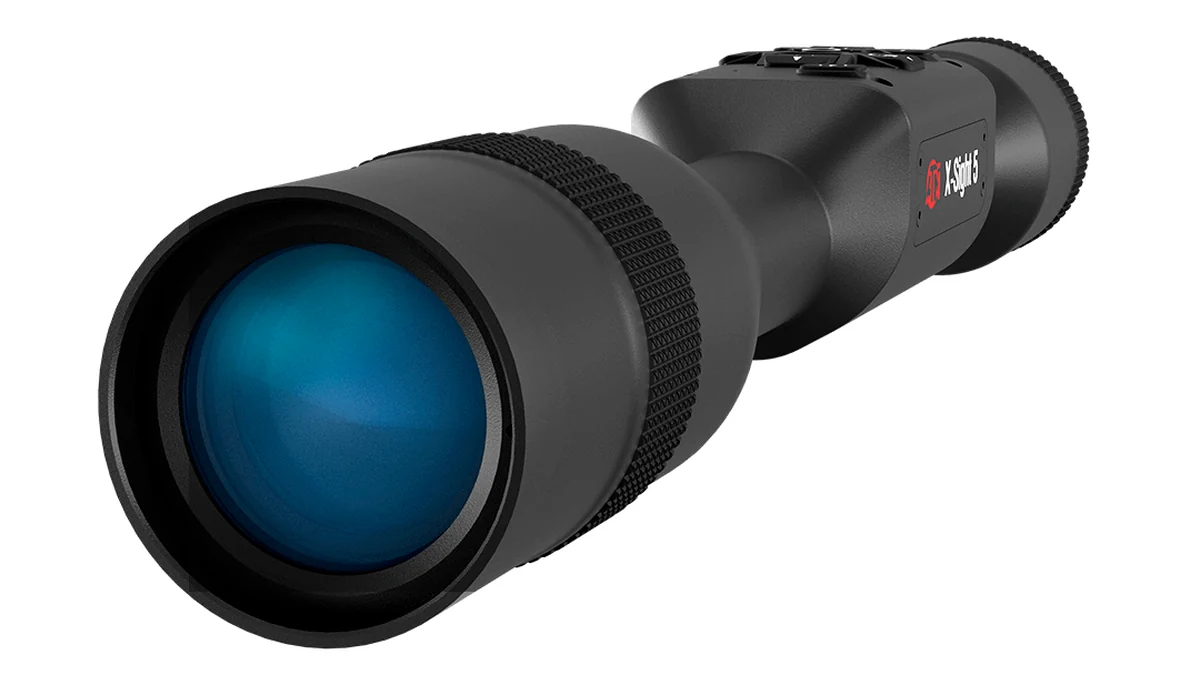
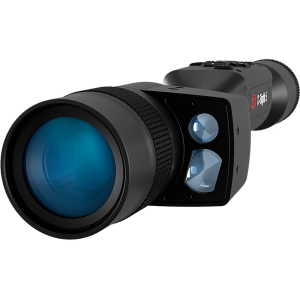
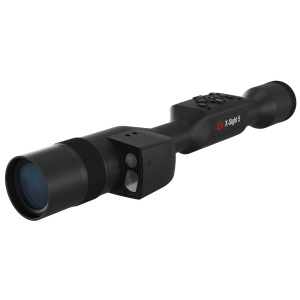
1. ATN X-Sight 5. Best Digital Night Vision Scope Overall
Pros
- 4K+ sensor, 4K recording, 240 fps
- 14 hours, longest digital battery here
- Ships with an IR850 illuminator
- 3-15x and 5-25x, Pro and LRF
- Day scope and night scope in one
Cons
- IR850 glows faint red, visibly
- ATN publishes no weight figure
- Replaces the discontinued X-Sight 4K Pro
The X-Sight 5 is here because the old version of this page recommended the X-Sight 4K Pro, which ATN has discontinued. The successor runs ATN’s Gen V processor and a 4K+ sensor, which ATN puts at roughly a third more resolution than the 4K models it replaces. If you followed the old advice you were shopping for something nobody sells.
What makes it the pick is that it does the whole job. It is a full color day scope and a digital night scope in one body, it records in 4K with slow motion at 120 or 240 fps, and ATN publish 14 hours of battery life, which is the longest of any digital device on this page and roughly four times what the Sightmark below manages. The line runs 3-15x and 5-25x, in Pro and LRF editions, so the same platform covers a hog rifle and a longer-range setup. For daylight work on the same rifle, compare it against our best rifle scopes guide.
Two honest notes. The included illuminator is an IR850, which means 850 nanometers, and 850 nm is not invisible. It shows as a faint red glow at the emitter that people can see and many animals can too. If that matters for what you hunt, budget for a 940 nm illuminator on top. And ATN do not publish a weight figure anywhere we could find, which on a scope you are hanging off a rifle is a strange thing to leave out.
Best for: The hunter who wants one scope on the rifle all year and does not want to charge it every night.
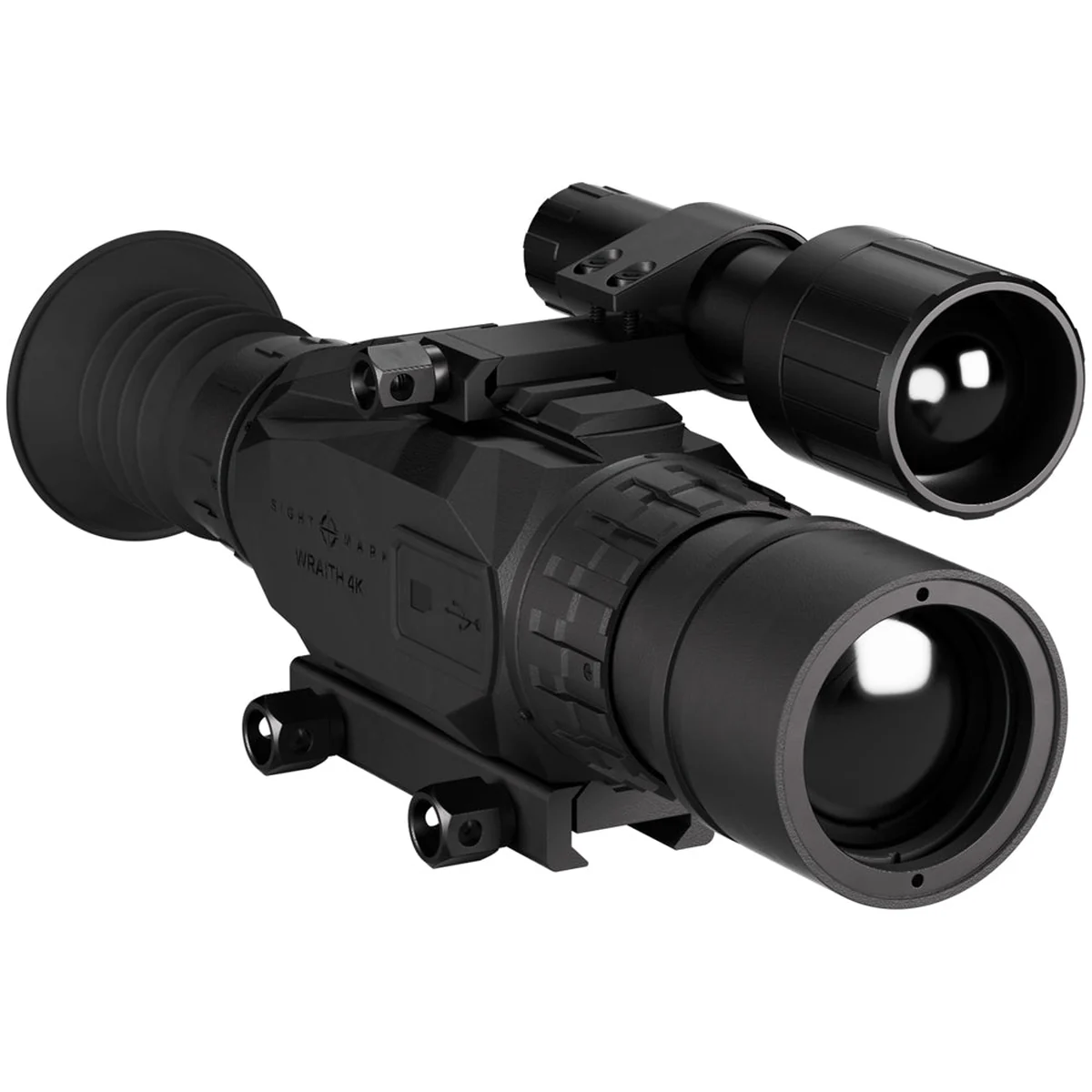
2. Sightmark Wraith 4K 4-32×40. Best Value Night Vision Scope
Pros
- $599.97 MSRP, street around $500
- True 4K 3840×2160 CMOS sensor
- 300 yards published night detection range
- Runs on 4 AA batteries
- 10 reticles, 9 colors, 4K recording
Cons
- 3.6 hours video, shortest scope runtime
- 21.6 oz, and IP55 not waterproof
- Rated to .308, not magnum
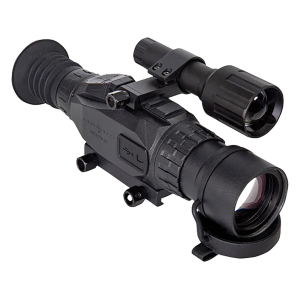
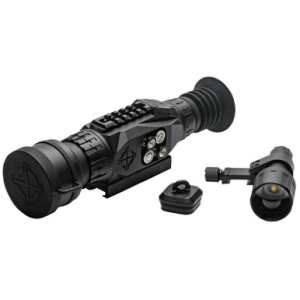
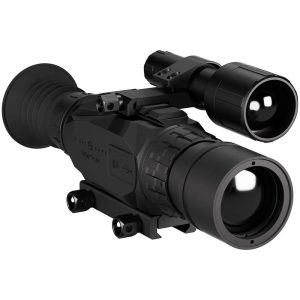
The Wraith 4K is the answer if the budget stops at $600. Sightmark publish a genuine 4K 3840×2160 CMOS sensor, a 1280×720 display, 4-32x magnification and 300 yards of night vision detection range, at an MSRP of $599.97 that streets nearer $500. For hogs inside 150 yards and deer inside 200 under decent IR, that is all the scope most people need.
The AA battery decision is smarter than it looks. Four AAs means no proprietary pack, no charging cable and no dead scope at 2 am because you forgot, just a spare set in the pack for a couple of dollars. It records in 4K, offers ten reticles in nine colors, and swaps between full color daytime and night mode.
Now the number that should decide it. Sightmark publish 3.6 hours in video mode and 4.4 hours in preview mode. That is the shortest run time of any scope on this page, less than a third of the ATN’s 14 hours, and it means a long night needs a second set of AAs in your pocket. It is also IP55, splash resistant rather than submersible, and rated to .308 Winchester rather than magnums. Buy it knowing all three.
Best for: A first night vision scope, or a dedicated hog rifle where the budget went on the rifle.
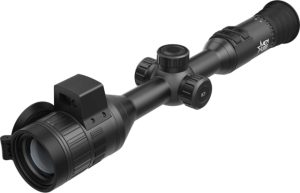
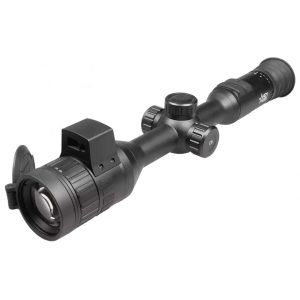
3. AGM Spectrum LRF 4K. Best Premium Digital Scope
Pros
- F1.2 aperture on 50 mm glass
- 0.49 inch 1920×1080 OLED, not LCD
- 1,000 m rangefinder and ballistic calculator
- 11 hours, internal plus swappable 18650
- 64 GB storage, 50 Hz sensor
Cons
- $1,195, the dearest digital unit here
- 2.6 lb, twice the Mini
- 18650 harder to source than AA
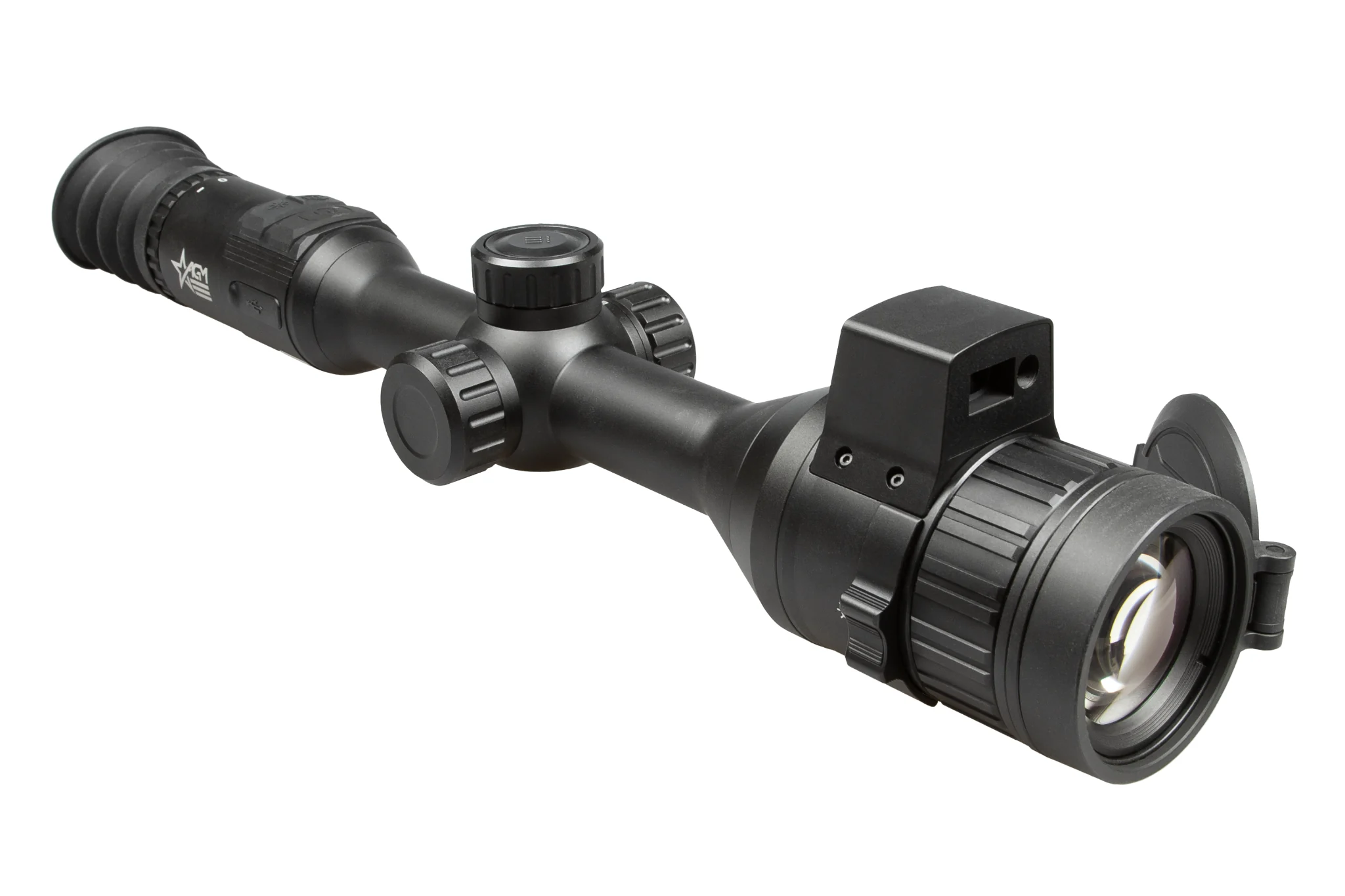
The Spectrum LRF 4K is where a digital scope stops being a compromise. The reason is the front end: a 50 mm lens with an adjustable F1.2 to F2.5 aperture, which is a genuinely fast optic and the single biggest factor in how much light reaches a sensor at night. Behind it sits a 3840×2160 CMOS running at 50 Hz and a 0.49 inch OLED display at 1920×1080, rather than the LCD panels the cheaper units use.
It also folds in the thing you would otherwise carry separately. There is a 1,000 meter laser rangefinder built into the scope, running a 905 nm laser, feeding a ballistic calculator. If you have priced a decent handheld rangefinder recently, that closes a chunk of the price gap on its own. Storage is 64 GB internal, and the magnification runs 3.5x to 28x.
The costs are weight and money. At 2.6 lb it is more than twice the Spectrum 4K Mini below and you will feel it on a carbine. At $1,195 it is twice the Sightmark. What you get for that is the only OLED display and the only integrated rangefinder in this guide, plus 11 hours of battery from a dual system with a swappable 18650. AGM also note that the 4K sensor is more IR-sensitive, which reduces how hard the illuminator has to work.
Best for: Someone who wants one device to range, solve and shoot in the dark, and is not counting ounces.
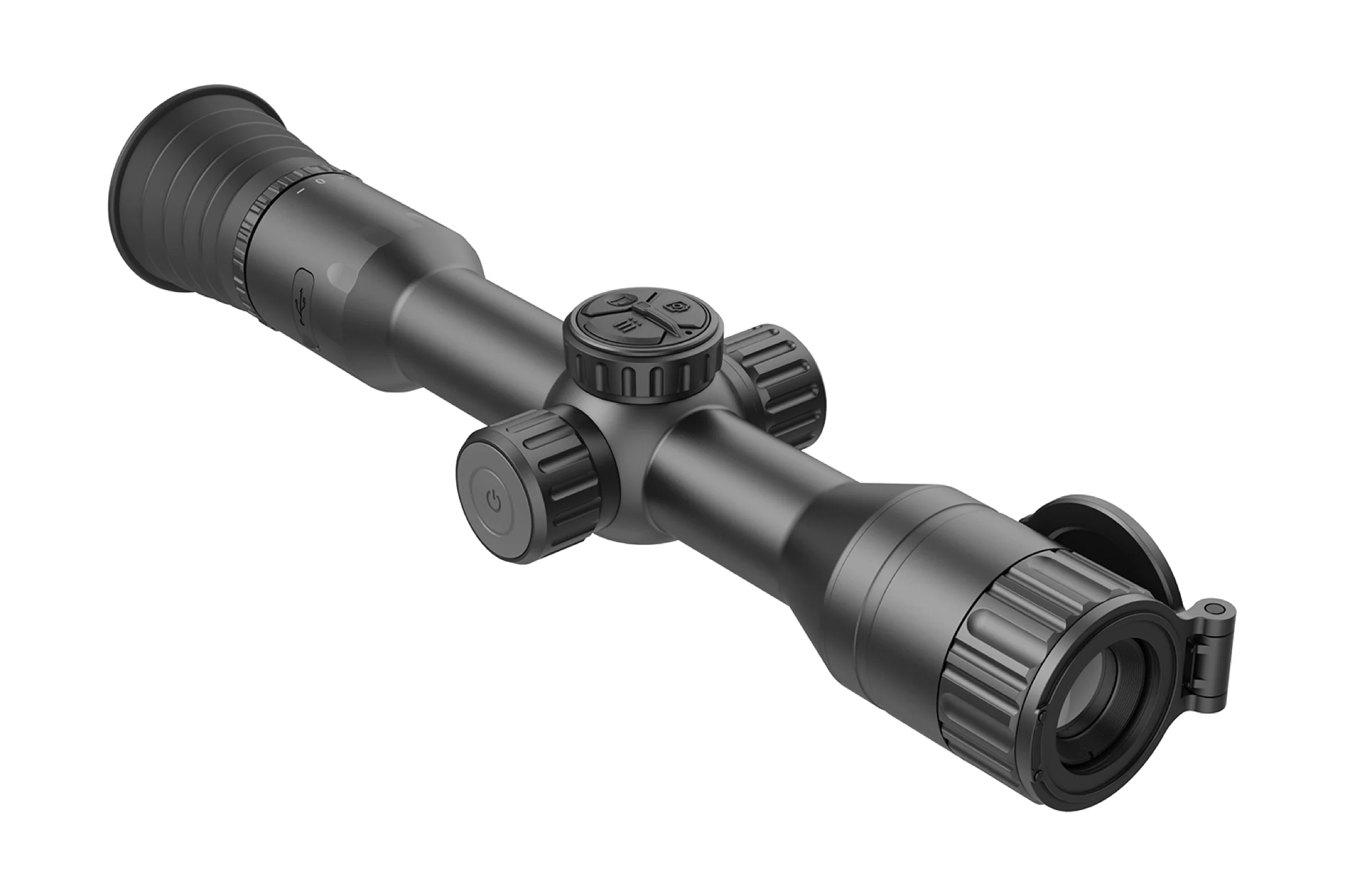
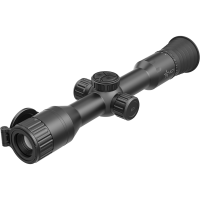
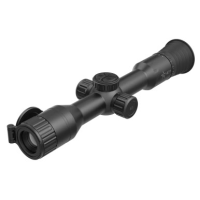
4. AGM Spectrum 4K Mini. Best Compact Digital Scope
Pros
- 1.0 lb, lighter than the Sightmark
- Same 4K sensor and OLED display
- 100 Hz refresh in 1080p mode
- 7.8 hours, internal plus 18650
- 32 GB storage, 3.5-20.5x magnification
Cons
- 40 mm F2.0, a stop slower
- No rangefinder, unlike the LRF
- $845, still $250 over the Sightmark
The Spectrum 4K Mini is the same idea as the LRF above with the weight taken out. AGM publish 1.0 lb against the LRF’s 2.6 lb, which is the difference between a scope that suits a lightweight carbine and one that does not. It keeps the 3840×2160 sensor and the 1920×1080 OLED display, so the image quality story is largely intact.
There is a feature here worth understanding. The display runs 50 Hz in 4K mode and 100 Hz in 1080p, and you can switch. On a moving animal, a hundred refreshes a second at 1080p is a better picture than fifty at 4K, because what you lose in pixels you gain in smoothness. That choice is not offered anywhere else in this guide.
What you give up against the LRF is the front end and the rangefinder. The lens is 40 mm at F2.0, a full stop slower than F1.2, which means measurably less light on the sensor in the last useful minutes of the night. There is no laser rangefinder and no ballistic calculator. Battery is 7.8 hours rather than 11. At $845 MSRP, with street pricing around $795, it is the middle option and it is an honest one.
Best for: A light carbine where the Spectrum LRF’s 2.6 lb would ruin the balance.
The Best Night Vision Monoculars: Digital
Handheld units for scanning, walking in, glassing a field edge or checking what set the dogs off. Nothing here mounts to a rifle, and none of it is a substitute for a scope, but a monocular is how most people actually use night vision.
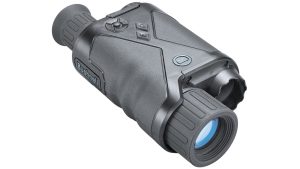
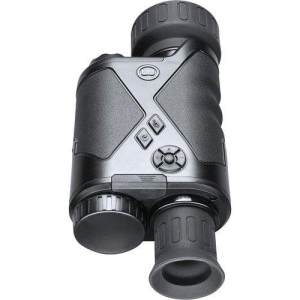
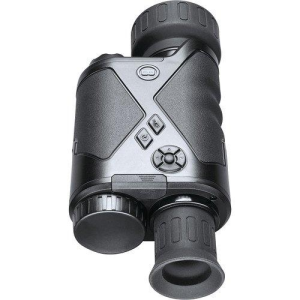
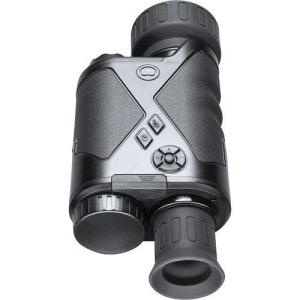
5. Bushnell Equinox Z2 6×50. Best Digital Night Vision Monocular
Pros
- 1,000 ft range on built-in illuminator
- 6x optical, most of any monocular
- Works in full daylight and darkness
- 1080p recording plus phone streaming
- Sold in 3×30, 4.5×40 and 6×50
Cons
- Bushnell publish no battery or weight
- IPX4, splash resistant not submersible
- 850 nm illuminator glows visibly red
The Equinox Z2 is the default handheld and has been for years. Bushnell publish 1,000 feet of viewing range on the built-in illuminator, which is about 305 meters and comfortably more than you can identify anything at anyway. It uses an IR-sensitive CMOS sensor and a micro-LCD rather than an intensifier tube, which is why it costs $300 rather than $2,300 and why it works perfectly well in daylight.
The 6×50 is the one to buy of the three. Six power is the most magnification of any monocular here, the 50 mm objective gathers the most light, and the price difference over the 3×30 is small. It records 1080p video to a card and will stream to a phone, which turns it into a useful tool for showing somebody else what you are looking at rather than just describing it.
Two gaps worth naming. Bushnell do not publish a battery life or a weight on the current product listing, which for a handheld device is exactly the pair of numbers you want before buying. And the illuminator is 850 nm and adjustable, so it is bright and effective but not covert. If you are trying not to announce yourself, that matters. Pair it with a good rangefinder and you have a workable night scanning kit.
Best for: Scanning fields and treelines, and anyone who wants night vision without a four-figure decision.
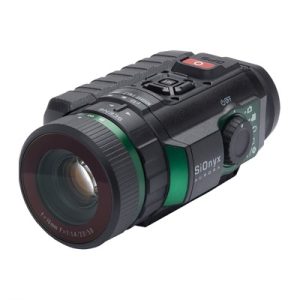
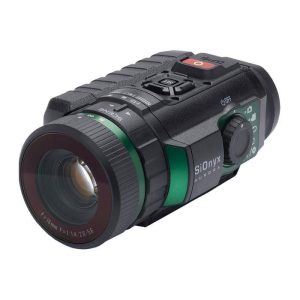
6. SiOnyx Aurora Black. Best Color Night Vision
Pros
- Full color down to 2 millilux
- Sensitive 400 to 1100 nm
- IP67, submersible 3 feet, 30 minutes
- 274 g, the lightest device here
- Rated for a 1 meter drop
Cons
- 2 hours, the shortest runtime here
- No magnification, a scanning tool only
- Bare camera ships with no illuminator
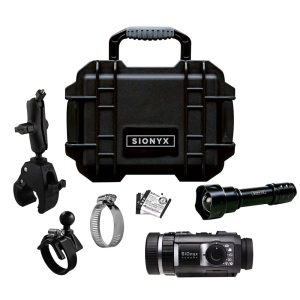
The Aurora Black does something nothing else here does: it shows you color. Every other device on this page renders the world in green, white or monochrome. SiOnyx built a sensor that is sensitive from 400 to 1100 nanometers and produces a full color image down to 2 millilux, which is roughly near moonless starlight. Being able to tell a brown animal from a black one, or read a color, is not a gimmick.
It is also the toughest small device in the guide. IP67 means submersible to three feet for half an hour, it survives a one meter drop, and it works from minus 20 to plus 50 degrees Celsius. At 274 grams it is under ten ounces, less than any other unit here, so it genuinely lives in a jacket pocket.
The limitation is blunt and you should not buy one without knowing it. Battery life is 2 hours. That is a quarter of the AGM Spectrum Mini and one twenty-fifth of the AGM PVS-14 further down. It also has no optical magnification, so it is for scanning and recording rather than identifying something at distance. The bare Aurora Black ships without an illuminator; the Explorer kit adds a 940 nm unit, which is the invisible wavelength and the right choice if you are worried about being seen.
Best for: Short sessions where color and toughness matter more than run time.
7. Bushnell Equinox X650. Best Budget Night Vision
Pros
- From about $140, cheapest here
- 650 ft range on 850 nm
- 6 hours on 3 included AAs
- 13.8 oz, tripod mount and rail
- Records photo and video to microSD
Cons
- 5×32 gathers less light than 6×50
- IPX4, splash resistant only
- 650 ft, a third of the Z2
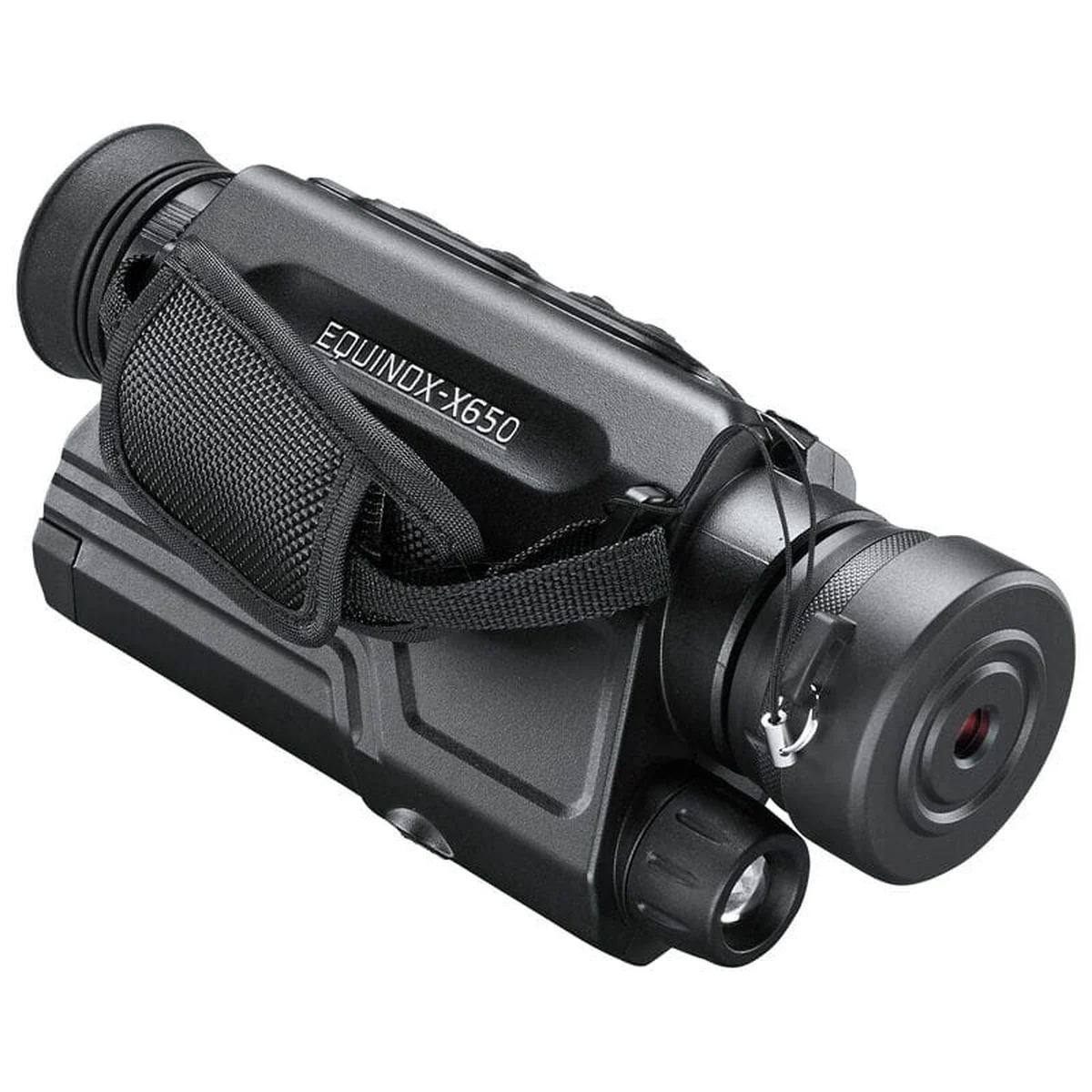
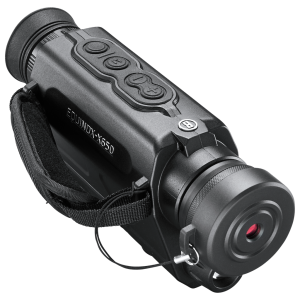
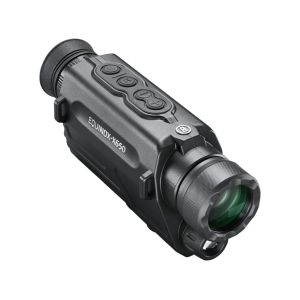
The Equinox X650 is the honest entry point. Bushnell publish 650 feet of viewing range in total darkness from a 1 watt 850 nm diode, on a 5×32 optic, running 6 hours on three AA batteries that come in the box. At street prices from about $140 it costs less than a fifth of the SiOnyx and less than half the Equinox Z2.
Note what the model name is telling you: the 650 in X650 is the viewing range in feet. That is unusually straightforward naming for this industry, and it makes the comparison with its bigger sibling easy. The Z2 6×50 does 1,000 feet. So the step up from X650 to Z2 is roughly a 50 percent gain in range for roughly double the money.
At 13.8 oz it is not the lightest thing here, but it takes a tripod and carries a Picatinny rail for a better illuminator later, which is the sensible upgrade path. It is IPX4, so keep it out of the creek. If night vision is something you are curious about rather than committed to, start here and find out whether you use it before spending four figures.
![Bushnell Equinox X650 Digital Night Vision w/Illuminator [EX650]](https://www.usa-gun-shop.com/wp-content/uploads/ugs-pc-img/6a78ac166133ca97716552f11c457eec.webp)
Best for: Finding out whether you will actually use night vision before committing real money.
The Best Night Vision Goggles and Analog Tubes
Image intensifier tubes. A photocathode, a vacuum, a phosphor screen and no computer anywhere in the chain, which is why they cost four times as much, run for two days on one battery and show you the world with no lag at all. This is also the only part of the market where goggles live.
8. AGM Wolf-14 NL1. Best Value Gen 2+ Tube
Pros
- From $1,800 into a Gen 2+ tube
- 51 to 64 lp/mm, P43 phosphor
- 42 degree field, wider than PVS-14
- 40 hours on one AA
- 290 g, lightest tube here, IP65
Cons
- 25 mm lens against the PVS-14 26
- Not PVS-14 form factor, mounts differ
- 1x only without an afocal lens
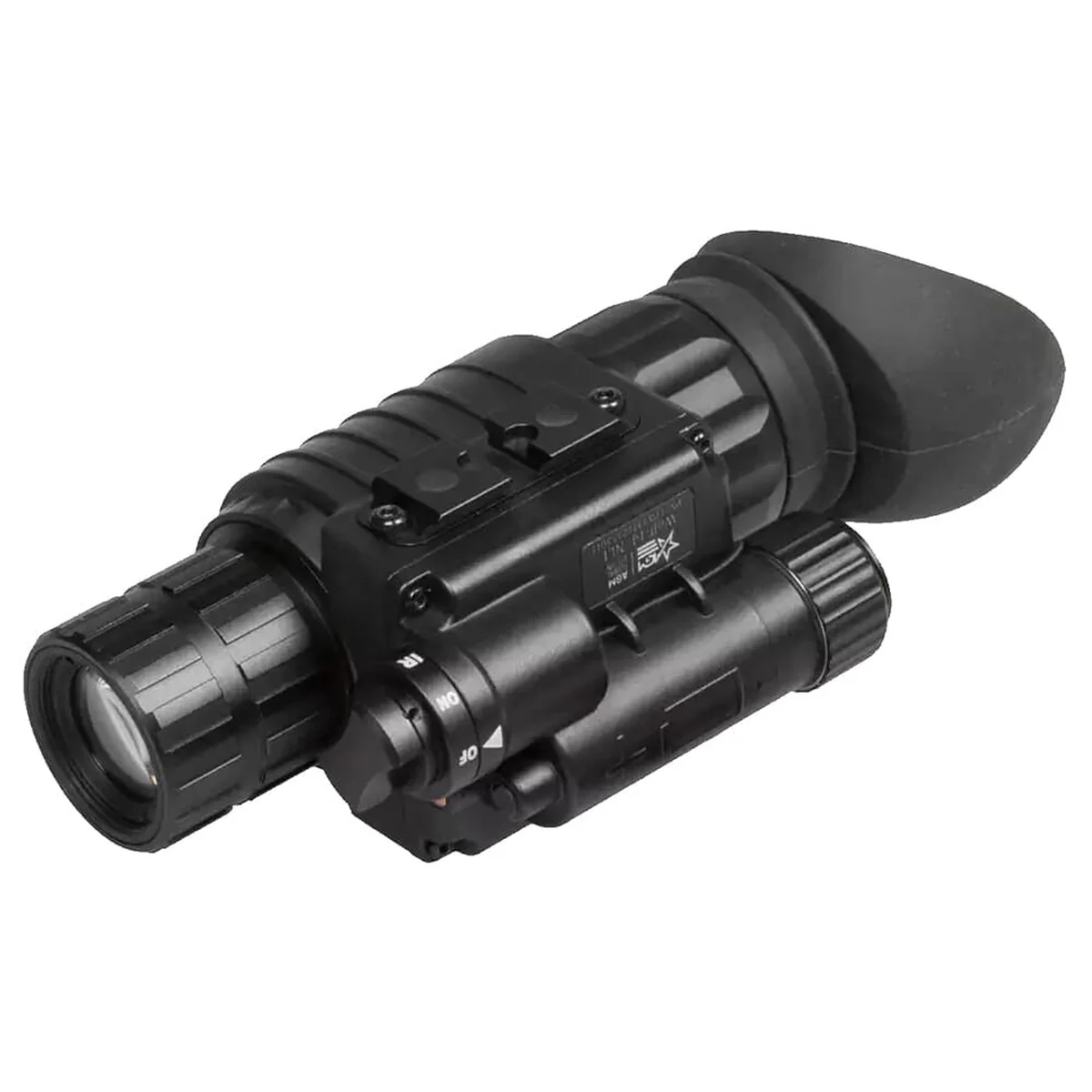
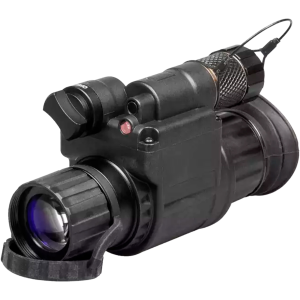
The Wolf-14 is the sensible way into analog. It carries a genuine Gen 2+ Level 1 P43 green phosphor tube rated at 51 to 64 line pairs per millimeter, in a 290 gram body with a 42 degree field of view, and it starts around $1,800. That is roughly $400 to $700 below the PVS-14 below for the same tube generation.
The specification that will surprise anyone coming from digital is the battery. AGM publish 40 hours on a single AA or CR123A. Not four hours. Forty. A tube is a passive vacuum device with no processor and no screen to drive, so the only current draw is the tube itself and the optional illuminator. It focuses from 0.25 meters to infinity, adjusts minus 5 to plus 5 dioptres, is IP65 rated and works from minus 40 to plus 50 Celsius.
What you give up against the PVS-14 is the ecosystem. The lens is 25 mm at F/1.2 rather than 26 mm, a marginal difference, but the bigger issue is that the PVS-14 is a standard form factor with an enormous accessory market behind it and the Wolf-14 is not. If you already own PVS-14 mounts, bridges or lenses, that matters. If you are starting fresh, the Wolf-14 saves you real money for the same tube.

Best for: A first tube device, where saving several hundred dollars matters more than accessory compatibility.
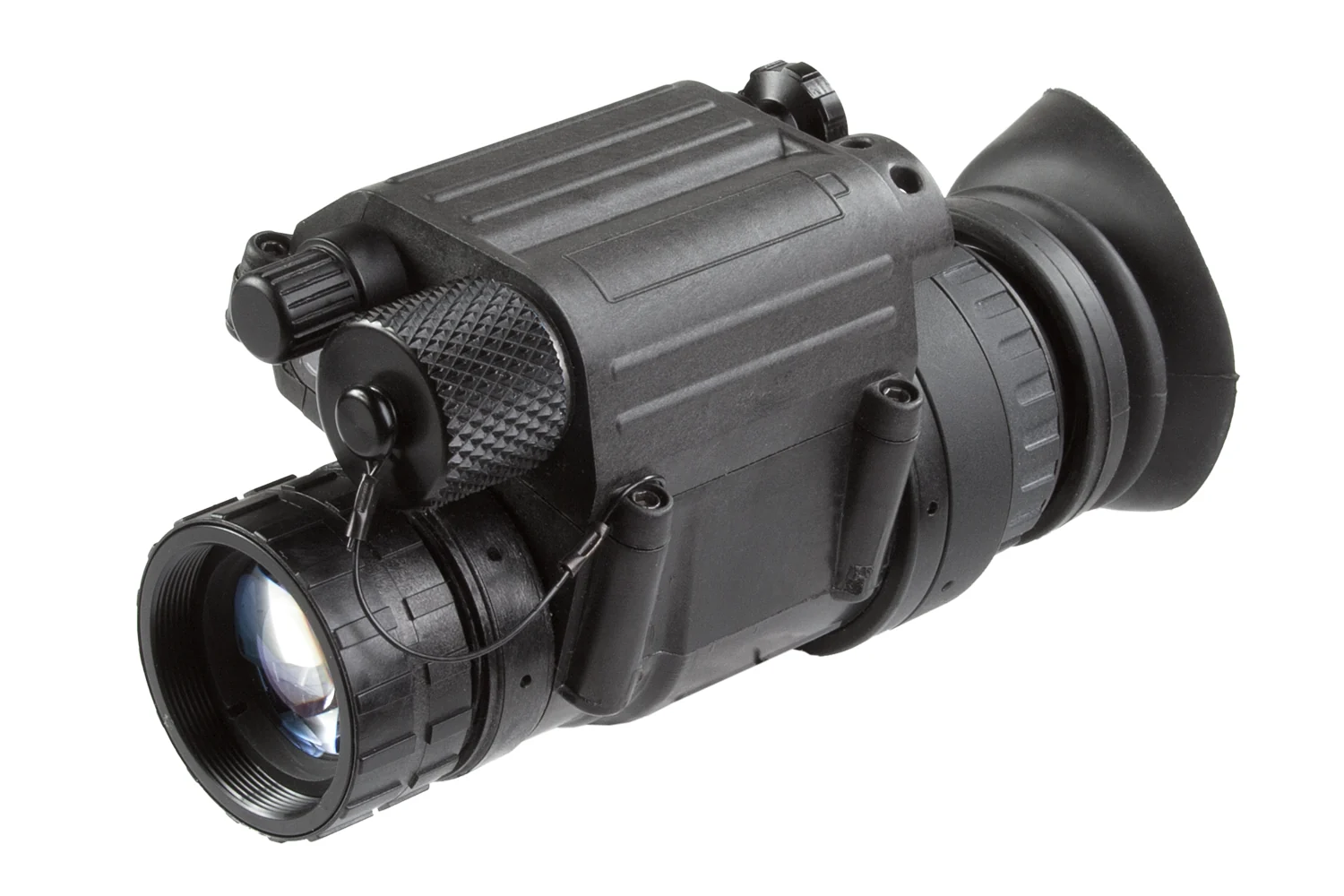
9. AGM PVS-14 NL1. Best Analog Night Vision Monocular
Pros
- 50 hours on one AA battery
- PVS-14 form factor, deepest accessory ecosystem
- Gen 2+ with manual gain control
- 26 mm F/1.2, 40 degrees, 12.4 oz
- Head, helmet, handheld or behind glass
Cons
- $2,216 up, four times a digital
- 1x unless you add an afocal
- AGM sell the NL1 by quote
The PVS-14 is the standard, and standards are worth paying for. AGM’s version runs a Gen 2+ green phosphor tube behind a 26 mm F/1.2 lens with a 40 degree field of view, weighs 12.4 oz, and carries manual gain plus an automatic bright light cutoff that protects the tube if somebody turns a torch on. It sells in NL1, NL2 and NL3 grades, which describe how clean the tube is rather than what generation it is.
Then there is the number that ends most arguments. AGM publish up to 50 hours on a single AA battery. The SiOnyx Aurora in this guide runs for two. The Sightmark Wraith runs for 3.6. You can put one alkaline cell in a PVS-14 at the start of a week of night hunting and not think about power again, and that is a different relationship with a piece of equipment.
The form factor is the other half of the value. A PVS-14 goes on a head mount, on a helmet, in your hand, or behind a day scope such as an LPVO, and every mount, bridge and afocal lens in the night vision world is built for it. That flexibility is why people pay $2,216 and up for a 1x monocular that cannot record video and does not work in daylight. Note that AGM quote the NL1 rather than publishing an MSRP, so the retail price is what the market says it is.
Best for: Anyone who wants one night vision device that will work with every accessory made for the next decade.
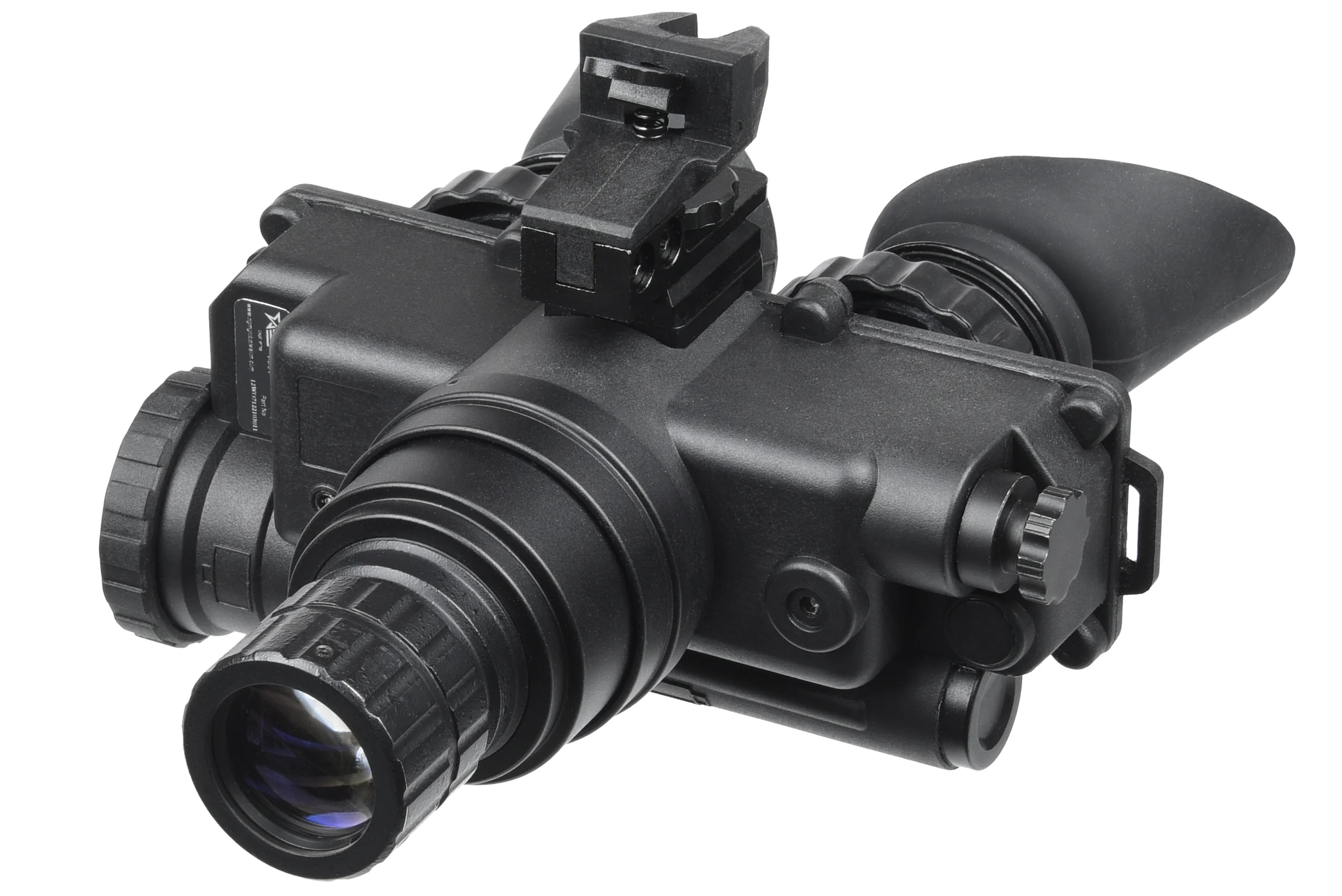
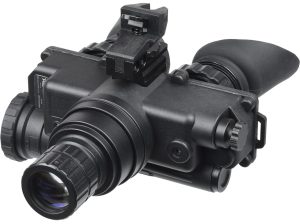
10. AGM Wolf-7 PRO. Best Night Vision Goggles
Pros
- Both eyes behind glass, less strain
- 40 hours IR off, 30 on
- Gen 2+ behind a 27 mm lens
- Green phosphor NL1 or white NW1
- 510 g, wearable for a night
Cons
- $2,795 up, dearest device here
- Single tube, so no stereo depth
- AGM publish no IPX rating
The Wolf-7 PRO is here because goggles do a job a monocular cannot. With both eyes behind intensified glass the picture feels natural and you can work for hours without the eye strain a single-eye device causes. Be clear about what it is though: the Wolf-7 is a biocular, so one tube feeds both eyepieces and both eyes see the identical image. That is comfort, not stereo depth. For real depth you need two tubes, which is the PS31-2 below. Goggles do not.
AGM build it on a Gen 2+ tube behind a 27 mm F/1.2 lens with a 40 degree field of view, in a 510 gram housing that runs on two AAs. Published battery life is 40 hours with the illuminator off and 30 hours with it on, which is a useful pair of figures because it tells you exactly what the IR costs you. It comes as the NL1 with a green phosphor tube or the NW1 with white phosphor, which many people find easier on the eyes over long periods.
Be clear about what goggles are not. This is a 1x device. It will not help you identify an animal across a field, and it is not a substitute for a scope on the rifle. It is for moving and doing. At $2,795 and up it is the most expensive item in this guide, and AGM describe it as waterproof without publishing an IPX figure, which is a gap worth noting at that money. If you want the dual-tube experience with real depth, AGM’s NVG-50 runs from about $4,995, which is a different conversation entirely.
Best for: Moving and working in the dark, where two-eyed comfort matters more than magnification or stereo depth.
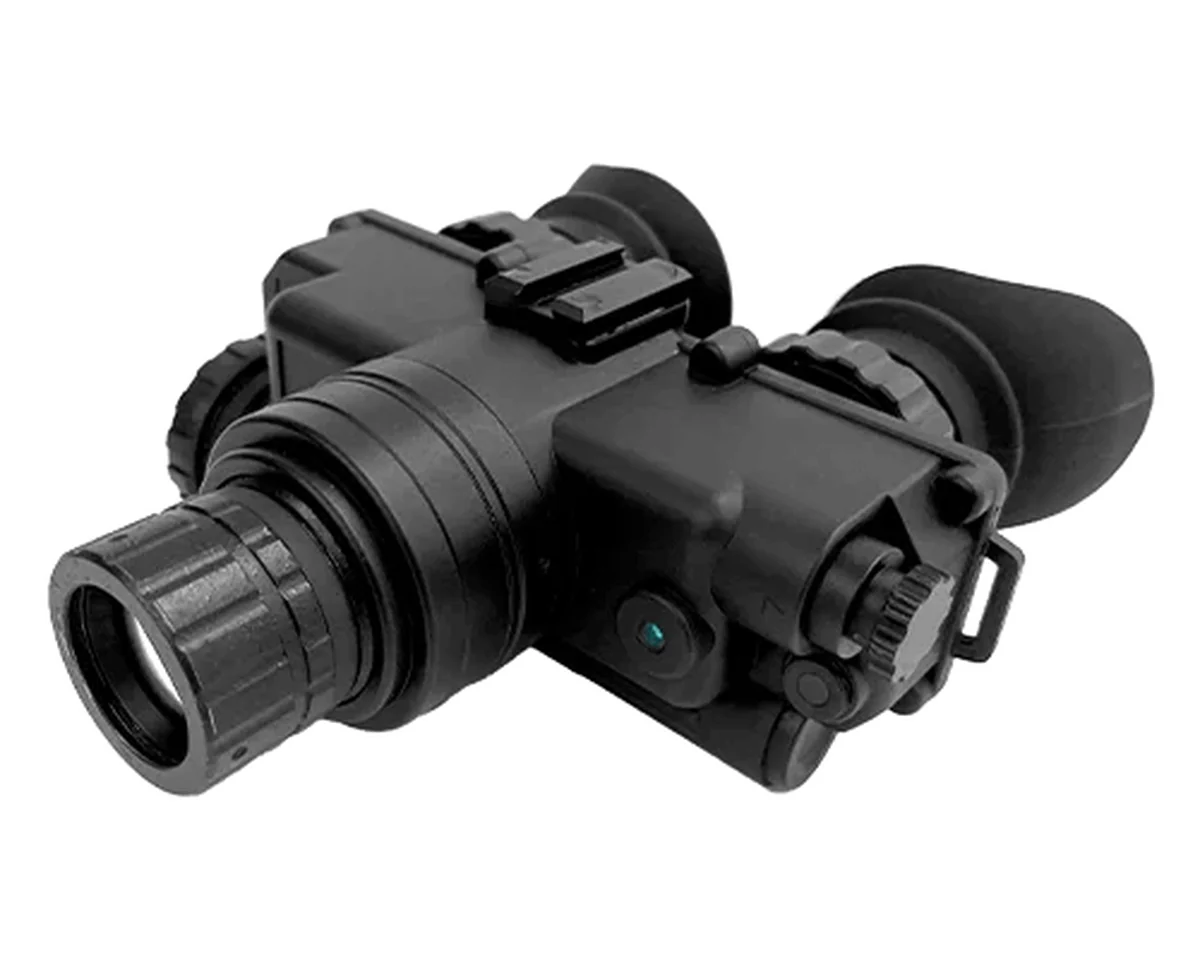
11. ATN NVG7-2W. Best Entry Goggles
Pros
- True goggles under $2,000
- White phosphor, easier on the eyes
- 50 hours on two AAs
- 40 degree field of view
Cons
- Single tube, so no depth perception
- 55-57 lp/mm is entry Gen 2+
- 1.1 lb hanging off a helmet
- Gen 3 resolves far more detail
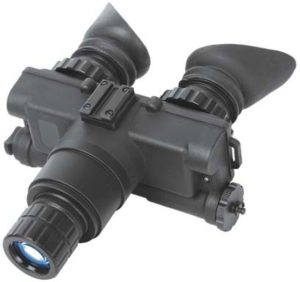
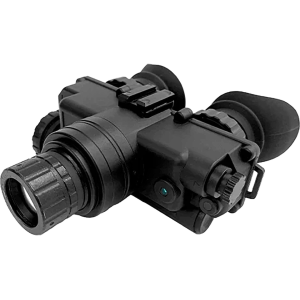
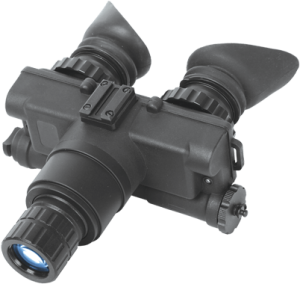
Everything above this point is a scope or a monocular. The NVG7 is the first entry on this page that is actually a pair of goggles: it straps to your head or a helmet, both eyes look through it, and your hands stay free. That is a different job from a monocular, and it is what most people mean when they search for night vision goggles. If you are hunting predators rather than walking ground, pair one with a coyote AR-15 instead.
ATN specify a Gen 2+ tube at 55-57 lp/mm in white phosphor, 1x magnification, a 40 degree field of view and 50 hours on two AA batteries. White phosphor matters more than the spec sheet suggests. The image is gray and white rather than green, and after a few hours it is noticeably less tiring to look at.
The honest limit is that it is a single tube. Both eyes see the same image, so you get no stereo depth, which is disorienting for walking terrain until you adapt and never fully goes away. The step up to two tubes is the PS31 below and it is a large step in both capability and money. At $1,995 direct from ATN this is the cheapest way into real hands-free night vision from a brand with a warranty behind it.
Best for: Walking, working and driving at night with your hands free, without spending five figures. The entry point to genuine goggles.
12. ATN PS31-2 BNVD-40. Best Dual Tube Goggles
Pros
- Two tubes, so real depth perception
- 58-60 lp/mm P45 white phosphor
- Pods pivot independently, binocular or monocular
- 60 hours on one CR123
Cons
- $4,895 is a serious commitment
- Gen 2+, not Gen 3
- 1.28 lb on your head
- 40 degree FOV, not 51
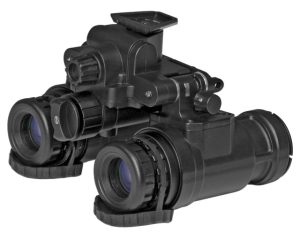
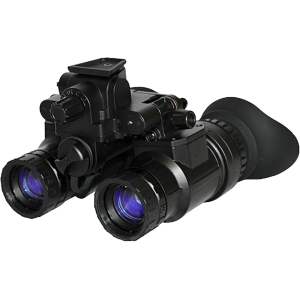
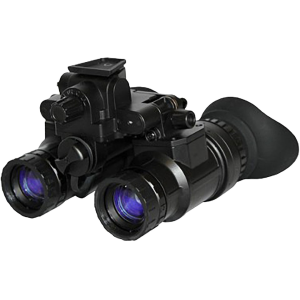
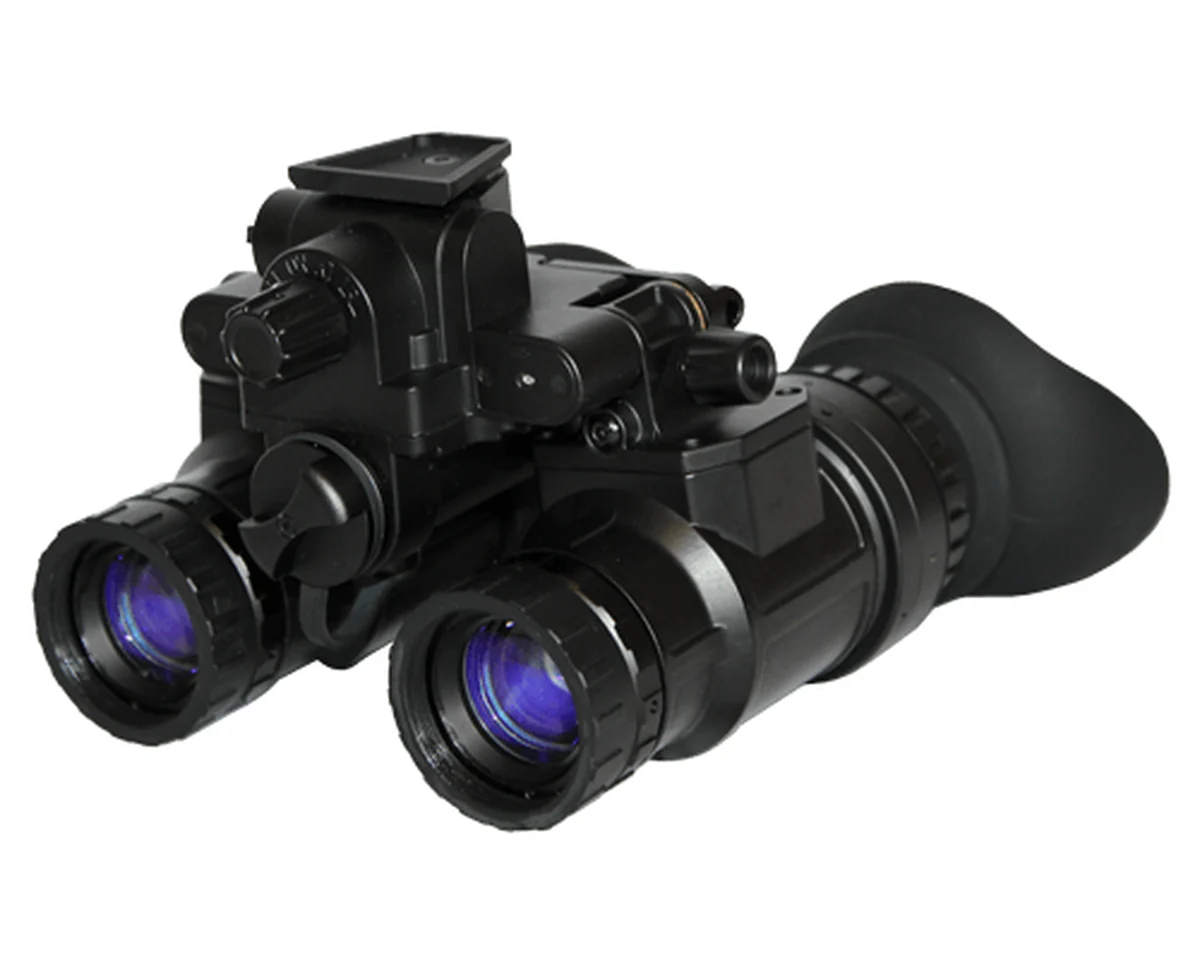
This is the configuration every serious night vision user ends up wanting, and the one this guide has never covered. Two independent tubes give you actual stereo depth, which is the difference between guessing where the ground is and seeing it. ATN sell it as a goggle and a binocular in one, and that is the right way to think about it: dual-tube night vision binoculars that happen to strap to your head. Outdoor Life builds its whole night vision guide around this format and starts it at $11,599. This is the same idea at $4,895.
ATN specify Gen 2+ tubes at 58-60 lp/mm with P45 white phosphor, a 40 degree field of view, IP65 sealing and 60 hours on a single CR123, stretching to 300 with the external pack. The pods pivot independently, so you can flip one up and keep an unaided eye on a lit screen or a map without breaking down the whole setup.
Two things to weigh before you spend this. It is Gen 2+, and Gen 3 tubes resolve materially more detail for materially more money, so this is the sensible middle rather than the top. And the 40 degree field of view is the standard one; the 51 degree version exists and costs more. Neither is a fault, but a $4,895 purchase deserves knowing what the next tier up actually buys.
Best for: The buyer who has used a single tube and wants depth perception. The most capable night vision on this page and the cheapest real dual tube we stock. Browse the rest of our night vision and thermal optics.
Battery Life: the Number That Decides Digital or Analog
Every comparison of the best night vision devices talks about image quality, price and whether you can record video. Almost none of them put the run times next to each other, and when you do, the argument changes shape entirely.
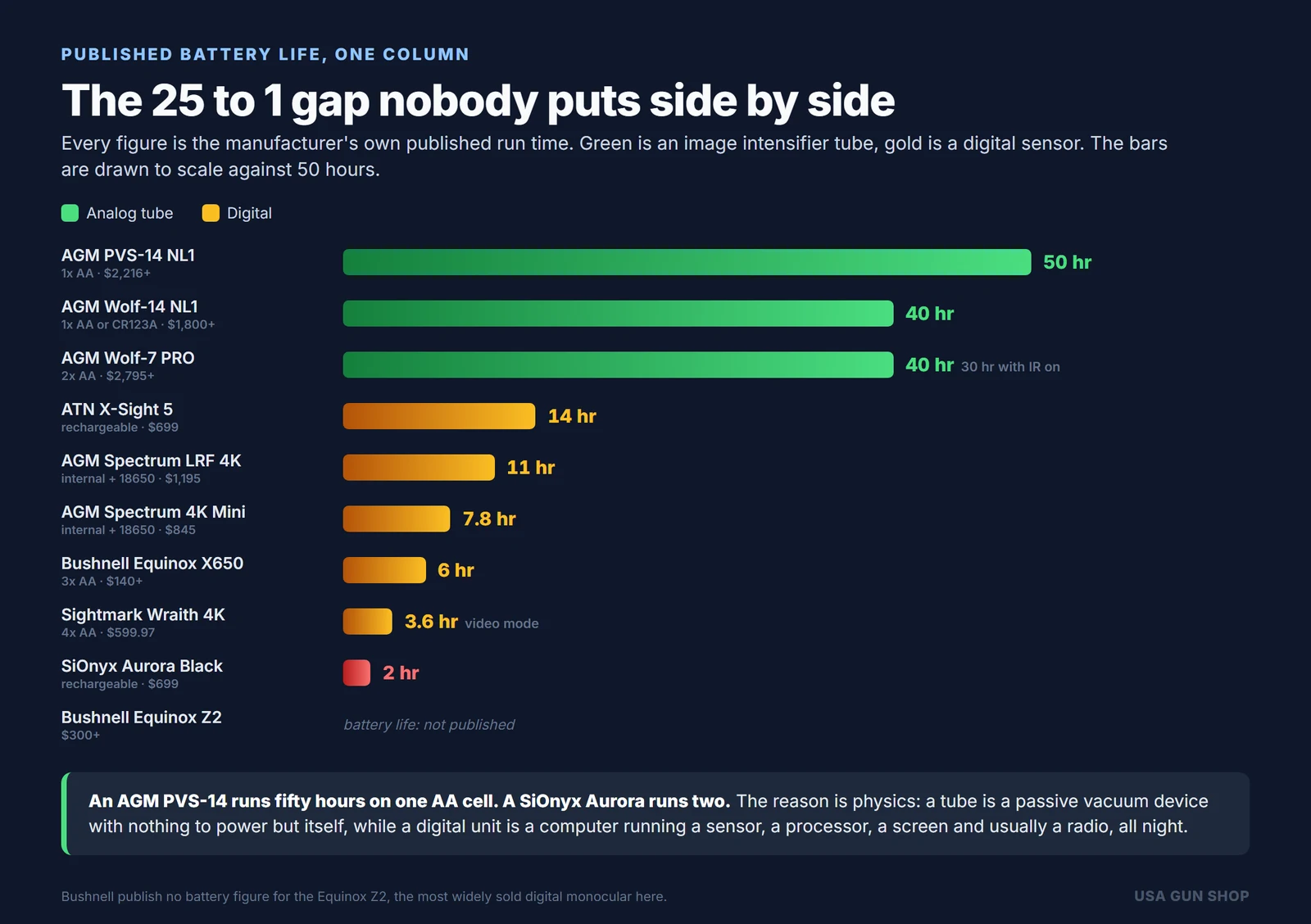
These are the manufacturers’ own published figures, in one column.
| Device | Technology | Published battery life | Power source | Price |
|---|---|---|---|---|
| AGM PVS-14 NL1 | Analog tube | 50 hours | 1x AA | $2,216+ |
| AGM Wolf-14 NL1 | Analog tube | 40 hours | 1x AA or CR123A | $1,800+ |
| AGM Wolf-7 PRO | Analog tube | 40 hr IR off, 30 hr IR on | 2x AA | $2,795+ |
| ATN X-Sight 5 | Digital | 14 hours | Rechargeable | $550 to $1,195 |
| AGM Spectrum LRF 4K | Digital | 11 hours | Internal + 18650 | $1,195 |
| AGM Spectrum 4K Mini | Digital | 7.8 hours | Internal + 18650 | $845 |
| Bushnell Equinox X650 | Digital | 6 hours | 3x AA | $140+ |
| Sightmark Wraith 4K | Digital | 3.6 hr video, 4.4 hr preview | 4x AA | $599.97 |
| SiOnyx Aurora Black | Digital | 2 hours | Rechargeable | $699 |
| Bushnell Equinox Z2 | Digital | not published | n/p | $300+ |
The gap is 25 to 1. An AGM PVS-14 runs for fifty hours on one AA cell. A SiOnyx Aurora runs for two. Those are not devices in the same category of usefulness over a long night, and no spec sheet comparison that leads with sensor resolution will tell you that.
The reason is physics, not engineering effort. An image intensifier tube is a passive vacuum device: photons hit a photocathode, electrons get accelerated across a gap, they strike a phosphor screen and you see light. The only current draw is the tube’s own voltage supply. A digital device is a computer. It has a sensor being read out fifty times a second, an image processor, an OLED or LCD screen, storage and in most cases a radio. All of that has to be powered, all night.
The practical version: every analog unit in this guide will do a full night, and a second and a third, on one battery you can buy at a petrol station. Every digital one needs planning. The ATN’s 14 hours covers a long night comfortably. The Sightmark’s 3.6 hours does not, which is why it takes AA cells you can carry spares of, and that is a design decision rather than an oversight.
One more thing this table shows. Bushnell publish no battery figure at all for the Equinox Z2, which is the most widely sold digital monocular in the guide. That is a real gap on the spec sheet of a handheld device, and it is why this page says so rather than filling it in.
What the Money Actually Buys
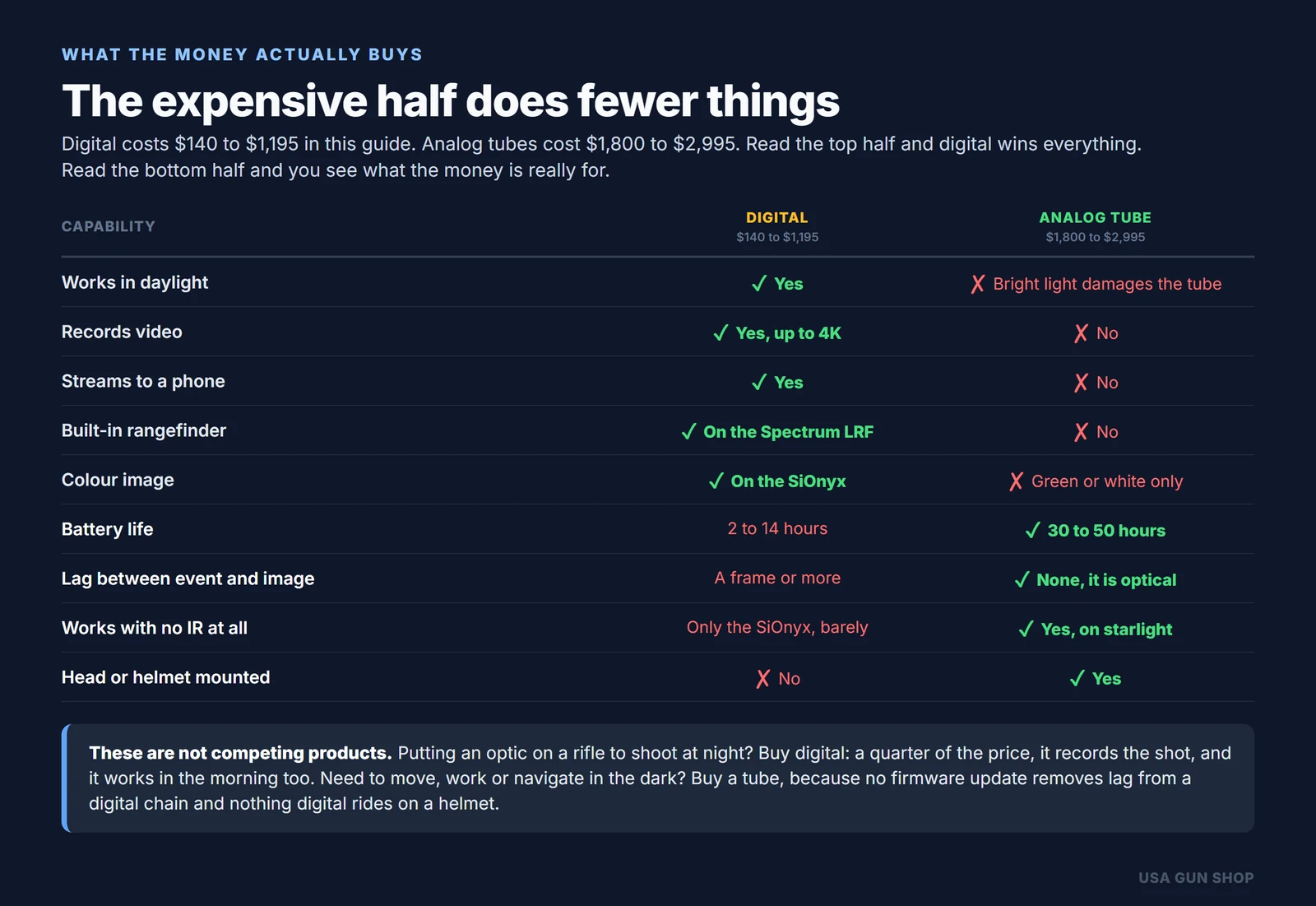
Put the two technologies in price order and the picture is uncomfortable for the expensive half.
| Capability | Digital ($140 to $1,195) | Analog tube ($1,800 to $2,995) |
|---|---|---|
| Works in daylight | Yes | No, bright light damages the tube |
| Records video | Yes, up to 4K | No |
| Streams to a phone | Yes | No |
| Built-in rangefinder | Yes, on the Spectrum LRF | No |
| Color image | Yes, on the SiOnyx | No, green or white only |
| Battery life | 2 to 14 hours | 30 to 50 hours |
| Lag between event and image | A frame or more | None, it is optical |
| Works with no IR at all | Only the SiOnyx, and barely | Yes, on starlight |
| Head or helmet mounted | No | Yes |
Read the top half and digital wins on everything. Read the bottom half and analog wins on the four things that cannot be fixed with a firmware update. A tube costs four times as much and does fewer things, and it is still the right answer for some people, because no amount of processing removes the lag from a digital chain, and no digital device will ride on your helmet while you walk.
The honest summary is that these are not competing products. If you are putting an optic on a rifle to shoot at night, buy digital: it is a quarter of the price, it records the shot, and it works in the morning too. If you need to move, work or navigate in the dark, buy a tube, because that is the job goggles were built for and digital cannot do it.
What Night Vision Costs Across the Whole Market
The prices above are the devices I picked. This table is the whole market, pulled from live dealer stock across roughly thirty retailers and sorted by what the device actually is. It is the context that makes the picks make sense.
| Type | In stock | Cheapest | Average | Dearest |
|---|---|---|---|---|
| Digital night vision | 71 | $104 | $430 | $1,995 |
| Analog Gen 2 | 54 | $180 | $2,373 | $6,299 |
| PVS-14 pattern | 201 | $125 | $3,017 | $6,446 |
| Analog Gen 3 | 57 | $3,595 | $5,479 | $8,995 |
| Goggles, binocular | 191 | $395 | $6,311 | $14,245 |
The number that should decide your purchase is in the Gen 3 row. Nothing in that tier starts below $3,595, and the average is $5,479. There is no budget Gen 3. If somebody offers you one for $1,200 it is a Gen 2 tube with optimistic marketing, or it is a thin-film Gen 2+ being sold as something it is not.
Set that against digital, which averages $430. That is a twelvefold difference, and it is the entire decision in one line. You are not choosing between two similar products at different prices. You are choosing between a camera and a tube.
The PVS-14 row needs a caveat, and it is the reason I have kept the cheap end of it out of my picks. Those 201 listings include a lot of mounts, shrouds and spare parts that carry the PVS-14 name, so the $125 floor is an accessory rather than a monocular. A real PVS-14 monocular starts a little over $2,200.
And the goggles row is where the money goes. Binocular night vision averages $6,311 because you are buying two tubes instead of one, plus a bridge and a head mount. If you want depth perception while walking, that is the bill. If you only want to see, one tube does the job for a fraction of it.
850 nm vs 940 nm: Why Your IR Illuminator Glows
Almost every digital device needs infrared light to see in true darkness, and the wavelength of that light is a specification buyers rarely check. It has one consequence that matters: whether the thing you are looking at can see you back.
| Wavelength | Visible to the eye? | Effective range | Which devices here ship it |
|---|---|---|---|
| 850 nm | Yes, a faint red glow at the emitter | Longer, the sensor sees it better | ATN X-Sight 5 (IR850), Sightmark Wraith 4K, Bushnell Equinox Z2, Bushnell Equinox X650 |
| 940 nm | No, effectively invisible | Shorter for the same power | SiOnyx Aurora Explorer kit |
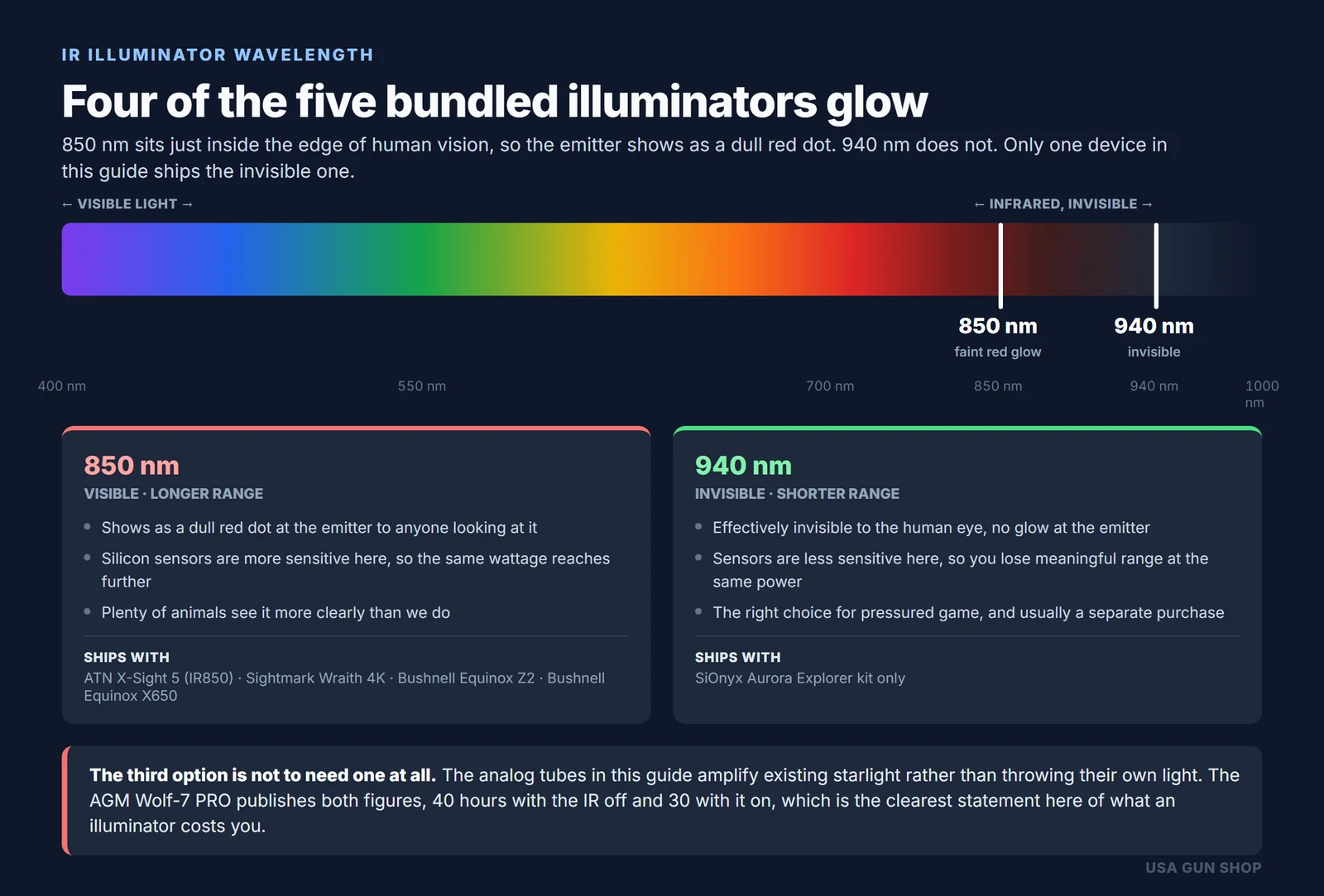
Every illuminator bundled with a device in this guide except one is 850 nm. That is not a conspiracy, it is a trade: silicon sensors are more sensitive at 850 nm than at 940, so the same wattage buys more range. The cost is that 850 nm sits just inside the edge of what a human eye can perceive, so the emitter shows as a dull red dot to anyone looking at it, and plenty of animals see it more clearly than we do.
940 nm is genuinely invisible and genuinely shorter ranged. If you are hunting pressured animals, or you simply do not want to advertise your position, it is the right choice and you will probably have to buy it separately, because only the SiOnyx Explorer kit includes one. Expect to give up meaningful range, or to spend more on watts to get it back.
The third option is not to need one. The analog units in this guide amplify existing starlight and moonlight rather than throwing their own light, so they emit nothing at all unless you switch the built-in illuminator on. The AGM Wolf-7 PRO publishes both figures, 40 hours with the IR off and 30 with it on, which is the clearest statement in this guide of what the illuminator costs you.
Figure of Merit: the Analog Spec Nobody Explains
If you shop analog tubes for more than about ten minutes you will run into FOM, or Figure of Merit, quoted as a bare number like 1800 or 2376. It is the single most useful number for comparing tubes and almost nobody selling you one bothers to say what it is.
FOM is resolution in line pairs per millimeter multiplied by signal-to-noise ratio. Resolution is how much detail the tube can draw. Signal-to-noise is how clean that detail is when there is barely any light to work with. A tube can be strong at one and weak at the other, and the product of the two is a fairer summary than either number alone.
Where the devices on this page sit: the AGM Wolf-14 and the ATN NVG7 run 55-57 lp/mm tubes, the ATN PS31-2 runs 58-60 lp/mm, and Gen 3 tubes start around 64 lp/mm and climb. Multiply through by a signal-to-noise ratio in the low twenties for Gen 2+ and the high twenties for Gen 3, and you get why Gen 3 goggles cost what they do.
The practical rule: under 1600 is entry level, 1600 to 2000 is solid Gen 2+ territory, and above 2000 you are in Gen 3. If a listing quotes lp/mm but not signal-to-noise, or a bare FOM with no breakdown, that is a choice about which number flatters the tube. Ask for both.
One more spec worth the same scrutiny: field of view. Most goggles here are 40 degrees. Wider options exist at 51 degrees and cost more, and the difference is very obvious the first time you walk with one. Digital devices quote FOV too, but on a digital unit the number that limits you is the sensor, not the optic. The same trade runs through daylight glass, which our binocular guide covers in more detail.
How to Choose the Best Night Vision for You
The best night vision for you is rarely the most expensive, and this is the one optics category where that is reliably true. For how it fits alongside everything else, see our complete gun optics guide. Everything below is the order the decisions actually matter in.
Start with what you are doing, not what you are buying
Shooting from a fixed position at night is a scope job, and a digital scope does it for a quarter of the money. Walking, working, driving or navigating is a goggle job, and only a tube will do it. Scanning a field to see whether anything is out there is a monocular job, and a $300 digital one is plenty. Buy for the verb.
Digital or analog
Digital gives you daylight use, 4K recording, streaming, sometimes a rangefinder, and prices from $140. Analog gives you no lag, thirty to fifty hours of battery, helmet mounting and the ability to work on starlight alone, from $1,800. The comparison table above lays out which capability sits on which side. Most people reading this want digital and are talked into thinking they want a tube.
Night vision generations, briefly
Generation describes the intensifier tube and applies only to analog devices. Gen 1 is cheap, dim and distorted at the edges. Gen 2 and Gen 2+ is where usable civilian equipment starts, and it is what every tube device in this guide runs. Gen 3 costs several thousand more and buys longer tube life and better performance in very low light. AGM’s NL1, NL2 and NL3 grades are not generations: they all describe Gen 2+ tubes, sorted by how few blemishes each one has, with NL1 the cleanest.
Aperture matters more than sensor resolution
Four of the digital devices here run a 4K sensor, so resolution is not the differentiator anyone thinks it is. What separates them is how much light reaches that sensor. The AGM Spectrum LRF 4K runs F1.2, the Spectrum 4K Mini runs F2.0, and that full stop is a real difference in the last usable minutes of light. Every analog unit here runs F/1.2 glass for the same reason.
Check the IR wavelength before you buy
850 nm glows visibly red at the emitter and reaches further. 940 nm is invisible and reaches less far. Every bundled illuminator in this guide except the SiOnyx Explorer kit’s is 850 nm, so if being unseen matters, budget for a separate 940 nm unit and a rail to hang it on.
Battery format, not just battery life
A device that runs 3.6 hours on AA cells you can buy anywhere may serve you better than one that runs 11 hours on a proprietary pack, if you are three days into a trip. The Sightmark takes 4 AAs, the Bushnells take 3, the AGM tubes take one. The AGM Spectrum units use a swappable 18650 alongside their internal cell, which is a reasonable middle ground.
Night vision is not thermal
Night vision amplifies the small amount of visible and near-infrared light that is already there, so it shows you a recognizable picture and needs some light or an illuminator to work. Thermal reads heat, sees through total darkness and light brush, and shows you a heat signature rather than an image you could identify an animal from. They solve different problems, and plenty of serious hunters carry both. Our best thermal scopes guide covers that side properly. For one affordable thermal sight in depth, see our AGM Rattler V2 review. For one thermal riflescope line tested model by model, see our Pulsar Thermion 2 review. For a thermal weapon sight family tested model by model, see our iRay Rico review.
Check the law where you hunt
Night vision and thermal are legal to own across the United States, but using them to take game is regulated state by state and species by species. Rules commonly differ between hogs, coyotes and deer, and between private and public land. Check your state wildlife agency’s current regulations before you hunt with any of this, because they change, and a guide page is not a legal authority.
How I Chose the Best Night Vision Devices
Night vision is unusually hard to rank on impressions, because every device looks impressive the first time you switch it on in a dark field. So this guide is built on published specifications and on arithmetic anyone can repeat, and it names its sources.
Sensor, tube, range, battery, weight and price figures come from the manufacturers: the Sightmark Wraith 4K specification, AGM on the Spectrum 4K Mini, AGM’s PVS-14 NL1 page, the Wolf-7 PRO NL1 page, and ATN’s X-Sight 5 listing. Where a manufacturer publishes nothing, the tables above say so rather than borrowing a figure from a retailer.
The comparisons are then arithmetic. The battery table is a single column of published run times sorted by size. The capability table is a yes or no against each manufacturer’s own feature list. The 850 versus 940 table is the wavelength each maker states it ships.
The candidate list came from what the field currently recommends, across both night vision monocular and night vision scope round-ups, since this category splits into three device types. Stock was then checked against live retailer inventory, and that check is what removed the previous version’s number one pick.
Mistakes to Avoid When Buying Night Vision
Assuming the best night vision is the priciest. If the device is going on a rifle, a $600 digital scope will out-feature a $2,500 monocular in every way that matters to a shooter, and record the shot as well.
Ignoring battery life until the second night. The spread in this guide is 2 hours to 50. That is the difference between a device you plan around and one you forget about.
Assuming the IR illuminator is invisible. Almost all of them are 850 nm, which glows red at the emitter. If you need covert, you need 940 nm and you will probably be buying it separately.
Comparing sensors instead of apertures. Nearly everything here is 4K. F1.2 against F2.0 is the specification that changes what you can see.
Expecting night vision to behave like thermal. Night vision needs light to amplify and will not see a coyote through brush. If detection through cover is the job, you want thermal.
Pointing a tube device at a light. Bright light damages an image intensifier. The AGM units here have automatic cutoff for exactly this reason, and it is still worth not testing it.
What We Removed From This Guide, and Why
The previous version of this page led with the ATN X-Sight 4K Pro as its best overall pick. ATN has discontinued it. Every merchant we check returns zero results for it, which is exactly what you would expect for a product its own manufacturer no longer makes. Recommending it was sending readers looking for something they could not buy.
The replacement is ATN’s own: the X-Sight 5, running their Gen V processor and a 4K+ sensor that ATN rate at about a third more resolution than the 4K generation it succeeds. It is stocked widely, it is cheaper than the 4K Pro was at launch, and it takes the top slot on merit as well as availability.
Two models that current expert lists do recommend are absent, and it is worth saying why. The Pulsar Digex C50 appears on more than one round-up and no merchant in our inventory carries it. The TRYBE PVS-14 is named as a white phosphor pick, and everything our merchants list under that name is a lens cover, an eye guard or an afocal lens rather than an actual unit. We do not list what we cannot price.
One deliberate omission. AGM’s NVG-50 dual-tube goggles are stocked and excellent, and they start near $4,995 and run past $8,995. That is a narrow enough audience that they get a mention rather than a slot. And nothing thermal appears on this page at all, however well it sells, because thermal is a different technology solving a different problem.
The Bottom Line: the Best Night Vision to Buy
For a rifle, buy the ATN X-Sight 5. It is a day scope and a night scope in one body, it records in 4K, and its 14 hours of battery is the longest of any digital device here by a comfortable margin. The line starts at $550 for the 3-15x Pro edition and runs to $1,195 for the 5-25x LRF. If even $550 is more than the job needs, the Sightmark Wraith 4K does the same work for around $500 on AA batteries you can replace anywhere, as long as you carry spares.
For a handheld, the Bushnell Equinox Z2 6×50 at around $300 gives you 1,000 feet of range and daylight use, and the Equinox X650 at about $140 is the cheapest honest way to find out whether you will use night vision at all. The SiOnyx Aurora Black is the one to buy if color and a submersible body matter more than its two hour battery.
Buy a tube only for a reason. The AGM Wolf-14 is the cheapest way into real Gen 2+, the AGM PVS-14 buys you the accessory ecosystem and fifty hours on one AA, and the AGM Wolf-7 PRO is the answer when you want both eyes behind glass to move in the dark, and the ATN PS31-2 is the one that adds real stereo depth. All three cost more than any digital device here and do fewer things, and for the right job they are still worth it.
Last updated August 29th 2026
What is the best digital night vision scope?
The ATN X-Sight 5. It is a full color day scope and a digital night scope in one body, records in 4K with slow motion at 120 or 240 fps, and ATN publish 14 hours of battery life, which is the longest of any digital device in this guide. It replaces the X-Sight 4K Pro, which ATN has discontinued. If $699 is more than you want to spend, the Sightmark Wraith 4K does the same job for around $500.
Is digital or analog night vision better?
They solve different problems. Digital costs $140 to $1,195, works in daylight, records 4K video and can include a rangefinder. Analog tubes cost $1,800 to $2,995, do none of that, and in exchange give you no lag, thirty to fifty hours of battery, the ability to work on starlight alone, and helmet mounting. If the device is going on a rifle, buy digital. If you need to move and work in the dark, buy a tube.
How long does night vision battery last?
The spread is enormous and it is the specification most buyers skip. An AGM PVS-14 runs up to 50 hours on a single AA. An AGM Wolf-14 runs 40. On the digital side the ATN X-Sight 5 manages 14 hours, the AGM Spectrum LRF 4K 11, the Sightmark Wraith 4K 3.6 hours in video mode, and the SiOnyx Aurora Black just 2. A tube is a passive vacuum device; a digital unit is a computer running a sensor, a processor and a screen all night.
What is the difference between 850nm and 940nm IR?
Eight hundred and fifty nanometers sits just inside the edge of human vision, so the emitter shows as a dull red dot to anyone looking at it and many animals see it more clearly than we do. Nine hundred and forty is effectively invisible but reaches less far at the same power, because sensors are less sensitive there. Four of the five illuminators bundled with devices in this guide are 850 nm; only the SiOnyx Aurora Explorer kit includes a 940.
Is night vision the same as thermal?
No. Night vision amplifies the small amount of visible and near-infrared light already present, so it shows a recognizable picture but needs some light or an IR illuminator to work. Thermal reads heat, works in total darkness and sees through light brush, but shows a heat signature rather than an image you could identify an animal from. Plenty of serious hunters carry both.
What night vision generation should I buy?
Generation applies only to analog tube devices. Gen 1 is cheap, dim and distorted at the edges. Gen 2 and Gen 2+ is where usable civilian equipment starts and is what every tube device in this guide runs. Gen 3 costs several thousand more for longer tube life and better very low light performance. AGM's NL1, NL2 and NL3 are not generations: all three are Gen 2+ tubes sorted by how few blemishes each has, NL1 being cleanest.
What are the best night vision goggles?
It depends what you mean by goggles. The ATN NVG7-2W at $1,995 is the cheapest real pair, a Gen 2+ white phosphor tube with a 40 degree field of view and 50 hours on two AA batteries. The AGM Wolf-7 PRO from $2,795 is the same idea with a longer track record. Both are single tube, so both eyes see the identical image and you get comfort rather than stereo depth. For real depth perception you need two tubes, and that is the ATN PS31-2 BNVD-40 at $4,895.
How much should you spend on night vision?
Under $200 buys a digital monocular like the Bushnell Equinox X650 that will show you something is there. Around $600 to $1,200 buys a capable digital scope such as the Sightmark Wraith 4K or the AGM Spectrum LRF 4K. Around $2,000 is the entry to genuine analog tubes and real goggles. Dual tube goggles start near $4,900. The honest advice is that the jump from digital to analog costs roughly three times as much and buys battery life and low-light performance, not resolution.
Is it legal to hunt with night vision?
Owning night vision and thermal is legal across the United States, but using either to take game is regulated state by state and species by species. Rules commonly differ between hogs, coyotes and deer, and between private and public land. Check your state wildlife agency's current regulations before hunting with any of it, because those rules change.
4,021+ Gun & Ammo Deals
Updated daily from 200+ top retailers. Filter by category, caliber, action type, and price.
Related Guides