
Last updated March 29th 2026
Some of the links below are affiliate links, meaning at no additional cost to you, we may earn a commission if you click through and make a purchase.
- Treat every gun as loaded
- Point the muzzle in a safe direction
- Keep your finger off the trigger until you’re ready to shoot
- Know your target and what’s beyond
| Gun | Gauge | MSRP | Price |
|---|---|---|---|
| BEST OVERALL VALUE Maverick 88 |
12 / 20 ga | ~$200 | Lowest Price ↓ |
| BEST COMBO DEAL Mossberg 500 Field Combo |
12 ga | ~$450 | Lowest Price ↓ |
| BEST BUDGET SEMI stoeger-m3000-full M3000 |
12 ga | ~$400 | Lowest Price ↓ |
| BEST FAST PUMP Winchester SXP |
12 / 20 ga | ~$350 | Lowest Price ↓ |
| BEST COMPETITION VALUE Mossberg 940 JM Pro |
12 ga | ~$1,000 | Lowest Price ↓ |
Table of Contents
How we tested: Every pick here is ranked against our testing methodology. Minimum round counts, accuracy and reliability protocols, the failures that disqualify a gun. Where we have not shot a specific variant ourselves, we say so in that section.
Getting the Most Shotgun for Your Dollar in 2026
Shotguns are one of the best deals in firearms right now. You can walk out of a gun store with a genuinely capable, reliable scattergun for $200. That’s not a compromise. That’s an embarrassment of riches compared to handguns and rifles at the same price.
But “best shotgun for the money” means something different depending on how much money you’ve got. A $200 buyer needs a different answer than someone shopping at $700 or $1,000. I built this list to cover the entire range, from the cheapest pump you’d actually trust to a competition-ready semi-auto that competes with guns costing twice as much.
Every pick here punches above its price tag in at least one meaningful way. Some cut corners to hit that price, and I’ll tell you exactly where. No sugarcoating.
If a $400 semi-auto has a mediocre trigger, I’m saying that, because you deserve to know before you buy. Check out our shotgun buying guide if you want to get up to speed on gauges, actions, and what to look for before you pull the trigger on any of these.
Eight guns. Eight price tiers. Let’s find the right one for your budget.

1. Maverick 88. Best Shotgun Under $250
- Gauge: 12 ga (20 ga available)
- Barrel Length: 18.5″ or 28″ (configuration dependent)
- Capacity: 5+1 (18.5″ barrel)
- Weight: 5.5 lbs (unloaded)
- Action: Pump
- MSRP: ~$200
Pros
- Lowest price of any reliable shotgun on the market
- Mossberg 500 parts compatibility (stocks, forends, accessories)
- Dual extractors and twin action bars for reliable feeding
Cons
- Crossbolt safety (top-mounted) is different from 500 tang safety
- Fit and finish is noticeably rougher than the 500
- No field-strip without tools


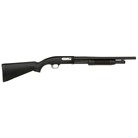
The Maverick 88 regularly sells for $180 to $210 and makes every other budget pick look expensive. depending on barrel configuration, and for that money you get a pump-action shotgun built by Mossberg’s budget-oriented subsidiary that shares DNA with the legendary 500. It runs. That’s the most important thing you can say about a defensive firearm.
The corners they cut to hit that price are real: the safety is a crossbolt button behind the trigger instead of the tang-mounted safety on the 500, the polymer and metal finish is on the rough side, and you’ll need tools to field strip it. None of that matters when you’re using it for home defense or hunting on a tight budget. The gun cycles reliably, patterns well, and will outlast most of the people who buy it.
Mossberg 500 accessories fit it, which is a big deal. Aftermarket stocks, pistol grips, mag tube extensions, and forends all cross over. You can buy a Maverick 88 for $200 and slowly build it into whatever you need without starting over. That kind of flexibility at this price is genuinely unusual.
If $200 is your ceiling and you want a shotgun that works, this is the answer. Nothing at this price is better. Not even close. See our full best budget shotgun breakdown for more options at this price level.
Best For: First-time buyers, home defense on a strict budget, and anyone who needs a working shotgun without spending a car payment.

2. Mossberg 500 Field Combo. Best Combo Deal
- Gauge: 12 ga
- Barrel Length: 28″ (vent rib) + 18.5″ (cylinder bore)
- Capacity: 5+1
- Weight: 7.5 lbs
- Action: Pump
- MSRP: ~$450
Pros
- Two barrels covers hunting and home defense in one package
- Tang-mounted safety, aluminum receiver, proven 500 platform
- Swappable barrels in seconds, no tools needed
Cons
- Single stock and forend means you’re using hunting furniture for defensive work
- 28″ barrel makes it unwieldy for HD until you swap it
- The combo package can be hard to find in stock
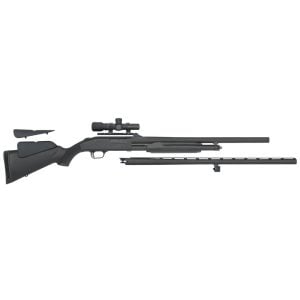
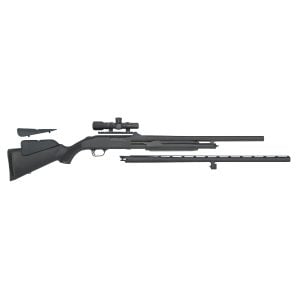
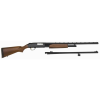

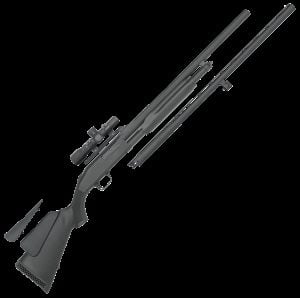
Mossberg 500 Field Combo is basically two shotguns for the price of one. You get a 28-inch vent-rib field barrel for birds and clay targets, plus an 18.5-inch cylinder bore for home defense. Swapping them takes about ten seconds. That versatility at $450 is a legitimately great deal.
The 500 is a better gun than the Maverick 88 in every measurable way. The tang-mounted safety is faster and more intuitive, the aluminum receiver is more durable, and the fit and finish is noticeably cleaner.
You’re also getting a gun with decades of proven reliability in military, law enforcement, and hunting applications, which counts for something.
What you’re paying for beyond the second barrel is the Mossberg name and the platform quality jump. Is it worth $250 more than the Maverick? If you hunt waterfowl or upland birds AND want a home defense gun, absolutely.
If you only need one barrel, the Maverick does the same job for less. But as a buy-one-get-one deal, the combo package is hard to beat in the pump-action world.
Best For: Hunters who want one gun that pulls double duty, and anyone who doesn’t want to own two separate shotguns.


3. stoeger-m3000-full M3000. Best Budget Semi-Auto
- Gauge: 12 ga
- Barrel Length: 26″ or 28″
- Capacity: 4+1
- Weight: 6.9 lbs
- Action: Inertia-driven semi-auto
- MSRP: ~$400
Pros
- Inertia-driven system is simple, lightweight, and reliable
- Benelli heritage. Shares design DNA with guns that cost 3x as much
- Reliable with 2-3/4″ through 3″ loads once broken in
Cons
- Needs a break-in period of 50-100 rounds
- Trigger is serviceable but not impressive
- 4+1 capacity is on the low side for a field gun
Getting a reliable inertia-driven semi-auto for $400 should feel impossible. Benelli’s comparable guns start around $1,200. The stoeger-m3000-full M3000 exists because stoeger-m3000-full is a Benelli subsidiary, and they basically made a stripped-down version of the system for people who want that reliability without the Italian price tag.
The break-in period is real and it matters. Plan on running 50 to 100 rounds of full-power loads through it before you trust it with light target ammo.
After that, it runs. I’ve seen these cycle thousands of rounds without a hiccup once they’re properly broken in, that’s not something you can say about a lot of budget semi-autos.
The trigger is the weak link, not terrible, but not good either. There’s some mush in the pull that you notice immediately if you’ve shot better semi-autos.
For hunting and general use, it’s fine. For competition, you’d want to upgrade it. The rest of the gun more than compensates at this price point.
If your heart is set on a semi-auto and your budget is under $500, the M3000 is the pick. Nothing else in this price range has the same combination of reliability and heritage. Check out our best shotguns under $500 guide for the full comparison at this price tier.
Best For: Hunters and sport shooters who want semi-auto reliability without a Benelli budget.


4. Winchester SXP. Best Fast Pump Action
- Gauge: 12 ga (20 ga available)
- Barrel Length: 26″ or 28″ (field variants)
- Capacity: 4+1
- Weight: 6.5 lbs
- Action: Pump (Speed Pump inertia-assisted)
- MSRP: ~$350
Pros
- Speed Pump action is notably faster than standard pumps
- Inflex recoil pad significantly softens felt recoil
- Hard chrome chamber handles the wettest, dirtiest conditions
Cons
- Trigger is mediocre at best
- Less aftermarket support than Mossberg/Remington platforms
- Not as well known, which spooks some buyers
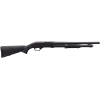
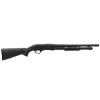

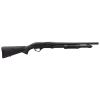
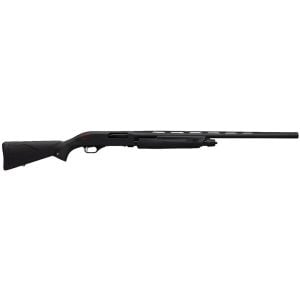
SXP’s “Speed Pump” action is not marketing fluff. The inertia-assisted mechanism genuinely lets you cycle the action faster than a standard pump, and you feel it the first time you put rounds through it. For a defensive gun or a competition pump, that speed is a real advantage.
Winchester also put a decent recoil pad on this thing, which matters more than people admit. The Inflex pad does a solid job absorbing felt recoil, making it more comfortable to run for a full day of hunting or a long range session. The hard chrome chamber is a nice touch too, especially if you’re hunting in wet conditions.
Trigger is the same story as the M3000: serviceable, not impressive. You take what you get at $350. But for speed, balance, and recoil management in a pump, the SXP earns its spot here. It’s genuinely competitive with guns priced $100 to $150 higher.
Best For: Hunters and defensive shooters who want the fastest possible pump action without moving up to a semi-auto.

5. Franchi Affinity 3. Best Mid-Range Semi-Auto
- Gauge: 12 ga (20 ga available)
- Barrel Length: 26″ or 28″
- Capacity: 4+1
- Weight: 6.6 lbs
- Action: Inertia-driven semi-auto
- MSRP: ~$750
Pros
- Inertia-plus recoil system is extremely smooth
- Better fit, finish, and trigger than anything in the $400-$500 range
- Handles 2-3/4″, 3″, and 3.5″ shells (12 ga models)
Cons
- Still a Benelli ecosystem in terms of chokes and accessories
- Doesn’t have the brand prestige of Beretta or Browning at this price
- 20 ga version can be harder to find
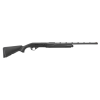

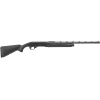
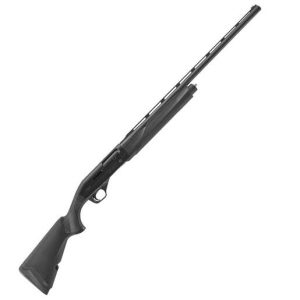
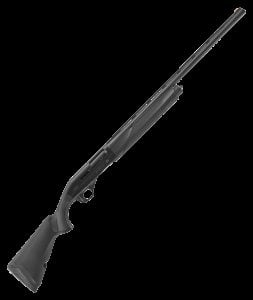
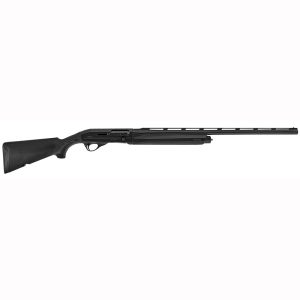
Franchi doesn’t get enough credit. They’re a Benelli company, which means their inertia-driven semi-autos share the same fundamental operating system as guns that cost $1,200 to $1,800. The Affinity 3 sits right in the middle of the market at $750 and delivers a noticeably better shooting experience than anything at $400 to $500.
Recoil is genuinely soft for an inertia gun. Franchi’s “Inertia Plus” system runs a bit smoother than the base stoeger-m3000-full setup, and the gun is light enough that you don’t feel beat up after a full day in the field. That combination makes it one of the better hunting semi-autos in this price window.
Where it gives ground to guns like the Beretta A300 is brand recognition. Right or wrong, that matters at resale time. The Franchi is a better technical value than the Beretta at this price, but if you ever want to sell it, you’ll probably get less back. That’s a real consideration worth knowing about before you buy.
Best For: Upland and waterfowl hunters who want serious semi-auto performance without paying Benelli prices.


6. Beretta A300 Ultima. Best Brand-Name Semi-Auto
- Gauge: 12 ga
- Barrel Length: 26″ or 28″
- Capacity: 4+1
- Weight: 7.7 lbs
- Action: Gas-operated semi-auto
- MSRP: ~$700
Pros
- Gas operation means softer felt recoil than inertia guns
- Beretta brand holds value extremely well
- Wide variety of Mobilchoke accessories available
Cons
- Heavier than comparable inertia guns
- Gas system requires more cleaning
- Trigger is nothing special for the price
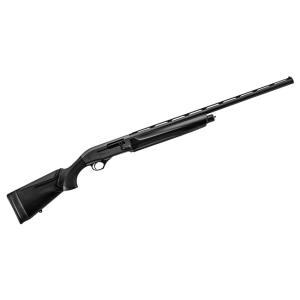

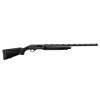
Gas guns run softer than inertia guns. That’s not opinion, it’s physics. The A300 Ultima uses Beretta’s proven gas system to absorb recoil before it reaches your shoulder, which makes it noticeably more comfortable to shoot than the Franchi or stoeger-m3000-full, especially with heavy hunting loads. If you shoot a lot of rounds in a day, that difference adds up fast.
Beretta also just holds its value. Buy one at $700, shoot it for five years, sell it used, and you’ll probably get $400 to $500 back. That’s not something you can say about every brand at this price. The Mobilchoke system is the industry standard, so you’ll never struggle to find accessories or replacement chokes.
The downside of gas operation is maintenance. You need to clean the gas ports and piston more often than an inertia gun, or you’ll start having cycling issues. It’s not complicated, but it is one more thing to do. The gun is also heavier than most of its competitors at 7.7 lbs, which you notice on a long hike.
At $700, the A300 Ultima delivers Beretta quality without the Beretta A400 price tag. That’s exactly what “best for the money” looks like in the mid-range semi-auto category. See how it stacks up against the competition in our best shotguns under $1,000 roundup.
Best For: Shooters who want a name-brand semi-auto that will hold its value and handle anything from light trap loads to heavy hunting shells without complaint.

7. CZ Redhead Premier. Best Over/Under Value
- Gauge: 12 ga (20 ga, 28 ga, .410 available)
- Barrel Length: 28″
- Capacity: 2
- Weight: 7.4 lbs
- Action: Over/under break-action
- MSRP: ~$900
Pros
- Turkish walnut stock looks and feels like it costs much more
- Single selective trigger, automatic ejectors included
- Chrome-lined bores, silver receiver with light engraving
Cons
- Only 2 rounds, which limits its utility beyond clays and hunting
- Turkish manufacture, not everyone’s preference
- Heavier than most field semi-autos

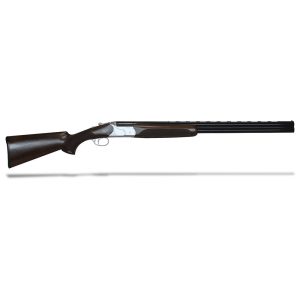

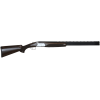
Over/unders at $900 are either garbage or a remarkable deal. The CZ Redhead Premier is the latter. The Turkish walnut stock has genuine figure and warmth to it, the chrome-lined bores clean up easily, and the single selective trigger and automatic ejectors are features you’d expect on a $1,500 gun. CZ gets a lot done at this price.
Honest caveat is Turkey versus Italy. A Beretta 686 or Browning Citori starts well above this price, and there’s a reason for that: decades of proven reliability, tighter tolerances, and a resale market that holds value. The Redhead Premier is a solid gun, but it’s a budget over/under, and you should go in with realistic expectations about longevity under heavy sporting use.
For a casual hunter or a clay shooter who wants the feel of a classic side-by-side or over/under without dropping $2,000, this is the right answer. It shoots well, it looks great, and it won’t embarrass you at a sporting clays course. That’s a lot to ask for under a grand, and the Redhead delivers it.
Best For: Bird hunters and clay shooters who want a proper over/under without a Beretta price tag, and who shoot it enough to appreciate the format but not so much they’ll stress-test the long-term durability.


8. Mossberg 940 JM Pro. Best Competition Value
- Gauge: 12 ga
- Barrel Length: 24″
- Capacity: 8+1
- Weight: 7.75 lbs
- Action: Gas-operated semi-auto
- MSRP: ~$1,000
Pros
- Designed with 3-Gun world champion Jerry Miculek
- 8+1 capacity out of the box, ready for competition
- Oversized bolt handle, loading port, and controls for fast manipulation
Cons
- Heavy at 7.75 lbs, especially when fully loaded
- $1,000 is a lot for a Mossberg
- Overkill for anyone not competing
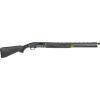
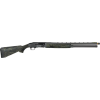

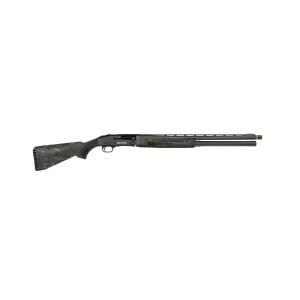
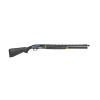
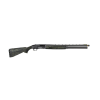
Competition-ready semi-autos with this capacity and these features start at $1,500 from most manufacturers. Benelli’s M2 Competition, the Beretta A400 Xtreme, the Fabarm L4S: all of them cost significantly more than the 940 JM Pro. Mossberg figured out how to build a competition shotgun with the input of the best 3-Gun shooter alive and sell it for a grand. That’s the whole value proposition.
The JM Pro designation means Jerry Miculek actually had input on this gun, and it shows. The loading port is enlarged for faster reloads. The bolt handle is oversized for positive manipulation under stress.
The controls are all in the right place for speed. You can shoot this gun competitively right out of the box without a single modification, which is unusual at any price.
It’s a big gun. 7.75 pounds empty means you’re carrying close to 10 pounds loaded with nine shells on board. In a 3-Gun match, that weight is less of an issue because the stages are short. For a hunting walk or all-day sporting clays, it’s a different story. Know what you’re buying it for.
For competition use, this is the clearest value on this entire list. If you want to shoot 3-Gun or run any kind of timed shotgun course without spending $1,500 or more, the 940 JM Pro is the gun. Explore more options in our best shotguns under $1,000 guide and check out our rundown of the best shotgun brands to see how Mossberg stacks up overall.
Best For: 3-Gun competitors and serious sport shooters who want a factory-ready competition shotgun without the $1,500-plus price tags from the Italian brands.
How to Pick the Right Shotgun for Your Budget
The clearest dividing line is pump versus semi-auto. Pumps are cheaper, more reliable in adverse conditions, and easier to maintain. Semi-autos are faster, softer shooting, and more fun to run.
Under $300, buy a pump. Between $350 and $500, you can go either way. Above $600, a semi-auto starts making a lot of sense unless you specifically want an over/under.
Budget also determines what corners get cut. Under $400, expect mediocre triggers, rough fit and finish, and limited aftermarket support, that’s fine for a utility gun.
If any of those things bother you, budget accordingly. At $700 and above, you’re buying genuine quality improvements, not just a brand name.
One thing worth knowing: shotguns hold their value better than most firearms when you buy from established brands. A used Mossberg or Beretta is always sellable; a used budget brand is a different story.
If there’s any chance you’ll upgrade later, start with a name people recognize. Our shotgun buying guide goes deep on all of this if you’re still figuring out exactly what you need.
Frequently Asked Questions
What is the best budget shotgun under $300 in 2026?
The Maverick 88 wins the sub-$300 category in 2026. Made by Mossberg in Texas on simplified Mossberg 500 tooling, the Maverick 88 ships for $229-$279 street price and runs the same dual-extractor pump action as the more expensive 500. Same internals, fewer features (no top-tang safety, fixed choke on the cheapest SKUs). Reliability is identical.
Is a Mossberg 500 worth the extra money over a Maverick 88?
Yes if you want the top-tang ambidextrous safety, the threaded choke tube system, and the broader aftermarket. The Mossberg 500 Field Combo at $399-$499 adds a 28-inch vent-rib field barrel plus a 24-inch rifled slug barrel, two guns for one purchase, which is genuinely useful for shotgun-zone deer hunters who also want a bird gun.
What is the cheapest reliable semi-auto shotgun for hunting?
The Stoeger M3000 at $549-$649 street price is the value semi-auto pick. Inertia-driven action (same operating principle as Benelli), 3-inch chambered, accepts standard chokes, and runs everything from light field loads to magnum waterfowl loads with no break-in needed. Stoeger is owned by Beretta, same QC standards.
Is the Beretta A300 Ultima worth the price over the Stoeger?
For most shooters, yes. The A300 Ultima at $799-$999 ships with Beretta-grade fit and finish, a softer recoil pad, lengthened forcing cones, and a 5-year warranty backed by Beretta's service network. The Stoeger does 95 percent of the job for 60 percent of the price. Pay the Beretta premium if you shoot the gun a lot.
Are budget over/under shotguns reliable?
The CZ Redhead Premier at $899-$1,199 is the floor of "reliable" in the over/under category. Below that, you get into Stoeger Condor / TR Imports territory where fit-and-finish and locking-lug wear become serious concerns. The Redhead's Turkish-built receivers from CZ's subcontractor are dimensionally correct and pattern well, with proper auto-ejectors.
What shotgun should I buy for sporting clays on a budget?
The Mossberg 940 JM Pro ($1,099-$1,299) is the dedicated competition pick, gas-operated, fast-cycling, oversized controls, lengthened forcing cones, designed in partnership with Jerry Miculek for 3-gun competition. For the price, it outshoots semi-autos that cost twice as much. For pure clays, a CZ Redhead Premier over/under at similar money gives you the traditional competition platform.
For a soft-shooting classic, read our Remington 1100 review.
For a value semi-auto shotgun, read our Winchester SX4 review.
6,216+ Gun & Ammo Deals
Updated daily from 200+ top retailers. Filter by category, caliber, action type, and price.
Related Guides