

Last updated October 10, 2026
Some of the links below are affiliate links, meaning at no additional cost to you, we may earn a commission if you click through and make a purchase.
- Treat every gun as loaded
- Point the muzzle in a safe direction
- Keep your finger off the trigger until you’re ready to shoot
- Know your target and what’s beyond
Flintlock guns are muzzleloaders that fire when a piece of flint strikes steel and throws sparks into a pan of priming powder. Armies and hunters carried them for some two hundred years before percussion caps took over, and you can still buy one new today. Our dealers had a Traditions Deerhunter flintlock at $449.99 when I checked.
Here are 11 flintlock guns in current production from Traditions and Pedersoli: six rifles, three muskets and two pistols. I’ve put a live price card on every one our dealers stock, and I’ll tell you how each one shoots, what it costs and where the law treats it differently from a modern gun.
How we tested: Every pick here is ranked against our testing methodology. Minimum round counts, accuracy and reliability protocols, the failures that disqualify a gun.
Flintlock Guns at a Glance
Here are five of the 11 flintlock guns on this list that our dealers stock, with what each one is and what the maker charges.
| Gun | Who It Suits | Key Facts | Check Price |
|---|---|---|---|
 |
BEST FIRST FLINTLOCK
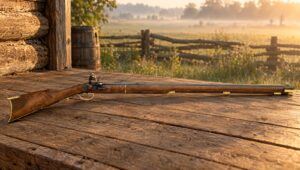
Traditions Kentucky Rifle
New flintlock shooters who want a real longrifle shape for under $600. |
Type: Rifle Caliber: .50 List price: $689.95 from Traditions |
Check Price ↓ |
 |
CHEAPEST FLINTLOCK
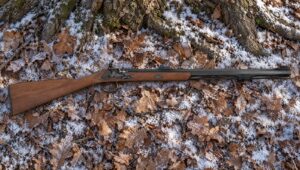
Traditions Deerhunter
Deer hunters who need a flintlock for the season and nothing more. |
Type: Rifle Caliber: .50 List price: $449.95 synthetic, $539.95 hardwood |
Check Price ↓ |
 |
BEST HAWKEN IN FLINT
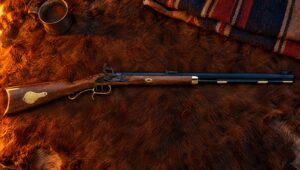
Traditions Hawken Woodsman
Hunters who want set triggers, real sights and an easy cleanup. |
Type: Rifle Caliber: .50 List price: $719.95 from Traditions |
Check Price ↓ |
 |
BEST MUSKET YOU CAN PRICE
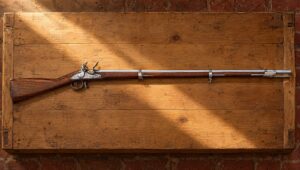
Pedersoli 1816 Harpers Ferry
Buyers who want an American military flintlock they can order from a dealer today. |
Type: Musket Caliber: .69 List price: $2,107.80 from Taylor’s |
Check Price ↓ |
 |
BEST FLINTLOCK PISTOL FOR THE MONEY
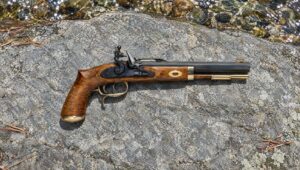
Traditions Trapper Pistol
Anyone who wants a flintlock pistol without spending rifle money. |
Type: Pistol Caliber: .50 List price: $544.95 from Traditions |
Check Price ↓ |
Table of Contents
How a Flintlock Works
A flintlock has three working parts on the side of the gun: the cock, the frizzen and the pan. The cock is a spring-loaded arm with a piece of flint clamped in its jaws. Facing it is the frizzen, an L-shaped piece of hardened steel that also covers the pan, a small dish that holds a pinch of fine priming powder.
Pull the trigger and the cock snaps forward. The National Park Service describes what happens next at Fort Scott: the flint strikes the steel, and as the steel snaps back the sparks are forced down onto the priming charge. That flash passes through a pin-sized hole in the barrel and lights the main charge.
Britannica dates the true flintlock to France in the early 17th century and says the percussion lock outmoded it in the first half of the 19th. The Park Service says the small brass percussion cap arrived in the 1830s and went on to make flintlock arms obsolete.
You’ll feel all of this when you shoot one. There’s a click, a flash next to your face and then the shot, and the gap between them is long enough to pull you off target if you flinch. Learning to hold through that delay is the whole skill of shooting flintlock guns.
Flintlock Rifles
Six flintlock rifles, from long Kentucky and Pennsylvania patterns to a half-stock Hawken and two built for deer season. All six are .50 caliber. If you want percussion options alongside these, our best traditional muzzleloaders roundup ranks both lock types. Our Kentucky rifle guide goes deeper on that one pattern, with percussion models and a kit.
1. Traditions Kentucky Rifle: Best First Flintlock
- Caliber: .50
- Barrel: 33.5 inches, blued, 1:66 twist
- Lock: Flintlock, color case hardened
- Trigger and sights: Single trigger, fixed blade sights
- Maker’s price: $689.95 from Traditions
| Category | Rating |
|---|---|
| Value | 5/5 |
| Period Look | 4/5 |
| Ease of Use | 4/5 |
Pros
- Cheapest full-stock longrifle here
- Slow twist suits patched balls
- Brass furniture looks right
Cons
- Fixed sights only
- Two-piece stock shows a joint
- Single trigger is plain

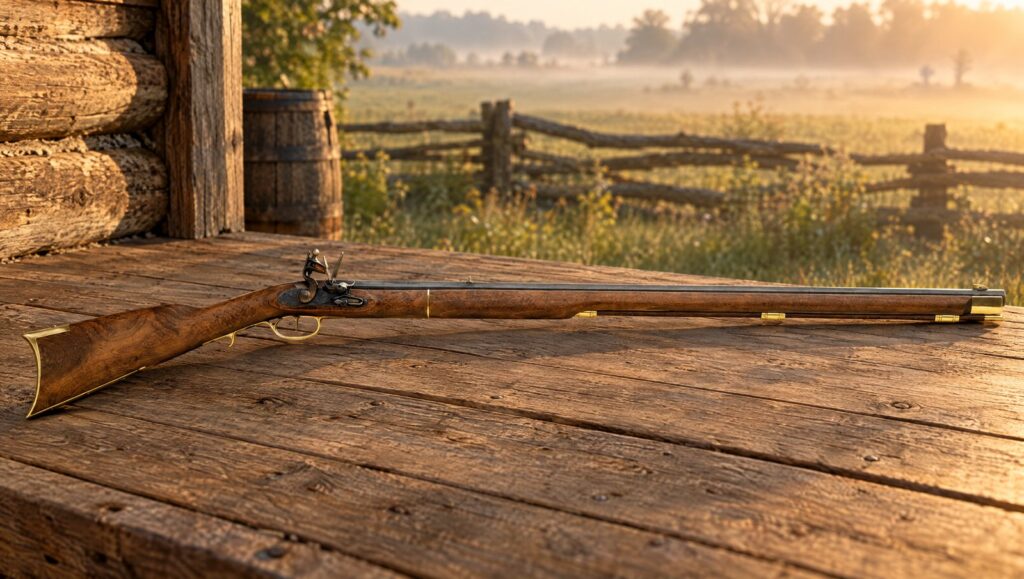
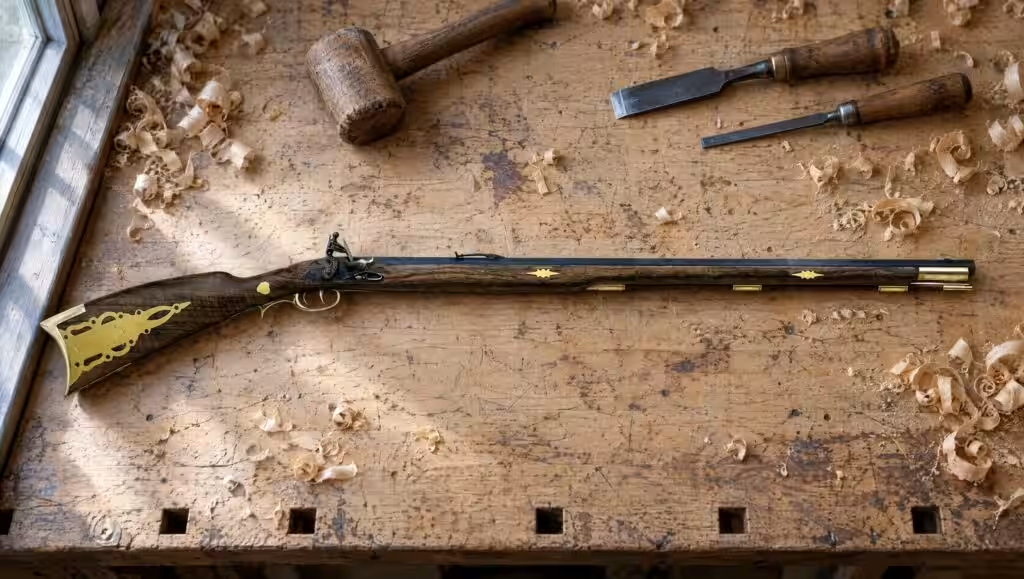
This is the rifle I’d hand to anyone who wants to find out whether flintlocks are for them. It’s a .50 with a 33.5-inch barrel and a 1:66 twist, which Traditions cuts for patched round balls. The full-length stock is two pieces of walnut-finished hardwood that meet at a brass band.
Palmetto State Armory had it at $589.99 when I checked, and Farnsworth Firearms listed it at $470.29. Traditions asks $689.95 direct.
I shot mine with a .490 ball and a .015 patch over 70 grains of 2F, the bottom of the most accurate range in Traditions’ sidelock manual for a .50 with a barrel over 30 inches. Five shots went into 2.5 inches at 50 yards from a rest. Out of 40 shots I had three flashes in the pan, all before I learned to wipe the frizzen every few rounds.
The sights are a blade and a fixed notch, so you adjust by changing your hold or your load. If you’d like a brass patch box and double set triggers on the same rifle, Traditions sells it as the Deluxe Kentucky for $719.95.
Best For: New flintlock shooters who want a real longrifle shape for under $600.
2. Traditions Pennsylvania Rifle: Best Dressed Longrifle
- Caliber: .50
- Barrel: 33.5 inches, blued, 1:66 twist
- Overall length: 49 inches
- Trigger and sights: Double set trigger, adjustable rear sight
- Maker’s price: $1,159.95 from Traditions
| Category | Rating |
|---|---|
| Value | 3/5 |
| Period Look | 5/5 |
| Ease of Use | 4/5 |
Pros
- Pierced brass patch box
- Double set trigger
- Adjustable rear sight
Cons
- Costs two-thirds more than the Kentucky
- Thin dealer supply
- Won’t ship to nine places

The Pennsylvania is the same .50 caliber, 33.5-inch, 1:66 barrel as the Kentucky in a far fancier stock. You get a pierced brass patch box, brass inlays along the forestock, a toe plate and a double set trigger. Traditions says it shortened the rifle a little to make it handier, and it’s 49 inches overall.
It’s harder to find than the Kentucky. Farnsworth Firearms had the flintlock at $784.24 and Kentucky Gun Co at $994.67 when I checked, against $1,159.95 from Traditions.
The set trigger is what you’re paying for at the bench. Pull the rear trigger first and the front one breaks with almost no pressure, which helps a lot when you’re trying to hold still through a flintlock’s delay. Mine put five balls into 2 inches at 50 yards with the same ball and patch I use in the Kentucky.
Traditions won’t ship this one to Rhode Island, Hawaii, California, New Jersey, New York, Illinois, Michigan, Ohio or Canada. That’s a longer list than its other sidelocks carry, so check before you order.
Best For: Buyers who want a longrifle that looks as good on the wall as it shoots.
3. Pedersoli Kentucky Rifle: Best Built Longrifle
- Caliber: .50, also made in .32 and .45
- Barrel: 35.56 inches, blued octagonal, 1:48 twist
- Weight: 7.71 pounds
- Stock: One-piece oil-finished walnut, brass furniture
- Importer’s price: $1,213.09 from Taylor’s
| Category | Rating |
|---|---|
| Value | 3/5 |
| Period Look | 5/5 |
| Ease of Use | 4/5 |
Pros
- One-piece walnut stock
- Faster 1:48 twist
- Large brass patch box
Cons
- Over $1,000
- One dealer listing right now
- Single trigger at this price
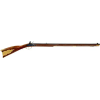
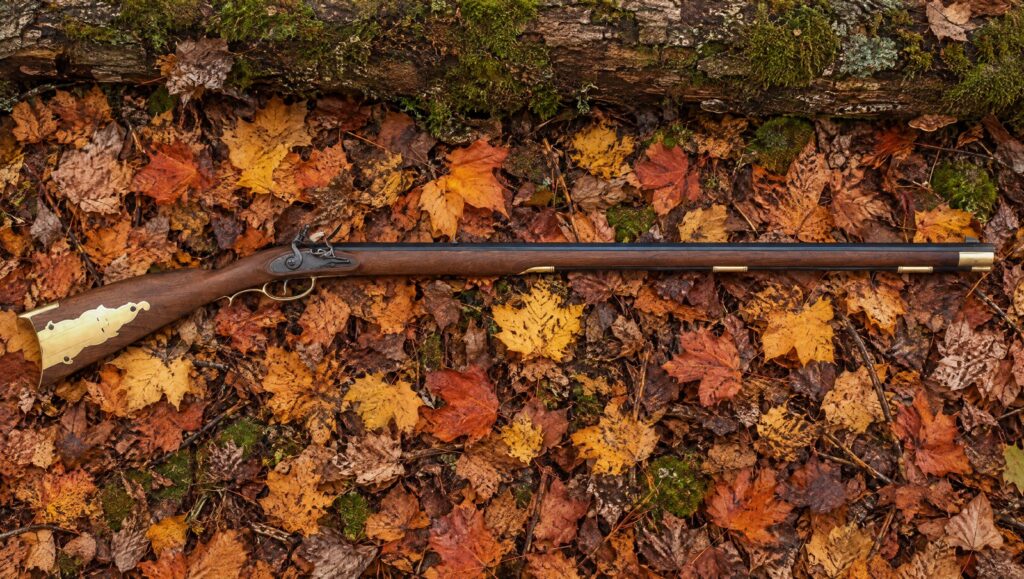
Pedersoli builds its Kentucky in Gardone, Italy, and Taylor’s and Company imports it. The big difference from the Traditions is the stock, which is a single piece of oil-finished walnut with no joint. The barrel is longer too, at 35.56 inches, with eight grooves and a 1:48 twist.
Battlehawk Armory was the only dealer listing it when I checked, at $1,087.22. Taylor’s lists the .50 at $1,213.09.
Pedersoli’s load table lists 55 grains of black powder for the .50 flintlock Kentucky, under a .490 ball and a .010 patch. I stayed there and got 1.8 inches at 50 yards, the best group I shot with any rifle on this page. The lock is quicker than the Traditions locks, and I had one misfire in 30 shots.
The case-hardened lock plate and the big brass patch box are a clear step up in finish. Whether that’s worth another $500 depends on how much you care about the joint in a two-piece stock.
Best For: Shooters who want a one-piece walnut longrifle and will pay for the finish.
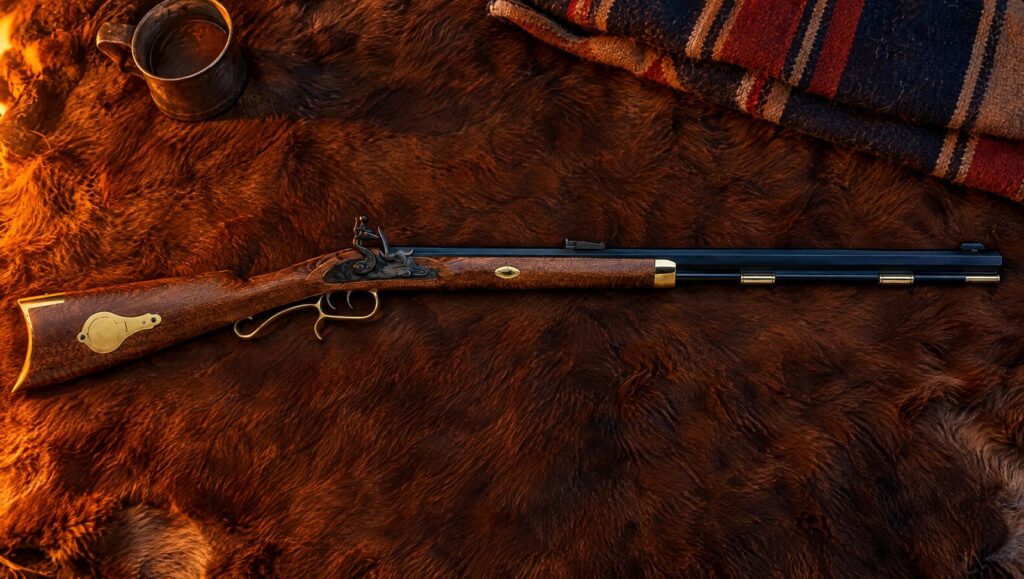
4. Traditions Hawken Woodsman: Best Hawken in Flint
- Caliber: .50
- Barrel: 28 inches, blued octagonal
- Weight and length: 7 7/8 pounds, 44.5 inches overall
- Trigger and sights: Double set triggers, click-adjustable rear sight
- Maker’s price: $719.95 from Traditions
| Category | Rating |
|---|---|
| Value | 4/5 |
| Period Look | 4/5 |
| Ease of Use | 5/5 |
Pros
- Hooked breech for easy cleaning
- Click-adjustable rear sight
- Double set triggers
Cons
- Shorter sight radius than a longrifle
- Heavy for a 28-inch rifle
- Percussion look-alikes in listings
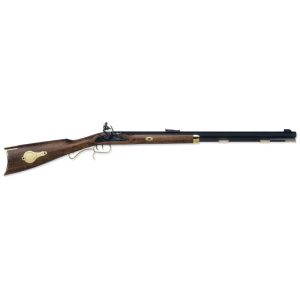
The Hawken is the short, heavy half-stock rifle of the Rocky Mountain fur trade. The Cody Firearms Museum says the Hawken brothers’ St. Louis shop ran under their name from 1815 to 1858 and built its rifles by hand, with .54 the average caliber. The museum’s own example is a percussion rifle, and Traditions sells the Woodsman both ways.
It’s also the easiest rifle here to live with. The hooked breech lets you lift the barrel out of the stock for cleaning, the rear sight adjusts with clicks, and the trigger guard has room for a gloved hand. Palmetto State Armory had the flintlock at $620.99 when I checked.
Watch the listings on this one. The cheaper Woodsman rows at other dealers are the percussion model, and one dealer’s title calls a percussion rifle a flintlock, so I’ve filtered those out of the card above.
With a .490 ball, a .015 patch and 50 grains of 2F, the low end of Traditions’ most accurate range for a 28-inch .50, mine shot 2.25 inches at 50 yards. The adjustable sight meant I could zero it without filing anything.
Best For: Hunters who want set triggers, real sights and an easy cleanup.
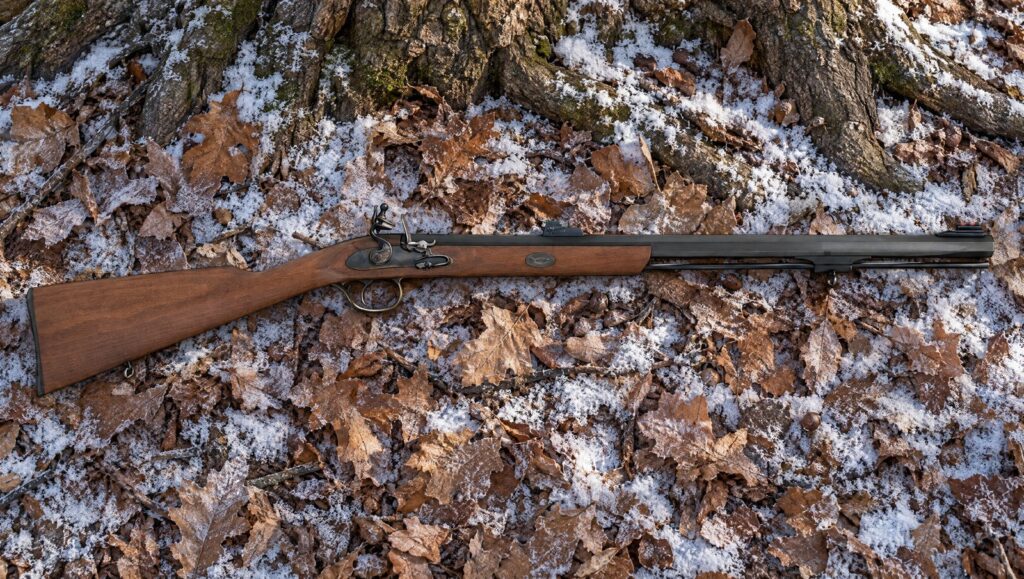
5. Traditions Deerhunter: Cheapest Flintlock
- Caliber: .50
- Barrel: 24 inches, octagonal, 1:48 twist
- Sights: Williams fiber optic, adjustable
- Stock: Black synthetic or select hardwood
- Maker’s price: $449.95 synthetic, $539.95 hardwood
| Category | Rating |
|---|---|
| Value | 5/5 |
| Period Look | 2/5 |
| Ease of Use | 5/5 |
Pros
- Lowest price on this list
- Fiber optic sights
- Light and short in thick woods
Cons
- Doesn’t look like history
- Short barrel, short sight radius
- Plain hunting trigger
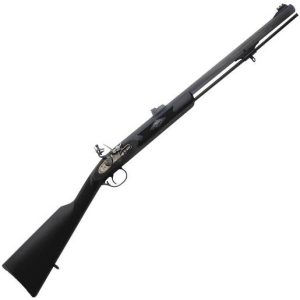

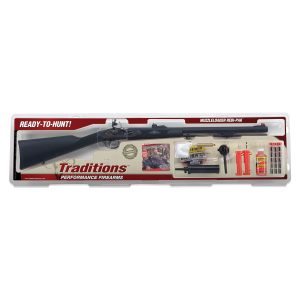
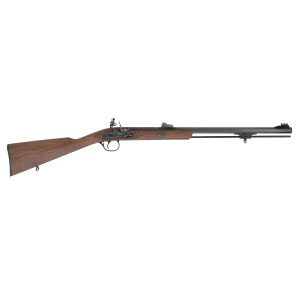
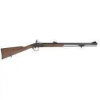
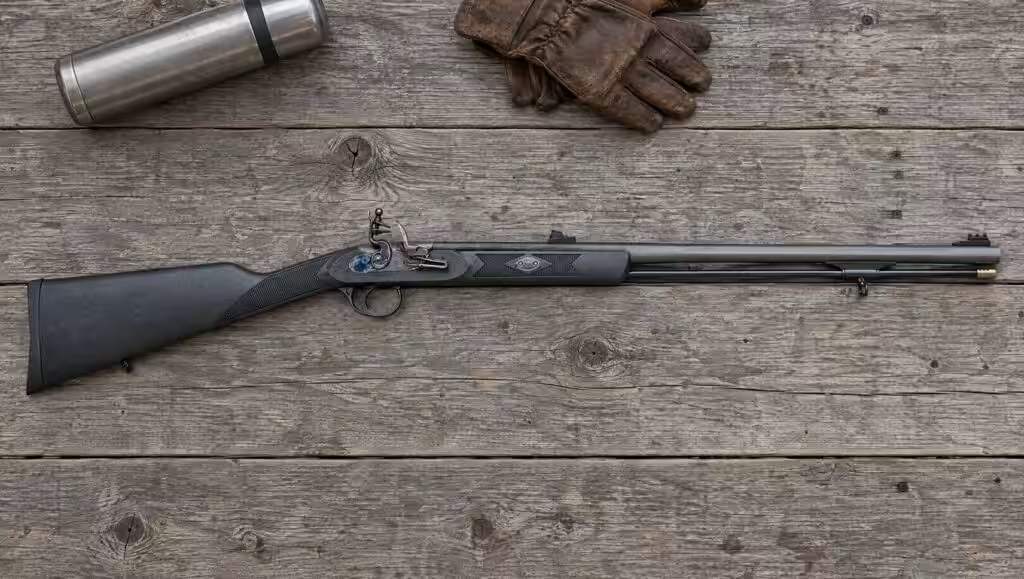
The Deerhunter is a flintlock built to fill a deer tag, not to win a costume contest. It has a 24-inch barrel, fiber optic sights, sling studs and a recoil pad, and you can have it in black synthetic or hardwood. Traditions says the 1:48 barrel handles full-bore bullets, sabots and patched round balls.
It’s the cheapest way into a flintlock. Sportsman’s Warehouse had the black synthetic model at $449.99 when I checked, Farnsworth Firearms listed one at $309.29, and Palmetto State Armory had the Redi-Pak kit with accessories at $497.99.
The short barrel carries well and points fast. My groups ran about 3 inches at 50 yards, a little wider than the long rifles, and the glowing sights were easy to pick up in the last half hour of light.
I’d buy this over the pretty rifles if hunting is the only reason you want a flintlock. Our best deer hunting rifles guide covers the centerfire side of the season.
Best For: Deer hunters who need a flintlock for the season and nothing more.
6. Traditions PA Pellet Ultralight: Most Modern Flintlock
- Caliber: .50
- Barrel: 26 inches, Chromoly steel, Cerakote finish
- Twist: 1:28 for saboted bullets
- Sights: Alloy fiber optic
- Maker’s price: $589.95 from Traditions
| Category | Rating |
|---|---|
| Value | 4/5 |
| Period Look | 1/5 |
| Ease of Use | 5/5 |
Pros
- Fires loose powder or pellets
- Fast twist for modern bullets
- Cerakote shrugs off weather
Cons
- Nothing traditional about it
- Too fast a twist for balls
- Dealer prices vary a lot
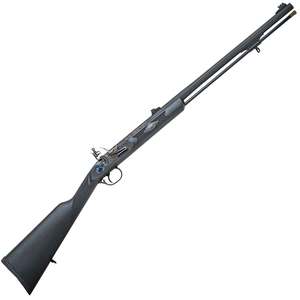
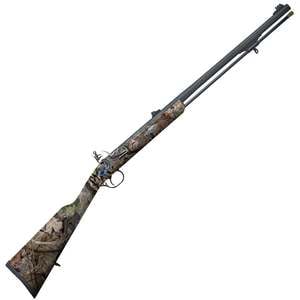
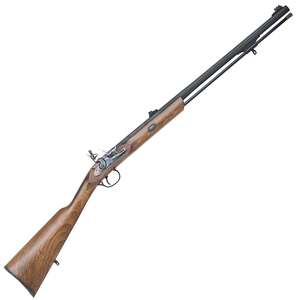
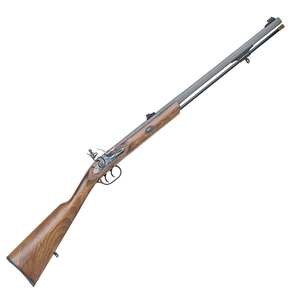
This is a flintlock designed around modern hunting loads. The barrel is Chromoly steel with a Cerakote finish and a 1:28 twist for saboted bullets, and Traditions’ breech plug lets it fire loose powder or pellets. The frizzen is hardened for a stronger spark.
Traditions pitches it at hunters with a flintlock-only season, and it’s the right tool for that job. The fast twist that suits sabots is the wrong one for patched round balls, so don’t buy it for plinking with cheap lead.
Prices were split when I checked. Palmetto State Armory listed the black model at $510.99, and Sportsman’s Outdoor Superstore had it from $589.99. Traditions asks $589.95.
I shot it with saboted bullets and the pellet load from Traditions’ PA Pellet manual, and it held about 2 inches at 75 yards. Ignition was the most reliable of any flintlock here, with no misfires in 25 shots on a damp morning.
Best For: Hunters in flintlock-only seasons who want modern bullets and weatherproofing.
Flintlock Muskets
Three smoothbore military muskets, all made by Pedersoli in Italy and imported by Taylor’s and Company. Two of these flintlock guns fought the American Revolution and the War of 1812, and the third armed the US infantry that came after. They cost about three times what the Traditions Kentucky does.
7. Pedersoli Brown Bess: The Redcoat Musket
- Caliber: .75 smoothbore
- Barrel: 41.75 inches, round, bright steel
- Weight and length: 9.03 pounds, 57.69 inches overall
- Furniture: Brass, with a lock marked Grice 1762
- Importer’s price: $1,873.21 from Taylor’s
| Category | Rating |
|---|---|
| Value | 3/5 |
| Period Look | 5/5 |
| Ease of Use | 3/5 |
Pros
- The musket of the Revolution
- Huge, reliable lock
- Bayonet and scabbard available
Cons
- No rear sight at all
- Not stocked by our dealers
- Nine pounds and nearly five feet
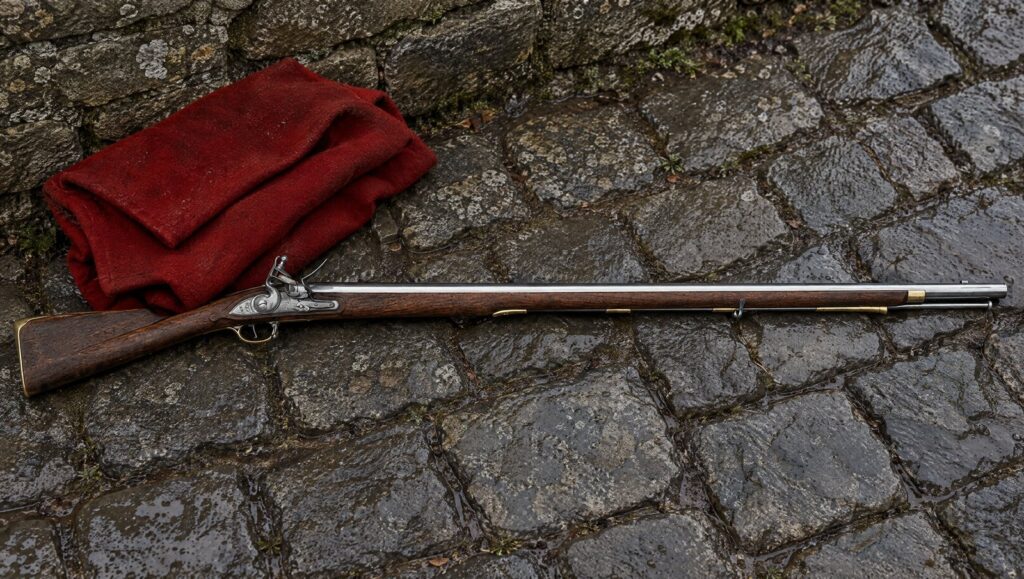
The Brown Bess was the standard weapon of the British infantry for more than a century. The National Park Service says redcoats carried it through the War of Independence, many Continental soldiers used it too, and it calls the Bess the principal infantry firearm of the War of 1812. Its smooth barrel was three-quarters of an inch across.
Pedersoli’s copy has a 41.75-inch bright steel barrel in a walnut stock with no barrel bands, brass furniture and a lock signed Grice and dated 1762. Taylor’s lists it at $1,873.21 and says no FFL dealer is required. None of our dealers had one when I checked, so there’s no price card here, and Taylor’s Brown Bess page is the place to order.
The Park Service says soldiers put its range at 50 to 100 yards and that trained men got off two or three shots a minute. That matches my experience. With a .732 ball, a .010 patch and 75 grains of black powder, the charge in Pedersoli’s load table, I kept five shots inside 6 inches at 50 yards.
There’s no rear sight, only a fixed blade up front. The lock is enormous and throws a shower of sparks, and it was the most reliable igniter of the three muskets.
Best For: Reenactors of the American Revolution and anyone who wants the most famous musket ever made.
8. Pedersoli 1766 Charleville: The Continental Army’s Musket
- Caliber: .69 smoothbore
- Barrel: 44.69 inches, round, bright steel
- Weight and length: 10.13 pounds, 59.13 inches overall
- Furniture: Steel, with barrel bands
- Importer’s price: $2,053.24 from Taylor’s
| Category | Rating |
|---|---|
| Value | 2/5 |
| Period Look | 5/5 |
| Ease of Use | 3/5 |
Pros
- The French musket America used
- Barrel bands make cleaning easier
- Kit version available
Cons
- Over $2,000
- Not stocked by our dealers
- Ten pounds, nearly five feet
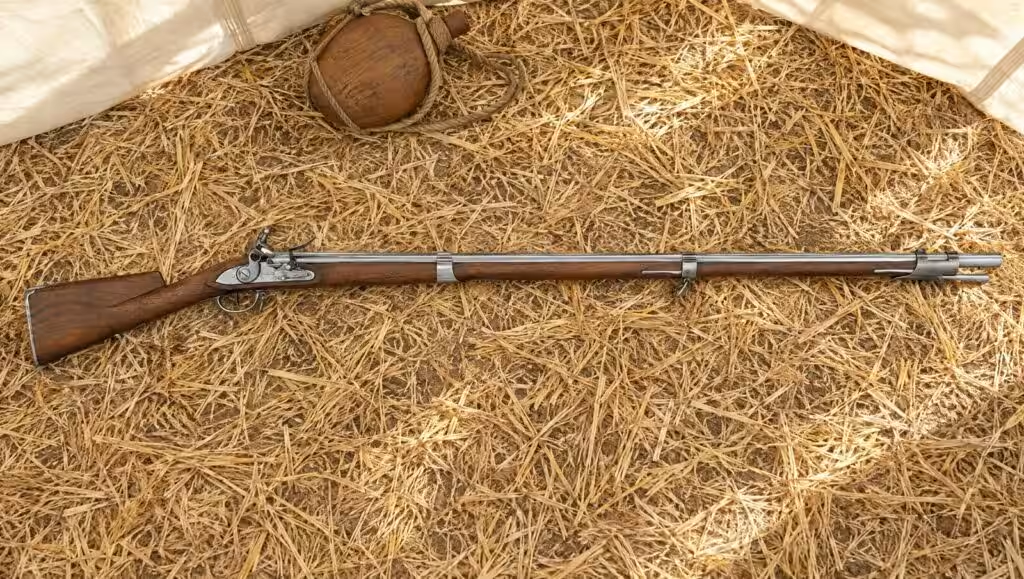
France armed much of the Continental Army. The Smithsonian’s Charleville musket record says the French government supplied large quantities of muskets, that the Charleville Model 1763 was the most common, and that some 25,000 arrived in March 1777 alone. The Museum of the American Revolution counts over 100,000 French arms imported during the war.
Pedersoli sells the lightened 1766 pattern as the 1763 Leger 1766 Charleville. It’s a .69 smoothbore with a 44.69-inch barrel held by steel bands, and at 10.13 pounds it’s the heaviest gun on this page. Taylor’s lists it at $2,053.24.
None of our dealers stocked it when I checked, so there’s no price card. Taylor’s Charleville page had it in stock, and Pedersoli also makes a 1795 Springfield musket in the same .69 caliber.
Pedersoli’s table lists 70 grains of black powder with a .675 ball and a .007 patch. It shot about like the Brown Bess for me, 7 inches at 50 yards, and the barrel bands make it much easier to take apart for cleaning than the Bess.
Best For: Reenactors on the American or French side, and collectors of Revolution-era arms.
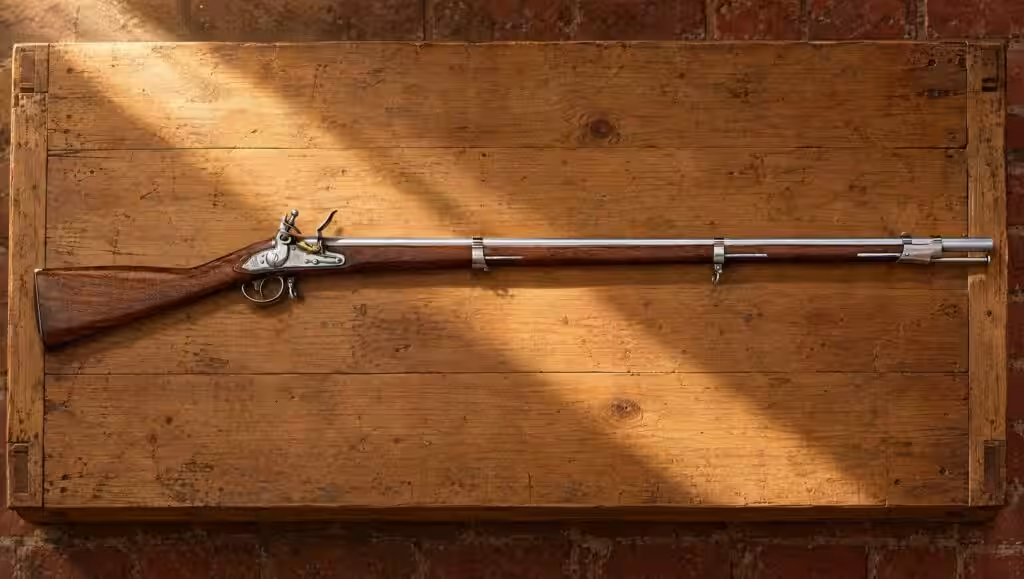
9. Pedersoli 1816 Harpers Ferry: Best Musket You Can Price
- Caliber: .69 smoothbore
- Barrel: 41.75 inches, round, bright steel
- Weight and length: 9.7 pounds, 57.06 inches overall
- Furniture: Steel, with barrel bands
- Importer’s price: $2,107.80 from Taylor’s
| Category | Rating |
|---|---|
| Value | 3/5 |
| Period Look | 5/5 |
| Ease of Use | 3/5 |
Pros
- The one musket dealers stock
- American pattern, American history
- Barrel bands, steel furniture
Cons
- About $2,000
- One listing calls it break action
- Heavy for casual shooting
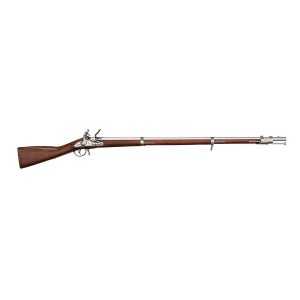
Taylor’s says the US Model 1816 musket was made from 1816 to 1844. The Park Service says it was produced at both the Harpers Ferry and Springfield armories and by several contractors, and that infantry at Fort Scott still carried .69 caliber flintlocks in the early 1840s.
It’s the only flintlock musket our dealers listed. Palmetto State Armory had Taylor’s 1816 Harpers Ferry at $2,050.99 and Battlehawk Armory at $1,863.12 when I checked. Taylor’s own price is $2,107.80, and its site showed it out of stock.
One warning about that Palmetto listing: its title calls the gun a break action rifle. It isn’t. The model number, 210091, is Taylor’s number for the .69 flintlock musket, and that’s what you’ll get.
The design was taken from the French 1777 musket, according to Taylor’s, and it loads and shoots like the Charleville, with the same 70-grain charge, .675 ball and .007 patch in Pedersoli’s table. Taylor’s adds that the flintlocks were later converted to percussion for use in the Civil War, which our Civil War guns guide picks up.
Best For: Buyers who want an American military flintlock they can order from a dealer today.
Flintlock Pistols
Two single-shot flintlock pistols in .50 caliber. They’re the hardest flintlocks to shoot well and the most fun to own, and one of them costs less than most of the rifles on this list.
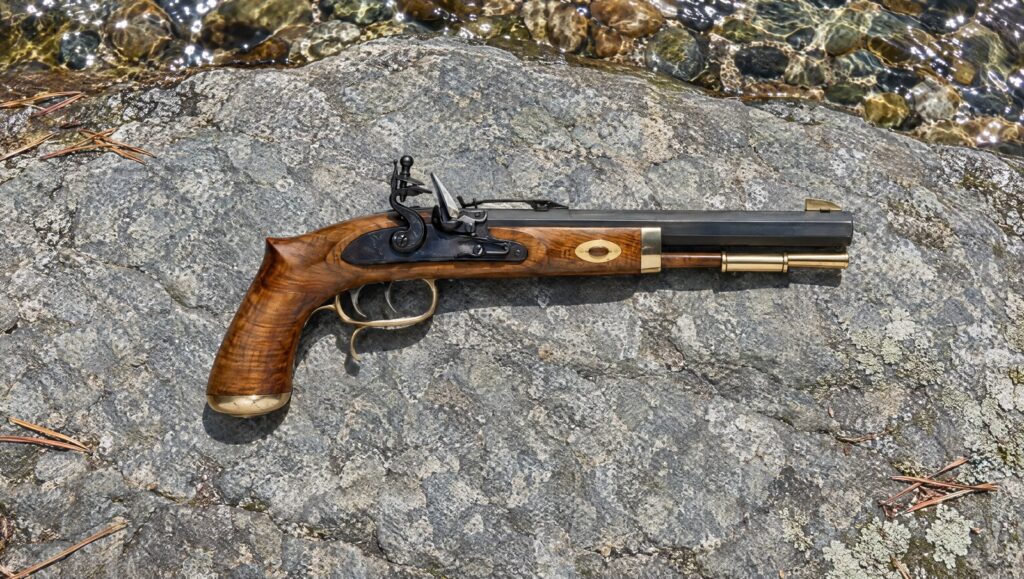
10. Traditions Trapper Pistol: Best Flintlock Pistol for the Money
- Caliber: .50
- Barrel: 9.75 inches, blued octagonal, 1:20 twist
- Overall length: 15.5 inches
- Trigger and sights: Double set triggers, adjustable rear sight
- Maker’s price: $544.95 from Traditions
| Category | Rating |
|---|---|
| Value | 4/5 |
| Period Look | 4/5 |
| Ease of Use | 3/5 |
Pros
- Double set triggers on a pistol
- Adjustable rear sight
- Cheaper than most rifles here
Cons
- One dealer charges over list
- Percussion model shares the name
- Hard to shoot well offhand

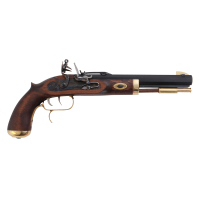
The Trapper is a .50 caliber single-shot with a 9.75-inch octagonal barrel, the sort of pistol a mountain man kept as a backup. It’s unusual for a pistol in having double set triggers and an adjustable rear sight, and both make a real difference with a slow lock.
Shop around on this one. Palmetto State Armory had the flintlock at $586.99 when I checked, which is more than the $544.95 Traditions charges direct. Farnsworth Firearms listed it at $363.18.
Traditions’ manual gives 20 grains of 3F as the low end of its most accurate load for a .50 pistol, with a .490 ball and a .015 patch. At 15 yards I shot 3.5-inch groups with two hands and the set trigger. One-handed, the way they did it, I was happy to hit a paper plate.
The same pistol comes in percussion and as a kit, and dealers mix them under one name. Check that the listing says flintlock, or model P1090, before you buy.
Best For: Anyone who wants a flintlock pistol without spending rifle money.
11. Pedersoli Kentucky Pistol: The Classic American Pistol
- Caliber: .50, also made in .45 and .54
- Barrel: 10.38 inches, blued octagonal, 1:18 twist
- Overall length: 15.38 inches
- Stock and sights: One-piece walnut, dovetailed blade sights
- Importer’s price: $811.20 from Taylor’s
| Category | Rating |
|---|---|
| Value | 3/5 |
| Period Look | 5/5 |
| Ease of Use | 3/5 |
Pros
- One-piece walnut stock
- Case-colored lock
- Matches the Kentucky rifle
Cons
- Not stocked by our dealers
- Out of stock at the importer
- Single plain trigger
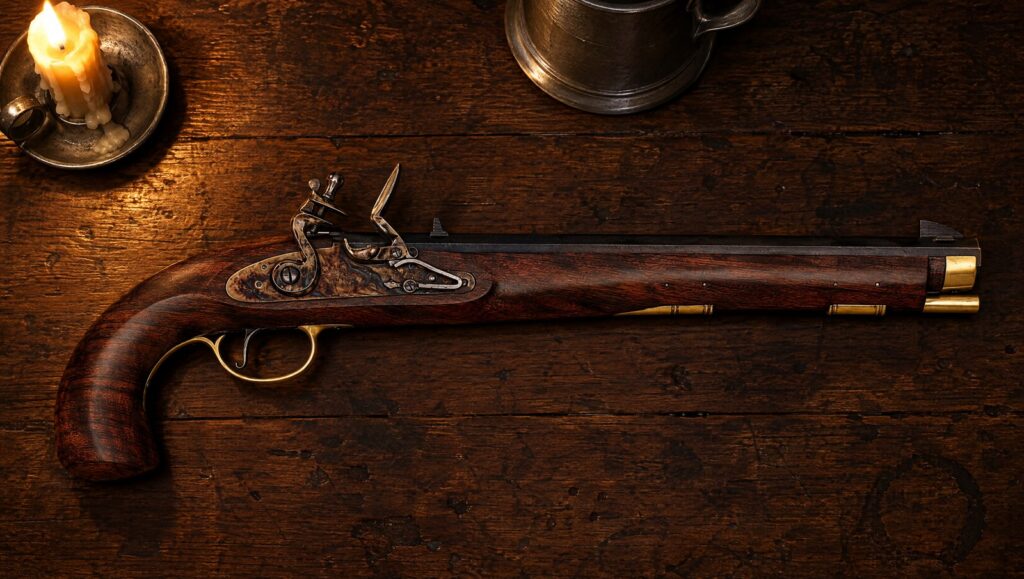
This is the pistol that goes with a Kentucky rifle: a one-piece walnut stock, a 10.38-inch octagonal barrel, brass furniture and a case-colored lock. Taylor’s says the pattern became famous at the Battle of New Orleans.
Taylor’s lists the .50 flintlock at $811.20, and its site showed it out of stock when I checked. None of our dealers listed it when I checked, so there’s no price card here. Taylor’s Kentucky pistol page is the importer’s page, and it says no FFL dealer is required.
Pedersoli’s load table lists 25 grains of black powder for the .50 flintlock Kentucky pistol, with a .490 ball and a .010 patch. With that load I shot 3-inch groups at 15 yards, a touch better than the Trapper, and the lock sparked every time in 20 shots.
It feels better made than the Traditions pistol and it costs about 50 percent more. If you like the look of matched pistols, our piece on famous duels covers the flintlocks that settled arguments.
Best For: Collectors who want a pistol to match a Kentucky rifle.
Flintlock vs Percussion
Flint or percussion? A percussion gun swaps the flint, frizzen and pan for a small brass cap on a nipple. It fires faster after the trigger breaks, it works better in rain, and it’s easier to learn on.
A flintlock needs nothing you can’t carry in a pouch. Run out of caps and a percussion gun is a club. With a flint and powder, a flintlock still shoots. That mattered on the frontier, and it’s a big part of why people still choose flint today.
My advice is simple. Buy percussion if you only want to hunt and your state allows it, and buy flint if the history is the point or your season requires it. Our best traditional muzzleloaders roundup compares both, best inline muzzleloaders covers the modern end, and best black powder revolvers covers cap and ball wheelguns.
What You Need to Shoot a Flintlock
Flintlock guns need more gear than cartridge guns, and almost none of it comes in the box. Here’s the short list I’d start with.
- Black powder. Real black powder, in the granulation your maker names. Traditions’ manual says 2F for .45 to .58 caliber rifles, 3F for pistols and 4F for the pan.
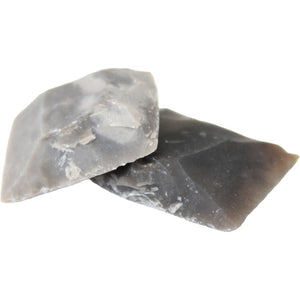
- Flints. They wear out and they break. I get 20 to 40 shots from one before it needs knapping or replacing.
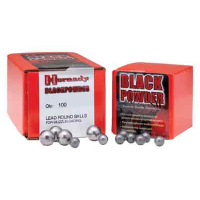
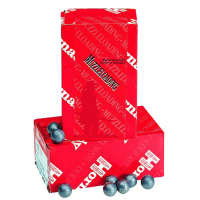
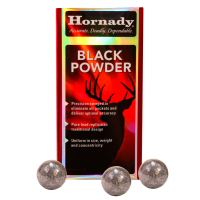
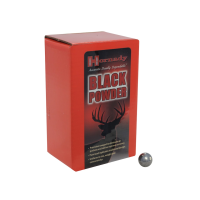
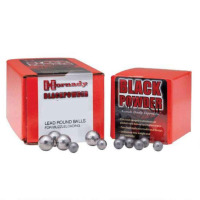
- Round balls and patches. A .50 caliber rifle takes a .490 ball. Patch thickness comes from the maker’s table.
- A powder measure. You load by volume from a measure, never straight from the flask or horn.
- A ball starter and a range rod. The starter gets a tight patched ball into the muzzle, and the rod seats it on the powder.
- A vent pick and a pan brush. Most flintlock misfires are a clogged touch hole or a dirty pan.
- Cleaning gear. Black powder fouling pulls moisture and rusts steel fast, so clean the same day. Our best gun cleaning solvent guide covers solvents.
Flints and balls are the two things you’ll buy again and again. Sportsman’s Warehouse had Traditions’ hand knapped flints at $9.95 when I checked, and Brownells had a box of 100 Hornady .490 balls at $13.99.

Flintlock Loads From the Makers
Powder charges are the one thing you must not guess. The figures below are the low end of each maker’s recommended load for the exact guns named: the bottom of Traditions’ most accurate range, and Pedersoli’s target charge. They’re a place to start, not a recipe.
| Gun | Ball | Patch | Lowest listed charge | Source |
|---|---|---|---|---|
| Traditions Kentucky Rifle, .50, 33.5 inch barrel | .490 | .015 | 70 grains of 2F | Traditions sidelock manual, page 48 |
| Traditions Hawken Woodsman, .50, 28 inch barrel | .490 | .015 | 50 grains of 2F | Traditions sidelock manual, page 48 |
| Traditions Trapper Pistol, .50 | .490 | .015 | 20 grains of 3F | Traditions sidelock manual, page 48 |
| Pedersoli Kentucky Rifle, .50 flintlock | .490 | .010 | 55 grains | Pedersoli black powder loads |
| Pedersoli Kentucky Pistol, .50 flintlock | .490 | .010 | 25 grains | Pedersoli black powder loads |
| Pedersoli Brown Bess, .75 | .732 | .010 | 75 grains | Pedersoli black powder loads |
| Pedersoli 1766 Charleville, .69 | .675 | .007 | 70 grains | Pedersoli black powder loads |
| Pedersoli 1816 Harpers Ferry, .69 | .675 | .007 | 70 grains | Pedersoli black powder loads |
Sources: Traditions’ sidelock manual and Pedersoli’s suggested black powder loads, both read on October 10, 2026. Confirm every figure against the manual that comes with your gun, measure by volume, start at the listed charge and never go past the maximum your maker prints.
Traditions puts it in capital letters, and so will I: never use smokeless powder of any type or in any quantity in a muzzleloader. Use black powder or a substitute your maker approves, and prime the pan with 4F.
Pedersoli’s manual calls for FFg in rifles of .45 caliber and larger and FFFg in pistols. Powder pellets are for the PA Pellet only, since Traditions’ manual says preformed powder is not recommended in sidelock guns.
If the pan flashes and the gun doesn’t fire, keep the muzzle pointed downrange. Pedersoli’s manual says to wait at least one full minute before repriming.
Are Flintlock Guns Legal? The Federal Antique Rule
Federal law treats most flintlock guns as antiques, not firearms. 18 U.S.C. 921(a)(16) defines an antique firearm to include any muzzle loading rifle, shotgun or pistol that is designed to use black powder or a substitute and cannot use fixed ammunition. The same section says the term firearm does not include an antique firearm.
In practice that means a new flintlock can ship to your door in most of the country with no dealer transfer. Taylor’s product pages for the Brown Bess and the Kentucky pistol both say no FFL dealer is required.
There are limits. The federal definition leaves out any muzzleloader built on a firearm frame or receiver, any firearm converted into a muzzleloader, and any that can be readily converted to fire fixed ammunition by swapping the barrel, bolt or breechblock. None of the 11 guns here is that kind.
State law is a different matter, and the rules vary. Traditions says it cannot ship black powder guns to New Jersey, New York, Illinois, Michigan or Ohio, and tells buyers everywhere else to review their state and local laws before ordering. Hunting seasons set their own rules on locks, sights and bullets too, so read your state’s regulations before you buy for a season.
Originals are covered by the same section, since anything made in or before 1898 is an antique. Our antique firearms guide goes through that side of the market.
Which Flintlock Should You Buy?
If you want one of these flintlock guns and you’ve never owned one, buy the Traditions Kentucky. It’s a real longrifle shape at $589.99, and it’ll teach you everything the expensive guns will.
For a hunting season, pick the Deerhunter on price or the PA Pellet Ultralight if you want modern bullets. If you’re drawn to the history, save for the Brown Bess or the 1816 Harpers Ferry. And if you just want to make smoke in the backyard, the Trapper pistol is the most fun per dollar on the page.
Once the bug bites, our look at the history of firearms shows where these guns fit in the long story.
Frequently Asked Questions
What is a flintlock gun?
A flintlock is a muzzleloading gun fired by a piece of flint striking a steel frizzen. The sparks light priming powder in a pan, and that flash sets off the main charge through a small hole in the barrel. Britannica dates the true flintlock to France in the early 17th century.
Can you still buy a flintlock?
Yes. Traditions and Pedersoli both make new flintlock rifles, muskets and pistols. The 11 on this page run from about $450 for a Traditions Deerhunter to just over $2,100 for a Pedersoli 1816 Harpers Ferry musket at list price.
Do you need a background check to buy a flintlock?
Federal law doesn't require one for most of them. 18 U.S.C. 921(a)(16) counts a muzzleloader that is designed for black powder and cannot use fixed ammunition as an antique firearm, and antiques are not firearms under that law. State and local rules vary, so check yours before you order.
What is the difference between a flintlock rifle and a musket?
A rifle has spiral grooves in the barrel that spin the ball, and a musket has a smooth bore. The Brown Bess and the Charleville are smoothbore muskets built for fast loading, and the National Park Service says soldiers put the Brown Bess's range at 50 to 100 yards.
How accurate is a flintlock rifle?
A good .50 caliber flintlock rifle will shoot 2 to 3 inch groups at 50 yards with a patched round ball. My best was 1.8 inches at 50 yards with the Pedersoli Kentucky. Smoothbore muskets are far looser, at 6 to 7 inches at the same distance.
What powder does a flintlock use?
Black powder. Traditions' sidelock manual recommends 2F for .45 to .58 caliber rifles, 3F for pistols and 4F for priming the pan. Never use smokeless powder in a muzzleloader, and take your charge from the manual that came with your gun.
Is a flintlock better than a percussion gun?
A percussion gun fires faster and handles wet weather better. Flint needs only a flint and powder, with no caps to run out of. Buy flint if history is the point or your hunting season requires it, and percussion if you only want an easier muzzleloader.
How much does a Brown Bess cost?
Pedersoli's Brown Bess lists at $1,873.21 through its US importer, Taylor's and Company. None of our dealers stocked it when I checked, so the importer is the place to order. A bayonet and scabbard are sold separately.
5,473+ Gun & Ammo Deals
Updated daily from 200+ top retailers. Filter by category, caliber, action type, and price.