

Affiliate disclosure: This Glock 21 review contains affiliate links. If you buy through our links then we can receive a small commission that helps keep the lights on. You don’t pay anything more.
- Treat every gun as loaded
- Point the muzzle in a safe direction
- Keep your finger off the trigger until you’re ready to shoot
- Know your target and what’s beyond
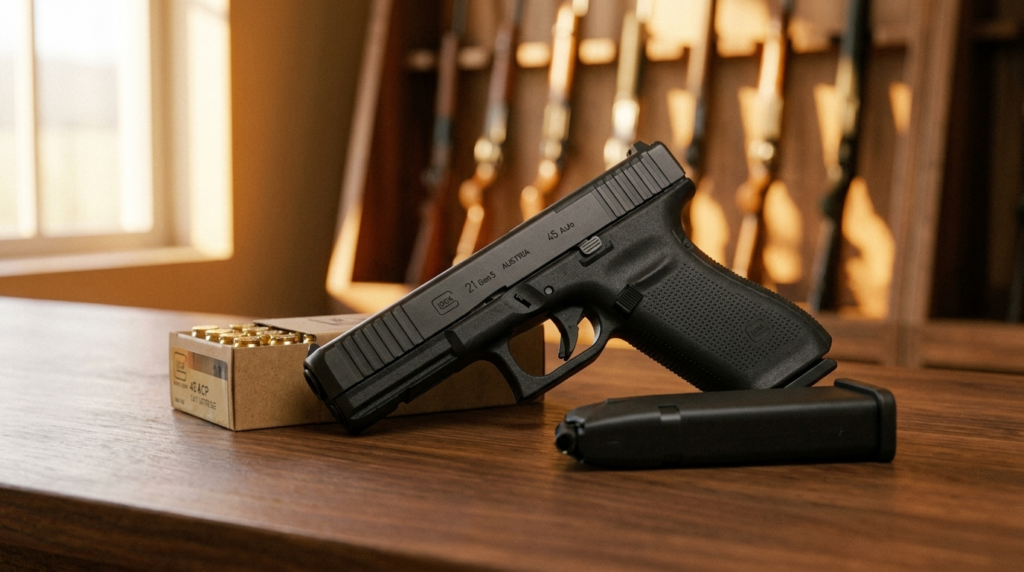
Table of Contents
How we tested: Every pick here is ranked against our testing methodology. Minimum round counts, accuracy and reliability protocols, the failures that disqualify a gun.
Review: Glock 21 – The 13-Round .45 That Refuses to Quit
Our Rating: 8.8/10
- RRP: $749 (Gen 5 MOS), $687 (Gen 4)
- Street Price: $620-$649 (Check our live pricing for the best current deal)
- Caliber: .45 ACP
- Action: Striker-fired, Safe Action
- Capacity: 13+1
- Barrel Length: 4.61″
- Overall Length: 8.03″
- Height: 5.51″
- Width: 1.34″
- Weight: 26.5 oz (without magazine), about 29 oz with an empty mag
- Frame: Polymer, current Gen 5 MOS
- Optics: MOS optic-ready slide (Gen 5 MOS)
- Made in: Smyrna, Georgia, USA
Pros
- 13 rounds of .45 ACP, a class-leading capacity for a duty-size big-bore
- Legendary Glock reliability; it runs wet, dry, dirty, and freezing
- The current Gen 5 MOS adds a better barrel, no finger grooves, and an optics cut
- Soft-shooting for a .45 thanks to the polymer frame and dual recoil spring
- Massive aftermarket and holster support, parts everywhere
Cons
- The grip is genuinely large; small hands struggle to reach the trigger
- The stock Glock trigger is fine, not great, and most buyers upgrade it
- It is big and heavy for concealed carry compared to a 9mm or the compact Glock 30
Quick Take
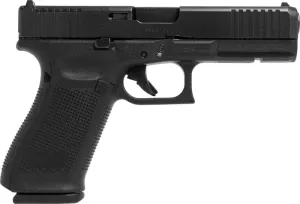
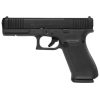
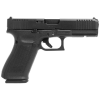
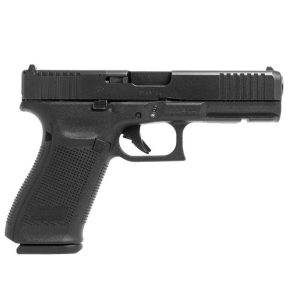
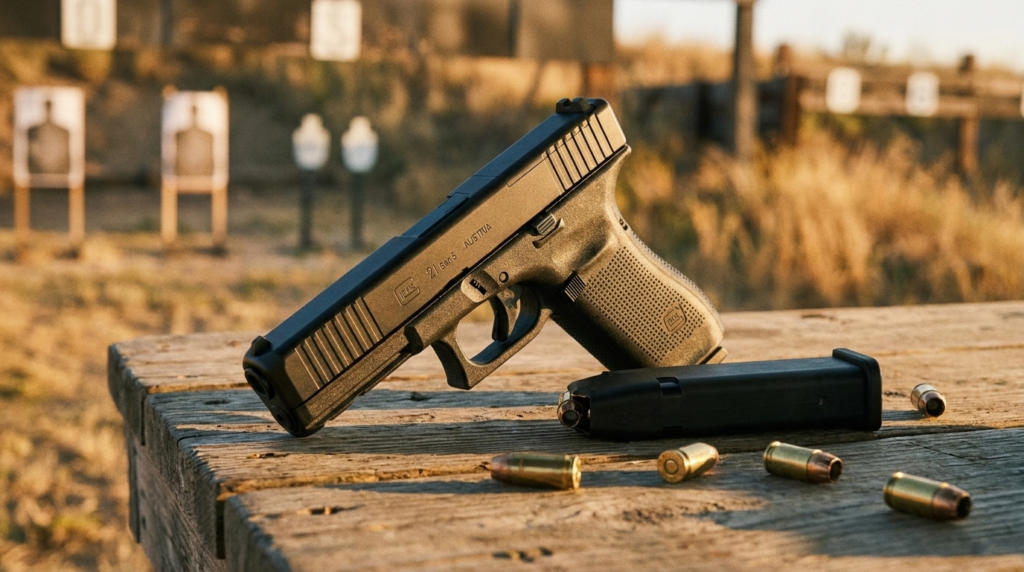
The Glock 21 is a full-size, striker-fired .45 ACP pistol that holds 13+1 rounds, runs with Glock’s bombproof reliability, and now comes optics-ready in the current Gen 5 MOS for around $600. It’s the workhorse big-bore Glock that duty users have trusted for decades.
When Glock built a .45, the genius was capacity. A traditional 1911 holds seven or eight rounds of .45; the Glock 21 holds 13, nearly doubling the firepower of a big-bore handgun while keeping the simple, reliable Safe Action system. For agencies and shooters who wanted .45 ACP without the 1911’s capacity penalty or finicky reputation, it was the obvious answer. FN has since pushed .45 capacity to 15 and 18 rounds; see our FN 545 review.
I ran a Gen 5 MOS hard to see whether the old warhorse still earns its keep against modern competition. It does. The reliability is exactly what you expect from a Glock, the .45 shoots softer than you’d think, and the optics cut drags it into the present. The grip is huge and the trigger is just okay, but as a duty, home-defense, and range .45, it remains one of the safest bets in the gun world.
Best For: Home defense, duty use, range shooting, and anyone who wants maximum .45 ACP capacity with total reliability. See how it ranks in our best .45 ACP pistols and best Glocks guides.
Why Glock Built the 21 This Way
Glock built the 21 to bring .45 ACP into the modern, high-capacity, reliability-first world that the 9mm Glock 17 had already conquered. The .45 had a devoted following, especially in American law enforcement and among 1911 traditionalists, but those guns were heavy, expensive, and limited to single-stack capacity.
Glock’s answer was to take the proven Glock system and build it around the fat .45 ACP cartridge. A polymer frame kept the weight reasonable despite the big bore, and a wide double-stack magazine pushed capacity to 13 rounds, a number no 1911 could touch. The Safe Action trigger and simple striker design meant it ran with the same go-anywhere reliability as every other Glock, which is the brand’s entire reason for existing.
The platform has evolved without losing the plot. The Gen 4 added a modular grip and a better recoil system, and the current Gen 5 MOS dropped the finger grooves shooters hated, added the more accurate Glock Marksman Barrel, an ambidextrous slide stop, a flared magwell, and an optics cut for a red dot. Through every generation, the mission stayed the same: maximum .45 capacity with absolute reliability. That’s why it’s still a default duty and defense choice.
Glock 21 Variants
The .45 Glock family covers a few use cases. Here’s how the configurations break down.
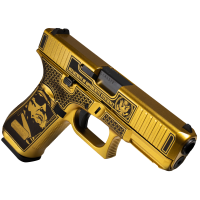
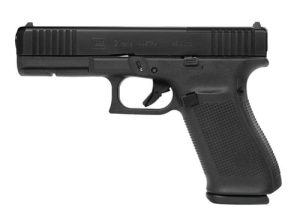
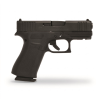
Glock 21 Gen 5 MOS $589-$689
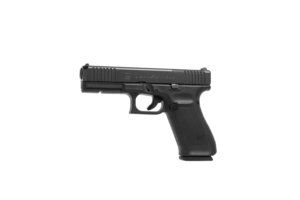
The current and best version. It drops the finger grooves, adds the Glock Marksman Barrel for better accuracy, an ambidextrous slide stop, a flared magwell, and an optics-ready MOS slide. This is the one to buy. Best For: anyone buying new who wants the modern, optics-ready .45.
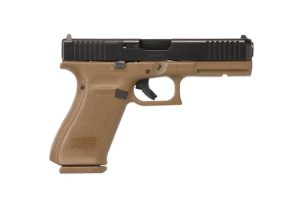
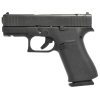
Glock 21 Gen 4 $519-$599
The previous generation, still widely available and often cheaper. It has the modular backstraps and the reliable Gen 4 recoil system but keeps the finger grooves and lacks the optics cut. A great value if you don’t need a red dot. Best For: budget buyers who want a proven iron-sight .45.
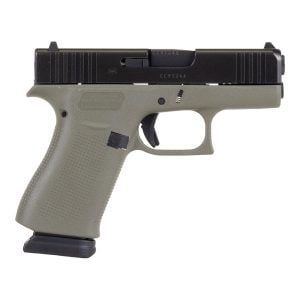
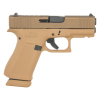
Glock 41 (long-slide .45) $649-$749
The competition-oriented .45, with a longer slide and barrel for a better sight radius and softer recoil, in a slimmer frame than the 21. If you want the .45 for matches or a duty gun with more reach, the 41 is the move. Best For: competition and target shooters who want a long-slide .45.
Competitor Comparison
The full-size .45 market still has real players. Here’s how the 21 stacks against them.
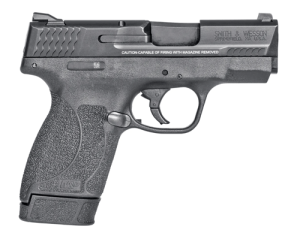
S&W M&P45 M2.0 ($549-$649) $549-$649
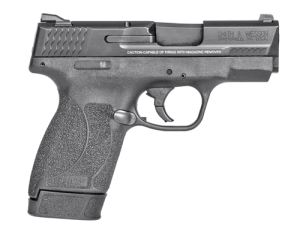
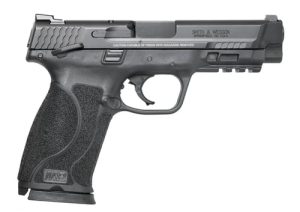
The M&P45 is the closest rival, a striker-fired .45 with a better stock trigger and a grip that fits more hands thanks to interchangeable backstraps. Glock answers with a deeper aftermarket, more holster options, and the reliability track record. Very close fight; the Smith for ergonomics and trigger, the Glock for support and proven reliability.
Glock 30 ($519-$599) $519-$599
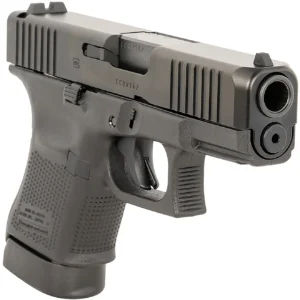
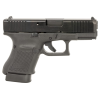
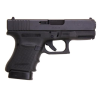
The Glock 30 is the compact .45 sibling, holding 10 rounds in a far more concealable package. If you want a carry .45 rather than a duty or home-defense gun, the 30 is the smarter pick. The 21 wins on capacity and shootability; the 30 wins on concealment.
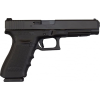
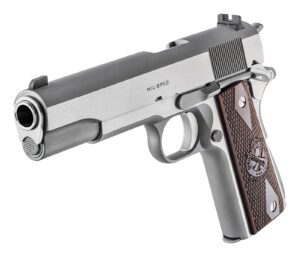
1911 .45 ($600-$1,200) $600-$1,200
The 1911 is the classic .45, with a superb single-action trigger and a slim, hand-filling grip that many shooters prefer. What it can’t match is the Glock’s 13-round capacity, its go-anywhere reliability, or its low maintenance. Buy the 1911 for the trigger and the heritage; buy the 21 for capacity and dependability.
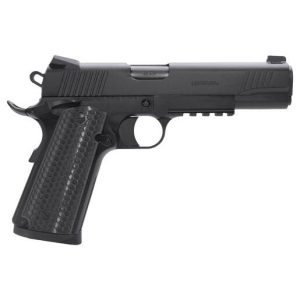

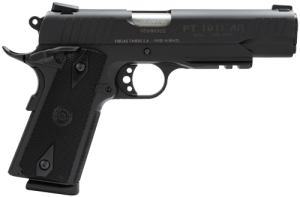
Verdict: The Glock 21 remains the safest all-around bet in a full-size .45: maximum capacity, total reliability, and unmatched support. The M&P edges it on ergonomics, the 1911 on trigger feel, and the Glock 30 on carry, but for a do-everything .45, the 21 is still the default.
| Dimension | Glock 21 Gen5 MOS | S&W M&P45 M2.0 | Glock 30 | 1911 .45 |
|---|---|---|---|---|
| Street Price (2026) | $549-$649 | $549-$649 | $519-$599 | $600-$1,200 |
| Capacity | 13+1 | 10+1 | 10+1 | 7-8+1 |
| Frame | Polymer | Polymer | Polymer | Steel |
| Size Class | Full-size | Full-size | Compact | Full-size |
| Stock Trigger | Serviceable | Better | Serviceable | Excellent SA |
| Optics Ready | Yes (MOS) | Yes (M2.0 OR) | No | Rarely |
| Our Score | 8.8/10 | Not reviewed | 8.2/10 | Not reviewed |
| Best For | Duty + HD capacity | Ergonomics + trigger | Concealed .45 | Trigger + heritage |
Features and Build Quality
Reliability and the Safe Action System
The Glock 21’s reliability is the whole reason to buy it, and it is as bulletproof as the brand’s reputation promises. The simple striker-fired Safe Action design has very few parts to fail, and it runs through mud, sand, freezing temperatures, and neglect that would choke fussier guns.
For a defensive or duty pistol, that dependability is everything. You can trust a Glock 21 to fire every time you press the trigger, which is exactly why agencies and serious defensive shooters have leaned on it for decades. It’s the kind of gun you can buy, shoot, and trust without a second thought.
The Grip and Ergonomics
The grip is the Glock 21’s biggest compromise, because fitting 13 rounds of fat .45 ACP makes for a large grip circumference. Shooters with big hands love it; shooters with small or medium hands often struggle to reach the trigger comfortably and get a proper press.
The Gen 5 helps by removing the finger grooves that fought against many hands, and the modular backstraps let you tune the reach a little. But there’s no getting around the physics: a double-stack .45 grip is big. Handle one before you buy, and if it doesn’t fit, the M&P45 or a single-stack option may suit you better.
The Trigger, Optics, and the Gen 5 Upgrades
The stock Glock trigger is serviceable but uninspiring, with a slightly spongy break that most enthusiasts eventually upgrade. It’s safe and consistent, which is the point for a duty gun, but it won’t win any trigger awards. A drop-in aftermarket trigger transforms the gun for around $100.
The Gen 5 MOS additions are the real news. The Glock Marksman Barrel genuinely tightens groups, the optics cut lets you mount a red dot for faster, more precise shooting, and the ambidextrous slide stop and flared magwell are welcome quality-of-life upgrades. These changes keep a decades-old design competitive with the newest pistols on the market.
At the Range: 800-Round Test
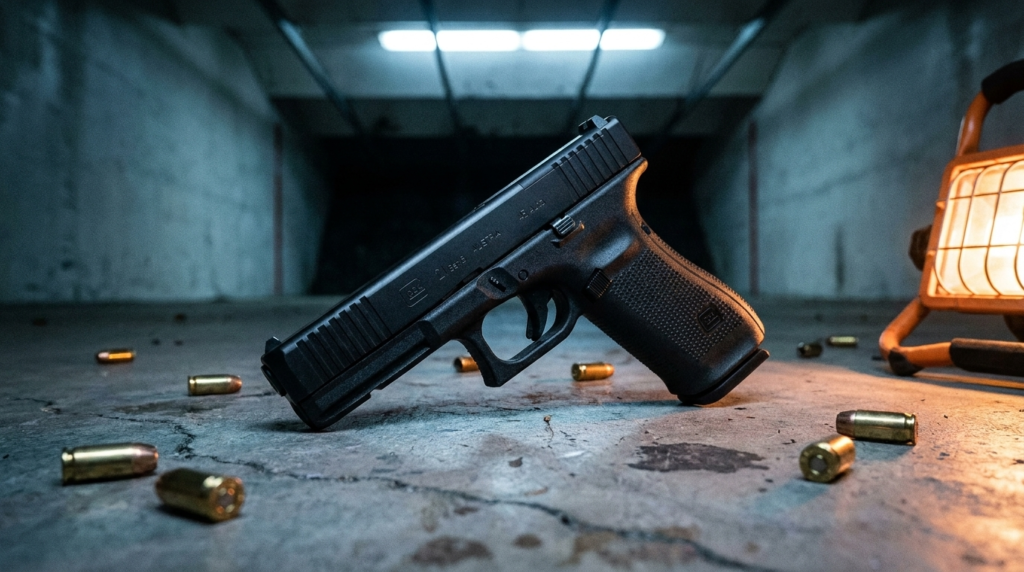
I put 800 rounds of mixed .45 ACP through a Gen 5 MOS Glock 21 over four sessions, running ball, hollow points, and a red dot, shooting at 7, 15, and 25 yards. Here’s the honest result.
Reliability
Zero malfunctions in 800 rounds, which is exactly what a Glock 21 is supposed to do. It fed every bullet profile I tried, from cheap range ball to fat hollow points, without a single hiccup. I shot it dirty, I shot it dry, and it never cared. This is the dependability you pay for.
That perfect run is the headline. A defensive pistol’s first job is to go bang every time, and the 21 did, through neglect and hard use. There’s a reason this gun has been a duty staple for so long.
Accuracy and Recoil
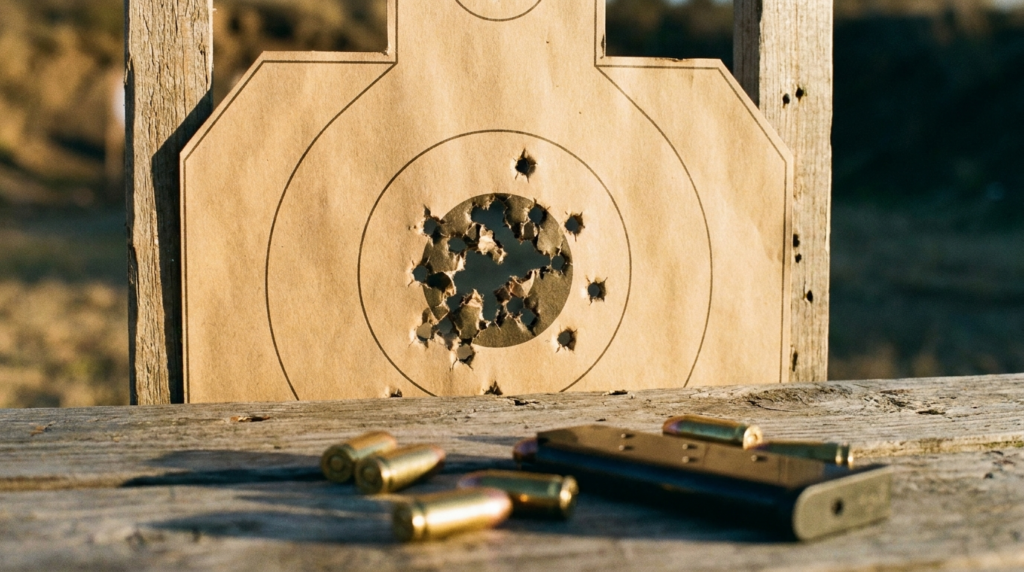
With the Marksman barrel and a red dot, accuracy was very good. I held groups around three inches at 25 yards, tightening at closer defensive distances. The .45 recoil surprised me with how manageable it was; the polymer frame and dual recoil spring soak up the big-bore push, and follow-up shots came back fast. It’s a heavy, slow bullet, so it pushes rather than snaps.
Ammunition Log
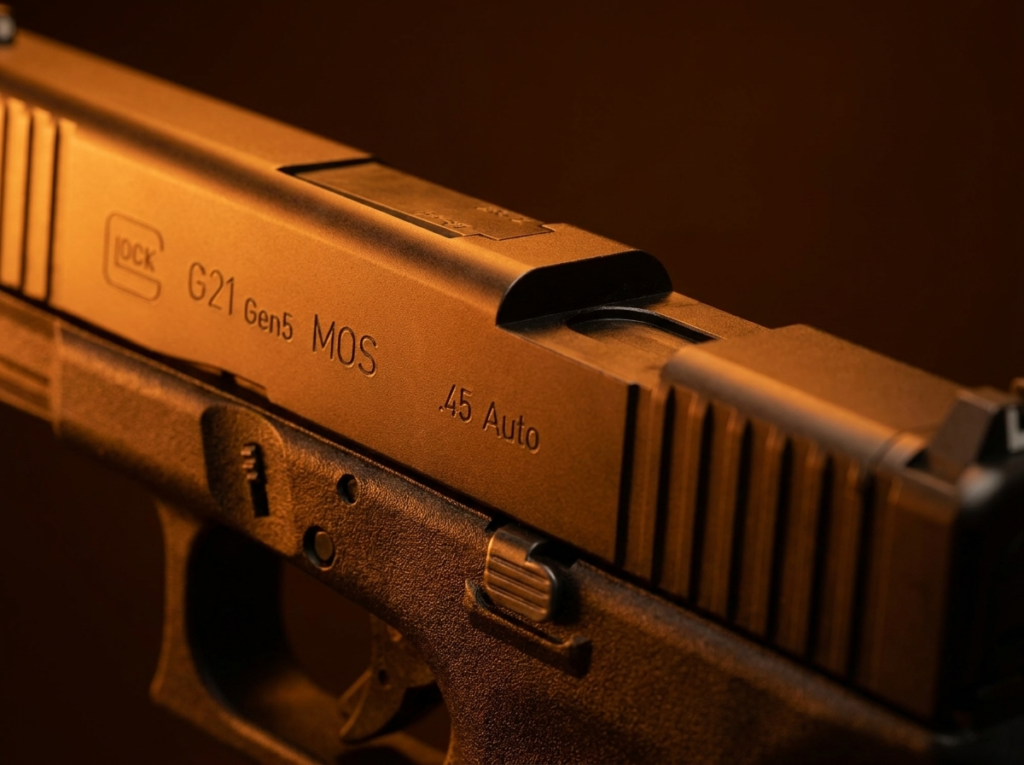
- Federal American Eagle 230gr FMJ: 350 rounds, flawless
- Blazer Brass 230gr FMJ: 250 rounds, best accuracy
- Speer Gold Dot 230gr JHP: 100 rounds, fed and shot reliably
- Federal HST 230gr JHP: 100 rounds, the defensive load, flawless
Performance Testing Results
Reliability (10/10)
Perfect. Eight hundred rounds of every bullet profile with zero stoppages, in clean and filthy conditions alike. This is the gold standard a defensive pistol is measured against, and the 21 meets it without trying.
Accuracy (8/10)
Very good, especially with the Gen 5 Marksman barrel and a red dot. Three-inch groups at 25 yards is plenty for a duty and defense .45, and the optics cut makes precise shots easier than irons ever could.
Ergonomics and Recoil (7/10)
Recoil is soft for a .45, a real strength. The grip is the deduction: it’s genuinely large, and small to medium hands will find the reach a stretch. The Gen 5’s removal of the finger grooves helps, but the circumference is what it is.
Value and Support (9/10)
At around $600 with total reliability and the deepest aftermarket and holster support of any pistol, the value is excellent. Parts, magazines, holsters, and upgrades are everywhere and cheap, which lowers the long-term cost of ownership.
Common Problems and Solutions
- Grip too big for your hand: Try the Gen 5 with the smallest backstrap, or have the grip professionally reduced. If it still doesn’t fit, the S&W M&P45 or a single-stack .45 is a better choice for smaller hands.
- Mediocre stock trigger: The factory trigger is safe but spongy. A quality drop-in trigger or a connector-and-spring kit sharpens it dramatically for around $50 to $130.
- Optic co-witness on MOS: Use the correct MOS adapter plate for your red dot and apply thread locker. Suppressor-height sights let you co-witness with the dot.
- Limp-wristing malfunctions: Rare, but new shooters with a weak grip can induce failures to eject. Firm up your grip and stance; the gun itself is not the problem.
Who Should NOT Buy the Glock 21
The Glock 21 is a superb workhorse, but it’s the wrong gun for several buyers. Here’s who should look elsewhere.
- The small-handed shooter: The big .45 grip is a real barrier. If your hands are small or medium, try an M&P45 or a single-stack .45 that fits you better.
- The concealed carrier: A full-size double-stack .45 is a lot to hide. For carry, get the compact Glock 30 or a slim 9mm from our carry guide.
- The trigger snob: If you want a crisp single-action break out of the box, a 1911 or a 2011 will satisfy you in a way the stock Glock trigger won’t.
- The budget-9mm pragmatist: If cheap practice ammo and capacity matter most, a 9mm Glock 17 or 19 does the defensive job for less money per round.
The Verdict
The Glock 21 remains one of the safest bets in the gun world: a 13-round .45 with total reliability, soft recoil, and the deepest support of any pistol on the market. The current Gen 5 MOS keeps a decades-old design fresh with a better barrel, cleaner grip, and an optics cut.
Its compromises are honest. The grip is big, the stock trigger is just okay, and it’s too large for easy concealment. None of that undermines what it does best: deliver maximum .45 ACP firepower with go-anywhere dependability for a fair price.
For home defense, duty use, or a range .45 you can trust forever, the 21 is hard to beat. Buy the Gen 5 MOS, add a red dot and maybe a better trigger, and you have a pistol that will outlast you. It’s a workhorse in the truest sense.
Final Score: 8.8/10 – The high-capacity .45 workhorse that still sets the reliability standard, big grip and all.
Best For: Home defense, duty use, and range shooters who want maximum .45 capacity with total reliability. See the full field in our best .45 ACP pistols and best Glocks guides.
FAQ: Glock 21
Upgrading your Glock 21? See our full guide to the best Glock 21 parts and accessories, red dots, sights, triggers, barrels, magazines and more, with live prices.
Is the Glock 21 a good gun?
Yes. It gives you 13 rounds of .45 ACP with the bombproof reliability Glock is known for, and it shoots softer than you would expect for the caliber. The only real catch is the big grip, so handle one before you buy to make sure it fits your hand.
How many rounds does a Glock 21 hold?
The Glock 21 holds 13+1 rounds of .45 ACP, which is the highest standard capacity of any full-size .45 on the market. A traditional 1911 holds seven or eight, so the Glock nearly doubles your firepower in the same caliber.
Is the Glock 21 good for concealed carry?
Not really. It is a big, full-size double-stack .45 and it is a lot to hide. If you want to carry a .45, the compact Glock 30 holds 10 rounds in a far more concealable package. Save the 21 for duty, home defense and the range.
What is the difference between the Glock 21 and the Glock 30?
The 21 is the full-size gun: 13+1 rounds, a longer barrel and grip, built for duty and home defense. The 30 is the compact version: 10+1 rounds in a shorter, thicker package that actually conceals. Same reliable Glock system, different mission.
What is new on the Glock 21 Gen 5 MOS?
The Gen 5 MOS drops the finger grooves shooters disliked, adds the more accurate Glock Marksman Barrel, an ambidextrous slide stop and a flared magwell, and cuts the slide for a red dot with the Modular Optic System. It is the best version of the 21 to date.
Does the Glock 21 have a lot of recoil?
Less than you would think. The polymer frame and dual recoil spring soak up the big .45 push, and because .45 is a heavy, slow bullet, it pushes rather than snaps. Follow-up shots come back fast, which surprises a lot of first-time .45 shooters.
Where is the Glock 21 made?
US-market Glock 21 pistols are made by Glock Inc. in Smyrna, Georgia.
Is the Glock 21 grip too big?
It is genuinely large, because fitting 13 rounds of fat .45 ACP makes for a wide grip. The Gen 5 removed the finger grooves and the modular backstraps let you tune the reach a little, but there is no getting around the circumference. If you have small hands, try it first; the S&W M&P45 may fit you better.
5,031+ Gun & Ammo Deals
Updated daily from 200+ top retailers. Filter by category, caliber, action type, and price.
Related Guides