

Last updated May 2026 · By Nick Hall, CCW instructor familiar with gun safe storage statutes across restricted states
- Treat every gun as loaded
- Point the muzzle in a safe direction
- Keep your finger off the trigger until you’re ready to shoot
- Know your target and what’s beyond

Gun Safe Storage Laws at a Glance
| State | Storage Required? | Applies To |
|---|---|---|
| California | Yes (all firearms) | Everyone, SB 53 |
| Massachusetts | Yes (all firearms) | Everyone |
| Connecticut | Yes (minors under 16) | Households with minors |
| New York | Yes (minors/prohibited) | Specific households |
| Colorado | Yes (minors/ineligible) | Specific households |
| New Jersey | Yes (minors under 16) | Specific households |
| Illinois | Yes (minors under 14) | Specific households |
| Hawaii | Yes (all firearms) | Everyone |
| Maryland | Yes (loaded, minors) | Specific households |
| Texas, FL, AZ | No requirement | N/A |
There Is No Federal Safe Storage Law
Let’s get the big one out of the way first. There is no federal gun safe storage law requiring you to lock up your firearms. The U.S. has no national safe storage mandate. What we have instead is a patchwork of state and local laws that vary wildly from “do whatever you want” to “lock it up or face criminal charges.”
Federal law does prohibit selling or transferring a handgun to someone under 18 (and long guns to anyone under 18 from a dealer). And some federal housing regulations require safe storage in specific contexts. But in your own home? Federal gun safe storage mandates do not exist. States are a different story.
California: The Strictest in the Nation
California’s Penal Code Section 25100-25245 makes it a criminal offense to store a loaded firearm where a child could access it. If a child actually gains access and causes injury or death, it’s a felony. Even without an incident, negligent storage where a child could access a loaded gun can result in penalties. Under SB 53, first and second violations are infractions with fines up to $500. Third and subsequent violations are misdemeanors.
SB 53, which took effect in 2026, expanded California’s requirements further. All firearms must be stored in a locked container or disabled with a trigger lock when not being carried or used. This applies even in homes without children. California also requires all new firearms to be sold with an approved locking device.
If you’re a California gun owner, a California-compliant gun safe isn’t optional. It’s the law. For the full breakdown of California firearms regulations, check our gun laws by state guide.
Massachusetts: Lock Everything, Always
Massachusetts General Law Chapter 140, Section 131L requires all firearms to be stored in a locked container or equipped with a trigger lock or other safety device. This applies to all firearms, loaded or unloaded, whether children are present or not.
Violations can result in fines up to $10,000, imprisonment up to 10 years, or both. Massachusetts does not mess around. If a minor gains access to an improperly stored firearm, the penalties are even stiffer. This is one of the most aggressive storage laws in the country.
Connecticut
Connecticut requires firearms to be stored in a locked container or room, or secured with a trigger lock, when the owner knows or should know that a minor under 16 could gain access. The law focuses on preventing access by minors specifically.
If a minor gains access to an improperly stored firearm and causes injury or death, the owner faces a Class D felony. Even without an incident, negligent storage is a Class A misdemeanor. Connecticut also requires dealers to provide a trigger lock or safe storage device with every sale.
New York
New York’s SAFE Act and subsequent amendments require safe storage when the owner lives with someone who is prohibited from possessing firearms (felons, people with domestic violence orders, etc.). Additionally, if a person under 16 has access, firearms must be locked up.
New York City has even stricter requirements than the state. All firearms must be stored in a locked safe, container, or with a trigger lock at all times when not being carried on person. The city’s laws go beyond the state requirements, so NYC residents need to comply with both.
Oregon and Washington
Oregon’s Measure 114 (passed 2022) includes a permit-to-purchase system and safety training that covers secure storage practices. However, the measure has NOT yet taken effect. Implementation was delayed to January 1, 2028 by HB 4145, and the Oregon Supreme Court is still considering constitutional challenges. In the meantime, Oregon does hold owners liable if a minor accesses an unsecured firearm under existing child access prevention laws.
Washington state requires firearms to be securely stored to prevent access by prohibited persons and minors. The law creates liability for gun owners if a prohibited person or minor accesses an improperly stored firearm and causes harm. Community safety provisions were strengthened in recent legislative sessions.
Colorado
Colorado passed its safe storage law in 2021 (SB 21-078). It requires gun owners to store firearms securely or use a trigger lock when the owner knows or should know that a juvenile or resident who is ineligible to possess a firearm could gain access. Violations are a Class 2 misdemeanor. If a juvenile or ineligible person actually obtains the firearm and uses it to cause injury or death, it escalates to a Class 1 misdemeanor. Colorado also requires firearms dealers to offer a locking device with every sale.
Illinois
Illinois requires firearms to be stored or secured by a locking device if the owner reasonably should know that a minor under 14 could gain access. The Firearm Concealment Act (430 ILCS 65/10a) makes it a Class C misdemeanor. If a minor actually discharges the firearm and causes injury or death, the penalties escalate. Illinois also passed the Protect Illinois Communities Act in 2023, which added assault weapon storage requirements in some jurisdictions.
New Jersey
New Jersey requires all firearms to be stored in a locked box, container, or locked gun rack, or equipped with a trigger lock, when the owner knows or reasonably should know that a minor under 16 could gain access. Violations are a disorderly persons offense. New Jersey also prohibits loaded firearms in any place accessible to children and requires firearms to be unloaded and locked during transport. The state is among the strictest in the Northeast for gun safe storage enforcement.
Maryland
Maryland requires firearms to be stored with a safety lock or in a locked container when the owner reasonably should know that an unsupervised minor under 16 could gain access. The law applies to loaded firearms only. Violations are a misdemeanor with fines up to $1,000. Maryland also requires all handgun sales to include a gun lock. If a minor gains access and injures themselves or others, the owner faces enhanced penalties.
Hawaii
Hawaii has some of the strictest gun safe storage requirements in the country. All firearms must be stored locked and unloaded when not in use. The state requires a permit for virtually every firearm purchase, and storage requirements are verified as part of the permitting process. Violations can result in misdemeanor charges. Hawaii’s geographic isolation and small population mean enforcement is more consistent than in larger states.
States With No Storage Requirements
A significant number of states have zero safe storage requirements. Texas, Florida, Arizona, Idaho, Montana, Wyoming, and most of the Deep South have no laws requiring you to lock up your firearms at home. In these states, storage is entirely at the owner’s discretion. No safe required, no trigger lock mandated, no criminal liability for leaving a loaded gun on the coffee table (unless a minor is injured, in which case general negligence laws may apply).
Even in these states, responsible storage is still the right call. A gun safe under $500 protects against theft, prevents unauthorized access, and demonstrates responsible ownership if you ever face a civil lawsuit. The absence of a law does not mean the absence of risk.
Child Access Prevention (CAP) Laws
Even states without broad safe storage mandates often have Child Access Prevention laws. These don’t require a safe specifically, but they create criminal liability if a minor gains access to a firearm and causes injury. As of 2025, 35 states plus DC have some form of CAP law, according to research from Johns Hopkins Center for Gun Violence Solutions.
CAP laws vary significantly. Some only apply if a child actually uses the firearm to cause injury or death. Others kick in when the child merely gains access. Some are felonies, others misdemeanors. The specifics and penalties matter, and they’re different in every state.
Even in states with no safe storage law at all (Texas, Arizona, most of the South and Mountain West), using a gun safe is still smart practice. Legal requirements aside, responsible storage protects your family and your liability exposure.
What Counts as “Compliant” Storage?
This varies by state, but generally: a locked container means a safe, lockbox, or locked room dedicated to firearm storage. A trigger lock or cable lock usually qualifies as an alternative. Some states specify that the container must be “tamper-resistant” or approved by a state agency.
California maintains an approved list of firearm safety devices. Massachusetts requires that the device be “capable of preventing discharge.” If you want to be bulletproof (legally speaking), a quality gun safe satisfies every state’s requirements. It’s the universal answer.
A $50 cable lock technically meets the minimum in most states. But it won’t stop a determined 12-year-old with YouTube access. A real safe with a proper lock is the only storage method that actually works for both legal compliance and physical security.
DOJ-Approved Devices vs Real Safes
California maintains the most detailed approved list of firearm safety devices through the Department of Justice. A device on the list can be a simple $10 cable lock, a trigger lock, a lockbox, or a full-size gun safe. The law treats them all as equally compliant. But compliance and actual security are not the same thing. A cable lock meets the legal requirement but a motivated 12-year-old with a YouTube tutorial can defeat most cable locks in under 60 seconds. A quality gun safe starting around $200-300 provides both legal compliance and genuine physical security.
Quick-Access vs Long-Term Storage
The tension in every gun safe storage law is the same: a locked-up gun is a slow gun in an emergency. Legislators want guns locked up. Gun owners want fast access for home defense. The compromise is quick-access safes. A biometric bedside safe that opens in under one second meets every state’s storage requirement while keeping your home defense firearm within reach. A full-size safe in the basement meets the law but does not help you at 3 AM. Think about both compliance and practicality when choosing your storage solution.
Penalties for Non-Compliance
Penalties range from small fines to felony charges. In Massachusetts, you’re looking at up to $10,000 and 10 years in prison. California misdemeanor charges can mean up to one year in county jail. If a child is injured or killed with your improperly stored firearm, most states escalate to felony charges.
Beyond criminal penalties, negligent storage opens you to civil lawsuits. If someone is injured with your unsecured firearm, you can be sued for damages. Homeowners insurance may not cover you if you were negligent in storing the weapon. The legal exposure and potential penalties are real and significant.
Trends: Where Storage Laws Are Heading
The national trend is clearly toward stricter storage requirements. California’s SB 53 (universal storage mandate regardless of children in the home) represents the direction other blue states are likely to follow. Several states have storage bills in committee for 2026-2027 sessions. The argument from advocates is straightforward: unsecured firearms contribute to youth suicides, accidental shootings, and school shootings when kids bring guns from home.
On the other side, gun rights organizations argue that mandatory storage laws create barriers to home defense (a locked-up gun is a slow gun in an emergency) and that enforcement is practically impossible without warrantless searches. Both sides have legitimate points. What is undeniable is that the number of states with some form of storage requirement has grown from 18 in 2015 to 35 in 2025. If you do not have a safe now, you may be legally required to have one in the near future.
The Smart Move Regardless of Your State
Whether your state requires safe storage or not, locking up your firearms is responsible gun ownership. Period. A good safe protects against theft, protects against unauthorized access, and protects you legally. It’s an investment in your family’s safety and your own peace of mind.
The trend in gun safe storage laws is clearly toward stricter requirements, not fewer. Several states have storage bills in committee right now. Even if your state is hands-off today, that could change. Getting ahead of the curve with a quality safe is just smart planning.
Shop Compliant Gun Storage
Best-scored accessories across 80+ retailers · Updated every 4 hours
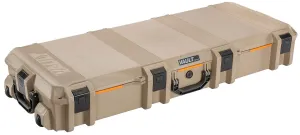
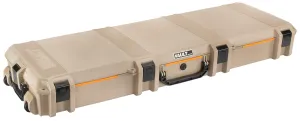
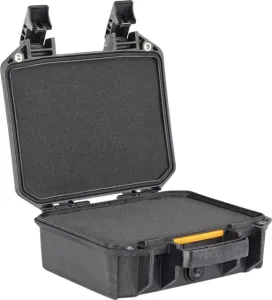
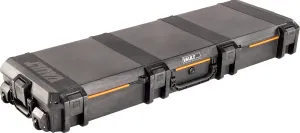
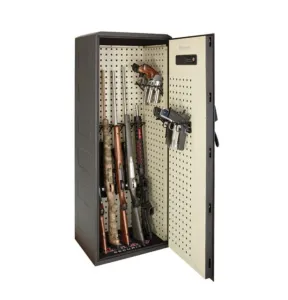
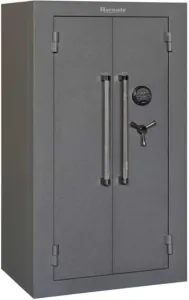
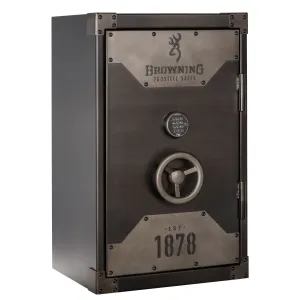
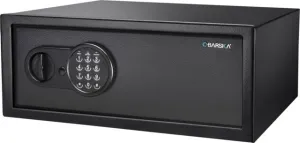
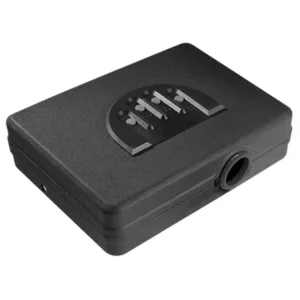
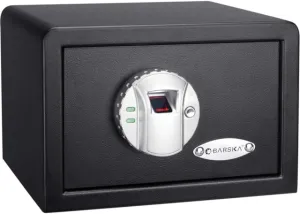
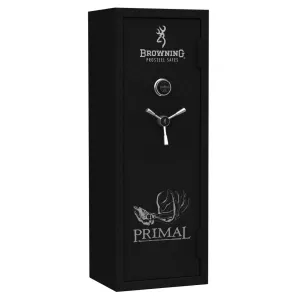
Browse DOJ-Approved Gun Safes →
How I Researched This Guide
Every statute cited in this guide was verified against the actual legislative text through official state legislature websites. CAP law counts come from the RAND Corporation’s gun policy research and Johns Hopkins Center for Gun Violence Solutions. I cross-referenced penalty information with Giffords Law Center and the National Conference of State Legislatures. This is not legal advice. Laws change. Always verify current requirements with your state’s official resources before relying on this guide.
FAQ: Gun Safe Storage Laws
Is there a federal gun storage law?
No. There is no federal law requiring gun owners to store firearms in a safe or locked container. Safe storage requirements are set at the state and local level, creating a patchwork of different rules across the country.
What states require gun safes?
California and Massachusetts have the strictest requirements, mandating locked storage for all firearms. Connecticut, New York, Oregon, and Washington have laws requiring secure storage to prevent child access or access by prohibited persons.
What is California SB 53?
SB 53 expanded California safe storage requirements effective 2026. All firearms must be stored in a locked container or disabled with a trigger lock when not being carried or used, even in homes without children.
What are child access prevention laws?
Child access prevention (CAP) laws create criminal liability for gun owners if a minor gains access to an improperly stored firearm. About 27 states plus DC have some form of CAP law with varying penalties.
What happens if I violate gun storage laws?
Penalties range from misdemeanor fines to felony charges with imprisonment. Massachusetts violations can result in up to 10,000 dollars in fines and 10 years in prison. If a child is injured, penalties escalate significantly.
Does a trigger lock count as safe storage?
In most states with storage requirements, a trigger lock or cable lock qualifies as an alternative to a locked container. However, a proper gun safe provides far superior physical security compared to a trigger lock.
Do I need a gun safe in Texas?
Texas has no state-level safe storage mandate. However, Texas does have a child access prevention law that creates liability if a child gains access to a readily dischargeable firearm. A gun safe remains smart practice regardless.
Can I be sued if someone steals my unsecured gun?
Yes. In many states, negligent storage can expose you to civil liability if someone is injured with your improperly stored firearm. A gun safe reduces both criminal and civil liability exposure.
15,367+ Gun & Ammo Deals
Updated daily from 10+ top retailers. Filter by category, caliber, action type, and price.