

Last updated September 2026 · By Nick Hall, gun owner who has worked with multiple homeowner insurance carriers on firearm coverage
- Treat every gun as loaded
- Point the muzzle in a safe direction
- Keep your finger off the trigger until you’re ready to shoot
- Know your target and what’s beyond
Table of Contents
The Short Answer: Yes, Usually 5-15% Off
Most major homeowners insurance companies will give you a discount for owning a gun safe. The typical range is 5-15% off your premium, though some insurers frame it differently. State Farm, Allstate, and USAA have all been known to offer credits for secure firearm storage. It’s worth a phone call to your agent.
Why do insurers care? Because theft claims involving firearms are expensive. If your guns are in a quality gun safe, they’re dramatically less likely to be stolen in a burglary. Fewer claims means lower risk, and lower risk means they’ll cut you a deal.
The discount alone won’t pay for a high-end safe in one year. But over 10-15 years? That 10% discount adds up. And you get the peace of mind that comes with knowing your collection is actually protected. That’s the real value.
What Insurers Look For
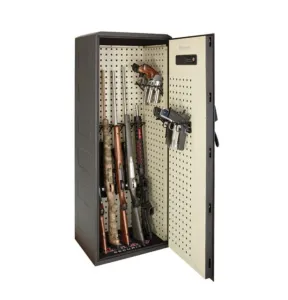
Not all safes qualify. Your $150 Stack-On cabinet from Walmart probably won’t impress your insurance company. They want to see a real safe with actual security features. The magic words most insurers look for: UL-listed, RSC-rated or better, and bolted down.
Underwriters Laboratories (UL) rates safes on burglary resistance. A UL RSC (Residential Security Container) rating means the safe survived 5 minutes of attack with common hand tools. UL TL-15 means it survived 15 minutes with more serious tools. The higher the rating, the happier your insurer.
Some companies just want proof you own a safe. Others want the make, model, and UL rating. A few might even ask for a photo. Keep your receipt and any documentation that came with the safe. It makes the conversation with your agent much smoother.
Major Insurers: Who Offers Gun Safe Discounts
State Farm: Offers a discount for homes with safes as part of their protective device credits. The discount applies to your overall policy, not just firearms coverage. You will need to tell your agent about the safe during your policy review. State Farm also offers firearms riders through their scheduled personal property endorsement.
USAA: Military members and veterans get competitive firearms coverage through USAA. They are generally more gun-friendly than civilian insurers and understand the value of a quality safe. USAA offers valuable personal property coverage that can be scheduled for individual firearms. Discounts for safe ownership vary by state.
Allstate: Offers protective device discounts that can include gun safes. The discount is typically bundled with other security features (alarm systems, deadbolts, smoke detectors). The more security features you have, the higher the total discount. Ask your agent specifically about firearm storage.
NRA-Endorsed Programs: The NRA partners with insurers that specialize in firearms coverage. These programs understand gun owners, do not penalize you for owning firearms, and typically offer better rates on riders than general insurers. NRA Insurance is worth comparing against your current policy if you have a significant collection.
What Standard Homeowners Policies Actually Cover
Here’s where people get burned. Standard homeowners insurance typically covers firearms as personal property, but with a cap. Most policies limit firearm theft claims to $2,500. If you own three decent handguns, you’ve already blown past that number.
Fire damage is usually covered under your general personal property limits, which are higher. But theft is the killer. A standard policy is not going to cover your $15,000 collection if someone kicks in the door and cleans you out. You need additional coverage.
Firearms Riders and Scheduled Coverage
A firearms rider (also called a floater or scheduled personal property endorsement) extends your coverage to the actual value of your collection. You provide a list of firearms with serial numbers and appraised values. The insurer covers them specifically, often with no deductible.
Riders typically cost $15-25 per $1,000 of coverage annually. So insuring a $10,000 collection runs about $150-250 per year. That’s cheap compared to replacing everything out of pocket. And having a safe can reduce even that rider cost.
NRA-endorsed programs through companies like SHOT Insurance and Collectibles Insurance Services specialize in firearms coverage. They understand the market, they don’t ask weird questions, and their rates are competitive. Worth looking into if your standard insurer makes it difficult.
Liability Coverage: The Part Nobody Thinks About
Homeowners insurance covers more than just your stuff. It covers your liability if someone is injured on your property. If a guest’s child finds an unsecured firearm in your house and someone gets hurt, your liability exposure is enormous. A lawsuit for a negligent firearms injury can easily reach six or seven figures.
Your standard liability coverage (typically $100,000-300,000) may not be enough. An umbrella policy adds $1-2 million of additional coverage for about $200-400 per year. Combined with a properly secured gun safe, you have both physical protection and financial protection. Some umbrella policy providers specifically ask about firearms storage. Having a safe works in your favor.
What Happens When You Do Not Have a Safe
If your firearms are stolen from an unlocked closet and you file a claim, your insurer will pay out (up to your policy limits), but they may raise your premium at renewal. Repeated claims or a pattern of negligent storage can lead to non-renewal. Some insurers will drop you entirely after a firearms theft claim if you cannot demonstrate reasonable security measures.
In states with safe storage laws, being in violation at the time of a theft or injury can complicate your claim. Insurers can argue that your negligence contributed to the loss. A safe eliminates this argument entirely. It is the clearest possible evidence that you took reasonable precautions.
Documenting Your Collection
If you ever need to file a claim, documentation is everything. Photograph every firearm. Record serial numbers, make, model, caliber, and approximate value. Store this information somewhere outside your home, like a cloud drive or a safe deposit box.
An app like Gun Inventory or even a simple spreadsheet works. The point is having proof of what you owned and what it was worth. Without documentation, you’re fighting with the insurance company over every dollar. With documentation, it’s straightforward.
Update your inventory annually, especially if you buy or sell firearms. A list from 2020 won’t help much if you’ve added ten guns since then. Treat it like any other financial record. Boring? Yes. Necessary? Absolutely.
Filing a Claim After Theft or Fire
If the worst happens, call the police first and get a report number. Then call your insurance company. Have your documentation ready: serial numbers, photos, purchase receipts, and your firearms inventory list.
For theft claims, the insurer will want the police report and proof of forced entry. If your guns were in a bolted-down safe and the thieves still got them, your claim is much stronger than if they were sitting in an unlocked closet. The safe doesn’t just protect your guns. It protects your claim.
For fire damage, document the damage before cleanup. Your insurer may send an adjuster, or they may work from photos. Either way, a fire-rated safe that actually protected your firearms is evidence that you took reasonable precautions. That matters.
The Bottom Line: A Safe Pays for Itself
Between the insurance discount, the reduced risk of theft, and the protection of your claim if something goes wrong, a quality gun safe is one of the smartest investments a gun owner can make. It’s not just about keeping bad guys out. It’s about keeping your financial exposure down.
Call your insurance agent this week. Ask about discounts for safe ownership. Ask about your current firearms coverage limits. And if you don’t have a rider on your collection, seriously consider one. A $200/year rider beats a $10,000 loss every single time.
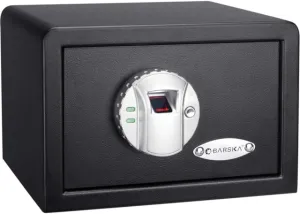
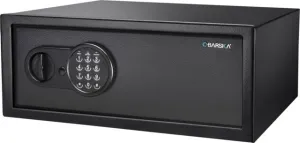
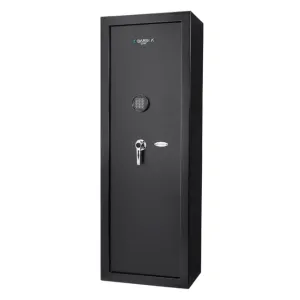
And if you need help picking the right safe to satisfy your insurer (and actually protect your guns), start with our best gun safes guide or narrow it down by budget with our best safes under $1,000 roundup.
Shop Gun Safes
Best-scored accessories across 200+ retailers · Updated every 4 hours

How I Researched This Guide
I contacted agents at State Farm, USAA, and Allstate to verify current discount policies for gun safe ownership. Rider pricing was confirmed through direct quotes for a $10,000 firearms collection. The $2,500 standard theft cap is industry-standard across most major carriers but varies slightly by state and policy. I also reviewed NRA Insurance and Collectibles Insurance Services programs for comparison. This guide covers general principles. Your specific policy, state, and insurer will determine exact discounts and coverage terms. Always verify with your agent.
FAQ: Gun Safes and Homeowners Insurance
How much do gun safes lower homeowners insurance?
Most insurers offer a 5-15% discount on homeowners insurance for owning a gun safe. The exact amount varies by company and the quality of your safe. UL-rated and RSC-certified safes typically qualify for larger discounts.
Does homeowners insurance cover stolen guns?
Standard homeowners policies typically cap firearm theft coverage at around 2,500 dollars. For collections worth more than that, you need a firearms rider or scheduled personal property endorsement to cover the full value.
What type of gun safe qualifies for an insurance discount?
Insurers generally look for UL-listed safes with RSC or higher burglary ratings, bolted-down installation, and electronic or mechanical locks. Basic steel cabinets usually do not qualify for discounts.
How much does a firearms insurance rider cost?
Firearms riders typically cost 15-25 dollars per 1,000 dollars of coverage annually. A 10,000 dollar collection would cost roughly 150-250 dollars per year to fully insure with scheduled coverage.
Do I need to provide serial numbers for a firearms rider?
Yes. Most insurers require serial numbers, make, model, caliber, and appraised values for each firearm on a scheduled rider. Keep this documentation updated annually as you buy or sell guns.
Will my insurance cover fire damage to guns in a safe?
Fire damage to firearms is typically covered under your general personal property limits, which are higher than theft limits. A fire-rated safe that protects your guns strengthens your claim and may reduce your deductible.
What happens if I file a theft claim without a safe?
You can still file a theft claim without a safe, but your payout will be limited to standard policy caps (usually 2,500 dollars). Having a safe with evidence of forced entry strengthens your claim significantly.
Should I photograph my gun collection for insurance?
Absolutely. Photograph every firearm, record serial numbers, and store documentation in a cloud drive or safe deposit box outside your home. This documentation makes filing claims straightforward and maximizes your payout.
5,380+ Gun & Ammo Deals
Updated daily from 200+ top retailers. Filter by category, caliber, action type, and price.
Related Guides