
Affiliate disclosure: This PSA 5.7 Rock review contains affiliate links. If you buy through our links then we can receive a small commission that helps keep the lights on. You don’t pay anything more.
- Treat every gun as loaded
- Point the muzzle in a safe direction
- Keep your finger off the trigger until you’re ready to shoot
- Know your target and what’s beyond

Table of Contents
How we tested: Every pick here is ranked against our testing methodology. Minimum round counts, accuracy and reliability protocols, the failures that disqualify a gun. Where we have not shot a specific variant ourselves, we say so in that section.
Review: PSA 5.7 Rock – The $399 Gateway to 5.7x28mm
Our Rating: 7.5/10
- RRP: $399
- Street Price: $369-$399 (Check our live pricing for the best current deal)
- Caliber: 5.7x28mm
- Action: Striker-fired, delayed blowback
- Barrel Length: 5.2″
- Overall Length: 8.4″
- Weight (unloaded): 24 oz
- Capacity: 23+1
- Frame Material: Polymer
- Slide Material: Steel
- Sights: Fiber optic front, adjustable rear
- Optics: Optics-ready (cover plate included)
- Safety: Trigger safety, firing pin block
- Grip: Textured polymer
- Made in: USA (Palmetto State Armory, Columbia, SC)
Pros
- Cheapest 5.7x28mm pistol by over $250 at $369-$399 street
- 23+1 capacity is highest in the 5.7 pistol class
- Delayed blowback + fiber-optic front sight make follow-ups stupid fast
Cons
- Ammo sensitivity with budget imported brands (Federal, FN, Speer, PSA-brand run clean)
- Trigger is functional but mushy with vague reset
- 5.7x28mm ammo runs $0.50-$0.70 per round, well above 9mm
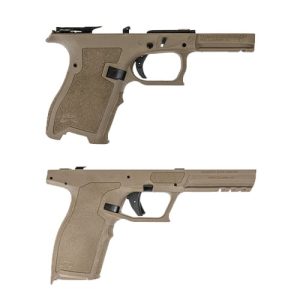
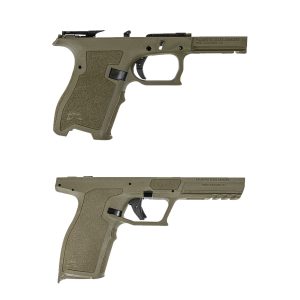
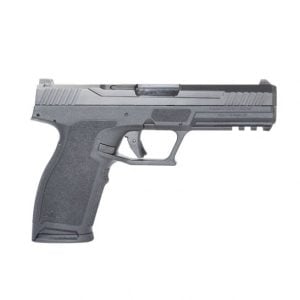
Quick Take

The PSA 5.7 Rock did something I honestly didn’t think was possible. It put the 5.7x28mm cartridge into a pistol that costs less than most polymer 9mms. At $399, this gun is not trying to compete with the FN Five-seveN on fit and finish. It’s trying to get that weird, fast, armor-piercing-capable little round into as many hands as possible, and it succeeds.
I put 800 rounds through the 5.7 Rock over several range trips, and the experience was a blast (literally). The 5.7x28mm round barely kicks out of this platform, the 23-round magazine feels like a cheat code, and the fiber optic front sight makes quick follow-up shots almost effortless. You will burn through ammo faster than you planned. Fair warning.
Is it perfect? No. It can be picky about ammo, the trigger won’t make you forget your favorite Glock, and you’re going to spend more on feeding it than you would a 9mm. But the sheer fun factor combined with that price tag makes the 5.7 Rock one of the most interesting budget pistols Palmetto State Armory has produced.
Best For: Shooters who’ve always wanted to try 5.7x28mm without spending FN money, range day entertainment, and anyone who thinks 23 rounds of screaming fast ammo sounds like a good time.
Why PSA Built the 5.7 Rock
For decades, the 5.7x28mm cartridge lived in a weird limbo. Everyone thought it was cool. Almost nobody actually owned a gun chambered in it.
The FN Five-seveN ran over $1,300 street price, and the ammo was expensive on top of that. It was the exotic sports car of the pistol world: fun to look at, painful to afford.
Palmetto State Armory saw an opening. They’ve built their entire brand on making popular platforms affordable (the Dagger line proved they could do it with striker-fired 9mms), and the 5.7x28mm market was ripe for disruption. Ruger cracked the door open with the Ruger-57 at around $649, and Smith & Wesson pushed through with their 5.7 at $699. PSA kicked the door down at $399.
Design philosophy behind the 5.7 Rock is simple: strip away everything that isn’t essential and deliver the core experience of shooting 5.7x28mm at a price that doesn’t make your wallet cry.
That means a functional (not fancy) trigger, a polymer frame, and a delayed blowback operating system that makes the whole package work.
They didn’t try to beat FN’s fit and finish. They tried to beat everyone’s price. Mission accomplished.
Timing also made sense. 5.7x28mm ammo availability has improved dramatically over the last couple of years. Prices have dropped from the crazy $1+ per round peaks to a more manageable $0.50 to $0.70 range.
It’s still not cheap, but it’s no longer unobtainium. A budget pistol needs available ammo, and the market finally caught up.
PSA 5.7 Rock Variants
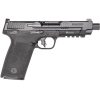
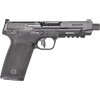
PSA builds the 5.7 Rock in three main configurations as of 2026. The reviewed gun is the standard Rock; here is how the other two variants differ if you are cross-shopping inside the Rock lineup.

PSA 5.7 Rock (Standard) $369-$399
Best For: first-time 5.7 buyers who want the bare-minimum entry price into the platform.

PSA 5.7 Rock TB (Threaded Barrel) $429-$459
Best For: shooters who want to suppress the 5.7x28mm cartridge and need a host pistol that doesn’t break the bank.

PSA 5.7 Rock 2 $449-$499
Best For: buyers willing to spend the extra for a noticeably better trigger and refined cosmetics.
Competitor Comparison

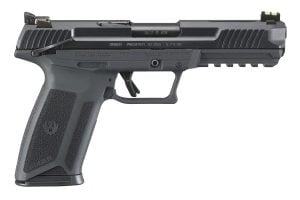
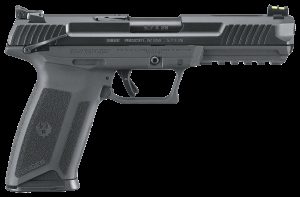
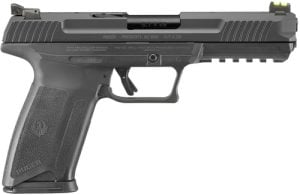
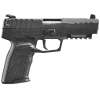
Ruger-57 ~$649
For a 5.7 you’d trust for home defense, the Ruger gets the reliability edge. For a range toy, the Rock delivers 90% of the experience at 60% of the price.

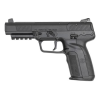
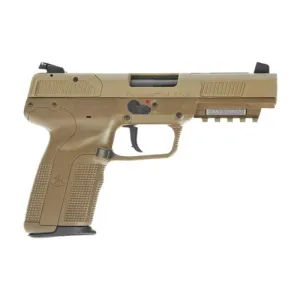
FN Five-seveN ~$1,300
You could buy three PSA 5.7 Rocks for the price of one Five-seveN. The FN wins on every measurable metric except value.
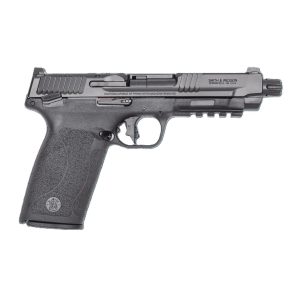
S&W M&P 5.7 ~$699
$300 above the Rock buys a better trigger, slightly better reliability across ammo types, and S&W customer service. Strong choice if budget allows.
| Dimension | PSA 5.7 Rock | Ruger-57 | FN Five-seveN | S&W M&P 5.7 |
|---|---|---|---|---|
| Street Price (2026) | $369-$399 | ~$649 | ~$1,300 | ~$699 |
| Capacity (flush) | 23+1 | 20+1 | 20+1 | 22+1 |
| Optics-Ready (factory) | Yes (cover plate) | Yes | Mk3 yes, Mk2 no | Yes |
| Threaded Barrel | Yes (TB variant) | Yes | Yes | Yes |
| Trigger Quality | Functional, mushy | Good | Excellent | Flat-faced excellent |
| Ammo Sensitivity | Sensitive to budget | Forgiving | Bulletproof | Mostly forgiving |
| Fit & Finish Ceiling | Budget | Solid mid-tier | Premium FN | Solid S&W |
| Best For | Cheapest 5.7 entry | Reliable home-defense 5.7 | No-compromise FN platform | Best trigger in class |
Read the chart this way: the PSA Rock wins outright on price and capacity. It loses on trigger quality, ammo sensitivity, and fit-and-finish to every other 5.7 platform. The chart is the buying decision in one frame.
Features and Design

5.7x28mm at $399: The Price That Changed Everything
Let’s be honest about what the 5.7 Rock really is. It’s a price breakthrough.
The 5.7x28mm cartridge pushes a lightweight projectile at velocities that most pistol rounds can only dream about (around 2,000 fps from a pistol barrel).
That velocity means flatter trajectory, less felt recoil, and terminal performance that punches above what you’d expect from a small-diameter bullet. Getting all of that for under $400 was science fiction just a few years ago.
PSA achieved this price point by making smart compromises. The polymer frame is functional without being luxurious. The controls work without feeling like they were hand-fitted.
The finish gets the job done. None of these compromises affect the core shooting experience, which is what matters when you’re dumping 23 rounds of 5.7 downrange with a grin on your face.
23-Round Capacity

5.7 Rock ships with a 23-round magazine, which is the highest standard capacity in the 5.7 pistol market right now. The FN Five-seveN and Ruger-57 both come with 20-round mags. Three extra rounds might not sound like a lot on paper, but when you’re at the range and everyone else is reloading before you are, it feels like a win.
The magazine itself is a double-stack design that sits flush with the grip. It’s not the smoothest feeding magazine I’ve ever used (more on that in the range section), but it’s functional and the extra capacity is a genuine selling point. PSA also sells additional magazines at reasonable prices, which is something FN cannot claim.
Delayed Blowback Operating System
5.7 Rock uses a delayed blowback system rather than a traditional locked-breech short recoil action. This is the same general operating principle used in the FN Five-seveN and Ruger-57. The delayed blowback design is well-suited to the 5.7x28mm cartridge’s high velocity and relatively low chamber pressure (compared to rounds like 9mm or .45 ACP).
What this means for you as a shooter is soft, almost nonexistent felt recoil. The slide reciprocates smoothly, the muzzle barely rises, and follow-up shots are stupid fast. I found myself putting accurate double-taps on steel at 15 yards without even trying. The delayed blowback system is one of the main reasons the 5.7 Rock is so enjoyable to shoot.
Fiber Optic Front Sight
PSA included a fiber optic front sight on the 5.7 Rock, which is a nice touch at this price point. The bright green fiber optic rod picks up ambient light well and gives you a fast, intuitive aiming reference. Paired with the adjustable rear sight, you can get this gun zeroed to your preferred load without much fuss.
Gun is also optics-ready, with a cover plate that can be removed to mount a micro red dot. If you plan on adding an optic, you’ll want to check PSA’s mounting pattern to make sure your preferred dot is compatible. It’s a welcome feature that would have been unthinkable on a $399 pistol just a few years ago.
Ergonomics and Controls
5.7 Rock’s grip is a fairly standard polymer affair with aggressive texturing on the sides and front strap. At 24 ounces unloaded, the gun is light enough to shoot all day without fatigue. The grip angle is comfortable and natural for most hand sizes, though shooters with very large hands might find it slightly narrow.
The slide stop, magazine release, and takedown lever are all where you’d expect them to be. Nothing is ambidextrous, which is a minor knock for lefties. The controls are functional and get the job done, but they don’t have the crisp, positive feel you’d get from the Ruger-57 or FN Five-seveN. At this price, that’s completely expected.
At the Range: 800 Rounds of 5.7x28mm

I tested the PSA 5.7 Rock over four range sessions totaling 800 rounds. The goal was simple: find out if this budget 5.7 actually works, figure out which ammo it likes, and see how much fun 23 rounds of barely-any-recoil shooting really is. Spoiler: it’s a lot of fun.
Ammo Log
- Federal American Eagle 5.7x28mm 40gr FMJ: 300 rounds
- FN SS197SR 40gr V-MAX: 200 rounds
- Speer Gold Dot 5.7x28mm 40gr HP: 100 rounds
- PSA 5.7x28mm 40gr FMJ: 100 rounds
- Various budget/imported 5.7x28mm: 100 rounds
Break-In Period (First 200 Rounds)
PSA doesn’t specify a formal break-in period for the 5.7 Rock, but based on my experience, the gun benefits from one. The first 50 rounds included two failure-to-feed malfunctions and one failure to lock back on the last round. All three happened with budget imported ammo. Switching to Federal American Eagle for the remainder of the break-in period, everything ran smoothly.
By round 150, the action felt noticeably smoother. The slide was cycling with less resistance and the trigger reset was more consistent. I cleaned and lubed the gun after the first 200 rounds and noticed the feed ramp had already polished itself up nicely. This is typical for budget firearms and not a cause for concern.
Reliability Testing (Rounds 200-800)
After the break-in period, the 5.7 Rock settled into a rhythm. Federal American Eagle and FN’s SS197SR ran flawlessly through the remaining 600 rounds. Zero malfunctions with either brand. The Speer Gold Dot defensive ammo also ran without a hiccup across 100 rounds, which is encouraging if you’re considering this gun for anything beyond range use.
Budget imported ammo continued to cause occasional issues. I had two more failure-to-feed malfunctions across the remaining test, both with the cheapest ammo I could find.
PSA’s own branded 5.7 ammo ran fine, with no stoppages across 100 rounds.
The takeaway: stick with name-brand ammo and the 5.7 Rock is reliable. Feed it bottom-shelf stuff and you might have problems.
Accuracy Testing

I shot accuracy groups from a sandbag rest at 15 and 25 yards using Federal American Eagle and FN SS197SR. At 15 yards, the 5.7 Rock consistently produced 2.5 to 3-inch groups, which is perfectly adequate for a gun in this price range. The fiber optic front sight made it easy to get a consistent sight picture, and the minimal recoil meant I wasn’t fighting the gun between shots.
Moving back to 25 yards, groups opened up to 3.5 to 4.5 inches, with the FN ammo producing slightly tighter results than the Federal. That’s nothing to write home about compared to a tuned competition gun, but it’s solid performance for a $399 pistol shooting a round that’s traveling over 2,000 fps. For practical shooting at self-defense distances, the 5.7 Rock is more than accurate enough.
Performance Testing Results
Reliability: 7/10
Out of 800 total rounds, I experienced four failure-to-feed malfunctions and one failure to lock back on empty. All five malfunctions occurred with budget imported ammo. With Federal, FN, Speer, and PSA-branded ammunition, the gun ran 700 rounds without a single stoppage. That’s a 100% reliability rate with quality ammo and roughly 95% overall.
Ammo sensitivity is a real consideration. If you only run quality ammo, this gun deserves an 8/10 on reliability. But since a truly reliable firearm should eat whatever you feed it, the ammo pickiness costs it a point. After the break-in period, the issues were rare, but they were present.
Accuracy: 7/10
2.5 to 3-inch groups at 15 yards and 3.5 to 4.5-inch groups at 25 yards are respectable for this class of pistol. The 5.7 Rock isn’t going to win any bullseye competitions, but it’s accurate enough for its intended purpose. The flat trajectory of the 5.7x28mm round is noticeable at longer distances, and the fiber optic sight helps you make the most of the gun’s mechanical accuracy.
Ergonomics and Recoil: 7/10
This is where the 5.7 Rock really shines as a shooting experience. The recoil is laughably soft.
If you’ve been shooting 9mm your whole life, the first time you touch off a round of 5.7x28mm from this gun, you’ll wonder if something went wrong.
The muzzle barely moves. Follow-up shots are almost instant. It is genuinely one of the most fun shooting experiences you can have with a centerfire pistol.
The ergonomics of the gun itself are good but not great. The grip texture is adequate, the controls are in the right places, and the weight distribution feels balanced. It loses a couple points for the slightly mushy trigger and the lack of ambidextrous controls. But the recoil management is so good that it makes everything else easier.
Fit and Finish: 7/10
This is a $399 gun and it looks like a $399 gun. The mold lines on the polymer frame are visible but not sharp.
The slide finish is even and functional without being beautiful. The sights are properly installed and aligned.
Everything works, nothing wobbles, and there are no sharp edges that would bother you during shooting. It’s honest budget quality, not pretending to be something it’s not.
I did notice some minor tooling marks inside the slide when I disassembled the gun for cleaning. These are cosmetic and don’t affect function, but they’re the kind of thing you won’t find on a Ruger or FN. The barrel hood showed normal wear patterns after 800 rounds with no concerning marks or deformation.
Known Issues and Common Problems
Ammo Sensitivity
This is the most widely reported issue with the 5.7 Rock, and my testing confirmed it. The gun strongly prefers quality, name-brand 5.7x28mm ammunition. Federal American Eagle, FN factory ammo, Speer Gold Dot, and PSA’s own brand all ran without issues. Some budget and imported brands can cause feeding problems, especially before the gun is broken in.
Solution is straightforward: stick with proven ammo brands. Given that 5.7x28mm isn’t a caliber where most people are scrounging for the absolute cheapest option, this is a manageable limitation. Run 200 rounds of quality ammo through it for break-in, and you’ll have a much better idea of what your specific gun likes.
Magazine Seating
Some owners have reported that fully loaded 23-round magazines require a firm slap to seat properly, especially on a closed slide. I experienced this a few times during testing.
The fix is simple: give the magazine a solid push until you hear and feel the click. Loading to 22 rounds instead of 23 also makes insertion smoother.
This issue tends to improve as the magazine spring breaks in.
Trigger Feel
5.7 Rock’s trigger is functional but unremarkable. It has a somewhat long take-up, a mushy break, and a reset that’s not as tactile as you’d get from a Ruger-57 or S&W 5.7. It’s not bad enough to affect practical accuracy, but if you’re coming from a gun with a crisp trigger, you’ll notice the difference. This is one of the areas where PSA cut costs, and it shows.
Who Should NOT Buy the PSA 5.7 Rock
The 5.7 Rock is a great budget entry, but it is the wrong pistol for several buyer profiles. If any of these describe you, save the resale hassle and pick something else.
- Dedicated home-defense buyers: the Rock is ammo-sensitive enough that one failure-to-feed during a defensive encounter is one too many. If your 5.7 is a primary defensive pistol, spend the extra $250 on a Ruger-57. The reliability across ammo brands is in a different league.
- Trigger snobs: the Rock’s trigger is functional but mushy, with a vague reset. If you care about crisp wall, clean break, and tactile reset, the S&W M&P 5.7 with its flat-faced trigger will make you happier. Or budget for an aftermarket trigger once they hit the market.
- Suppressor users on the standard Rock: the base Rock model lacks a threaded barrel. If you want to run a 5.7 suppressor, spec the PSA 5.7 Rock TB variant from the start or look at the Ruger-57 with its factory thread.
- 9mm carry shooters on a strict ammo budget: 5.7x28mm still runs $0.50-$0.70 per round. If you put 200+ rounds through your carry gun monthly, the ammo cost gap versus 9mm will exceed the savings on the gun itself within a year. A Glock 19 or PSA Dagger Compact in 9mm makes more economic sense.
- Fit-and-finish enthusiasts: this is a $399 pistol and it looks like one. Visible mold lines, basic finish, tooling marks inside the slide. If you want a pistol that looks and feels premium, the FN Five-seveN or even the S&W 5.7 deliver a noticeably more refined experience.
Parts, Accessories and Upgrades
| Upgrade Category | Recommended Component | Why It Matters | Cost Estimate |
|---|---|---|---|
| Red Dot Optic | Holosun 507C or similar micro dot | Takes advantage of the optics-ready slide and fast 5.7 follow-ups | $250-$320 |
| Extra Magazines | PSA 5.7 Rock 23-round magazine | You’ll burn through 23 rounds fast, trust me | $25-$35 each |
| Upgraded Trigger | Check PSA for aftermarket options as they become available | The stock trigger is the weakest link on this platform | TBD |
| Magazine Extension | Check aftermarket availability | If 23 rounds isn’t enough (it probably is) | TBD |
| Holster | Dedicated Kydex holster for the 5.7 Rock | Unique frame dimensions mean generic holsters won’t fit | $40-$70 |
| Cleaning Kit | Standard pistol cleaning kit with 5.7mm/.22 cal bore brush | 5.7x28mm runs dirty, keep it clean | $15-$25 |
Aftermarket for the 5.7 Rock is still developing. This is a relatively new platform, so don’t expect the kind of accessory ecosystem you’d find for a Glock or even PSA’s own Dagger. That said, Palmetto State Armory sells extra magazines and accessories directly, and Brownells is starting to stock compatible parts as well. Give it time and this platform will likely see more support as adoption grows.
The Verdict
The PSA 5.7 Rock is not the best 5.7x28mm pistol you can buy. That title still belongs to the FN Five-seveN, with the Ruger-57 as a strong runner-up.
The 5.7 Rock isn’t trying to be the best. It’s trying to be the most accessible, and on that front, it wins by a mile.
At $399, it costs less than half what the next cheapest 5.7 pistol goes for. That’s not a small gap. That’s a different market entirely.
After 800 rounds, I came away impressed by the value and the fun factor. The 5.7x28mm cartridge is a joy to shoot from this platform.
The recoil is minimal, the 23-round capacity is generous, and the whole experience just makes you want to keep pulling the trigger.
Yes, you need to feed it decent ammo. Yes, the trigger is just okay. Yes, the fit and finish reflects the budget price.
None of that changes the fact that PSA made the 5.7 caliber accessible to regular shooters, and that matters.
If you’ve been eyeing the 5.7x28mm cartridge but couldn’t justify FN or Ruger money, the 5.7 Rock is your ticket in. Buy it, run 200 rounds of Federal through it for break-in, and then enjoy having one of the most entertaining range guns in your collection. Just budget for ammo. You’re going to shoot this thing a lot more than you planned.
Final Score: 7.5/10
Best For: Budget-conscious shooters who want 5.7x28mm without premium pricing, high-capacity enthusiasts, range day fun seekers, and anyone who wants to find out what all the 5.7 hype is about without spending over $600.
FAQ: PSA 5.7 Rock
Is the PSA 5.7 Rock reliable?
Yes, with quality name-brand ammunition. Across 800 rounds, the PSA 5.7 Rock ran flawlessly with Federal American Eagle, FN SS197SR, Speer Gold Dot, and PSA-branded ammo: zero malfunctions across 700 rounds of those four brands. Budget imported 5.7x28mm caused four feeding malfunctions during the first 200 rounds. Stick with name brands and the gun is reliable.
PSA 5.7 Rock vs Ruger-57: which is better?
For pure budget value, the PSA Rock wins decisively at $369-$399 versus the Ruger-57 at around $649. The Rock gives you 23+1 capacity vs the Ruger's 20+1, and both are optics-ready. For trigger quality, reliability across ammo brands, and overall fit-and-finish the Ruger-57 is the clear winner. Budget range toy -> Rock. Defensive carry or daily-driver 5.7 -> Ruger-57.
How accurate is the PSA 5.7 Rock?
From a sandbag rest at 15 yards with Federal American Eagle 40-grain FMJ, the PSA 5.7 Rock produces 2.5-3 inch five-shot groups. At 25 yards, groups open to 3.5-4.5 inches with FN SS197SR slightly tighter than Federal. Adequate for a $399 pistol and more than accurate enough for practical shooting at self-defense distances.
Is the PSA 5.7 Rock optics-ready?
Yes, the standard 5.7 Rock ships with an optics-ready slide and a cover plate that can be removed to mount a micro red dot. Check PSA's mounting footprint specification before buying an optic to confirm compatibility with your chosen dot (Holosun 507C and similar RMSc-pattern optics generally fit).
What ammo runs best in the PSA 5.7 Rock?
Federal American Eagle 40-grain FMJ, FN SS197SR 40-grain V-MAX, Speer Gold Dot 40-grain JHP, and PSA-branded 5.7x28mm all ran flawlessly in my 800-round test. Budget imported brands caused occasional feeding malfunctions during break-in. The Rock is ammo-sensitive: stick with name-brand defensive or practice ammunition.
Does the PSA 5.7 Rock have a threaded barrel?
The standard PSA 5.7 Rock at $399 does not have a threaded barrel. PSA also sells a 5.7 Rock TB variant at $429-$459 with a 1/2x28 threaded muzzle and thread protector for suppressor mounting. If you plan to run a 5.7 can, buy the TB version from the start rather than retrofitting.
Is the PSA 5.7 Rock good for concealed carry?
The Rock is on the larger side for concealed carry at 8.4 inches overall length and 24 ounces unloaded, but it works for IWB carry under loose clothing. The 5.7x28mm cartridge offers high-velocity, low-recoil terminal performance and 23-round capacity in a relatively compact frame. Better suited to home defense or open carry than deep concealment.
How much does PSA 5.7 Rock ammo cost?
5.7x28mm ammunition runs $0.50-$0.70 per round in 2026 for Federal American Eagle FMJ practice ammo. Premium defensive loads like Speer Gold Dot run $1-$1.50 per round. That is roughly twice the cost of equivalent 9mm. Budget for ammo cost as part of your 5.7 ownership decision: a high-volume shooter will spend more on feeding the gun than they did buying it.
6,216+ Gun & Ammo Deals
Updated daily from 200+ top retailers. Filter by category, caliber, action type, and price.
Related Guides