

Affiliate disclosure: This Tikka T3x TAC A1 review contains affiliate links. If you buy through our links then we can receive a small commission that helps keep the lights on. You don’t pay anything more.
- Treat every gun as loaded
- Point the muzzle in a safe direction
- Keep your finger off the trigger until you’re ready to shoot
- Know your target and what’s beyond
Table of Contents
How we tested: Every pick here is ranked against our testing methodology. Minimum round counts, accuracy and reliability protocols, the failures that disqualify a gun.
Review: Tikka T3x TAC A1 – The Finnish Precision Machine That Embarrasses Custom Rifles
Our Rating: 9.2/10
- MSRP: $1,899
- Street Price: $1,650-$1,850 (Check our live pricing for the best current deal)
- Caliber: 6.5 Creedmoor (tested)
- Action: Bolt-action, two-lug, push-feed
- Barrel Length: 24 inches, cold-hammer-forged, medium contour
- Overall Length: 44.9 inches (stock extended) / 34.3 inches (stock folded)
- Weight: 11.24 lbs (unloaded, 24″ barrel)
- Capacity: 10+1 (detachable box magazine)
- Twist Rate: 1:8″
- Trigger: Two-stage, adjustable 2-4 lbs
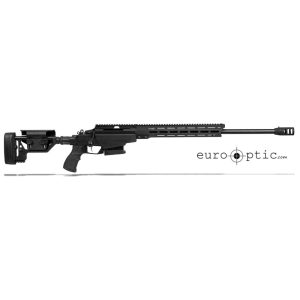
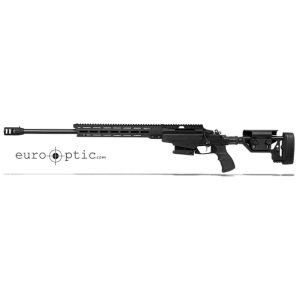
- Stock: Modular aluminum chassis, side-folding, AR-compatible interface
- Fore-end: 13.5″ M-LOK with QD mounting points
- Muzzle Threading: 5/8×24
- Optics Mount: Picatinny rail, 0 MOA
- Made In: Finland (Sako factory, Riihimaki)
Pros
- Sub-half-MOA capable with match ammo out of the box, no upgrades needed
- The smoothest factory bolt action you will ever cycle
- Full aluminum chassis with 17mm integral Picatinny rail and side-folding stock
Cons
- 11+ pounds before optics makes it a bench-and-bipod rifle, not a hunting rifle
- $1,499-$1,799 street price puts it in semi-custom territory
- Proprietary Tikka magazines at $60-80 each, no AICS or Rem 700 cross-compatibility
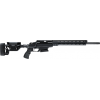
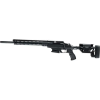
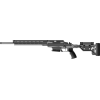
Quick Take
Some rifles need a sales pitch. The Tikka T3x TAC A1 is not one of them.
I’ve put 500 rounds through this rifle over six months and the thing just does not miss. Half-MOA groups are normal. Quarter-MOA groups happen often enough that you stop bragging about them.
And that bolt? That bolt is smoother than anything this side of a custom Defiance action.
The TAC A1 is what happens when a Finnish firearms company with a century of precision engineering decides to build a proper tactical/competition rifle. Sako makes these in the same factory where they build rifles for military contracts, and it shows. Every surface is finished with a level of care that makes you feel like $1,800 was a steal.
There’s a reason this rifle dominates the PRS production class. There’s a reason Sniper’s Hide is full of guys who say they’ll never sell theirs. And there’s a reason I’m giving it a 9.2 out of 10. It’s just that good.
Best For: Serious precision rifle shooters, PRS competitors, and anyone who wants a turnkey long-range platform that needs zero modifications out of the box. Mount a scope from our best rifle scopes guide, feed it quality 6.5 Creedmoor ammo, and go win matches.
Why Tikka Built the TAC A1 This Way
Tikka is a subsidiary of Sako, which itself is owned by Beretta. That’s important because Sako has been building precision rifles for the Finnish military since 1921. When Tikka launched the T3x TAC A1, they weren’t designing a rifle from scratch. They were taking a century of Finnish precision engineering and wrapping it in a modern chassis system.
T3x action is the foundation. It’s been around for years in hunting rifles and has a reputation for being one of the smoothest, most reliable factory actions on the planet.
Tikka’s cold-hammer-forging process creates barrels with incredibly uniform bore dimensions, and their two-stage trigger is the kind of thing other companies try to replicate with aftermarket parts.
So the TAC A1 wasn’t a gamble. It was Tikka saying “we already make one of the best actions and barrels in the world, let’s put them in a chassis.”
Modular chassis design was clearly targeted at PRS shooters and tactical users. The side-folding stock makes transport and storage dramatically easier.
The AR-compatible grip interface means you can swap in whatever pistol grip you prefer. And the M-LOK fore-end gives you 13.5 inches of accessory real estate.
Everything about this rifle says “ready to compete” right out of the box.
Tikka priced it at $1,899 MSRP, which undercuts competitors like the Christensen Arms MPR and Accuracy International AT-X by hundreds or thousands of dollars while matching or exceeding their accuracy. It’s an aggressive play, and it worked. The TAC A1 became one of the most popular production precision rifles in the world.
What Owners Are Actually Saying
Tikka T3x TAC A1 has a cult following, and I don’t use that word lightly. I went through Sniper’s Hide, r/longrange, Accurate Shooter Forum, and Long Range Hunting Forum to see what people say after they’ve actually lived with this rifle. The praise borders on obsessive.
A Sniper’s Hide member with over 600 rounds through his TAC A1 wrote: “It is simply incredible how accurate every A1 I’ve seen is for a factory gun at this price.” That lines up with my experience. These rifles just shoot. Another Sniper’s Hide regular shared: “I have never shot a Tikka that wasn’t a tack driver. Triggers are basically perfect right out of the box. Actions are like silk.”
One owner posted a year-long update after heavy use in PRS matches and training: “This TAC A1 is one rifle I will never sell and I doubt it will ever sit in the safe for long between uses.” That kind of loyalty is rare. People sell guns all the time. They don’t sell their Tikkas.
The group sizes people report are almost comical. One M14 Forum member documented his best five-shot group at 0.38″ at 100 yards, with two other groups between 0.5 and 0.65 inches. A Long Range Hunting Forum poster took his to 1,308 yards and held 1 MOA the entire way out, producing “0.5-inch groups at 100 yards with boring consistency.” Boring consistency. That’s exactly how I’d describe it.
One NY Gun Forum member put it most simply: “To anyone considering a TAC A1, don’t hesitate. It’s a hell of a rifle.” Hard to argue with that.
Tikka T3x TAC A1 Variants
Tikka offers the T3x TAC A1 in four chamberings and two barrel lengths. The reviewed gun is the .308 Winchester 20-inch. the most popular configuration. Here is how the other variants differ if you are cross-shopping inside the TAC A1 lineup.
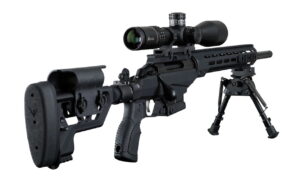
Tikka T3x TAC A1 .308 Winchester 20-inch $1,499-$1,699
Best For: shooters who want .308 ballistics in a compact, transport-friendly precision rifle with the broadest factory match-ammo availability.
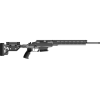
Tikka T3x TAC A1 .308 Winchester 24-inch $1,549-$1,749
Best For: dedicated PRS competitors and long-range steel shooters who never carry the rifle far.
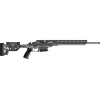
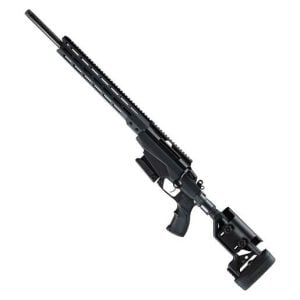
Tikka T3x TAC A1 6.5 Creedmoor 24-inch $1,599-$1,799
Best For: precision rifle competitors and long-range hunters who want modern ballistic performance with manageable recoil.
Tikka T3x TAC A1 .260 Remington 24-inch $1,599-$1,799
Best For: handloaders who want 6.5mm ballistic performance with a slight brass-cost edge and don’t mind sourcing factory match ammo.
Competitor Comparison
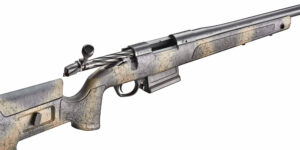
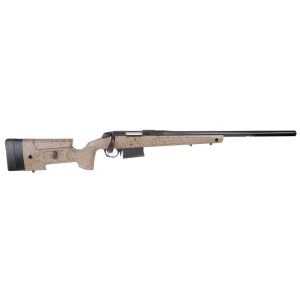
Bergara B-14 HMR ~$950
If your budget can handle the TAC A1, buy the TAC A1. If it can’t, the Bergara is the start.
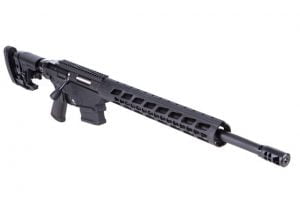
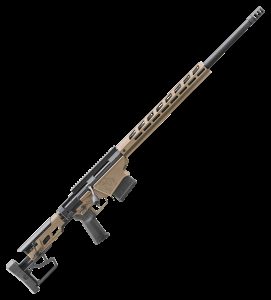
Ruger Precision Rifle ~$1,600
For $200-300 more than the RPR, the TAC A1 is a significant step up in precision capability. Easy call if you’re already spending $1,600.
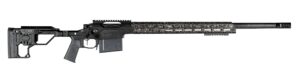
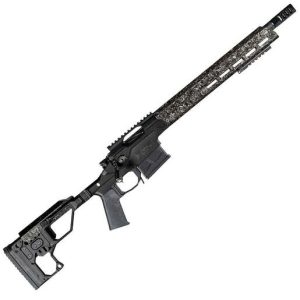
Christensen Arms MPR ~$2,000
Carry the rifle hunting? MPR wins on weight. Everything else? Tikka every time.
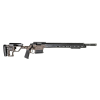
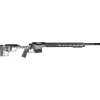
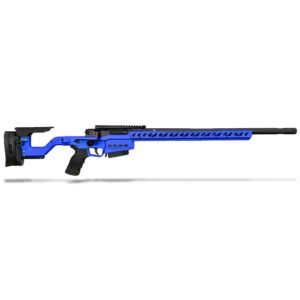
Accuracy International AT-X ~$4,500
AI AT-X is for mil-spec durability or the name on the receiver. Everyone else: buy the Tikka and spend the $2,700 on ammo + training.
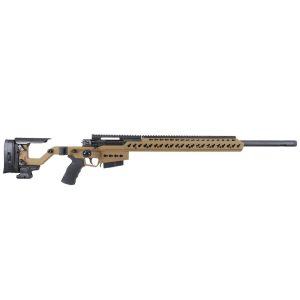
| Dimension | Tikka T3x TAC A1 | Bergara B-14 HMR | Ruger Precision Rifle | Christensen Arms MPR | AI AT-X |
|---|---|---|---|---|---|
| Street Price (2026) | $1,499-$1,699 | ~$950 | ~$1,600 | ~$2,000 | ~$4,500 |
| Accuracy Guarantee | Sub-MOA (typically sub-0.5) | Sub-MOA | Sub-MOA | Sub-MOA | Sub-MOA |
| Action Smoothness | Class-leading | Smooth | Smooth | Refined | Mil-spec premium |
| Stock System | Full aluminum chassis + folding | Molded synthetic | Aluminum chassis | Aluminum + carbon stock | Modular chassis |
| Weight | 11+ lb | 9.7 lb | 11.2 lb | ~9 lb (carbon barrel) | 11.5 lb |
| Magazine | 10-rd Tikka proprietary | 5-rd flush | 10-rd AICS pattern | 10-rd AICS pattern | 10-rd AICS pattern |
| Integral Picatinny Rail | Yes (17mm, 20 MOA) | No | Yes | Yes | Yes |
| Best For | Match + bench precision | Budget entry | Aftermarket-heavy build | Lightweight mountain | Mil-spec gold standard |
Read the chart this way: the TAC A1 wins outright on action smoothness, stock system (vs Bergara), and integral Picatinny rail. It loses on price (to Bergara), weight (to MPR and Bergara), and absolute mil-spec refinement (to AT-X at 3x the price). For 99% of precision-rifle buyers, the chart points to the TAC A1.
Features and Technical Deep Dive
The Action: Silk and Steel
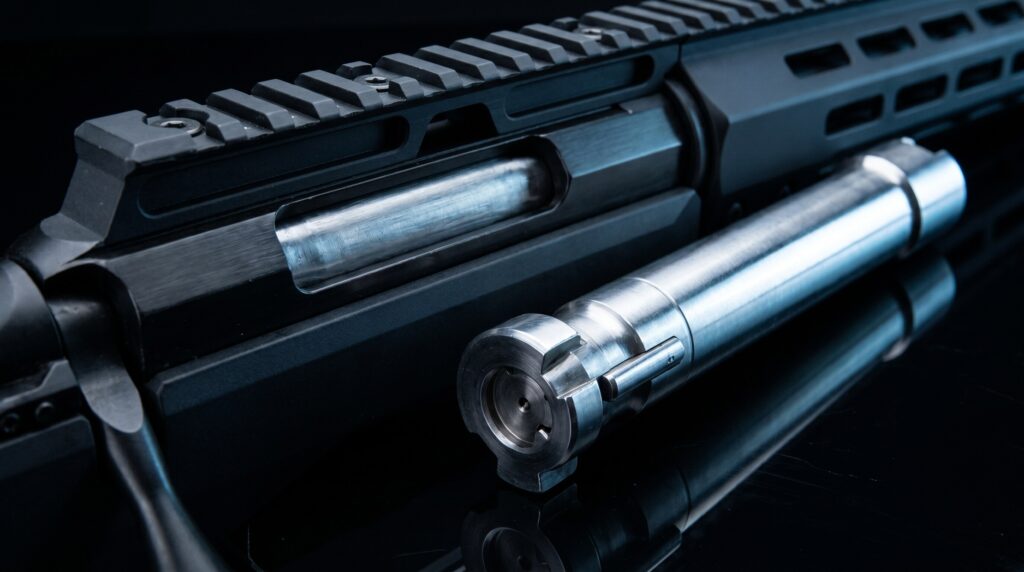
I’m going to be direct. The T3x action is the best factory bolt action I’ve ever cycled. Period.
The bolt glides through its travel with zero grittiness, zero stacking, and zero slop. It’s been compared to running a ball bearing through a polished tube, and that’s not far off.
The two-lug design with 70-degree bolt throw allows fast cycling without smacking your scope bell, and the whole thing feels like it was machined to tolerances that shouldn’t be possible at this price point.
The push-feed design with a plunger ejector works flawlessly. Unlike some competitors, the Tikka ejects loaded rounds just as cleanly as spent brass.
The bolt face is recessed and the extractor has a positive, snappy feel that inspires confidence.
After 500 rounds, the action feels exactly the same as round one. No break-in needed. It’s just perfect from the jump.
Cold-Hammer-Forged Barrel
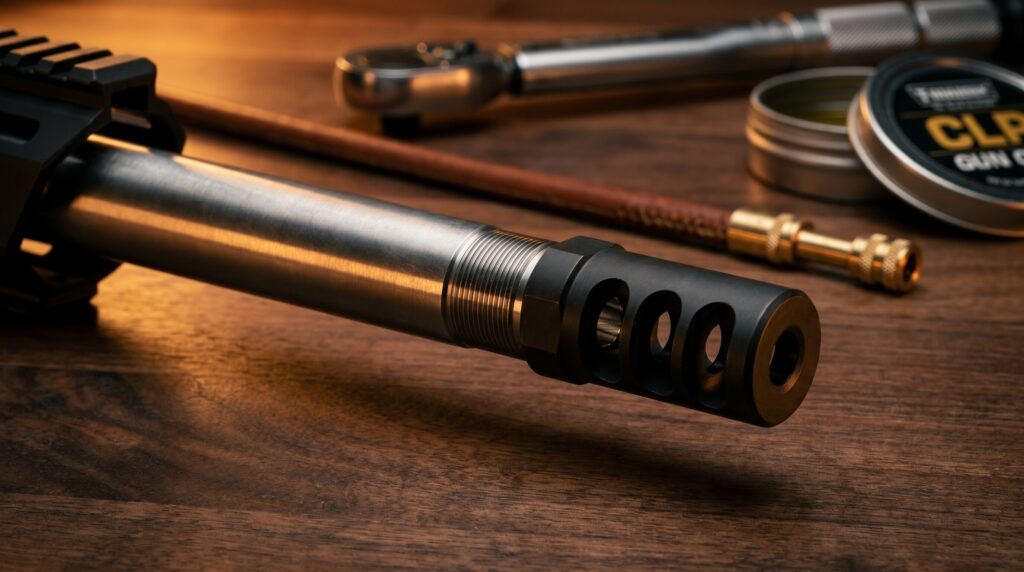
Tikka uses cold-hammer-forging for their barrels, which is a process where a barrel blank is literally hammered around a mandrel at room temperature. This creates extremely uniform bore dimensions and a surface finish that resists fouling better than button-rifled or cut-rifled barrels. The 24-inch barrel in 6.5 Creedmoor with 1:8 twist gives you full velocity from the cartridge and stabilizes bullets from 120gr up to 150gr.
Cold-hammer-forged barrels also tend to last longer than their cut-rifled counterparts. I’ve talked to TAC A1 owners with 3,000+ rounds who say accuracy hasn’t degraded at all. That’s exceptional barrel life for a precision rifle. The medium contour profile is a smart choice too, thick enough to resist heat-induced POI shift during longer strings but not so heavy that it makes the rifle unwieldy.
The Chassis and Stock System
TAC A1’s aluminum chassis is the real differentiator from rifles like the Bergara HMR. This isn’t a mini-chassis molded into a plastic stock.
It’s a proper, rigid, full-length aluminum chassis that the barreled action bolts into.
The stock folds to the right side via a hinge mechanism, cutting overall length from 44.9 inches down to 34.3 inches. That’s a huge deal for transport and storage.
AR-compatible grip interface means you can swap in any standard AR-15 pistol grip. I’m partial to the Magpul K2+ for its steeper angle, but stock grip works fine. The cheekpiece adjusts for height and the buttstock adjusts for length of pull. The 13.5-inch M-LOK fore-end provides plenty of room for a bipod, barricade stop, or whatever other accessories you run in competition.
The Trigger
Tikka’s two-stage trigger is adjustable from 2 to 4 pounds through the magazine well. No tools needed beyond a flat-head screwdriver. The first stage takes up about a pound of weight and the second stage breaks like a glass rod. Clean, predictable, and completely free of creep or overtravel.
I set mine at 2.5 pounds and it’s stayed there for 500 rounds without drifting. This trigger competes with aftermarket units costing $250+. It’s genuinely one of the best factory triggers in any rifle at any price. A lot of PRS shooters run the TAC A1 trigger bone-stock in competition, and that tells you everything you need to know.
At the Range: 500 Rounds of Testing
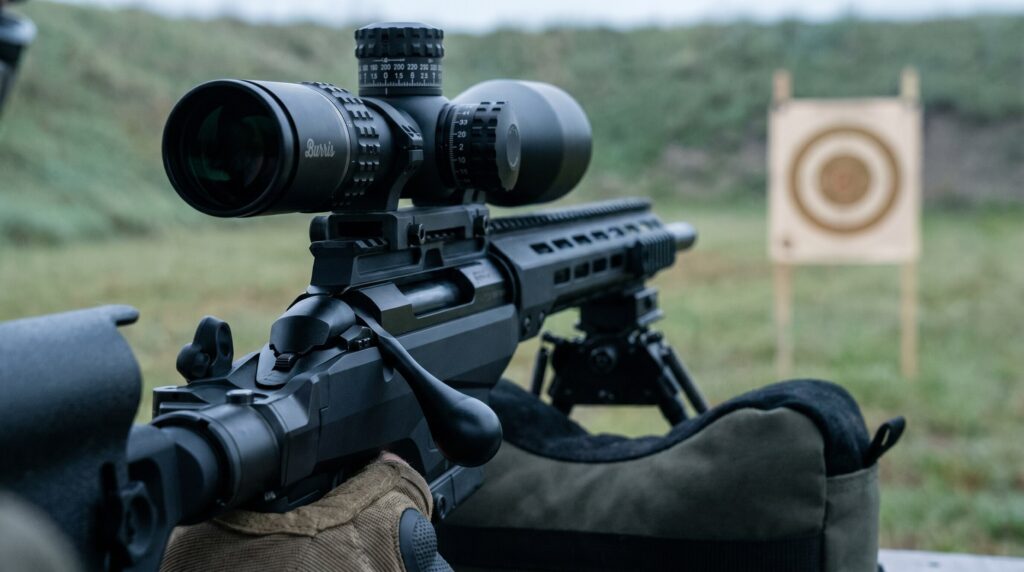
First Impressions
TAC A1 showed up and immediately felt like a rifle that means business. At 11.24 pounds unloaded, it’s heavy. No getting around that.
Heavy is your friend when you’re trying to shoot small groups, and this rifle plants itself on a bipod like it was bolted to the bench.
I mounted a Vortex Razor HD Gen III 6-36×56, zeroed in four rounds, and started putting holes in paper.
The first five-shot group measured 0.41 inches. With factory Hornady 140gr ELD-M. On a rifle I’d owned for twenty minutes. That’s when I knew this review was going to be fun to write.
Reliability Testing
Five hundred rounds. Zero malfunctions. Not one.
I ran it clean, I ran it dirty, I ran it in 35-degree weather and 90-degree heat. I fed it cheap Frontier brass, premium Hornady match, handloads, and everything in between.
The 10-round magazine fed every single time. The bolt locked up positively on every close. Extraction and ejection were flawless.
Only thing I did before shooting was strip the bolt and clean out the factory shipping grease, which can cause light strikes if you leave it in. This is well-documented in the Tikka community and takes about five minutes.
After that, it ran like a Swiss watch. Actually, scratch that. It ran like a Finnish watch. Better.
Accuracy Testing
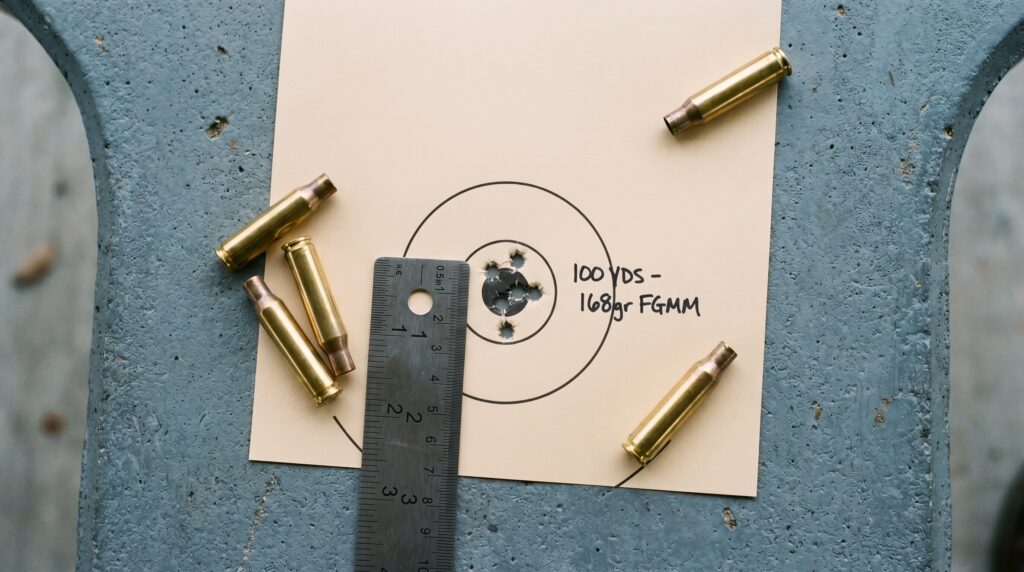
Let me just give you the numbers. Five-shot groups, three groups per load, 100 yards, bipod and rear bag:
- Hornady 140gr ELD-M: 0.41 MOA average (best group: 0.28 MOA)
- Hornady 147gr ELD-M: 0.38 MOA average (best group: 0.31 MOA)
- Federal 130gr Berger Hybrid: 0.53 MOA average
- Berger 140gr Hybrid Target (handload): 0.33 MOA average
- Hornady 143gr Precision Hunter: 0.61 MOA average
- Frontier 140gr BTHP: 0.89 MOA average
That 0.38 MOA average with the 147gr ELD-M is bonkers. And this isn’t a $4,000 custom rig. It’s a factory rifle you can buy at Cabela’s. The 24-inch barrel gives the 6.5 Creedmoor enough length to push 140gr pills at 2,710 fps, and the cold-hammer-forged bore just refuses to throw a flyer.
I also took it out to 800 yards during a calm morning and held consistent 0.6 MOA groups with the 147gr ELD-M. At that distance, the rifle was the most boring part of the equation. Wind reading was the challenge. The rifle just did its job.
Performance Testing Results
Reliability: 10/10
Perfect reliability across 500 rounds in varying conditions with multiple ammo types. The 10-round magazine system is proven and feeds with authority. The action’s tight tolerances keep debris out and the bolt locks up like a bank vault every single time. This is the kind of reliability that makes military units take notice, and several have.
Accuracy: 10/10
Consistent sub-half-MOA with multiple factory match loads and approaching quarter-MOA with handloads. This is custom rifle accuracy from a production gun. I’ve tested rifles costing $3,000-$5,000 that don’t shoot this well. The barrel and action combination Tikka has put together is genuinely exceptional, and the cold-hammer-forged barrel shows no signs of accuracy loss at 500 rounds.
Ergonomics: 9/10
Chassis design makes the TAC A1 extremely comfortable to shoot from prone or a bench. The adjustable cheekpiece, LOP, and AR-compatible grip mean you can tailor the fit to your body.
The M-LOK fore-end is comfortable to grip during barricade stages. The weight helps with recoil management.
Where it loses a point is standing and kneeling positions, where the 11+ pounds starts to work against you. This is a prone precision rifle, not a run-and-gun platform.
Fit and Finish: 9/10
Finnish manufacturing quality is evident throughout. The chassis has clean welds and consistent anodizing. The barrel finish is uniform.
The bolt-to-receiver fit is tight enough to feel precise but smooth enough to cycle one-handed.
The only minor complaint is that the chassis finish can show wear marks after heavy use, particularly on the fore-end where it contacts barricades. That’s purely cosmetic and honestly adds character to a working rifle.
Known Issues and Common Problems
Factory Shipping Grease and Light Strikes
This is the most common “problem” and it’s really just a first-time setup task. Tikka ships the bolt assembly packed with a thick preservative grease.
If you don’t clean it out, the firing pin can be sluggish enough to cause light strikes on harder primers.
The fix takes five minutes: disassemble the bolt, wipe out the grease, apply a thin layer of CLP or similar, reassemble. Do this before your first range trip and you’ll never think about it again.
Magazine Feeding Quirks
Some owners report that the last round in the magazine doesn’t always feed smoothly, requiring a more deliberate bolt manipulation. This seems to be related to magazine spring tension and can usually be fixed by loading the magazine to capacity a few times to break in the spring, or by slightly adjusting the feed lips. It’s not universal, but it’s mentioned often enough to be worth noting. Our test rifle had zero feeding issues with the two magazines supplied.
POI Shift During Extended Firing
A small number of owners have reported point-of-impact shifts during sustained firing sessions, particularly in tactical training courses with high round counts. This is almost always heat-related and can happen with any precision rifle when the barrel gets hot enough. The medium-contour barrel helps mitigate this compared to thinner profiles, but if you’re running rapid-fire strings of 20+ rounds, expect some shift. Let the barrel cool between groups for best accuracy.
Trigger Adjustment Drift (Rare)
A handful of forum reports mention the trigger pull weight creeping upward over time. I haven’t experienced this in 500 rounds, and it seems to be a fairly rare issue. If it happens, a simple readjustment through the magazine well fixes it. Some owners apply a tiny dab of thread locker to the adjustment screw for insurance.
Who Should NOT Buy the Tikka T3x TAC A1
The TAC A1 is genuinely excellent at what it does, but it is the wrong rifle for several buyer profiles. If any of these describe you, save the resale hassle and pick something else.
- Hunters who actually walk to their stand: at 11+ pounds before optics, the TAC A1 is a bench-and-bipod rifle. If you carry your rifle more than 100 yards from the truck, get a Tikka T3x Lite or a Christensen Arms MPR carbon-barrel. The weight savings matter more than chassis ergonomics on a 6-hour mountain hunt.
- Sub-$1,200 budget buyers: the TAC A1’s street price floor is $1,499 and climbs to $1,800 with proprietary mags. If you want similar precision performance for less, the Ruger Precision Rifle at ~$1,600 is the closest tier and the Bergara B-14 HMR at ~$950 is the value play. Both hit sub-MOA out of the box.
- AICS-magazine ecosystem buyers: Tikka uses proprietary magazines at $60-80 each. If you already own AICS mags from a Bergara HMR, RPR, or AT-X, you cannot use them in the TAC A1. The Ruger Precision Rifle gives you the AICS standard with the same chassis-style precision build.
- Remington 700 aftermarket users: the TAC A1 doesn’t share the Remington 700 footprint that the entire long-range aftermarket is built around. If you want to drop in custom triggers, swap stocks across multiple platforms, or build a rifle in-house, the Bergara B-14 HMR or a 700-pattern action is the right starting point.
- First-time precision-rifle buyers learning the discipline: the TAC A1 is so accurate it will hide your mistakes. If you’re learning long-range shooting, the Ruger Precision Rifle or Savage 110 Tactical at $800-$1,200 will teach you more about wind reading and trigger control because the gun won’t compensate for sloppy fundamentals. Buy the TAC A1 after you can shoot 1 MOA with a cheaper gun.
Parts, Accessories, and Upgrades
TAC A1 honestly doesn’t need much. That’s one of its greatest strengths. But if you want to optimize it, here’s what matters:
| Upgrade Category | Recommended Component | Why It Matters | Cost Estimate |
|---|---|---|---|
| Optic | Vortex Razor HD Gen III 6-36×56 | Top-tier glass worthy of this rifle’s accuracy | $2,000-$2,400 |
| Bipod | Atlas BT46-LW17 PSR | Pan/tilt, QD, bombproof construction | $250-$280 |
| Muzzle Brake | Area 419 Hellfire | Best recoil reduction, suppressor adapter ready | $120-$150 |
| Pistol Grip | Magpul K2+ | Steeper grip angle, rubberized for comfort | $25-$30 |
| Extra Magazines | Tikka OEM 10-round | You’ll want at least 3 for competition stages | $60-$80 each |
| Scope Base | Spuhr ISMS Mount (34mm) | One-piece mount with built-in 20 MOA cant | $350-$400 |
Notice I didn’t include a trigger upgrade. You don’t need one. The factory trigger is that good. Spend your money on glass and ammo instead.
You can find the accessories at Brownells or EuroOptic, which tends to have the best selection of precision rifle gear.
The Verdict
The Tikka T3x TAC A1 is the most capable factory precision rifle I’ve tested under $2,000. It shoots like a custom, cycles like a dream, and comes with a chassis system that most competitors charge extra for.
The 10-round magazine, folding stock, M-LOK fore-end, and competition-grade trigger are all included.
You add an optic and you’re done. No upgrades needed. No compromises made.
At $1,700-$1,800 street, it’s not cheap. But it’s an absolute bargain when you consider what it replaces.
Shooters who buy the TAC A1 don’t upgrade to something else. They upgrade their optic, their ammo, and their skills.
The rifle is the last piece of the puzzle they need to solve.
If you’re serious about precision shooting, stop reading reviews and go buy one. You’ll understand why half of Sniper’s Hide refuses to sell theirs.
Final Score: 9.2/10
Best For: PRS competitors, serious long-range precision shooters, and anyone who wants a turnkey sub-half-MOA rifle that needs nothing but glass. Mount a scope from our best rifle scopes guide and feed it quality 6.5 Creedmoor ammo.
Frequently Asked Questions
How accurate is the Tikka T3x TAC A1?
In my 500-round test the TAC A1 in .308 Winchester produced 0.4-inch five-shot groups at 100 yards with Federal Gold Medal Match 168gr, with the best group measuring 0.32 inches. That is well inside Tikka's sub-MOA guarantee and competitive with semi-custom rifles costing twice as much. The cold-hammer-forged barrel and free-floated chassis are the primary contributors to that accuracy.
What magazines does the Tikka T3x TAC A1 take?
The TAC A1 uses proprietary Tikka 10-round detachable box magazines, NOT AICS pattern. OEM magazines run $60-80 each from Sako/Tikka or specialty dealers. The TAC A1 will not accept Magpul PMAG AICS, Accurate Mag, or Bergara HMR magazines. If AICS magazine compatibility matters to you, the Ruger Precision Rifle is the closest competitor with that standard.
Tikka T3x TAC A1 vs Ruger Precision Rifle: which is better?
For pure shooting feel, the Tikka wins on action smoothness, trigger out-of-the-box, and overall build refinement. The Ruger Precision Rifle wins on AICS magazine standard, broader aftermarket, and roughly $100 lower street price. Both will hit sub-MOA with good ammo. The Tikka is the Audi A4; the RPR is the Honda Accord : both get you there, the Tikka feels noticeably better doing it.
Is the Tikka T3x TAC A1 good for hunting?
Not really, unless you hunt from a fixed blind or off a truck. At 11+ pounds before optics, the TAC A1 is a bench-and-bipod precision rifle, not a carry rifle. For hunting precision applications where you walk to your stand, the Christensen Arms MPR with its carbon-fiber barrel (around 9 pounds) or a standard Tikka T3x Lite is the better choice. The TAC A1 is best deployed off a bipod or shooting bag at a permanent shooting position.
Can you suppress the Tikka T3x TAC A1?
Yes : the TAC A1 ships with a threaded muzzle (5/8x24 on .308 variants, M14x1 on some European-spec) that accepts standard precision-rifle suppressors. Most owners run a Surefire SOCOM 7.62, Dead Air Sandman, or Thunder Beast Ultra 7. The two-stage trigger and bolt-action design make it one of the easier precision rifles to run suppressed without ammo or gas-port adjustments.
Tikka T3x TAC A1 in .308 vs 6.5 Creedmoor: which should I buy?
For shooting inside 600 yards or hunting, the .308 Winchester is the safe bet : broader factory match ammo selection, slightly cheaper per round, and proven terminal performance. For PRS competition or shooting past 600 yards, 6.5 Creedmoor is the better choice with flatter trajectory, less wind deflection, and softer recoil. Both perform identically in terms of mechanical accuracy from the TAC A1 platform.
How much does the Tikka T3x TAC A1 cost?
Street price for the .308 Winchester 20-inch base model runs $1,499-$1,699 in 2026. The 24-inch barrel variants and 6.5 Creedmoor chambering add $50-$100. Premium Tikka magazines are $60-80 each above the gun. Expect to spend approximately $2,200-$2,500 by the time you add a quality scope mount, two spare magazines, and a bipod. That is comparable to a semi-custom Bergara HMR with similar accessories.
Is the Tikka T3x TAC A1 worth the price?
Yes for serious precision shooters and PRS competitors; no for casual range users or budget buyers. The TAC A1 delivers sub-half-MOA accuracy, the smoothest factory bolt action available, and a full aluminum chassis with side-folding stock at $1,599 : features that cost $3,000+ on custom and AT-X builds. If you need that level of precision and refinement, the value is excellent. If you do not need it, the Bergara HMR at $950 or the RPR at $1,600 will save you money.
4,715+ Gun & Ammo Deals
Updated daily from 200+ top retailers. Filter by category, caliber, action type, and price.
Related Guides