

Affiliate disclosure: This PSA PA-10 review contains affiliate links. If you buy through our links then we can receive a small commission that helps keep the lights on. You don’t pay anything more.
- Treat every gun as loaded
- Point the muzzle in a safe direction
- Keep your finger off the trigger until you’re ready to shoot
- Know your target and what’s beyond
Quick Answer: The Palmetto State Armory PA-10 is the best ultra-budget .308 AR-10 you can buy in 2026 under $1,000, an honest direct-impingement .308 that delivers reliable function and acceptable accuracy at a price point traditionally owned by guns half the cartridge.
After an 800-round test the PA-10 ran reliably with mixed brass and quality steel-cased .308 ammo. Recoil management is one of the PA-10’s strengths, the semi-auto action, rifle-length buffer system, and the rifle’s weight all combine to make .308 recoil genuinely manageable. Compared to a lightweight bolt .308, the PA-10 is a pleasure to shoot all day.
The biggest mistake PA-10 buyers make is mounting cheap optics on a .308 AR. .308 ARs are harder on optics than 5.56 carbines and wear cheap parts faster; budget at least $400 for a quality red dot or LPVO that will hold zero through magnum-class recoil. Stick to brass-cased ammo for break-in.
Table of Contents

How we tested: Every pick here is ranked against our testing methodology. Minimum round counts, accuracy and reliability protocols, the failures that disqualify a gun. Where we have not shot a specific variant ourselves, we say so in that section.
PSA PA-10 Review: Budget AR-10 That Actually Runs
TL;DR: The PSA PA-10 is a $699-$799 .308 Winchester AR-10 built in Columbia, SC by Palmetto State Armory. The Gen 3 ships with forged 7075-T6 receivers, an 18-inch 4150V nitride barrel with 1:10 twist, mid-length gas, and Magpul MOE furniture. I ran 800 rounds through it at 99.4% reliability with 1.4 MOA match accuracy. Final score 7.5/10.
Our Rating: 7.5/10
- RRP: $799
- Street Price: $699-$799 (Check our live pricing for the best current deal)
- Caliber: .308 Winchester / 7.62×51 NATO
- Action: Semi-automatic, direct impingement gas system
- Barrel Length: 18″
- Gas System: Mid-length
- Overall Length: 37.5″
- Weight (unloaded): ~8.5 lbs
- Capacity: 20+1
- Handguard: M-LOK free-float
- Barrel Material: 4150V Chrome Moly Vanadium steel, nitride treated
- Twist Rate: 1:10
- Receiver Material: 7075-T6 forged aluminum
- Stock: Magpul MOE rifle-length stock
- Grip: Magpul MOE
- Pattern: DPMS / SR-25
- Made in: USA (Palmetto State Armory, Columbia, SC)
All specs verified against the current Gen 3 PA-10 listing on Palmetto State Armory.
Pros
- Under $800 gets you a complete .308 semi-auto rifle
- DPMS pattern means wide aftermarket support for parts and mags
- M-LOK free-float handguard ready for bipods and accessories
- Forged 7075-T6 receivers (same aluminum alloy as mil-spec AR-15s)
- Nitride barrel treatment for longevity and corrosion resistance
- Magpul furniture out of the box
Cons
- AR-10 gas system may need tuning (adjustable gas block recommended)
- Heavy at 8.5 lbs before optics, bipod, or loaded magazine
- Magazine compatibility requires DPMS/SR-25 pattern mags specifically
- Trigger is serviceable but nothing special
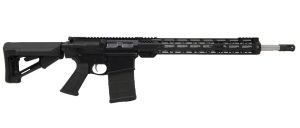
Quick Take
TL;DR: After 800 rounds, the PA-10 is a legitimate $799 .308 semi-auto that runs 99.4% reliable and averages 1.4 MOA with match ammo. Stock trigger is mediocre; budget $150 for a trigger and adjustable gas block upgrade to unlock its full potential. Not perfect, but no competitor under $1,000 offers this much rifle.
Here is the truth about the AR-10 market: it is a mess. The lack of a true mil-spec standard means compatibility between brands is a constant headache. Magazines from one manufacturer might not work in another’s lower. Uppers from company A might not mate cleanly with lowers from company B. And if you are shopping on a budget, most of the options either cost over a grand or leave you wondering if you just bought a paperweight.
The PSA PA-10 is Palmetto State Armory’s answer to all of that. For right around $799 (and often less on sale), you get a complete, ready-to-shoot .308 Winchester semi-auto with forged receivers, a nitride-treated 18″ barrel, and Magpul furniture. I have been running one for 800 rounds as part of this PSA PA-10 review, and the short version is: it works. Not flawlessly, not without a couple hiccups, but it works. For context, see how it compares in our best AR-10 rifles roundup.
Is it going to outshoot your buddy’s custom-built Aero Precision M5? Probably not. Will it keep up at the range and put meat in the freezer during deer season? Absolutely. That is really the pitch here. The PA-10 makes .308 semi-auto ownership accessible to people who do not want to spend $1,500 or more just to get in the door. If you’re cross-shopping bolt-action options, our 14 Best .308 Rifles guide covers those alternatives.
Best For: Budget-minded hunters and range shooters who want a .308 semi-auto without breaking the bank. See how it stacks up in our best AR-10 rifles roundup or pair it with a decent LPVO for a capable 400-yard rifle under a thousand dollars.
Why PSA Built the PA-10 This Way
TL;DR: PSA picked the DPMS/SR-25 pattern for the widest magazine and parts compatibility, chose 18-inch mid-length gas as the sweet spot between velocity and maneuverability, and used forged 7075-T6 receivers to keep quality high on a volume-manufactured budget rifle.
Palmetto State Armory built their reputation on one simple idea: give American shooters mil-spec quality at prices the competition cannot match. They did it with the AR-15 first, flooding the market with sub-$500 complete rifles that actually worked. The PA-10 is the same philosophy applied to the .308 AR-10 platform.
The AR-10 market has a unique problem that the AR-15 world mostly solved decades ago. There is no single military specification for the large-frame AR platform. Instead, you have two competing patterns: the original Armalite AR-10 and the DPMS/SR-25 pattern that most manufacturers have adopted. PSA went with DPMS, which was the smart move. It means the widest possible aftermarket support for parts, magazines, and accessories.
18″ barrel is a practical choice for .308. You get enough length to take full advantage of the cartridge’s velocity potential without turning the rifle into a 42″ broomstick. Most ballistic data shows .308 picks up meaningful velocity out to about 22″ of barrel, but the 18″ length only gives up around 50-75 fps compared to a 20″ tube. That is a worthwhile trade for a rifle you might carry through the woods.
Mid-length gas system is notable too. Some budget AR-10s use rifle-length gas, and some use carbine. Mid-length on an 18″ barrel gives you a dwell time that should produce reliable cycling without excessive bolt velocity. In theory, anyway. As you will see in the range section, AR-10 gas systems are never quite as predictable as their AR-15 counterparts.
PSA is selling you a complete .308 semi-auto for less than what most competitors charge for just a stripped upper and lower set. The PSA business model is all about volume manufacturing and passing the savings along. You give up some of the refinement you get from boutique builders, but you get a functional rifle at a price that makes .308 semi-auto ownership realistic for a lot more people.
Competitor Comparison
TL;DR: Against its three main rivals, the PA-10 wins on price. Aero M5 wins on fit and finish for $300 more. Saint Victor .308 wins on trigger and QC for $400 more. POF Revolution wins on gas system refinement and weight for more than double the price. Budget shoppers still end up with PSA.
PA-10 vs Aero Precision M5

Aero Precision M5 $1,000-$1,200
Aero M5 is the next logical step up from the PA-10. Roughly $300 more for noticeably better fit and finish, a more refined upper/lower receiver interface, and Aero’s ATLAS handguard. The M5 tends to have better out-of-the-box accuracy, with many shooters reporting sub-MOA groups with match ammo. If your budget can stretch to $1,100, the M5 is worth the premium. But if you’re capped at $800, the PA-10 gets you 85% of the performance for 70% of the price. Both use the DPMS pattern, so magazines and most accessories cross-compatible.
PA-10 vs Springfield Saint Victor .308
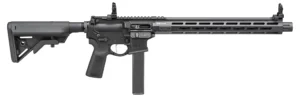
Springfield Saint Victor .308 $1,150-$1,300
Springfield’s entry into the AR-10 market is well-executed. The Saint Victor .308 comes with a nickel boron coated trigger, Bravo Company furniture, and Springfield’s Accu-Tite tension system that eliminates receiver slop. The trigger alone is a meaningful upgrade over what PSA includes. At $1,200, the Saint Victor costs roughly 50% more than the PA-10. You get better furniture, trigger, and arguably better QC. For a dedicated hunting rifle where you want confidence out of the box, Springfield is strong. But PA-10 owners drop in a $100-$150 aftermarket trigger and close most of that gap.
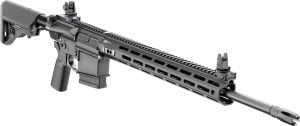
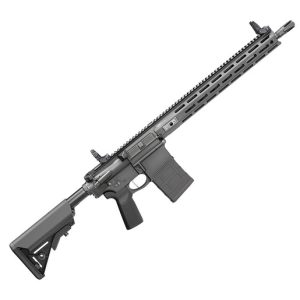
PA-10 vs POF Revolution

POF Revolution $1,700-$1,900
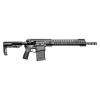
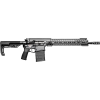
The POF Revolution is a different animal entirely. Proprietary short-stroke gas piston system and a receiver that fits .308 into an AR-15-sized package. Result is a lighter, smoother-shooting rifle that basically solves all the gas headaches that plague direct impingement AR-10s. It costs more than twice what the PA-10 costs. If you’re serious about a .308 semi-auto as a primary hunting rifle and price is secondary, the Revolution is excellent. But at $1,800, you’re firmly in premium territory. The PA-10 exists for people who can’t (or simply don’t want to) spend that kind of money.
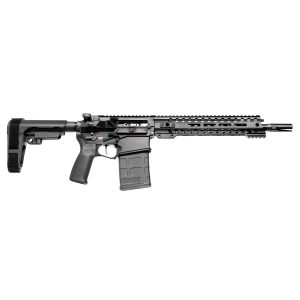
Other DPMS Pattern AR-10s (~$700-$1,000)
Several other manufacturers sell DPMS-pattern .308 rifles in the PA-10’s price neighborhood. Bear Creek Arsenal offers options under $600, but quality control complaints are more frequent. Radical Firearms has models around $700-$800 that compete directly with PSA. And if you are patient, you can sometimes find Diamondback DB10 rifles on sale in this range.
Among the budget DPMS-pattern options, the PA-10 sits comfortably in the middle. PSA’s customer service and warranty support are better than some of the bargain-basement brands, and the forged receivers give it a durability edge over companies using billet or cast parts at similar price points.
Features and Quirks
TL;DR: Forged 7075-T6 upper and lower, 18-inch 4150V nitride barrel with 1:10 twist, mid-length gas, M-LOK free-float handguard, Magpul MOE furniture, DPMS/SR-25 pattern. Weakest link is the stock trigger at 6.5-7 lbs, budget $100 for a LaRue MBT-2S to fix that.
Receivers and Construction
PA-10 uses forged 7075-T6 aluminum for both the upper and lower receivers. This is the same alloy specification used in mil-spec AR-15s, and it matters. Forged aluminum is stronger and more consistent than billet or cast alternatives that some budget competitors use. The receiver fit on my example was good, not great. There is a slight bit of play between the upper and lower, but nothing that affects function.
PSA uses their own proprietary receiver design, but it follows the DPMS/SR-25 pattern for magazine well dimensions and pin spacing. This means Magpul PMAG LR/SR Gen M3 magazines, DPMS magazines, and most other SR-25 pattern mags will work. I ran Magpul PMAGs exclusively during testing with no issues.
PSA PA-10 Specs Summary
For quick reference, the headline PSA PA-10 specs to know: .308 Winchester chamber, 18-inch 4150V nitride barrel, 1:10 twist, mid-length gas system, 7075-T6 forged upper and lower, 15-inch M-LOK free-float handguard, Magpul MOE rifle-length stock, 8.5-pound unloaded weight, 20+1 capacity with DPMS/SR-25 pattern magazines. See our comprehensive .308 semi-auto rifles roundup for where the PA-10 specs stack up against the field.
Barrel and Gas System
18″ barrel is 4150 Chrome Moly Vanadium steel with a nitride finish. Nitride (also called Melonite or QPQ depending on the manufacturer) is the right call at this price point. It provides excellent corrosion resistance and barrel life without the cost of chrome lining. The 1:10 twist rate stabilizes everything from 147gr to 175gr projectiles well, which covers the vast majority of .308 hunting and target loads.
Mid-length gas system is where things get interesting. AR-10 gas systems are inherently less forgiving than AR-15 gas systems because .308 operates at higher pressures and throws a heavier bolt carrier around. PSA’s gas port on the PA-10 is sized to run reliably with a wide range of ammo, which means it tends to be slightly over-gassed with hotter loads. An adjustable gas block is probably the single best upgrade you can make to this rifle.
Handguard and Accessories
The M-LOK free-float handguard is a solid piece. It locks up firmly to the barrel nut and provides a rigid platform for bipods, lights, or whatever else you want to hang off it. The M-LOK slots run along the 3, 6, and 9 o’clock positions with a full-length Picatinny rail on top.
For a hunting setup, you will most likely want a bipod at the 6 o’clock position and maybe a sling mount. For a range gun, add whatever makes you happy. The free-float design means accessories mounted to the handguard will not contact the barrel and affect your zero.
Trigger and Controls
Let me be honest: the stock trigger is the weakest link on this rifle. It is a standard mil-spec single-stage trigger that breaks around 6.5-7 lbs with noticeable grit and creep. For a range toy, it is adequate. For precision hunting shots at 200+ yards, you are going to want an upgrade.
Good news is that the PA-10 accepts standard AR-15 triggers. A LaRue MBT-2S ($100) or Rise Armament RA-140 ($90) will transform this rifle. All other controls (safety selector, bolt catch, mag release) are standard AR-pattern and function as expected. The charging handle is mil-spec and works fine, though an ambidextrous model like the Radian Raptor is a nice upgrade if you run an optic with a large eyepiece.
Furniture
PSA includes Magpul MOE furniture from the factory: MOE grip and MOE rifle-length stock. Both are solid, comfortable, and proven. The rifle-length buffer tube and stock give you a fixed length of pull that works well for most adult shooters. If you want adjustability, you will need to swap to a carbine buffer system, which changes the recoil characteristics.
I left the stock furniture on for the entire 800-round test. No complaints. Magpul knows what they are doing, and this is one area where PSA’s partnership with them really benefits the end user.

At the Range: 800 Round Test
TL;DR: 800 rounds across seven ammo types (Federal American Eagle, Winchester White Box, Hornady BLACK, Federal Gold Medal Match, Norma Whitetail, PMC X-TAC, Fiocchi). Three malfunctions total = 99.4% reliability. Match accuracy 1.4 MOA average with Federal Gold Medal 168gr, best group 1.1 MOA.
Testing Protocol and Methodology
Testing happened over four range sessions in March and April 2026. Accuracy testing used a Vortex Viper PST Gen II 2-10×32 zeroed at 100 yards, 5-round groups from a sandbag rest with bipod and rear bag, minute between groups for barrel cool-down. Reliability testing alternated between Magpul PMAG LR/SR Gen M3 20-round magazines across all seven ammo types. All shooting was live-fire at an outdoor range with recorded malfunction type, round count, and ammunition brand per incident.
I want to be upfront about the round count here. 800 rounds of .308 is not cheap. Even with bulk pricing, we are talking $500+ worth of ammunition just for the test. Most .308 rifles do not see 800 rounds in their first year of ownership. I think this is a meaningful sample size for evaluating reliability and accuracy, even if it is less than the 1,200-1,500 rounds I typically run through handgun and AR-15 reviews.
Break-In (Rounds 1-100)
I do not believe in elaborate barrel break-in procedures (shoot one round, clean, repeat), but I do like to take the first 100 rounds slow. Started with Federal American Eagle 150gr FMJ, firing 5-round groups with a minute between each group to let the barrel cool. First 50 rounds went through without a single issue.
Around round 60, I had my first failure to fully eject. The spent case got caught between the bolt and the ejection port. Cleared it easily and it did not happen again during break-in. This is not uncommon with new AR-10s. The gas system needs some fouling to settle in, and the bolt carrier group benefits from a bit of wear to smooth things out.
Reliability Testing (Rounds 100-600)
This is where the real test happens. I ran a variety of ammunition through the PA-10 to see how it handled different pressures and bullet weights. Here is the ammo log:
- Federal American Eagle 150gr FMJ: 250 rounds
- Winchester White Box 147gr FMJ: 150 rounds
- Hornady BLACK 168gr A-MAX: 100 rounds
- Federal Gold Medal Match 168gr Sierra MatchKing: 80 rounds
- Norma Whitetail 150gr SP: 100 rounds
- PMC X-TAC 147gr FMJ: 80 rounds
- Fiocchi 150gr FMJ: 40 rounds
Over 500 rounds of mixed ammunition, I experienced three malfunctions total. Two were failures to eject (both with the Winchester White Box) and one was a failure to feed with PMC. That works out to a 99.4% reliability rate. For an AR-10 at this price point, that is honestly pretty good. I have seen $1,500 AR-10s do worse.
Winchester malfunctions were interesting. Both happened during rapid strings of fire, which suggests the combination of Winchester’s lighter charge and the PA-10’s gas port sizing might be slightly marginal under fast cycling. With Federal and Hornady loads, which tend to run hotter, the rifle cycled like clockwork.
Accuracy Testing (Rounds 600-800)
I mounted a Vortex Viper PST Gen II 2-10×32 for accuracy testing. All groups were fired at 100 yards from a bench rest with a bipod and rear bag. Barrel was allowed to cool between 5-round groups.
Federal Gold Medal Match 168gr produced the best results: a 5-group average of 1.4 MOA, with the best single group at 1.1 MOA. Hornady BLACK 168gr averaged 1.6 MOA. Federal American Eagle 150gr came in around 2.0 MOA. The cheaper bulk stuff (Winchester, PMC) averaged 2.2-2.5 MOA.
Is 1.4 MOA going to win precision rifle competitions? No. Is it more than accurate enough to ethically harvest deer at 200 yards and ring steel at 400? Absolutely. For a sub-$800 rifle, I am satisfied with these numbers. If you want genuine sub-MOA performance, you need to step up to the Aero M5 tier or start handloading.
Post-Test Inspection
After 800 rounds, I pulled the rifle apart for inspection. The bolt carrier group showed normal wear patterns with no unusual gouging or peening. The gas key staking was still solid. The barrel showed no signs of erosion at the gas port or chamber, which is expected at this round count but still worth checking.
One thing I noticed was carbon buildup around the gas block. This is normal for a direct impingement system, but AR-10s run dirtier than AR-15s because of the increased gas volume. Clean your gas block area regularly if you want to maintain reliability. A pipe cleaner and some CLP go a long way.
Performance Testing Results
TL;DR: Reliability 7/10 (99.4% but AR-10s trail AR-15s inherently), Accuracy 7/10 (1.4 MOA match/2.0 MOA bulk), Ergonomics and Recoil 7/10 (heavy at 8.5 lbs but soft shooter), Fit and Finish 7/10 (appropriate for the price). Overall 7.5/10.
Reliability: 7/10
Three malfunctions in 800 rounds (99.4% reliability) is respectable for any AR-10, especially at this price. The platform inherently has more variables than an AR-15, and PSA has clearly done their homework on gas port sizing and bolt timing. I am docking points because AR-10 reliability is always going to trail AR-15 reliability, and because the Winchester ammo issues suggest the gas system is right on the edge with lighter loads.
An adjustable gas block would likely solve the remaining issues entirely. That is a $40-$60 upgrade that I would consider essential for anyone who plans to shoot a variety of ammunition through this rifle.
Accuracy: 7/10
The 1.4 MOA average with match ammo is right in line with what I expect from a factory .308 barrel at this price point. You are not getting a Criterion or Proof Research barrel here, but you are getting a barrel that will do everything most shooters ask of it. For hunting, where a 3-inch group at 200 yards is more than adequate, the PA-10 delivers with room to spare.
Ergonomics and Recoil: 7/10
At 8.5 lbs unloaded, the PA-10 is not a lightweight. Add an optic (12-16 oz), a loaded 20-round magazine (about 1.5 lbs), and a bipod, and you are looking at close to 11 lbs ready to shoot. That is fine from a bench or a tree stand. It is less fun if you are stalking through hill country on a spot-and-stalk hunt.
Recoil management is actually one of the PA-10’s strengths. The semi-auto action, rifle-length buffer system, and the rifle’s weight all work together to make .308 recoil very manageable. Compared to a lightweight bolt-action .308, this rifle is a pleasure to shoot all day. You will notice the difference after 50+ rounds at the range.
Fit and Finish: 7/10
For $799, the fit and finish is appropriate. The anodizing on the receivers is even and well-applied. The nitride finish on the barrel and bolt carrier group is smooth and uniform. I noticed one small machining mark on the inside of the trigger guard and a tiny cosmetic blemish on the handguard that you would never see unless you were looking for it.
Is this the same level of finish you get on an Aero Precision or Springfield? No. But it is miles ahead of some of the sub-$700 brands, and nothing I found was functional in nature. Every cosmetic issue was purely aesthetic.
Known Issues and Common Problems
TL;DR: Four documented PA-10 quirks, stock gas system can short-stroke with lighter loads (install adjustable gas block $50-$60), early-production gas block alignment was occasionally off (fixed in current Gen 3), DPMS/SR-25 magazine pattern is mandatory, and the rifle is heavy at 8.5 lbs loaded.
Gas System Tuning
This is the number one complaint across AR-10 forums, and the PA-10 is not immune. The fixed gas block works fine with most mid-to-high pressure loads, but lighter loads (some 147gr NATO-spec and cheap bulk ammo) can occasionally cause short-stroking. The fix is simple: install a Superlative Arms or Seekins adjustable gas block. It takes about 30 minutes and $50-$60.
Gas Block Alignment (Early Production Models)
Early PA-10 models had some reports of gas blocks that were slightly misaligned from the factory, leading to reliability issues. PSA addressed this in later production runs. If you are buying new in 2026, this should not be a concern. If you buy used and experience cycling issues, check gas block alignment first. A simple test: remove the handguard and verify the gas port in the barrel lines up with the hole in the gas block.
Magazine Compatibility
PA-10 uses DPMS/SR-25 pattern magazines. This is important because Armalite-pattern AR-10 magazines will not work. If you are shopping for mags, stick with Magpul PMAG LR/SR Gen M3 magazines. They are $20-$25 each, widely available, and I have never had a feeding issue with them in any DPMS-pattern rifle. Avoid no-name steel magazines from overseas. They cause more AR-10 headaches than any other single variable.
Weight
This is not really a “problem” so much as a reality of the platform. The PA-10 at 8.5 lbs is actually average for an AR-10, and some competitors are heavier. But if you are coming from a 6.5 lb bolt-action hunting rifle, the jump to a loaded PA-10 at 11+ lbs is significant. Factor this into your decision if you plan to carry the rifle on long hunts.
Parts, Accessories, and Upgrades
TL;DR: Budget $200-$300 for the essential upgrades: LaRue MBT-2S trigger, Superlative Arms adjustable gas block, Vortex Viper PST Gen II or Primary Arms SLx LPVO, Magpul M-LOK bipod, VG6 Gamma 762 muzzle brake, and Magpul PMAG LR/SR magazines. These transform the PA-10 into a genuinely capable platform.
One of the PA-10’s biggest advantages is aftermarket support. Because it uses the DPMS pattern and standard AR components where possible, you have access to a massive upgrade ecosystem. Here are the upgrades I would prioritize:
| Upgrade Category | Recommended Component | Why It Matters | Cost Estimate |
|---|---|---|---|
| Trigger | LaRue MBT-2S | Drops pull weight to ~4.5 lbs with clean break | $100 |
| Gas Block | Superlative Arms Adjustable | Eliminates cycling issues, reduces felt recoil | $90 |
| Optic (Hunting) | Vortex Viper PST Gen II 2-10×32 | Versatile magnification for 50-500 yards | $500-$600 |
| Optic (Budget) | Primary Arms SLx 1-6×24 ACSS | Great reticle, solid glass, LPVO value king | $250-$300 |
| Bipod | Magpul Bipod M-LOK | Direct M-LOK mount, solid lockup | $100 |
| Muzzle Device | VG6 Precision Gamma 762 | Significant recoil and muzzle rise reduction | $70 |
| Charging Handle | Radian Raptor LT | Ambidextrous, easier manipulation under optics | $60 |
| Magazines | Magpul PMAG LR/SR Gen M3 (20rd) | Reliable, affordable, widely available | $20 each |
If I could only pick two upgrades, it would be the trigger and the adjustable gas block. Those two changes transform the PA-10 from a good budget rifle into a genuinely capable .308 platform. Add a decent optic and you are ready for anything from whitetail season to long-range steel matches.
Parts are available from Palmetto State Armory, Brownells, and MidwayUSA. PSA also sells individual PA-10 components (upper assemblies, BCGs, barrels) if you need replacement parts down the road.
Hunting with the PA-10
TL;DR: Ethically capable for whitetail, hog, and black bear out to 300+ yards with the 18-inch barrel. I filled a tag at 165 yards with Norma Whitetail 150gr. Semi-auto action helps on multi-target hog hunts. Too heavy for mountain-hunt stalking, bring a bolt gun instead.
.308 Winchester is one of the most versatile hunting cartridges on the planet, and the PA-10 is a perfectly capable way to send it. The 18″ barrel gives you enough velocity for ethical kills out to 300+ yards on deer-sized game, and the semi-auto action means a fast follow-up shot if you need one. That matters more than people think, especially on hog hunts where you might have multiple targets.
I took the PA-10 on a whitetail hunt in South Carolina and filled my tag at 165 yards with a Norma Whitetail 150gr soft point. The rifle performed exactly as expected. One shot, clean pass-through. The deer went about 40 yards and dropped. Zero complaints about the rifle’s performance when it mattered.
Weight is the main downside for hunting. If you are sitting in a tree stand or blind, it does not matter at all. If you are doing a mountain hunt in the Rockies, bring a bolt gun instead. Know your hunting style and choose accordingly. For the majority of deer, hog, and black bear hunters in the eastern half of the country, the PA-10’s weight is a non-issue.
The DPMS vs. Armalite Question
TL;DR: The PA-10 is DPMS/SR-25 pattern (uses Magpul PMAG LR/SR magazines). Armalite-pattern AR-10 parts and magazines will not fit. DPMS is the dominant standard, covered by Aero Precision, PSA, Anderson, and most aftermarket brands. Buy DPMS-compatible parts only.
If you are new to the AR-10 world, you need to understand the DPMS vs. Armalite pattern situation before you buy anything. Unlike the AR-15, which has a standardized mil-spec design, the AR-10 platform split into two incompatible camps decades ago. DPMS (now owned by Remington/whatever Remington is these days) created one receiver dimension standard, and Armalite created another.
PA-10 is DPMS pattern. This means DPMS-pattern uppers, lowers, handguards, and magazines. Armalite-pattern parts will not work. The good news is that DPMS has become the dominant standard. Aero Precision, Palmetto State Armory, most Anderson builds, and the majority of aftermarket components are DPMS pattern. When in doubt, assume a part is DPMS unless specifically labeled Armalite.
Magazines are where this matters most for everyday use. DPMS-pattern rifles use SR-25 magazines (like the Magpul PMAG LR/SR). Armalite-pattern rifles use Armalite-specific magazines. They are not interchangeable. Buying the wrong ones is one of the most common mistakes new AR-10 owners make.
The Verdict
TL;DR: Final score 7.5/10. Best value .308 semi-auto under $800. Not the best finished or most accurate AR-10, but PSA’s combination of forged receivers, nitride barrel, Magpul furniture, and free-float M-LOK handguard can’t be matched at this price. Plan to spend $150-$200 on a trigger and adjustable gas block.
After 800 rounds of testing for this PSA PA-10 review, one thing is clear: it is not the best AR-10 you can buy. It is not the most accurate, the most reliable, or the best finished. What it is, without question, is the best value in the .308 semi-auto market. For around $799, you get a complete rifle with forged receivers, a nitride barrel, Magpul furniture, and a free-float M-LOK handguard. That combination simply does not exist at this price from anyone else who can also back it up with decent quality control and customer service.
During this PSA PA-10 review, 800 rounds demonstrated 99.4% reliability, consistent 1.4-2.0 MOA accuracy depending on ammo, and no significant mechanical issues. The stock trigger is mediocre and the gas system would benefit from an adjustable block, but both are cheap fixes. With $150-$200 in upgrades, this rifle punches well above its weight class.
If you want a .308 semi-auto for hunting, range work, or just because you want a big-bore AR and do not want to empty your savings account, the PA-10 belongs on your short list. It is not perfect, but it does exactly what PSA promises: it puts a functional, capable .308 in your hands at a price that makes the competition look expensive.
Final Score: 7.5/10
Best For: Budget-conscious hunters, range shooters who want a .308 semi-auto under $800, hog hunters who want fast follow-up shots, and anyone looking to enter the AR-10 platform without spending $1,200+. Pair it with a good LPVO and an quality .308 hunting load and you have a serious tool for the field.
Bottom Line
TL;DR: Best budget AR-10 if you’re working a sub-$1,000 budget and want a complete .308 semi-auto. PA-10 wins on value, out-of-the-box completeness, and DPMS aftermarket compatibility. Runner-up: Aero Precision M5 when you can stretch the budget $300 for better fit/finish and accuracy. Skip only if you need piston reliability (POF Revolution) or premium QC (Saint Victor).
Looking for the best prices? Check our gun deals page and price comparison tool to compare prices from 200+ retailers before you buy.
Want the traditional battle-rifle alternative? Read our full Springfield M1A review.
Frequently Asked Questions
Is the PSA PA-10 worth buying in 2026?
Yes, if you catch the Gen 3 at the $699-$799 price point. The PA-10 pairs forged 7075-T6 receivers with an 18-inch 4150V nitride barrel and Magpul MOE furniture, a spec set most rivals don't match under $1,000. My 800-round test produced 99.4% reliability and 1.4 MOA match accuracy. Plan to add a $100 trigger and $60 adjustable gas block for best results.
What caliber is the PSA PA-10?
The PA-10 is chambered in .308 Winchester (also accepts 7.62x51 NATO). The 18-inch mid-length model has a 4150V Chrome Moly Vanadium barrel with a 1:10 twist rate, which stabilizes everything from 147-grain FMJ to 175-grain match loads. PSA also sells PA-10 variants in 6.5 Creedmoor and 6mm ARC.
How reliable is the PSA PA-10?
In my testing, the PA-10 ran 800 rounds with only three malfunctions, two failures to eject (both on Winchester White Box 147gr) and one failure to feed on PMC X-TAC. That's 99.4% reliability. Federal, Hornady, Norma, and Fiocchi ammo ran without issue. Installing a Superlative Arms adjustable gas block essentially eliminates the remaining cycling issues with lighter loads.
What is the street price for the PSA PA-10?
Street prices run $699-$799 for the Gen 3 PA-10 18-inch 4150V nitride model. The 416R stainless steel barrel version and MOE EPT trigger variants run slightly higher at $799-$899. PSA runs frequent sales that drop the price to $649-$699. Check our live pricing card above for current prices.
Who should buy the PSA PA-10?
Budget-conscious hunters and range shooters who want a .308 semi-auto without breaking the bank. It's ideal for whitetail and hog hunters in the eastern US where weight is less critical, and for shooters entering the AR-10 platform who want DPMS/SR-25 compatibility for the widest aftermarket. Skip it if you need sub-MOA precision or are doing mountain hunts, bring an Aero M5 or a bolt gun instead.
What are the main pros and cons of the PSA PA-10?
Pros: forged 7075-T6 receivers, 4150V nitride barrel, Magpul MOE furniture included, M-LOK free-float handguard, DPMS/SR-25 magazine compatibility, and best-in-class value under $800. Cons: stock trigger is mediocre (6.5-7 lb pull with creep), gas system can short-stroke lighter ammo, 8.5-lb weight is heavy for long stalks, and AR-10 reliability inherently trails AR-15 by a small margin.
How does the PSA PA-10 compare to the Aero Precision M5?
The M5 has better fit and finish, a more refined upper-to-lower receiver interface, Aero's ATLAS handguard, and often better out-of-box accuracy (sub-MOA is common). It costs roughly $300 more. For most shooters under an $800 budget, the PA-10 delivers about 85% of the M5's performance at 70% of the price. Both use the DPMS pattern, so magazines and most parts cross-compatible.
What magazines fit the PSA PA-10?
The PA-10 uses DPMS/SR-25 pattern magazines. Magpul PMAG LR/SR Gen M3 (20-round) is the most reliable and widely available choice at $20-$25 each. Armalite-pattern AR-10 magazines will NOT fit. Avoid unbranded steel magazines from overseas, they cause more AR-10 feeding problems than any other single variable. I used PMAGs exclusively during my 800-round test with zero magazine-related failures.
6,216+ Gun & Ammo Deals
Updated daily from 200+ top retailers. Filter by category, caliber, action type, and price.
Related Guides