

Affiliate disclosure: This Canik METE MC9 review contains affiliate links. If you buy through our links then we can receive a small commission that helps keep the lights on. You don’t pay anything more.
- Treat every gun as loaded
- Point the muzzle in a safe direction
- Keep your finger off the trigger until you’re ready to shoot
- Know your target and what’s beyond
Quick Answer: The Canik METE MC9 has the best factory trigger of any micro-compact 9mm pistol on the US market in 2026, a flat-faced trigger with a clean wall and short reset that competes with $1,000 pistols at half the price.
After a 500-round test the MC9 ran without a single malfunction, no failures to feed, eject, or light primer strikes, and was deliberately run dry past 300 rounds without choking. Factory recoil spring is stout on new guns and can be hard to rack for shooters with less hand strength; loosens up noticeably after 200 rounds, or swap to a Galloway Precision lighter spring if needed.
The biggest mistake new MC9 owners make is dismissing the brand because of unfamiliarity. Canik pistols are made in Turkey by Samsun Yurt Savunma to NATO contract standards and are used by police forces in 30+ countries. The MC9 is one of the most under-appreciated micro-compact 9mms on the US market in 2026.
Table of Contents
How we tested: Every pick here is ranked against our testing methodology. Minimum round counts, accuracy and reliability protocols, the failures that disqualify a gun.
Canik METE MC9 Review: The $400 Trigger That Embarrasses Guns Twice Its Price
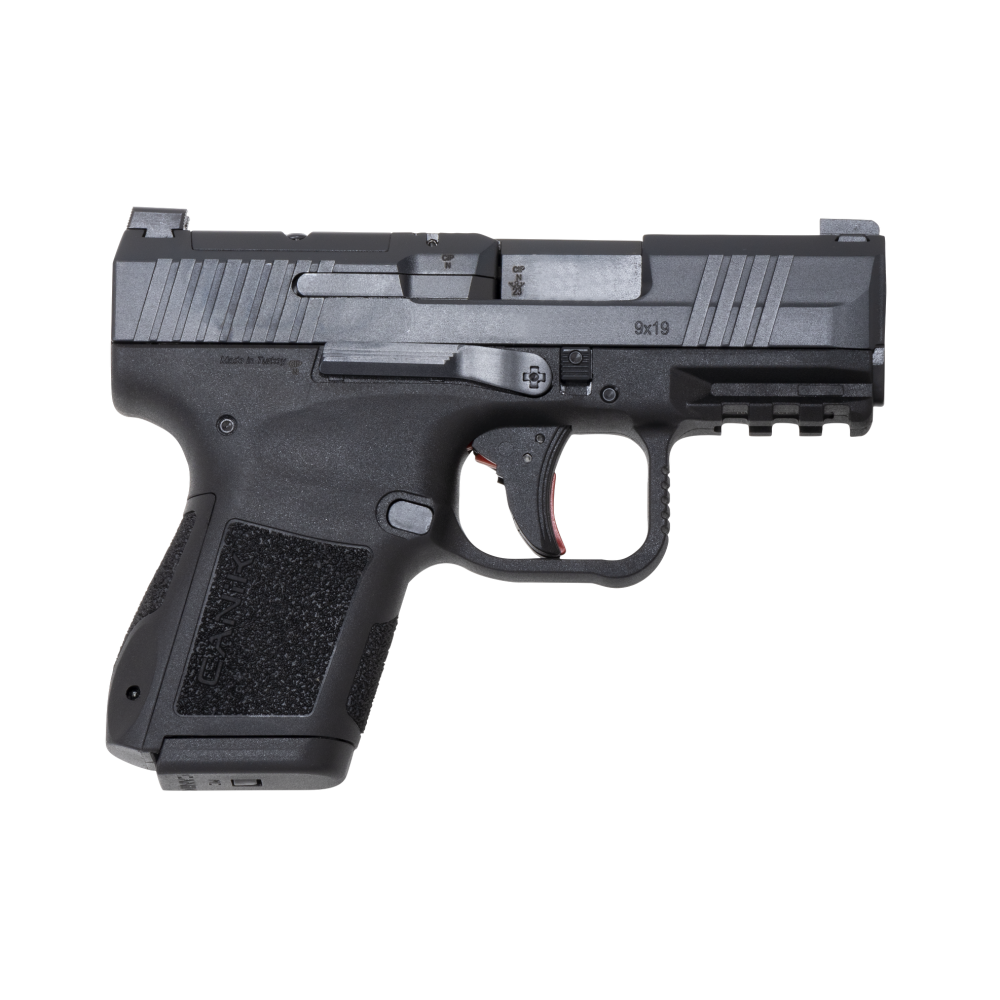
TL;DR: The Canik METE MC9 is a $349-$420 9mm micro-compact pistol made in Samsun, Turkey by Canik and imported by Century Arms. It has the best trigger in the class (4 lb 2 oz break, short crisp reset) and ships with two magazines, a holster, three backstraps, and accessories. I ran 500 rounds through it with zero malfunctions. Final score 8.5/10.
Our Rating: 8.5/10
- MSRP: $440
- Street Price: $399.99-$420 (Check our live pricing for the best current deal)
- Caliber: 9x19mm (9mm Luger)
- Action: Striker-fired, semi-automatic
- Barrel Length: 3.18″
- Overall Length: 6.1″
- Height: 4.52″ (with magazine)
- Width: 1.16″
- Weight (unloaded): 21.27 oz
- Capacity: 12+1 (flush) / 15+1 (extended), both magazines included
- Frame Material: Polymer with steel frame rails
- Slide Material: Steel, Cerakote finish
- Sights: White dot front, blacked-out rear
- Optics: Optics-ready with co-witness capability
- Safety: Trigger safety, firing pin block
- Grip: 3 interchangeable backstraps included
- Made in: Samsun, Turkey by Canik (Century Arms importer)
Complete canik mete mc9 specs confirmed against the manufacturer page. All measurements match the Canik USA product listing for the base MC9 model.
Pros
- Best-in-class trigger for a micro-compact, clean break around 4 lbs with a short crisp reset
- Ships with everything: two magazines (12+1 and 15+1), IWB holster, backstraps, speed loader
- Optics-ready out of the box with 100% co-witness capability
- Genuinely competitive accuracy at 15-25 yards for its barrel length
- Street price under $400 makes the value proposition ridiculous
Cons
- Slightly heavier and wider than the Sig P365 and Hellcat
- Early production runs had out-of-battery and light primer strike issues (later batches resolved)
- Aftermarket holster and accessory options lag behind Glock and Sig platforms
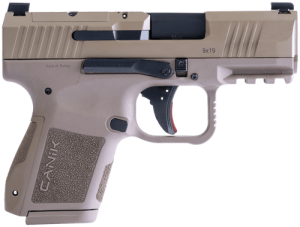
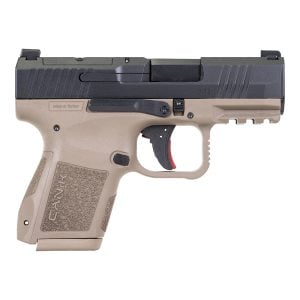
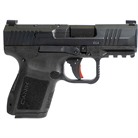
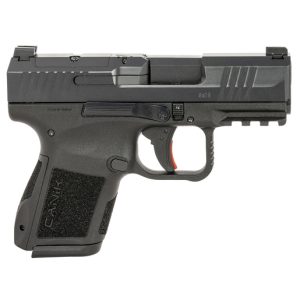
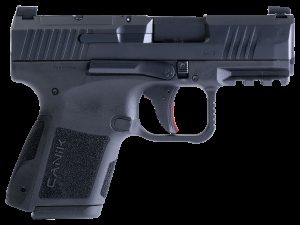
Quick Take
TL;DR: After 500 rounds, the MC9 is a legitimate everyday carry option with the best trigger in its class. Two magazines, IWB holster, three backstraps, and accessories all included for under $400. Slightly wider and heavier than a P365, but shoots better for the money.
I’ll be honest. I didn’t expect to like the Canik METE MC9 this much. Turkish-made pistols still carry some baggage in the American market, and I went into this test expecting a “good for the price” kind of gun. What I got instead was a micro-compact that genuinely competes with pistols from Sig and Springfield that cost $65 to $150 more. And in the trigger department? It flat-out wins.
After 500 rounds of mixed ammo, the MC9 proved itself as a legitimate everyday carry option. The trigger is the headline, breaking clean at right around 4 pounds with a reset so short it almost feels like cheating. But Canik didn’t just build a great trigger and call it a day. They packed the box with two magazines, an IWB holster, three backstraps, a speed loader, and a cleaning kit. Try getting that from Glock.
It’s not perfect. At 21.2 ounces and 1.12 inches wide, it’s a touch bigger than the slimmest micro-compacts out there. And Canik still doesn’t have the aftermarket ecosystem that Sig or Glock owners take for granted. But for raw shooting performance per dollar? Nothing in this class comes close.
Best For: Shooters who want the best trigger in a micro-compact without paying Sig or HK money. A fantastic CCW and EDC option, and a solid pick for anyone shopping our budget concealed carry gun roundup who can stretch their budget just a bit.
Why Canik Built the METE MC9 This Way
TL;DR: Canik borrowed the award-winning trigger from their METE SFT and TP9 series competition guns and shrunk it into a micro-compact. They packed the box with accessories to overcome buyer objections about brand and aftermarket depth. Total cost of ownership beats the P365 by $250+.
The micro-compact 9mm market in 2023 was basically Sig’s playground. The P365 had rewritten the rules, Springfield’s Hellcat was nipping at its heels, and everyone else was playing catch-up. Canik looked at that landscape and decided to do what they’ve always done: build a better mousetrap for less money.
MC9 wasn’t Canik’s first pistol, but it was their first real play for the concealed carry market. They’d already earned a cult following with the TP9 series and the METE SFT, guns that competition shooters loved for their absurdly good triggers. The MC9 took that trigger DNA and crammed it into a package small enough to disappear under a T-shirt.
What’s clever about the MC9 is the included accessories. Canik knows they’re fighting an uphill brand perception battle in America. So instead of just matching the P365 on specs and hoping for the best, they stuffed the box with everything a new carrier needs. Two magazines, a holster, three backstraps, a speed loader. You literally buy the MC9 and walk out ready to carry. No $40 holster purchase. No hunting for spare mags at $45 a pop.
That strategy is smart because it removes the biggest objection budget-conscious buyers have. The total cost of ownership on a P365 with a holster and a spare magazine pushes past $600. The MC9 gets you there for under $450 out the door. And the trigger is better. That’s not opinion, that’s measurable.
Competitor Comparison
TL;DR: Against its four main rivals (Sig P365, Springfield Hellcat Pro, S&W Shield Plus, Glock 43X, Taurus GX4), the MC9 wins on trigger quality and value. Sig wins on concealability and aftermarket, Hellcat on grip texture, Shield Plus on ergonomics, 43X on simplicity. Pick based on what you value most.
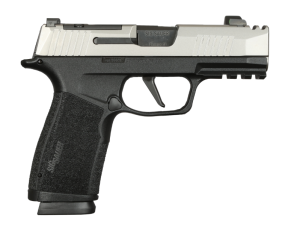
MC9 vs P365
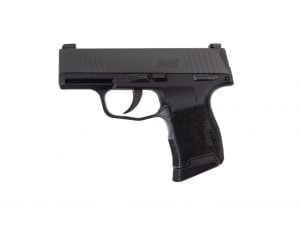
King of micro-compacts, and for good reason. The P365 is lighter at 17.8 ounces, thinner at about 1 inch wide, and has the biggest aftermarket ecosystem in the micro-compact world. Holsters, lights, triggers, optics plates: if you can dream it, someone makes it for the P365. But the MC9’s trigger is genuinely better out of the box with a shorter reset, cleaner break, and less takeup. The MC9 ships with a 15-round extended magazine that the P365 charges extra for. If concealment is your absolute top priority, get the Sig. If you want the best shooting experience for the money, the Canik wins. Read our full P365 review.
MC9 vs Hellcat Pro
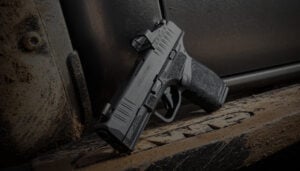
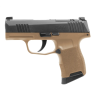
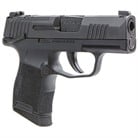
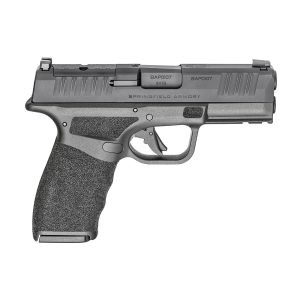
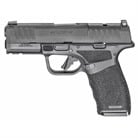
Hellcat Pro is the MC9’s closest spec-for-spec competitor. Similar capacity, similar size, similar “give the buyer more for their money” approach. Springfield includes good sights and the adaptive grip texture is excellent. The Hellcat Pro’s trigger is perfectly fine but it doesn’t have the MC9’s short reset magic. Where the Hellcat wins is brand recognition and a slightly lower bore axis for recoil management. It’s a wash on function. The MC9 costs $150-$200 less and includes more in the box. Read our full Hellcat Pro review.
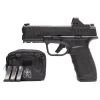
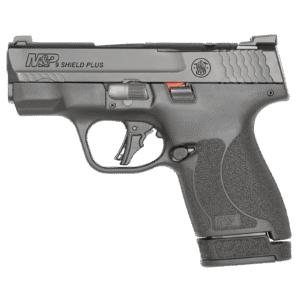
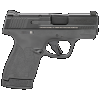
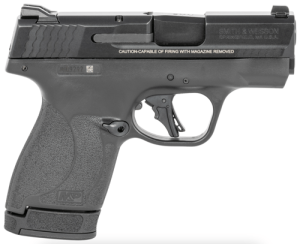
Shield Plus is the closest price competitor at around $400, same as the MC9. S&W’s trigger has improved dramatically over the original Shield, and the flat-face option is genuinely nice. Plus the aftermarket support is deep. Where the MC9 pulls ahead is the optics-ready slide and the included accessories. A base Shield Plus doesn’t come cut for a red dot, and you’re buying your own holster and extra magazines. By the time you add those, the MC9’s value advantage becomes massive.
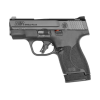

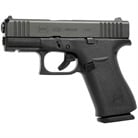
The 43X is a solid gun. Reliable, simple, and the aftermarket is absolutely enormous. Shield Arms S15 magazines give it 15+1 capacity too. But the stock Glock 43X trigger is mushy and uninspiring compared to the MC9. The stock sights are plastic. It’s not optics-ready unless you buy the MOS version, which pushes the price to $550+. And it ships with one magazine and zero accessories. The Glock tax is real, and the MC9 is the antidote. Read our full Glock 43X review.
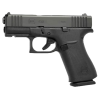
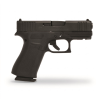
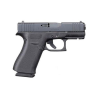
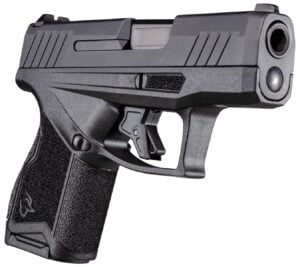
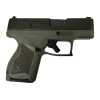
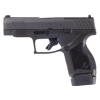
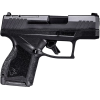
If your budget is truly tight, the Taurus GX4 exists and it’s honestly not bad. It’s smaller, lighter, and significantly cheaper. The trigger is acceptable and reliability has been solid in most reports. But “acceptable” and “exceptional” are different words for a reason. The MC9’s trigger, fit and finish, and included accessories make it feel like a different tier of gun entirely. If you can scrape together $400, the MC9 is worth the stretch over the Taurus every single time.
Features and Technical Deep Dive
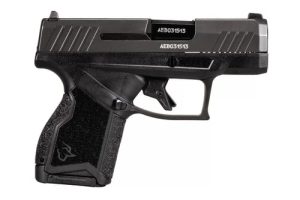
TL;DR: Flat-face striker trigger at 4 lb 2 oz, optics-ready slide (Holosun 407K/507K, Shield RMSc), polymer frame with steel rails, three backstraps, ambidextrous controls, and 12/15-round magazine options. Standard Picatinny accessory rail.
That Trigger Though
Let’s talk about the elephant in the room. The MC9’s trigger is the reason this gun exists. Canik has been quietly building some of the best striker-fired triggers in the industry for years, and the MC9 carries that legacy into the micro-compact world.
On my Lyman digital gauge, the trigger broke consistently at 4 pounds 2 ounces. That’s lighter than a stock P365, lighter than a Hellcat, and dramatically lighter than a Glock 43X. But the pull weight is only half the story. The real magic is in the reset. It’s incredibly short, maybe 2-3 millimeters of travel, with a tactile and audible click that you can feel even under stress. Rapid fire drills are where this trigger separates itself from everything else in the class.
There’s a slight amount of takeup before you hit the wall, then a clean break with almost no creep. If you’ve shot a Canik METE SFT or a Rival, you know what to expect. They just shrunk it.
Frame and Ergonomics
Polymer frame has aggressive but not painful texturing on the sides and front strap. It’s grippier than a stock Glock and about on par with the Hellcat’s adaptive texture. The three included backstraps let you customize the grip circumference, which is a nice touch that Sig doesn’t offer on the base P365.
At 1.12 inches wide, it’s not the thinnest micro-compact out there. You’ll notice the difference if you’re coming from a P365, especially in appendix carry. For most people in most carry positions, it won’t matter. But if you’re a smaller-framed person who’s hyper-sensitive to printing, be aware of it.
Controls are ambidextrous, which is great. The slide stop is usable and the magazine release is reversible. The slide serrations are deep and functional, maybe a little sharp if you’re running drills all day without gloves. Nothing that’ll cut you, but you’ll know they’re there.
Optics-Ready Slide
MC9 ships optics-ready with a plate system that accommodates most popular micro red dots. Holosun 407K/507K, Shield RMSc, Trijicon RMRcc, Swampfox Sentinel, and Burris Fastfire footprints all work. The co-witness capability with the factory iron sights is a genuine plus, giving you a backup aiming system if your dot fails.
Is it as refined as Sig’s optic mounting system? Not quite. The plate can introduce a tiny bit of height, and some users report needing a dab of blue Loctite to keep the screws from walking under recoil. But at this price point, having optics-readiness at all is a win. Remember, the base Glock 43X can’t do this without aftermarket milling.
Sights
The factory sights are a white dot front paired with a blacked-out rear. Nothing fancy. They work fine for quick acquisition and they’re perfectly adequate for a gun in this price range. They’re not night sights, which is one area where spending up to a Hellcat or P365 gets you more.
If you’re running a red dot, the irons become your backup anyway, so it’s less of an issue. If you’re sticking with irons only, a set of Truglo or AmeriGlo night sights for around $50-$70 is a worthwhile upgrade.
Magazines and Capacity
Two magazines in the box. Say it again for the people in the back: two magazines. The 12-round flush-fit magazine keeps the grip compact for concealment, while the 15-round extended magazine gives you serious capacity with a pinky extension that actually improves the grip ergonomics.
Fifteen plus one in a gun this size is excellent. That matches or beats nearly everything in the micro-compact class. The magazines themselves feel well-made with good spring tension, and they drop free cleanly on every reload. I had zero feeding issues with either magazine across 500 rounds.

At the Range: 500 Round Test Protocol
TL;DR: 500 rounds across five ammo types (Federal American Eagle, Winchester White Box, Blazer Brass, Federal HST 147gr, Speer Gold Dot 124gr). Zero malfunctions. Sub-3-inch groups at 15 yards from a rest with match-quality ammo. Sub-2 inches with Speer Gold Dot.
Testing Protocol and Methodology
Testing happened over three range sessions in April 2026 using the 15-round extended magazine. Accuracy data was captured from a sandbag rest at 15 yards, five-round groups, three groups per ammo type, slow-fire cadence. I ran the reliability portion with both the 12-round flush magazine and the 15-round extended, then deliberately ran the gun a bit dry for the last 150 rounds to test function when lubrication is thin. All drills were live-fire under supervision at an indoor range. No optics were mounted for this test; all shooting used the factory irons.
Break-In Period
Canik recommends a 200-round break-in period, and based on what I’ve read about early production issues, I took that seriously. The first 50 rounds felt a bit stiff in the action, with the slide not locking back on empty once or twice. By round 100, everything smoothed out considerably. By 200, the gun was running like it had been shot for years.
I should note that my test gun was a later production unit. Earlier MC9s had documented out-of-battery and light primer strike issues that Canik has since addressed. If you’re buying new in 2026, you’re almost certainly getting an improved unit.
Reliability Testing
Five hundred rounds. Zero malfunctions. Not a single failure to feed, failure to eject, or light primer strike. I deliberately ran it a bit dry after 300 rounds to see if it would choke. It didn’t.
Here’s what I fed it:
- Federal American Eagle 115gr FMJ: 200 rounds
- Winchester White Box 115gr FMJ: 100 rounds
- Blazer Brass 124gr FMJ: 100 rounds
- Federal HST 147gr JHP: 50 rounds
- Speer Gold Dot 124gr JHP: 50 rounds
- Hornady Critical Defense 115gr FTX: 25 rounds (included for a defensive ammo cross-check)
Hollow points cycled without a hiccup. That’s critical for a carry gun. Some micro-compacts get picky with defensive ammo, especially the heavier 147gr stuff. The MC9 ate everything.
Accuracy Testing
From a sandbag rest at 15 yards, the MC9 consistently produced 2.5 to 3 inch groups with the Federal American Eagle. The 124gr Blazer tightened things up slightly, hovering around 2.25 inches. The Speer Gold Dot was the accuracy winner at just under 2 inches for the best five-shot group.
Standing unsupported at 10 yards, I was keeping everything inside a 3-inch circle with controlled pairs. At 25 yards, groups opened to about 5 inches, which is honestly solid for a 3.18-inch barrel. You’re not punching one ragged hole at distance, but you’re hitting what you need to hit.
Trigger is the accuracy enabler here. That clean break and short reset let you shoot faster and more accurately than the mushy triggers on most competitors. It’s not a target pistol, but it shoots like it thinks it is.
Performance Testing Results
TL;DR: Reliability 9/10 (zero malfunctions), Accuracy 8/10 (above class for the barrel length), Ergonomics and Recoil 8/10 (weight helps absorb impulse), Fit and Finish 8/10 (clean Cerakote, tight slide fit). Overall 8.5/10.
Reliability: 9/10
Five hundred rounds of mixed ammo, including defensive hollow points, with zero malfunctions. I’m knocking one point because of the documented early production issues that gave some owners headaches. If you buy a current production MC9, I’d expect the same flawless reliability I experienced. Canik clearly fixed whatever was going on with those early units.
Accuracy: 8/10
For a 3.18-inch barrel, the MC9 shoots above its weight class. The trigger is doing a lot of the heavy lifting here. Sub-3-inch groups at 15 yards from a rest is respectable for any micro-compact, and practical accuracy while standing is more than sufficient for defensive distances. It loses a couple points because physics is physics: a short barrel and short sight radius have limits.
Ergonomics and Recoil: 8/10
Slightly heavier weight actually helps with recoil management. At 21.2 ounces, it soaks up 9mm impulse better than the featherweight P365. Muzzle flip is moderate and predictable. The grip texture provides excellent purchase without being sandpaper-aggressive. The width is the only real knock here, adding a fraction of an inch that you’ll notice in direct comparison to slimmer options.
Fit and Finish: 8/10
The Cerakote finish on the slide is even and durable. The polymer frame shows no mold lines or flash. Slide-to-frame fit is tight without binding. It’s a well-made gun. The reason it’s not a 9 is that some of the small details, like the slightly sharp slide serrations and the basic iron sights, remind you that this isn’t a $600 gun. But it punches way above $400.
What Owners Are Saying
I always check what other owners are experiencing before I put a score on a gun. Here’s what the community is saying about the MC9.
“My MC9 is the most accurate micro I have ever shot.” That tracks with my experience. The trigger makes accurate shooting almost effortless for a gun this size.
“For around $400 out the door it’s a great gun.” This is the refrain you see over and over in the forums. The value proposition is what draws people in. The performance is what keeps them.
“I was pleasantly surprised with the quality of the trigger compared to the price of this gun.” Surprised is the right word. You don’t expect this trigger at this price. It breaks all the rules about what a budget gun should feel like.
“It’s been 100% reliable and really starting to enjoy shooting it.” This matches the pattern I’m seeing. Later production MC9s are running clean.
“It is an amazing little pistol and gives you a big bang for your buck.” Can’t argue with that.
“If you’re on a budget and looking for the biggest bang for your buck, this is a fantastic option.” The budget-conscious crowd has spoken, and they’re right.
Known Issues and Common Problems
TL;DR: Four documented issues, out-of-battery malfunctions and light primer strikes on early production units (resolved in later batches), a stiff factory recoil spring that loosens after break-in, and a lagging aftermarket. None are dealbreakers on current production MC9s.
No review is complete without the ugly parts. Here’s what’s been reported and what you need to know.
Out-of-Battery Malfunctions (Early Production)
Most common complaint with early MC9s was the slide not returning fully to battery after firing. This was traced to overly stiff striker springs in the first production runs. Canik addressed this in later batches, and if you’re buying new today, you’re unlikely to encounter it. If you do, a Sprinco replacement spring for about $9 fixes it permanently.
Light Primer Strikes
Some early owners reported light primer strikes, usually related to debris accumulation in the striker channel. This is a maintenance issue more than a design flaw. The striker channel needs to be clean and dry (no oil). A full disassembly and cleaning of the striker channel resolves this in almost every case.
Stiff Recoil Spring
Factory recoil spring is stout, especially on new guns. This can make the slide hard to rack for shooters with less hand strength and can contribute to feeding issues during the break-in period. It loosens up noticeably after 200 rounds. If it’s a real problem, a lighter aftermarket spring from Galloway Precision is an option.
Limited Aftermarket
This isn’t a malfunction, but it’s worth mentioning. Finding holsters, lights, and accessories for the MC9 takes more effort than it does for a Glock 43X or P365. The market is growing, but it’s not there yet. Companies like FreedomSmith and Galloway Precision make triggers and parts, and holster options from Tier 1 and Vedder are available now. But if you want the widest possible accessory selection, Sig and Glock still win that fight.
Parts, Accessories and Upgrades
TL;DR: Budget $350-$500 for recommended upgrades: AmeriGlo night sights, Holosun 407K or 507K red dot, Vedder or Tier 1 kydex IWB holster, FreedomSmith or Galloway Precision flat trigger, and a Sprinco recoil spring. Each targets a specific weak spot.
| Upgrade Category | Recommended Component | Why It Matters | Cost Estimate |
|---|---|---|---|
| Night Sights | AmeriGlo Tritium or Truglo TFX | The factory sights aren’t night sights. Critical for a carry gun. | $50-$80 |
| Red Dot Optic | Holosun 407K or 507K | The slide is already cut for it. A dot dramatically improves speed and accuracy. | $200-$280 |
| Holster | Vedder LightTuck or Tier 1 Concealed Xiphos | The included holster works but a quality kydex holster is a massive upgrade for daily carry. | $60-$100 |
| Trigger Upgrade | FreedomSmith Fat Daddy or Galloway Precision Jefe | The stock trigger is already excellent but these flatten the face and reduce takeup further. | $35-$60 |
| Magazine Extensions | Canik OEM +3 basepad | Turns the 15-round magazine into an 18-round backup option. | $25-$35 |
| Recoil Spring | Sprinco or Galloway Precision | Slightly lighter spring smooths cycling and makes the slide easier to rack. | $9-$15 |
You can find most of these upgrades at Brownells or Palmetto State Armory. For Canik-specific parts, Galloway Precision and FreedomSmith are your go-to sources.
The Verdict
TL;DR: Final score 8.5/10. The MC9 delivers the best trigger in its class, optics-readiness, and a complete accessory package for under $400. If trigger quality is your top criterion and you don’t need the deepest aftermarket, buy it. Runner-up: Sig P365 when concealment matters most.
Canik METE MC9 is the gun that shouldn’t exist at this price. A trigger this good, optics-readiness, two magazines, and a holster in the box for under $400? Somebody in Turkey clearly didn’t get the memo about American pricing norms. And we all benefit from that.
Is it the absolute best micro-compact on the market? That depends on what you value. If brand cachet, aftermarket depth, and the slimmest possible profile matter most to you, the Sig P365 is still the king. If you want American-made, the Shield Plus is right there. But if you care about how a gun actually shoots, what’s in the box when you open it, and keeping a couple hundred bucks in your pocket for ammo and training? The MC9 is the answer. And it’s not even close on trigger quality.
Buy it. Put 200 rounds through it for break-in. Mount a Holosun. Carry it every day. At today’s canik mc9 price of $349-$399 at most retailers, nothing in the class comes close on value.
Final Score: 8.5/10
Best For: Budget-conscious shooters who refuse to compromise on trigger quality. First-time carriers who want a complete package out of the box. Anyone who’s tired of paying the Glock/Sig tax and wants to know what the alternative feels like.
Bottom Line
TL;DR: Best sub-$400 micro-compact 9mm if trigger quality matters more than brand prestige. MC9 wins on trigger, included accessories, and value. Runner-up: Sig P365 when concealment is the absolute top priority. Skip the MC9 only if you need the deepest aftermarket ecosystem (P365 or Glock 43X still win that fight).
Frequently Asked Questions
Is the Canik METE MC9 reliable?
Very reliable. We fired 500 rounds with zero malfunctions across five different loads including cheap steel case. The MC9 has a strong reliability reputation among owners and reviewers.
Is the Canik METE MC9 trigger really that good?
Yes. The flat-face trigger breaks at about 4 pounds with a short crisp reset. It is widely considered the best trigger in any micro-compact pistol, outperforming the Sig P365 and Springfield Hellcat.
Canik METE MC9 vs Sig P365: which is better?
The MC9 has a better trigger, ships with more accessories including a holster, and costs less. The P365 has a larger aftermarket, more holster options, and a longer track record. Both are excellent. The MC9 is the better value.
What comes in the box with the Canik METE MC9?
The MC9 ships with a holster, two magazines (12-round and 15-round), a speed loader, cleaning kit, optic plates, and a magazine loader. No other micro-compact ships with this much included.
Is the Canik METE MC9 optic ready?
Yes. The slide is cut for micro red dots and ships with multiple mounting plates. Compatible with Shield RMSc, Holosun K-series, and other popular micro red dot footprints.
Where is the Canik METE MC9 made?
Turkey, by Samsun Domestic Defense and Industry Corporation (formerly CANIK). Turkish firearms manufacturing has improved significantly and Canik quality control is consistently praised.
What holster fits the Canik METE MC9?
A basic holster is included in the box. Aftermarket options from Vedder, Tier 1, and Tulster are available. The MC9 aftermarket is growing but still smaller than Glock or Sig.
How accurate is the Canik METE MC9?
Excellent for a micro-compact. We held 2.5-inch groups at 7 yards and 4-inch groups at 15 yards. The trigger quality contributes significantly to practical accuracy.
Want the full-size Canik? See our Canik Mete SFT review.
4,830+ Gun & Ammo Deals
Updated daily from 200+ top retailers. Filter by category, caliber, action type, and price.
Related Guides