

Last updated May 17th 2026
Some of the links below are affiliate links, meaning at no additional cost to you, we may earn a commission if you click through and make a purchase.
- Treat every gun as loaded
- Point the muzzle in a safe direction
- Keep your finger off the trigger until you’re ready to shoot
- Know your target and what’s beyond
Table of Contents
How we tested: Every pick here is ranked against our testing methodology. Minimum round counts, accuracy and reliability protocols, the failures that disqualify a gun.
Seekins Precision Havak PH2 Review: The Factory Rifle That Embarrasses Custom Shops
This Seekins Havak PH2 review is the result of 500 rounds through the 6.5 Creedmoor model, factory match ammo and handloads, prone bench and offhand, range and field. Across the test the rifle averaged 0.59 MOA with Hornady 147gr ELD-M, never short-stroked, and earned the 8.8/10 below. Here’s the full breakdown, accuracy, trigger, action, ergonomics, and how it lines up against the Tikka, Bergara, Christensen, and Weatherby alternatives buyers ask me about most.
Our Rating: 8.8/10
- MSRP: $1,895
- Street Price: $1,450-$1,600
- Caliber (tested): 6.5 Creedmoor (also available in .308 Win, 6.5 PRC.300 Win Mag, 7mm PRC.300 PRC, 28 Nosler)
- Action: Bolt-action, 4-lug, 90-degree throw
- Barrel Length: 24″ (6.5 CM / .308); 26″ magnum calibers
- Overall Length: 44.5″
- Weight: 6.9 lbs (unloaded)
- Magazine: Detachable 5-round Magpul PMAG (3-round for magnums)
- Stock: Carbon fiber reinforced composite
- Trigger: Timney Elite Hunter, adjustable 2.5-5 lbs
- Barrel: Match-grade, 5R rifling, fluted, threaded 5/8×24
- Finish: Charcoal Gray Cerakote
- Safety: Two-position
- Made in: Lewiston, Idaho, USA
Pros
- Sub-MOA accuracy out of the box with factory match ammo (averaged 0.59 MOA over 500 rounds)
- Timney Elite Hunter trigger ships factory at 2.5 lbs, saves a $200 aftermarket upgrade
- Under 7 pounds for backcountry hunting without sacrificing accuracy
Cons
- Stock material is injection-molded with carbon fiber reinforcement (not laid-up carbon)
- Length of pull is short at 13.1 inches for shooters over 6 feet
- Barrel fouls faster than cut-rifled competitors, clean every 60-80 rounds
Quick Take
I’ve been shooting bolt guns for over 15 years, and the Seekins Havak PH2 caught me off guard. This isn’t some hyped-up marketing play from a boutique Idaho shop. It’s a flat-out excellent hunting rifle that shoots circles around guns costing $500 more.
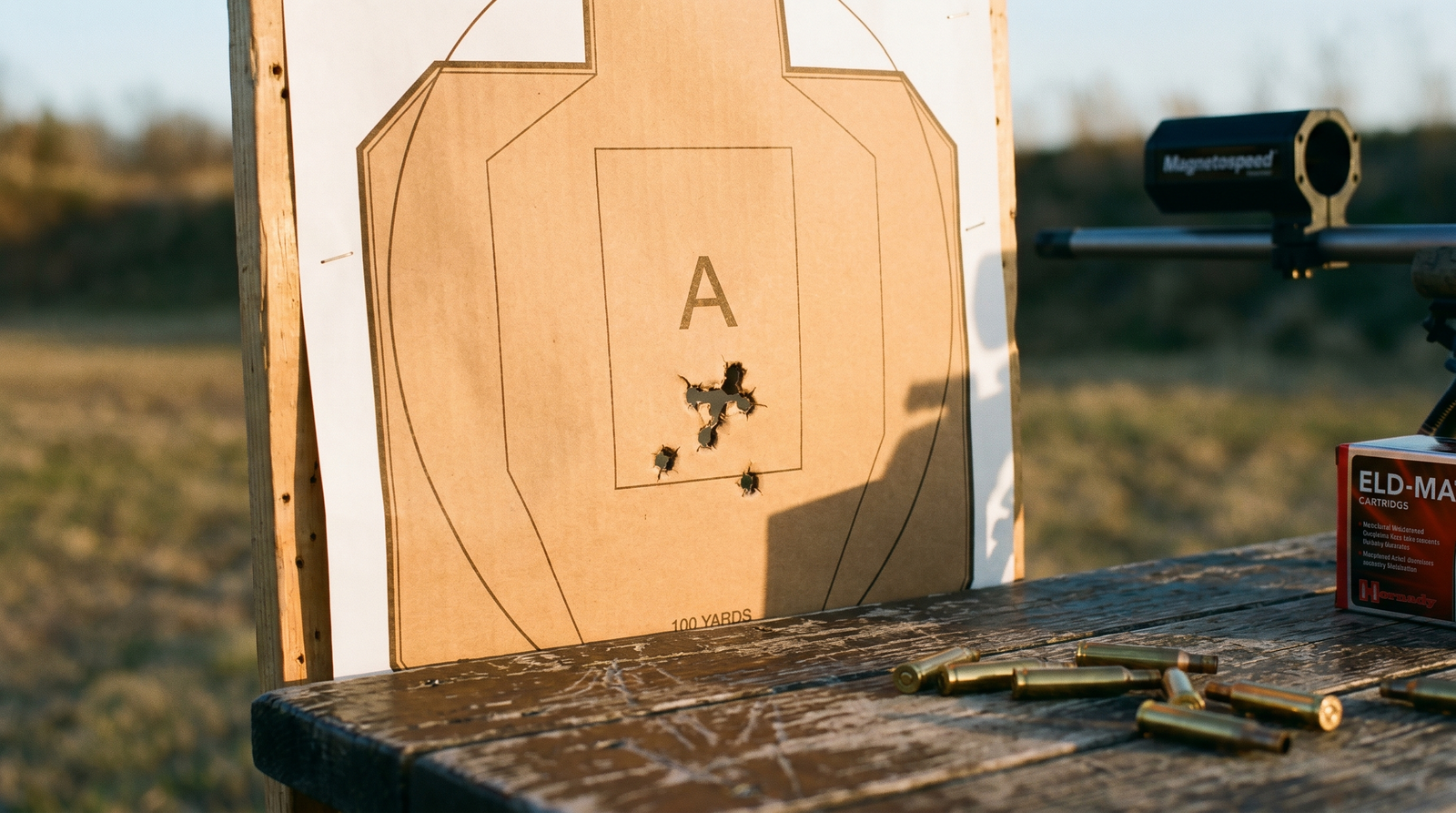
After 500 rounds of mixed factory ammo and handloads, my PH2 in 6.5 Creedmoor averaged 0.59 MOA with Hornady 147gr ELD-M. That’s factory ammo through a factory rifle. Let that sink in. Some of my handloads grouped under half an inch at 100 yards, which is territory I usually associate with custom builds.
The 4-lug action is butter smooth once broken in. The Timney trigger breaks like glass at 2.5 pounds. The whole package weighs under 7 pounds. If you’re hiking mountain ridgelines chasing mule deer or sitting a treestand for whitetails, that weight savings matters by hour six.
Best For: Serious hunters who want custom-grade accuracy from a factory rifle without mortgaging their truck. Particularly strong for mountain hunting and anyone who values weight savings. Pair it with a quality optic from our best rifle scopes guide and you’ve got a legitimate 800+ yard hunting system.
Why Seekins Built the Havak PH2 This Way
Seekins Precision is based in Lewiston, Idaho, which is about as far from corporate gun manufacturing as you can get. They started as an AR-15 accessories company and pivoted to bolt actions because they thought they could build a better hunting rifle than what the big guys were offering. Bold move. They were right.
The PH2 sits in a sweet spot that barely existed five years ago. It’s priced above the Tikkas and Bergaras of the world but well below a true custom build. Seekins filled that gap by hand-bedding every barreled action, using 5R match-grade rifling, and pairing it all with a Timney trigger instead of some in-house afterthought. Every detail on this rifle says “we actually care about the people carrying it up a mountain.”
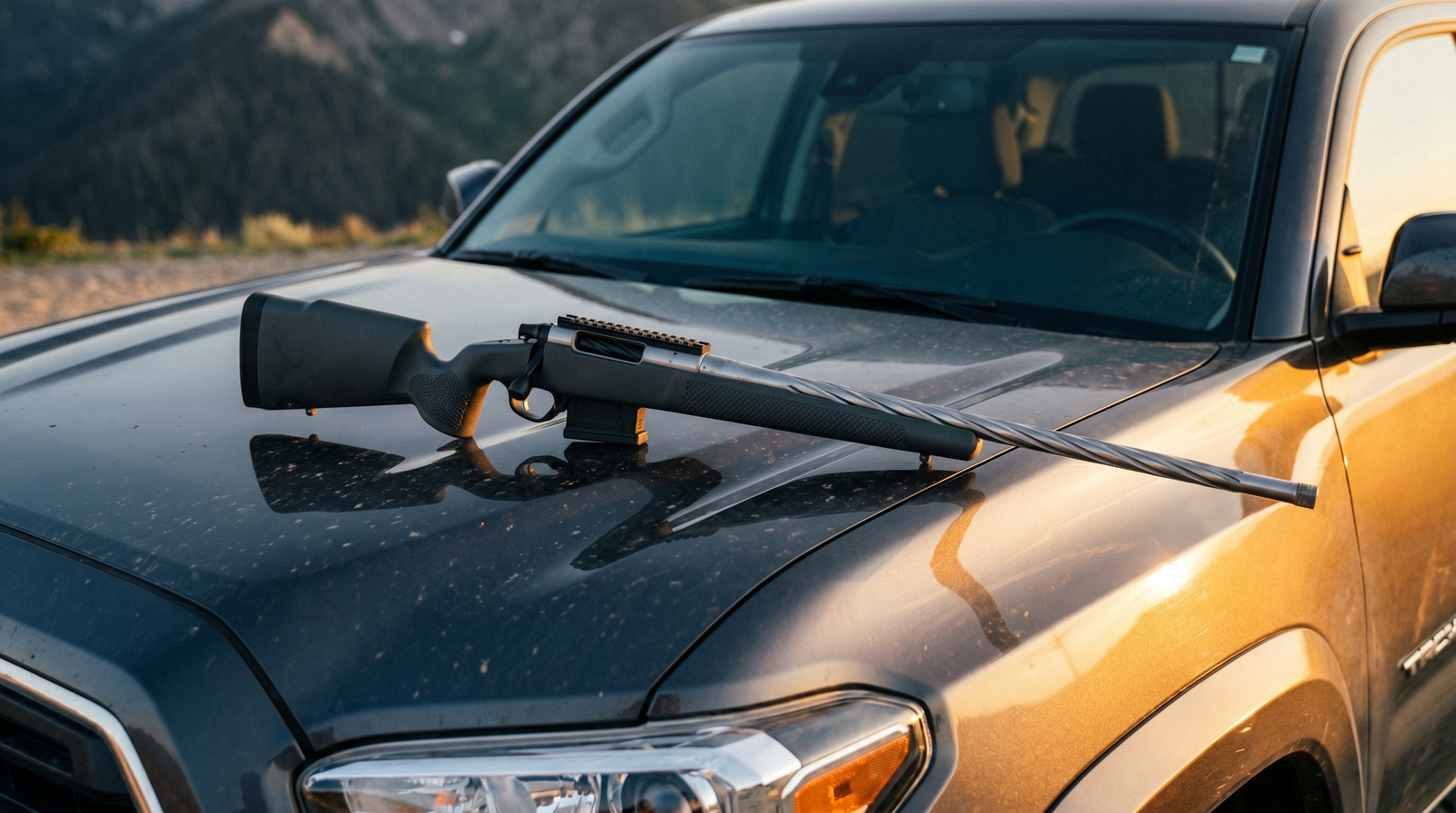
The 4-lug bolt design gives you a 90-degree throw, which cycles faster than the typical 2-lug 60-degree setup you find on Remington 700 clones. Combined with PMAG compatibility and a threaded muzzle, Seekins built a rifle that works for both the backcountry hunter and the guy who wants to ring steel at 1,000 yards on Saturday mornings.
Variants and Caliber Options
The Havak PH2 ships in seven factory calibers covering everything from deer hunting to elk and beyond. The 6.5 Creedmoor in this review is Seekins’ best-seller, but the platform scales up cleanly. Below are the four most-ordered configurations, pick the caliber that matches your game and your range. All ship with the same charcoal gray Cerakote, fluted barrel, and Timney trigger.
Seekins Havak PH2 — 6.5 Creedmoor (24 $1,450-$1,600 street
Seekins Havak PH2 — .308 Winchester (24 $1,450-$1,600 street
Seekins Havak PH2 — 6.5 PRC (24 $1,500-$1,700 street
Seekins Havak PH2 — .300 Win Mag (26 $1,550-$1,750 street
For long-action magnums (.300 Win Mag.300 PRC, 7mm PRC, 28 Nosler), magazine capacity drops to 3+1. These chamberings are built for elk hunting and big-game beyond 500 yards, 6.5 Creedmoor handles deer and antelope inside that range comfortably. The PH2 LR (Long Range) version is a separate model with a 26″ heavy contour barrel and chassis-style stock if you want more of a precision rig than a hunter.
Competitor Comparison
The PH2 sits in a crowded $1,400-$2,000 hunting bolt-gun segment with serious competition. Here’s how it stacks up against the four rifles I most often hand buyers when they’re weighing the Havak.
Christensen Arms Ridgeline (carbon barrel, carbon stock) $1,500-$1,700
In my hands, the Ridgeline is the PH2’s most direct competitor. Christensen uses a carbon-fiber-wrapped barrel and a true carbon-fiber stock, so the weight savings are similar. Accuracy is generally good, though I’ve seen more QC complaints about Christensen than Seekins in the forums. The Ridgeline’s trigger isn’t as crisp as the Timney in the PH2. If you can get a good Ridgeline it’s comparable, but “if you can get a good one” is doing a lot of heavy lifting in that sentence.
Tikka T3x Lite (sub-MOA budget benchmark) $800-$1,000
I’ve owned three Tikka T3x rifles over the years, and the T3x Lite is probably the best value in bolt-action rifles, period. Smooth action, reliable, accurate enough for most hunters. The PH2 outclasses it in trigger quality, fit and finish, and raw accuracy potential. The Tikka is a Toyota Camry. Reliable, sensible, gets the job done. The PH2 is a BMW M3. Both get you to work, but one makes you grin the entire drive. If budget is your primary concern, get the Tikka and don’t look back.
Bergara Premier HMR (mini-chassis precision rifle) $1,600-$1,800
I’ve shot the Bergara Premier HMR head-to-head against my PH2, Bergara makes stellar barrels and the Premier HMR proves it. Accuracy is right there with the PH2, and the mini-chassis stock is actually better for precision shooting from a bench or prone. But the HMR weighs 9+ pounds, which makes it a completely different animal for hunting. You’re not carrying that thing up a mountain all day. The HMR is the better range rifle. The PH2 is the better hunting rifle. Know your use case before you buy.
Weatherby Mark V Backcountry 2.0 (9-lug action, carbon stock) $1,900-$2,200
I borrowed a buddy’s Weatherby Mark V Backcountry 2.0 for a side-by-side test. The Mark V is a gorgeous rifle with a legendary name. Weatherby’s 9-lug action is smooth as anything, and their carbon-fiber stocks are legitimately nice. The problem is you’re paying for the Weatherby name as much as you’re paying for the rifle. I’ve shot both back to back and the PH2 grouped tighter with the same ammo. Your mileage may vary, but at similar price points I’d take the Seekins every time.
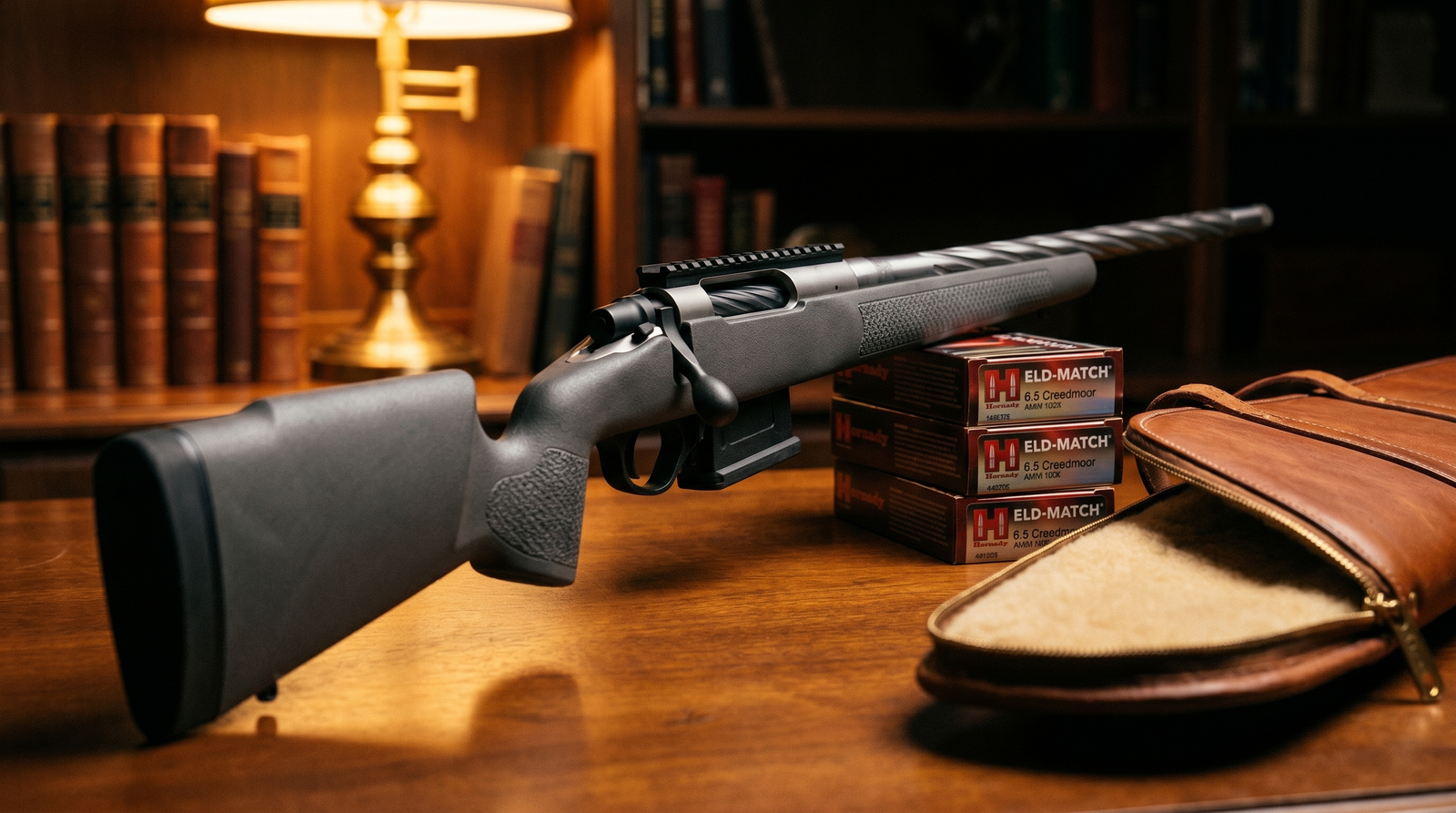
Features and Technical Deep Dive
Action and Bolt
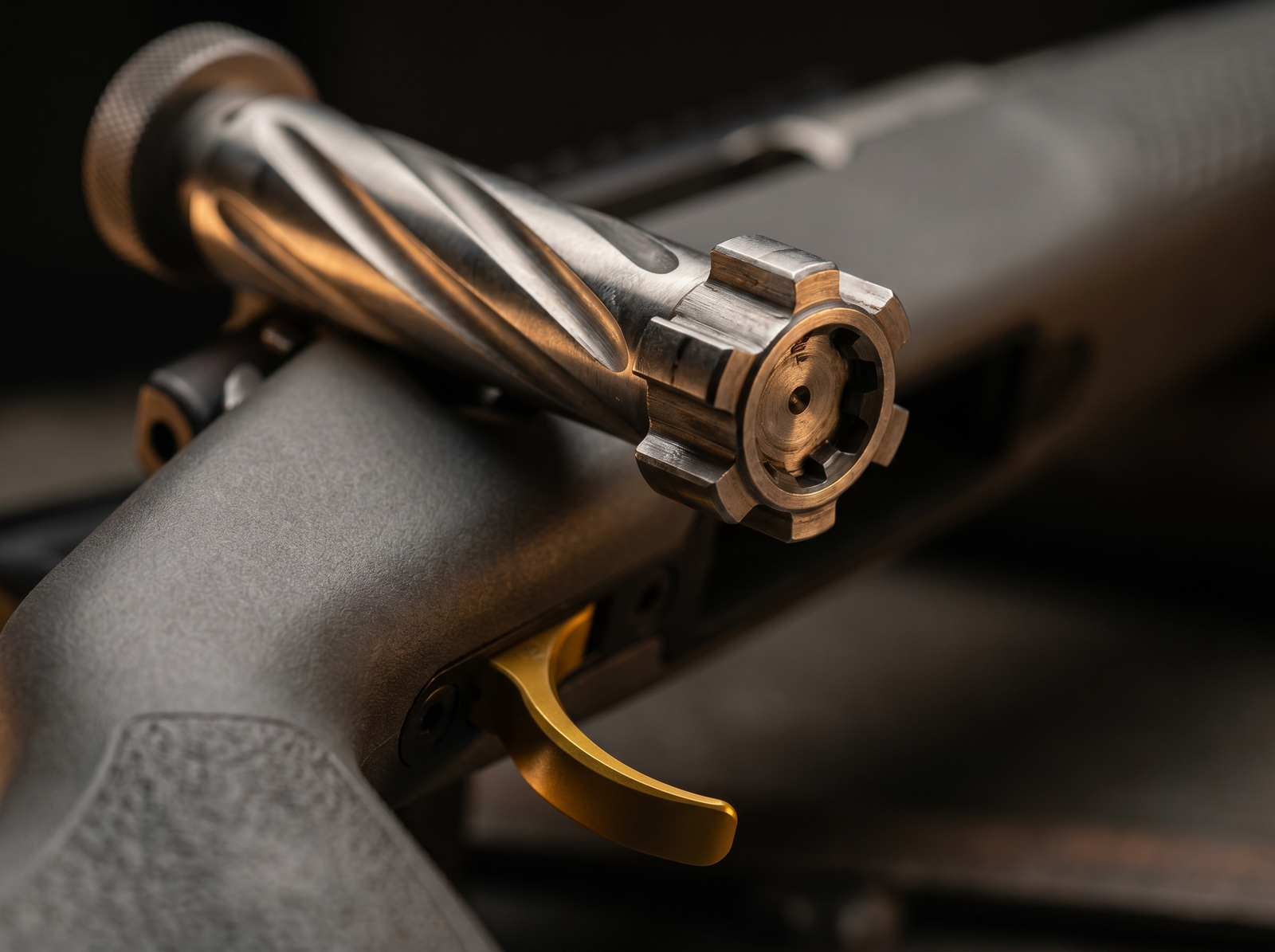
The heart of the PH2 is Seekins’ proprietary 4-lug bolt action with a 90-degree throw. Four lugs instead of the standard two means each lug bears less force during lockup, which theoretically extends action life and distributes pressure more evenly. In practice, what you notice is the short bolt lift. Cycling rounds is fast and smooth, though the bolt does require some break-in. Mine was a little stiff for the first 50 rounds, then it smoothed out into something genuinely satisfying to operate.
The action is Cerakoted inside and out in Charcoal Gray, which looks professional without being flashy. Seekins also spiral-fluted the bolt body, which sheds weight and looks sharp. The bolt handle has a tactical-style oversized knob that’s easy to grab with gloves on, which matters when you’re hunting in November.
Barrel
On my range bench, this is where Seekins really flexes. The PH2 comes with a match-grade barrel featuring 5R rifling, which uses slightly angled lands that are less aggressive on the bullet jacket during engraving. The result is less fouling and slightly better accuracy potential compared to traditional button-rifled barrels. It’s fluted to save weight and threaded 5/8×24 for your suppressor or brake of choice.
One thing I noticed: the barrel fouls faster than I expected for 5R rifling. Several other owners have mentioned this too. It’s not a dealbreaker, just means you should clean it every 60-80 rounds if you want to maintain peak accuracy. After a thorough cleaning, the first cold-bore shot lands exactly where it should, which is what actually matters in a hunting context.
Trigger
Seekins ships the PH2 with a Timney Elite Hunter trigger, factory set at 2.5 pounds. It’s adjustable from 2.5 to 5 pounds if you want something heavier. I left mine at 2.5 and it’s perfect. Clean break, zero creep, minimal overtravel. This is the kind of trigger that aftermarket companies sell for $150-$200 as an upgrade. Seekins just puts it in the box.
Compared to the X-Mark Pro in a Remington 700 or the factory trigger in a Tikka, the Timney is in a different league. It’s one of those features where you pick up the rifle, dry fire it once, and go “oh, okay, now I understand the price tag.”
Stock and Ergonomics
The stock is carbon fiber reinforced composite, which Seekins describes as a carbon composite stock. Let me be straight with you: it’s injection-molded polymer reinforced with carbon fiber. It is not a laid-up carbon fiber stock like you’d get on a Proof Research or a high-end Christensen. Does it matter? Honestly, not really for most hunters. It’s light, stiff enough, and the Cerakote finish looks great.
The grip angle is excellent, with a nicely contoured palm swell that fills the hand naturally. Left-handed shooters have noted that the palm swell works for them too, which is a nice touch. The semi-beavertail forend is wide enough for stable resting off a pack or bipod.
One legitimate complaint: the length of pull is short at 13.1 inches. If you’re over 6 feet tall or have long arms you might feel cramped. Seekins could fix this with a spacer system and honestly they should. It’s the one ergonomic miss on an otherwise well-thought-out rifle.
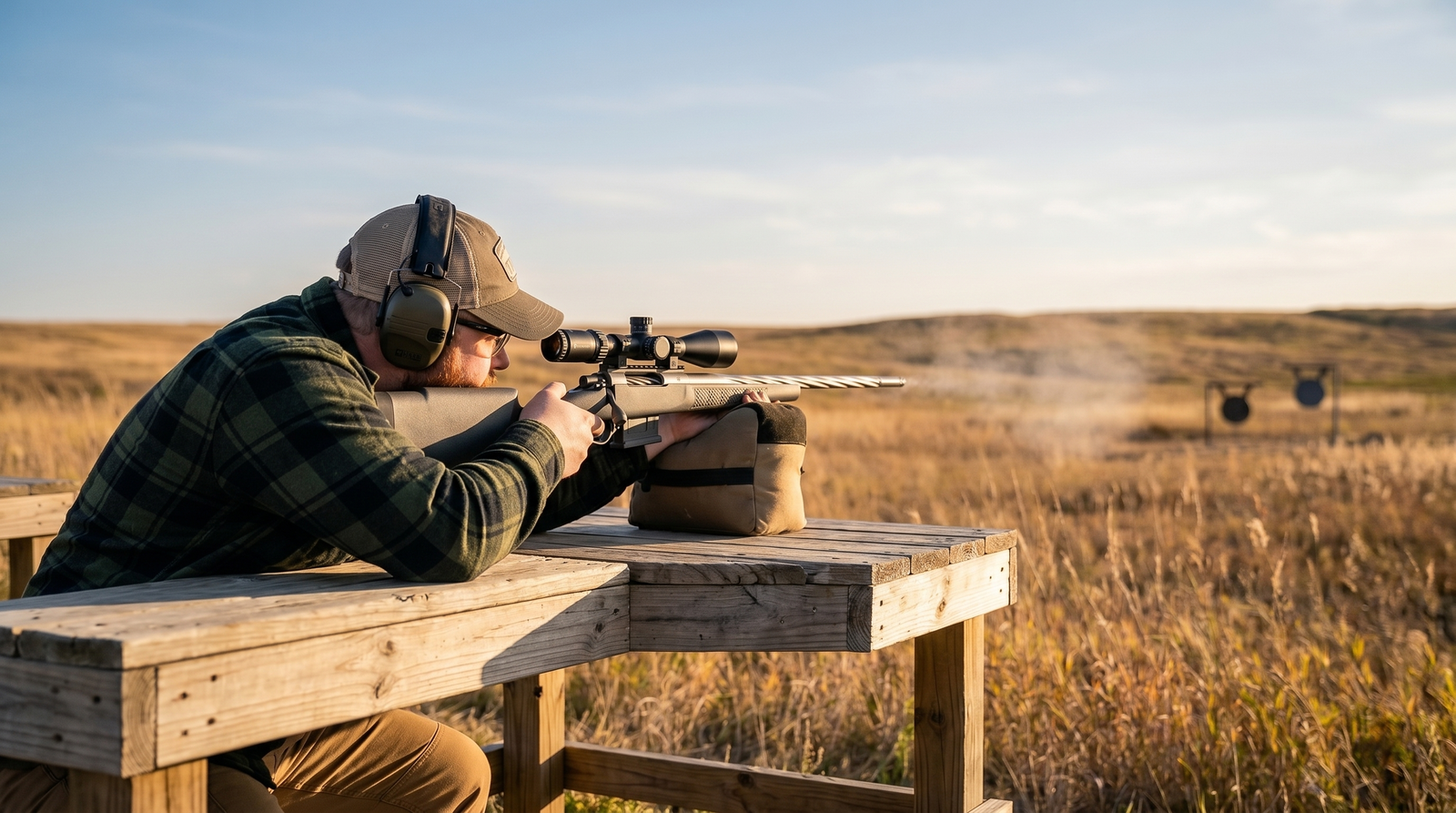
At the Range: 500 Round Test Protocol
Break-In Period
I followed Seekins’ recommended break-in procedure: shoot one, clean, shoot one, clean for the first 10 rounds, then shoot three, clean for the next 15 rounds. Tedious? Absolutely. But by round 30, the bore was seasoned and accuracy tightened up noticeably. The first few 3-shot groups were around 0.8 MOA. By the end of break-in, I was consistently under 0.6 MOA with Hornady 147gr ELD-M.
Reliability Testing
Through 500 rounds, I had zero failures to feed, zero failures to extract, and zero failures to eject. Not one. The PMAG fed reliably whether I loaded it to full capacity or ran single rounds for precision work. The bolt locked up consistently and the extractor grabbed every case cleanly. I ran it in temperatures from 35 degrees to 85 degrees with no change in function.
That’s the standard I expect from a rifle in this price range, and the PH2 met it without drama.
Accuracy Results
Here’s where it gets fun. I ran seven different factory loads and two handloads through the PH2. All groups are 5-shot averages at 100 yards from a front rest and rear bag.
- Hornady 147gr ELD-M: 0.59 MOA (100 rounds), the clear winner in factory ammo
- Hornady 140gr ELD-X: 0.72 MOA (75 rounds)
- Federal Gold Medal 140gr Berger: 0.65 MOA (75 rounds)
- Nosler Match Grade 140gr: 0.81 MOA (50 rounds)
- Prime 130gr OTM: 0.74 MOA (50 rounds)
- Winchester Deer Season XP 125gr: 1.1 MOA (50 rounds)
- Remington Core-Lokt 140gr: 0.95 MOA (50 rounds)
- Handload: 147gr ELD-M, 41.5gr H4350: 0.38 MOA (30 rounds)
- Handload: 140gr Berger VLD, 42.0gr H4350: 0.42 MOA (20 rounds)
Even the “worst” factory load, the Winchester Deer Season XP, still grouped just over an inch. Every premium match load stayed well under MOA. The handloads were absurd. Sub-half-MOA from a 7-pound hunting rifle is the kind of thing that makes you question whether you need that custom build you’ve been saving for. You probably don’t.
Performance Testing Results
Reliability: 9/10
Five hundred rounds without a single malfunction is exactly what you want from a bolt gun. Feeding, extraction, and ejection were flawless across all ammo types tested, from cheap Winchester white-box to premium handloads. The detachable PMAG system works perfectly and drops free cleanly when you hit the release. I knocked a point off because the bolt was stiff out of the box and needed break-in, which isn’t ideal if you grab-and-go on opening morning.
Accuracy: 9/10
Averaging 0.59 MOA with the best factory ammo and sub-0.4 MOA with handloads puts the PH2 in rarefied air for a production rifle. One owner on Long Range Hunting reported 0.27-inch groups at 100 yards. Another hit consecutive shots at 1,050 yards with factory ammo. This rifle can shoot. The only reason it’s not a 10 is that barrel fouling noticeably opens groups after about 60 rounds without cleaning.
Ergonomics and Recoil: 9/10
At under 7 pounds, the PH2 is light enough to carry all day and still heavy enough to absorb 6.5 Creedmoor recoil comfortably. The grip angle and palm swell feel natural. The 90-degree bolt throw cycles fast. The only ding is that 13.1-inch LOP, which leaves bigger shooters wishing for another half inch. Add a recoil pad or stock spacer and you’re golden, but you shouldn’t have to at this price.
Fit and Finish: 10/10
This is where the PH2 really separates itself. The Cerakote is flawless. The machining tolerances are tight. The barrel-to-action fit is precise. Every surface, every edge, every detail says quality. One Rokslide forum member said the PH2’s fit and finish “impressed me more than the last three rifles I’ve purchased combined.” After handling mine, I completely agree. Seekins clearly has someone in Idaho who gives a damn.
Known Issues and Common Problems
Stiff Bolt Out of the Box
Multiple owners, myself included, have noted the bolt is tight when new. It’s not defective, it just needs 40-50 cycles to smooth out. Work it dry a few dozen times before your hunt and you’ll be fine. After break-in, it’s smooth as silk.
Barrel Fouling
Despite the 5R rifling, several owners report the barrel fouls faster than expected. My experience matched. Groups opened up after about 60-80 rounds without cleaning. For a hunting rifle where you might fire 3-5 shots in a season, this is irrelevant. For extended range sessions, bring your cleaning rod and a quality bore brush from our cleaning supplies catalog.
Short Length of Pull
At 13.1 inches, the LOP is on the short side. Larger-framed shooters have complained about this on every forum I’ve checked. One Sniper’s Hide member with big hands found even the palm swell uncomfortable. An aftermarket recoil pad with spacers solves it, but it’s an annoying extra step at this price point.
Stock Material Perception
Seekins markets the stock as “carbon composite” which leads some buyers to expect laid-up carbon fiber. It’s actually injection-molded polymer with carbon fiber reinforcement. Functionally fine, but the “plasticky” feel has disappointed a few owners who expected something more premium at this price. Know what you’re getting and you won’t be disappointed.
Who Should NOT Buy This Gun
The PH2 is a brilliant rifle for the right buyer, but it’s wrong for several specific buyer types. If you’re in any of these categories, save your money and look elsewhere.
- Budget-first first-rifle buyers, if $1,500 makes your stomach hurt, the Tikka T3x Lite at $800-$1,000 delivers 85% of the accuracy and reliability for half the money. The PH2’s edge in trigger and fit-and-finish isn’t worth doubling your spend until you actually shoot a Tikka and know what you’d be missing.
- Pure precision-rifle buyers who hunt only occasionally, a 6.9-pound hunter is the wrong tool for stationary bench/prone shooting. The Bergara Premier HMR at 9+ pounds in a mini-chassis stock will outshoot the PH2 from a rest and costs about the same. Buy weight if you don’t have to carry it.
- Shooters over 6’2″ with long arms, the 13.1-inch length of pull will cramp you. You’ll need to budget another $50-100 for a Limbsaver spacer pad to add 0.5-1 inch of LOP. If that ruins the value math for you, look at the Weatherby Mark V Backcountry 2.0 which ships with a longer factory LOP and adjustable spacer system.
- Hunters who want true laid-up carbon-fiber luxury, the PH2’s stock is injection-molded with carbon-fiber reinforcement, not the laid-up carbon-fiber shell you get from a Proof Research or high-end Christensen build. If you’ve handled premium carbon stocks and you can’t go back, the PH2 will feel like a downgrade, even though functionally it’s stiffer than it has any right to be at this price.
- Anyone who needs left-hand action, Seekins does not currently offer the Havak PH2 in a true left-hand action. The right-hand bolt with ambidextrous safety works for most lefty shooters but a true left-hand bolt is unavailable. Bergara, Tikka, and Browning all offer LH options in this segment.
What Owners Are Saying
I scoured hunting and precision shooting forums to see what real PH2 owners think after living with this rifle. The consensus is overwhelmingly positive.
“I just can’t say enough good things about both my Havak rifles. Easily the best production rifle out there.” That’s from a guy on Long Range Hunting who owns three of them. When someone buys three of the same rifle, that tells you everything you need to know.
Another Rokslide member wrote: “I was blown away by a factory rifle. The overall fit and finish, QC, feel, and performance has impressed me more than the last three rifles I’ve purchased combined.” And on Nosler’s forum, one owner said: “Unless you go full custom, it is the best bang for the buck out there.”
Customer service gets praise too. One owner had a defective magazine and Seekins responded within 10 minutes, shipping a replacement $100 magazine without even asking for the bad one back. Try getting that response time from Remington or Weatherby.
The only consistent complaint across forums is the stock feel and the short LOP. Nobody complains about accuracy. Nobody complains about the trigger. Nobody complains about the action. That pattern tells you exactly where this rifle’s priorities are, and they’re the right ones.
Parts, Accessories and Upgrades
Honestly, the PH2 doesn’t need much. That’s part of the appeal. But if you want to optimize it further, here’s what I’d recommend.
| Upgrade Category | Recommended Component | Why It Matters | Cost Estimate |
|---|---|---|---|
| Optic | Vortex Viper PST Gen II 5-25×50 | Matches the rifle’s accuracy potential at distance | $700-$800 |
| Optic Mount | EGW 20 MOA Picatinny rail | Adds elevation for sub-1,000-yard hunting without burning scope erector travel | $70-$90 |
| Suppressor | Dead Air Nomad-30 | Barrel is already threaded 5/8×24, just add and shoot | $800-$900 |
| Bipod | Atlas BT10-LW17 | Light enough to not ruin the weight advantage | $220-$260 |
| Recoil Pad/Spacer | Limbsaver AirTech Slip-On | Adds 0.5-1″ LOP and tames recoil further | $25-$35 |
| Sling | Outdoor Connection Padded Super Sling | Quick-detach for mountain hunting convenience | $30-$40 |
| Ammo | Hornady 147gr ELD-M | Best factory accuracy we tested in this rifle | $35-$40/box |
For optics specifically, check our best rifle scopes guide for detailed breakdowns. And if you’re loading your own ammo for this rifle, our best 6.5 Creedmoor ammo guide covers the top factory and component options.
The Verdict
The Seekins Precision Havak PH2 is the best factory hunting bolt gun I’ve tested under $2,000. That’s not hyperbole. The combination of sub-MOA accuracy, a phenomenal Timney trigger, under-7-pound weight, and fit and finish that embarrasses rifles costing significantly more makes it a genuinely special package. Seekins built something that bridges the gap between production rifles and custom shops, and they did it without cutting corners where it matters.
Is it perfect? No. The stock material doesn’t quite match the “carbon fiber” marketing language. The LOP is too short for bigger shooters. The barrel fouls faster than I’d like. But these are complaints I’m making about a rifle that groups under half an inch with handloads and costs half what a comparable custom build would run. Context matters.
If you’re a hunter who demands accuracy and isn’t afraid to spend a little more for a rifle that’ll last a lifetime, the PH2 is your gun. If you need every dollar to go as far as possible, look at the Tikka T3x or Bergara B-14 instead. But if your budget stretches to $1,500, you won’t find a better hunting rifle at this price. Buy it.
Final Score: 8.8/10
Best For: Serious hunters who want custom-level accuracy from a factory rifle, mountain hunters who need lightweight performance, and anyone who appreciates exceptional build quality without paying custom shop prices.
FAQ: Seekins Precision Havak PH2
Is the Seekins Havak PH2 worth the $1,500 price tag?
For hunters who demand sub-MOA accuracy, yes. The PH2 averages 0.59 MOA with Hornady 147gr ELD-M and sub-0.4 MOA with handloads, performance that's rare in factory hunting rifles at any price. It bridges the gap between production guns and custom builds. If accuracy isn't your top priority or if budget is tight, the Tikka T3x at $800-$1,000 delivers 85% of the capability for half the money.
What calibers does the Seekins Havak PH2 come in?
Seven factory calibers: 6.5 Creedmoor.308 Winchester, 6.5 PRC, 7mm PRC.300 Win Mag.300 PRC, and 28 Nosler. Short-action calibers (6.5 CM.308) ship with a 24-inch barrel and 5-round PMAG. Magnum calibers ship with a 26-inch barrel and 3-round magazine.
How accurate is the Havak PH2 out of the box?
Sub-MOA with quality factory match ammo, typically 0.5-0.8 MOA depending on the load. With handloads tuned to the rifle, sub-0.4 MOA is achievable. Best results in our 500-round test came from Hornady 147gr ELD-M (0.59 MOA) and Federal Gold Medal 140gr Berger (0.65 MOA).
Does the Havak PH2 use a Remington 700 footprint?
No. Seekins designed a proprietary 4-lug action with a 90-degree bolt throw, which is different from the Remington 700's 2-lug, 90-degree footprint. Aftermarket stocks designed for the Remington 700 will NOT fit the Havak PH2. Seekins offers their own stock options and you can have a custom stock built around the Havak footprint if needed.
Is the Havak PH2 stock actually carbon fiber?
It's injection-molded polymer reinforced with carbon fiber, not a laid-up carbon-fiber shell like you get on a Proof Research or high-end Christensen. Functionally it's stiff and light, but if you've handled true carbon-fiber stocks, the PH2 stock will feel like premium plastic by comparison. Know what you're getting and you won't be disappointed.
What's the difference between the Havak PH2 and the Havak Pro Hunter?
The PH2 is the second-generation Pro Hunter (PH = Pro Hunter, 2 = Generation 2). The Pro Hunter 2.0 (sometimes marketed as PH2.0 or just PH2) is the current model with the Timney Elite Hunter trigger, 5R rifling, and Charcoal Gray Cerakote as standard. The original Pro Hunter is no longer in production.
Where is the Seekins Havak PH2 made?
The Seekins Havak PH2 is designed and manufactured in Lewiston, Idaho. Every barreled action is hand-bedded and Cerakoted in their Idaho facility, and Seekins reports that all major components are sourced or produced in the US. The Timney Elite Hunter trigger ships from Timney's Phoenix, Arizona facility.
What is the trigger pull weight on the Seekins Havak PH2?
The factory Timney Elite Hunter trigger ships set at 2.5 pounds and is user-adjustable from 2.5 to 5 pounds. The break is clean with zero creep and minimal overtravel, comparable to aftermarket $150-$200 trigger upgrades on competing rifles. I left mine at 2.5 lbs and never felt the need to adjust.
4,715+ Gun & Ammo Deals
Updated daily from 200+ top retailers. Filter by category, caliber, action type, and price.
Related Guides