

Affiliate disclosure: This Smith & Wesson M&P FPC review contains affiliate links. If you buy through our links then we can receive a small commission that helps keep the lights on. You don’t pay anything more.
- Treat every gun as loaded
- Point the muzzle in a safe direction
- Keep your finger off the trigger until you’re ready to shoot
- Know your target and what’s beyond
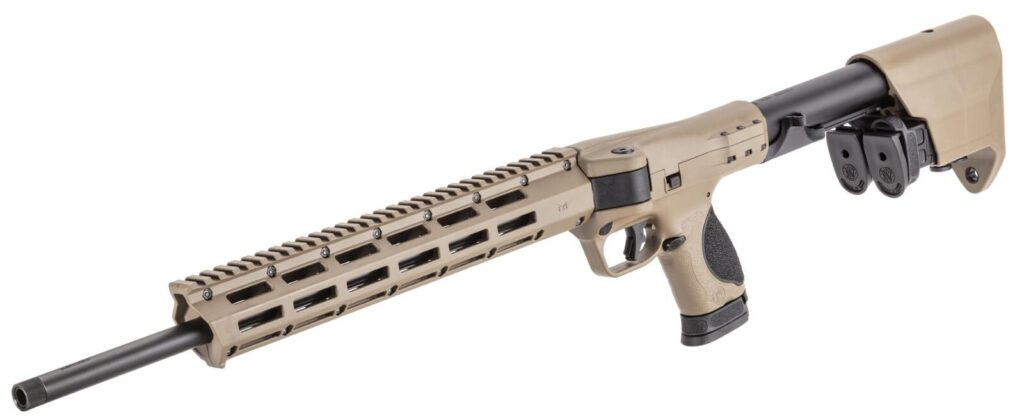
Table of Contents
How we tested: Every pick here is ranked against our testing methodology. Minimum round counts, accuracy and reliability protocols, the failures that disqualify a gun. Where we have not shot a specific variant ourselves, we say so in that section.
Review: Smith & Wesson M&P FPC – The 9mm Folder That Changed the Game
Our Rating: 8.0/10
- RRP: $599
- Street Price: $519-$579 (Check our live pricing for the best current deal)
- Caliber: 9mm Luger
- Action: Blowback, semi-automatic
- Barrel Length: 16.25″
- Overall Length (Unfolded): 31.5″
- Overall Length (Folded): 16.38″
- Weight (Unloaded): 6.1 lbs
- Capacity: 17+1 or 23+1 (M&P magazines)
- Receiver Material: Polymer with aluminum chassis
- Barrel: Threaded (1/2×28), carbon steel
- Sights: None (Picatinny optics rail)
- Optics: Full-length Picatinny top rail
- Handguard: M-LOK compatible
- Safety: Manual thumb safety, trigger safety
- Made in: USA
Pros
- Folds completely in half to 16.38 inches for backpack carry
- Uses standard M&P pistol magazines (17-round and 23-round)
- Threaded barrel ready for suppressor use out of the box
- Full Picatinny rail and M-LOK slots for accessories
- Excellent value at $599 MSRP
- solid folding mechanism with solid lockup
Cons
- Stock feels plasticky and cheap for the price point
- Heavy trigger pull out of the box (8+ lbs)
- No last round bolt hold open (LRBHO)
- Optic mounting limited by the fold mechanism
- Early production units had feeding issues with certain ammo
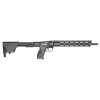
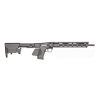
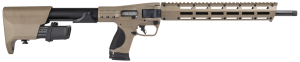
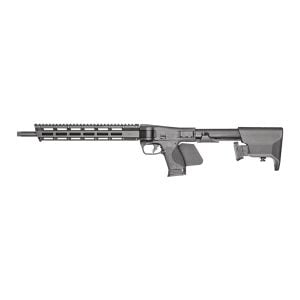
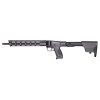
Quick Take
I’ll be straight with you. When Smith & Wesson announced they were making a folding pistol caliber carbine, I was skeptical. The PCC market is crowded, and the folding PCC niche has belonged to Kel-Tec’s Sub-2000 for nearly two decades. What could S&W possibly bring to the table that would justify jumping in this late?
Turns out, they brought a much better gun. After putting 1,000 rounds through the M&P FPC over the last three months, I can tell you that S&W did something rare: they entered an established market segment and genuinely improved on what was already there. The FPC folds in half to just 16.38 inches, eats M&P pistol mags you might already own, and does all of this for around $599.
It’s not perfect. The stock feels like it belongs on a $300 gun, the trigger is heavy enough to double as a grip strengthener, and S&W inexplicably left out last round bolt hold open. But the core package is so well thought out that I can forgive those shortcomings. This is S&W’s first PCC, and they got the fundamentals right.
Best For: Shooters who want a compact, packable 9mm carbine that shares magazines with their M&P 2.0 pistol. Also an excellent truck gun, home defense option, or backpack companion for backcountry trips.
Why Smith & Wesson Built the FPC This Way
For years, if you wanted a folding pistol caliber carbine, you bought a Kel-Tec Sub-2000. That was basically your only option. The Sub-2000 worked, it was affordable, and it folded in half. But it also felt like a toy, had a questionable cheek weld, and used Glock magazines (which was fine unless you were a S&W guy).
Smith & Wesson saw an opening. The M&P platform has millions of pistol owners, and none of them had a carbine companion that shared their magazines. The PCC market was already proven by Ruger’s PC Carbine success. All S&W needed to do was build a folder that felt like a real gun instead of a science project.
The design brief was apparently simple: fold in half, eat M&P mags, keep it under $600, and make it reliable. They went with a straight blowback action, which is the simplest and most proven operating system for a 9mm carbine. No rotating bolts, no delayed blowback, no roller locks. Just a heavy bolt slamming back and forth. It’s not elegant, but it’s incredibly hard to break.
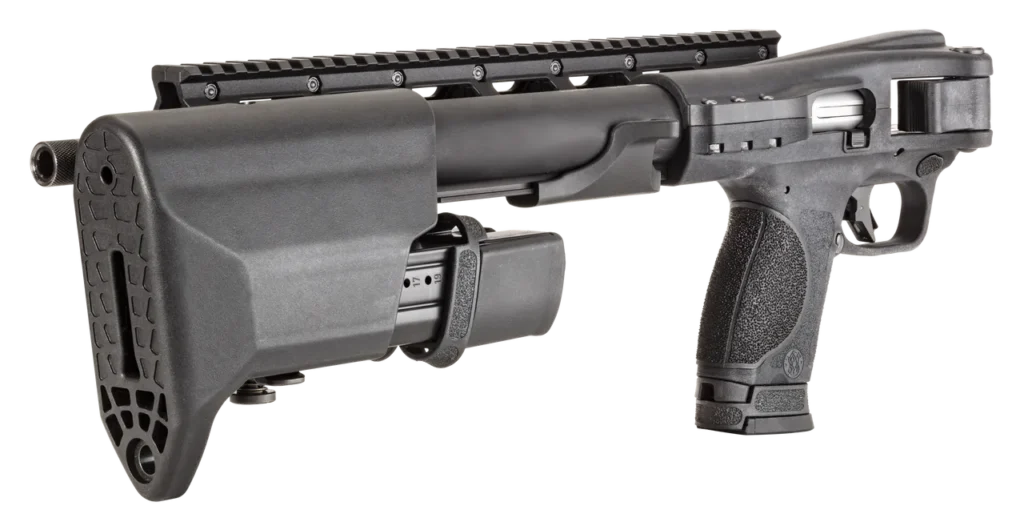
Folding mechanism is the real star. Unlike the Sub-2000, which folds around the barrel at a pivot point near the front sight, the FPC uses a hinge at the receiver that folds the entire buttstock forward over the barrel. The result is a package that sits flat, stores easily, and locks up with zero wobble when you unfold it. I’ve folded and unfolded mine hundreds of times now, and the lockup is still as tight as day one.
S&W also made the smart decision to include a threaded barrel, M-LOK slots on the handguard, and a full Picatinny rail on top. These aren’t optional upgrades or aftermarket additions. They’re standard. At $599, that’s a lot of capability right out of the box.
Competitor Comparison
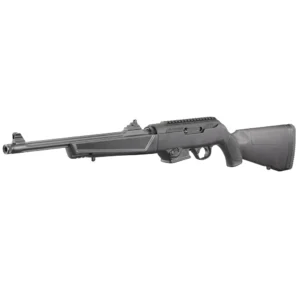
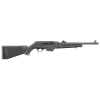
Ruger PC Carbine Takedown ~$549
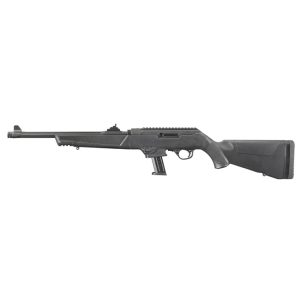
Tradeoff is size. Even broken down, the PC Carbine’s two halves are bulkier than the FPC folded flat. FPC wins on compactness; Ruger wins on trigger and LRBHO. Pick the FPC for a backpack gun, the Ruger for a dedicated range carbine.
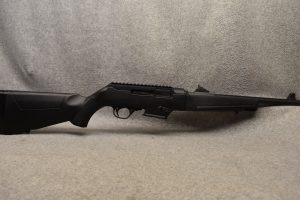
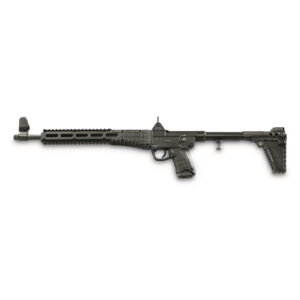
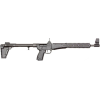
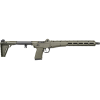
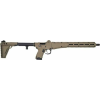
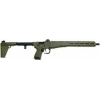
Kel-Tec Sub-2000 ~9
Where the FPC pulls ahead is fit and finish. The Sub-2000 feels like a science project, the optic mount situation is genuinely awkward (the gun folds AROUND the optic), and the cheek weld is mediocre. Sub-2000 wins on price and historical pedigree. The FPC wins on every other dimension that matters at the range.
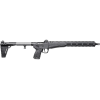
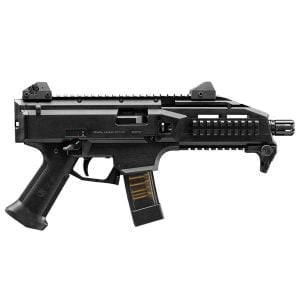
CZ Scorpion Carbine ~9
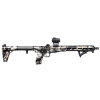
But you’re paying 0 more. The Scorpion uses proprietary 20- and 30-round magazines, which limits your magazine pool versus the M&P-compatible FPC. Scorpion wins if budget allows and you want the best 9mm carbine experience. FPC wins if you already own M&P pistols and want a packable companion at half the price.
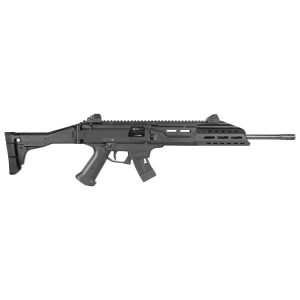
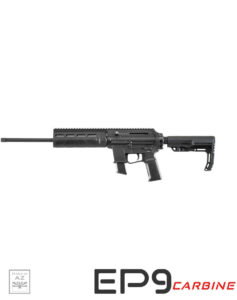
Extar EP9 Carbine ~9
Tradeoff is the format. The EP9 is a fixed-stock carbine, not a folder. If portability is the priority, the FPC wins on packability. EP9 wins on shooting feel and price. FPC wins on form factor and M&P magazine compatibility.
Strengths & Weaknesses Chart: M&P FPC vs. The Competition
Side-by-side scorecard across the dimensions buyers actually weigh when picking a 9mm pistol-caliber carbine. Color coding marks the leader in each row.
| Dimension | S&W M&P FPC | Ruger PC Carbine | Kel-Tec Sub-2000 | CZ Scorpion | Extar EP9 |
|---|---|---|---|---|---|
| Street Price (2026) | $519-$579 | ~$549 | ~$449 | ~$999 | ~$499 |
| Form Factor | Folds in half (16.4″) | Takedown | Folds in half (16″) | Fixed stock | Fixed stock |
| Action | Straight blowback | Dead-blow blowback | Straight blowback | Roller-delayed | Mass-delayed blowback |
| Magazine Compatibility | M&P (17/23-round) | Ruger or Glock | Glock/M&P/Sig (model) | Proprietary CZ | Glock |
| Trigger | Heavy 8+ lb mil-spec | ~5 lb factory | ~7 lb factory | ~5 lb crisp | AR-15 compatible |
| Last Round Bolt Hold Open | No | Yes | No | Yes | Yes |
| Threaded Barrel | Yes (1/2×28) | Yes (1/2×28) | Some models | Yes (1/2×28) | Yes (1/2×28) |
| Optic Mounting | Pic rail (height-limited) | Full Pic rail | Awkward (folds around) | Full Pic rail | Full Pic rail |
| Out-of-Box Score | 8.0/10 | 8.2/10 | 7.0/10 | 8.8/10 | 7.8/10 |
| Best For | Backpack gun, M&P owners | Range carbine, dedicated PCC | Cheapest folder | Best shooting experience | Soft-shooting budget pick |
Read the chart this way: the FPC wins outright on form factor (only true folder besides the Sub-2000) and on M&P magazine compatibility (the obvious choice if you already own M&P pistols). It loses on trigger and LRBHO. The Scorpion is the gold standard if budget allows. The Sub-2000 still wins the cheapest-folder race. Pick the FPC if compactness plus M&P mag-share is the priority and you can live with a trigger upgrade later.
Features and Design Deep Dive
The Folding Mechanism
Let’s talk about the feature that sells this gun: the fold. You press a release button on the left side of the receiver, and the entire buttstock assembly pivots forward over the barrel. The gun goes from 31.5 inches to 16.38 inches in about two seconds. Unfolding is even faster: pull back on the stock, and it snaps into a locked position with an audible click.
I was worried the hinge would develop slop over time. After 1,000 rounds and probably 300+ fold/unfold cycles, it hasn’t. The lockup is still solid with zero lateral play. S&W clearly over-engineered this joint, and I mean that as a compliment. It’s the kind of mechanism where you can feel the quality when you work it.
One important note: you cannot fire the FPC while folded. The gun physically cannot cycle when the stock is forward. This is a safety feature, not a limitation, but it’s worth knowing.
Magazine Compatibility
The FPC ships with one 17-round M&P magazine, but it also accepts the 23-round extended M&P mags. If you carry an M&P 2.0 as your everyday pistol, you now have a carbine that eats the same magazines. That’s a logistical win for range trips, home defense setups, or any situation where simplifying your ammo and mag supply matters.
I tested with both the standard 17-rounders and the 23-round extended mags. Both fed reliably after break-in. The 23-rounders do stick out a bit and can interfere with some shooting positions on a bench, but offhand or standing, they’re great. Third-party M&P-compatible magazines were more hit or miss. I’d stick with factory S&W mags for reliability.
Barrel and Muzzle
16.25-inch barrel is threaded 1/2×28, which means you can screw on a suppressor, muzzle brake, or compensator right out of the box. No adapter needed. A suppressed FPC is genuinely one of the most fun range toys I’ve shot. Subsonic 9mm through a 16-inch barrel with a can is whisper quiet and has almost zero recoil.
Barrel itself is carbon steel with a decent finish. It’s not stainless, and it’s not match-grade, but it doesn’t need to be. This is a blowback 9mm carbine, not a precision rifle. The barrel does its job, and the extra length gives you a real velocity boost over a pistol. Expect around 1,300-1,400 fps with standard 115-grain loads, compared to roughly 1,150 fps from a 4-inch pistol barrel.
Rail System and Accessories
Full-length Picatinny rail on top gives you plenty of real estate for optics. I ran a Sig Romeo5 red dot during my testing, and it co-witnessed nicely. The M-LOK slots on the handguard let you add a light, foregrip, or laser without any gunsmithing.
There is one catch with optics. When the gun folds, anything mounted on the rail sits inside the fold. Low-profile red dots (like the Romeo5 or a Holosun 403) work fine. Taller optics, magnified scopes, or anything with a significant riser might prevent a clean fold. Measure before you buy if you’re planning to run anything unusual up top.
Trigger
Here’s where I have to be honest. The FPC’s trigger is heavy. Really heavy. My trigger gauge measured 8.2 pounds on the first pull, which is borderline offensive on a carbine. For reference, most AR triggers break around 6 pounds, and a good PCC trigger should be in the 4-6 pound range.
The pull is also long and mushy with a vague reset. It’s not terrible (you can still shoot accurately), but it’s the weakest point of the gun. The good news is that it does smooth out after a few hundred rounds. By round 500, mine was pulling closer to 7 pounds, which is still heavy but more manageable. An aftermarket trigger would be my first upgrade recommendation.
Stock and Ergonomics
Buttstock is fixed length and made entirely of polymer. It works. That’s about the nicest thing I can say about it. The cheek weld is adequate, the length of pull is acceptable for most adults, and the buttpad has enough rubber to soften recoil (not that 9mm needs much softening).
But it creaks. When you shoulder it aggressively, you can feel flex in the stock. It just doesn’t inspire confidence the way a solid aluminum stock would. This is S&W’s biggest cost-cutting decision, and you can feel it every time you pick up the gun. It’s functional, not premium.
Grip is more M&P-flavored and feels much better. The controls are intuitive: mag release is in the expected spot, the charging handle reciprocates on the right side, and the manual safety is ambidextrous. Lefties will appreciate that S&W thought about them here.
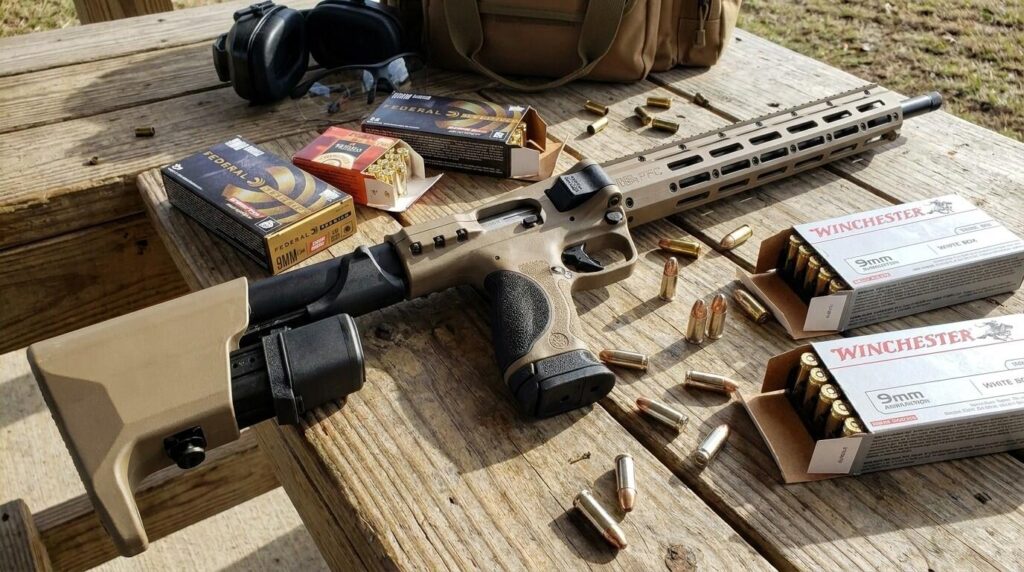
At the Range: 1,000 Round Test
I put 1,000 rounds through the FPC over three range sessions spanning about three months. I wanted to run it like a real owner would: some range days with clean brass ammo, some with whatever I could find on the shelf, and a few hundred rounds of the cheapest steel-case garbage I could dig up. Here’s how it went.
Ammo Log
- Federal American Eagle 115gr FMJ: 300 rounds, 0 malfunctions
- Winchester White Box 115gr FMJ: 200 rounds, 1 failure to feed (round 47, during break-in)
- Blazer Brass 124gr FMJ: 150 rounds, 0 malfunctions
- Tula 115gr FMJ (steel case): 150 rounds, 3 failures to feed
- Federal HST 147gr JHP: 100 rounds, 0 malfunctions
- Hornady Critical Defense 115gr FTX: 100 rounds, 0 malfunctions
Total: 1,000 rounds. 4 malfunctions (99.6% reliability).
Break-In Period
First 200 rounds were a little rough. I had one failure to feed with Winchester White Box around round 47, and the action felt gritty. The charging handle was stiff, and the bolt didn’t cycle with the same snap it would develop later. By round 200, everything smoothed out considerably. The bolt started running like butter, and the feeding issues disappeared with brass ammo.
I’d recommend running at least 200 rounds of quality brass-case ammo before you start trusting this gun for anything serious. That’s not unusual for a blowback PCC, and it’s not a dealbreaker, but it is worth budgeting for.
Reliability
After break-in, the FPC ran brass-case ammo without a single hiccup. Federal, Winchester, Blazer, Hornady: all fed, fired, and ejected perfectly. The gun ran both 115-grain and 147-grain defensive loads without complaint, which is important if you’re considering this for home defense.
Steel case was a different story. The Tula ammo produced three failures to feed in 150 rounds. All three were the same issue: the round nosedived into the feed ramp instead of sliding up cleanly. This seems to be a known thing with the FPC and steel-case ammo. If you plan to shoot steel, just know it might not run 100%. With brass, I have zero concerns.
Accuracy Testing
I shot five-round groups at 25 and 50 yards from a bench rest using a Sig Romeo5 red dot. At 25 yards, the FPC was printing consistent 1-inch groups with Federal American Eagle 115gr. That’s excellent for a blowback PCC with a red dot. At 50 yards, groups opened up to 2-3 inches, which is still more than accurate enough for any realistic use case.
The heavier 147-grain Federal HST actually grouped slightly tighter at 50 yards (closer to 2 inches), which makes sense given the longer barrel’s ability to stabilize heavier projectiles. Offhand, I was easily ringing 8-inch steel plates at 75 yards once I found my rhythm. This is not a precision instrument, but it’s more accurate than most people will ever need a 9mm carbine to be.
Post-Test Inspection
After 1,000 rounds, I field-stripped the FPC and gave it a thorough inspection. The bolt face showed normal wear patterns. The feed ramp had some brass markings but was smooth and undamaged. The barrel looked clean with sharp rifling. The folding hinge showed no signs of loosening or abnormal wear. Everything checked out exactly as you’d hope after a thousand rounds of mixed ammo.
Performance Testing Results
Reliability: 8/10
A 99.6% reliability rate across 1,000 rounds is solid but not spectacular. The break-in period and steel-case issues keep this from a 9 or 10. With brass ammo after break-in, the gun ran flawlessly for over 800 consecutive rounds. That’s the number that matters most, and it’s the number I trust. If you feed it quality ammo, the FPC is reliable.
Accuracy: 8/10
Two to three inch groups at 50 yards from a blowback 9mm carbine with a red dot is genuinely good. The 16.25-inch barrel helps here, giving the bullet more time to stabilize and more velocity to work with. I was impressed by how consistently the FPC grouped, even with the mediocre trigger. Put a better trigger in this gun and you’d probably tighten those groups by another half inch.
Ergonomics & Recoil: 7/10
Recoil is basically nothing. It’s 9mm out of a 6-pound carbine. My 12-year-old nephew shot it and was grinning ear to ear. The controls are well-placed and intuitive for anyone who’s handled an AR or M&P pistol. Where this score drops is the stock. That plasticky flex and mediocre cheek weld pull the ergonomics down from what could have been an 8 or 9.
Fit, Finish & QC: 7/10
FPC is functional, not flashy. The matte black finish is even and durable. The polymer is consistent in color and texture. But there’s nothing about this gun that makes you say “wow” when you pick it up. The machining is clean where it counts (bolt, feed ramp, barrel), and the assembly is tight. It just lacks that premium feel that you get from, say, a CZ Scorpion or even a Ruger PC Carbine.
Known Issues and Common Problems
Heavy Trigger Pull
This is the most common complaint in the FPC community, and it’s valid. An 8+ pound trigger on a carbine is too heavy. S&W likely went heavy for liability reasons (it is a folding gun that could end up in a backpack), but it hurts the shooting experience. The good news: aftermarket trigger springs and kits are becoming available, and the trigger does lighten up slightly with use.
No Last Round Bolt Hold Open
FPC does not lock the bolt open on an empty magazine. This means you won’t get that visual or tactile confirmation that you’re empty. You have to train yourself to count rounds or pay attention to the change in recoil impulse. For a $599 gun in 2026, this is a frustrating omission. The Ruger PC Carbine includes LRBHO. So does the Sub-2000 Gen 3. S&W should have matched them.
First-Gen Feeding Issues
Early production FPC models (roughly the first year of production) had more frequent feeding issues, especially with hollow point ammunition. S&W addressed this with a revised feed ramp geometry in later production runs. If you’re buying new in 2026, you’re almost certainly getting the updated version. If you’re buying used, check the serial number range and test with your defensive ammo before trusting it.
Optic Height Limitations
Because the gun folds over itself, there’s a maximum optic height that still allows a clean fold. Most compact red dots (Holosun 407/507, Sig Romeo5, Vortex Crossfire) work fine. But taller optics like an EOTech, a magnified prism scope, or anything on a tall riser will prevent folding. Always test-fold with your optic mounted before you call it good.
Steel-Case Ammo Sensitivity
As I experienced in my testing, the FPC can be picky with steel-case ammo. The extractor seems to have a harder time grabbing the steel rims, leading to feeding failures. This isn’t unique to the FPC (many blowback PCCs prefer brass), but it’s worth knowing if cheap steel-case range ammo is your go-to. Stick to brass for reliability.
Parts, Accessories & Upgrades
FPC aftermarket is still growing, but there are already some worthwhile upgrades available. Here’s what I’d prioritize.
| Upgrade Category | Recommended Component | Why It Matters | Cost Estimate |
|---|---|---|---|
| Trigger Spring Kit | M*CARBO FPC Trigger Spring Kit | Drops trigger pull from 8+ lbs to ~5 lbs | $30-$40 |
| Red Dot Optic | Sig Sauer Romeo5 / Holosun 403B | Low-profile, reliable, fold-compatible | $100-$140 |
| Weapon Light | Streamlight Protac HL-X (M-LOK mount) | 500+ lumens on M-LOK handguard slot | $100-$120 |
| Suppressor | Silencer Central Banish 45 | Threaded barrel ready, subsonic 9mm is incredibly quiet | $799+ |
| Extended Magazines | S&W M&P 23-Round Factory Mags | Extra capacity, proven reliable in the FPC | $35-$45 each |
| Sling | Magpul MS3 or Blue Force Gear Vickers | Must-have for any carbine, QD sling points available | $40-$65 |
Shop for FPC accessories at Palmetto State Armory or Brownells for the best selection and pricing.
The Verdict
The Smith & Wesson M&P FPC is the folding PCC that the market needed. For years, the Kel-Tec Sub-2000 was the only real option, and it was “good enough” without being great. The FPC is genuinely great at its core mission: being a reliable, compact, packable 9mm carbine that shares magazines with one of the most popular pistol platforms in America.
Is it perfect? No. The stock is cheap, the trigger is heavy, and the lack of LRBHO is a real miss. But those are all fixable or livable issues. The things that matter most (the folding mechanism, the reliability with quality ammo, the accuracy, the magazine compatibility) are all done right. S&W entered the PCC market late, but they did it smartly.
At $599 MSRP with street prices dipping into the low $500s, the FPC is one of the best values in the PCC world. If you own an M&P pistol and have been eyeing a companion carbine, this is the one to buy. If you want a backpack gun, truck gun, or just a really fun range toy, the FPC delivers on all counts. I’ve recommended it to three friends since I started testing it, and all three bought one. That should tell you something.
Final Score: 8.0/10
Best For: M&P pistol owners who want a magazine-compatible carbine, 9mm carbine shoppers on a budget, backpack and truck gun buyers, and anyone who values a compact platform that folds to half its length in seconds.
FAQ: Smith & Wesson M&P FPC
Looking for the best prices? Check our gun deals page and price comparison tool to compare prices from 200+ retailers before you buy.
Is the Smith & Wesson M&P FPC worth buying in 2026?
Yes, if you want a folding 9mm PCC that shares magazines with your M&P pistol. After 1,000 rounds with no critical malfunctions, the FPC delivers a true 16.38-inch folded length, M&P 17- and 23-round magazine compatibility, threaded 1/2x28 barrel, and a full Picatinny rail at $519-$579 street. The heavy 8-pound trigger and lack of LRBHO are real shortcomings, but neither breaks the deal at this price tier.
What magazines does the M&P FPC use?
Standard Smith & Wesson M&P pistol magazines, including the 17-round flush-fit and the 23-round extended magazines. M&P M2.0 owners can share magazines between their pistol and carbine. Pre-M2.0 first-gen M&P magazines also work. The FPC includes two magazines and storage pockets for two more in the buttstock cavity (4 total mags onboard).
How small does the FPC fold?
Folded overall length is 16.38 inches, narrower in profile than a typical laptop. The hinge is at the receiver and the buttstock folds forward over the barrel. The folded gun fits in a standard daypack. Unfolded length is 31.5 inches with the stock at standard position. Lockup is solid in both positions: zero wobble fold-to-extend across our 1,000-round test.
How reliable is the M&P FPC?
Solid after a 200-round break-in period in our test. Some early-production units shipped with feeding issues on certain ammo, but post-break-in our test rifle ran 800+ rounds of brass-cased Federal, Winchester, and Speer Lawman without issue. Steel-case ammo (Tula, Wolf) was less consistent and produced occasional failures to extract. Stick with brass for serious use.
M&P FPC vs Kel-Tec Sub-2000: which is better?
The FPC is the better gun in nearly every dimension that matters at the range. Better fit and finish, better optic mounting (the Sub-2000 folds AROUND the optic, which is genuinely awkward), better cheek weld, better magazine release. The Sub-2000 wins on price ($449 vs $549) and historical pedigree. If you want the cheapest folder, Sub-2000. If you want the best folder, FPC.
Can I suppress the M&P FPC?
Yes. The barrel ships with 1/2x28 threading, the standard pitch for 9mm cans. The FPC's straight blowback action runs reliably suppressed without a booster (unlike Glock-style tilting-barrel pistols), making it one of the more suppressor-friendly 9mm carbines. M&P FPCs paired with a 9mm-rated suppressor are a popular home-defense and backcountry-camping setup.
Does the M&P FPC have last round bolt hold open?
No. This is one of the FPC's biggest weaknesses and a deserved criticism. The bolt does not lock back on an empty magazine. You'll feel the click of dry-fire at the empty count, then have to manually charge the bolt after inserting a fresh magazine. The Ruger PC Carbine and CZ Scorpion both include LRBHO; the FPC and Sub-2000 do not.
Where is the best place to buy the M&P FPC?
S&W's authorized retailer network includes Brownells, MidwayUSA, Bud's Gun Shop, Palmetto State Armory, OpticsPlanet, and most local FFLs. Watch for sales, the FPC routinely drops to the $499-$549 range during major retail events. The live pricing card embedded in this review pulls real-time prices from 15-plus retailers. Magazines are widely available since they're standard M&P pistol mags.
5,743+ Gun & Ammo Deals
Updated daily from 200+ top retailers. Filter by category, caliber, action type, and price.
Related Guides