

Last updated September 5th 2026
Some of the links below are affiliate links, meaning at no additional cost to you, we may earn a commission if you click through and make a purchase.
- Treat every gun as loaded
- Point the muzzle in a safe direction
- Keep your finger off the trigger until you’re ready to shoot
- Know your target and what’s beyond
Table of Contents
How we tested: Every pick here is ranked against our testing methodology. Minimum round counts, accuracy and reliability protocols, the failures that disqualify a gun.
The Short Answer
Buy the 9mm. It hits harder, holds more rounds, costs less to shoot, and it now fits in pistols that are within a few tenths of an inch of a pocket .380. The .380 keeps one honest job: the absolute smallest, lightest gun you can carry, for pocket and ankle work where even a micro-9 prints. It also keeps a second job that has nothing to do with size, which is being the easiest gun in the store to rack and fire if your hands are the limiting factor.
Everything below is the reasoning, including the part most comparisons get wrong about recoil and the part almost none of them mention about barrel length.
Specs Comparison: .380 ACP vs 9mm
| Metric | .380 ACP | 9mm |
|---|---|---|
| Bullet diameter | .355 in | .355 in |
| Typical bullet weight | 90 to 100 gr | 115 to 147 gr |
| SAAMI test barrel | 3.75 in | 4.00 in |
| Typical velocity | ~950 fps | ~1,150 fps |
| Muzzle energy | ~200 ft-lbs | ~350 to 400 ft-lbs |
| Recoil | Mild to moderate in small guns | Moderate |
| Typical capacity | 6 to 12 | 10 to 17+ |
| Smallest practical guns | Pocket micro pistols | Micro-compacts |
| Practice ammo cost | Higher per round | Lowest centerfire |
Pros
- Fits the smallest pistols made
- Easy-rack designs suit weak hands
- Genuine pocket and ankle carry
Cons
- Less energy than 9mm
- Lower capacity in most guns
- Costs more per round
Pros
- Roughly double the muzzle energy
- Higher capacity at the same size
- Cheapest centerfire ammo made
Cons
- More recoil than a larger .380
- Smallest 9mm bigger than smallest .380
- Snappy in the lightest micro-compacts
The Core Difference: Power and Size
Both cartridges fire the same .355-inch bullet, so the difference is not bullet width. It is how much powder sits behind it and how big a gun that powder needs. The 9mm uses a longer, higher-pressure case to push a heavier bullet faster, roughly doubling the muzzle energy of a typical .380. That extra power is the 9mm’s whole argument.
The .380’s argument is the exact inverse. Lower pressure and a shorter case let it run in a simple blowback pistol with no locking mechanism, which is how you end up with a gun that weighs ten ounces and vanishes in a pocket. John Browning designed both, the 9mm in 1901 and the .380 in 1908, and the .380 was never meant to compete on power. It was meant to make small guns possible. Every other difference in this comparison falls out of that one trade.
What a Pocket-Gun Barrel Does to These Numbers
Here is the thing nearly every .380 versus 9mm article skips. Those published velocity and energy figures are not measured from carry guns. SAAMI, the industry body that publishes the standards ammo makers load to, specifies a 3.75-inch test barrel for .380 ACP and a 4-inch test barrel for 9mm Luger, with velocity read 15 feet from the muzzle. Almost nobody carries either cartridge in a barrel that long.
A Ruger LCP II has a 2.75-inch barrel. A Sig P365 has 3.1 inches. So the .380 is being measured from a barrel about an inch longer than the gun it actually lives in, and the 9mm from a barrel nearly an inch longer than its most popular carry pistol. Both lose velocity, but they do not lose it equally. The 9mm runs at higher pressure with more powder still burning as the bullet exits, so it gives up more actual feet per second when you cut the barrel. The .380 was designed around short barrels and has less to lose.
What that means in practice: the energy gap between a pocket .380 and a micro-9 is narrower than the spec sheet implies. It is not close to gone. The 9mm still lands well ahead, and it starts from roughly twice the energy, so it can afford the loss. But if you have been reading a 200 ft-lb .380 figure against a 400 ft-lb 9mm figure and assuming that is what your two carry guns are doing, the real spread is tighter than that. The right conclusion is not that the .380 caught up. It is that you should compare loads at the barrel length you actually own, and manufacturers who publish short-barrel data are doing you a favor.
Stopping Power and Penetration
On energy alone the 9mm leads and it is not particularly close. More velocity and heavier bullets give it more consistent penetration through clothing and intermediate barriers, and modern 9mm hollow points expand reliably while still reaching vital depth. That combination is why most police agencies in the country carry 9mm.
The .380 sits closer to the edge. It works with a quality load at close range, and people defend themselves with one regularly, but it has less margin when conditions are not ideal. Heavy clothing is the usual failure point. Some expanding .380 bullets either open up and stop short of useful depth, or they plug with fabric and never open at all. The 9mm gives bullet designers more velocity to work with, so it handles that same denim and leather with room to spare.
Worth saying plainly: the myth that a .380 has no stopping power is wrong. It is a real defensive cartridge. It just gives you a thinner cushion, and that cushion is the entire point of carrying a gun you might have to bet on.
Ammo Selection: Where .380 Has Less Room for Error
Picking a defensive load matters in both calibers. In the .380 it matters more, because the bullet has to solve a harder problem with less to work with. The industry benchmark most people reference is the FBI protocol’s 12-inch minimum penetration in ballistic gel. Plenty of .380 hollow points expand beautifully and fall short of that number. Plenty of others reach depth by barely expanding at all, which means you are effectively carrying a ball round with extra steps.
That is why you will hear experienced .380 carriers recommend either a proven expanding load that has been gel-tested at short barrel lengths, or a solid non-expanding design like a hard-cast or monolithic bullet that guarantees depth and gives up expansion on purpose. Both are defensible. What is not defensible is grabbing whatever hollow point is on the shelf and assuming it works, because in .380 the spread between the good and the useless is wide.
The 9mm hands you a much easier job, and a bigger menu. Bullet weights run 115, 124 and 147 grains, so you can buy cheap 115-grain ball for practice and carry a proven 124 or 147-grain defensive load without changing anything about the gun. The .380 clusters at 90 to 100 grains with far less to tune. That flexibility is a quiet 9mm advantage that rarely makes the comparison charts.
Recoil, and Why Smaller Does Not Mean Softer
This is supposed to be the .380’s home ground, and it half is. In a slightly larger .380, something like the M&P 380 Shield EZ or a full-size Beretta in .380, recoil is genuinely gentle. The cartridge’s modest power spread across a heavier gun is about as pleasant as centerfire shooting gets. If a mild gun is what you need, that is where to look.
The catch is that the .380s people actually buy are not those guns. They are ten-ounce pocket pistols, and physics does not care what is stamped on the barrel. A featherweight .380 with a tiny grip can snap harder in the hand than a slightly larger 9mm with real texture to hold onto. I would rather shoot a P365 for an hour than an LCP, and so would most people who have done both.
So the honest rule is that gun size drives felt recoil at least as much as caliber does. If someone is recoil-shy, the answer is the most capable gun they can shoot comfortably and will actually practice with, and that is often a properly sized 9mm rather than the smallest .380 on the counter. The worst outcome in this whole debate is a buyer who gets talked into a tiny .380 because it sounds gentle, hates shooting it, and never trains.
Slide Racking: The Advice That Gets Repeated Wrong
For a lot of shooters, especially older ones and anyone with arthritis or a hand injury, working the slide is a bigger obstacle than recoil ever was. And the standard advice, get a .380, is only sometimes right.
Many small .380s are straight blowback, which means the recoil spring alone has to hold the breech shut against firing pressure. That spring is often stiff, and it is fighting you across a very short, slippery slide with almost nothing to grip. A locked-breech micro-9 like a P365 or a Hellcat uses a barrel that unlocks to help cycle, so the spring does not have to do all the work, and the slide is longer with better serrations. Plenty of people find the 9mm easier to rack than the pocket .380 they were told to buy.
Where the .380 genuinely wins is the purpose-built easy-rack designs. The M&P 380 Shield EZ exists for exactly this problem and it solves it properly, with a light slide, a full-size grip and a hammer-fired action you can operate with very little strength. If hand strength is the deciding factor, do not shop by caliber. Go to a counter, rack everything, and buy the one your hands can work. That single test outranks the entire ballistics discussion.
Capacity and Concealment
At any given size, the 9mm holds more. Micro-9s carry 10 to 12-plus rounds in a frame barely larger than a single-stack .380 holding 6 or 7, and that gap has widened as makers have squeezed double-stack magazines into smaller frames. Some double-stack .380s exist, but the caliber still mostly lives in low-capacity guns.
Concealment is where the .380 earns its keep, and it is a narrower win than it used to be but a real one. A pocket .380 goes in a front pocket holster or an ankle rig and disappears in a way even a micro-9 cannot quite match. If you dress light, work somewhere that punishes printing, or want a backup gun that rides somewhere a belt gun cannot, the .380 is still the answer. That is the use case where it beats the 9mm outright rather than on a technicality.
The Micro-9 Changed the Question
The single biggest thing to happen to this debate is not a new bullet. It is the micro-compact 9mm. The Sig P365 and the guns that followed it fit 10 to 12-plus rounds of 9mm into a frame within a few tenths of an inch of a single-stack .380, and they did it without making the gun harder to shoot.
Before those guns existed, the .380 owned the small-carry niche and the trade was obvious: accept less power to get a gun you would actually carry. Now the 9mm contests that niche directly and the trade has mostly evaporated. You give up a small amount of size and thickness to gain roughly double the energy and nearly double the rounds. That is the whole reason the default recommendation moved, and it is why the .380 has retreated to the extreme end of small rather than owning everything under a certain size.
Two things people still get wrong here. The .380 and the 9mm do not share ammunition or magazines, despite the .380 sometimes being called 9mm Short, and the cases are different lengths at different pressures. And a micro-9 is not automatically comfortable. There is a point below the P365 where a 9mm starts behaving like a pocket .380 in the recoil department, and shrinking past that buys you nothing you wanted.
The Guns Each Caliber Comes In
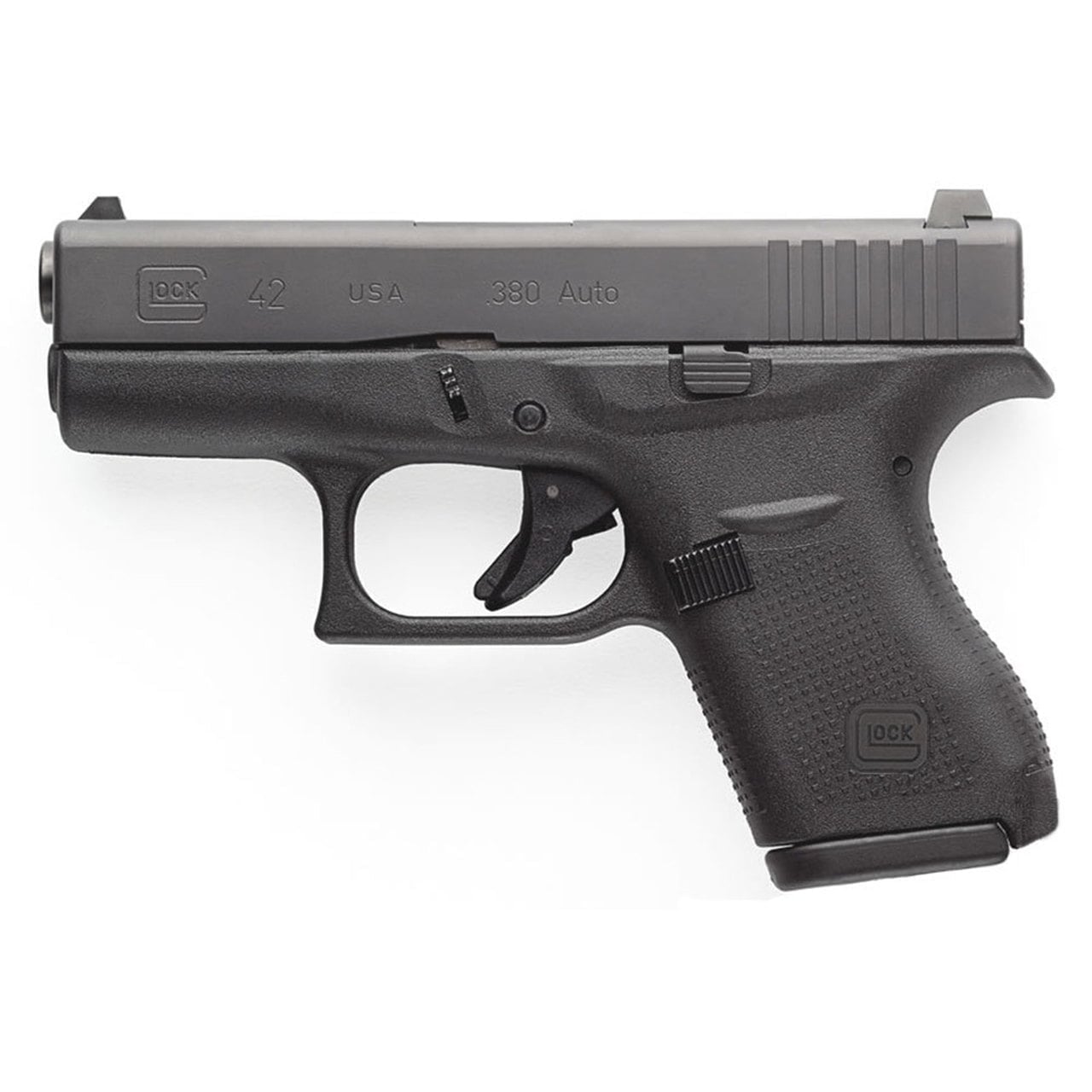
The .380 lives in small carry guns and a handful of deliberately mild larger ones. The regulars are the Ruger LCP II and LCP Max, the Smith and Wesson Bodyguard 2.0, the Glock 42, the Sig P238, and the M&P 380 Shield EZ at the easy-shooting end. If you want the smallest everyday pistol that exists, this is the shelf you start at. Our full breakdown of the category is in the best .380 pistols.
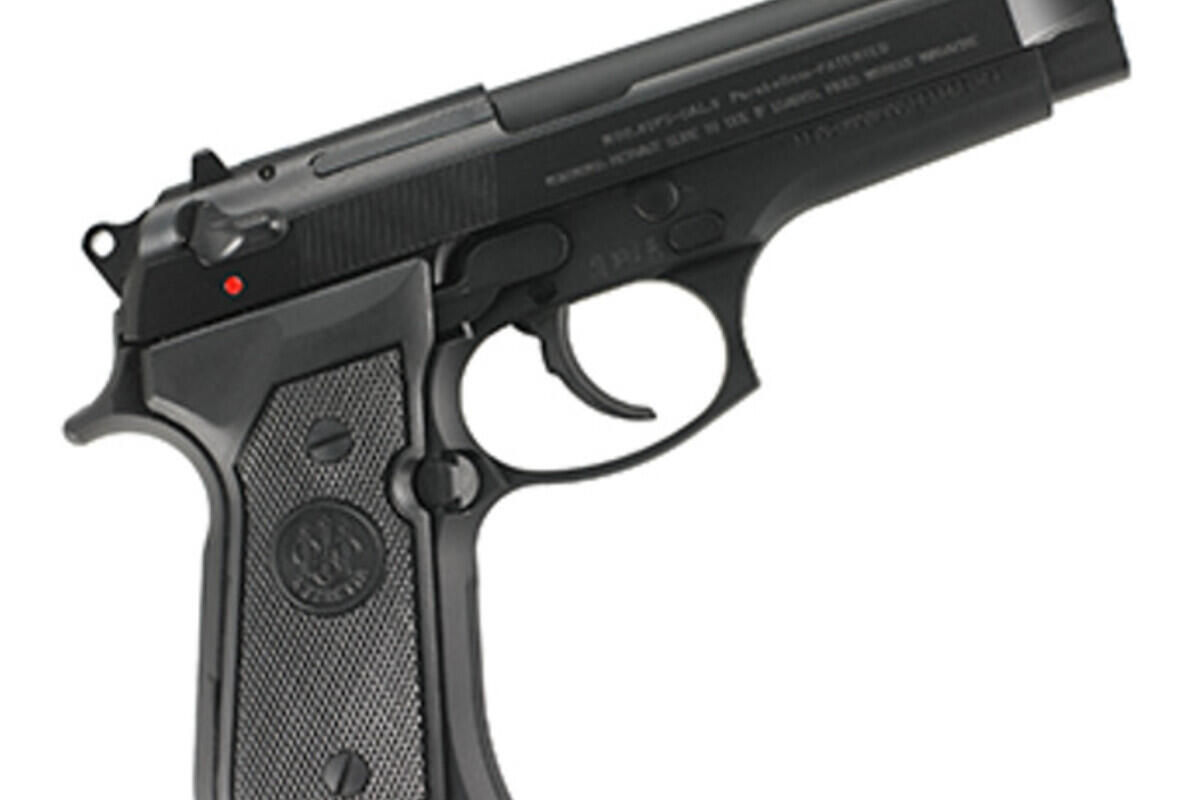
The 9mm is chambered in nearly every handgun made. For carry, the short list is the Sig P365 and P365 XL, the Springfield Hellcat, the Shield Plus, the Glock 43X and 48, and the Glock 19 if you can carry a compact. That catalog is deep enough that you can match a gun to your hand and your carry method precisely rather than settling, which is a large part of why it is the default answer. More options are in the best 9mm pistols.
What They Actually Cost to Shoot
The 9mm is the cheapest centerfire handgun round made, and it is stocked everywhere in bulk. The .380 is produced in smaller volume, costs noticeably more per round, and is occasionally awkward to find in quantity.
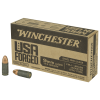
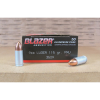
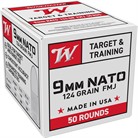
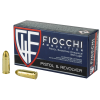
Checking the retailers we track as I write this, the cheapest .380 defensive ammunition from a trusted seller runs a little over 60 cents a round, while comparable 9mm sits around 50. Practice ball opens the gap further, because 9mm bulk cases exist in a way .380 bulk cases mostly do not. Over a year of honest range trips that difference is real money, and it shows up as fewer rounds fired. The caliber that is cheaper to shoot is the caliber you will be better with, which is not a small consideration in a defensive gun. Both cards below pull live prices, so you can check the current spread yourself rather than take my word for it.
My Recommendation
Buy a 9mm if you want the best all-around defensive caliber, you care about capacity and cheap practice, or a micro-compact conceals well enough for how you dress. That is most people, most of the time.
Buy a .380 if you need genuine pocket or ankle carry, you want a backup gun, or an easy-rack .380 is the most gun your hands can reliably operate. Those are all legitimate reasons and none of them are a consolation prize.
The test I would actually run: try to carry a micro-9 for two weeks the way you really dress, not the way you dress on the day you go to the range. If it works, take the 9mm and do not look back. If it prints, digs, or quietly stays in the safe, buy the .380 and load it with something that has been gel-tested out of a short barrel. A quality .380 you carry every day beats a 9mm you leave at home, and that is not a close call either.
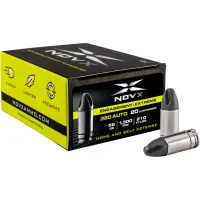
.380 ACP Ammo: Live Prices
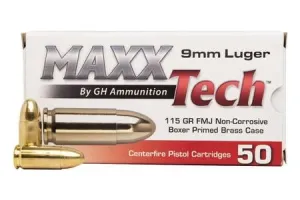
9mm Ammo: Live Prices

Frequently Asked Questions
Is 9mm better than .380 for self-defense?
For most people, yes. The 9mm carries roughly twice the energy of a .380, expands and penetrates more reliably with modern defensive ammo, holds more rounds and costs less to practice with. The .380 is still effective at close range with a quality load, but the 9mm has more margin.
Does .380 kick less than 9mm?
In a slightly larger .380 pistol, yes, recoil is genuinely mild. But in the tiniest pocket .380s the light weight can make recoil snappier than a properly sized 9mm. Gun size matters as much as caliber for felt recoil.
Can a .380 fire 9mm ammo?
No. They are different cartridges with different case lengths and pressures and are not interchangeable. The .380 ACP is also called 9mm Short, but it is not the same as 9mm Luger. Only use the caliber stamped on your barrel.
Why would anyone choose a .380 over a 9mm?
For the smallest, lightest pistols made. Pocket .380s conceal and carry in ways even micro-9mm guns cannot match, which makes them ideal for deep concealment, ankle carry and backup guns, or for shooters who want the mildest gun they will actually practice with.
Is the .380 enough for concealed carry?
Yes, a .380 with quality defensive ammo is a viable carry caliber, and many people carry one daily. Just understand it has less margin than a 9mm, so bullet selection and shot placement matter even more.
Does .380 lose less velocity than 9mm out of a short barrel?
Yes, in absolute terms. SAAMI measures .380 ACP from a 3.75-inch test barrel and 9mm Luger from a 4-inch barrel, and most carry guns are shorter than both. The 9mm runs at higher pressure with more powder still burning at the muzzle, so it gives up more feet per second when the barrel is cut. That narrows the real gap between a pocket .380 and a micro-9 compared to what the spec sheets suggest, but it does not close it. The 9mm starts from roughly twice the energy, so it can afford the loss.
How much more does .380 ammo cost than 9mm?
Across the retailers we track, .380 defensive ammunition runs a little over 60 cents a round against roughly 50 cents for comparable 9mm, and the gap widens on practice ammo because 9mm is sold in bulk cases that .380 mostly is not. The .380 is produced in far smaller volume, which is the reason. Over a year of regular range trips that difference is real money and it tends to show up as fewer rounds fired.
Is a .380 always easier to rack than a 9mm?
No, and this is where the usual advice goes wrong. Many small .380s are straight blowback, so the recoil spring alone holds the breech shut and it is often stiff, fighting you across a very short slide with little to grip. A locked-breech micro-9 like a Sig P365 uses the barrel to help cycle and has a longer slide with better serrations. Where the .380 genuinely wins is the purpose-built easy-rack guns such as the M&P 380 Shield EZ. If hand strength is your deciding factor, rack several guns at the counter rather than shopping by caliber.
3,979+ Gun & Ammo Deals
Updated daily from 200+ top retailers. Filter by category, caliber, action type, and price.
Related Guides