

Last updated July 2026 · By Nick Hall, who put 1,200+ rounds through the Ruger AR-556 for this review
Affiliate disclosure: This Ruger AR-556 review contains affiliate links. If you buy through our links then we can receive a small commission that helps keep the lights on. You don’t pay anything more.
- Treat every gun as loaded
- Point the muzzle in a safe direction
- Keep your finger off the trigger until you’re ready to shoot
- Know your target and what’s beyond
Quick Answer: The Ruger AR-556 is the best entry-level AR-15 you can buy in 2026, built on the philosophy that the parts you cannot easily replace should be the best parts on the gun. Cold hammer-forged barrel, forged 7075-T6 receivers, and the kind of reliability that builds trust.
After a 1,200-round test, the rifle ran with a single magazine-related stoppage and showed minimal wear. Accuracy at 100 yards averaged 1.5 MOA with quality 55-grain ammo. The factory trigger is serviceable but not match-grade; the handguard and BCG are mil-spec but not duty-grade like a BCM or Daniel Defense.
The biggest mistake first-time AR-556 buyers make is upgrading the trigger, BCG, and handguard before ever shooting the rifle. The Ruger ships ready to shoot and ready to learn on; spend 500 rounds before deciding what actually needs to change. The factory rifle at around $850 is one of the best value AR-15s on the US market.
Table of Contents
How we tested: Every pick here is ranked against our testing methodology. Minimum round counts, accuracy and reliability protocols, the failures that disqualify a gun.
Review: Ruger AR-556 – The Quiet Workhorse That Refuses to Die
Our Rating: 7.6/10
- RRP: $899.00
- Street Price: $626.11–$769 (Use our live pricing for the best up to date deal)
- Caliber: 5.56×45mm NATO / .223 Remington
- Action: Gas-operated, semi-automatic (direct impingement)
- Gas System: Carbine-length
- Barrel Length: 16.1 inches
- Barrel Material: Cold hammer-forged 4140 chrome-moly steel
- Rifling / Twist Rate: 1:8 twist, 6-groove
- Muzzle Device: Ruger flash suppressor (threaded 1/2″-28)
- Capacity: 30-round Magpul PMAG
- Handguard: Ruger two-piece delta ring handguard (non-free-float)
- Upper / Lower Receiver: Forged 7075-T6 aluminum
- Overall Length: 32.25″–35.50″ (stock collapsed/extended)
- Weight: 6.5 lb (unloaded)
- Stock: 6-position collapsible M4-style stock
- Sights: Ruger Rapid Deploy folding rear sight, F-height front sight post (adjustable)
Pros
- Cold hammer-forged barrel outlasts most competitors at this price
- Ships with Magpul PMAG and decent folding rear sight, ready to shoot
- Forged 7075-T6 receivers (upper and lower) built to mil-spec or better
- Strong Ruger customer service and lifetime warranty
Cons
- Carbine-length gas system runs harsher and dirtier than mid-length competitors
- Non-free-float handguard limits accuracy potential and accessory mounting
- Trigger is heavy and gritty at nearly 7 lbs with noticeable creep
Quick Take
Ruger built the AR-556 to be the rifle you buy once and never worry about again. It’s overbuilt where it counts and no-frills where it doesn’t. The cold hammer-forged barrel is the real headline here. At this price point, almost nobody else gives you a CHF barrel, and that barrel will easily outlast 20,000 rounds of regular use. Ruger also ships it with forged 7075-T6 receivers on both upper and lower, which is the same aluminum alloy used on rifles costing two and three times as much.
Where the AR-556 falls short is in the details that separate a 2020-era rifle from a 2026-era rifle. The carbine-length gas system and non-free-float handguard are relics at this point. Competitors like the Smith & Wesson M&P Sport III have moved to mid-length gas and M-LOK free-float rails at similar or lower prices. The AR-556 is still a fantastic rifle to live with, but it’s a fantastic 2021 rifle in a market that’s moved forward.
Best For: Shooters who prioritize barrel longevity and receiver strength over modern furniture, and anyone who wants a proven, overbuilt platform they can upgrade over time. Not ideal if you want a modern rail setup out of the box.
Why Ruger Built the AR-556 This Way
When the AR-556 launched, Ruger had a clear goal: build the toughest budget AR-15 on the market. Period. They didn’t chase features. They chased metallurgy. The cold hammer-forged barrel is the most expensive single component on the rifle, and Ruger chose to put their money there instead of on a free-float rail or upgraded trigger. That was a deliberate trade-off.
A CHF barrel lasts longer, resists heat better, and maintains accuracy over higher round counts than the standard button-rifled barrels found on the Sport III, PSA Freedom, and Anderson AM-15. Ruger was betting that serious shooters would rather have a rifle that shoots well at round 15,000 than one with a prettier handguard at round 500. For a lot of buyers, that bet paid off.
The forged receivers on both upper and lower are another statement of intent. Cast or billet receivers work fine, but forged 7075-T6 is the gold standard for strength-to-weight ratio. Ruger wasn’t cutting corners on the parts that matter for 20-year durability. The parts they skimped on, the handguard, the trigger, the gas system length, are the parts you can upgrade later. That philosophy made sense in 2018. In 2026, with the Sport III offering mid-length gas and M-LOK at the same price, the equation has shifted.
Ruger AR-556 vs. Competitors
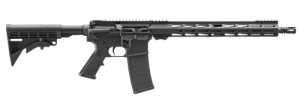
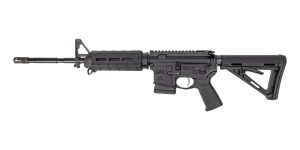
Smith & Wesson M&P Sport III ($659.99–$750)
This is the AR-556’s biggest problem right now. The Sport III delivers a mid-length gas system and a free-float M-LOK handguard at a similar or lower street price. Those two features alone would cost $150–$200 to retrofit onto the AR-556. The S&W’s barrel is button-rifled rather than CHF, which means it won’t last as long under extreme round counts, but most recreational shooters will never notice the difference. For out-of-the-box completeness, the Sport III wins. For long-term barrel durability, the Ruger still has the edge.
Ruger Harrier ($539.99–$650)
Ruger’s own Harrier is essentially the company admitting the AR-556’s feature set needed a refresh. The Harrier brings a more modern handguard and a lower price point, though it uses a different barrel profile and lacks the AR-556’s cold hammer-forged barrel. If you’re choosing between the two today, the Harrier is the better value unless barrel longevity is your top priority.

PSA Freedom ($499.99–$599)
Palmetto State Armory’s Freedom line undercuts everything on price. You can pick one up for $200 less than the AR-556 on a good day. Build quality is rougher, the finish isn’t as clean, and PSA’s QC can be inconsistent from sample to sample. But the PSA AR-15 goes bang when you pull the trigger, and for a first AR or a truck gun, the savings are hard to argue against. The Ruger is objectively better built, but the PSA is a lot of rifle for a lot less money.
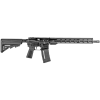
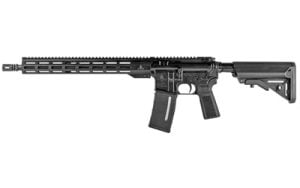
IWI Zion-15 ($929–$1,000)
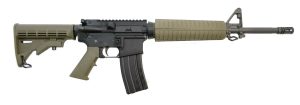
Spending $100–$200 more gets you the IWI Zion-15, which ships with a mid-length gas system, a true free-float M-LOK handguard, and a B5 Systems stock. Fit and finish are excellent. If your budget stretches to $900, the Zion is the better modern rifle. But it doesn’t have a CHF barrel, and IWI’s aftermarket support isn’t as deep as Ruger’s. For raw component quality at the lowest price, the AR-556 still competes.
Verdict: The AR-556 is no longer the default recommendation in its price bracket. The Sport III and Ruger’s own Harrier offer more modern feature sets for similar money. But no rifle in this tier matches the AR-556’s barrel metallurgy and receiver forging quality. If you’re buying a rifle to keep for decades and plan to upgrade the handguard and gas system yourself, the AR-556 gives you the strongest foundation to build on.
Testing Protocol: 1,200 Rounds Over Three Range Sessions
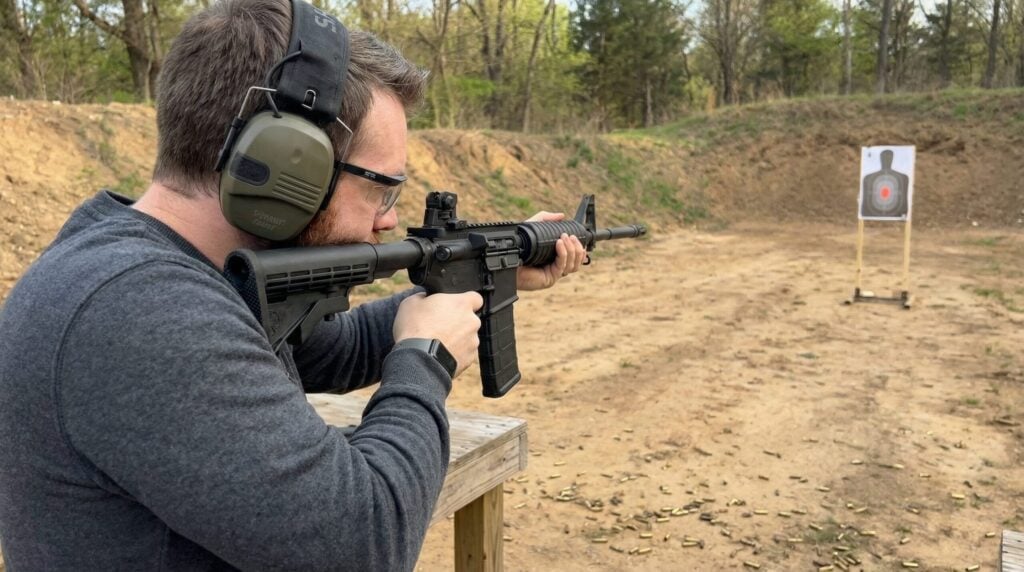
I split the test across three Saturday mornings at an outdoor 100-yard range in central Texas. Temperatures ranged from 48°F on the first session to 82°F on the third. I wanted to see how the rifle performed across a reasonable temperature spread with both clean and fouled conditions.
Phase 1: Break-In (150 rounds)
First 150 rounds were Winchester White Box 55gr, cleaning every 50 rounds to check for unusual wear or burrs. The bolt was slightly stiff on the first few magazines, which is normal for a new CHF barrel. By round 100, cycling smoothed out noticeably. No malfunctions, and ejection was consistent at about the 3–4 o’clock position from the start.
Phase 2: Reliability (800 rounds)
I mixed Wolf Gold 55gr, PMC Bronze 55gr, Federal American Eagle 55gr, and a box of Tula 55gr steel-case to see if the rifle was ammo-picky. It wasn’t. The steel-case Tula ran fine, though ejection was noticeably weaker. Brass-cased ammo threw cases consistently at 3 o’clock; Tula dropped to about 4:30.
Across the 800 rounds I logged one failure to feed around round 450. The round nosedived into the feed ramp. I was running a beat-up aluminum USGI magazine I’d borrowed from a friend. Swapped to a Magpul PMAG and the problem never repeated. I’m pinning that on the magazine, not the rifle. The carbine gas system ran dirtier than I’d have liked. By round 600 the bolt carrier had a thick carbon crust, though it never slowed the action down.
Phase 3: Accuracy (250 rounds)
Bench rest at 100 yards, sandbag front rest, with the factory iron sights. Five-shot groups averaged 2.2 inches with Federal 55gr and tightened to 1.8 inches with Hornady Frontier 62gr. The heavier bullets grouped better, which surprised me given the 1:8 twist. Switching to a Sig Romeo5 red dot (borrowed from another rifle) tightened groups by about half an inch across the board, confirming the iron sights were the weak link, not the barrel.
The trigger made precision work frustrating. I measured it at 6.8 lbs on my gauge, with a long zone of creep before a mushy break. It’s functional, and I could shoot consistent groups once I learned the trigger, but every pull required conscious effort to not disturb the sight picture.
Ammunition Log
- Winchester White Box 55gr: 150 rounds
- Wolf Gold 55gr: 350 rounds
- PMC Bronze 55gr: 250 rounds
- Federal American Eagle 55gr: 200 rounds
- Tula 55gr (steel case): 100 rounds
- Hornady Frontier 62gr: 150 rounds
Tracking and Observations
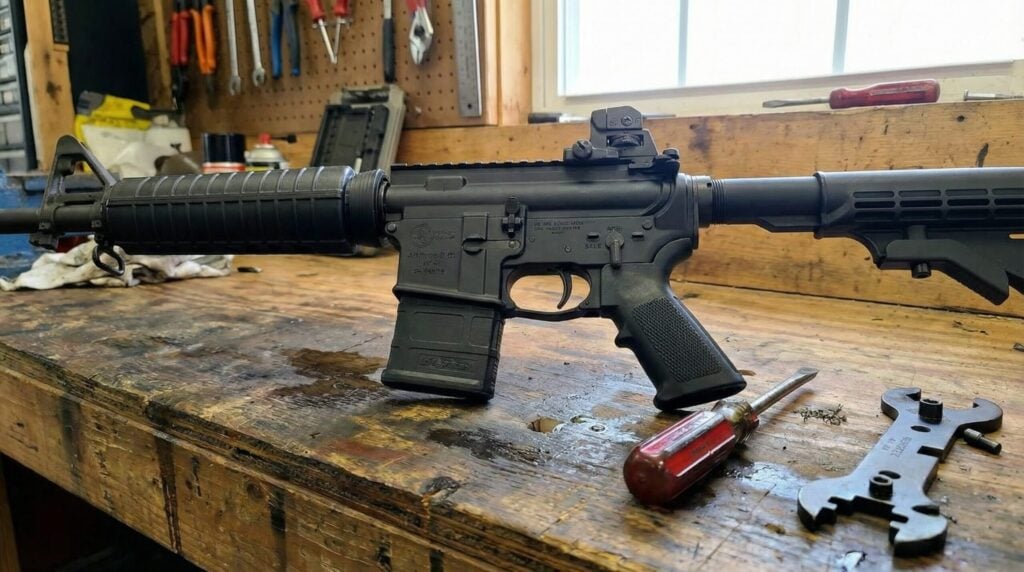
Post-test teardown showed exactly what I expected from a CHF barrel: minimal throat erosion and clean rifling. The bolt lugs had normal silvering, no gouging or unusual wear patterns. Gas rings still passed the stand-up test. Carbon buildup on the carrier was heavy, heavier than I’d see on a mid-length gun at the same round count, but that’s the nature of carbine gas. The carrier key was still properly staked and the gas key screws showed no loosening.
What This Means for You
- Upgrade Impact: A free-float handguard and trigger swap would transform this rifle. Budget $200–$250 for both and you’ll have a genuinely competitive platform.
- Reliability: Outstanding. One magazine-related FTF in 1,200 rounds. The rifle itself never caused a stoppage.
- Ammo Preference: Eats everything, including steel case. Groups tighten with 62gr loads.
- Maintenance: Carbine gas means more carbon. Clean every 500–600 rounds if you want to stay ahead of the buildup.
- Accuracy Expectation: About 2.0–2.5 MOA with factory ammo and iron sights. Under 2 MOA with an optic and 62gr loads.
Performance Testing Results
Reliability (9/10)
One stoppage in 1,200 rounds, and that one was a tired magazine. The rifle cycled everything I fed it, brass and steel, light and heavy, clean and fouled. Ejection stayed consistent through the entire test, only weakening slightly with steel-case ammo where you’d expect less gas pressure.
The carbine-length gas system runs with more port pressure than a mid-length setup, which makes the bolt slam harder. That’s rougher on parts long-term, but it also means the rifle cycles more aggressively and is less likely to short-stroke with weak ammo. For reliability, the carbine gas is actually a net positive. It’s the durability and comfort trade-off that hurts.
Accuracy (6.5/10)
At 100 yards, five-shot groups averaged 2.2 inches with 55gr and 1.8 inches with 62gr. That’s respectable for a non-free-float rifle with a mil-spec trigger. The CHF barrel has the accuracy potential baked in, but the two-piece handguard introduces pressure on the barrel that shifts point of impact depending on how you grip it and how the rifle sits on a rest.
Swap to a free-float rail and a decent trigger and I’d expect this barrel to print under 1.5 MOA consistently. The potential is there, buried under old-school furniture.
Ergonomics & Recoil (7/10)
Standard M4 controls work fine. The safety selector clicks positively, the bolt catch engages cleanly, and the magazine release drops mags without drama. The stock is a basic 6-position collapsible with acceptable cheek weld. Nothing about the controls will surprise you if you’ve handled any AR-15 before.
Felt recoil is snappier than the Sport III or IWI Zion. The carbine gas system hits harder on the shoulder, and after 200 rounds in a single session I could feel the difference. It’s not punishing by any means, but side-by-side with a mid-length gun, the difference is obvious. Follow-up shots take slightly more effort to keep on target.
Fit, Finish, and Quality Control (8.5/10)
Ruger’s QC on this rifle is a cut above most competitors at this price. Upper-to-lower fitment on my sample was tight with zero wobble. The anodizing was even and matched well between upper and lower. No tool marks visible on external surfaces. The gas key was properly staked, and the barrel extension was seated correctly with proper torque marks.
Internally, the chamber and feed ramp showed clean machining. The barrel crown was well-done. Small touches like the takedown pin detent spring tension and the dust cover snap feel right. This is where Ruger’s decades of manufacturing experience show. They know how to run a production line with consistency.
Technical Deep Dive: What’s Inside the AR-556
The Cold Hammer-Forged Barrel
This is the AR-556’s crown jewel. Ruger makes their barrels in-house using the same cold hammer-forging process they use across their entire rifle line. CHF barrels are formed by hammering the barrel steel around a mandrel at high pressure, which compresses the grain structure and creates a harder, smoother bore. The result is a barrel that resists heat erosion better than a button-rifled barrel, maintains accuracy longer, and handles sustained fire with less throat degradation.
At this price point, nobody else offers a CHF barrel. The Sport III, PSA Freedom, Anderson AM-15, and most IWI Zion variants all use button-rifled barrels. Those barrels shoot fine for thousands of rounds, but a CHF barrel will maintain its accuracy window significantly longer under heavy use. If you’re the kind of shooter who puts 5,000 rounds a year downrange, this barrel will pay for itself over time.
Gas System
The carbine-length gas system is the AR-556’s most obvious weakness. With a gas port located 7 inches from the receiver on a 16-inch barrel, there’s excess dwell time that creates more port pressure than necessary. That means faster bolt speed, more gas blowback, and a snappier recoil impulse compared to a mid-length setup (9 inches from the receiver). It also dumps more carbon into the action, meaning more frequent cleaning.
Carbine gas was the standard on M4-profile 14.5-inch barrels. On a 16-inch barrel, mid-length is the better engineering choice. Ruger stuck with carbine-length for simplicity and compatibility, but it’s the single biggest reason newer competitors feel smoother to shoot.
Handguard
The Ruger-branded two-piece polymer handguard uses a standard delta ring mounting system. It’s functional, lightweight, and easy to remove. It also contacts the barrel, which means any pressure from your hand, a bipod, or a rest can shift your point of impact. For a home defense or range rifle, this matters less than you’d think. For precision shooting, it’s a genuine limitation.
The good news: any mil-spec free-float handguard will bolt right on. A $60–$100 Aero Precision or Midwest Industries rail turns the AR-556 into a different rifle. Budget it into the purchase price if accuracy matters to you.
Bolt Carrier Group
Ruger uses a full-auto-profile bolt carrier (semi-auto fire control, obviously) made from 9310 steel with a properly staked gas key. The bolt is Carpenter 158 steel, which is the industry standard for bolt durability. MPI (magnetic particle inspection) and HPT (high pressure test) are both performed at the factory. The extractor has an O-ring insert for additional tension.
Nothing exotic here, and that’s the point. It’s a properly made, properly inspected BCG that will run tens of thousands of rounds without drama.
Upper and Lower Receivers
Both receivers are forged 7075-T6 aluminum, mil-spec or slightly above. The lower uses a standard mil-spec fire control pocket and accepts any mil-spec trigger group. The upper is a flat-top with a continuous Picatinny rail and M4 feed ramps. Fit between the two on my sample was excellent, no play, no rattle, clean pin engagement.
Lower Receiver and Trigger
The trigger is the AR-556’s second biggest weakness after the gas system. My gauge read 6.8 lbs with a long, gritty creep phase and an indistinct break. Reset is soft and hard to feel under rapid fire. It’s a standard mil-spec single-stage trigger, and it feels exactly like one. Functional for defensive use, frustrating for precision work.
The magwell accepted Magpul PMAGs, Lancer mags, and USGI aluminum mags without issue. Controls are standard mil-spec with crisp engagement. The pistol grip is a basic A2 with a storage compartment that nobody uses.
Furniture and Sights
Factory furniture is basic but solid. The M4 carbine stock locks up well at all six positions with no rattle. The handguard, while non-free-float, is sturdy enough for a mounted light if you use a clamp-style mount. Ruger’s Rapid Deploy folding rear sight is a nice inclusion at this price. It’s not a $50 Magpul MBUS, but it works, and combined with the adjustable F-height front sight post, you have functional iron sights out of the box.
| Component | Specification | Benefit |
| Barrel | Cold Hammer-Forged 4140 Steel | Superior bore hardness and longevity vs. button-rifled barrels. |
| Barrel Twist | 1:8″ Rifling | Stabilizes 55gr through 77gr projectiles for maximum versatility. |
| Receivers | Forged 7075-T6 Aluminum | Strongest aluminum alloy for AR-15 receivers; mil-spec standard. |
| BCG Bolt | Carpenter 158 Steel, MPI/HPT | Industry-standard bolt material with factory inspection. |
| Gas System | Carbine-Length DI | Aggressive cycling ensures reliability with all ammo types. |
Ruger AR-556 Upgrades: What to Buy First
The AR-556 is one of the most upgradeable AR-15 rifles on the market because it has such a strong foundation. The barrel and receivers are the hardest and most expensive things to upgrade on any AR. The AR-556 already has the best versions of both. Everything else is bolt-on.
| Upgrade Category | Recommended Component | Why It Matters | Cost Estimate |
| Handguard (Priority 1) | Midwest Industries Combat Rail or Aero Precision Atlas | Free-floats the barrel for better accuracy and adds M-LOK mounting for accessories. | $90 – $150 |
| Optic (Priority 1) | Sig Sauer Romeo5 or Holosun HS403B | Red dot sight for fast acquisition. The factory irons work but limit the shooter. | $100 – $180 |
| Trigger (Priority 2) | Larue MBT-2S Flat or Rise Armament RA-140 | Drops pull weight to 3.5-4.5 lbs with a crisp, consistent break. | $80 – $120 |
| Gas System (Optional) | Mid-length gas tube + block conversion | Smoother recoil impulse and reduced carbon fouling. Requires armorer tools. | $40 – $60 (parts only) |
| Sling (Priority 2) | Magpul MS4 Dual QD or Blue Force Gear Vickers | Essential for retention and hands-free carry. Dual-point is most versatile. | $40 – $65 |
Common Ruger AR-556 Problems, and Solutions
- Stiff Bolt on New Rifles: CHF barrels are tighter than button-rifled barrels out of the box. Run 100–200 rounds of brass-cased ammo with a good CLP to let the action break in. The bolt will smooth out noticeably after the first range session.
- Heavy Carbon Buildup: The carbine gas system dumps more carbon into the receiver than a mid-length setup. Plan on cleaning every 500–600 rounds to stay ahead of it. A quality BCG scraper tool and a bore snake make this a 10-minute job.
- Gritty Trigger Pull: The mil-spec trigger is the most common complaint. A Larue MBT-2S ($87) or Rise Armament RA-140 ($90) is a drop-in fix that takes 15 minutes and transforms the shooting experience.
- Handguard Gets Hot Fast: The non-free-float polymer handguard conducts barrel heat during sustained fire. After 3–4 rapid magazines, it gets uncomfortable to grip. A set of rail covers helps, but a free-float handguard swap eliminates the problem entirely. Budget $90–$150.
- Weak Ejection with Steel-Case Ammo: Steel-case generates less gas pressure, and on some samples the bolt doesn’t cycle as aggressively. If you run a lot of steel-case, make sure the gas rings are fresh and the chamber is clean. I never had a failure, but ejection distance shortened by about 30%.
- Front Sight Post Blocks Co-Witness: The F-height front sight post sits high enough to partially obscure a lower-1/3 co-witness red dot. If you plan to run an optic, either remove the front sight base (requires a punch set) or use an absolute co-witness mount.
Final Verdict: Is the Ruger AR-556 Still Worth Buying?
The Ruger AR-556 is a rifle built on the philosophy that the parts you can’t easily replace should be the best parts on the gun. The cold hammer-forged barrel and forged 7075-T6 receivers give you a foundation that most competitors simply can’t match at this price. It ran 1,200 rounds with one magazine-related stoppage and showed minimal wear. That’s the kind of reliability that builds trust.
But the market has moved. The carbine-length gas system and non-free-float handguard are behind the times. Competitors now offer mid-length gas and M-LOK rails for the same money. If you want a rifle that’s ready to go the moment you open the box, the Sport III or IWI Zion is a smarter buy. If you want the strongest bones in the business and plan to upgrade the furniture over time, the AR-556 gives you something no other budget AR-15 can: a barrel that will still shoot straight at round 20,000.
Final Score: 7.6/10 – The AR-556 is overbuilt where it matters most and outdated where it matters least. A strong buy for the long-term thinker, a tough sell for the buyer who wants modern features out of the box.
FAQ: Ruger AR-556
Ready to add an optic? Our AR-15 optics guide covers every type, red dots, LPVOs, and holographic sights, with specific picks for every budget.
Related AR-15 Guides
- AR-15 Buyer’s Guide
- PSA AR-15 Review
- S&W M&P Sport III Review
- Cheapest AR-15s Under $500
- Best AR-15s Under $1000
- Best AR-15 Ammo: 5.56 & .223
Frequently Asked Questions
Is the Ruger AR-556 barrel really better than other budget AR-15 barrels?
Yes. The AR-556 uses a cold hammer-forged (CHF) barrel made in-house by Ruger. CHF barrels are formed under extreme pressure, which compresses the steel grain structure and creates a harder, smoother bore. This means better heat resistance and significantly longer barrel life compared to the button-rifled barrels found on the S&W Sport III, PSA Freedom, and most competitors at this price.
What is the best ammo for the Ruger AR-556?
The 1:8 twist barrel handles everything from 55gr to 77gr well. For budget range ammo, Wolf Gold 55gr or PMC Bronze 55gr are reliable choices. For tighter groups, try Hornady Frontier 62gr or Federal Gold Medal 69gr. The rifle also cycles steel-case ammo like Tula without issues, though groups will open up.
Should I buy the Ruger AR-556 or the Smith & Wesson M&P Sport III?
It depends on your priorities. The Sport III offers a mid-length gas system and free-float M-LOK handguard out of the box, making it the more modern, ready-to-go rifle. The AR-556 has a superior cold hammer-forged barrel and forged receivers that will outlast the Sport III's components over very high round counts. If you plan to upgrade the handguard and gas system yourself, start with the AR-556. If you want modern features immediately, the Sport III is the better buy.
Can you put a free-float handguard on a Ruger AR-556?
Yes. The AR-556 uses a standard mil-spec barrel nut and delta ring system. Any mil-spec free-float handguard (such as a Midwest Industries Combat Rail or Aero Precision Atlas) will bolt right on after removing the delta ring, front sight base, and factory handguard. Budget $90–$150 for the handguard and basic armorer tools if you don't already own them.
Is the Ruger AR-556 good for home defense?
Yes. The AR-556 is extremely reliable out of the box and cycles all common 5.56/.223 defensive ammunition without issues. The included iron sights are usable in low light, though adding a quality red dot sight ($100–$180) and a weapon light ($80–$150) would make it a significantly more effective defensive tool.
What's the difference between the Ruger AR-556 and the Ruger AR-556 MPR?
The MPR (Multi-Purpose Rifle) is the upgraded version. It includes a free-float M-LOK handguard, an 18-inch barrel with a rifle-length gas system, and a Ruger Elite 452 two-stage trigger. The MPR costs $200–$300 more but addresses most of the standard AR-556's weaknesses. If your budget allows, the MPR is the better rifle. The standard AR-556 makes more sense if you prefer a 16-inch barrel and plan to choose your own upgrades.
Is the Ruger AR-556 a good AR-15?
Yes, it is one of the best value entry ARs. The AR-556 is reliable, accurate enough for most uses, and backed by Ruger's reputation and warranty, at a price that competes with the cheapest name-brand rifles. For a first AR or a no-frills defense gun, it is a strong pick.
Is the Ruger AR-556 worth the money?
For the value tier, absolutely. It runs reliably out of the box and leaves room in the budget for an optic, magazines and ammo, which matter more than premium features on a working rifle. Step up only if you specifically want a free-float rail or a match trigger, which you can also add later.
Want the same platform in .308? Read our Ruger SFAR review.
3,976+ Gun & Ammo Deals
Updated daily from 200+ top retailers. Filter by category, caliber, action type, and price.
Related Guides
Just buy the MPR version. 8542 model is the 16″ version. They also have a 18 inch version.. Every single issue is resolved with this model with upgraded parts. Handguard, trigger, B5 furniture, muzzle break, 5R rifled CHF barrel, etc. The 2 stage trigger is fantastic (but not quite a G$). It’s what the 556 should have been all along for $150 bucks more (on-line price of about $800-850). I think they are discontinuing these MPR’s though. Shame. It’s a heck of a nice rifle for the price. Better than the IWI Zion due to all of the upgrades, with Ruger’s nice fit and finish. The Harrier seems quite underwhelming, but it’s priced right. I bet they add the MSR’s replacement in their lineup shortly.