

Last updated August 2026 · By Nick Hall, who put 1,500+ rounds through the Walther PDP for this review
Affiliate disclosure: This Walther PDP review contains affiliate links. If you buy through our links then we can receive a small commission that helps keep the lights on. You don’t pay anything more.
- Treat every gun as loaded
- Point the muzzle in a safe direction
- Keep your finger off the trigger until you’re ready to shoot
- Know your target and what’s beyond
Quick Answer: The Walther PDP is the best premium striker-fired 9mm pistol you can buy in 2026 outside the HK VP9 tier, with the Performance Duty Trigger that is widely considered the best factory striker-fired trigger on the market and a SuperTerrain slide serration design that genuinely improves grip under sweat or gloves.
After a 1,500-round test the PDP ran without a malfunction across mixed brass and steel-cased ammo. Standard configuration includes optic-cut slide, ambidextrous controls, and a 17+1 capacity. The Canik TP9SFX is the budget competition alternative at $440-$515 if PDP money is out of range.
The biggest mistake new PDP buyers make is dismissing it because of Walther’s smaller US market share. The PDP is genuinely competitive with Glock 19, HK VP9, and Sig P320 X-Compact at the same price tier; the Performance Duty Trigger alone is worth handling the gun before deciding. Shoot one before committing to a Glock or Sig.

Also see our head-to-head comparison: Walther PDP vs Glock 19.
Table of Contents
How we tested: Every pick here is ranked against our testing methodology. Minimum round counts, accuracy and reliability protocols, the failures that disqualify a gun.
Review: Walther PDP – The Best Striker-Fired Trigger You Can Buy
Our Rating: 8.5/10
Walther PDP Full Size 4.5″ Specifications
- RRP: $699
- Street Price: about $540
- Caliber: 9mm Luger
- Action: Striker-fired, semi-automatic
- Barrel Length: 4.5″
- Overall Length: 8.0″
- Height: 5.7″
- Width: 1.34″
- Weight (unloaded): 24.0 oz
- Capacity: 18+1
- Frame: Polymer with Performance Duty Texture
- Slide: Steel, black Tenifer finish
- Sights: 3-dot polymer (co-witness height)
- Optics: Factory optics-ready, adapter plate requested from Walther
- Safety: Striker-fired with integrated trigger safety
- Grip: Interchangeable backstraps (S/M/L)
- Made In: Fort Smith, Arkansas, USA
Walther PDP Pros and Cons
Pros
- Best-in-class striker-fired trigger out of the box
- Factory optics-ready with plates for most dots
- 18+1 capacity in a full-size frame
- SuperTerrain slide serrations provide excellent grip
- Outstanding ergonomics with three interchangeable backstraps
- Made in the USA (Fort Smith, Arkansas)
Cons
- Stock polymer sights are disappointing at this price point
- Grip texture may be too aggressive for some shooters
- No manual safety option available
- Slightly wider than some competitors at 1.34 inches
- Limited aftermarket support compared to Glock
Walther PDP: Best Prices
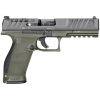
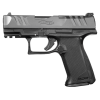
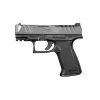
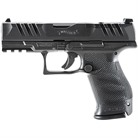
Quick Take
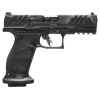
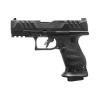
The Walther PDP Full Size 4.5″ is one of the best full-size striker-fired 9mm pistols you can buy right now. That trigger is the headline feature, and it lives up to the hype. I measured it at a consistent 4.5 to 5 pounds with a clean break, a short tactile reset, and almost zero take-up. Out of the box, it feels better than triggers most people pay $150+ to install in their Glocks.
Walther’s optics mounting system is genuinely well thought out. The plate isn’t in the box. You request the one for your optic from Walther, and there are plates for most major red dots, from the Trijicon RMR to the Holosun 507C to the Leupold DeltaPoint Pro. No gunsmithing. Just bolt it on and go.
The 18+1 capacity puts it right in the fight with the Glock 17 and Sig P320, and the ergonomics are arguably better than both. The Performance Duty Texture on the grip is aggressive enough for a solid purchase, even with wet or gloved hands. Some shooters find it too aggressive for extended range sessions, and I’d agree it can be a bit much during high-volume days.
Best For: Shooters who prioritize trigger quality in a duty-size platform. Competition shooters looking for a great base gun. Anyone who wants a factory optics-ready pistol that actually does the optics part right.
Walther PDP Firearm Scorecard
Why Walther Built the PDP This Way
Walther had a problem. The PPQ was one of the best-kept secrets in the handgun world, adored by anyone who shot it, but it never gained the traction it deserved in a market dominated by Glock. The PDP was Walther’s answer: take everything the PPQ did right, modernize it, and market it properly this time.
The biggest strategic move was the optics-ready slide. When the PDP launched in 2021, the industry was in the middle of a massive shift toward pistol-mounted red dots. Walther didn’t just cut a slide and call it a day. They developed a multi-plate system that accommodates virtually every major red dot sight on the market. That was a smart play.
The “Performance Duty” branding signals Walther’s intent. This gun targets the duty, home defense, and competition markets all at once. With an 18+1 capacity, a trigger that competes with aftermarket upgrades, and an optics system that actually works, Walther positioned the PDP as the thinking shooter’s alternative to the Glock 19 and Sig P320.
Made in Fort Smith, Arkansas, the PDP also gives Walther a “Made in America” story that matters to a lot of buyers. The German engineering heritage combined with American manufacturing is a compelling pitch, and the quality of the finished product backs it up.
Walther PDP Models Explained: Every Variant
The gun I tested above is one configuration out of a big family. Walther’s site lists 42 separate PDP product pages right now, and the names get confusing fast: Standard, Pro-E, Pro SD, Pro-X PMM, Professional ACRO, Match, Steel Frame, F-Series, Two Tone. Underneath, it’s simpler than it looks. There are three grip frames (Full Size, Compact and F-Series), barrels from 3.5 to 5.1 inches, and two trigger families. Every one is a 9mm, and every one either takes a red dot plate or ships with the dot already on it. Here’s the whole current lineup in one table, then what each version is for.
| Model | Barrel | Overall length | Weight | Capacity | Optics | MSRP | Representative SKU |
|---|---|---|---|---|---|---|---|
| PDP Full Size 4 in | 4 in | 7.5 in | 24.4 oz | 18+1 | Plate cut | $699 | 2851237 |
| PDP Full Size 4.5 in | 4.5 in | 8.0 in | 24.0 oz | 18+1 | Plate cut | $699 | 2842475 |
| PDP Full Size 5 in | 5 in | 8.5 in | 26.9 oz | 18+1 | Plate cut | $699 | 2844001 |
| PDP Compact 4 in | 4 in | 7.5 in | 24.4 oz | 15+1 | Plate cut | $699 | 2851229 |
| PDP Compact 5 in | 5 in | 8.5 in | 26.1 oz | 15+1 | Plate cut | $699 | 2844222 |
| PDP F-Series 3.5 in | 3.5 in | 6.5 in | 23.3 oz | 15+1 | Plate cut | $699 | 2849313 |
| PDP F-Series 4 in | 4 in | 7.25 in | 24.0 oz | 15+1 | Plate cut | $699 | 2842734 |
| PDP Pro-E Full Size 4.5 in | 4.5 in | 8.0 in | 24.0 oz | 20+1 | Plate cut | $899 | 2884950 |
| PDP Pro SD Full Size 5.1 in | 5.1 in | 8.5 in | 27.0 oz | 18+1 | Plate cut | $999 | 2842521 |
| PDP Pro-X PMM Full Size 4.6 in | 4.6 in | 8.5 in | 27.0 oz | 20+1 | Plate cut | $1,149 | 4796036 |
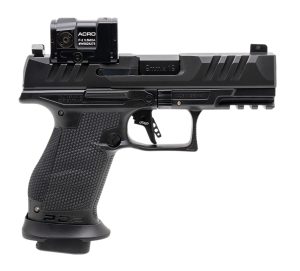
| PDP Professional ACRO Full Size 4.5 in | 4.5 in | 8.0 in | 25.0 oz | 20+1 | Aimpoint ACRO included | $1,749 | 2881225PRO |
| PDP Match Full Size 5 in | 5 in | 8.5 in | 27.0 oz | 18+1 | Plate cut | $1,249 | 2872595 |
| PDP Steel Frame Full Size 4.5 in | 4.5 in | 8.0 in | 40.0 oz | 18+1 | Plate cut | $1,899 | 2872285 |
| PDP Steel Frame Pro Full Size 4.5 in | 4.5 in | 8.0 in | 40.0 oz | 20+1 | Plate cut | $2,199 | 2897008 |
| PDP Steel Frame Match Full Size 5 in | 5 in | 8.3 in | 41.0 oz | 20+1 | Plate cut | $2,399 | 2872200 |
Specs and MSRP are Walther’s listed figures for the SKU in the last column. Capacity is the standard magazine, and Walther lists a 10-round version of every model. MSRP is list price, so for what these sell for today, use the live price cards below.
PDP Full Size (4, 4.5 and 5 Inch)
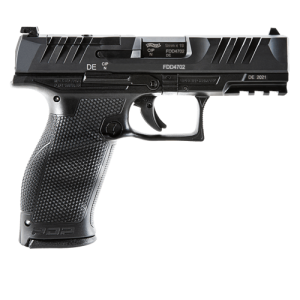
This is the Standard line, and the 4.5-inch is the gun in this review. All three share the full-size grip with its 18-round magazine, the Performance Duty Trigger and a plate-cut slide. Only the slide and barrel change. The 4.5-inch is the one I’d call the default, and it’s what I ran for 1,500 rounds without a malfunction. The 4-inch puts a shorter slide on the big grip. It’s 7.5 inches overall, which makes it handier in a car or a nightstand safe. The 5-inch stretches to 8.5 inches overall and gives you the longest sight radius if you shoot irons. Walther ships two magazines with each. Pick on slide length alone, because nothing else differs.

PDP Compact (4 and 5 Inch)
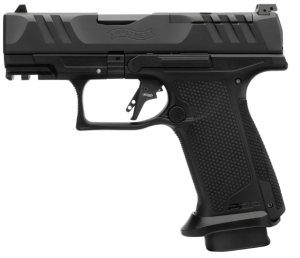
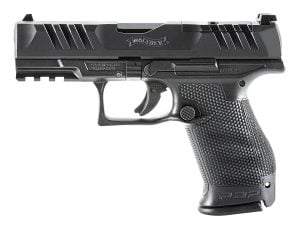
Compact describes the grip, not the slide. The frame is shorter and takes a 15-round magazine, and Walther pairs it with either a 4-inch or a 5-inch barrel. The Compact 4-inch is the carry gun of the family at 7.5 inches overall and 24.4 ounces, with the same trigger and optics cut as the big gun. Walther lists the Full Size 4-inch at the same length and weight, so what you give up is three rounds, and what you gain is less grip to hide. The Compact 5-inch is the odd one: a long slide on a short grip, 8.5 inches overall and 26.1 ounces. It suits shooters who can hide a grip easily but want the longer barrel. If concealment is the whole job, check our best compact 9mm pistols list too.
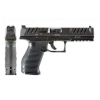
PDP F-Series (3.5 and 4 Inch)
The F-Series is its own frame, built for smaller hands. Walther’s claims are specific: a reduced grip circumference, a shorter trigger reach, and 20 percent less force to rack the slide thanks to a two-piece striker. Standard trim comes with a 3.5-inch or 4-inch barrel and a 15-round magazine at $699. Above that sit the F-Series Pro-E ($899), Pro ($999), Pro-X PMM with a compensator ($1,149) and Professional ACRO ($1,749), all with the Dynamic Performance Trigger F-Series and 18-round magazines. Don’t write it off as a niche gun. Anyone who finds the full-size grip a handful should try one, and it’s on our best guns for small hands list for that reason. I put 600 rounds through two of them in our Walther PDP-F review.
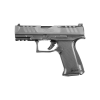
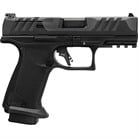
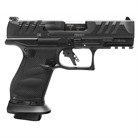
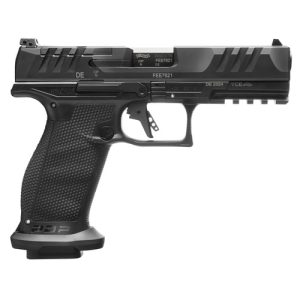
PDP Pro-E
The Pro-E is the cheapest way into the Dynamic Performance Trigger. Walther calls this version the DPT-E, and it swaps the curved Standard shoe for a flat-faced polymer one. You also get a polymer magwell, magazine extensions and three magazines instead of two. The Full Size 4.5-inch holds 20 rounds, the Compact 4-inch holds 18, and both list at $899. For a range or duty gun it’s the upgrade I’d pay for before any other, because a better trigger and a magwell are the first two things people add to a Standard PDP anyway. Buying them fitted at the factory saves the parts hunt.
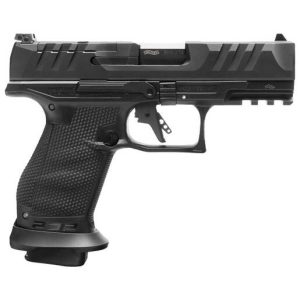
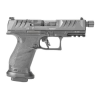
PDP Pro SD
SD is the suppressor-ready one. The barrel is threaded 1/2×28, and it measures 5.1 inches on the Full Size and 4.6 inches on the Compact. Both carry the Dynamic Performance Trigger, hold 18 rounds, ship with three magazines and list at $999, in black or with a gray or FDE frame. One thing to know before you buy spares: the Pro SD has a magwell, and Walther says its magazines need aluminum base pads to seat in it. Polymer-base magazines won’t lock in. If you’re never going to hang a suppressor or a compensator on the muzzle, the Pro-E at $899 gets you most of the same gun for less.
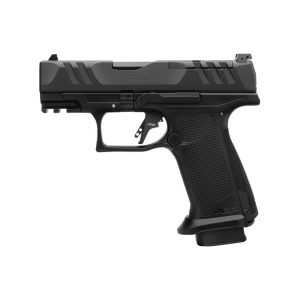
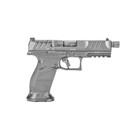
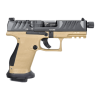
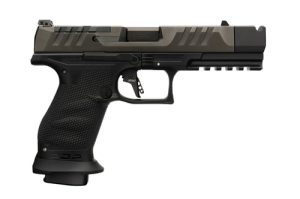
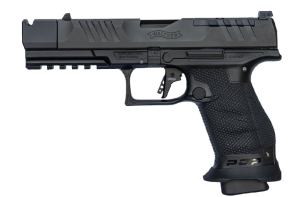
PDP Pro-X PMM
This is the factory compensated PDP, built with Parker Mountain Machine. Both versions use a 4.6-inch threaded barrel with a PMM compensator on the end, the Dynamic Performance Trigger, an aluminum magwell and aluminum base pads. The Full Size holds 20 rounds, the Compact 18, and each lists at $1,149. Walther sells the same recipe on the small frame as the F-Series Pro-X PMM with a 3.5-inch barrel. A comp on a 9mm duty gun is a luxury, not a need. But if you shoot fast and want the dot to stay in the window between shots, this saves you buying a threaded barrel and a comp separately, then finding a holster that fits the result.
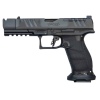
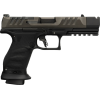
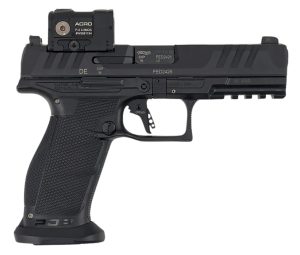
PDP Professional ACRO
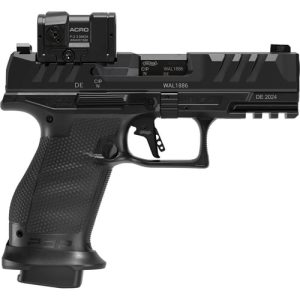
The Professional ACRO skips plates entirely. Walther mills the slide directly for the Aimpoint ACRO and includes the optic, along with tritium night sights, the Dynamic Performance Trigger, an aluminum magwell and three magazines. It comes as a Full Size 4.5-inch with 20 rounds or a Compact 4-inch with 18, and there’s an F-Series version too. All three list at $1,749. That sounds steep until you price an ACRO by itself. Buy this one if you want a duty setup with the dot already on it and you don’t plan to swap optics, because a direct-milled slide commits you to that footprint. Our best red dot sights for pistols guide covers the alternatives.
PDP Match
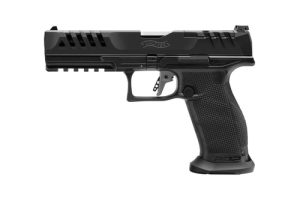
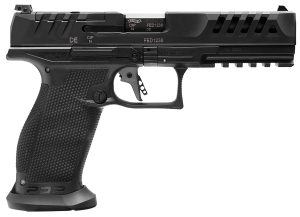
The Match is the polymer competition gun: a 5-inch barrel, the Dynamic Performance Trigger, an aluminum magwell and cuts machined into the slide. Walther lists it at 8.5 inches overall and 27 ounces, and it ships with two 18-round magazines and one 20-rounder. MSRP is $1,249. As with the Pro SD, the magwell needs aluminum base pads, so standard polymer-base magazines are out. This is where I’d point anyone starting USPSA or IDPA who wants one gun and a dot instead of a project. Our best competition pistols roundup shows what it’s up against.
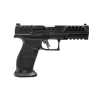
PDP Steel Frame and Steel Frame Pro
The steel guns keep the PDP’s trigger and controls but trade polymer for a machined steel frame with wrap-around grips. The point is weight. Walther lists the Steel Frame Full Size 4.5-inch at 40 ounces, far heavier than any polymer PDP, and that mass soaks up recoil. The base Steel Frame keeps the Performance Duty Trigger and lists at $1,899 as a Full Size with 18 rounds or a Compact 4-inch with 15. The Steel Frame Pro adds the Dynamic Performance Trigger, an aluminum magwell and aluminum base pads for $2,199, with 20 rounds in the Full Size and 18 in the Compact. It’s a lovely thing to shoot and a brick to carry. Buy it for the range and for matches, not for a belt.
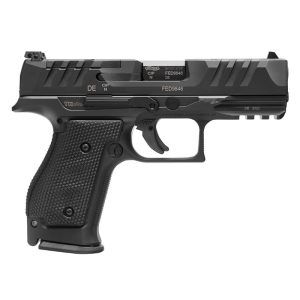
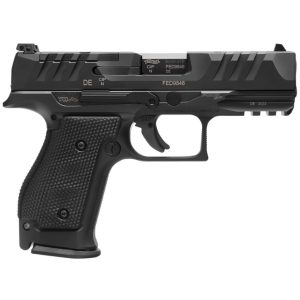
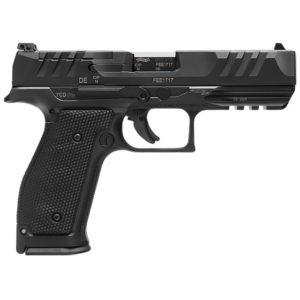
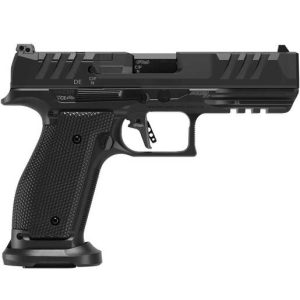
PDP Steel Frame Match
The top of the line. It’s the steel frame with a 5-inch barrel, the Dynamic Performance Trigger and three 20-round magazines, at 41 ounces and $2,399. Walther pitches it as a race gun and a duty gun in one, and the weight is the whole story, because that much steel barely moves in recoil. At this money you’re cross-shopping dedicated competition pistols, so be honest about whether you’ll shoot enough matches to earn it. For most people the polymer Match does the same job at about half the price, and the difference buys a lot of ammunition and entry fees.


PDP Two Tone and California Models
Two more labels turn up at dealers. Two Tone is a Standard PDP with a gray, FDE or OD green frame under a black slide, sold as a Compact 4-inch, a Full Size 4.5-inch and a Full Size 5-inch. Walther charges nothing extra for the color, so buy on looks. The California models are 10-round versions built to be sold in that state: a Full Size 4.5-inch and a Compact 4-inch at $799 each, with a loaded chamber indicator on top of the slide and a magazine disconnect. Walther flags two limits on them. The Dynamic Performance Trigger is not compatible, and optics such as the Trijicon SRO may not clear the indicator.
Which Walther PDP Should You Buy?
Most people should buy the Full Size 4.5-inch or the Compact 4-inch and stop there. If it lives in a nightstand or a duty holster, get the Full Size. If you’re going to carry it, get the Compact, or the F-Series if the grip feels big in your hand.
Step up to a Pro-E when you already know you want the lighter, shorter trigger and a magwell. Go Pro SD only for a suppressor, and Pro-X PMM only if you want the compensator fitted at the factory. The Professional ACRO makes sense for one buyer: someone who wants an Aimpoint ACRO and never plans to change it. For matches, the polymer Match is the smart money and the Steel Frame Match is the indulgence.
Whichever you choose, the grip texture and the trigger feel I covered above carry across the line, and that’s the reason to buy a PDP at all. Still deciding between brands? Our Walther PDP vs Glock 19 comparison and our best Walther pistols list cover that.
PDP Magazine and Optic Plate Compatibility
Magazines follow the frame, not the slide. Going by Walther’s own parts listings:
- Full Size frame: the 18-round magazine, or the 20-round extended magazine that ships with several Pro models. Walther says the Full Size magazine is not compatible with the Compact or F-Series.
- Compact and F-Series frames: the 15-round magazine, which is the same one the PPQ M2 uses. Walther’s 18-round aluminum magazine with an extended base pad fits both frames too.
- Magwell models such as the Pro SD and Match: magazines need aluminum base pads. Polymer base pads will not seat.
Slides swap as well. Walther says any slide fits any frame across its two frame sizes, which is how the factory gets so many combinations out of so few parts.
Optic plates are where buyers get caught. There are two PDP optic cuts, which Walther calls PDP 1.0 and PDP 2.0. It sells different plates for each and tells buyers to verify the cut before ordering. The plate is not in the box: Walther’s spec sheet lists it as not included, and you request one through its Optic Plate Request form, which is for US customers only, quotes 4 to 6 weeks for delivery, cannot ship direct to California and runs as a promotion that expires on 12/31/2026. For the 2.0 cut, Walther lists plates for the Trijicon RMR and SRO (the same plate takes the Holosun 407C, 507C and 508T), the Leupold DeltaPoint Pro and Vortex Defender, the Docter and Vortex Viper, the Holosun 509T and the Aimpoint ACRO. Walther does not carry a plate for the Holosun 507K, 407K or EPS, so those need a third-party plate.
Walther PDP Optics Fitment by Model
Every current PDP is set up for a red dot, but only one line arrives with glass on it. Going by Walther’s spec sheets, the lines split like this.
| PDP line | Optic mounting | Optic in the box | What you add |
|---|---|---|---|
| Standard Full Size, Compact and Two Tone | Plate cut | None | Optic and matching plate |
| F-Series Standard | Plate cut | None | Optic and matching plate |
| Pro-E, Pro SD, Pro-X PMM and F-Series Pro | Plate cut | None | Optic and matching plate |
| Match, Steel Frame, Steel Frame Pro and Steel Frame Match | Plate cut | None | Optic and matching plate |
| Professional ACRO (Full Size, Compact and F-Series) | Slide milled for the Aimpoint ACRO | Aimpoint ACRO included | Nothing |
| California models | Plate cut | None | Optic and matching plate (Walther says the Trijicon SRO may not fit) |
Which plate you order depends on the cut, and the two are easy to tell apart. Walther describes the Generation 1 cut as flat bottom and the Generation 2 cut as lug bottom. It doesn’t publish which cut each current model carries, so look at your own slide before you order. The plate list changes with it. Walther’s request form offers RMR and SRO, DeltaPoint Pro, Docter and Vortex Viper plates for both cuts, and adds Holosun 509T and Aimpoint ACRO plates for the 2.0 cut only. If you have a 1.0-cut slide and want an ACRO, Walther’s shop sells a C&H Precision plate for that pairing.
Best Red Dots for the Walther PDP
Four dots cover almost every PDP buyer, and each one has a Walther plate. I’ve kept to full-size pistol optics, because Walther carries no plate for the slim carry dots. The specs are the optic makers’ own figures.
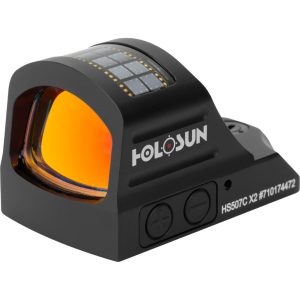
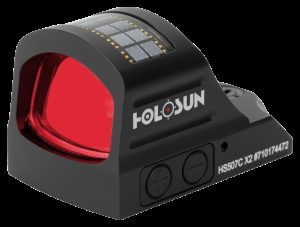
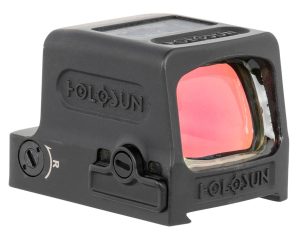
Holosun HS507C X2: Best All-Around and Carry
This is the dot I ran on the review gun for several hundred rounds, and the zero never moved. It uses the RMR footprint, so it sits on Walther’s RMR plate on either cut. Holosun lists a 2 MOA dot with a 32 MOA circle you can switch on, a CR1632 battery in a side tray, 50,000 hours of battery life and a 1.5 ounce body. The side tray matters, because you change the battery without pulling the optic off the slide. On a PDP Compact that gets carried, it’s light enough to forget and tough enough to trust. If you also carry a slimmer pistol, our best red dots for concealed carry guide covers the smaller footprints.
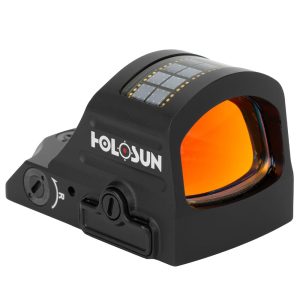

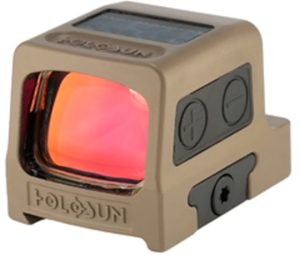
Holosun HE509T X2: Best for Home Defense
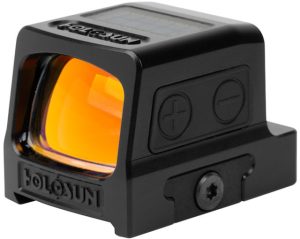
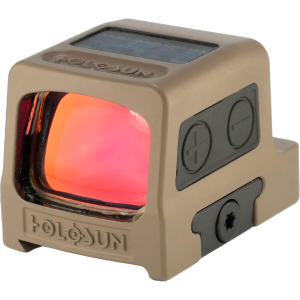
The 509T is an enclosed-emitter dot, so the LED sits inside a sealed housing where dust, lint and moisture can’t get between it and the glass. Holosun builds that housing from titanium and lists it at 1.27 ounces, with the same 2 MOA dot and 32 MOA circle, a side-loading CR1632 and 50,000 hours of battery life, plus a solar panel that backs up the battery. Walther lists a 509T plate for the 2.0 cut only, so confirm your cut first. On a nightstand gun that sits for months between range trips, sealed and self-powered is what I want. It’s also the pistol pick in our best home defense optics roundup.
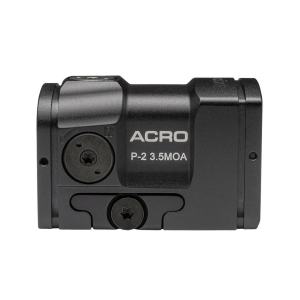
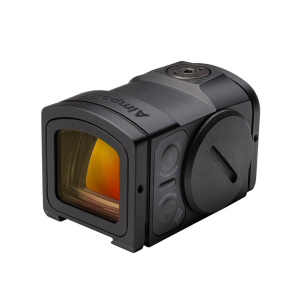
Aimpoint ACRO P-2: Best for Duty
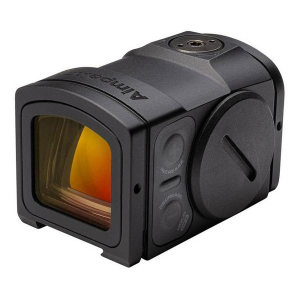
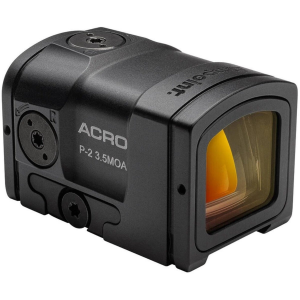
Walther builds the Professional ACRO around this optic, and that tells you where it belongs. The ACRO P-2 is fully enclosed and runs a 3.5 MOA dot. Aimpoint rates it for 50,000 hours on one CR2032, which it puts at over 5 years, and says it’s submersible to 35 meters. At 2.2 ounces it’s the heaviest of these four. You don’t need the Professional model to run one. Walther lists an ACRO plate for the 2.0 cut, and its shop sells a C&H Precision plate for the 1.0 cut. Buy it for a pistol that rides in a duty holster in all weather. Our Aimpoint vs Holosun comparison goes deeper on what the extra money buys.
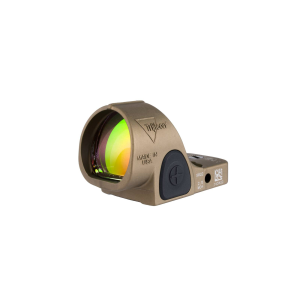
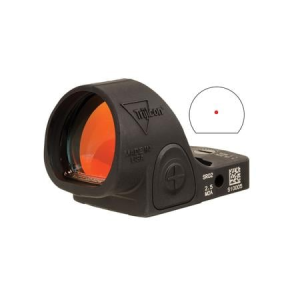
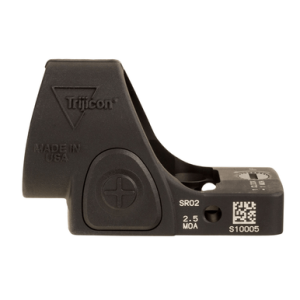
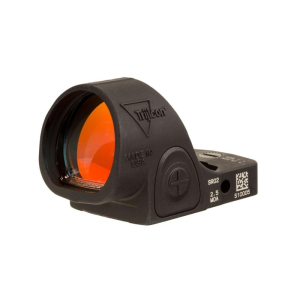
Trijicon SRO: Best for Competition
The SRO is the match dot. Trijicon gave it a wide field of view so the dot is easy to find and track at speed, and it keeps the RMR footprint, so Walther’s RMR and SRO plate fits either cut. The 2.5 MOA version runs on a top-loading CR2032 that Trijicon rates for over 3 years, and it weighs 1.6 ounces. It’s the natural partner for a PDP Match or Steel Frame Match. Two cautions. Walther says the SRO may not fit the California models, and that big window hangs out past the housing more than an RMR’s does, so I’d keep it off a carry gun. It’s the top pick in our best competition red dots roundup.
Walther PDP vs the Competition
The full-size striker-fired 9mm market is crowded. Here’s how the PDP stacks up against four of its closest competitors.
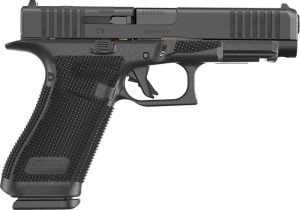
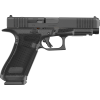
Walther PDP vs Glock 17 Gen 6
The Glock 17 is the benchmark for full-size polymer 9mm pistols, and the Gen 5 MOS version adds optics capability. But the Glock’s trigger can’t touch the PDP’s. It’s mushy, with a longer reset, and most serious Glock shooters end up replacing it. The PDP gives you that upgraded trigger feel straight from the factory.
Where the Glock wins is aftermarket support. You can find holsters, parts, and accessories for a Glock 17 anywhere on earth. The PDP’s aftermarket is growing, but it’s not close yet. The Glock 17 MOS street price runs $580 to $650, which puts it in the same ballpark as the PDP.
Walther PDP vs Sig Sauer P320 M17
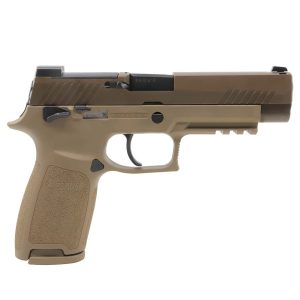
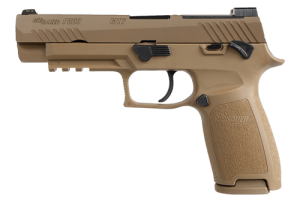
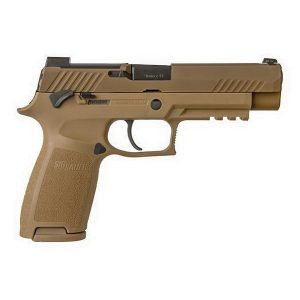
The Sig P320 won the U.S. Military’s Modular Handgun System contract, and the M17 is the civilian version of that duty gun. It has a manual safety (which the PDP lacks), a proven military track record, and excellent modularity. You can swap grip modules, slides, and calibers on the P320 platform.
The PDP’s trigger is better than the P320’s flat trigger, period. Ergonomics are subjective, but I find the PDP’s grip angle more natural. The P320 M17 runs $600 to $700, making it slightly more expensive than the PDP in most cases. If you want military provenance and modularity, go Sig. If you want the best trigger and ergonomics, the PDP wins.
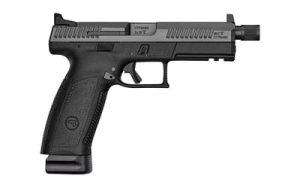
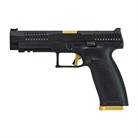
Walther PDP vs CZ P-10F
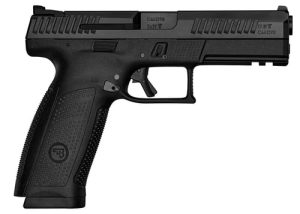
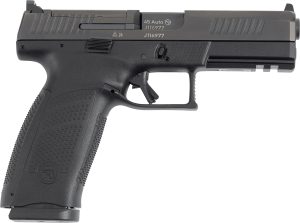
The CZ P-10F is the dark horse in this comparison. It’s a full-size striker-fired 9mm with a very good trigger (not quite PDP-level, but close), excellent ergonomics, and a street price of about $445 to $525. That’s up to about $90 less than the PDP, which makes it a serious value play.
The P-10F’s trigger has a bit more take-up than the PDP, and the optics-ready version (the P-10F OR) costs extra. The PDP comes optics-ready in every configuration. CZ has a passionate aftermarket community, though it still trails both Glock and Sig in accessories. If budget is your primary concern, the CZ P-10F is worth a hard look.
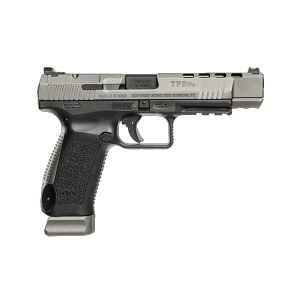
Walther PDP vs Canik TP9SFx
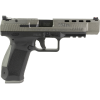
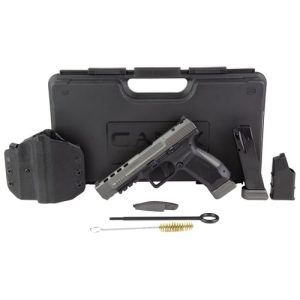
The Canik TP9SFx is the budget competition pistol that punches way above its weight. At $440 to $515, it comes with a match-grade barrel, a Warren Tactical fiber optic front sight, and a trigger that rivals guns costing twice as much. It’s been a USPSA and IDPA favorite for years.
The PDP has better build quality and a more refined trigger feel, but the Canik is hard to argue with on value. The TP9SFx includes more accessories in the box (holster, extra backstraps, cleaning kit, extra magazine) than almost any pistol at any price. If you’re getting into competition on a budget, the Canik is tough to beat. For duty use or if you want a more polished package, the PDP is the better choice.
Technical Deep Dive: What Makes the PDP Special
The Trigger (The Star of the Show)
Let’s start with why most people buy this gun. The PDP’s trigger, which Walther calls the Performance Duty Trigger (PDT), is simply the best factory striker-fired trigger I’ve used. It breaks at a consistent 4.5 to 5 pounds with a crisp, clean wall and an audible, tactile reset that’s short enough for rapid follow-up shots.
The trigger has minimal take-up before you hit the wall, and the break is more like a single-action pull than a typical striker-fired mush. For comparison, a stock Glock trigger breaks at around 5.5 pounds with noticeably more creep and a longer, less defined reset. The PDP trigger makes fast, accurate shooting easier, especially for newer shooters who haven’t developed the discipline to work through a bad trigger.
Slide and SuperTerrain Serrations
The PDP’s slide features Walther’s SuperTerrain serrations, which look aggressive and work even better than they look. They run across the front and rear of the slide, providing a positive grip surface for press checks and manipulations. Even with sweaty or oily hands, I never had trouble getting purchase on the slide.
The Tenifer finish on the steel slide is the same corrosion-resistant treatment Walther has used for years. It’s durable, resists holster wear well, and has held up nicely over my testing period. The matte black finish is understated and professional.
Optics Mounting System
Walther’s optics system on the PDP deserves its own section because they genuinely got this right. The slide comes milled with a universal mounting interface, and Walther supplies the adapter plate separately. The spec sheet lists the plate as not included, so you request the one you need through Walther’s Optic Plate Request form, which is for US customers only and quotes 4 to 6 weeks for delivery. Walther’s plates cover the Trijicon RMR and SRO, Holosun 407C/507C/508T and 509T, Leupold DeltaPoint Pro, Vortex Defender, Docter, Vortex Viper and Aimpoint ACRO.
The plates sit low in the slide, which gives you a good co-witness with the factory sights and keeps the red dot as close to the bore axis as possible. I ran a Holosun 507C on mine for several hundred rounds and the zero held perfectly. No loosening screws, no shifting point of impact. If you’re looking for the best pistol red dot sights to pair with this gun, you have plenty of solid options.
Grip and Backstraps
The Performance Duty Texture on the PDP’s grip is aggressive. It’s a raised, almost sandpaper-like texture that covers the front strap, back strap, and side panels. In a duty or defensive context, this is exactly what you want. The gun doesn’t move in your hands during recoil, even without gloves.
For long range sessions, that same texture can chew up your hands. I’ve done 300-round days with the PDP and my palms were raw by the end. That said, Walther includes three interchangeable backstraps (small, medium, and large) that let you customize the grip circumference. The medium backstrap worked best for my hands, giving a natural point of aim every time I brought the gun up.
Barrel
The 4.5″ barrel is a cold hammer-forged unit with Walther’s traditional polygonal rifling. This design promotes slightly higher velocities compared to conventional button rifling and contributes to the PDP’s solid accuracy. The barrel is well-crowned and shows consistent concentricity, which helps with mechanical accuracy.
At the Range
I’ve put more than 1,500 rounds through the PDP across multiple range trips, including a mix of Federal American Eagle 124gr, Blazer Brass 115gr, Speer Gold Dot 124gr +P, and Federal HST 147gr. The gun ate everything without a single malfunction. No failures to feed, no failures to eject, no light primer strikes. Nothing.
Recoil is manageable and flat. The 24.0-ounce weight (unloaded) combined with the grip angle and bore axis height makes for quick follow-up shots. Shooting the PDP next to a Glock 17, I consistently noticed less muzzle flip with the Walther. The trigger definitely contributes to accuracy on the clock. During timed drills, my split times with the PDP were consistently faster than with my Glock 17.
At 25 yards off a bench, the PDP grouped Federal HST 147gr into 2.5 inches consistently. Blazer Brass 115gr opened up to about 3.5 inches, which is still solid for ball ammo. The cold hammer-forged barrel is doing its job. Off-hand at 15 yards, I could keep rapid strings inside a 4-inch circle, which is about as good as I shoot with any pistol.
One thing I noticed is that the PDP is a loud gun. The short barrel with the polygonal rifling seems to produce a sharper report than some competitors. It’s not a dealbreaker, but it’s noticeable at an indoor range. Good ear protection is a must, obviously.
Performance Testing Results
| Ammunition | Velocity (fps) | 25yd Group (in) | Malfunctions |
|---|---|---|---|
| Federal American Eagle 124gr FMJ | 1,128 | 2.8″ | 0 |
| Blazer Brass 115gr FMJ | 1,168 | 3.5″ | 0 |
| Speer Gold Dot 124gr +P JHP | 1,198 | 2.6″ | 0 |
| Federal HST 147gr JHP | 988 | 2.5″ | 0 |
| Winchester White Box 115gr FMJ | 1,152 | 3.2″ | 0 |
Velocity measured with a Caldwell Chronograph at 10 feet from muzzle. Groups measured from 5-shot strings at 25 yards, benchrested. Total rounds fired during testing: 1,500+.
Known Issues
No gun is perfect, and the PDP has a few documented issues worth knowing about before you buy.
Trigger reset spring: Some early production PDP models experienced a trigger reset spring issue where the trigger would fail to reset properly after firing. Walther addressed this in later production runs and will replace the spring for free if your gun is affected. If you’re buying new in 2026, this is almost certainly a non-issue.
Early production teething problems: The first batch of PDPs that shipped in 2021 had some reports of light primer strikes and occasional feeding issues with certain hollow point profiles. Walther resolved these quickly, and current production guns run like clocks. My test gun was manufactured in late 2024 and has been flawless.
Limited aftermarket: This is probably the PDP’s biggest practical weakness. Compared to the Glock ecosystem, finding holsters, night sights, extended controls, and other accessories for the PDP can be a challenge. The selection is growing year over year, but if you need a specific Kydex holster with a specific light-bearing configuration, your options are still limited compared to Glock or Sig.
Stock sights: The factory 3-dot polymer sights are the weakest link on this gun. On a pistol that costs $520 and up, shipping with plastic sights feels like a cost-cutting move. Budget $50 to $80 for a set of Ameriglo or Trijicon night sights and consider it part of the purchase price.
Walther PDP Parts, Accessories, and Upgrades
| Upgrade | Recommendation | Price Range |
|---|---|---|
| Night Sights | Ameriglo Bold or Trijicon HD XR | $50-$120 |
| Red Dot Sight | Holosun 507C X2 or Trijicon RMR Type 2 | $250-$450 |
| Weapon Light | Streamlight TLR-7A or SureFire X300U | $125-$300 |
| Holster (OWB) | Safariland 6390RDS or T.Rex Arms Ragnarok | $45-$180 |
| Holster (IWB) | Tier 1 Concealed Axis Elite or LAS Concealment Ronin | $80-$160 |
| Extended Mag Release | Tyrant Designs CNC Extended Mag Release | $30-$50 |
| Extra Magazines | Walther OEM 18-round magazines | $30-$40 |
| Threaded Barrel | Walther factory threaded barrel | $150-$200 |
The first upgrade I’d recommend is a set of night sights. The factory polymer sights are the PDP’s one real weak point, and tritium night sights or fiber optic sights transform the shooting experience. If you plan to mount a red dot, you can skip standalone sights and go with suppressor-height co-witness sights instead.
For accessories, check Brownells and Palmetto State Armory for the best prices on Walther PDP magazines, holsters, and parts.
The Verdict
Final Score: 8.5/10
The Walther PDP Full Size 4.5″ is a genuinely excellent pistol that does several things better than any of its competitors. That trigger is the real deal. The optics mounting system is one of the best in the industry. The ergonomics are outstanding, and the 18+1 capacity gives you plenty of rounds on tap.
It’s not perfect. The stock polymer sights need to go immediately, the aftermarket is still catching up to Glock and Sig, and the grip texture is too aggressive for some. But those are fixable problems. The things the PDP does well, like the trigger, the optics system, and the overall shooting experience, are baked into the design.
If you’re shopping for a full-size 9mm pistol and trigger quality matters to you, the Walther PDP should be at the top of your list. It’s also a fantastic choice if you want a factory optics-ready gun without paying for a separate milling job. For competition shooters on a budget, the 5″ model is worth considering too.
Best For: Home defense, range use, USPSA/IDPA competition, duty carry. Shooters who want the best possible trigger in a factory striker-fired pistol.
Skip It If: You need maximum aftermarket support (buy a Glock), you want a manual safety option, or you prefer a less aggressive grip texture for high-volume range days.
Also Available: Walther PDP Compact 4″ (15+1), PDP F-Series 3.5″ and 4″ (smaller grip for smaller hands), PDP 5″ (competition-oriented model).
FAQ: Walther PDP
Is the Walther PDP reliable?
Yes. After early production teething issues in 2021, current PDP models are extremely reliable. I put 1,500+ rounds through mine without a single malfunction, including a mix of FMJ and hollow point ammunition. Walther addressed the early trigger reset spring issue and the guns shipping today run clean.
Is the Walther PDP better than a Glock 17?
In terms of trigger quality, ergonomics, and factory optics mounting, yes. The PDP beats the Glock 17 in those areas. The Glock 17 wins on aftermarket support, holster availability, and proven track record. Both are excellent pistols. Your priorities will determine which is “better” for you.
What red dot sights fit the Walther PDP?
Walther makes PDP adapter plates for the Trijicon RMR and SRO, Holosun 407C/507C/508T and 509T, Leupold DeltaPoint Pro, Vortex Defender, Docter, Vortex Viper and Aimpoint ACRO. The plate is not in the box, so request the one for your red dot through Walther’s Optic Plate Request form, and check which optic cut your slide has first. On the PDP 1.0 cut, Walther says the Vortex Venom will not work without modification, and it does not carry a plate for the Holosun 507K, 407K or EPS, so those need a third-party plate. For our top picks, see our best pistol red dot sights guide.
Can you conceal carry a Walther PDP Full Size?
You can, but it’s a full-size gun at 8.0″ overall length and 5.7″ in height. It’s doable with a quality IWB holster and the right wardrobe, but it’s not ideal for everyday concealed carry. If concealment is your priority, look at the PDP Compact 4″ or the F-Series instead. Check out our best concealed carry handguns list for more options.
Is the Walther PDP made in the USA?
Yes. The Walther PDP is manufactured at Walther’s facility in Fort Smith, Arkansas. While Walther is a German company with engineering roots in Ulm, Germany, the PDP production line is entirely American.
What is the difference between the Walther PDP and PPQ?
The PDP replaced the PPQ and improved on it in several key areas. The PDP has a factory optics-ready slide (the PPQ did not), an updated trigger with a shorter reset, more aggressive grip texture, redesigned SuperTerrain slide serrations, and interchangeable backstraps. The PDP is the PPQ evolved, not just renamed.
What is the best ammo for a Walther PDP?
For range use, Federal American Eagle 124gr and Blazer Brass 115gr both run great and are affordable. For self-defense, Federal HST 147gr and Speer Gold Dot 124gr +P are proven performers that feed reliably in the PDP. See our best 9mm ammo for self defense guide for detailed recommendations.
Frequently Asked Questions
Is the Walther PDP a good gun?
The Walther PDP is one of the best striker-fired pistols available. It has arguably the best factory trigger in its class, an excellent ergonomic grip, and a factory optics-ready slide. In our 1,500-round test, it ran flawlessly. The PDP competes directly with the Glock 19, Sig P320, and CZ P-10 C, and many shooters prefer the PDP trigger over all of them.
What makes the Walther PDP trigger special?
The Walther PDP uses Walther Performance Duty Trigger (PDT), which features a flat face, a short take-up, a clean and crisp break, and a short tactile reset. The pull weight runs approximately 4.5 to 5 pounds. Out of the box, it is widely considered the best factory striker-fired trigger on the market, surpassing Glock, Sig, and most competitors without aftermarket modifications.
What red dot fits the Walther PDP?
Walther makes optic adapter plates for the PDP to fit most popular red dots including the Trijicon RMR, Holosun 507C, Leupold DeltaPoint Pro, and Aimpoint ACRO. The full-size model uses standard-footprint optics, while the compact and F-Series may use different plates. The plate is requested from Walther, not packed in the box, so confirm the plate for your preferred optic and your slide's optic cut before you order.
What is the difference between the Walther PDP and PPQ?
The PDP replaced the PPQ in Walther lineup. The PDP features a factory optics-ready slide, an updated grip texture with a more aggressive pattern, a redesigned slide with improved serrations, and the refined Performance Duty Trigger. The PPQ trigger was already excellent, and the PDP trigger is a further evolution. If you liked the PPQ, the PDP is a straight upgrade in every area.
How much does a Walther PDP cost?
Walther lists the standard PDP at $699, and that MSRP is the same for the Compact, Full Size and F-Series. Street prices are consistently below MSRP. Check our live pricing for the best current deals.
What is special about the Walther PDP trigger?
Walther's Performance Duty Trigger is the headline feature, with a short, clean pull and a fast, tactile reset that rivals guns costing far more. It is widely considered one of the best factory striker triggers available, and it is a big reason shooters choose the PDP over rivals.
Is the Walther PDP good for concealed carry?
The compact PDP and PDP-F models conceal well for daily carry, while the full-size versions lean toward duty and home defense. All share the same excellent trigger and grip, so you get top-tier shootability whichever size you pick. For concealment, the compact with a shorter slide is the one to choose.
Is the Walther PDP better than a Glock?
It depends on what you value. The PDP generally beats a stock Glock on trigger feel and grip ergonomics, which is its biggest draw, while Glock wins on aftermarket support, track record and sheer ubiquity. Both are reliable. Shooters who prize a great out-of-the-box trigger often prefer the PDP; Glock loyalists value the ecosystem.
How many Walther PDP models are there?
Walther's site lists 42 PDP product pages, but they come down to eleven lines: the Standard Full Size and Compact, the F-Series, the Pro-E, Pro SD, Pro-X PMM and Professional ACRO, the polymer Match, and the Steel Frame, Steel Frame Pro and Steel Frame Match. The rest are barrel lengths, frame colors, California models and 10-round versions of those.
What is the difference between the Walther PDP Full Size and Compact?
The grip. The Full Size frame takes an 18-round magazine and the Compact frame takes a 15-round magazine. Slide length is separate: Walther sells the Full Size with 4, 4.5 and 5 inch barrels and the Compact with 4 and 5 inch barrels, and both use the same Performance Duty Trigger and optics cut.
Are Walther PDP magazines interchangeable between models?
Not across the whole family. Walther says the 18-round Full Size magazine is not compatible with the Compact or F-Series. The Compact and F-Series share the 15-round magazine, which is also the PPQ M2 magazine. Models with a magwell, such as the Pro SD and Match, need magazines with aluminum base pads.
What is the difference between the PDP Pro-E, Pro SD and Pro-X PMM?
All three add a Dynamic Performance Trigger and a magwell to the Standard PDP. The Pro-E uses the polymer DPT-E trigger and lists at $899. The Pro SD has a threaded barrel for a suppressor and lists at $999. The Pro-X PMM adds a Parker Mountain Machine compensator on a 4.6 inch threaded barrel and lists at $1,149.
3,976+ Gun & Ammo Deals
Updated daily from 200+ top retailers. Filter by category, caliber, action type, and price.
Related Guides