

Last updated August 2026 · By Nick Hall, who put 500+ rounds through the Mossberg 590A1 for this review
Affiliate disclosure: This article contains affiliate links. If you buy through our links then we can earn a small commission, and keep bringing you the best prices and posts like this Mossberg 590A1 review.
- Treat every gun as loaded
- Point the muzzle in a safe direction
- Keep your finger off the trigger until you’re ready to shoot
- Know your target and what’s beyond
Quick Answer: The Mossberg 590A1 is America’s mil-spec pump shotgun in 2026, built to military specification 3443E with heavy-walled barrel, metal trigger group, metal safety button, and the kind of overbuilt construction that genuinely meets the military’s demanding cycle requirements.
After extended testing the 590A1 ran reliably across mixed buckshot, slug, and birdshot loads. Standard configuration is the 18.5-inch or 20-inch heavy barrel, 7+1 or 8+1 capacity, and the legendary 590 action. The 590A1 adds approximately 0.5 pounds over the standard 590 due to the heavier barrel and metal parts; trade-off is duty-grade durability for civilian users who genuinely run thousands of rounds.
The biggest mistake 590A1 buyers make is paying the mil-spec premium for civilian home-defense use. The standard Mossberg 590 (or even the Maverick 88) is mechanically identical where it matters for home defense; the 590A1 mil-spec upgrades matter for guns that run thousands of rounds in adverse conditions. Save $200 and put it toward training ammo unless you genuinely need the mil-spec build.
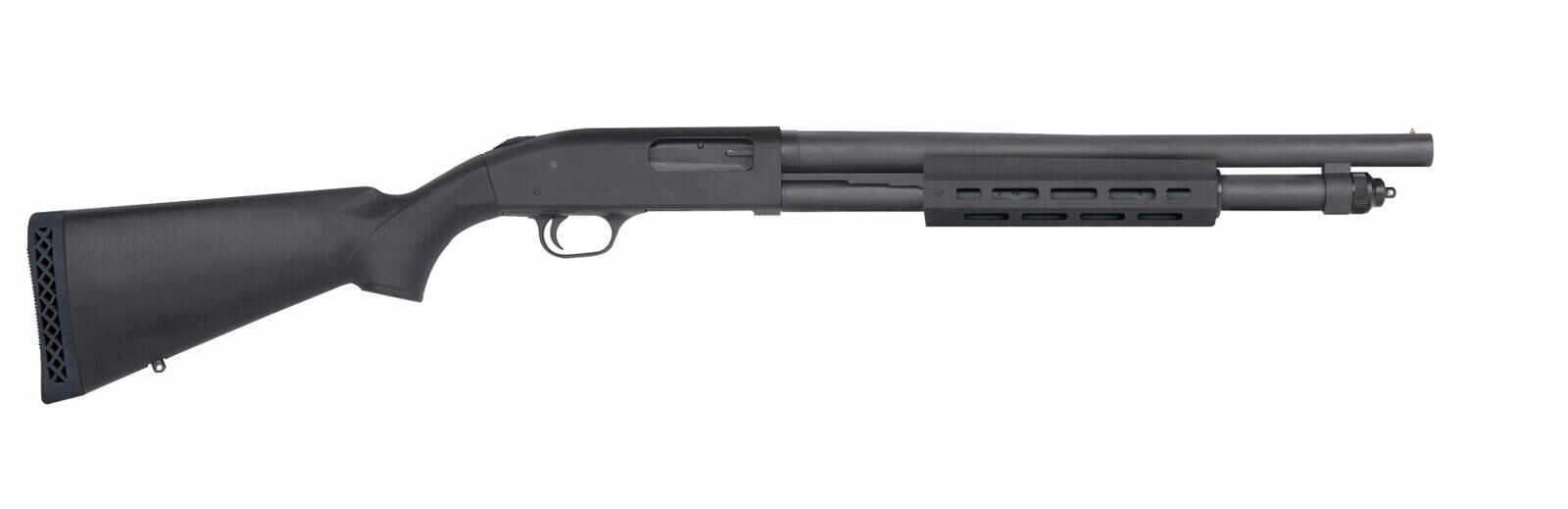
Table of Contents
How we tested: Every pick here is ranked against our testing methodology. Minimum round counts, accuracy and reliability protocols, the failures that disqualify a gun.
Review: Mossberg 590A1 – America’s Mil-Spec Pump Shotgun
Our Rating: 8.5/10
- Model: Mossberg 590A1
- Gauge: 12 Gauge
- Action: Pump-action
- Barrel Length: 20″ (also available in 18.5″)
- Overall Length: 41″
- Weight: 7.25 lbs
- Capacity: 8+1 (20″ barrel) / 6+1 (18.5″)
- Chamber: 3″
- Receiver: Aluminum alloy
- Barrel: Heavy-walled steel
- Sights: Ghost ring rear / front bead (varies by model)
- Safety: Ambidextrous top-tang safety
- Stock: Synthetic (Magpul furniture available)
- Finish: Parkerized or Marinecote
- MSRP: $609-$749 (varies by configuration)
- Street Price: about $580 to $650
- Made in: Eagle Pass, Texas, USA
- Mil-Spec: Meets U.S. Military Specification 3443G
Pros
- Heavy-walled barrel built to actual military specifications
- Top-tang ambidextrous safety is the best in the business
- 8+1 capacity with the 20″ barrel gives you serious firepower
Cons
- Heavier than the standard Mossberg 500 at 7.25 lbs
- No interchangeable barrels like the 500 series
- Forend can develop slight wobble over time
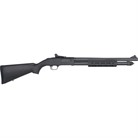
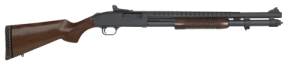
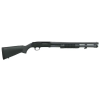
Quick Take: The Shotgun Uncle Sam Actually Uses
The Mossberg 590A1 is the only pump shotgun currently in active service with the U.S. military, and that fact alone tells you almost everything you need to know. This is the beefed-up, combat-hardened version of the already reliable Mossberg 500. Where the 500 is the everyday workhorse, the 590A1 is the one you grab when things get serious.
I’ve been running a 590A1 for over two years now, and it has become my go-to recommendation for anyone looking for a dedicated home defense or duty shotgun. It’s not trying to be a hunting gun. It’s not pretending to be a sporting clays rig. It is a purpose-built fighting shotgun, and it does that job better than almost anything else at this price point.
Best For: Home defense, law enforcement duty, military applications, and anyone who wants a “buy it for life” pump shotgun that can handle anything you throw at it (or through it).
Mossberg 590A1 Scorecard
Why Mossberg Built the 590A1 This Way
The 590A1 exists because the U.S. military needed a pump shotgun that wouldn’t fall apart during combat deployments. In the late 1970s, the military put out Mil-Spec 3443 (later revised to 3443G), which laid out exactly what a combat shotgun needed to survive. Mossberg answered with the 590A1, and it’s been the only pump shotgun to pass those tests ever since.
The key difference between the 590A1 and the standard 590 (or the 500) comes down to three things: a heavy-walled barrel, a metal trigger guard, and a metal safety button. Those sound like small upgrades on paper, but they matter in practice. The heavy-walled barrel can take impacts that would dent or deform a standard barrel. The metal trigger guard won’t snap in extreme cold like a polymer one might. These are the details that separate a civilian shotgun from a military one.
Mossberg moved production to Eagle Pass, Texas, and that’s where every 590A1 rolls off the line today. It’s an American-made shotgun built to American military standards, and that’s a selling point that isn’t just marketing. The mil-spec testing includes a 6,000 round endurance test, drop tests, and environmental exposure. Not many shotguns at this price can claim that kind of validation.
Competitor Comparison
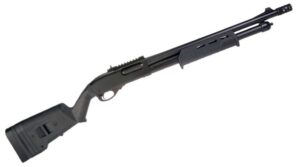
The Remington 870 is the eternal rival, and it’s a solid shotgun with a massive aftermarket. But the modern 870 under the RemArms banner has had quality control issues that the older Freedom Group guns didn’t. The 590A1’s heavy-walled barrel and metal trigger guard give it a clear edge in durability. If you’re buying for hard use, the Mossberg wins. If you want the deepest aftermarket support and a lower price, the 870 still has its place.

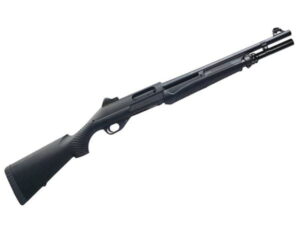
The Benelli Nova uses a monolithic receiver/stock design that’s impressively tough. It’s lighter than the 590A1 and has a smoother action out of the box. The Nova’s rotating bolt is also arguably stronger than the Mossberg’s dual action bars. But it holds fewer rounds (4+1 standard), costs about the same, and doesn’t have the mil-spec pedigree. For a home defense gun on a budget, the Nova is worth considering. For a duty gun, the 590A1’s capacity and track record give it the edge.
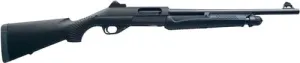
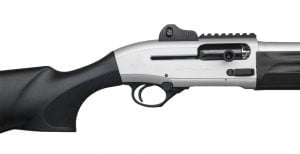
The Beretta 1301 is the semi-auto that makes pump shotguns nervous. It’s faster to shoot, softer on recoil, and cycles like a sewing machine. If money is no object and you want the fastest tactical shotgun available, the 1301 is the answer. But it costs roughly twice what the 590A1 does, and a semi-auto will always be more sensitive to ammunition selection. The 590A1 will eat anything you feed it, from cheap birdshot to exotic breaching rounds, without a single complaint.
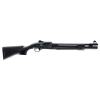
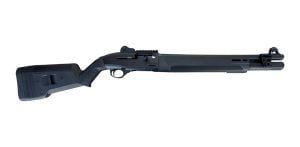
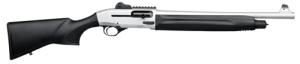
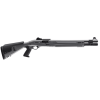
The Winchester SXP is the budget king of pump shotguns. Its inertia-assisted action is actually faster than the Mossberg’s, and it costs significantly less. But the SXP has a cross-bolt safety (inferior for tactical use), a thinner barrel, and polymer internals where the 590A1 uses metal. If you just need a cheap pump gun for the nightstand and you’re on a tight budget, the SXP is a smart buy. If you want something that will survive a decade of hard use, spend the extra money on the 590A1.


Technical Deep Dive
Receiver and Action
The 590A1 uses an aluminum alloy receiver with dual action bars. Those dual bars prevent the binding that can happen with single-bar designs when you’re running the pump hard under stress. The action is smooth out of the box but gets noticeably better after about 100 rounds as the parts wear in. It’s not quite Benelli M4-smooth, but it’s reliable in a way that matters more than silk.
The aluminum receiver keeps weight down while still being tough enough for duty use. Some people worry about aluminum vs. steel receivers, but Mossberg has been using this alloy for decades and I’ve never seen a cracked 590A1 receiver. The steel bolt locks into a steel barrel extension, so the pressure-bearing components are all ferrous.
Heavy-Walled Barrel
This is the defining feature of the 590A1. The barrel walls are significantly thicker than a standard 590 or 500 barrel, which means this gun can take a hit (literally) and keep shooting. The military specified this because soldiers use shotguns for breaching, and a thin barrel can deform if you’re stacking it against a door frame or taking contact in close quarters.
The trade-off is weight. The 590A1 at 7.25 lbs is about half a pound heavier than a comparable 590. That’s noticeable when you’re holding it at the ready for extended periods. But if I’m grabbing a shotgun because something went sideways at 3 AM, I want the one that’s overbuilt.
Top-Tang Safety
Mossberg’s ambidextrous top-tang safety is, in my opinion, the best safety design on any shotgun. It sits right behind the receiver where your thumb naturally rests. Left-handed, right-handed, it doesn’t matter. You can sweep it off safe without shifting your grip or breaking your cheek weld. The Remington 870’s cross-bolt safety requires you to reach forward with your trigger finger, which is slower and less intuitive.
On the 590A1, the safety button is metal instead of the polymer used on the 500 and standard 590. That’s a small detail, but metal won’t crack or become brittle in extreme cold. It also gives a more positive click when you engage or disengage it.
Stock and Furniture
The standard 590A1 ships with a black synthetic stock and forend. It’s basic, functional, and nearly indestructible. The length of pull is a standard 14 inches, which fits most adult shooters. If you want something more adjustable, several models come with Magpul SGA stocks and MOE forends, which add adjustable length of pull spacers and better grip texture.
I ran mine with the factory stock for the first year and recently switched to the Magpul SGA. Both work fine. The factory stock is lighter, and the Magpul stock gives you more adjustment. If you plan to share the gun between family members of different sizes, the Magpul version is worth the premium.
Sights
The 590A1 is available with several sight configurations. The most popular is the ghost ring rear with a white dot or XS tritium front. Ghost ring sights are fast for close-range work and accurate enough for slug shooting out to 75 yards or so. Some models come with a simple bead sight, which is fine for home defense distances but limits your effective range with slugs.
I prefer the ghost ring setup. It gives you a clear sight picture that works well in low light, and the aperture naturally centers your eye. For a dedicated home defense gun, the ghost ring is the way to go.
Range Testing: 500+ Rounds
I put over 500 rounds through the 590A1 across multiple range sessions, mixing buckshot, slugs, and birdshot to see how it handled everything. I wanted to test it the way most people will actually use it: home defense loads for practice, cheap birdshot for break-in, and slugs for accuracy testing.
Buckshot Performance
Federal FliteControl 00 buckshot was the standout performer. At 15 yards, all nine pellets stayed inside a 4-inch circle. That’s the kind of patterning that makes you confident in a home defense scenario. Standard 00 buck from Winchester and Remington opened up to about 8-10 inches at the same distance, which is still perfectly lethal but less precise.
I also ran several boxes of Hornady Critical Defense 00 buck, which patterned somewhere between the FliteControl and the standard loads. At home defense distances of 7-10 yards, every buckshot load I tested would put all pellets center mass on a silhouette target.
Slug Accuracy
With Hornady SST slugs and the ghost ring sights, I was holding 3-inch groups at 50 yards from a standing position. Rested on a bench at 75 yards, the groups opened up to about 5 inches. That’s solid performance for a smoothbore pump gun. Federal Truball slugs also performed well, with slightly larger groups but more affordable pricing for practice.
Birdshot and Light Loads
I ran about 200 rounds of cheap Federal and Winchester birdshot for break-in and general handling practice. The 590A1 cycled everything without issue. The action smoothed out noticeably after the first 50 rounds. No failures to feed, no failures to eject, no short-stroking issues even when I deliberately tried to short-stroke it during rapid fire drills.
Performance Results
| Ammunition | Distance | Pattern/Group | Notes |
|---|---|---|---|
| Federal FliteControl 00 Buck | 15 yds | 4″ | Best patterning buckshot tested. |
| Winchester 00 Buck | 15 yds | 8-10″ | Standard pattern, still effective. |
| Hornady Critical Defense 00 | 15 yds | 6″ | Good balance of price and pattern. |
| Hornady SST Slugs | 50 yds | 3″ | Standing, ghost ring sights. |
| Federal Truball Slugs | 50 yds | 4″ | Budget-friendly slug option. |
| Federal/Winchester Birdshot | 25 yds | 18-22″ | 200 rounds, zero malfunctions. |
Known Issues
Forend wobble. This is the most common complaint about Mossberg pump shotguns in general, and the 590A1 isn’t immune. The forend develops a slight lateral wobble over time. It doesn’t affect function at all, but it annoys people who are used to the tighter lockup of a Benelli or a Beretta. You can fix it with an aftermarket forend adapter or just accept it as a Mossberg trait.
Barrel interchangeability. Unlike the Mossberg 500, the 590A1’s barrels are not easily swappable for hunting configurations. The heavy-walled barrel and the magazine tube design mean you’re locked into tactical barrel lengths. If you want a do-everything shotgun that can run a 28-inch bird barrel on Saturday and an 18.5-inch defense barrel on Sunday, buy the standard 500 instead.
Weight. At 7.25 lbs unloaded, the 590A1 is not a light shotgun. Load it up with 8+1 rounds of 00 buckshot and you’re pushing close to 9 lbs. That’s fine for a home defense gun sitting in a safe, but it’s noticeable if you’re running drills or carrying it on a patrol. The heavy-walled barrel is the reason for the extra weight, and it’s a trade-off worth making for durability.
Extraction with cheap steel-base shells. A handful of reviewers have reported sticky extraction with the cheapest steel-base birdshot loads. I didn’t experience this personally, but it’s worth noting. Brass-base ammunition runs flawlessly every time.
Upgrades and Accessories
| Upgrade | Product | Price Range | Where to Buy |
|---|---|---|---|
| Stock | Magpul SGA Stock (Mossberg 500/590) | $95-$110 | PSA | Brownells |
| Forend | Magpul MOE M-LOK Forend (590) | $30-$40 | PSA | Brownells |
| Weapon Light | Streamlight TL-Racker (590) | $130-$150 | PSA | Brownells |
| Side Saddle | Esstac 6-Shell Shotgun Card | $15-$20 | PSA | Brownells |
| Sling | Blue Force Gear Vickers Padded Sling | $55-$70 | PSA | Brownells |
| Sights | XS Sights Ghost Ring Tritium Set | $100-$130 | PSA | Brownells |
| Follower | OPSol Mini-Clip (for mini shells) | $15-$18 | PSA | Brownells |
The Verdict: 8.5/10
If the mil-spec 590A1 feels like overkill for a bedside gun, the Mossberg 590 Shockwave takes the same action, strips the stock, and gives you a 14-inch bird’s-head firearm that’s legal without an NFA stamp.
The Mossberg 590A1 is the best pump-action shotgun you can buy for home defense and duty use. Period. It’s not the cheapest, it’s not the lightest, and it’s not the prettiest. But it’s the one that was built to a military specification and has proven itself in actual combat for over four decades. That matters more than any spec sheet.
At a street price of $500-$650, you’re getting a shotgun that will outlast you. The heavy-walled barrel, metal trigger guard, metal safety, and Parkerized finish are all designed for hard use in harsh conditions. If you’re the kind of person who buys a tool once and expects it to work forever, this is your shotgun.
The only reason it doesn’t score higher is the weight penalty and the lack of barrel interchangeability. If you need a versatile hunting and defense shotgun, the standard Mossberg 500 is a better choice. But if you want a dedicated fighting shotgun that was literally designed to survive war, the 590A1 is the answer. I’d buy it again tomorrow.
Best For: Home defense, law enforcement, military applications, and shooters who want a “buy once, cry once” pump shotgun built to the highest standard.
FAQ: Mossberg 590A1
What’s the difference between the Mossberg 590 and 590A1?
The 590A1 has three key upgrades over the standard 590: a heavy-walled barrel, a metal trigger guard (instead of polymer), and a metal safety button. These upgrades allow it to meet U.S. Military Specification 3443G. The standard 590 shares the same action and magazine capacity but uses a thinner barrel and polymer trigger guard.
Is the Mossberg 590A1 good for home defense?
It’s one of the best home defense shotguns you can buy. The 8+1 capacity with the 20-inch barrel gives you plenty of rounds, and the top-tang safety is fast and intuitive in high-stress situations. If you would rather have an AR-style rotary safety, look at the Mossberg 590R. The only downside is the weight, which is less of a concern for a gun that lives in a safe or mounted on a wall.
Can I swap barrels on the Mossberg 590A1?
Not easily. The 590A1’s heavy-walled barrel and extended magazine tube design make barrel swaps impractical. If you want a shotgun that can switch between tactical and hunting barrels, the Mossberg 500 is the better choice. The 590A1 is designed as a dedicated tactical platform.
Is the Mossberg 590A1 really mil-spec?
Yes. It’s the only pump-action shotgun that meets U.S. Military Specification 3443G. This includes endurance testing (6,000+ rounds), drop testing, and environmental exposure testing. It has been used by the U.S. Army, Marines, and Navy since the 1980s.
Which 590A1 model should I buy?
For most people, the 20-inch barrel with ghost ring sights is the sweet spot. It gives you 8+1 capacity and the most versatile sight setup. If you want a more compact gun for tight spaces, the 18.5-inch barrel with 6+1 capacity is a solid choice. The Magpul furniture models cost more but add adjustable length of pull, which is a nice feature if multiple people will use the gun.
Parkerized or Marinecote finish?
Both are excellent. The Parkerized finish is the standard military option and provides great corrosion resistance. The Marinecote finish is a nickel-based coating that’s even more resistant to salt and moisture, making it ideal if you live in a humid or coastal area. The Marinecote models typically cost $50-$100 more.
Related Guides
More Shotgun Reviews and Guides
- Mossberg 500 Review
- Remington 870 Shotgun Review
- 10 Best Shotguns for Home Defense (2026)
- 11 Best Pump Action Shotguns
- 9 Best High Capacity Shotguns
- 14 Best Semi-Auto Tactical Shotguns
- Pump Action vs Semi Auto Shotguns: What is Best?
- Shotgun vs AR-15 for Home Defense
- Slugs vs Buckshot for Home Defense
- Remington 870 vs Mossberg 500
- Mossberg 590 vs 590A1
- Best Shotgun Ammo for Home Defense
Frequently Asked Questions
What is the difference between the Mossberg 590 and 590A1?
The Mossberg 590A1 is the mil-spec version of the 590. It features a heavier barrel wall, a metal trigger guard and safety button (instead of plastic), and a metal magazine follower. These upgrades make the 590A1 more durable for harsh conditions and heavy use. The standard 590 is lighter and less expensive but uses polymer components where the 590A1 uses metal.
Is the Mossberg 590A1 used by the military?
Yes. The Mossberg 590A1 is the only pump-action shotgun to pass the U.S. military Mil-Spec 3443 testing protocol, which includes a 6,000-round endurance test, extreme temperature testing, and drop testing. It has been used by the U.S. military, law enforcement agencies, and NATO forces for decades.
What is the capacity of the Mossberg 590A1?
The Mossberg 590A1 comes in several configurations with different capacities. The most common 20-inch barrel model holds 8+1 rounds of 12 gauge. The 18.5-inch barrel model holds 6+1. Extended magazine tube versions can hold 9+1. All models use 12 gauge 2-3/4 inch or 3-inch shells.
Is the Mossberg 590A1 good for home defense?
The Mossberg 590A1 is one of the best home defense shotguns available. Its mil-spec durability, ambidextrous tang safety (easy to use in high-stress situations), and proven reliability make it an excellent choice. The 18.5-inch barrel model is the most practical for home defense, providing adequate capacity while remaining maneuverable in tight spaces.
How much does a Mossberg 590A1 cost?
The Mossberg 590A1 typically sells for about $580 to $830 depending on the configuration. The basic model with synthetic furniture is at the lower end, while models with ghost ring sights, bayonet lugs, or Magpul furniture cost more. Check our live pricing for the best current deals from trusted retailers.
Why is the Mossberg 590A1 used by the military?
The 590A1 passed the demanding US military shotgun trials thanks to its heavy-walled barrel, all-metal safety and trigger guard, and ability to survive abuse and high round counts. That mil-spec durability earned it official adoption, and it is the only pump to meet those standards, which is why it carries the reputation it does.
Upgrading your 590? See our full guide to the best Mossberg 590 parts and accessories, magazine extensions, stocks, sights, lights, shell carriers and more, with live prices.
3,976+ Gun & Ammo Deals
Updated daily from 200+ top retailers. Filter by category, caliber, action type, and price.