

Last updated September 2026 · By Nick Hall, who has installed gun safes in basements, garages, closets, and on second floors
Some of the links below are affiliate links, meaning at no additional cost to you, we may earn a commission if you click through and make a purchase.
- Treat every gun as loaded
- Point the muzzle in a safe direction
- Keep your finger off the trigger until you’re ready to shoot
- Know your target and what’s beyond
Table of Contents
Buying the safe is the easy part. Where to put a gun safe decides how fast you can reach it, how long the steel and the guns inside it last, and whether the floor underneath holds. I’ve watched people spend two grand on a good safe and then park it in the one spot in the house that cancels out every feature they paid for.
For most homes the best place for a gun safe is a ground-floor interior closet or a finished basement room, anchored to the floor, off an exterior wall, and out of sight from any window or entry door. A concrete slab takes anything you can buy. A wood-framed floor needs a little thought first.
Five questions settle it. Can the safe physically get there, can the floor hold it, and what does that room do to steel over ten years? Then the two nobody asks until it’s too late: how fast can you open it at two in the morning, and who gets to see it?
Work through them in that order and the answer tends to pick itself.
How we tested: Every pick here is ranked against our testing methodology. Minimum round counts, accuracy and reliability protocols, the failures that disqualify a gun. Where we have not shot a specific variant ourselves, we say so in that section.
Why Placement Decides More Than the Safe Does
A safe is a fixed object you’ll live with for twenty years. The lock, the steel gauge and the fire rating are all settled the day you buy it, and none of them will change afterward. Placement is the only variable left, and it moves four things at once: access time, fire exposure, humidity, and load on the structure.
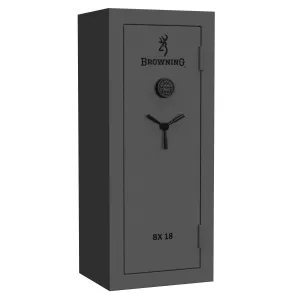
Weight is the part people underestimate. A Liberty Centurion 24 weighs 375 pounds empty and a Browning Sporter 33 weighs 560, both as published by the makers. Fill either one with rifles, ammunition and documents and you’re concentrating a serious load onto roughly six square feet of floor.
Then there’s the unglamorous part. A safe in the wrong room gets opened less, a safe that’s awkward to reach ends up with the door left cracked, and a safe you have to move furniture to open stops being a safe at all somewhere around the third week. That’s how the whole system quietly fails.
Best Rooms for a Gun Safe, Room by Room
Not every room is a candidate. Here’s how the common options stack up, including the one everybody recommends and the reason it isn’t automatic.
Master Bedroom Closet
This is the spot most owners pick, and it earns most of that. It is steps from where you sleep, it is climate controlled, it is out of sight of guests, and in a single-story house it sits on the same slab or joists as everything else.
The honest catch is that it’s also the first place an intruder looks. Bedrooms and closets are where people keep valuables, so that’s where a search starts. That does not disqualify the closet. It moves the weight of the decision onto two other things: the safe has to be anchored, and it shouldn’t be visible from the doorway.
Liberty land in the same place in their own setup guide, recommending a spot away from windows or high-traffic areas and naming a walk-in closet as an excellent choice. Concealment and convenience aren’t opposites here. Fast to reach and hard to spot is the whole goal.
The real closet problem is dimensional. Closets are tight, and getting a 375-pound box through a bedroom door and around a corner into one is where plenty of deliveries stop. I helped move a Centurion into a friend’s closet last spring, and we had to bring it back out into the hall because the frame beat us by about half an inch and nobody had measured it first.
Basement
Structurally, a basement is the easy answer. Concrete handles any weight you can put on it, the temperature stays flat year round, and heat rises, so a basement is the last part of a house to reach the temperatures a fire rating is measured at. For a big collection this is the right call more often than not.
Moisture is the price. Basements run humid, and a safe that sits cooler than the room air is exactly the surface condensation forms on. I run a rod in mine year round. Skipping it for one damp summer is how you find orange freckles on a bolt face in September.
Two things change the answer. If your area floods, a basement safe becomes an underwater vault, and no fire rating helps with that. And if the basement safe holds your home defense handgun, you’ve put a flight of stairs between you and it, which is what the two-safe split further down solves.
Spare Bedroom or Home Office
Underrated, and often the best compromise in a house with no basement. It’s climate controlled, it sees low traffic, it isn’t the room a search starts in, and a safe in the corner or the closet there reads as furniture.
It carries the same 30 psf design load as any other bedroom, so the floor question below applies exactly as it does in the master. The cost is a few seconds of access time, which matters for the defensive gun and not at all for the collection. My own long guns live in a spare-room closet for that reason, and the handgun doesn’t.
Garage
I’ll be blunt about the garage. It’s the weakest room in the house for a safe, and people keep choosing it because it’s the easiest room to get the safe into.
An attached garage swings through the whole outdoor temperature range, and Liberty describe the result precisely, explaining that warm, moisture-laden air contacts a cooler surface and leaves water behind. It’s also the room a thief can work in unobserved with the door down, often with your own tools already in it.
If the garage really is your only option, anchor the safe into the slab, run a dehumidifier rod year round rather than seasonally, and put a cabinet or a workbench in front of it so the first thing through the door doesn’t see a safe. Our guide on how to bolt down a gun safe covers the concrete anchors.
Dedicated Safe Room
If you’re building or remodeling, a purpose-built room with reinforced walls, a solid core door and its own climate is the ceiling. It’s what large collections end up in, and it’s the only option here that solves security, climate and floor load in one move rather than trading one against another.
It isn’t cheap, and it’s only worth costing out while the walls are already open. Retrofitting one into a finished basement means framing, a steel door and, in most builds, a new circuit.
Living Room, Entryway and Anywhere Visible
A safe in a public room advertises itself to every delivery driver, contractor and guest who walks past it. Some people do this deliberately with a display cabinet, which is a different product doing a different job.
For a working gun safe, keep it out of the rooms visitors stand in. If a display piece is what you actually want, our gun cabinet picks are built for it.
Room-by-Room Comparison
Same six rooms, in the same order, scored on the five things that decide the outcome.
| Room | Security | Fire | Climate | Access | Floor | Verdict |
|---|---|---|---|---|---|---|
| Master bedroom closet | Good if anchored | Average | Excellent | Excellent | Slab fine, joists need a check | Best all-round |
| Basement | Good | Good | Needs a dehumidifier | Slow | Concrete, no question | Best for a collection |
| Spare bedroom or home office | Good | Average | Excellent | Moderate | Slab fine, joists need a check | Best compromise |
| Dedicated safe room | Excellent | Excellent | Excellent | Varies | Designed for it | Ceiling, if remodeling |
| Garage | Poor | Poor | Poor | Moderate | Concrete, no question | Last resort |
| Living room or entryway | Poor, visible | Average | Excellent | Excellent | Slab fine, joists need a check | Avoid |
Will It Even Get Through the Door?
This question ends more placement plans than floor load ever has, and almost nobody answers it with a number. The advice you normally get is to leave a couple of inches of clearance on each side of the safe. That’s wrong, and it talks people into buying a smaller safe than their house can take.
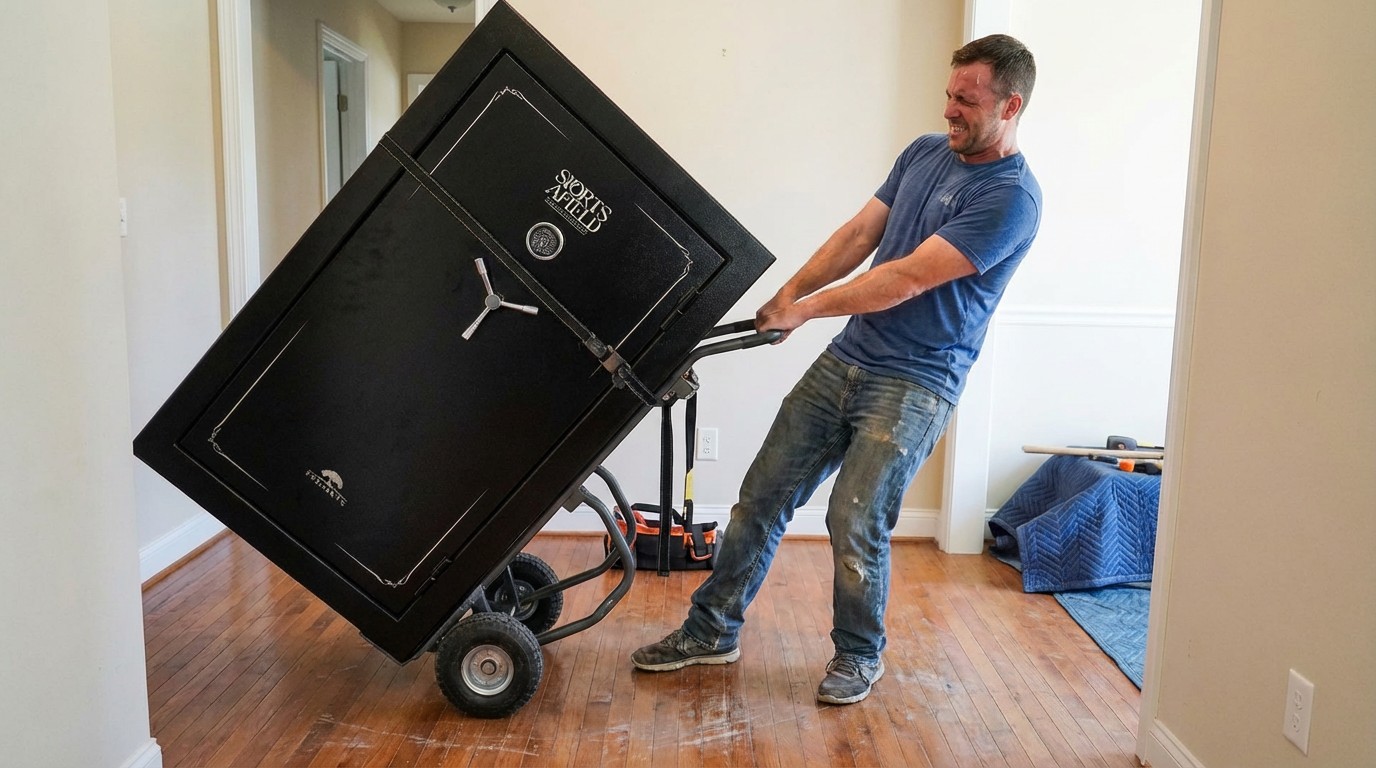
A safe doesn’t go through a doorway square. It goes through tipped back on a heavy dolly, traveling on its depth rather than its width. So the doorway you need is narrower than the safe is wide.
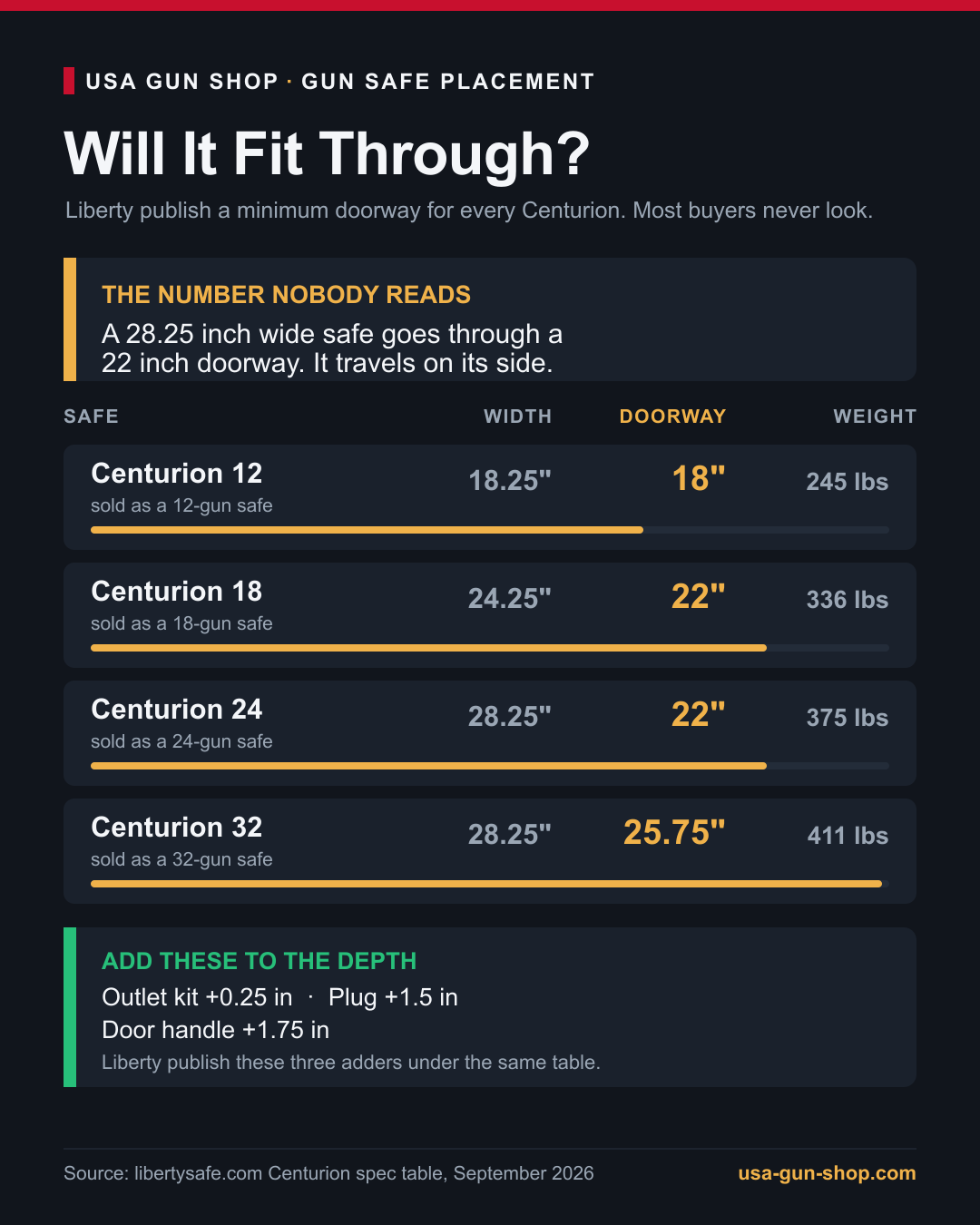
Liberty publish the answer outright. Every Centurion carries a Min Doorway Required spec alongside its exterior dimensions, and on the 24 that figure is 22 inches for a safe 28.25 inches wide.
| Liberty Centurion | Exterior width | Min doorway published | Weight |
|---|---|---|---|
| Centurion 12 | 18.25 in | 18 in | 245 lbs |
| Centurion 18 | 24.25 in | 22 in | 336 lbs |
| Centurion 24 | 28.25 in | 22 in | 375 lbs |
| Centurion 32 | 28.25 in | 25.75 in | 411 lbs |
Depth is where people get caught instead. Liberty note under that same table that you should add a quarter inch to the depth for the outlet kit, an inch and a half for a plug, and 1.75 inches for the handle. Three small numbers. Together they’re enough to stop a safe in a closet opening, and I have watched exactly that happen to a neighbor’s Centurion because the outlet kit was never counted.
Measure the narrowest point on the whole route, not the door. In my own house that point is a hallway turn, not any doorway, and I only found it by walking the route with a tape before I ordered anything. Then measure the swing arc. A safe you can’t open fully loses its top shelf.
- Front door or garage door, then every interior door on the route
- The tightest hallway turn, measured corner to corner
- Stair width and the landing, if stairs are involved
- Ceiling height at the tip-back point on the dolly
- Door swing clearance in the final position, plus the handle
Can Your Floor Take It?
Concrete is a non-question. Slab-on-grade homes, basements and garage floors take any gun safe made, and Liberty put a ground-level slab in the less of a concern category for exactly that reason. Wood-framed floors are where this needs a moment.
Residential floors are designed to a uniformly distributed live load, and the number isn’t the same in every room. Under the 2012 International Residential Code tables most jurisdictions still build to, joists in residential living areas are sized for 40 psf, while joists in residential sleeping areas are sized for 30 psf.
Read that against the advice everybody gives. The room most often recommended for a gun safe is a bedroom closet, and a bedroom is designed to the lower of the two figures. That isn’t a reason to rule out the closet. It’s a reason to stop treating 40 psf as the universal number, which is what the internet does.
The psf comparison is a rule of thumb and nothing more. A design live load is spread evenly across a floor while a safe is a point load sitting on four corners, so the same safe can be fine against one wall and a problem eight feet away in the same room, depending on the size, species, spacing and span of the joists under it.
Three moves do most of the work. Put the safe against a load-bearing wall or in a corner, which is where the joists are supported and where Liberty point owners for additional support. Sit it across the joists rather than along a single one. And on an upper floor or over a long span, get a structural engineer to look at it before the delivery is booked.
Our second-floor gun safe guide works through the joist arithmetic in detail, and the gun safe weight guide has loaded weights by capacity if you’re still choosing a size.
The Room You Pick Decides the Humidity
Rust does quiet, expensive damage to a collection, and it’s almost entirely a placement problem. A safe isn’t airtight. Every time the door opens, room air goes in, and whatever that air is carrying settles on the steel.
The EPA advise keeping indoor humidity below 60 percent, ideally between 30 and 50 percent relative humidity. Liberty aim a little tighter inside the safe itself, telling owners to aim for roughly 35 to 50 percent, and that’s the band I work to.
Condensation is the mechanism, not humidity on its own. Three placements cause it: against an exterior wall that runs cooler than the room, in a garage or basement with big temperature swings, and in any humid room where the steel stays cooler than the air overnight.
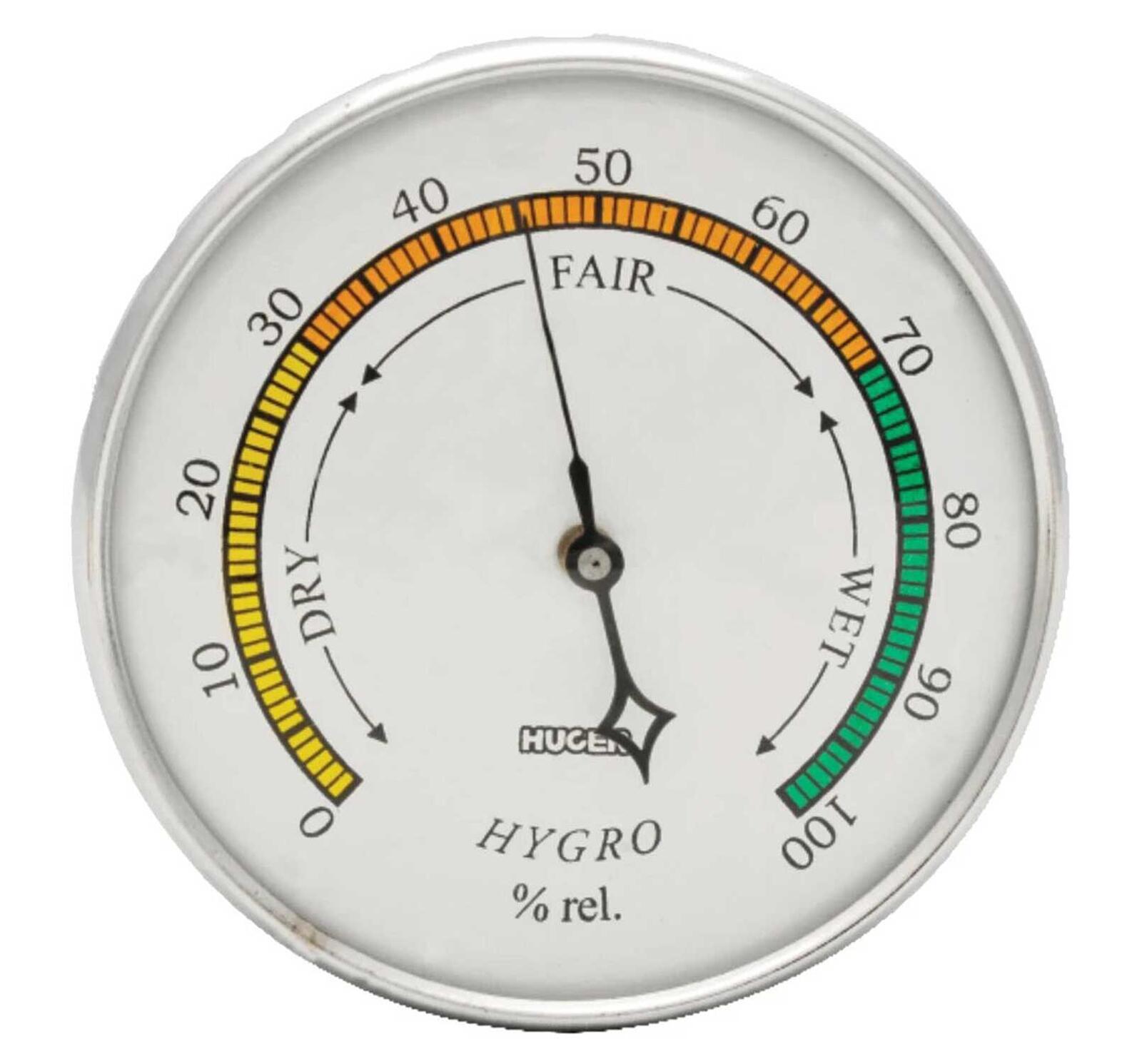
So put the safe on an interior wall wherever you have the choice. Run a rod or a rechargeable unit inside it from day one rather than waiting to see rust. And buy a cheap hygrometer, leave it in the safe for the first month, and find out what your room is actually doing instead of guessing.
Live pricing from our retail partners
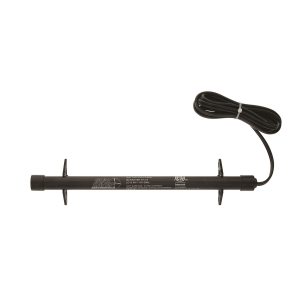
The full breakdown of rods, desiccant and rechargeable units is in our gun safe humidity control guide, and the tested picks are in best gun safe dehumidifiers.
Fast Access, and the Two-Safe Split
If a gun in that safe is your home defense gun, the safe has to be reachable and open in seconds from where you sleep. That one requirement rules out the basement, the garage and the far end of the house for that firearm.
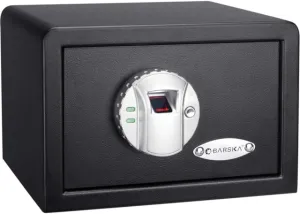
Two safes doing two jobs is the arrangement that works. A small quick-access vault at the bed for the defensive handgun, and the main safe wherever the structure, the climate and the concealment are best. Ask one safe to do both and either the defensive gun is too slow to reach, or the whole collection sits behind a lock built for speed rather than for security.
The bedside vault is also what frees you to put the big safe somewhere sensible. Once the fast gun is handled, the collection can go in the basement without an argument. That’s the order I’d buy them in, if the budget only stretches to one this year.
Live pricing from our retail partners
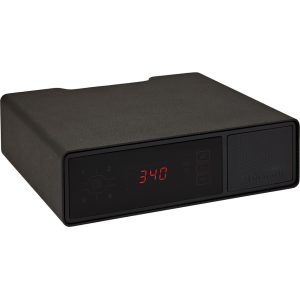
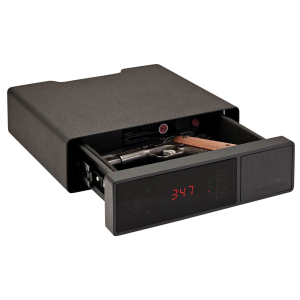
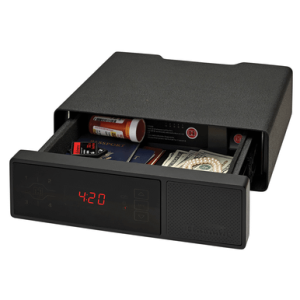
More options in best nightstand gun safes and best gun safes for home defense, including wall and under-bed mounts if the nightstand is already full.
Fire: Where It Sits Changes What It Survives
A fire rating is measured in a furnace under controlled conditions, not in your house. The same safe with the same rating gets a very different fire depending on the room it is standing in.
Heat rises, so an upper floor is the hardest place for a safe to ride out a structure fire and a basement is the easiest. Keep clearance from the things that start and feed house fires: water heaters, furnaces, gas lines, breaker panels and stored fuel.
There’s a second-order problem upstairs that safe marketing never mentions. In a serious fire the floor can go before the safe does, and Liberty make the same point when they explain that anchoring prevents it from falling through a compromised floor to a hotter area below. A 400-pound box that drops a story lands hard, and it lands hot.
Read what fire ratings actually mean before you shop on that number. If fire is your main worry, start with the best fireproof gun safes.
Concealment Without Making It Obvious
A safe nobody knows about is a safe nobody plans around. Houses get cased, and the people who see the inside of yours aren’t all burglars. Delivery drivers, tradespeople, house guests and their kids all build a picture of what’s where.
Walk-in closets do the most work for the least effort. After that it’s false walls, built-in cabinetry, a finished basement room behind a locked door, or any corner of the house that isn’t on the line of sight from a doorway, a window or the spot where a delivery driver stands waiting for a signature.
Two habits matter as much as the hiding place. Don’t leave the shipping carton, the branded pallet or the manual sitting out on the curb on collection day, where anyone driving past learns what arrived and roughly what it cost, and don’t post the safe on social media. If you want purpose-built concealment rather than a good closet, our hidden gun safe picks cover the mirrors, shelves and in-wall units built for it.
Placement Mistakes That Cost Money Later
These are the ones I keep seeing on real installs. None of them are obvious until the damage is done. None of them are covered anywhere above, either.
Buying the safe before measuring the route. The order matters. Measure the tightest point first, then shop inside that number, because a safe that can’t reach the room is a restocking fee and a wasted Saturday.
Anchoring into a slab without checking what’s in it. Post-tension cables and in-floor heating loops both live in concrete, and a masonry bit finds them the hard way. Slab plans, a rebar scanner, or a corner position away from the middle of the bay all avoid it.
Putting the safe where the door can’t open fully. A door that only swings ninety degrees costs you the shelf and the door organizer you paid for. Leave the swing arc, not just the footprint.
Blocking the outlet you’ll need later. Dehumidifier rods, interior lights and electronic locks all want power, and Liberty’s depth note exists because a plug adds an inch and a half behind the safe. Run the power before the safe arrives, not after.
Treating a rental like a purchase. Renters can’t drill the floor, which moves the whole security model onto cabling and weight. Our apartment gun safe guide covers what works when bolting down isn’t allowed.
Delivery Day: What Actually Happens
Here’s the part that surprises first-time buyers, and it’s worth knowing before you pick a room on the far side of the house.
Delivery and installation are separate things you pay for separately. Liberty put it plainly in their own delivery guide: if you haven’t paid for installation, the movers will leave the safe on the curb. A 400-pound box on your driveway isn’t a problem you solve with two friends and a hand truck.
Crews that do install it bring gear you can’t rent casually. Liberty list SlikSticks, reinforced dollies and electric stair-climbing dollies, because ordinary dollies bend and air-filled tires burst under the weight. They lay blankets or plywood on the route first.
Ask three questions before you book. Is the delivery to the curb, the threshold or the room you actually want? Do they do stairs, and what does that cost? And will they anchor it while they’re there, because that’s the one job worth handing over.
Anchoring is not optional, wherever the safe ends up. Liberty call it the single most effective step you can take against theft, and their safes ship with the holes already drilled. The kit differs by floor, which makes it a placement decision in itself: a wood-floor kit lag-bolts into framing, and a concrete-floor kit uses a masonry anchor and a carbide bit.
Live pricing from our retail partners
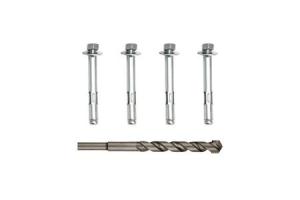
Step by step, with the bolt sizes and the concrete depths, is in how to bolt down a gun safe. If the safe is already in the wrong room, moving a gun safe covers doing it without wrecking the floor.
What Goes Under the Safe
Whatever the safe sits on becomes part of the install, and this is the five-minute job people skip.
On bare or unsealed concrete, put something between the base and the slab. Heavy rubber matting is the usual answer and it does two jobs at once, breaking the moisture path that wicks up through unsealed concrete and stopping the steel base from chewing the floor as the safe gets nudged into its final position. On finished wood or tile, the mat protects the floor rather than the safe.
Carpet is the one to think about. A heavy safe compresses pile and padding unevenly and can rock slightly once it settles, which is exactly what you don’t want on a door that has to line up. I shim before anchoring and check again a week later, because the second check is the one that catches it.
Leave a gap at the back too. An inch or two of air between the safe and the wall keeps the steel closer to room temperature and gives you room for the plug, which is the inch and a half Liberty tell you to add to the depth.
Where to Put a Gun Safe: How I Would Decide
If you have a slab or a basement, use it. Concrete removes the structural question entirely and leaves you free to optimize for concealment and climate. Put the main safe in a finished basement room or a ground-floor interior closet, on an interior wall, anchored, with a dehumidifier running.
If you’re on a wood-framed floor, keep the safe on the ground level, against a load-bearing wall, and measure the route before you buy rather than after. A mid-size safe placed properly beats a big one wedged into the only room it fitted.
Then add the bedside vault. That single purchase is what lets the big safe live somewhere sensible instead of somewhere fast, and it’s the change that makes the whole setup work.
Still choosing the safe itself? Start with our gun safe buying guide, size it with gun safe sizes explained, and check whether you need a safe at all in gun safe vs gun cabinet. Budget shoppers can jump straight to the best gun safes under $1,000.
Shop Gun Safes
Best-scored accessories across 200+ retailers · Updated every 4 hours



FAQ: Where to Put a Gun Safe
Where is the best place to put a gun safe in a house?
A ground-floor interior closet or a finished basement room, on an interior wall, anchored to the floor and out of sight from any window or entry door. Concrete removes the structural question, and an interior wall keeps the steel closer to room temperature so condensation has nothing to form on.
What size doorway does a gun safe need?
Less than you'd think, because the safe travels tipped back on a dolly rather than going through square. Liberty publish a minimum doorway for every Centurion: 18 inches for the 12, 22 inches for the 18 and the 24, and 25.75 inches for the 32, against exterior widths up to 28.25 inches. Measure the narrowest point on the whole route, not just the door.
Can I put a gun safe on the second floor?
Often yes, but check first rather than assume. Under the International Residential Code tables most jurisdictions build to, joists in sleeping areas are sized for a 30 psf live load and living areas for 40 psf, and a safe is a point load rather than an evenly spread one. Put it against a load-bearing wall, sit it across several joists, and have an engineer look at anything heavy or anything over a long span.
Is a garage a good place for a gun safe?
It's the weakest room in the house for one. A garage swings through the full outdoor temperature range, which drives condensation inside the safe, and it's the room a thief can work in unobserved with the door down. If it's your only option, anchor into the slab, run a dehumidifier and screen the safe from view.
What humidity should a gun safe be kept at?
The EPA advise keeping indoor relative humidity below 60 percent and ideally between 30 and 50 percent. Liberty aim a little tighter inside the safe itself, telling owners to aim for roughly 35 to 50 percent. Put a hygrometer inside for the first month and find out what your room actually does before you size a dehumidifier.
How much does a gun safe weigh?
Liberty publish 245 pounds for the Centurion 12, 375 for the Centurion 24 and 411 for the Centurion 32, and Browning publish 560 pounds for the Sporter 33. Those are empty weights. Rifles, ammunition and documents add a substantial amount on top, so size the floor to the loaded safe.
Should I put my gun safe on a mat?
Yes on bare or unsealed concrete, where heavy rubber matting breaks the moisture path between the slab and the base of the safe. On finished wood or tile the mat protects the floor instead. On carpet, shim the safe level before anchoring, because compressed pile lets a heavy safe settle unevenly.
How far should a gun safe be from a water heater?
Keep clear of water heaters, furnaces, gas lines and stored fuel altogether rather than working to a set distance. Those are the things that start and feed house fires, and a fire rating is measured in a furnace under controlled conditions, not next to a gas can.
Will the delivery driver put the gun safe where I want it?
Only if you paid for installation. Liberty state that without it the movers leave the safe on the curb. Installation crews bring SlikSticks, reinforced dollies and electric stair-climbing dollies, and many will anchor the safe while they're there. Ask whether the delivery is to the curb, the threshold or the room before you book.
Related Guides
4,617+ Gun & Ammo Deals
Updated daily from 200+ top retailers. Filter by category, caliber, action type, and price.
Related Guides