

Last updated March/April 2026 · By Nick Hall, AR-15 builder who has assembled rifles in carbine, mid-length, and rifle gas systems
Last updated July 2026. This post contains affiliate links. If you click and buy, I may earn a small commission at no extra cost to you. Full disclosure.
- Treat every gun as loaded
- Point the muzzle in a safe direction
- Keep your finger off the trigger until you’re ready to shoot
- Know your target and what’s beyond
Table of Contents
Gas system length is one of those specs that shows up on every AR-15 product page but most shooters don’t fully understand. It directly affects how your rifle cycles, how hard it recoils, how long your parts last, and how reliably the gun runs. Getting it right is the difference between a smooth-shooting rifle and a parts-beating, brass-mangling headache.
I’ve run every gas system length from pistol to rifle across builds ranging from 7.5″ truck guns to 20″ precision setups. The physics are simple once you understand dwell time. Let me break it down.
How the AR-15 Gas System Works
When you fire an AR-15, the bullet travels down the barrel and passes a small hole (the gas port) drilled into the barrel. Gas from the burning powder enters this port, travels through the gas tube back to the upper receiver, and pushes the bolt carrier group rearward. This is the direct impingement system that Eugene Stoner designed, and it’s been working for 60+ years.
AR-15 remains the most popular rifle platform in America with over 24 million in civilian hands according to NSSF estimates.
The “gas system length” refers to the distance from the upper receiver to the gas port. A longer gas system puts the gas port further from the chamber. This means the bullet has traveled further (and pressure has dropped more) before gas is tapped off. Less gas at lower pressure means gentler cycling. More gas at higher pressure means more violent cycling.
For a deeper comparison between direct impingement and piston-driven systems, check our DI vs piston guide. Both use the same gas system length concepts, just different methods of transferring energy to the bolt carrier.
The Four Gas System Lengths
| Gas System | Port Distance | Best Barrel Lengths | Recoil Feel |
|---|---|---|---|
| Pistol | 4.0″ | 7.5″ – 10.3″ | Harsh |
| Carbine | 7.0″ | 10.5″ – 16″ | Moderate |
| Mid-Length | 9.0″ | 14.5″ – 18″ | Smooth |
| Rifle | 12.0″ | 18″ – 20″+ | Very Smooth |
Pistol-Length Gas System
Pistol-length gas system has the shortest distance from the receiver to the gas port at roughly 4 inches. It’s used on barrels from 7.5″ to about 10.3″. The gas port is close to the chamber, so it taps gas at very high pressure. The result is violent cycling, harsh recoil, and a lot of wear on internal parts.
Running a pistol gas system requires heavier buffers (H2 or H3) to slow down the bolt carrier and prevent battering. Even with a heavy buffer, these guns are noticeably snappier than longer gas systems. I run an H2 buffer and an enhanced extractor spring on all my pistol-gas builds. It’s non-negotiable for reliability.
Advantage of pistol gas is that it works on very short barrels where other gas systems physically can’t fit. If you’re building a 7.5″ or 10.3″ SBR or pistol, pistol gas is your only option. Just know what you’re signing up for in terms of recoil and parts life.
Carbine-Length Gas System
Carbine gas system is the most common gas system on AR-15s. With a port distance of about 7 inches, it works on barrels from 10.5″ to 16″. The M4 carbine uses a carbine gas system on its 14.5″ barrel, and that combination has proven itself in decades of combat.
On a 16″ barrel, the carbine gas system works fine but is slightly over-gassed. You get reliable cycling with every type of ammo, which is why manufacturers use it. The trade-off is more recoil and faster parts wear compared to a mid-length system on the same barrel.
Carbine gas really shines on 10.5″ to 12.5″ barrels. At those lengths, the dwell time is well-balanced and the gun cycles smoothly with a proper buffer. My 11.5″ carbine-gas build with an H2 buffer is one of the most reliable AR-15s I own. See our buffer weight guide for pairing recommendations.
Mid-Length Gas System
Mid-length is the sweet spot for 14.5″ to 16″ barrels and my personal favorite gas system for most builds. The port sits about 9 inches from the receiver, which means the bullet has traveled further and pressure has dropped more before gas is tapped. The result is noticeably softer recoil, gentler extraction, and longer parts life compared to carbine gas on the same barrel.
A 16″ barrel with a mid-length gas system is the single most popular configuration for civilian AR-15s, and for good reason. It’s the smoothest-shooting common setup, works with a standard carbine buffer, and is reliable with a wide range of ammo. If someone asks me what to build, this is my default answer.
Mid-length also gives you a longer handguard compared to carbine, which means more rail space for accessories and a better grip position. That improved ergonomic is a nice bonus on top of the cycling benefits.
Rifle-Length Gas System
Rifle gas system was the original M16 design. With a 12-inch port distance, it’s the longest and gentlest gas system. It runs on 18″ to 20″ barrels and produces the softest recoil of any AR-15 configuration. Brass comes out looking nearly unfired. The rifle barely feels like it’s cycling.
Downside is that rifle gas requires a rifle-length buffer tube and buffer, which means a fixed stock (A1/A2 style) or a proprietary system like the VLTOR A5. You can’t run a standard collapsible stock with a rifle gas system without the A5 adapter. This limits your stock options and increases cost.
For precision builds, DMR setups, and 20″ rifles, rifle gas is the clear choice. I keep a 20″ rifle-gas upper around specifically because it’s the most pleasant AR-15 to shoot. The recoil impulse is so soft you can spot your own shots through the scope. Great for hunting and long-range work.
Understanding Dwell Time
Dwell time is the distance the bullet travels between the gas port and the muzzle. This is the critical concept that ties barrel length and gas system length together. During dwell time, gas is flowing into the gas tube and pushing the BCG rearward. Once the bullet exits the muzzle, pressure drops rapidly and gas flow stops.
More dwell time means more gas pushes the BCG, resulting in stronger cycling. Less dwell time means less gas and potentially unreliable cycling. This is why you can’t just put any gas system on any barrel length.
Example: a rifle-length gas system on a 16″ barrel would have only 4 inches of dwell time. That’s not enough gas to reliably cycle the action. A pistol-length gas system on a 20″ barrel would have 16 inches of dwell time, massively over-gassing the gun and beating it to death. The chart above shows proper pairings that balance dwell time for reliable but gentle cycling.
Over-Gassing vs Under-Gassing
An over-gassed rifle sends too much gas into the system. Symptoms include: brass ejecting forward of 3 o’clock, excessive felt recoil, primer cratering, chewed-up case mouths, and premature wear on the buffer, buffer tube, and bolt. Most factory AR-15s are intentionally over-gassed to ensure reliability with all ammo types. It works, but it’s not ideal.
An under-gassed rifle doesn’t get enough gas to fully cycle. Symptoms include: failure to eject, failure to feed, bolt not locking back on empty, and short-stroking. This usually happens when someone uses a gas system that’s too long for their barrel, or when the gas port is too small.
Fix for over-gassing is a heavier buffer, an adjustable gas block, or both. The fix for under-gassing is a lighter buffer, a larger gas port (requires a gunsmith), or a shorter gas system. For most shooters, an adjustable gas block is the most elegant solution because it lets you tune gas volume at the source. Our parts and accessories guide covers the best adjustable gas blocks.
Gas System and Suppressor Use
Running a suppressor increases backpressure significantly, which sends more gas into the action. A rifle that’s properly gassed unsuppressed becomes over-gassed with a can. This is why suppressed AR-15s often need heavier buffers, adjustable gas blocks, or both.
If you plan to run a suppressor, mid-length or rifle-length gas systems handle the extra pressure better than pistol or carbine gas. The lower port pressure means the gun starts from a better baseline, and the increase from the suppressor doesn’t push it as far into over-gassed territory.
My favorite suppressed setup is a 14.5″ or 16″ barrel with a mid-length gas system and an adjustable gas block. Tune it for suppressed use (slightly under-gassed unsuppressed is fine) and you get an incredibly smooth, quiet, soft-shooting rifle. It’s as close to “no recoil” as a centerfire rifle gets.
Matching Gas System to Barrel Length
Here’s a more detailed pairing chart with specific recommendations. For barrel length details, see our barrel length guide.
| Barrel Length | Best Gas System | Dwell Time | Notes |
|---|---|---|---|
| 7.5″ | Pistol | 3.5″ | Marginal dwell, harsh cycling |
| 10.3″ | Pistol | 6.3″ | Mk18 standard, needs heavy buffer |
| 10.5″ | Carbine | 3.5″ | Tight on dwell, carbine barely works |
| 11.5″ | Carbine | 4.5″ | Good balance, increasingly popular |
| 12.5″ | Carbine | 5.5″ | Excellent dwell, smooth cycling |
| 14.5″ | Carbine or Mid | 7.5″ / 5.5″ | Both work well, mid is softer |
| 16″ | Mid-Length | 7.0″ | The gold standard combo |
| 18″ | Rifle or Mid | 6.0″ / 9.0″ | Rifle gas is ideal, mid works |
| 20″ | Rifle | 8.0″ | Original M16 spec, very smooth |
Adjustable Gas Blocks
An adjustable gas block lets you control exactly how much gas enters the system. You can tune for minimum reliable cycling, which gives you the softest recoil, least parts wear, and best brass condition. It’s especially useful for suppressed guns or builds where you’re switching between different ammo types.
The two main types are restriction-based (like SLR and Seekins) and bleed-off (like Superlative Arms). Restriction types limit gas flow to the BCG. Bleed-off types vent excess gas before it reaches the BCG. Both work well, but bleed-off keeps the gas system cleaner because excess gas exits the block instead of staying in the barrel.
For a home defense or duty gun, I prefer a fixed gas block with the right buffer weight. Adjustable blocks can potentially shift their settings, and you don’t want to diagnose a malfunction under stress. For everything else, adjustable blocks are fantastic. Build your rifle the right way with our complete AR-15 build guide.
Gas Port Size Matters Too
The gas port diameter works together with gas system length to determine total gas volume. A larger port sends more gas. Standard port sizes vary by gas system length: pistol gas ports are typically .070″-.080″, carbine .078″-.093″, mid-length .075″-.078″, and rifle .086″-.093″.
Manufacturers sometimes oversize gas ports for reliability insurance. This is why even “properly” paired gas system/barrel combos can still be over-gassed. Quality barrel makers like Criterion size their ports precisely for optimal cycling, which is one reason their barrels shoot and cycle so well out of the box.
My Recommendation
For most shooters building a general-purpose AR-15, go with a 16″ barrel and mid-length gas system. It’s the best balance of performance, reliability, and shootability. If you’re building a short gun, 11.5″ or 12.5″ with carbine gas is excellent. For precision, 18″ with rifle gas is butter-smooth.
Don’t overthink gas system length. Match it to your barrel using the charts above, run an appropriate buffer weight, and your gun will run great. The AR-15 platform is incredibly well-engineered. When you pair the components correctly, it just works. Check out our best AR-15 rifles for builds that get the gas system right from the factory.
Shop AR-15 Parts & Upgrades
Best-scored parts across 200+ retailers · Updated every 4 hours


Frequently Asked Questions
What gas system length should I use for a 16 inch barrel?
Mid-length. It provides the smoothest cycling, softest recoil, and best parts longevity on a 16 inch barrel.
Can I change the gas system length on my AR-15?
Only by changing the barrel. The gas port is drilled into the barrel at a fixed location. Swapping gas systems requires a new barrel with the port in the correct position.
Does gas system length affect accuracy?
Not directly. Barrel quality and ammo are the primary accuracy factors. However, a properly gassed system cycles more gently, which can contribute to better practical accuracy.
What is dwell time and why does it matter?
Dwell time is the distance from the gas port to the muzzle. It determines how long gas flows into the action before the bullet exits. Too much causes over-gassing, too little causes under-gassing.
Is mid-length gas more reliable than carbine gas?
On a 16 inch barrel, both are very reliable. Carbine gas is slightly more forgiving with weak ammo. Mid-length is better long-term because it causes less parts wear.
Do I need an adjustable gas block?
Not necessarily. If your gas system and buffer are properly matched, a fixed gas block works perfectly. Adjustable blocks are most useful for suppressed guns or competition rifles.
What gas system does the military M4 use?
The M4 carbine uses a carbine-length gas system on a 14.5 inch barrel. The M16A2/A4 uses a rifle-length gas system on a 20 inch barrel.
Does gas system length affect handguard selection?
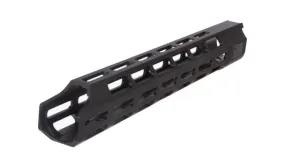
Yes. Your handguard must be long enough to cover the gas block. Longer gas systems require longer handguards. Most manufacturers list compatible gas system lengths in their specs.
4,617+ Gun & Ammo Deals
Updated daily from 200+ top retailers. Filter by category, caliber, action type, and price.
Related Guides